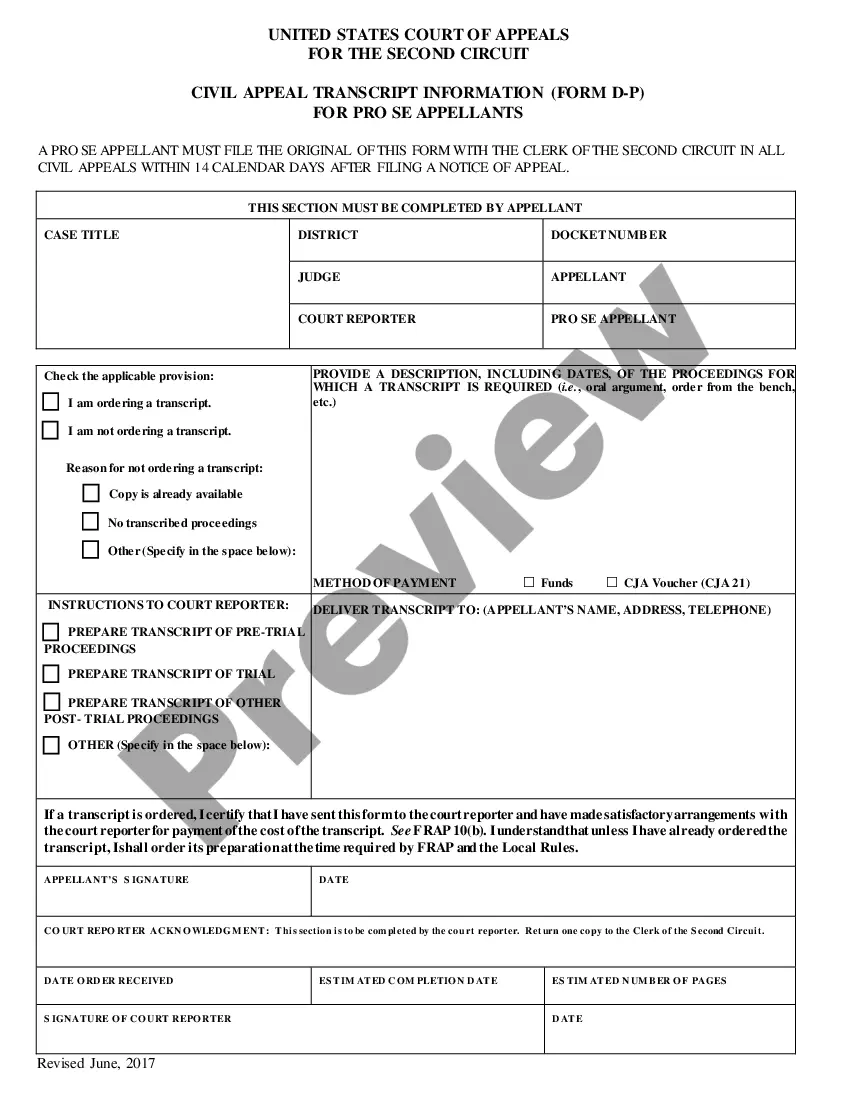
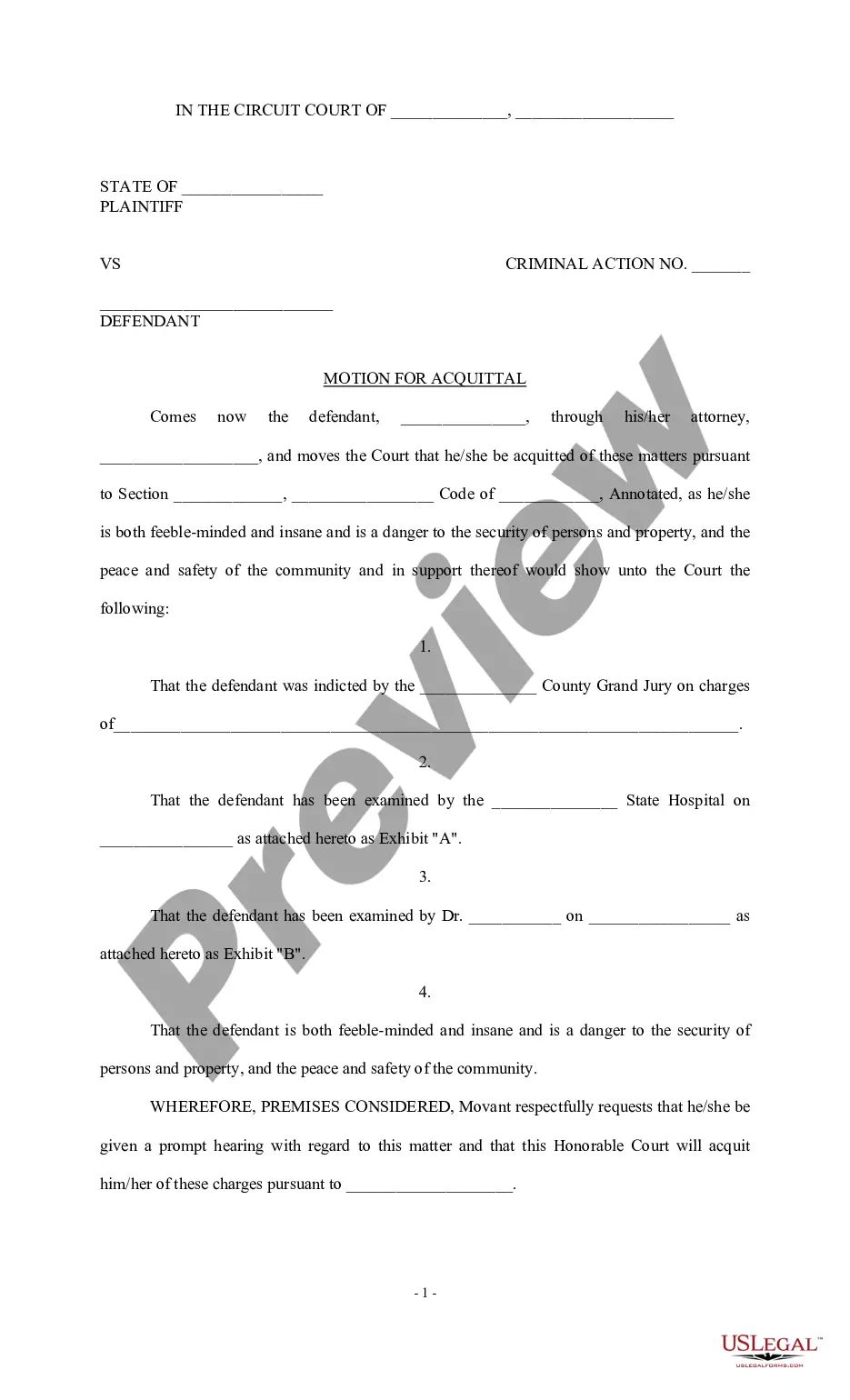
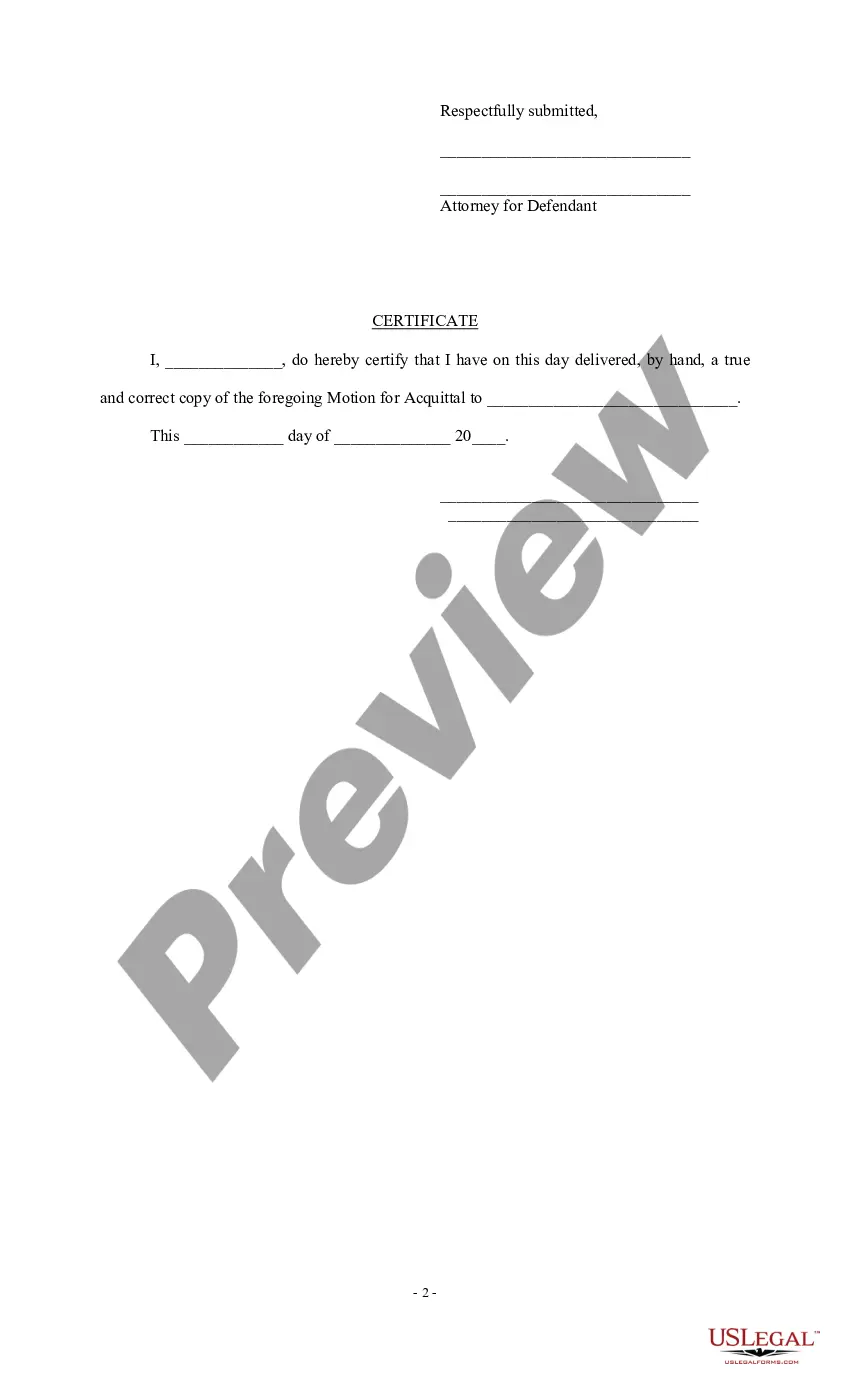
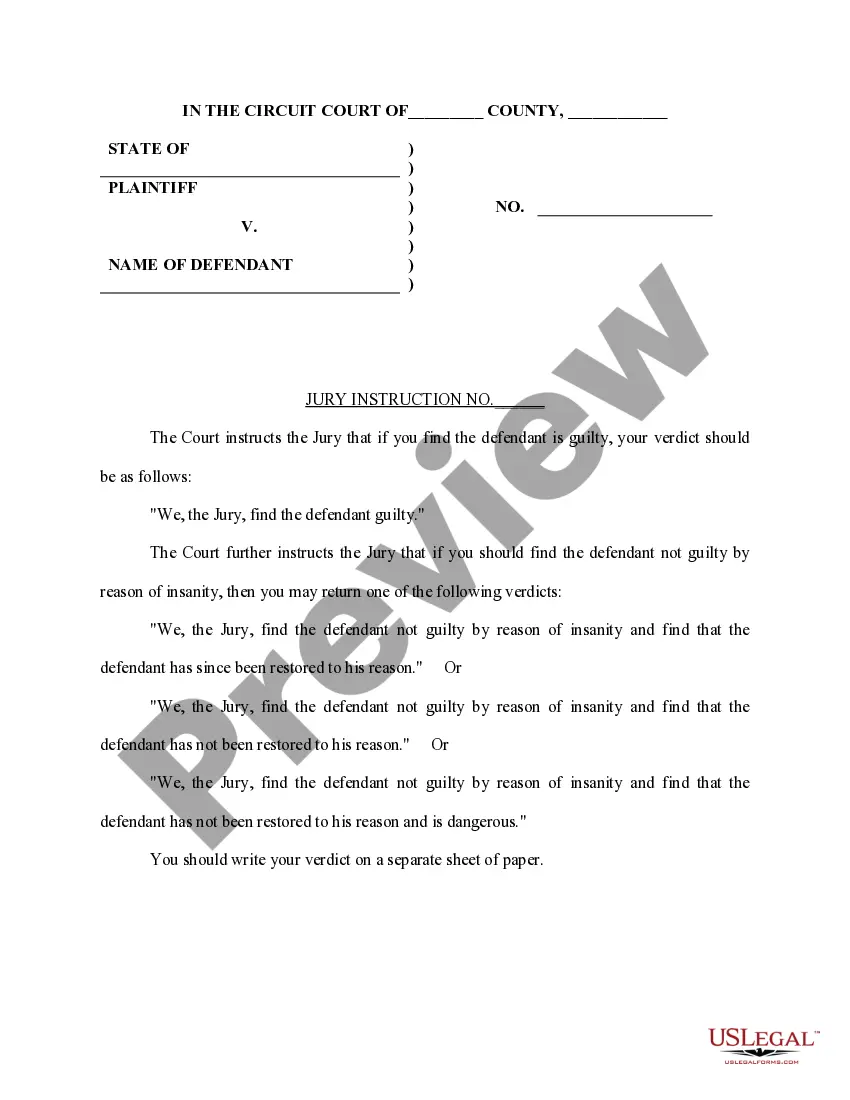
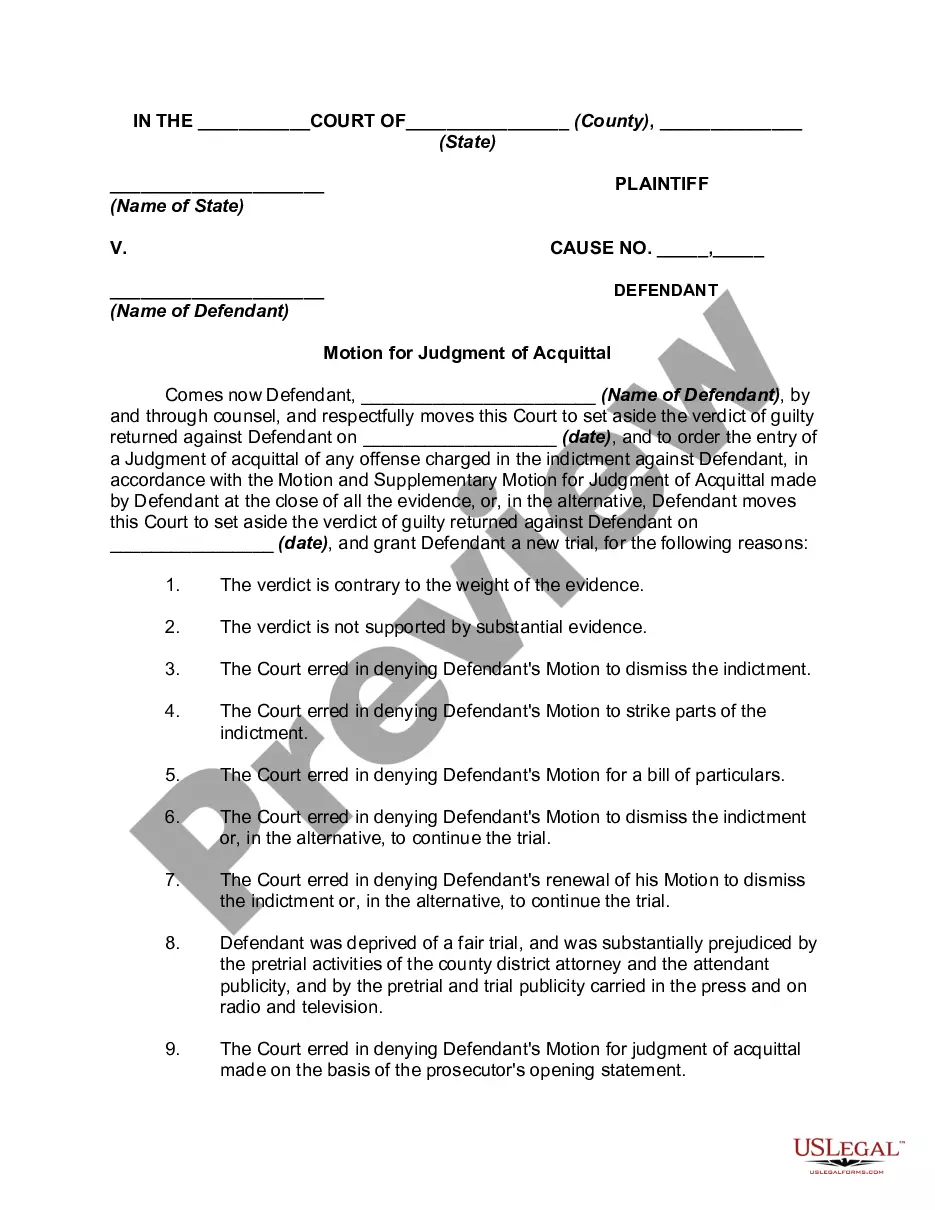
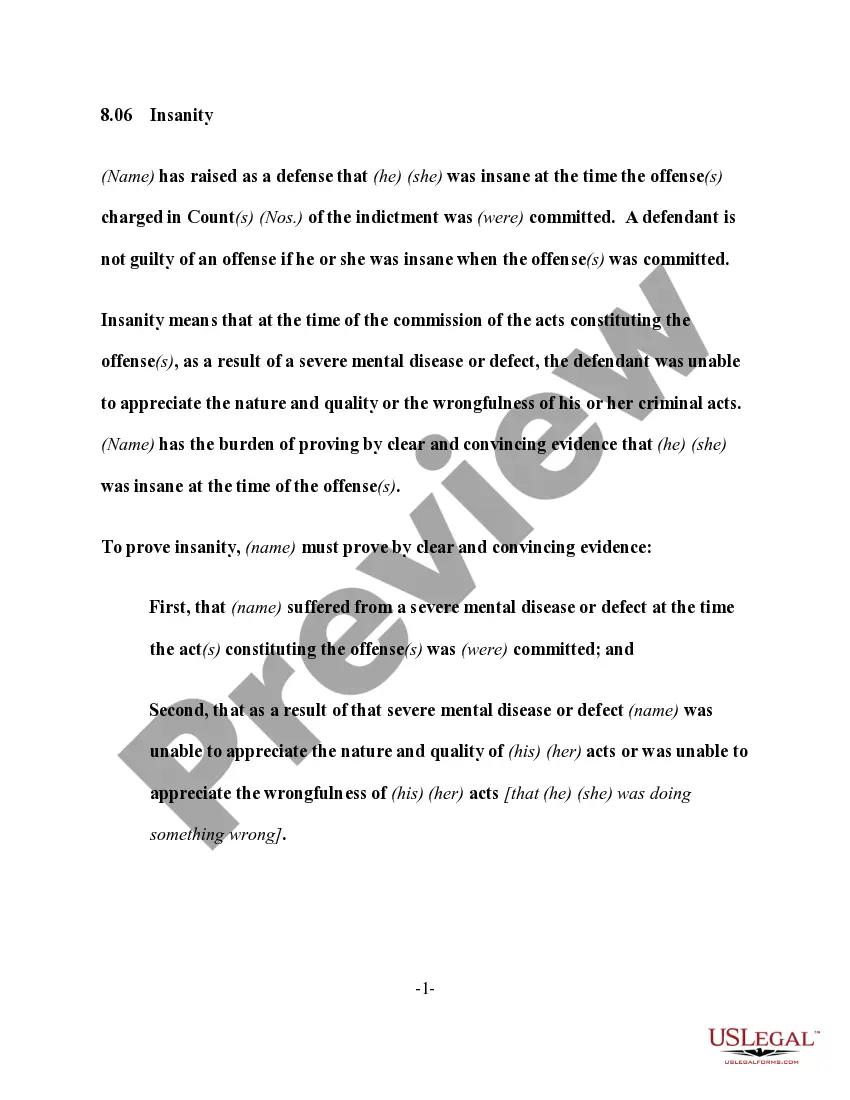
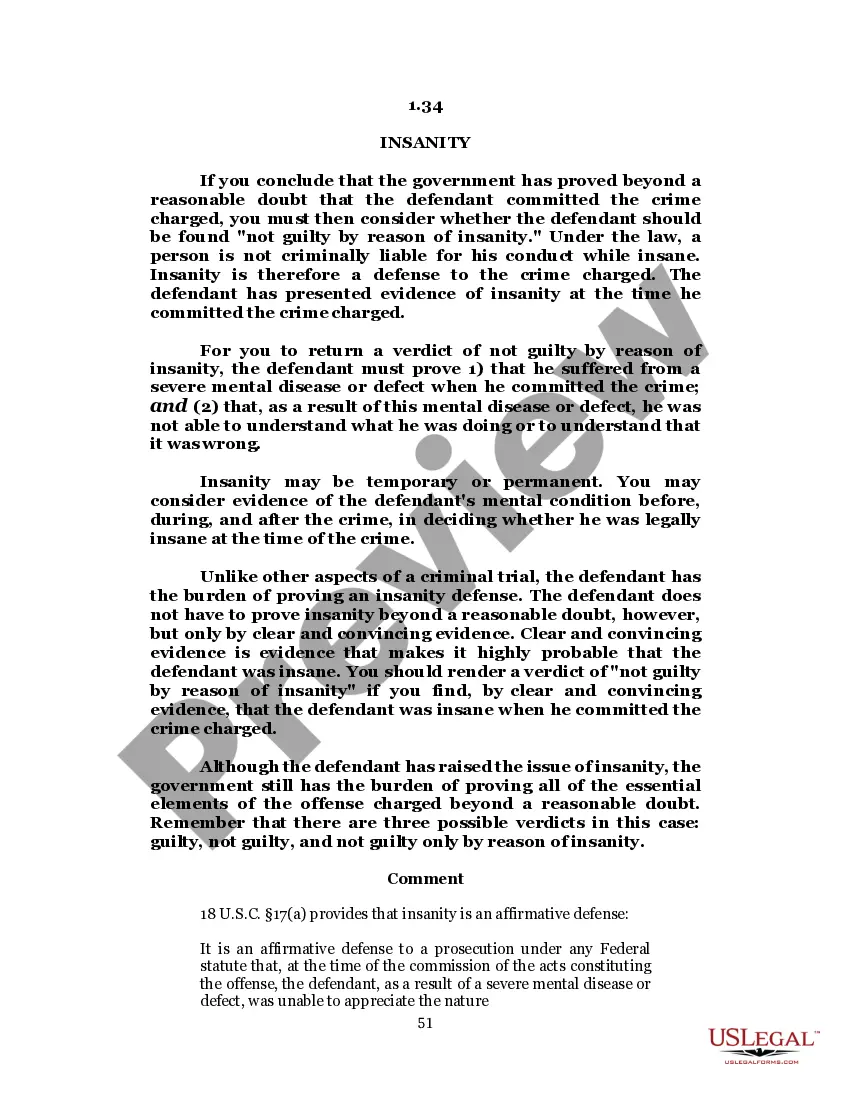
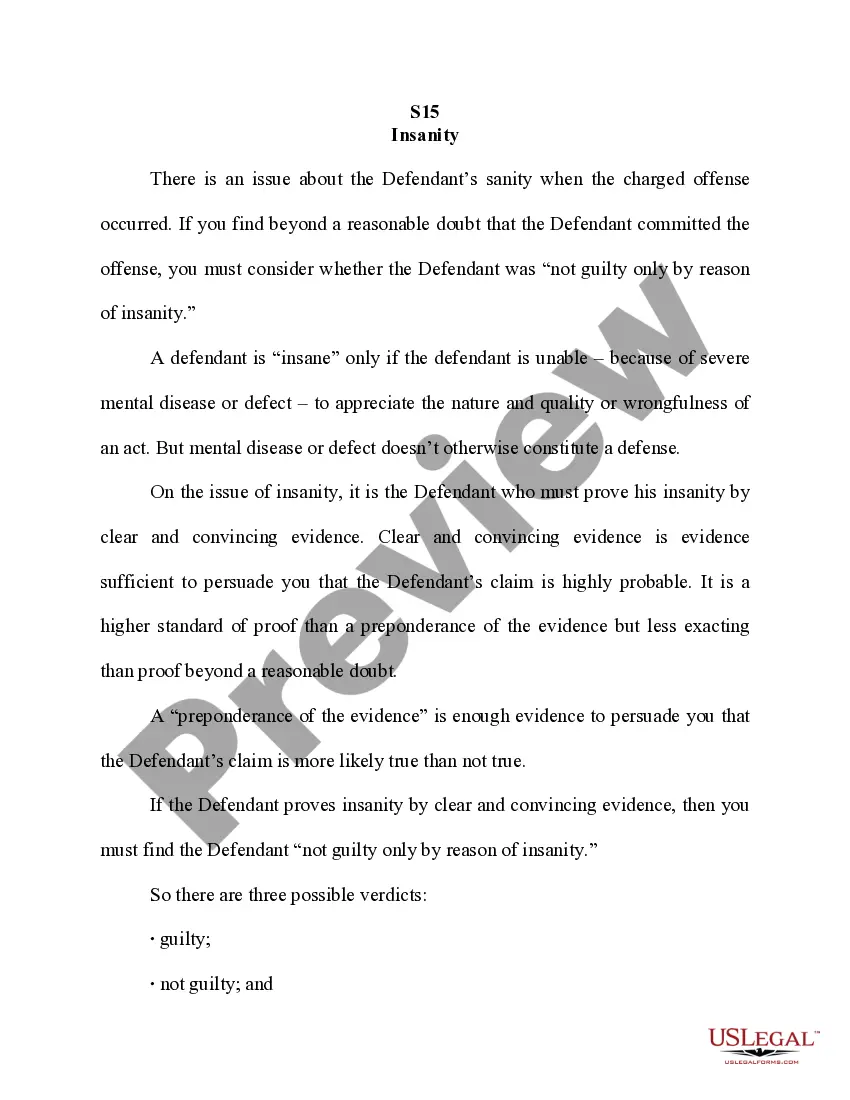
Defendant, through his/her attorney moves the court that he/she be acquitted of certain matters because he/she is both-feeble minded and insane
Pennsylvania Motion for Acquittal Based on Insanity
Instant download
Description
Free preview
Get your form ready online
Our built-in tools help you complete, sign, share, and store your documents in one place.
Built-in online Word editor
Make edits, fill in missing information, and update formatting in US Legal Forms—just like you would in MS Word.
Export easily
Download a copy, print it, send it by email, or mail it via USPS—whatever works best for your next step.
E-sign your document
Sign and collect signatures with our SignNow integration. Send to multiple recipients, set reminders, and more. Go Premium to unlock E-Sign.
Notarize online 24/7
If this form requires notarization, complete it online through a secure video call—no need to meet a notary in person or wait for an appointment.
Store your document securely
We protect your documents and personal data by following strict security and privacy standards.

Make edits, fill in missing information, and update formatting in US Legal Forms—just like you would in MS Word.

Download a copy, print it, send it by email, or mail it via USPS—whatever works best for your next step.

Sign and collect signatures with our SignNow integration. Send to multiple recipients, set reminders, and more. Go Premium to unlock E-Sign.

If this form requires notarization, complete it online through a secure video call—no need to meet a notary in person or wait for an appointment.

We protect your documents and personal data by following strict security and privacy standards.
Looking for another form?

How to fill out Motion For Acquittal Based On Insanity?
Locating the appropriate legal document template can be quite challenging. Naturally, there are numerous templates available online, but how do you acquire the legal form you require? Utilize the US Legal Forms website. The platform offers a vast array of templates, such as the Pennsylvania Motion for Acquittal Based on Insanity, which you can utilize for business and personal purposes. All forms are verified by experts and comply with state and federal regulations.
If you are already registered, Log In to your account and click the Download button to obtain the Pennsylvania Motion for Acquittal Based on Insanity. Use your account to browse through the legal documents you have purchased previously. Visit the My documents tab in your account and retrieve another copy of the document you need.
If you are a new user of US Legal Forms, here are simple steps you should follow: First, ensure you have selected the correct form for your city/region. You can review the form using the Preview button and read the form description to confirm this is suitable for you. If the form does not meet your requirements, utilize the Search field to find the appropriate form. Once you are confident that the form is suitable, proceed by clicking the Buy now button to purchase the form. Select the pricing plan you prefer and enter the required details. Create your account and complete the transaction using your PayPal account or credit card. Choose the document format and download the legal document template to your device. Complete, modify, and print out and sign the acquired Pennsylvania Motion for Acquittal Based on Insanity.
Utilize US Legal Forms for all your legal document needs to ensure you have the correct and compliant forms at your disposal.
- US Legal Forms is the largest repository of legal documents where you can discover various document templates.
- Take advantage of the service to download properly crafted paperwork that adhere to state standards.
- The forms are validated by professionals to ensure compliance.
- Multiple templates are available for both personal and business needs.
- Users can easily navigate through their purchased forms.
- The platform supports different payment methods for convenience.
Form popularity
FAQ
The four versions of the insanity defense are M'Naghten, irresistible impulse, substantial capacity, and Durham. The two elements of the M'Naghten insanity defense are the following: The defendant must be suffering from a mental defect or disease at the time of the crime.
In Pennsylvania, insanity is a defense and the test to determine it is referred to as the M'Naughten Test. A person who is found guilty but mentally ill, however, failed to meet the necessary burden of proof under the M'Naughten test but met the burden of proof with regards to mental illness.
Legal insanity requires that the person, by reason of mental disease or defect was incapable of either: Knowing the nature of his or her act. Understanding the nature of his or her act. Distinguishing between right and wrong at the time of commission of the crime.
A legal determination of acquittal by reason of insanity puts the legal question to rest so that both patient and providers can work unencumbered toward recovery goals.
Bobbitt argued that she suffered years of abuse and was sexually assaulted by John Bobbitt, which resulted in her snapping and cutting off his genitals. The jury found her not guilty by reason of temporary insanity. Bobbitt was ordered by a judge to go through a 45-day evaluation period in a mental hospital.
?Not guilty by reason of insanity? is a plea by a criminal defendant who admits the criminal act, but claims that they were mentally disturbed at the time of the crime and lacked the mental capacity to have intended to commit a crime. Such a plea requires that a court conduct a trial on the issue of insanity alone.
Four variations of the insanity defense currently exist: M'Naghten, irresistible impulse, substantial capacity, and Durham. M'Naghten Insanity Defense. ... Irresistible Impulse Insanity Defense. ... The Substantial Capacity Test. ... The Durham Insanity Defense. ... Proving Insanity. ... Diminished Capacity. ... Mental Competence to Stand Trial.
The insanity defense, also known as the mental disorder defense, is an affirmative defense by excuse in a criminal case, arguing that the defendant is not responsible for their actions due to a psychiatric disease at the time of the criminal act.