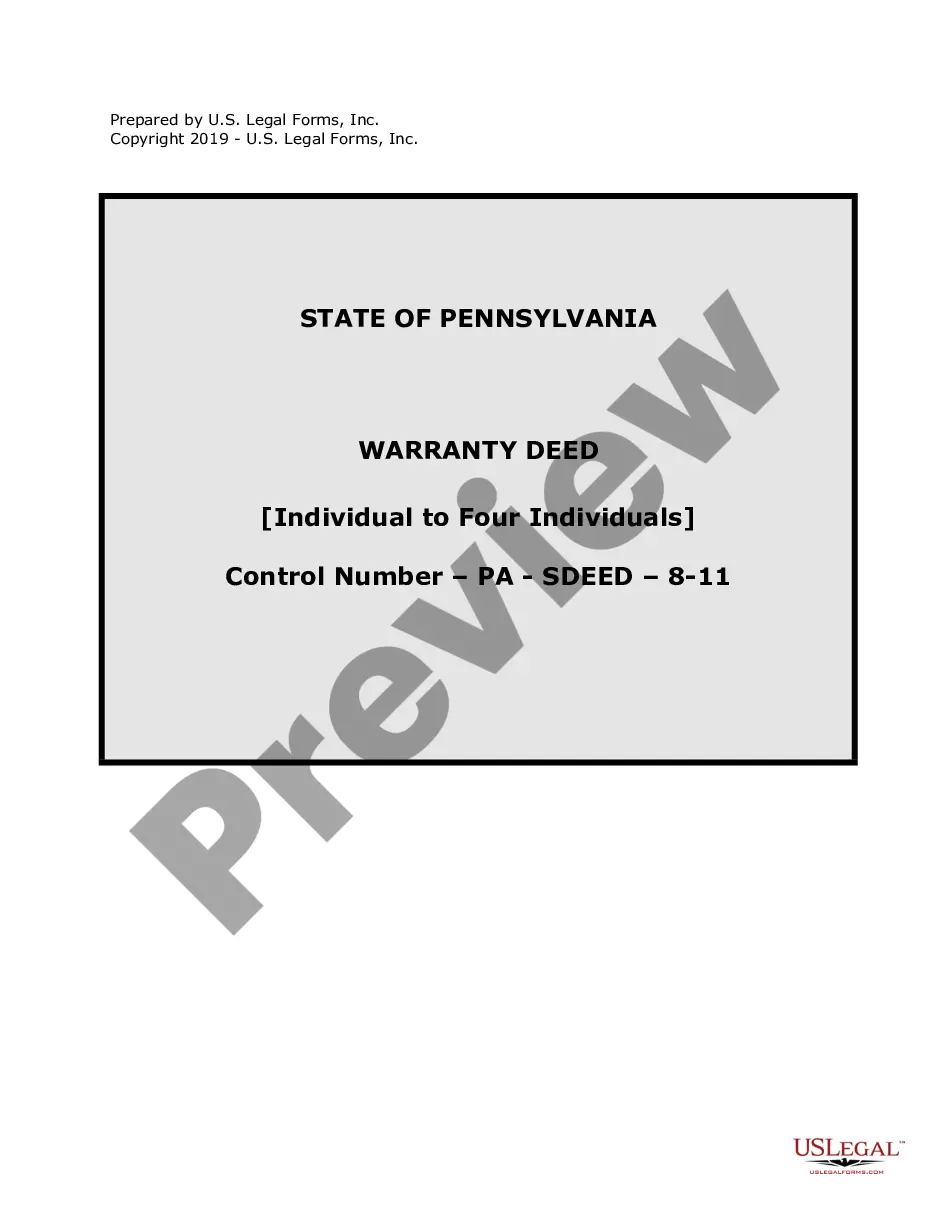
Pennsylvania Warranty Deed from Individual to Four Individuals as Tenants in Common with Reserved Life Estate
About this form
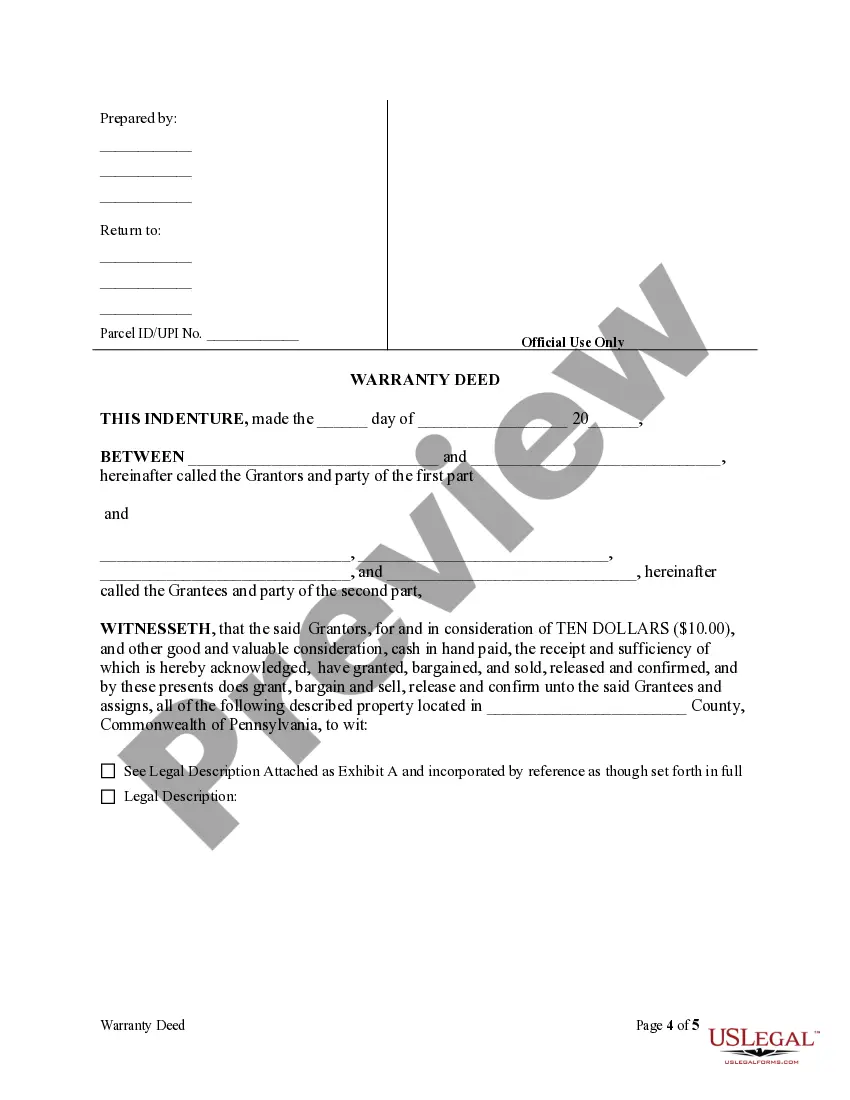
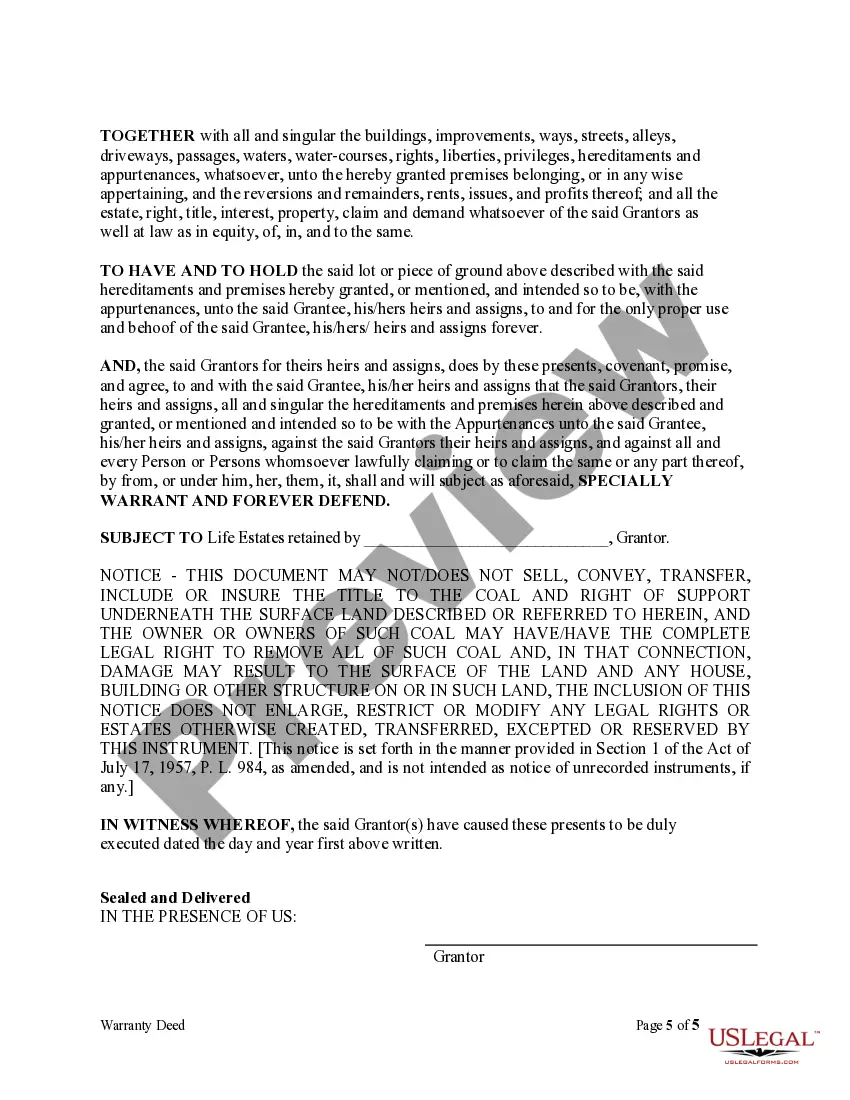
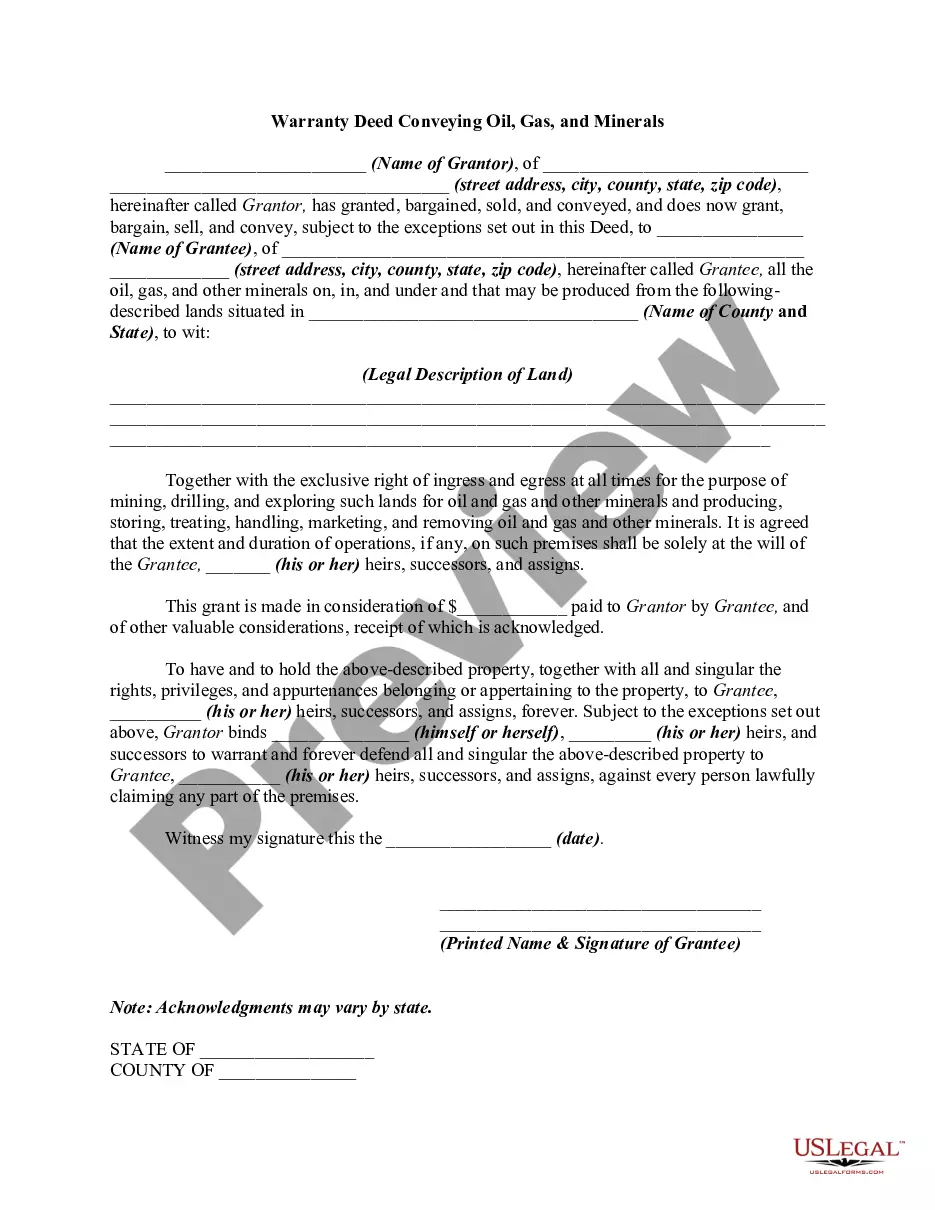
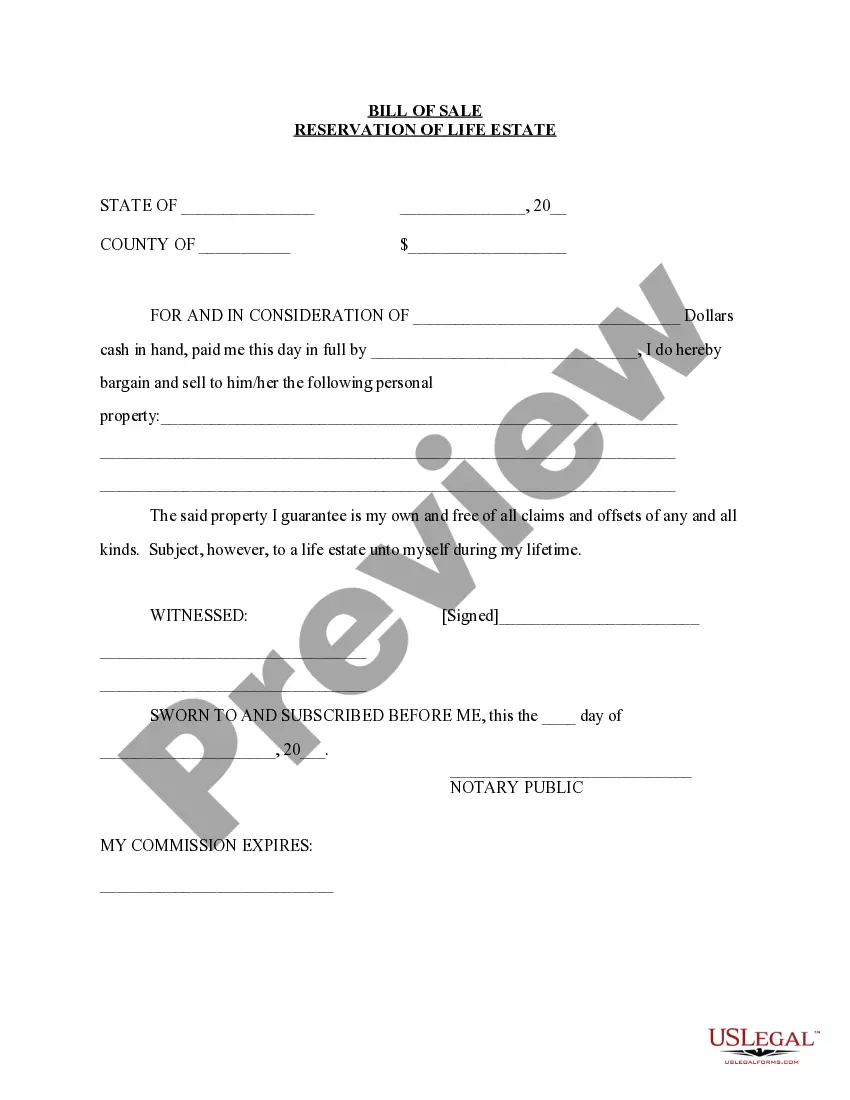
This Warranty Deed is a legal document that enables an individual (the grantor) to transfer property ownership to four individuals who will hold the title as tenants in common. It specifically includes a reserved life estate, allowing the grantor to retain certain rights to the property until their passing. This form is essential for establishing property rights while providing the grantor with the security of enjoying the property during their lifetime, differing from standard deeds that do not include a reservation of life estate.
Main sections of this form
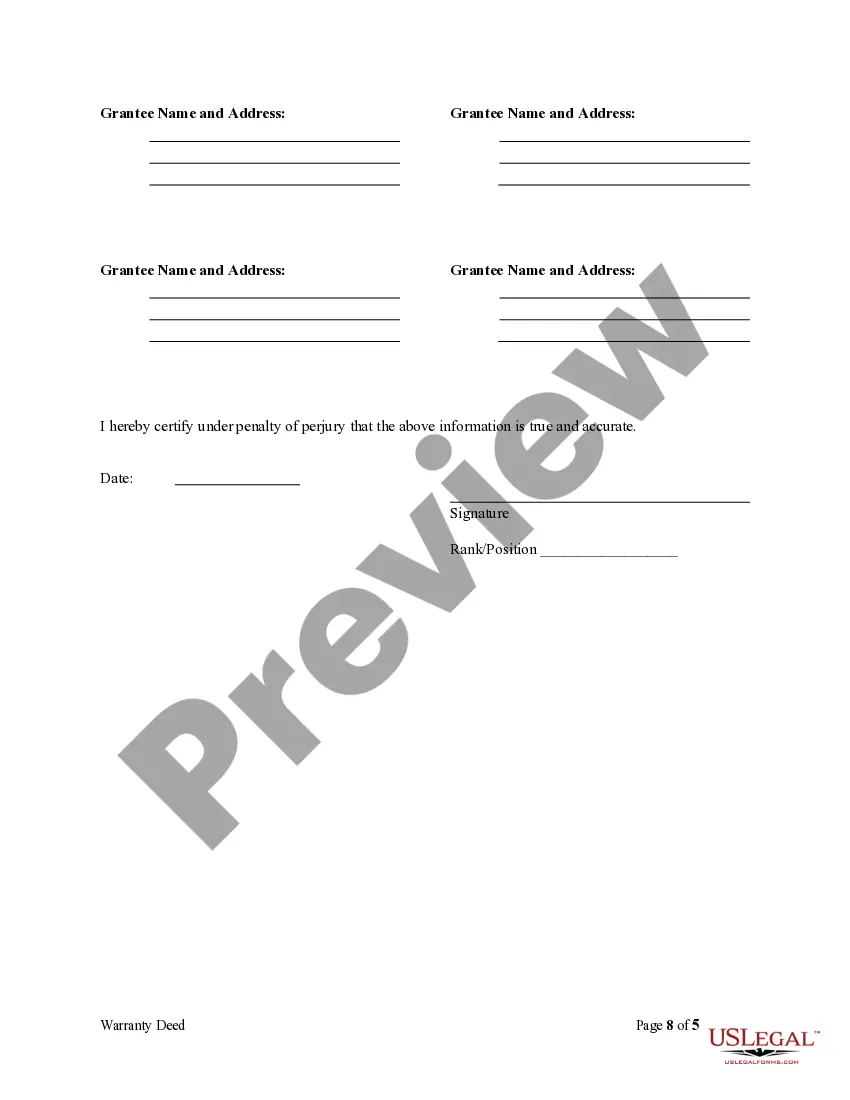
- Identification of the grantor and grantees.
- Description of the property being transferred.
- Details of the reserved life estate for the grantor.
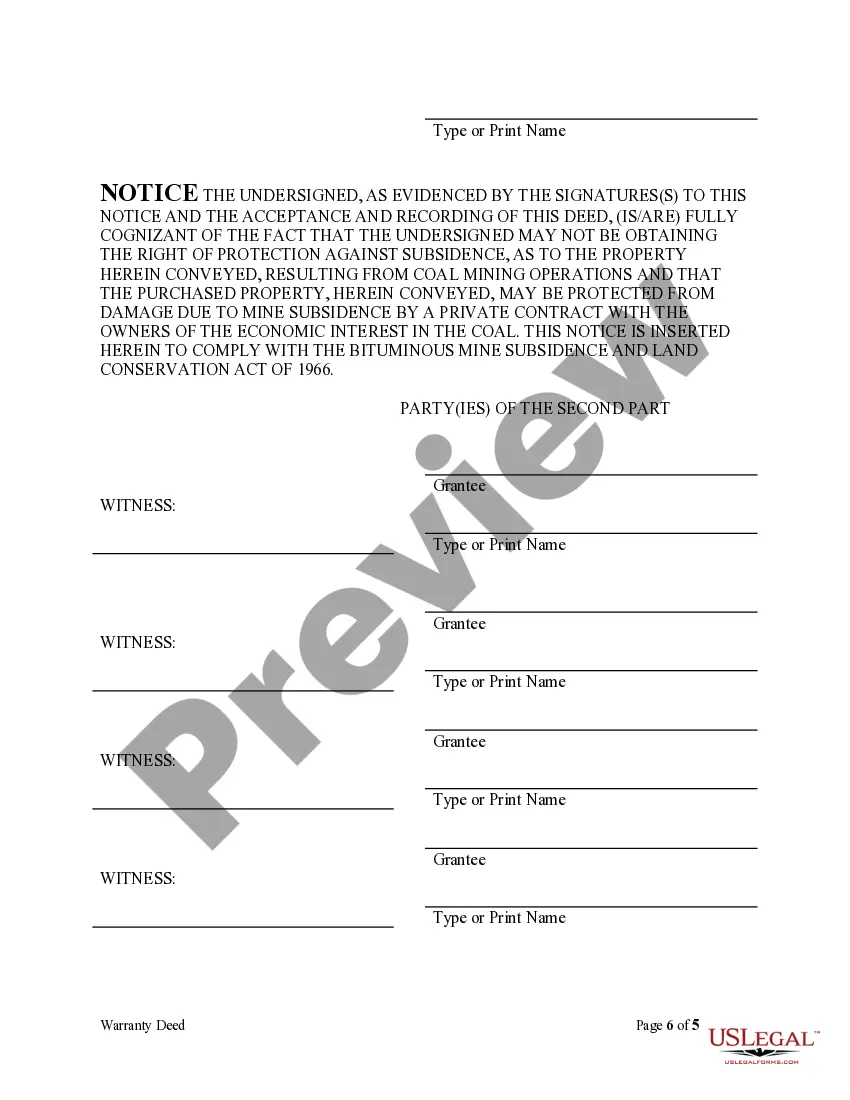
- Signatures of all parties involved, including witnesses.
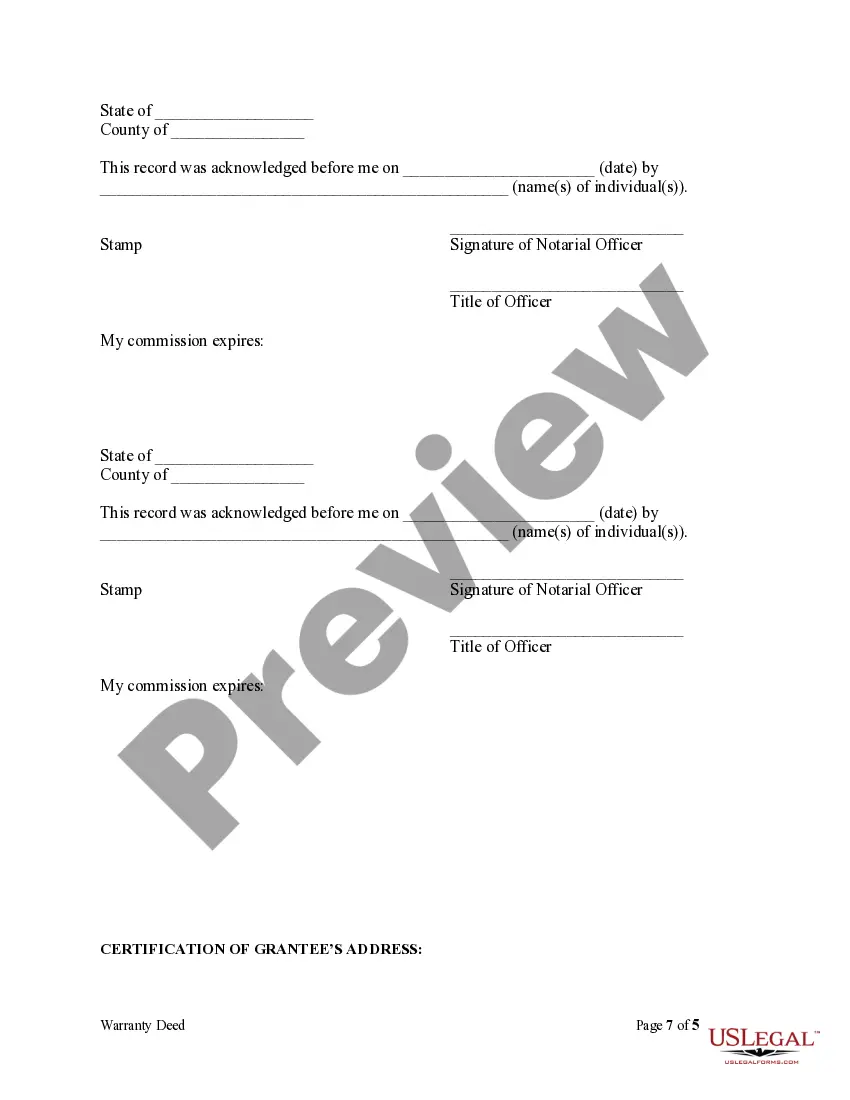
- Notary acknowledgment for the grantor's signature.
When to use this document
This form should be used when an individual wishes to transfer property to multiple individuals while retaining the right to use the property during their lifetime. This situation commonly arises in family estates where an owner wants to ensure that property is passed down to heirs while still having the ability to live there or manage the property until their death.
Who can use this document
- Property owners wishing to transfer ownership to multiple individuals.
- Individuals who want to retain a life estate in the property.
- Heirs or beneficiaries involved in estate planning.
How to prepare this document
- Identify the parties: Enter the names and addresses of the grantor and four grantees.
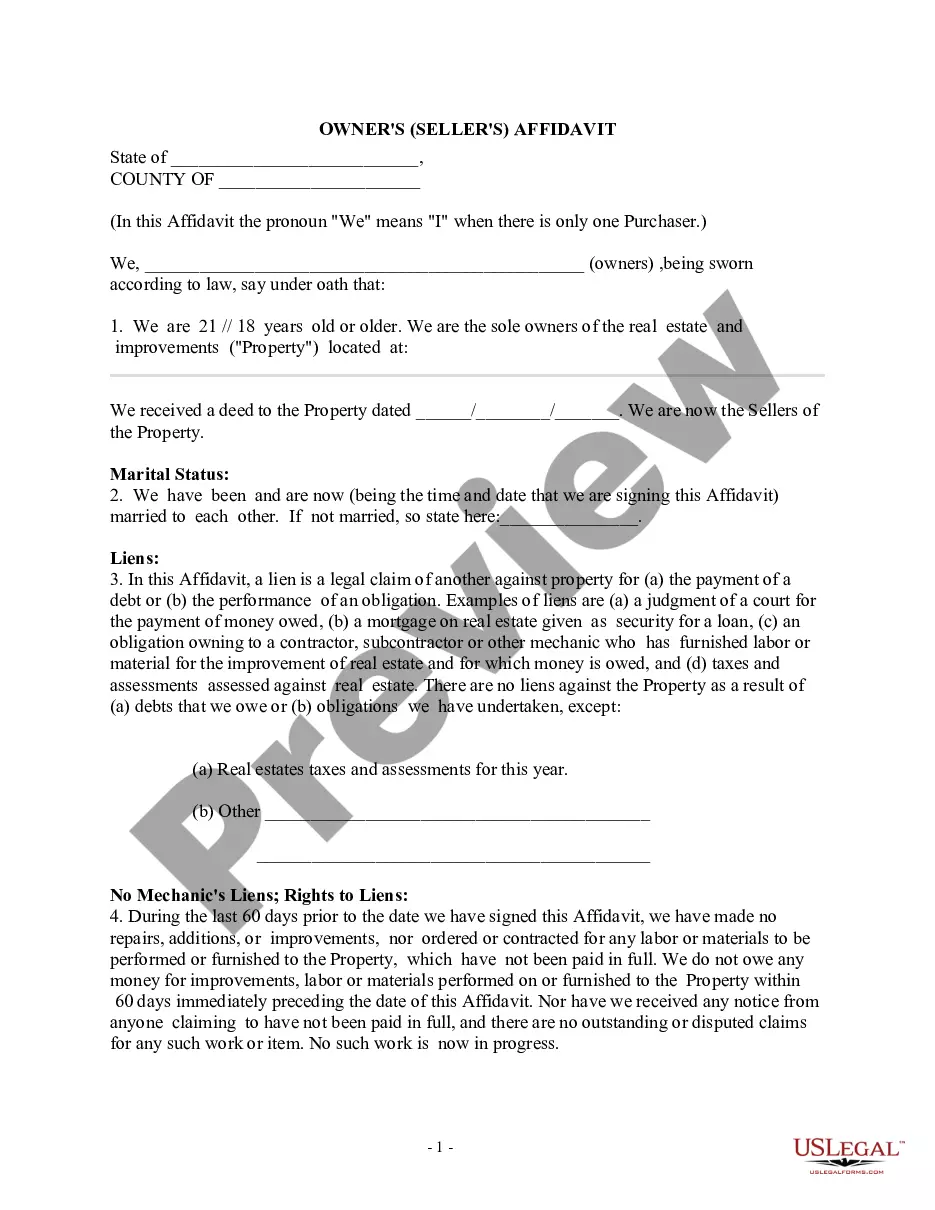
- Specify the property: Describe the property being transferred and attach a legal description if necessary.
- Complete financial considerations: State the value of the property and any financial transactions.
- Sign the deed: All parties must sign the document in the presence of witnesses.
- Notarize the document: Have the signatures notarized to validate the deed.
Does this form need to be notarized?
To make this form legally binding, it must be notarized. Our online notarization service, powered by Notarize, lets you verify and sign documents remotely through an encrypted video session.
Get your form ready online
Our built-in tools help you complete, sign, share, and store your documents in one place.
Make edits, fill in missing information, and update formatting in US Legal Forms—just like you would in MS Word.
Download a copy, print it, send it by email, or mail it via USPS—whatever works best for your next step.
Sign and collect signatures with our SignNow integration. Send to multiple recipients, set reminders, and more. Go Premium to unlock E-Sign.
If this form requires notarization, complete it online through a secure video call—no need to meet a notary in person or wait for an appointment.
We protect your documents and personal data by following strict security and privacy standards.

Make edits, fill in missing information, and update formatting in US Legal Forms—just like you would in MS Word.

Download a copy, print it, send it by email, or mail it via USPS—whatever works best for your next step.

Sign and collect signatures with our SignNow integration. Send to multiple recipients, set reminders, and more. Go Premium to unlock E-Sign.

If this form requires notarization, complete it online through a secure video call—no need to meet a notary in person or wait for an appointment.

We protect your documents and personal data by following strict security and privacy standards.
Avoid these common issues
- Omitting the legal description of the property.
- Failing to include all required signatures, including witnesses.
- Not notarizing the document, which can invalidate the deed.
- Incorrectly stating the rights associated with the life estate.
Advantages of online completion
- Convenient access to legal documents from anywhere at any time.
- Edit and customize the form easily before printing.
- Reliable templates drafted by licensed attorneys to ensure legal compliance.
Legal use & context
- This deed legally transfers ownership while retaining the grantor's rights during their lifetime.
- It provides clarity regarding property ownership among multiple grantees.
- Enforceability may vary based on adherence to local laws and proper execution.
What to keep in mind
- The Warranty Deed with a reserved life estate is crucial for property owners wishing to manage their assets while providing for beneficiaries.
- Proper completion, signing, and notarization are essential for the deed's validity.
- This form is specifically tailored for use in Pennsylvania, adhering to state regulations.
Looking for another form?
Form popularity
FAQ
If one person passes away, the home will automatically continue to be owned by the surviving partner, even if there is no will. This is known as the survivorship rule. However, many couples choose to hold their homes as tenants in common.
A person owns property in a life estate only throughout their lifetime. Beneficiaries cannot sell property in a life estate before the beneficiary's death. One benefit of a life estate is that property can pass when the life tenant dies without being part of the tenant's estate.
A life estate deed permits the property owner to have full use of their property until their death, at which point the ownership of the property is automatically transferred to the beneficiary.
A warranty deed guarantees that: The grantor is the rightful owner of the property and has the legal right to transfer the title.The title would withstand third-party claims to ownership of the property. The grantor will do anything to ensure the grantee's title to the property.
In tenancy in common, when one owner dies, the other owner does not take the property; rather, the deceased owner's heirs inherit the deceased owner's share.
If the deceased owned real property in NSW as 'joint tenants' with another person, the property will need to be transferred to the surviving joint tenant.You do not need to apply for a grant of probate or letters of administration to transfer property held in joint names.
This life estate deed is a document that transfers ownership of real property, while reserving access and use of the property for the duration of the grantor's life. It allows the original owner (grantor) to remain on the premises with full access to and benefits from the property.
Reservation of the present interest allows the owner to retain ownership for a period of time measured by the life of one or more individuals, by a term of years, or by a combination of the two.
This life estate deed is a document that transfers ownership of real property, while reserving access and use of the property for the duration of the grantor's life. It allows the original owner (grantor) to remain on the premises with full access to and benefits from the property.