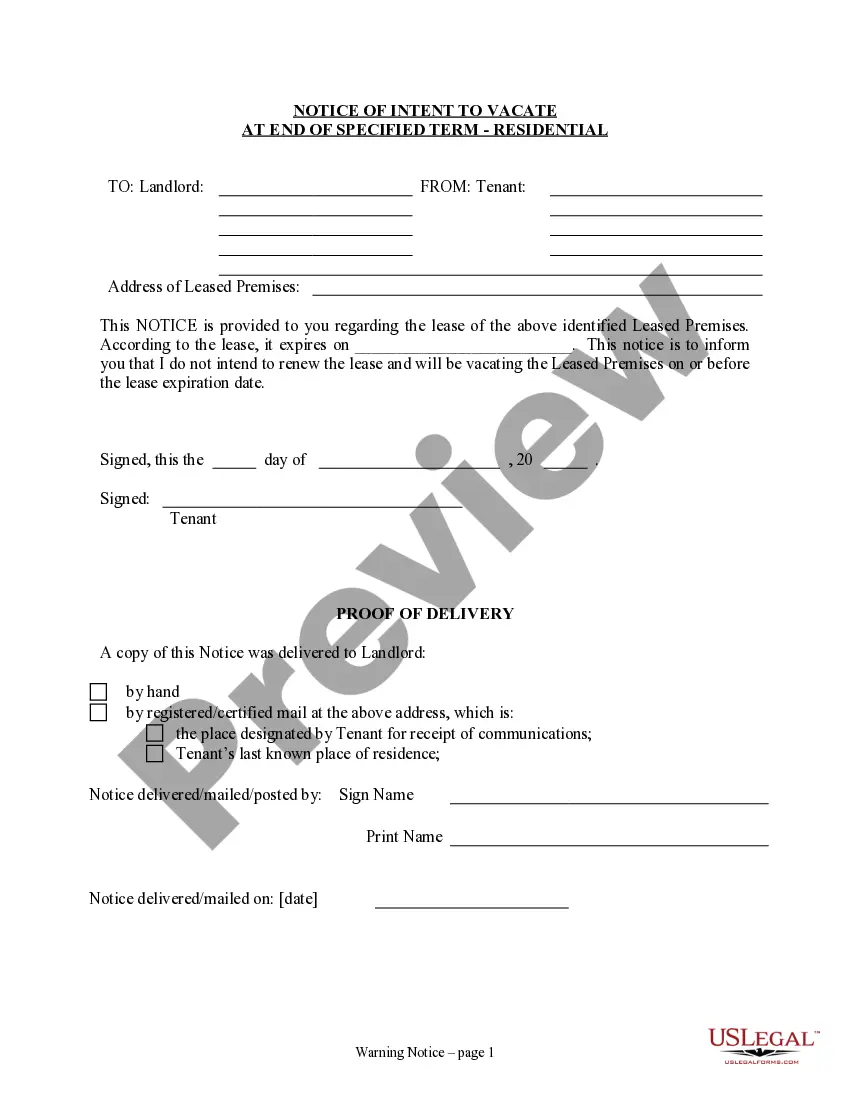
Pennsylvania Affidavit of Consent
What is this form?
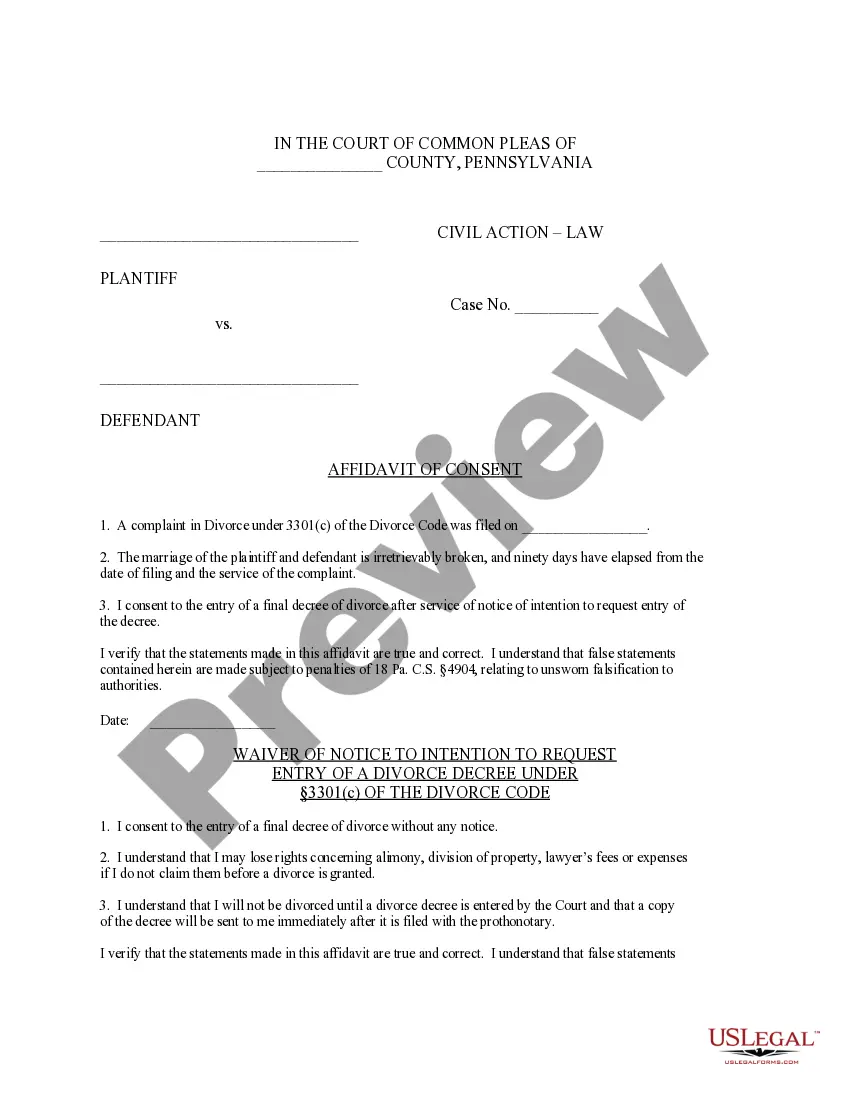
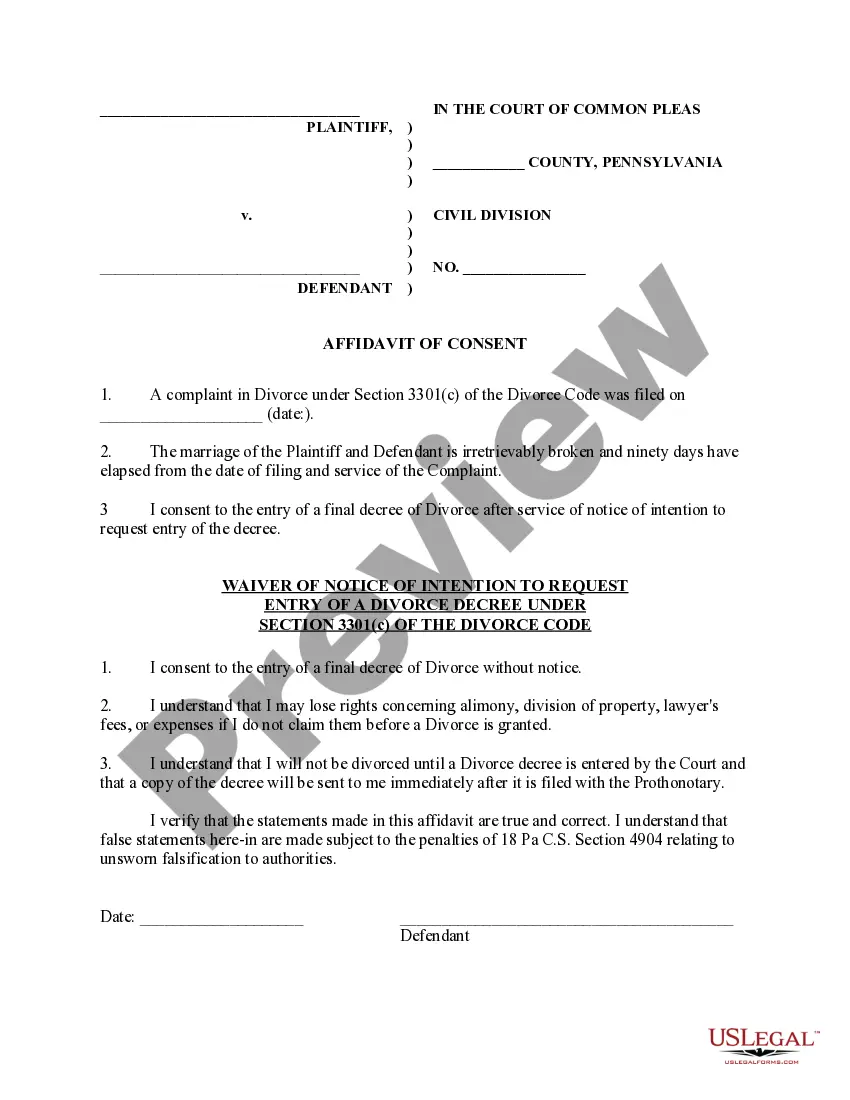
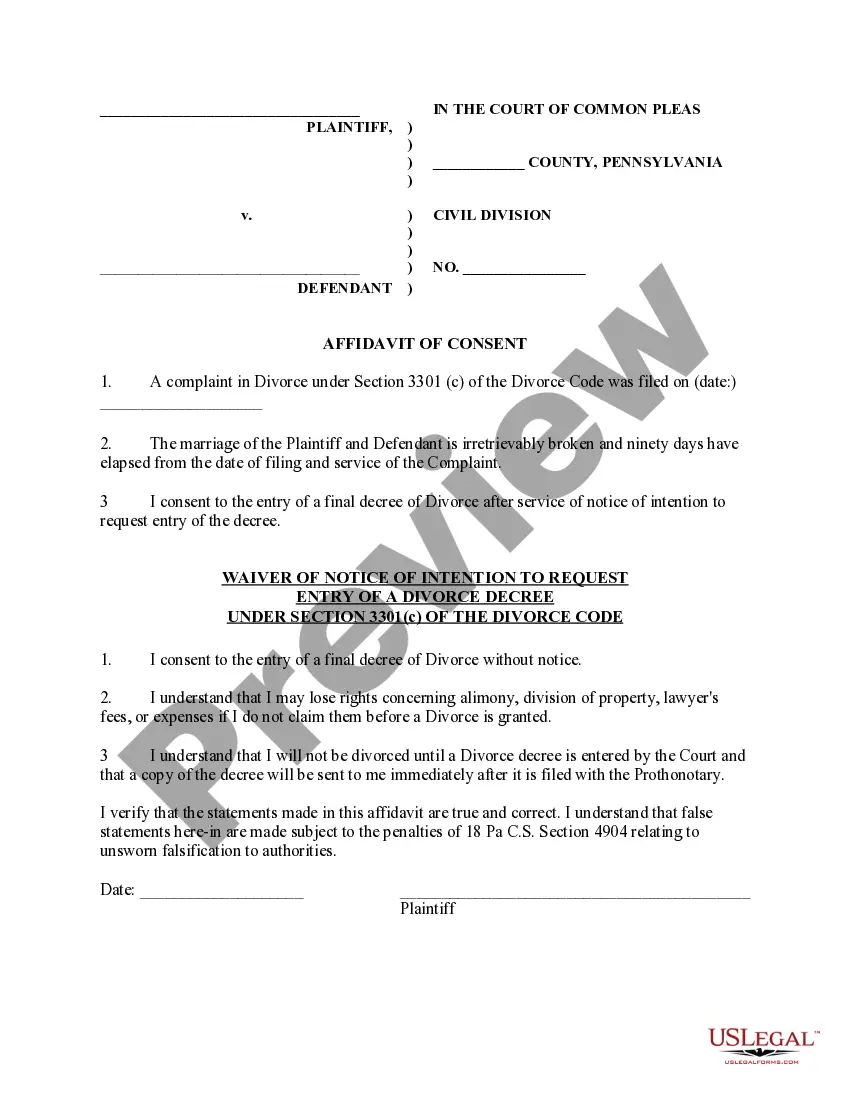
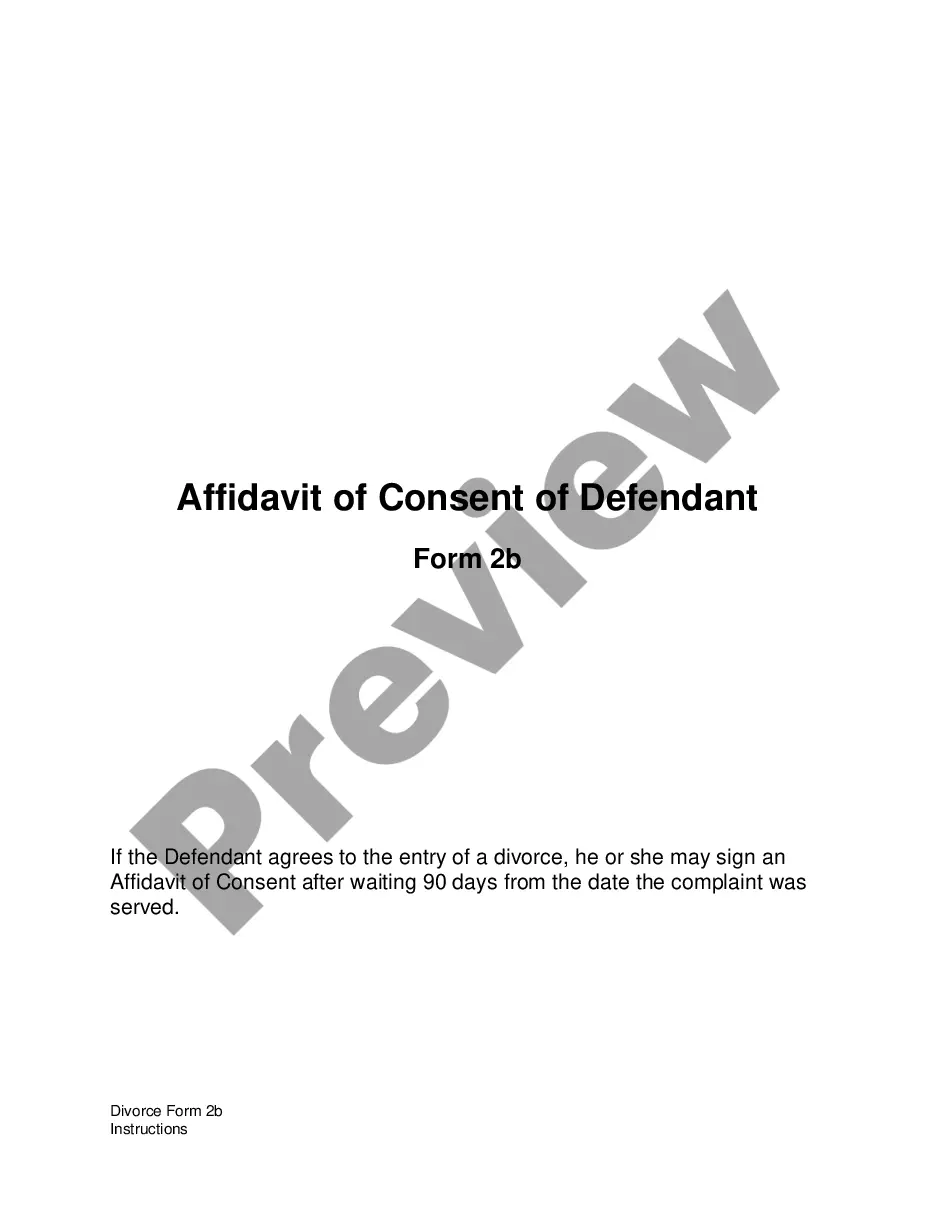
The Affidavit of Consent is a legal document that serves as a sworn statement by one spouse in a divorce proceeding. In this form, the affiantâ the individual making the statementâ agrees to proceed with a divorce without receiving notice of the request for a final divorce decree. This affidavit is crucial for individuals who want to expedite their divorce process while waiving their right to further notifications. It differs from other divorce forms by specifically including consent to waive notice, which affects the timeline and rights within the divorce proceedings.
Key parts of this document
- Identification of the county and case information, including parties involved.
- Confirmation of the divorce complaint filing date and the elapsed time since.
- Consent to the entry of a final divorce decree without notice.
- Understanding of potential legal rights lost regarding alimony and property division.
- Verification statements declaring the truth of the information provided.

When this form is needed
This form is typically used by a spouse who wishes to consent to a divorce without receiving any notice of the court's intention to issue a divorce decree. It is especially relevant when both parties agree that the marriage is irretrievably broken and want to expedite the process, or if one spouse cannot be located to serve notice. Using this affidavit can simplify and speed up the divorce proceedings, allowing for a quicker finalization of the divorce.
Who needs this form
- Individuals involved in a divorce case in Pennsylvania who do not wish to receive notice prior to the final decree.
- Spouses who have mutually agreed to the terms of the divorce.
- Individuals prepared to waive their rights to receive notifications regarding the divorce proceedings.
How to prepare this document
- Enter the county and case number at the top of the form.
- Fill in the date when the divorce complaint was filed.
- Confirm that the marriage is irretrievably broken and that the requisite time has elapsed.
- Sign the affidavit in front of a notary public, ensuring that all statements are accurate and complete.
- Keep a copy of the completed affidavit for your records.
Is notarization required?
Yes, this form must be notarized to be legally valid. A notary public will verify your identity and witness your signature, ensuring the affidavit's authenticity. US Legal Forms provides integrated online notarization services, allowing you to complete this process securely over a video call at your convenience.
Get your form ready online
Our built-in tools help you complete, sign, share, and store your documents in one place.
Make edits, fill in missing information, and update formatting in US Legal Forms—just like you would in MS Word.
Download a copy, print it, send it by email, or mail it via USPS—whatever works best for your next step.
Sign and collect signatures with our SignNow integration. Send to multiple recipients, set reminders, and more. Go Premium to unlock E-Sign.
If this form requires notarization, complete it online through a secure video call—no need to meet a notary in person or wait for an appointment.
We protect your documents and personal data by following strict security and privacy standards.

Make edits, fill in missing information, and update formatting in US Legal Forms—just like you would in MS Word.

Download a copy, print it, send it by email, or mail it via USPS—whatever works best for your next step.

Sign and collect signatures with our SignNow integration. Send to multiple recipients, set reminders, and more. Go Premium to unlock E-Sign.

If this form requires notarization, complete it online through a secure video call—no need to meet a notary in person or wait for an appointment.

We protect your documents and personal data by following strict security and privacy standards.
Typical mistakes to avoid
- Failing to include accurate case information, such as the case number.
- Not signing the affidavit in front of a notary public.
- Overlooking the implications of waiving notice, such as losing rights to alimony or property claims.
Why use this form online
- Convenience: Access and complete the form from anywhere at any time.
- Editability: Easily make changes to ensure all information is correct before notarization.
- Reliable source: Use forms drafted by licensed attorneys to ensure compliance with legal standards.
Looking for another form?

Form popularity
FAQ
If one spouse does not want to divorce or is unwilling to agree to an uncontested divorce, a hearing is usually necessary. Litigation is necessary to resolve contested issues such as the division of marital property and alimony.
The court will consider factors such as the length of the marriage, the division of the parties' marital property, and the parties' ages, health, earning capacities, and needs in deciding whether, in what amount, and for how long to award alimony.
An Affidavit of Consent is a legal document that you can use to agree to move forward with a no-fault divorce. In some states, it's a required first step for this type of divorce, where both spouses agree that the other spouse isn't at fault?in other words, neither spouse caused the divorce.
Procedurally, both parties must sign an affidavit of consent for a mutual consent divorce under Section 3301(c). For a divorce based on two year separation under 3301(d), one of the parties must file an affidavit of separation and then serve the other party with the filed affidavit as well as a counter-affidavit.
Pennsylvania is not a 50/50 common law state. PA law requires divorcing couples to equitably divide the marital property. This means that the division of marital property should be based on fairness utilizing a set of enumerated factors in the PA Divorce Code.
What is a wife entitled to in a divorce in PA? The wife is not automatically entitled to anything that is not her direct property or assets in a divorce in PA. Alimony payments may be required based on the wife's situation and any division of property will also be determined based on other factors.
Whereas this law previously stated that the spouses involved with the divorce must have been living separately for no less than two years, the law now reads that the involved spouses must be separated for no less than one year in order to obtain a lawful divorce in PA under 3301(d).
You must be separated for more than 2 years in order to do a Pennsylvania Divorce without your spouse's signature. If your spouse can be served and he/she does not respond, you may be able to get your divorce without signature. Even after 2 years, your spouse could contest the case.