Pennsylvania Deed of Distribution - Executor / Personal Representative to Individual
What this document covers
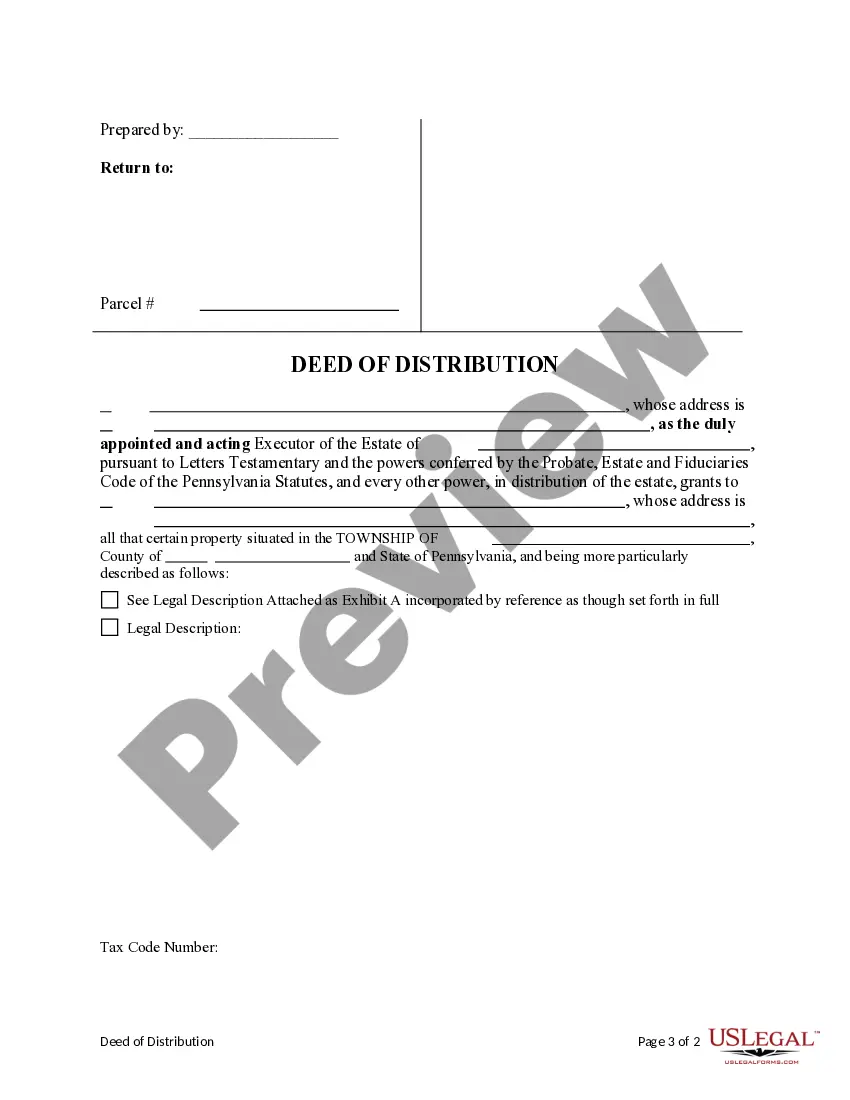
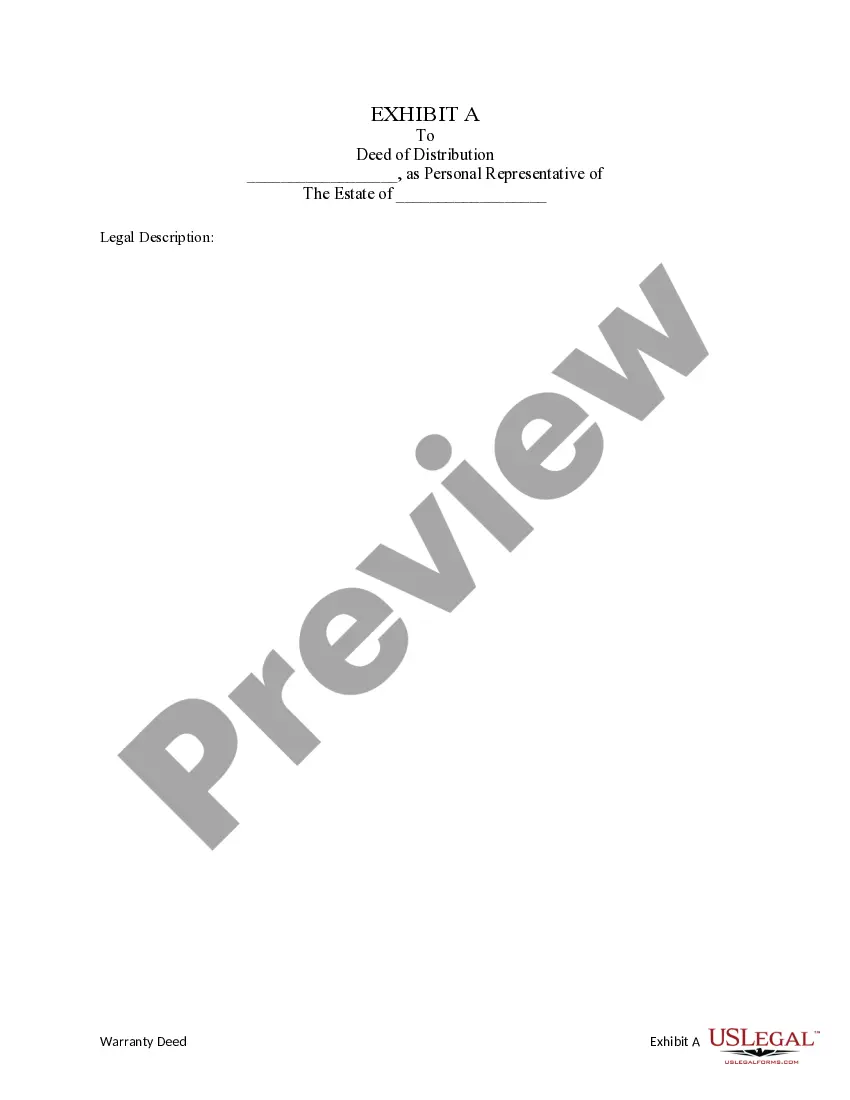
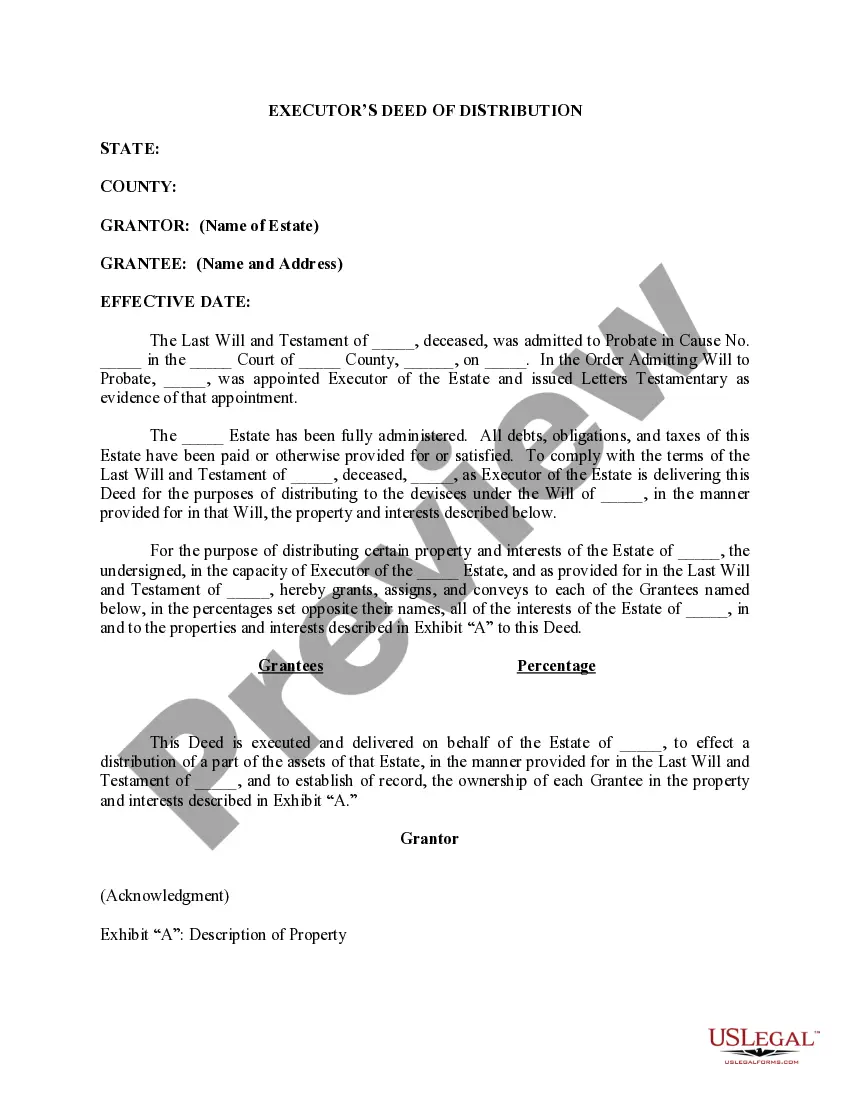
The Deed of Distribution is a legal document in which the executor or personal representative of an estate (the Grantor) transfers property to a beneficiary (the Grantee) as designated in the will. This form is unique because it formalizes the distribution of real property from an estate, ensuring compliance with state laws. Unlike a standard property transfer document, this deed specifically addresses the distribution of assets from estates, making it essential for executors and beneficiaries during estate settlement.
Key components of this form
- Details of the Grantor (executor or personal representative)
- Information about the Grantee (beneficiary or purchaser)
- Description of the property being conveyed
- Recital of the Grantor's authority to act on behalf of the estate
- Date of transfer
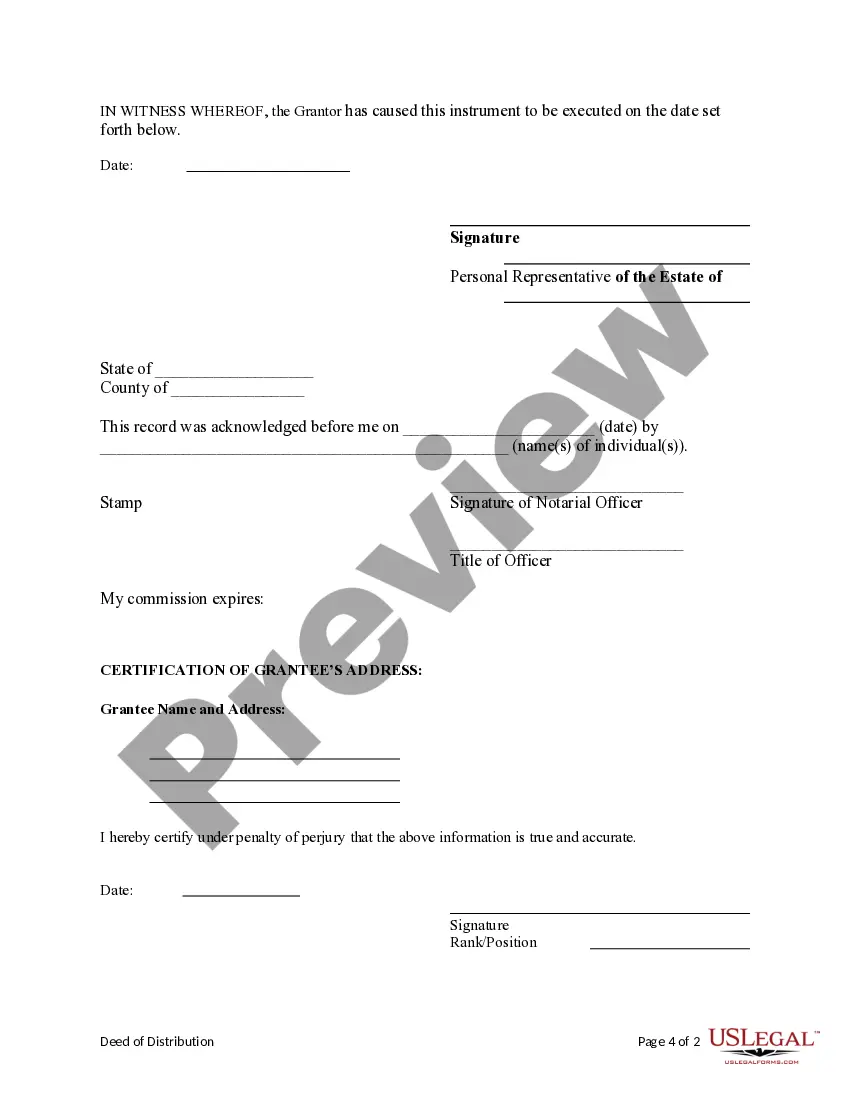
- Signatures of the Grantor and witnesses, if necessary


When to use this form
This form is needed when an executor or personal representative is transferring real property to a beneficiary or purchaser from the estate. You will need this deed when the estate is settled and the distribution of assets is in process, ensuring that the beneficiary receives clear title to the property as designated in the will.
Intended users of this form
- Executors or personal representatives managing an estate
- Beneficiaries designated to receive property from an estate
- Individuals purchasing property from an estate
- Estate attorneys or legal representatives assisting in the property distribution process
Instructions for completing this form
- Identify the parties: Enter the names of the Grantor and Grantee.
- Specify the property: Include a detailed description of the real property being transferred.
- State the authority: Confirm the Grantorâs capacity to act as the executor or personal representative.
- Enter the date of the transfer: Specify when the transfer will occur.
- Collect signatures: Ensure that the Grantor and any witnesses sign the document as required by state law.
Does this form need to be notarized?
This form does not typically require notarization unless specified by local law. However, it is advisable to have it notarized to ensure its acceptance and legality, particularly in instances involving real property transactions.
Get your form ready online
Our built-in tools help you complete, sign, share, and store your documents in one place.
Make edits, fill in missing information, and update formatting in US Legal Forms—just like you would in MS Word.
Download a copy, print it, send it by email, or mail it via USPS—whatever works best for your next step.
Sign and collect signatures with our SignNow integration. Send to multiple recipients, set reminders, and more. Go Premium to unlock E-Sign.
If this form requires notarization, complete it online through a secure video call—no need to meet a notary in person or wait for an appointment.
We protect your documents and personal data by following strict security and privacy standards.

Make edits, fill in missing information, and update formatting in US Legal Forms—just like you would in MS Word.

Download a copy, print it, send it by email, or mail it via USPS—whatever works best for your next step.

Sign and collect signatures with our SignNow integration. Send to multiple recipients, set reminders, and more. Go Premium to unlock E-Sign.

If this form requires notarization, complete it online through a secure video call—no need to meet a notary in person or wait for an appointment.

We protect your documents and personal data by following strict security and privacy standards.
Mistakes to watch out for
- Failing to accurately describe the property, which can lead to disputes.
- Not obtaining the necessary signatures from witnesses.
- Omitting the date of transfer, complicating the validity of the deed.
- Using this form without verifying state-specific requirements.
Why use this form online
- Convenience of completing the form from home at any time.
- Editable fields that streamline data entry and minimize errors.
- Access to forms that comply with current legal standards and requirements.
- Immediate downloadable access for prompt use in legal processes.
Legal use & context:
- The Deed of Distribution effectively transfers title to property from an estate to individuals.
- It must be executed following the estate's probate process, ensuring all debts and taxes are settled.
- Using this form appropriately protects the rights of beneficiaries and ensures compliance with state law.
What to keep in mind
- The Deed of Distribution is used to transfer property from an estate to a beneficiary or buyer.
- Ensure accurate information and signatures are included to avoid legal issues.
- This form is specifically developed according to Pennsylvania's legal requirements but may need adjustments for other jurisdictions.
Looking for another form?
Form popularity
FAQ
A personal representative is appointed by a judge to oversee the administration of a probate estate.When a personal representative is nominated to the position in a will, he's commonly called the executor of the estate.
A personal representative is appointed by a judge to oversee the administration of a probate estate.In most cases, the judge will honor the decedent's wishes and appoint this person. When a personal representative is nominated to the position in a will, he's commonly called the executor of the estate.
In most states, an executor's deed must be signed by a witness and notarized. An executor's deed should be recorded in the real estate records of the county in which the property being conveyed is located.
As the Personal Representative, you are responsible for doing the following: 2022 Collecting and inventorying the assets of the estate; 2022 Managing the assets of the estate during the probate process; 2022 Paying the bills of the estate. Making distribution to the heirs or beneficiaries of the estate.
Before distributing assets to beneficiaries, the executor must pay valid debts and expenses, subject to any exclusions provided under state probate laws.The executor must maintain receipts and related documents and provide a detailed accounting to estate beneficiaries.
You can do this by simply signing your name and putting your title of executor of the estate afterward. One example of an acceptable signature would be Signed by Jane Doe, Executor of the Estate of John Doe, Deceased. Of course, many institutions may not simply take your word that you are the executor of the estate.
A beneficiary, or heir, is someone to which the deceased person has left assets, and a personal representative, sometimes called an executor or administrator, is the person in charge of handling the distribution of assets.
Can I start the estate process without them? Co-Executors in Pennsylvania must serve jointly.
When you and someone else are named as co-executors in a Will, that essentially means that you must execute the Will together. You must both apply to Probate the Will together. You must both sign checks and title transfers together. Basically, neither of you may act independently of the other.