Safety policies for employees.
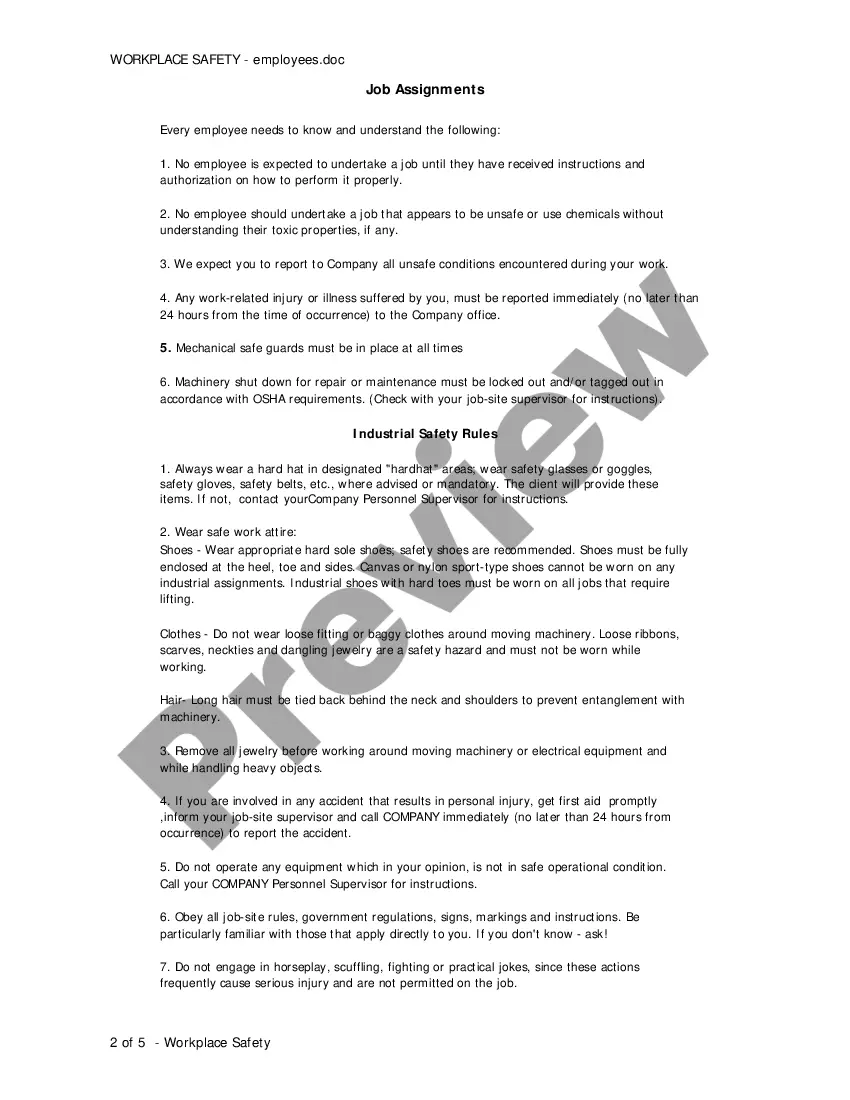
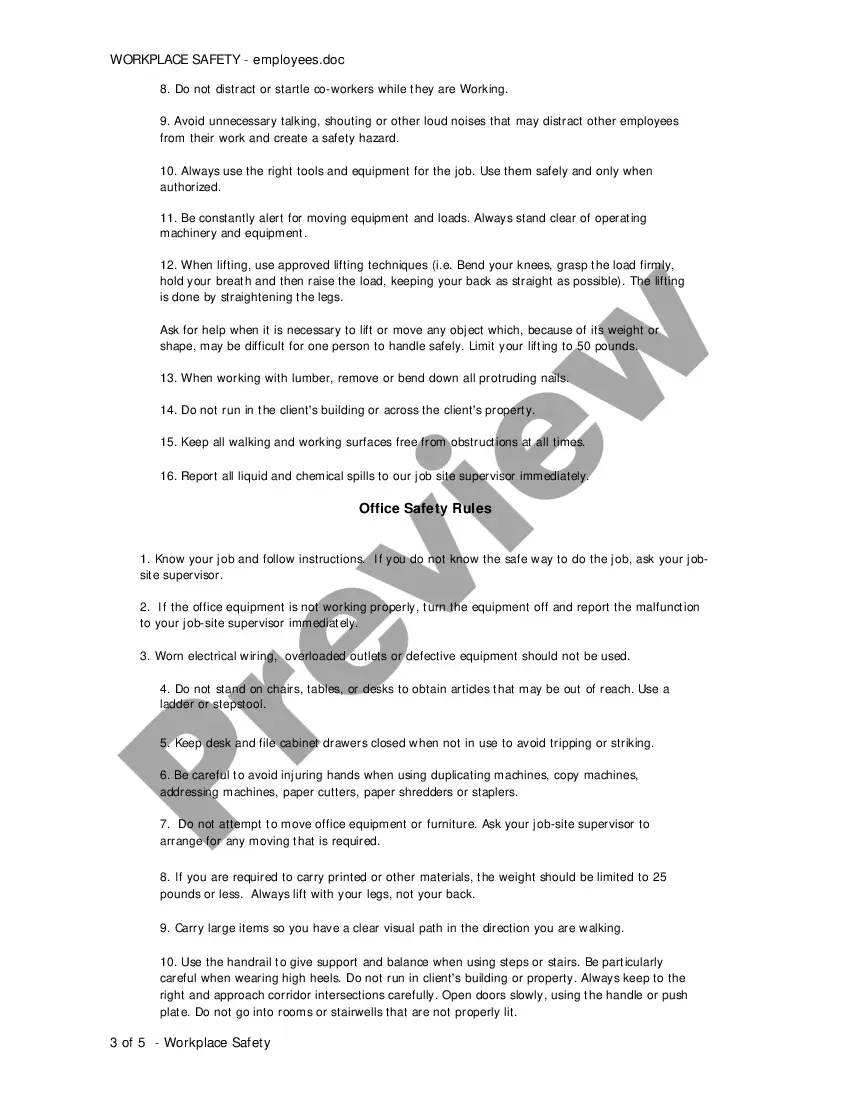
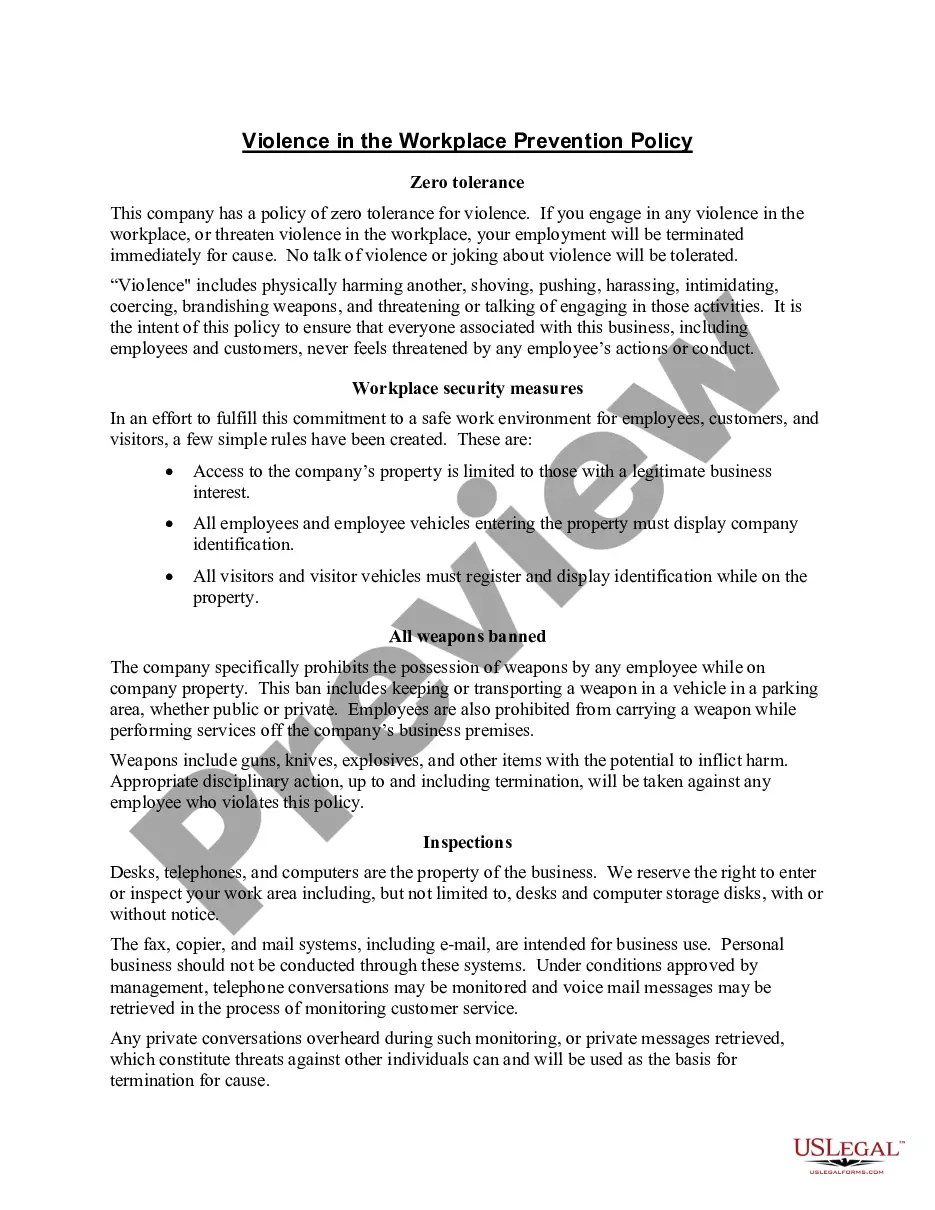
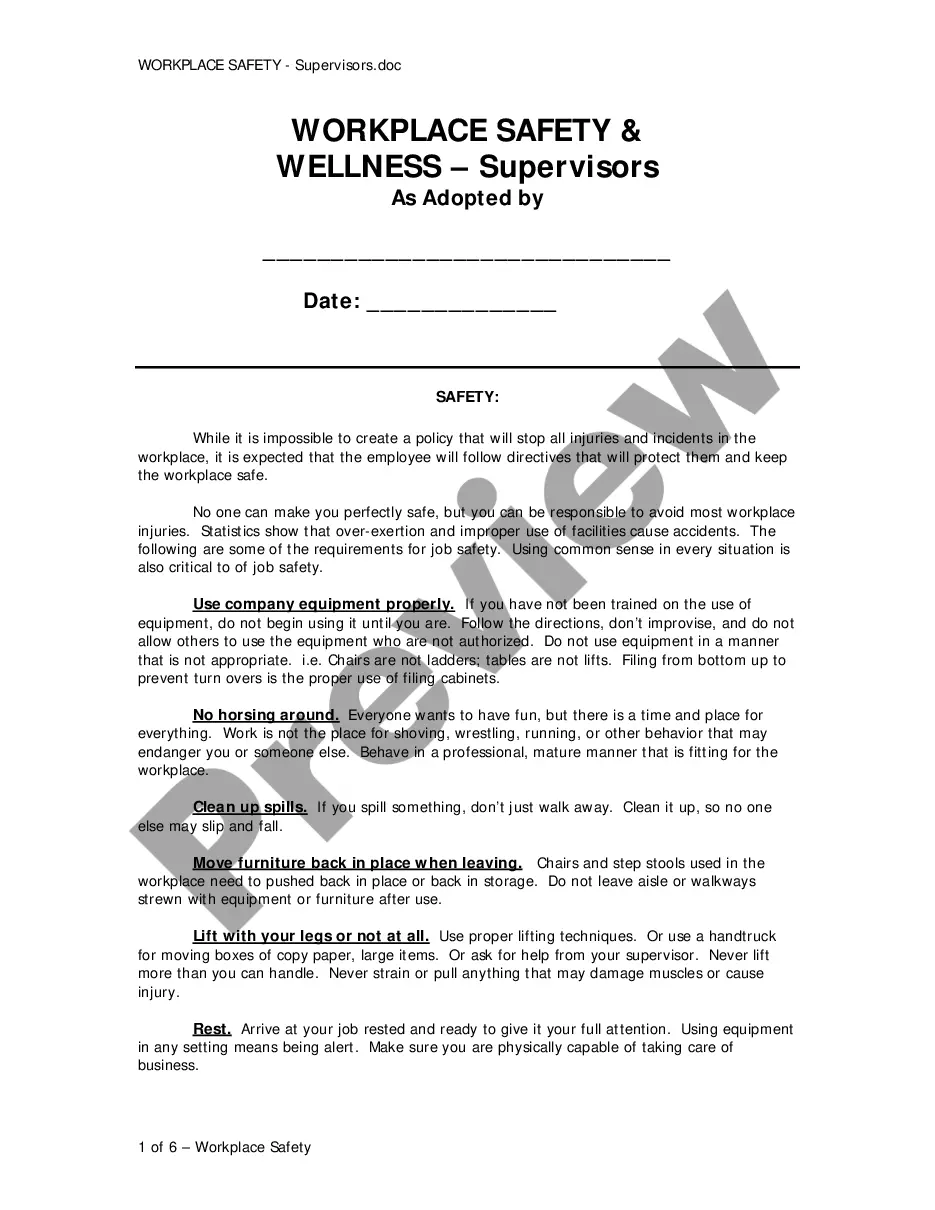
Oregon Workplace Safety Policy - For Employee
Instant download
Description
Free preview
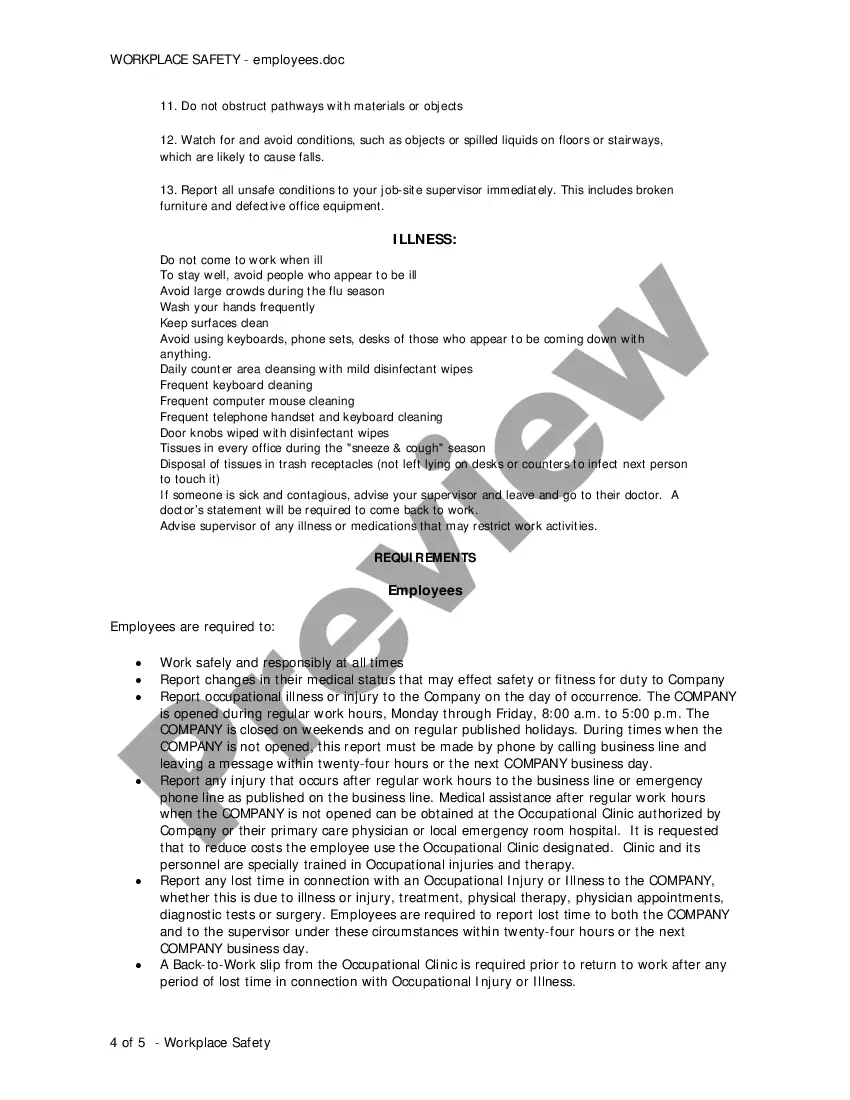
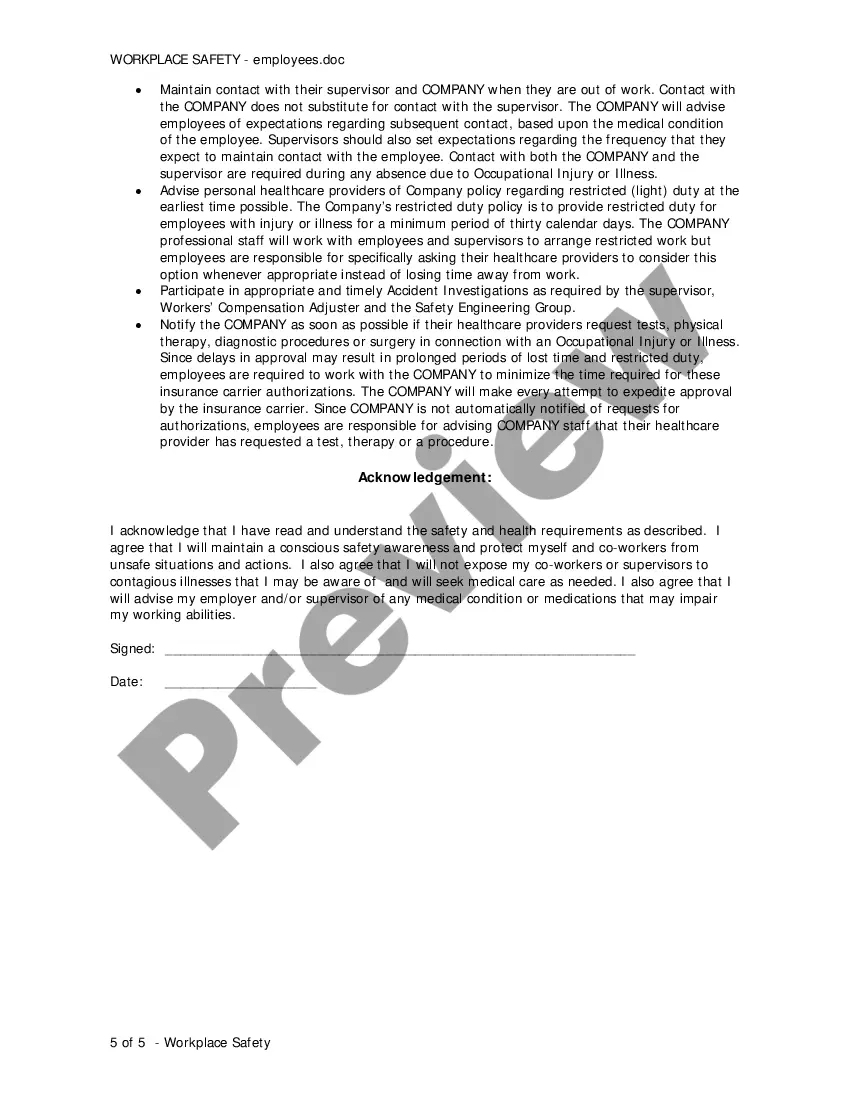
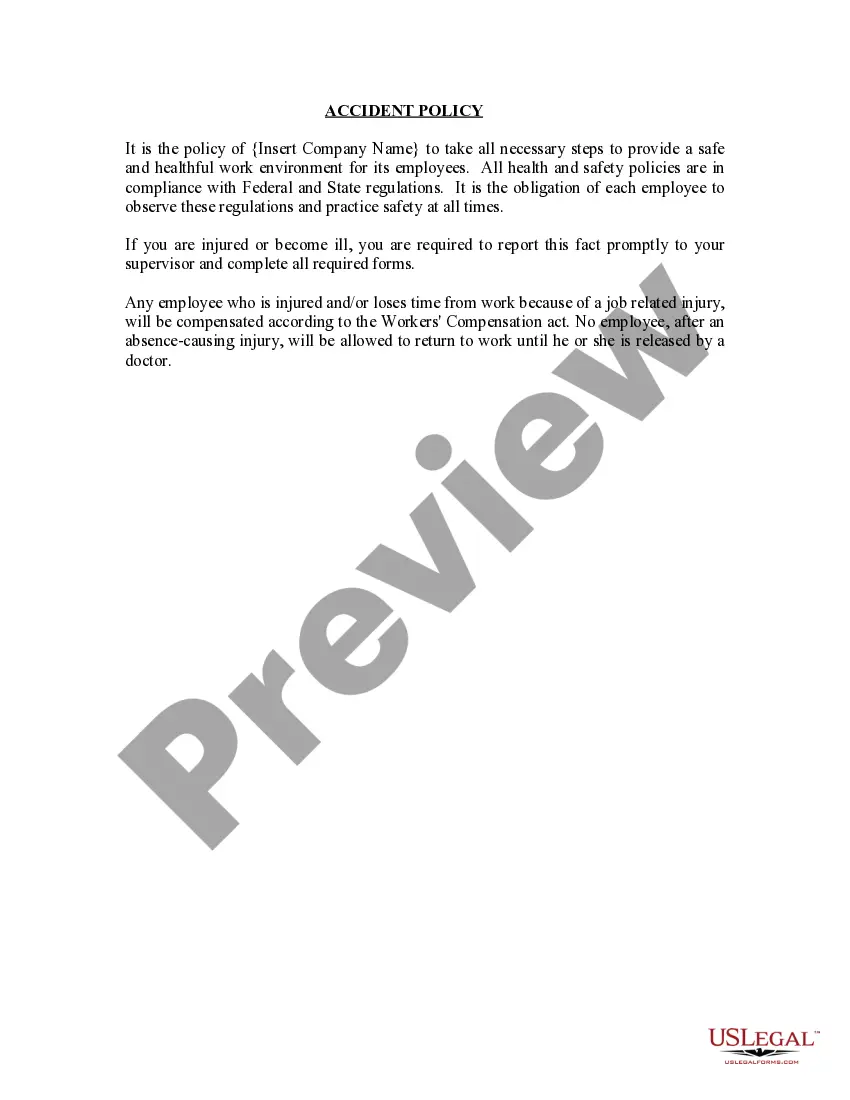
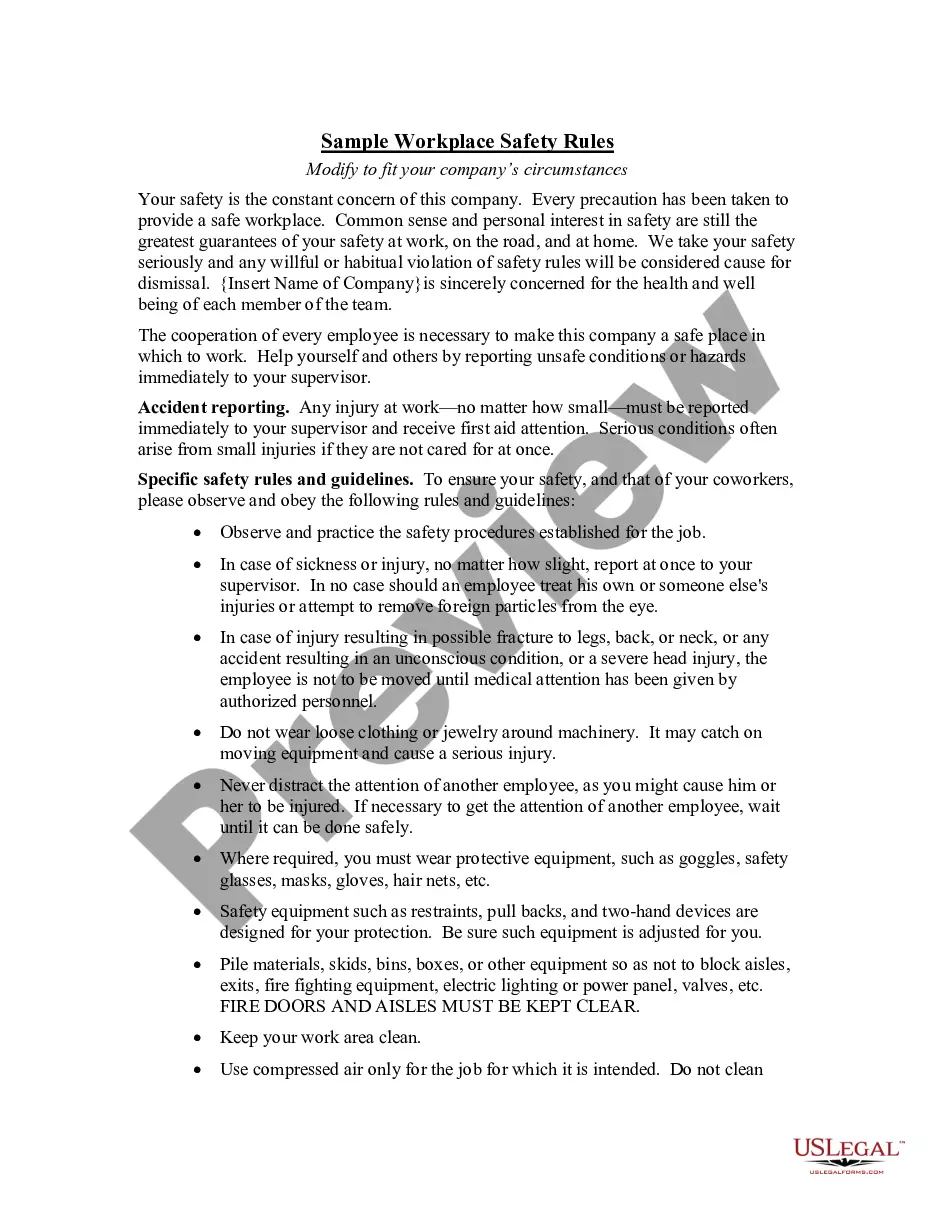
How to fill out Workplace Safety Policy - For Employee?
Locating the appropriate valid document template can be challenging.
Of course, there are numerous templates accessible online, but how can you discover the authentic one you need.
Utilize the US Legal Forms platform. The service offers a vast array of templates, including the Oregon Workplace Safety Policy - For Employee, that you can use for business and personal purposes.
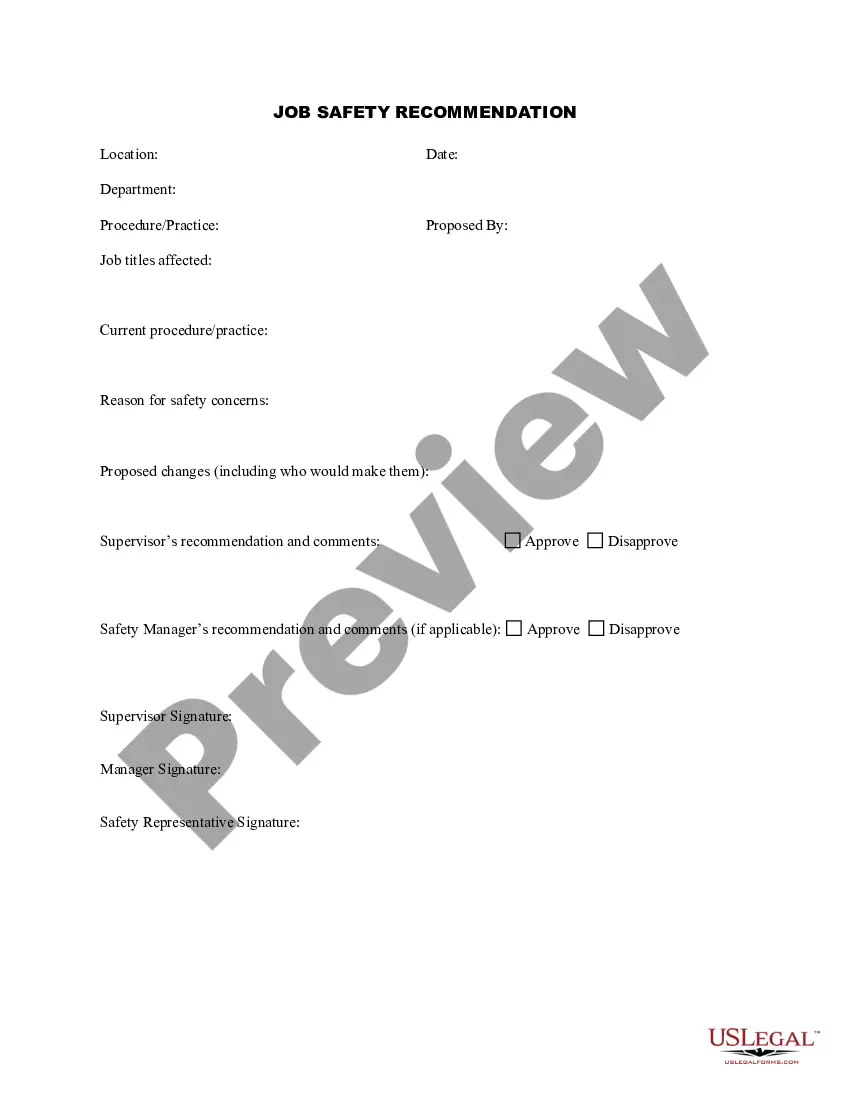
You can preview the document using the Review button and examine the form description to confirm it is the correct one for you.
- All documents are reviewed by experts and comply with federal and state regulations.
- If you are currently registered, Log In to your account and click the Acquire button to locate the Oregon Workplace Safety Policy - For Employee.
- Use your account to browse through the legal documents you have purchased in the past.
- Navigate to the My documents section of your account and obtain another copy of the document you need.
- For new users of US Legal Forms, here are some straightforward guidelines to follow.
- First, ensure you have chosen the correct template for your city/region.
Form popularity
FAQ
Reporting OSHA violations in Oregon can be a straightforward process for employees wishing to ensure safety standards are upheld. Individuals can file a complaint by contacting the Oregon OSHA office directly via phone or using their online reporting system. It’s important to gather relevant information about the violation, including details of the event and the workplace conditions. Familiarity with the Oregon Workplace Safety Policy - For Employee can aid in presenting a thorough report.
Certain incidents require mandatory reporting to Oregon OSHA to promote a safer workplace. Employers must report accidents that lead to fatalities or serious injuries requiring hospitalization. Additionally, incidents involving amputations or loss of eyesight must also be reported promptly. Understanding the Oregon Workplace Safety Policy - For Employee can help employees recognize which events require reporting.
Employees can file a complaint to OSHA in several ways, ensuring their concerns about workplace safety are addressed. One option is to submit a complaint online through the OSHA website, where they can describe their issue in detail. Alternatively, employees can call their local OSHA office or send a written complaint via mail. Engaging with Oregon Workplace Safety Policy - For Employee resources can also provide clarity on the process.
Yes, Oregon has its own state OSHA plan that governs workplace safety. This plan aligns with the Oregon Workplace Safety Policy - For Employee to ensure that local companies maintain safe working conditions. In fact, it allows for more specific regulations that cater to Oregon's unique industries. Staying informed about these regulations is essential for both employers and employees.
Getting employees to follow safety rules begins by clearly defining the Oregon Workplace Safety Policy - For Employee. Make safety training engaging and relevant, so employees understand its importance. Regularly remind employees about safety practices through meetings, newsletters, or digital platforms. Establishing clear consequences for not following rules also helps in motivating adherence.
The 3 C's of safety stand for Commitment, Communication, and Compliance. Commitment involves fostering a culture where safety is prioritized as part of the Oregon Workplace Safety Policy - For Employee. Communication encourages staff to speak up about safety concerns, and compliance ensures that safety regulations are followed consistently. Together, these principles create a safe workplace for everyone.
Employers often require safety certifications to ensure staff are knowledgeable about the Oregon Workplace Safety Policy - For Employee. These certifications may include first aid, CPR training, or specific safety protocols relevant to your industry. Obtaining Certifications not only boosts safety awareness among employees but also demonstrates a commitment to maintaining a safe work environment.
Addressing employees who do not follow safety rules requires a clear and structured approach. First, identify specific behaviors that violate the Oregon Workplace Safety Policy - For Employee. Discuss these issues privately and outline the potential consequences of non-compliance. It’s essential to provide additional training or resources where needed, and to emphasize the importance of safety for everyone's well-being.
To encourage employees to adhere to safety rules, you should create a positive culture around workplace safety. Frequent training sessions and workshops help employees understand the importance of the Oregon Workplace Safety Policy - For Employee. Recognizing and rewarding those who consistently follow safety practices also reinforces positive behavior. Open communication about safety concerns and regular feedback can enhance commitment to safety standards.
A simple example of a policy might be a ‘No Smoking’ policy within the workplace. This type of policy clearly outlines where smoking is prohibited, the reasons behind it, and the consequences for violations. When you create an Oregon Workplace Safety Policy - For Employee, consider including straightforward rules like this to ensure clarity and compliance, ultimately contributing to a healthier work environment.