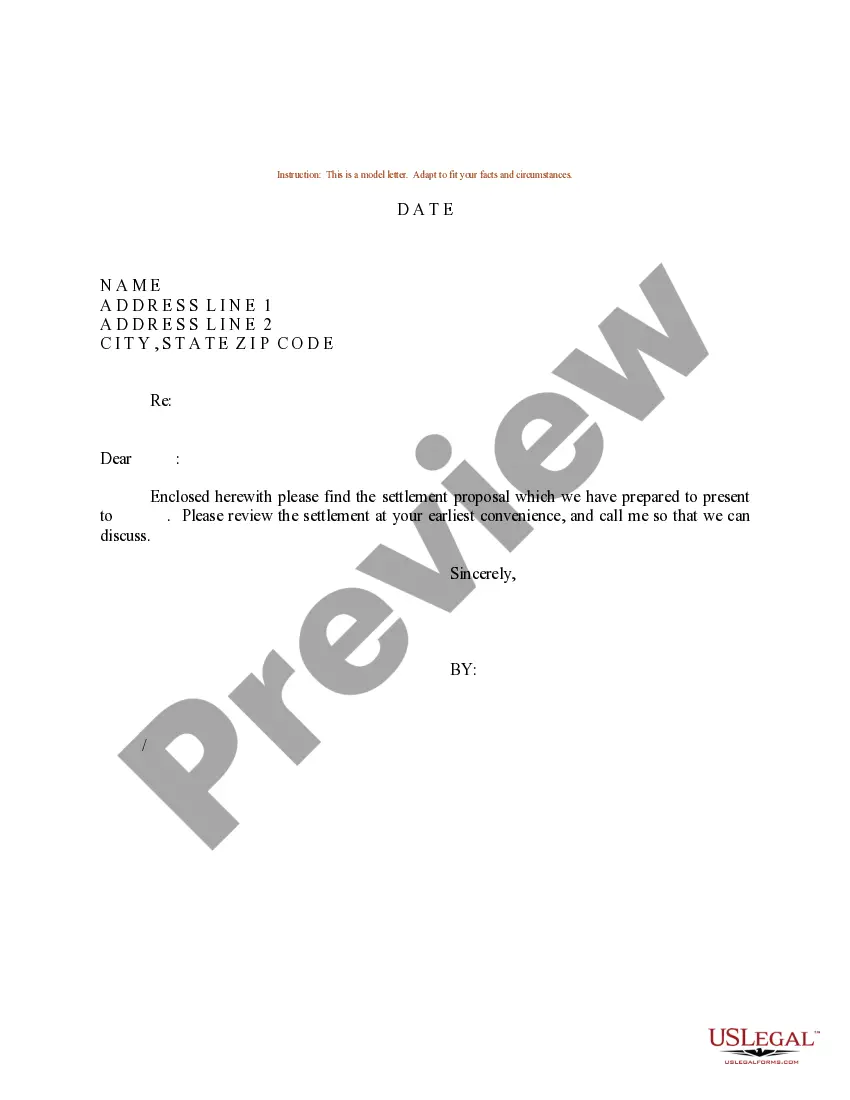
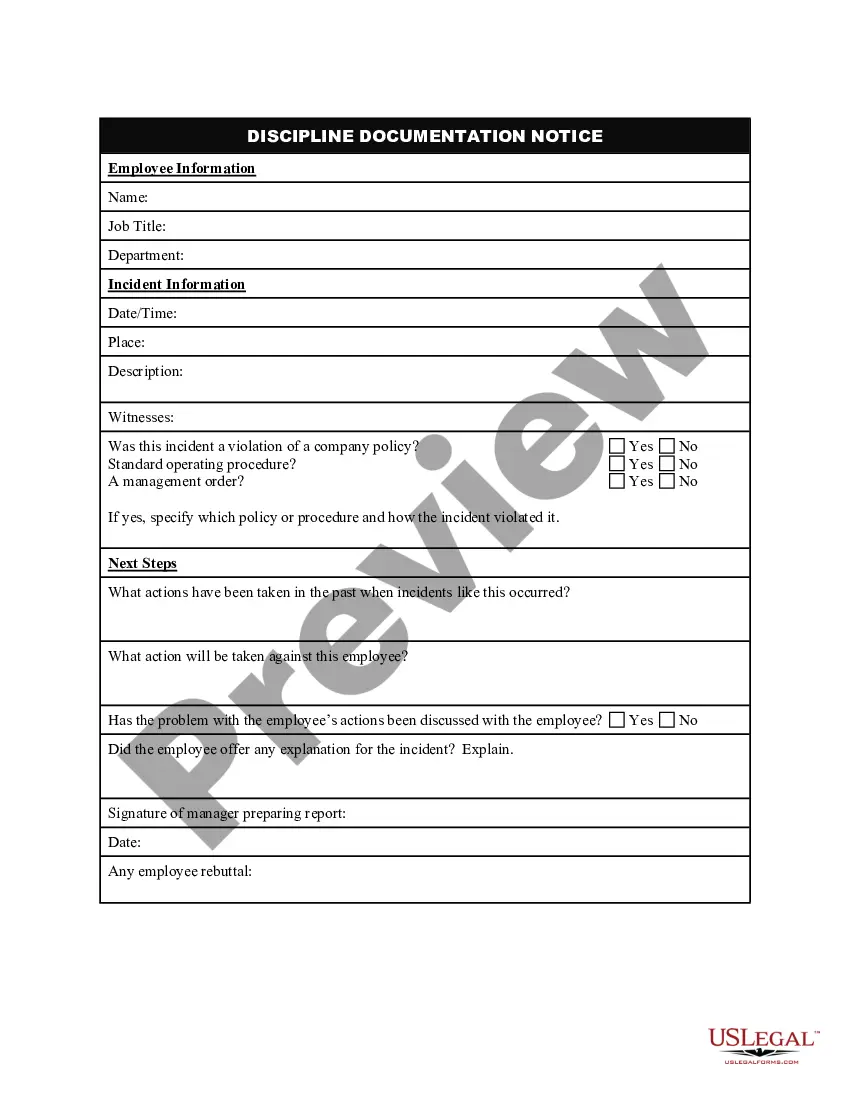
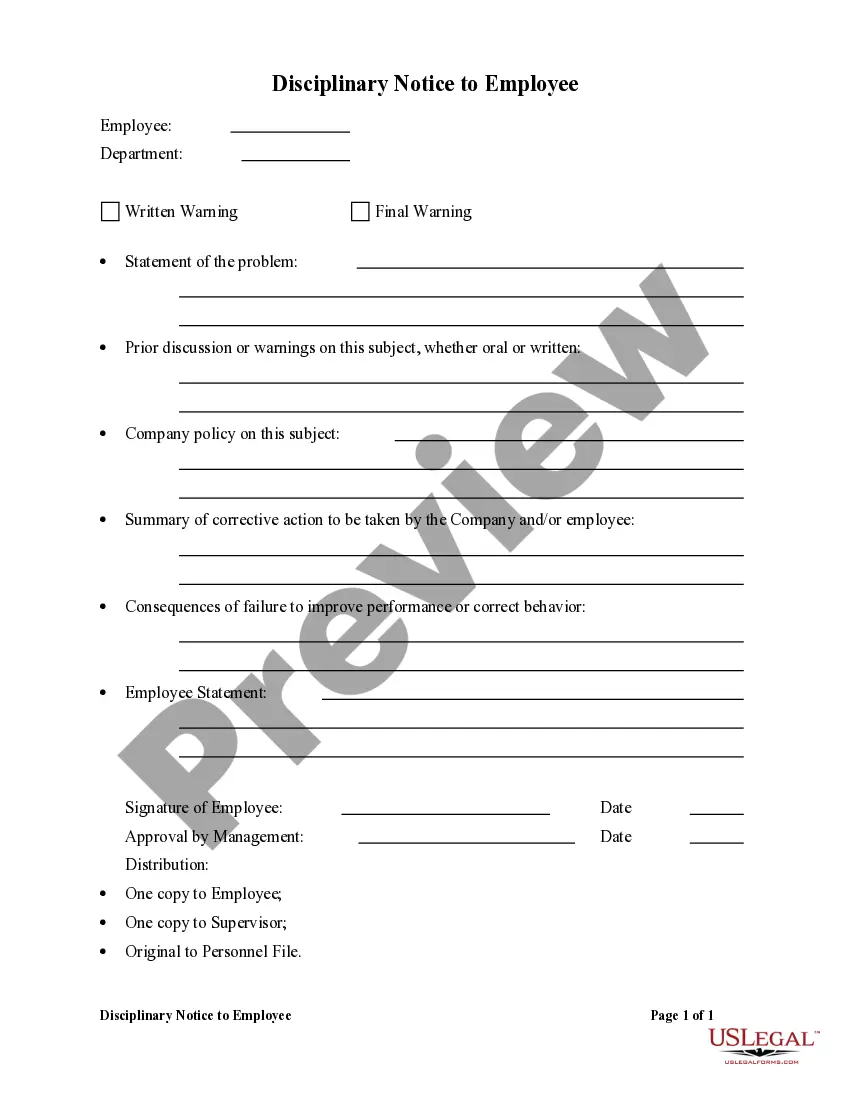
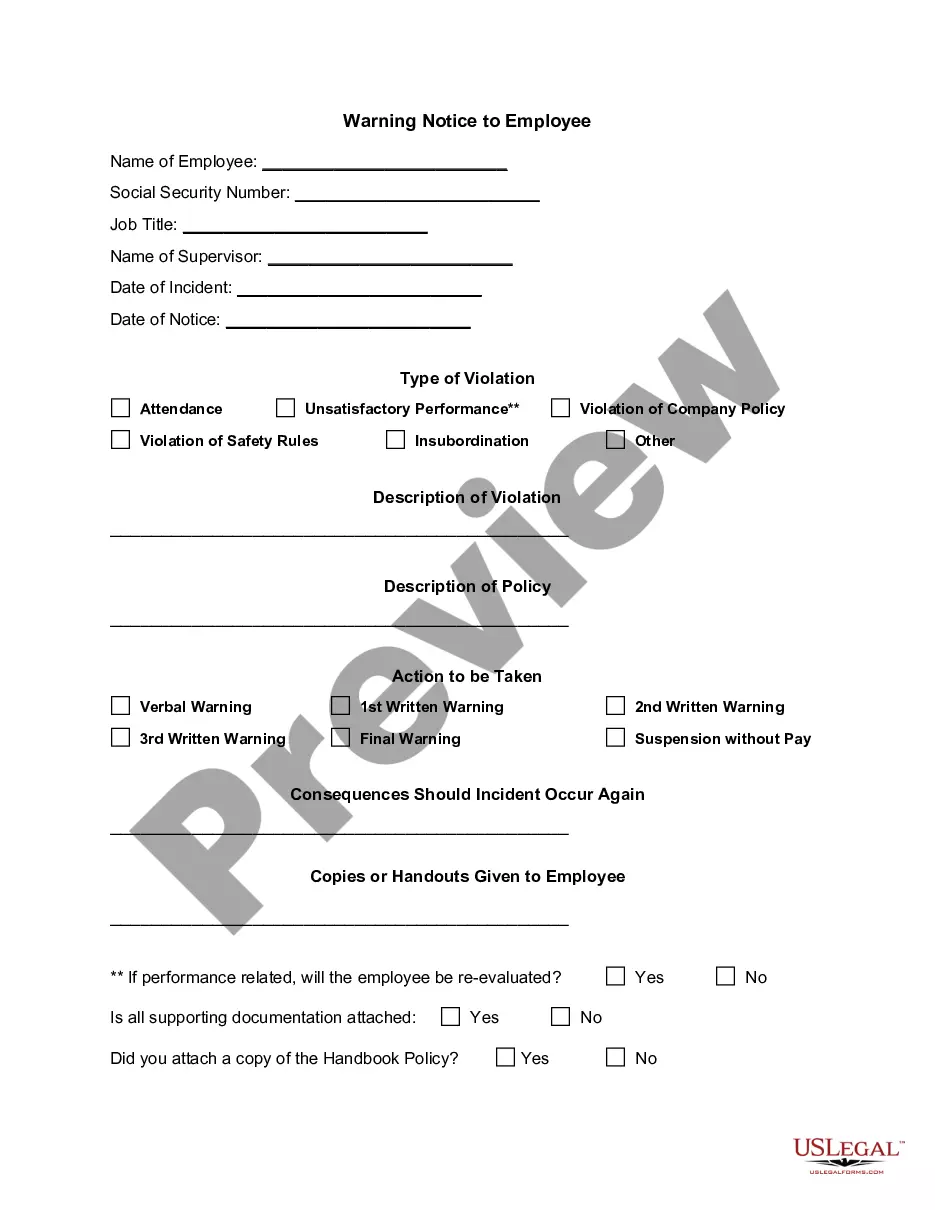
Oregon Discipline Documentation Notice
Description
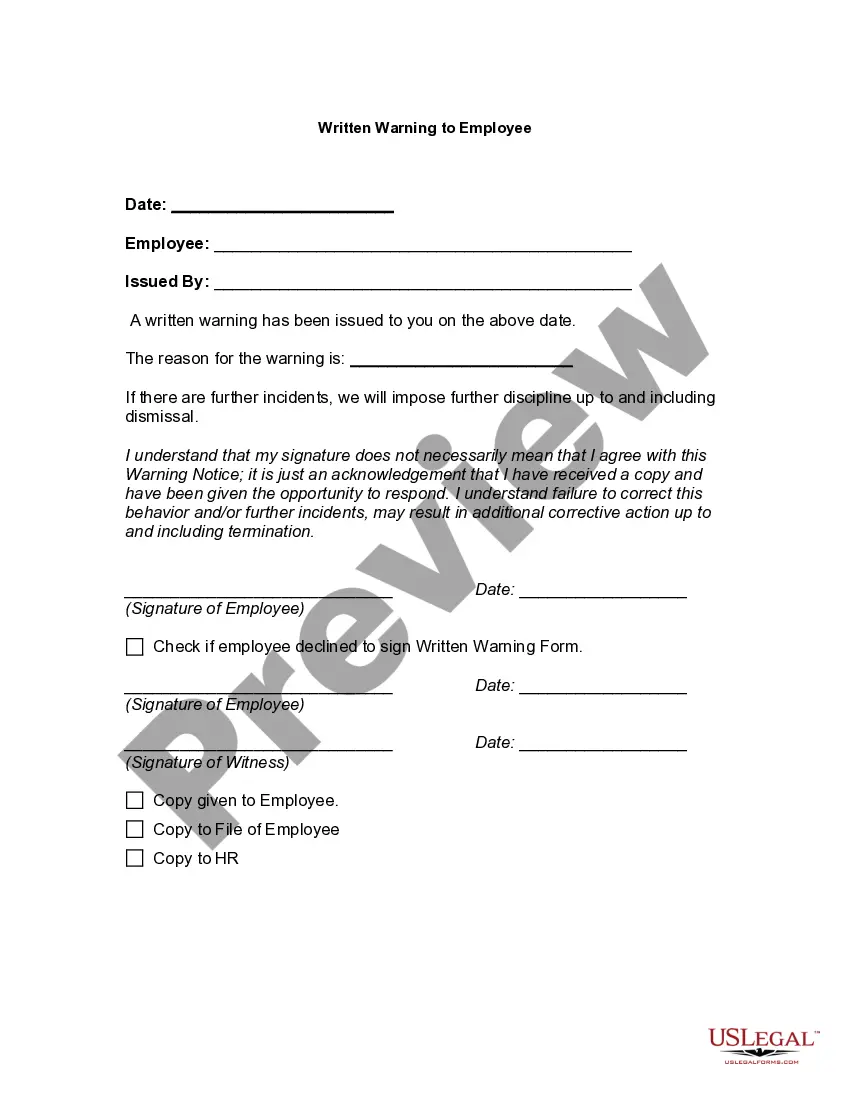
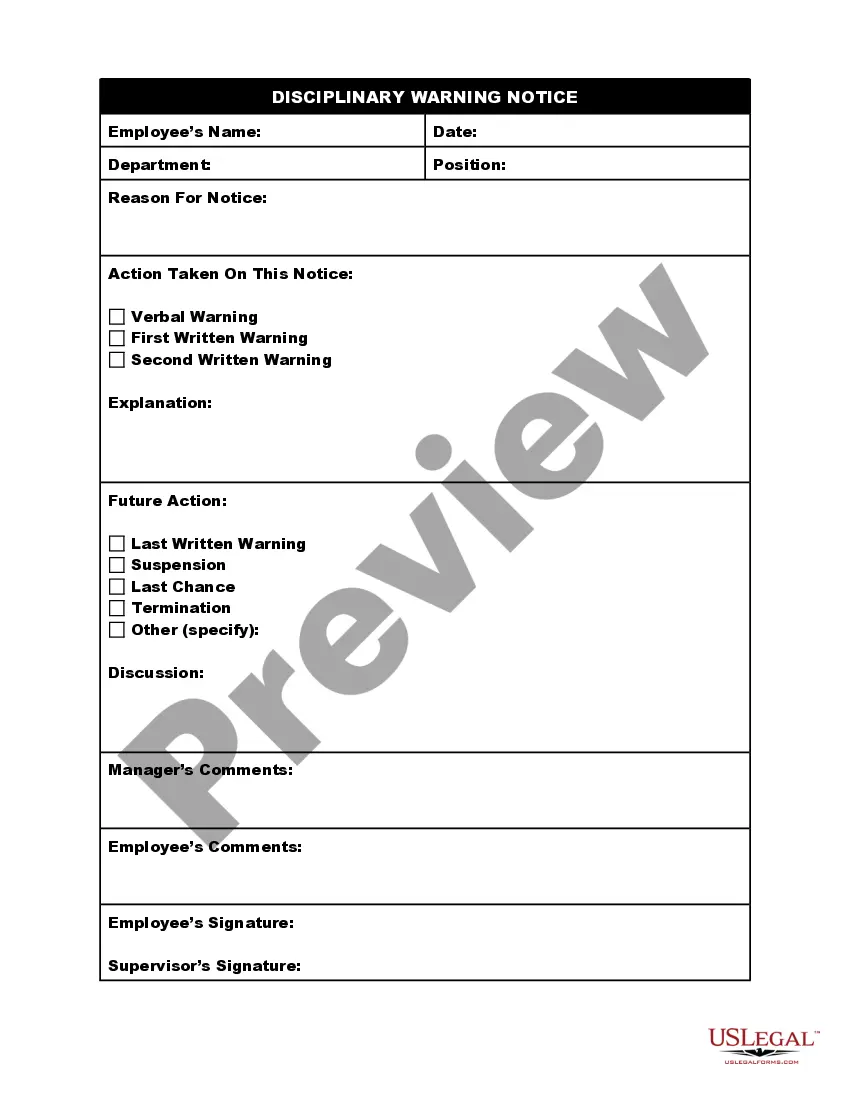
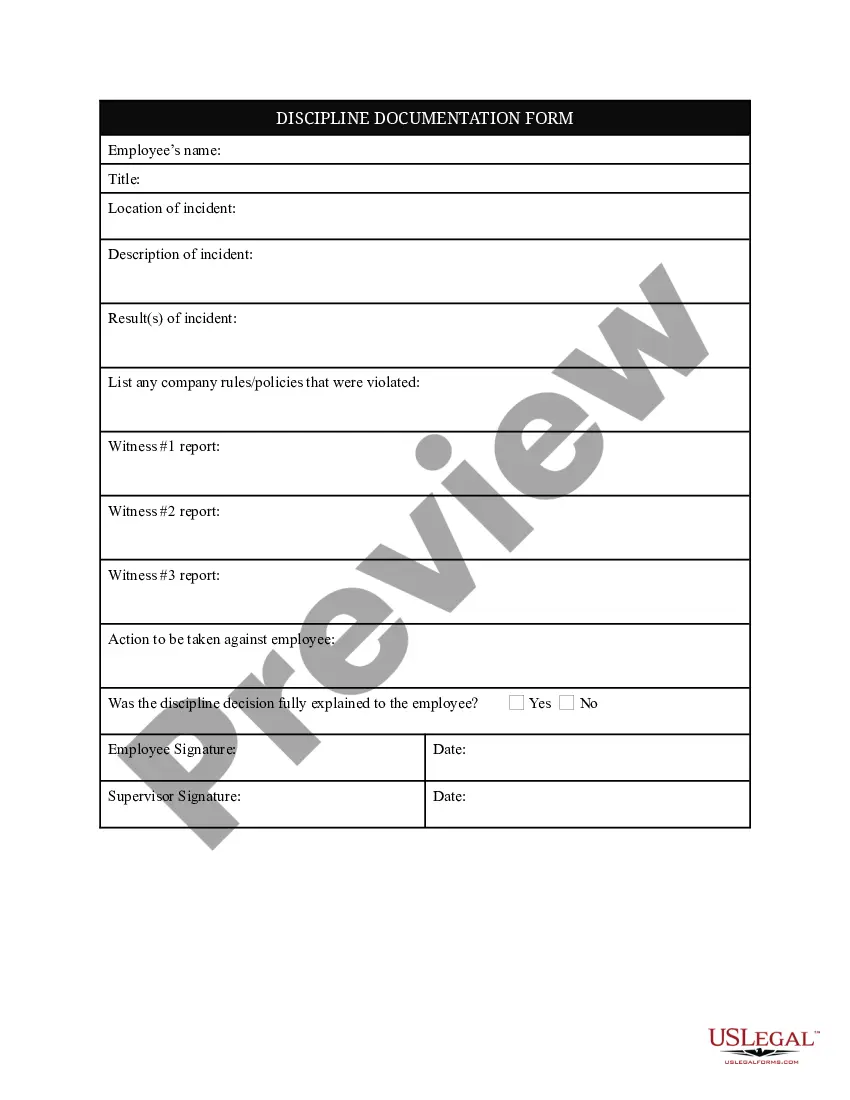
Get your form ready online
Our built-in tools help you complete, sign, share, and store your documents in one place.
Make edits, fill in missing information, and update formatting in US Legal Forms—just like you would in MS Word.
Download a copy, print it, send it by email, or mail it via USPS—whatever works best for your next step.
Sign and collect signatures with our SignNow integration. Send to multiple recipients, set reminders, and more. Go Premium to unlock E-Sign.
If this form requires notarization, complete it online through a secure video call—no need to meet a notary in person or wait for an appointment.
We protect your documents and personal data by following strict security and privacy standards.

Make edits, fill in missing information, and update formatting in US Legal Forms—just like you would in MS Word.

Download a copy, print it, send it by email, or mail it via USPS—whatever works best for your next step.

Sign and collect signatures with our SignNow integration. Send to multiple recipients, set reminders, and more. Go Premium to unlock E-Sign.

If this form requires notarization, complete it online through a secure video call—no need to meet a notary in person or wait for an appointment.

We protect your documents and personal data by following strict security and privacy standards.
Looking for another form?




How to fill out Discipline Documentation Notice?
Locating the correct valid record template can be a challenge.
Of course, there are numerous templates accessible online, but how do you find the authentic document you require.
Utilize the US Legal Forms website. This service offers thousands of templates, including the Oregon Discipline Documentation Notice, which can be utilized for both business and personal purposes.
First, ensure you have selected the correct form for your locality. You can review the form using the Preview button and read the form description to confirm it meets your needs.
- All templates are verified by experts and comply with state and federal regulations.
- If you are already registered, sign in to your account and click the Download button to obtain the Oregon Discipline Documentation Notice.
- Use your account to review the legitimate forms you have obtained in the past.
- Visit the My documents tab in your account to retrieve another copy of the document you desire.
- If you are a new user of US Legal Forms, here are simple steps you can follow.
Form popularity
FAQ
A disciplinary action is a reprimand or corrective action in response to employee misconduct, rule violation, or poor performance. Depending on the severity of the case, a disciplinary action can take different forms, including: A verbal warning.
A disciplinary action is a reprimand or corrective action in response to employee misconduct, rule violation, or poor performance. Depending on the severity of the case, a disciplinary action can take different forms, including: A verbal warning. A written warning.
All disciplinary records must be removed from your personnel file after three years if your record has remained clear of similar offenses.
Requirements for the retention of employee records in Ontario are set out in the Employment Standards Act. The general rule is that employee records are to be retained for three years after the employee ceases to be employed by the employer.
A. Provides warning: It is very important to provide advance warning that punishment will follow unacceptable behavior. As you move closer to a hot stove you are warned by its heat that you will be burned if you touch it.
This must be kept for either three years after the employee's 18th birthday or three years after the employee stopped working for the employer, whichever happens first.
The disciplinary outcome and details must remain confidential. However, where appropriate, it can be a good idea for the employer to talk privately with any staff who knew the disciplinary procedure was happening. This can help avoid any negative effects on the business, for example: bad feeling.
The usual standard time that a warning following a disciplinary will last on your file is 6 months. However, it will depend on the policies and code of conduct that each workplace has in place. A final warning might last on file for a longer period such as 12 months.
Best Practices in Documenting Employee DisciplineHave an employee discipline form.Conduct a full and fair investigation.Get the facts.Be objective.Be clear and specific.Complete the form while the facts are fresh.Get the employee's acknowledgement.Allow the employee to explain the conduct.More items...?
How to document employee performance issuesStick to the facts and underline expectations.Emphasize behavior.Align records of past performance.Describe proof of misconduct.Identify and present consequences.Meet in person and get a signature.