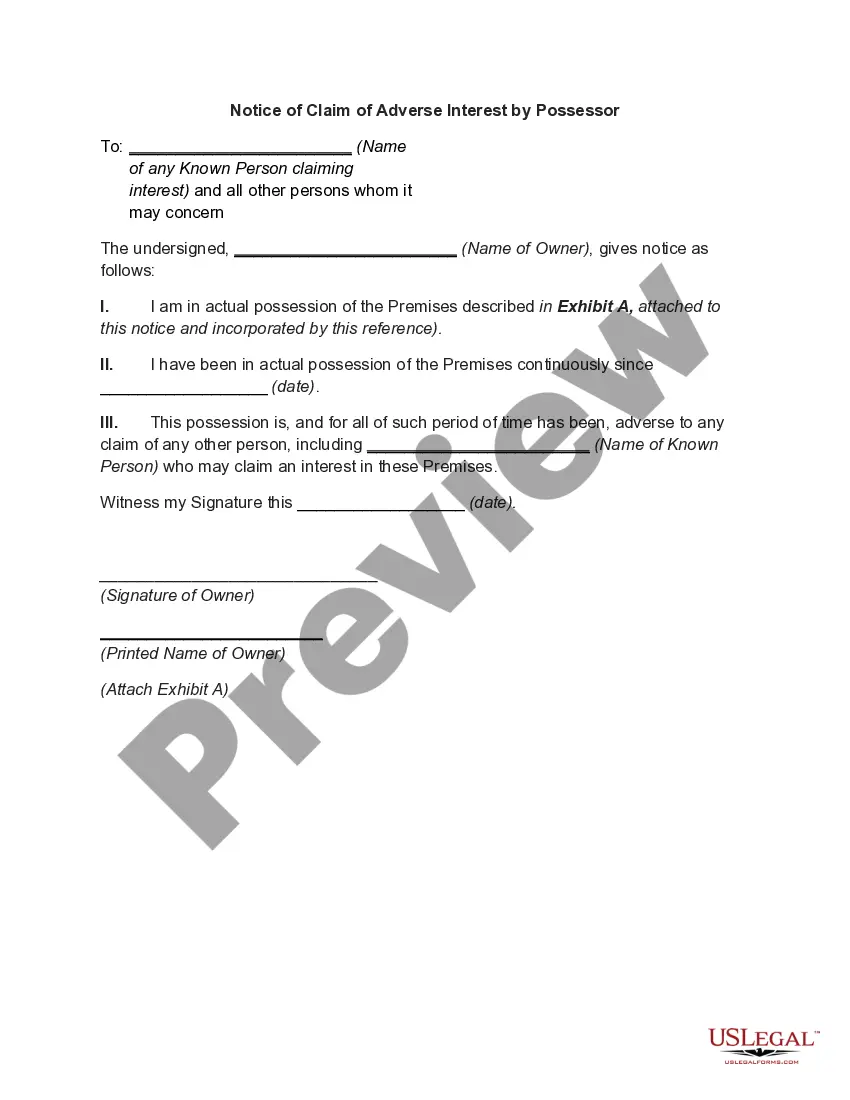
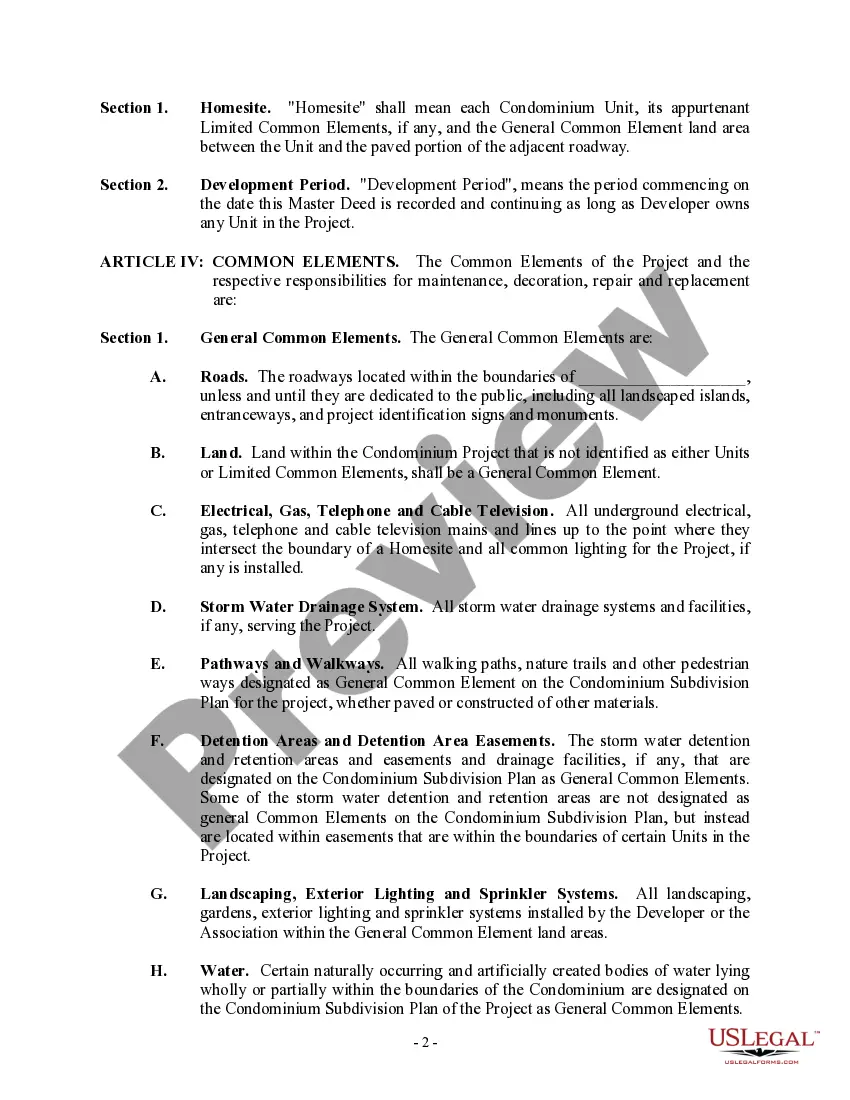
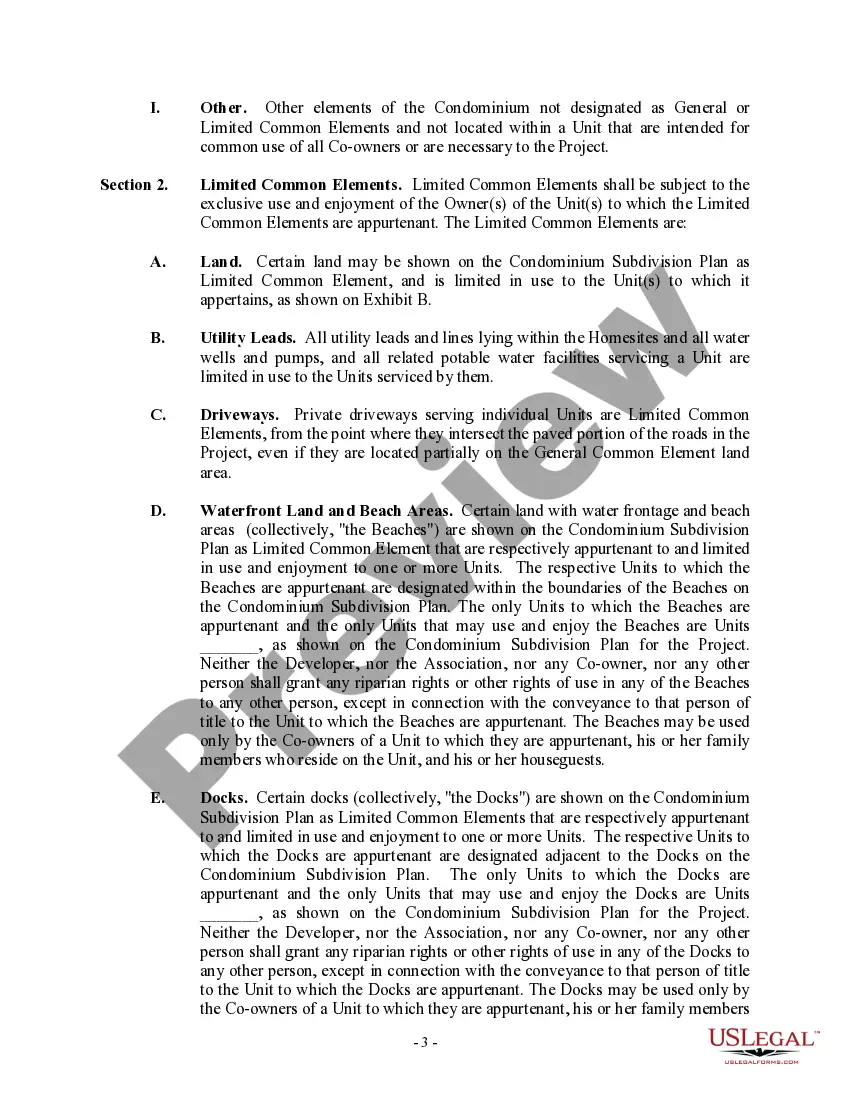
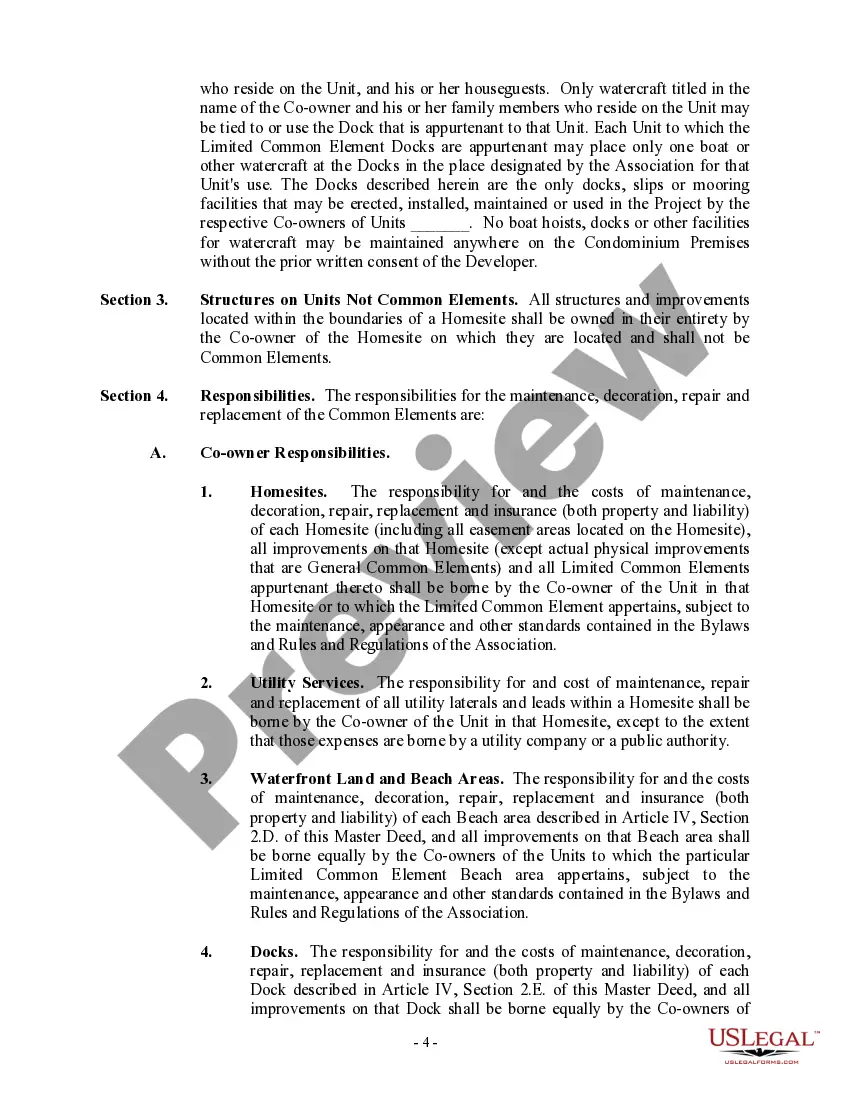
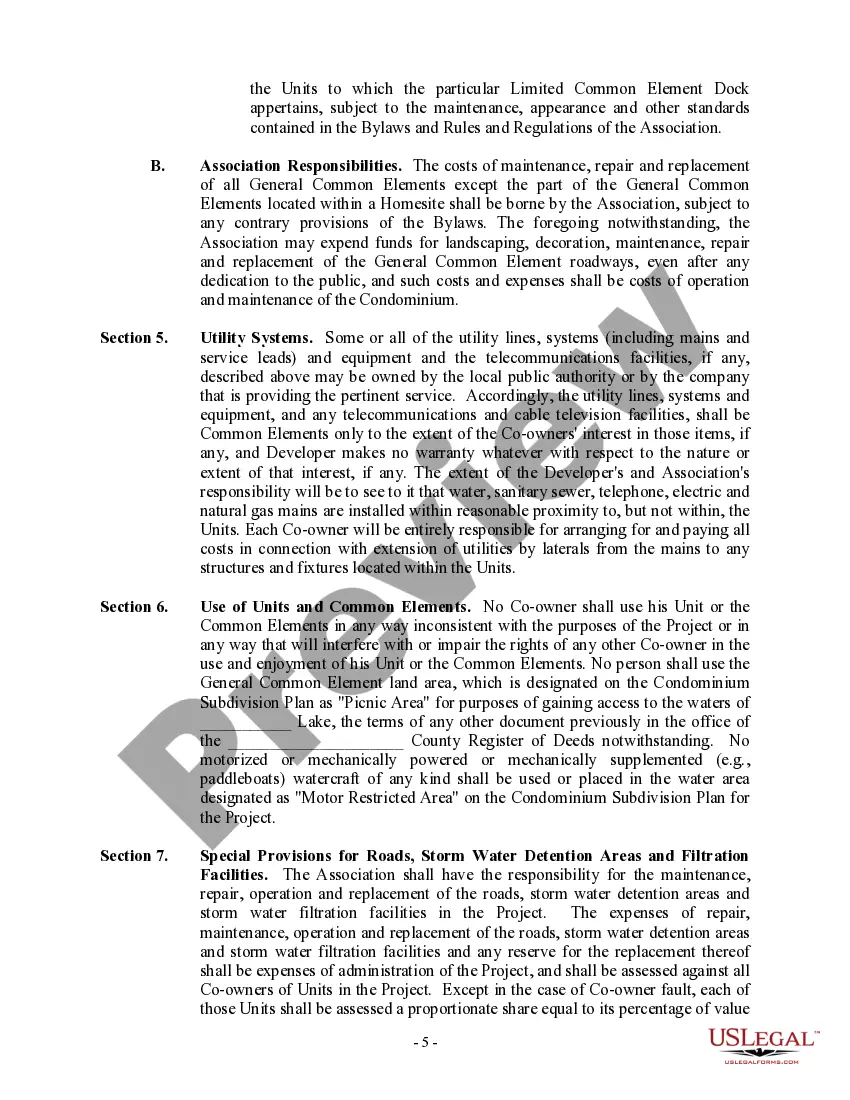
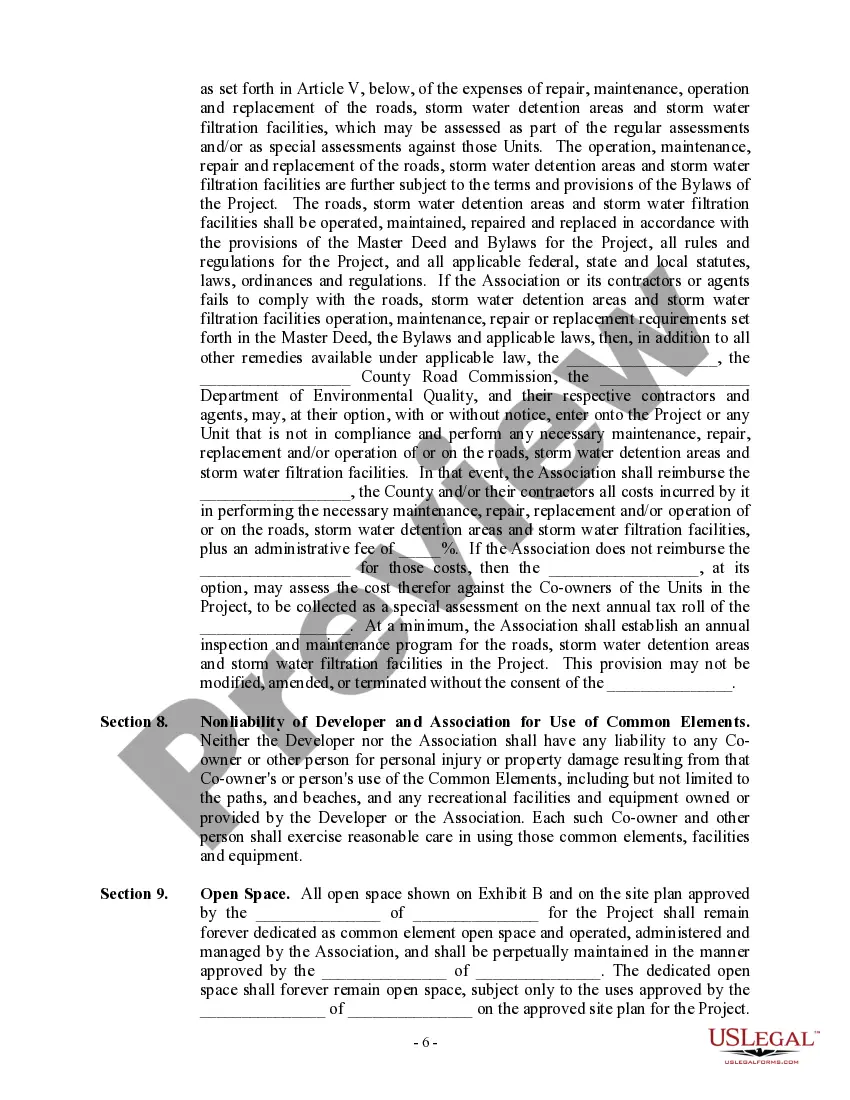
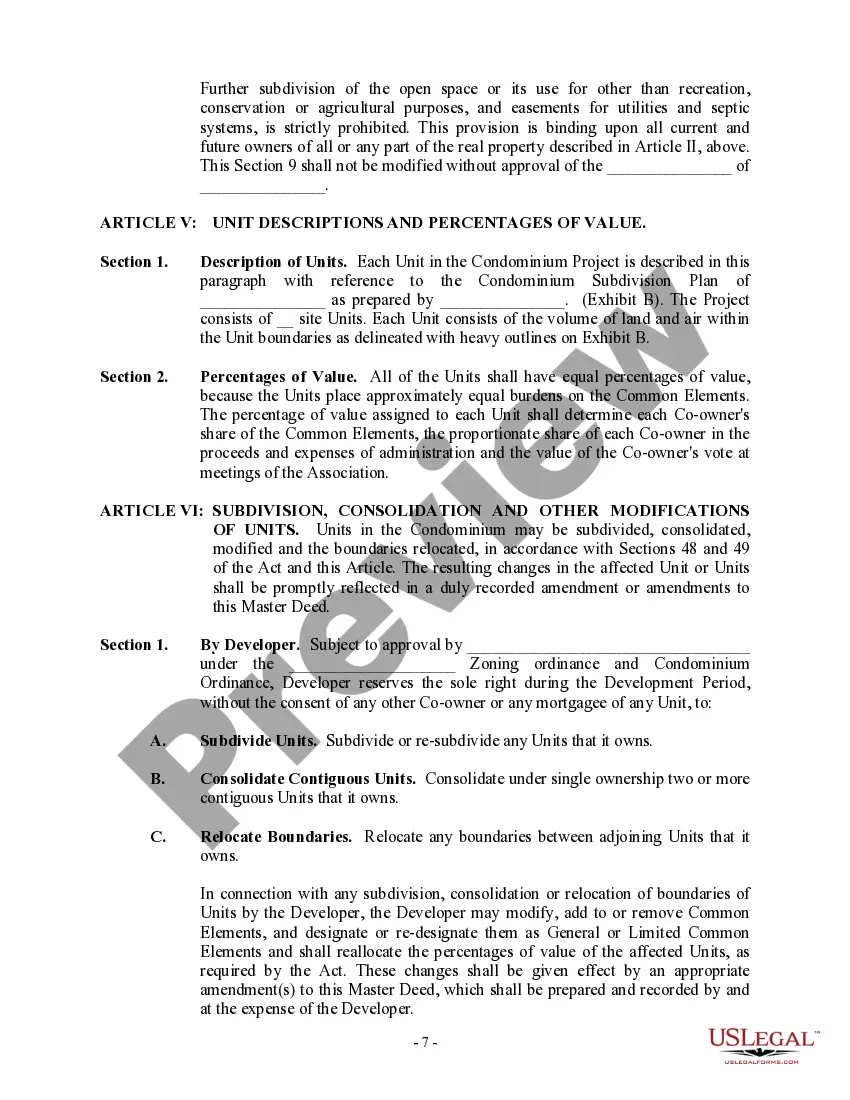
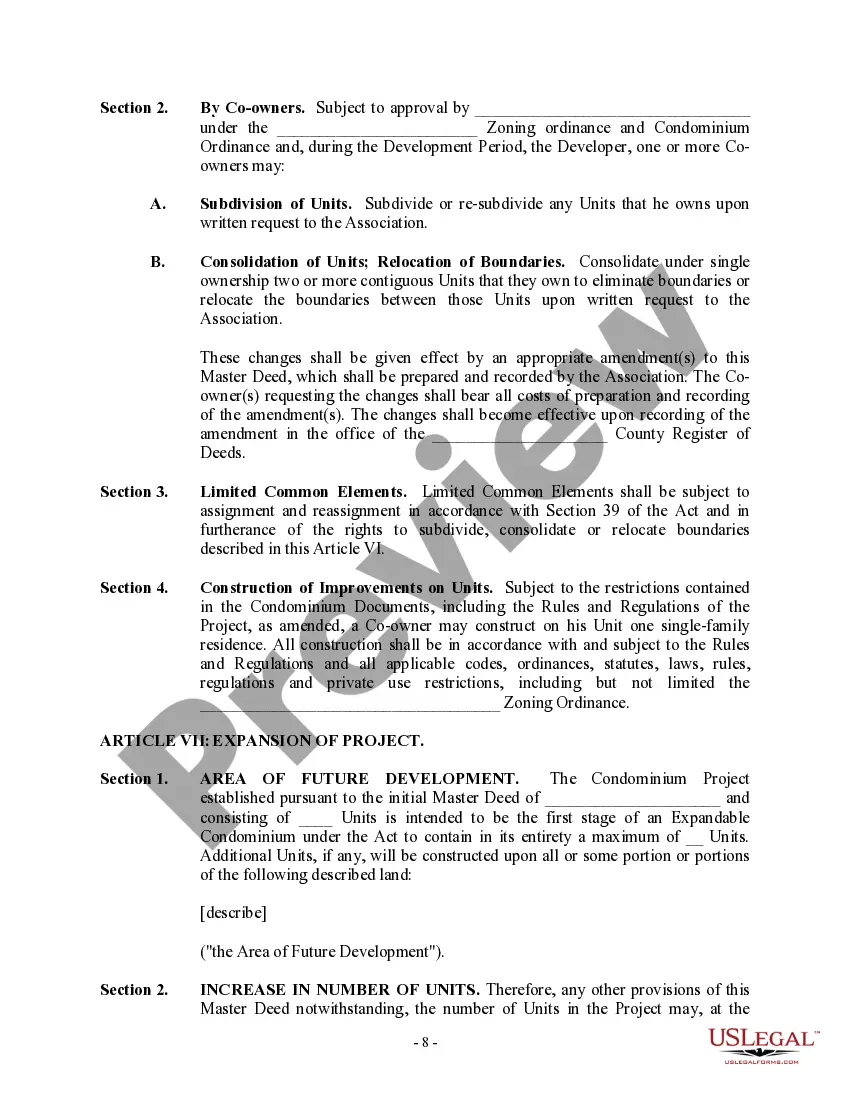
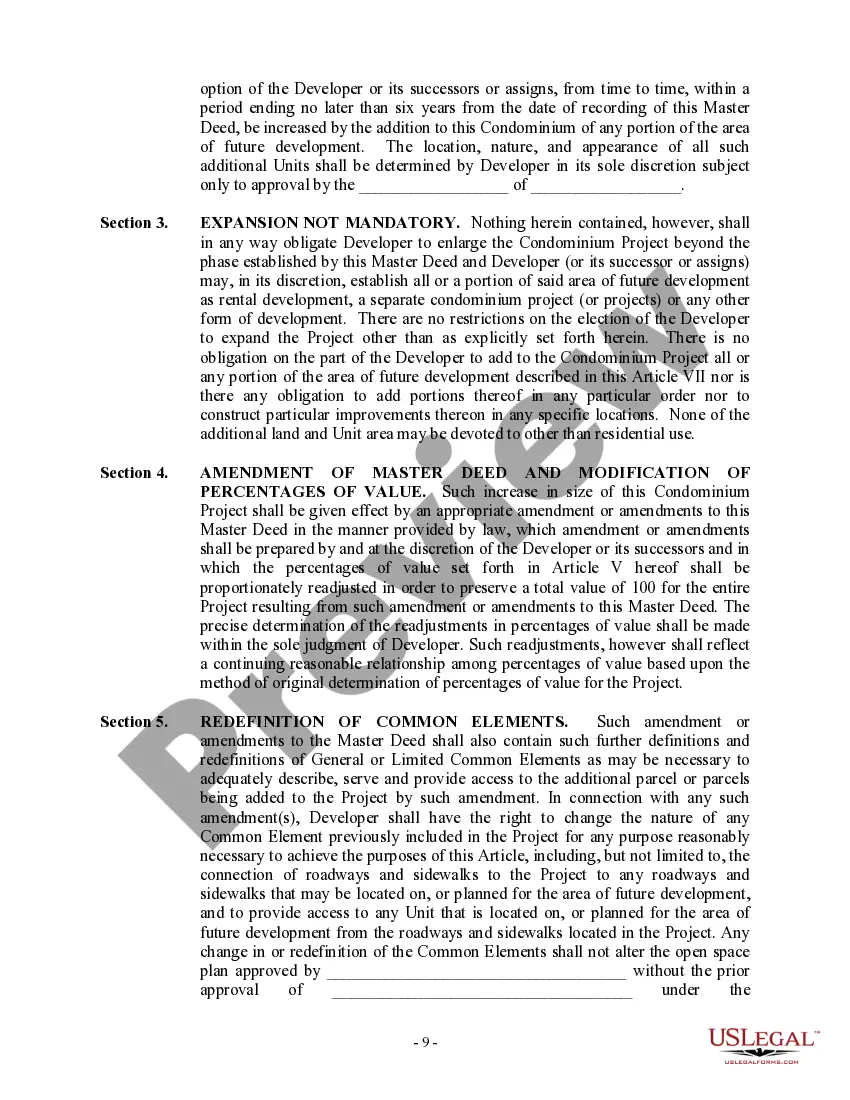
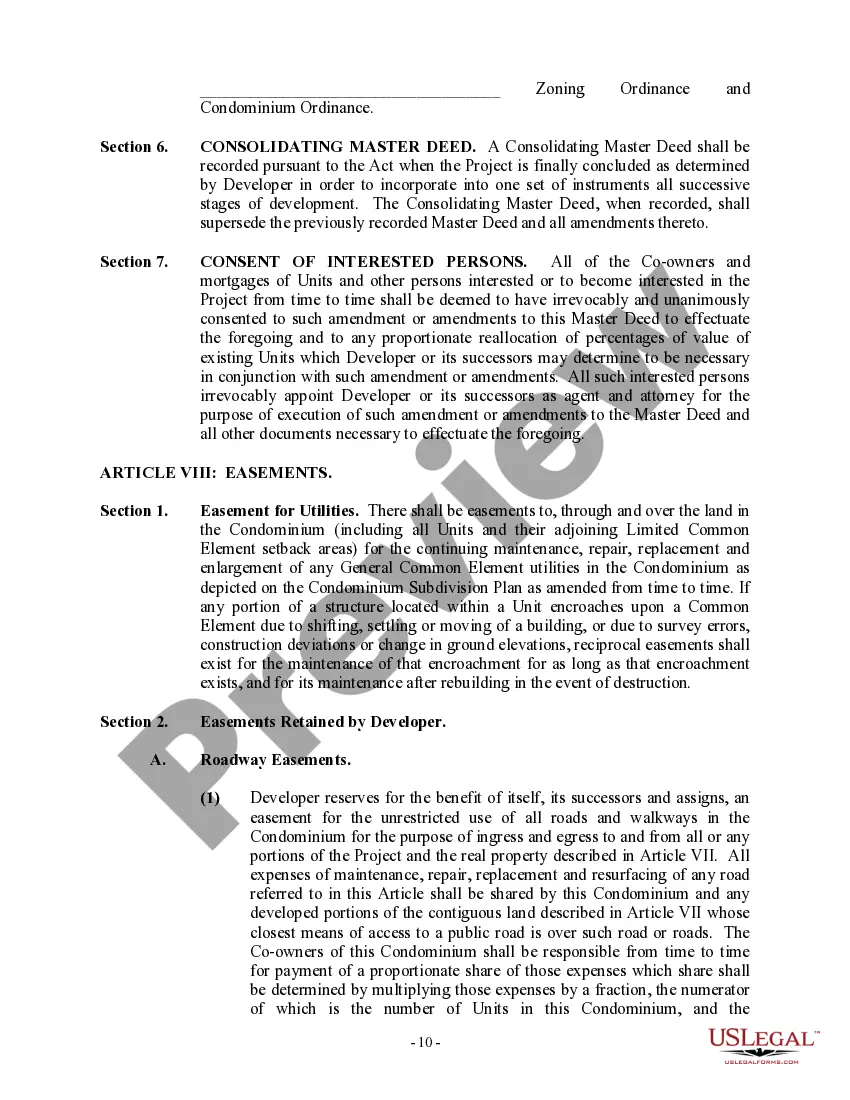
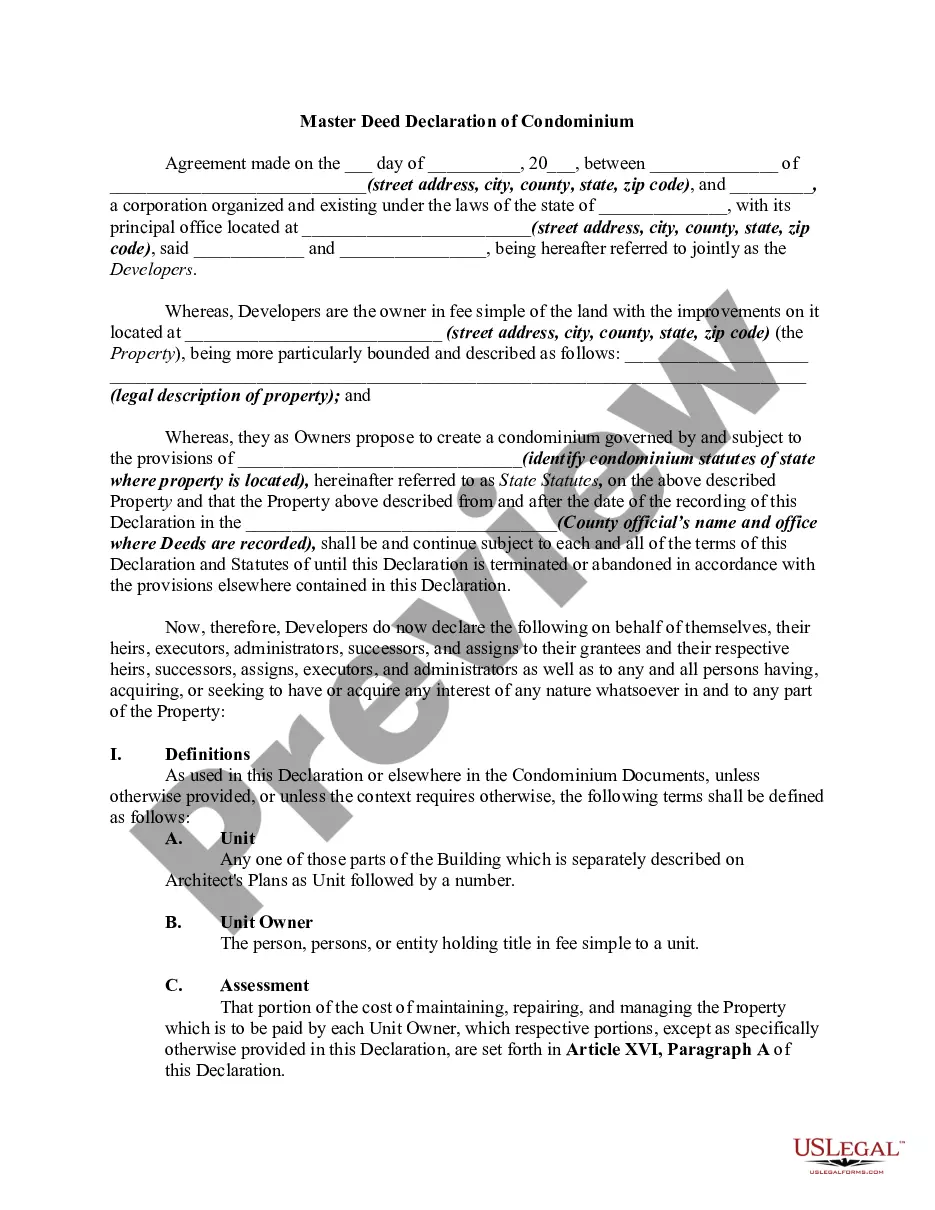
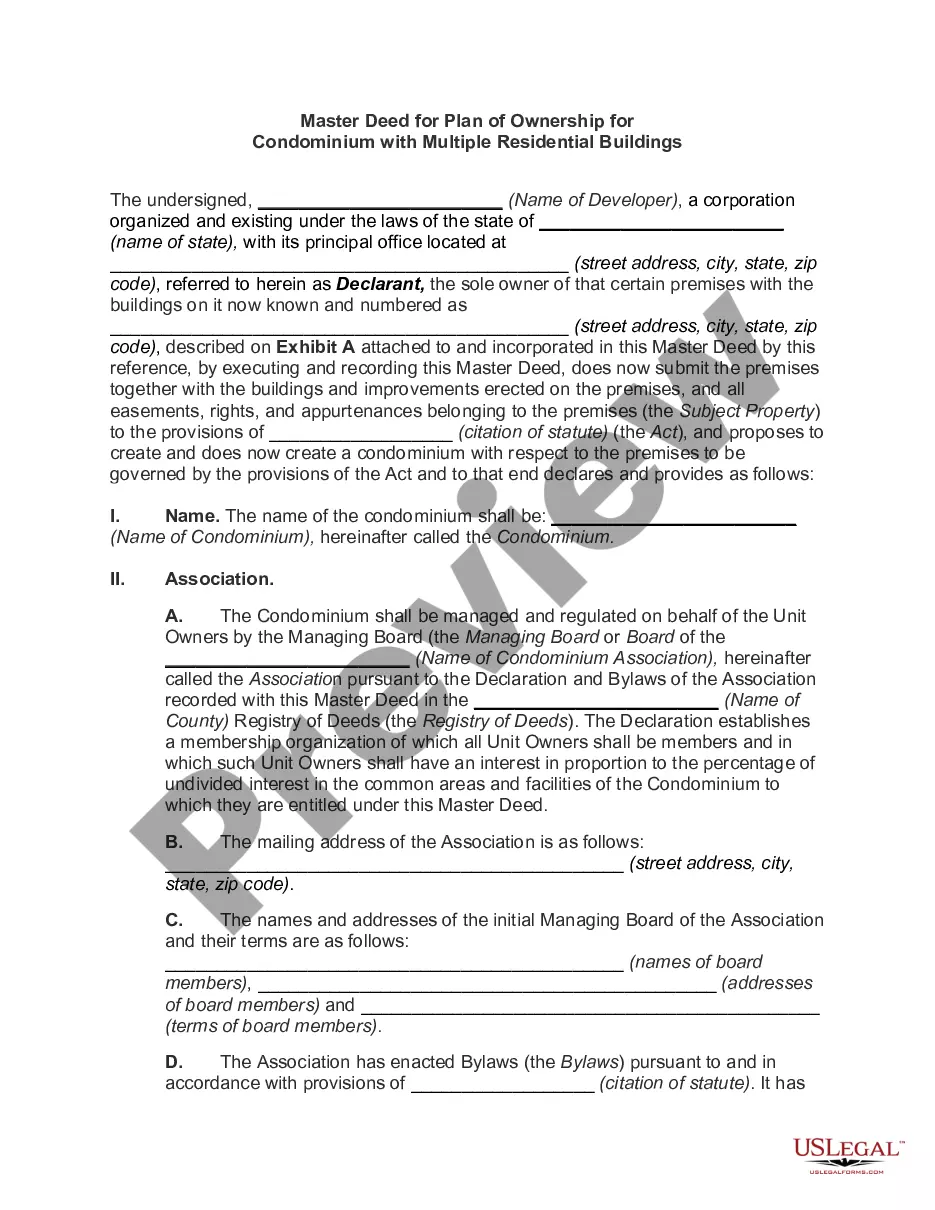
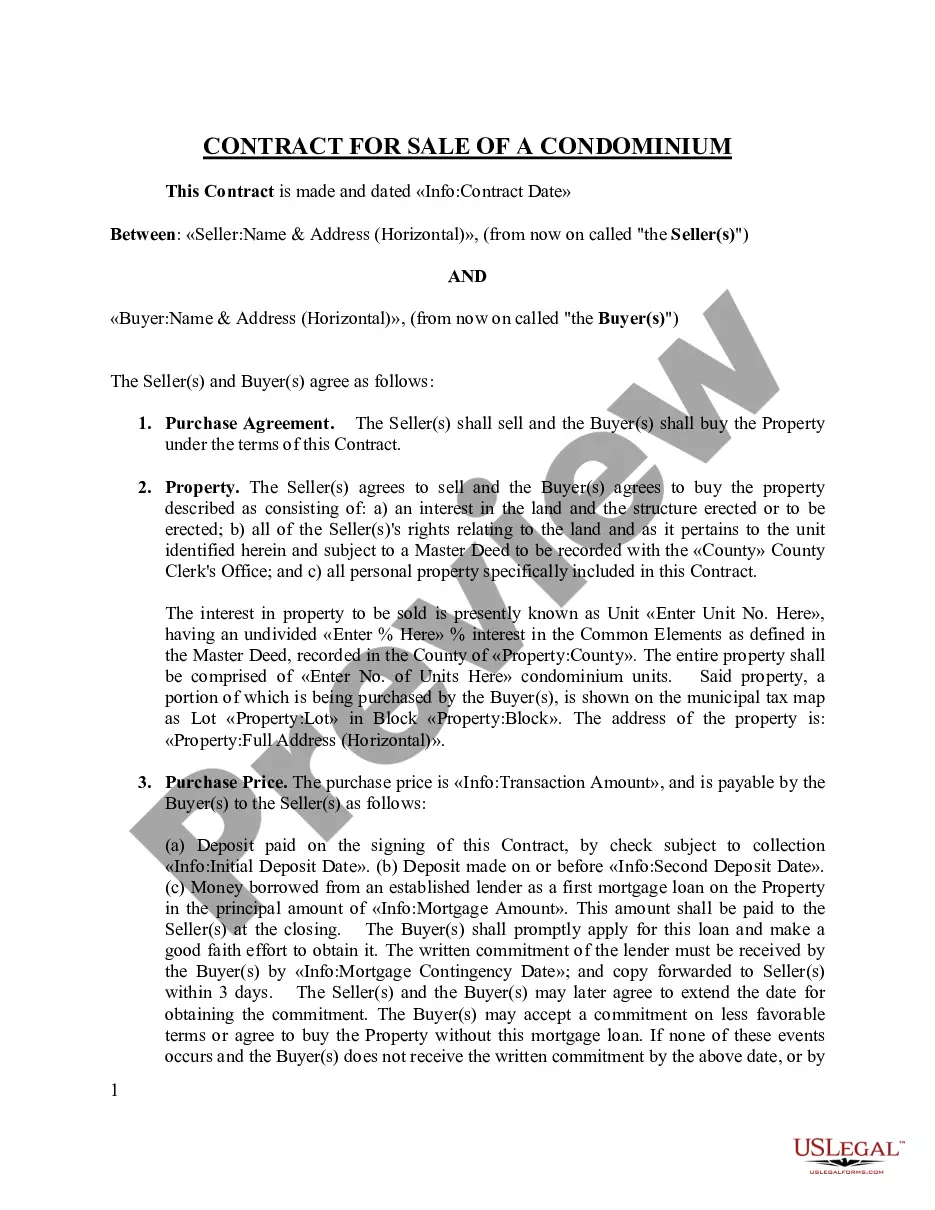
This form is a Master Deed. This Master Deed is executed by a developer pursuant to the provisions of the Condominium Act. The deed contains a legal description of the project and the responsibilities of the co-owner.
Oregon Condominium Master Deed - Residential Condo Development
Instant download
Description
Free preview



Get your form ready online
Our built-in tools help you complete, sign, share, and store your documents in one place.
Built-in online Word editor
Make edits, fill in missing information, and update formatting in US Legal Forms—just like you would in MS Word.
Export easily
Download a copy, print it, send it by email, or mail it via USPS—whatever works best for your next step.
E-sign your document
Sign and collect signatures with our SignNow integration. Send to multiple recipients, set reminders, and more. Go Premium to unlock E-Sign.
Notarize online 24/7
If this form requires notarization, complete it online through a secure video call—no need to meet a notary in person or wait for an appointment.
Store your document securely
We protect your documents and personal data by following strict security and privacy standards.

Make edits, fill in missing information, and update formatting in US Legal Forms—just like you would in MS Word.

Download a copy, print it, send it by email, or mail it via USPS—whatever works best for your next step.

Sign and collect signatures with our SignNow integration. Send to multiple recipients, set reminders, and more. Go Premium to unlock E-Sign.

If this form requires notarization, complete it online through a secure video call—no need to meet a notary in person or wait for an appointment.

We protect your documents and personal data by following strict security and privacy standards.
Looking for another form?


How to fill out Condominium Master Deed - Residential Condo Development?
Have you ever been in a situation where you require documents for either business or specific purposes nearly every day.
There are numerous legitimate document templates accessible online, but finding ones you can trust is not simple.
US Legal Forms offers a plethora of form templates, such as the Oregon Condominium Master Deed - Residential Condo Development, which can be tailored to comply with federal and state regulations.
Once you obtain the correct form, click Buy now.
Choose the pricing plan you prefer, fill in the necessary information to create your account, and pay for your order using your PayPal or credit card. Select a convenient file format and download your copy. Access all the document templates you have purchased in the My documents section. You can obtain another version of the Oregon Condominium Master Deed - Residential Condo Development whenever needed. Just click on the desired form to download or print the document template. Use US Legal Forms, one of the most extensive collections of legitimate forms, to save time and avoid mistakes. The service offers professionally crafted legal document templates that can be used for various purposes. Create an account on US Legal Forms and start making your life easier.
- If you are already familiar with the US Legal Forms website and possess an account, simply Log In.
- Then, you can download the Oregon Condominium Master Deed - Residential Condo Development template.
- If you do not have an account and wish to start using US Legal Forms, follow these instructions.
- Select the form you need and ensure it is for the correct city/county.
- Utilize the Preview button to examine the document.
- Check the details to confirm you have selected the appropriate form.
- If the form isn’t what you are looking for, use the Search field to find the form that suits your requirements.
Form popularity
FAQ
In Oregon, HOAs are governed by the Oregon Planned Communities Act found in Chapter 94 Section 500 of the Oregon Statutes. This act governs all buildings and improvements where owners are collectively responsible for maintenance, operation, and insurance related to any property within the community.
At a minimum, removing a board member normally requires the vote of all HOA members. To obtain a valid vote, you must meet all relevant procedures required under your state's laws and in your development's governing documents, including prior notice, special meeting, quorum, and proxy voting requirements.
The Oregon Condominium Act is a set of laws that govern the creation, ownership, and operation of condominiums in the state of Oregon. It outlines the rights and responsibilities of condominium owners and developers and provides a framework for the formation of condominium associations.
The Oregon Condominium Act requires that the condominium association be organized to serve as a means through which the unit owners may take action with regard to the administration, management and operation of the condominium. Each unit owner is automatically a member of the association.
In sum, the Oregon Planned Community Act provides a comprehensive framework for the formation and operation of planned communities in Oregon. It sets forth the legal rights and obligations of the members, the owners, and the association, and provides for the enforcement of those rights and obligations.
The North Carolina Planned Community Act applies to all planned communities created within the state of North Carolina on or after January 1, 1999, except as otherwise provided in section 47F-1-102. The Act is organized into the following Articles: Article 1 - General Provisions.
The Oregon Condominium Act governs the creation, conversion, common expenses, apportionment of interest, management, and powers of condominium associations in the state. It also covers voting rights, insurance, association administration, and insurance requirements.