Oregon Assignment of Mortgage Package
Overview of this form package
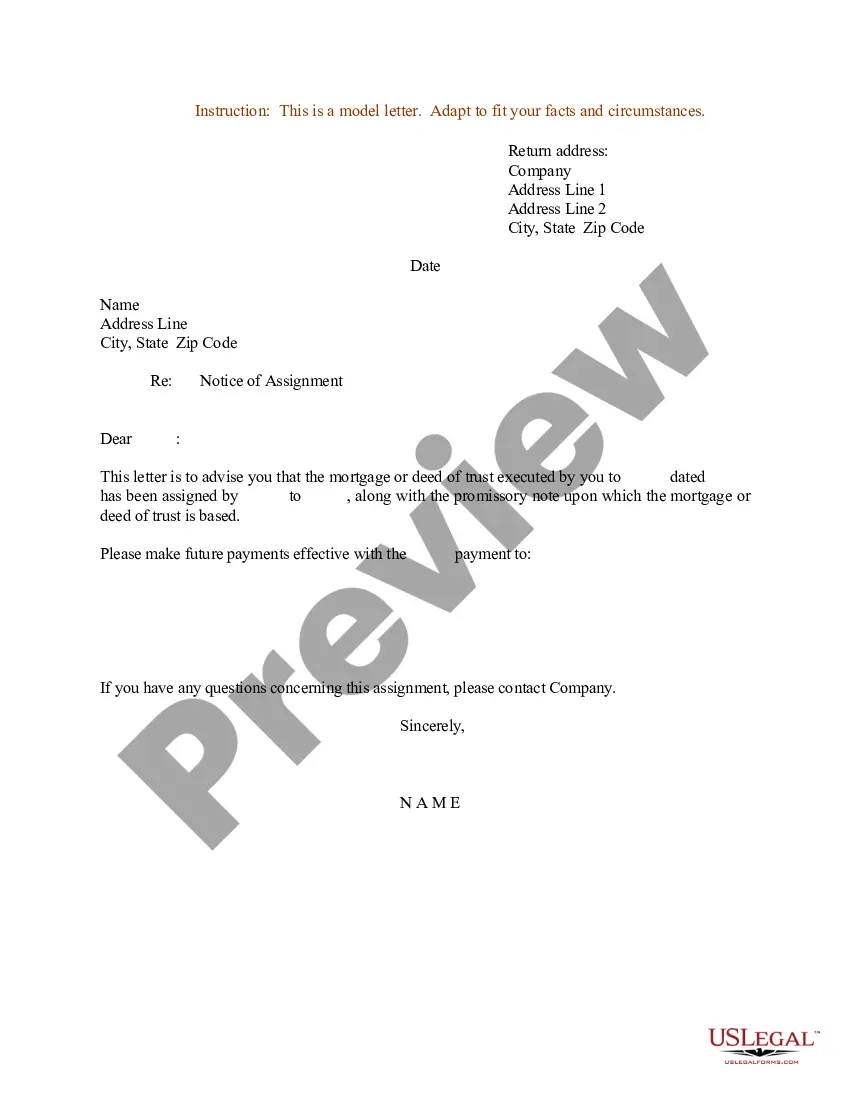
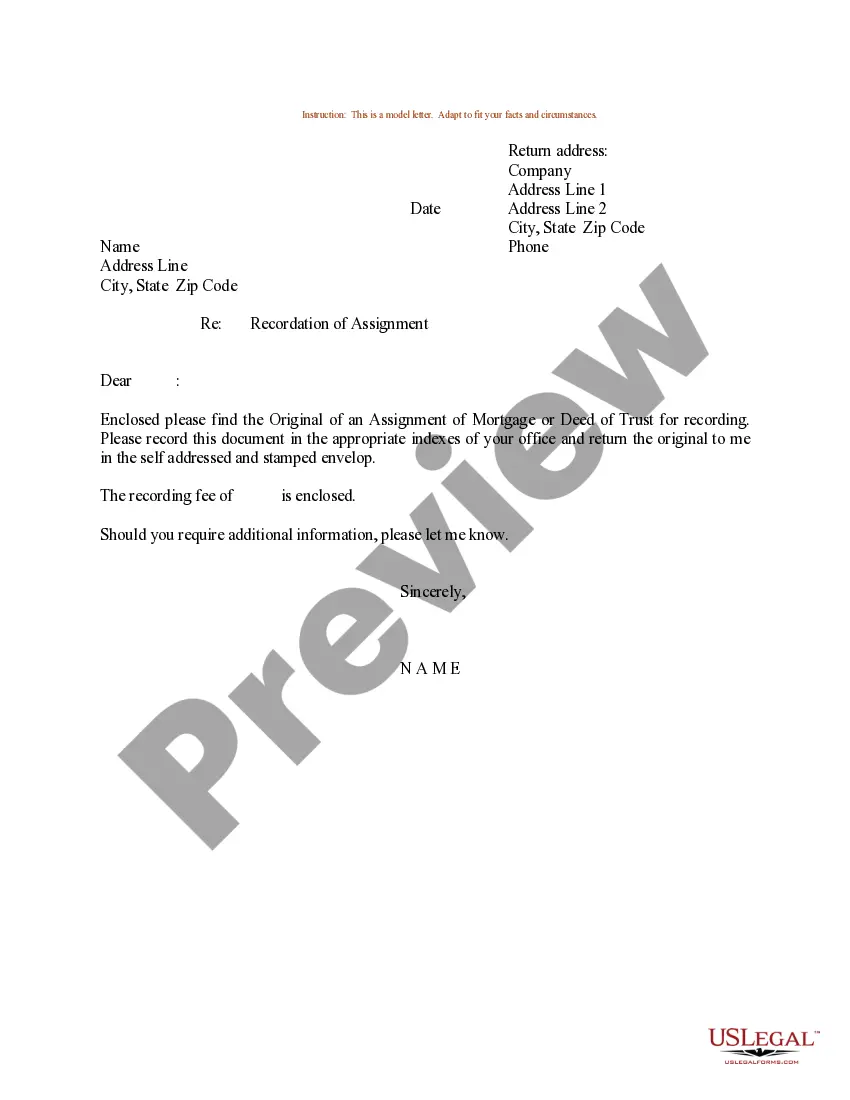
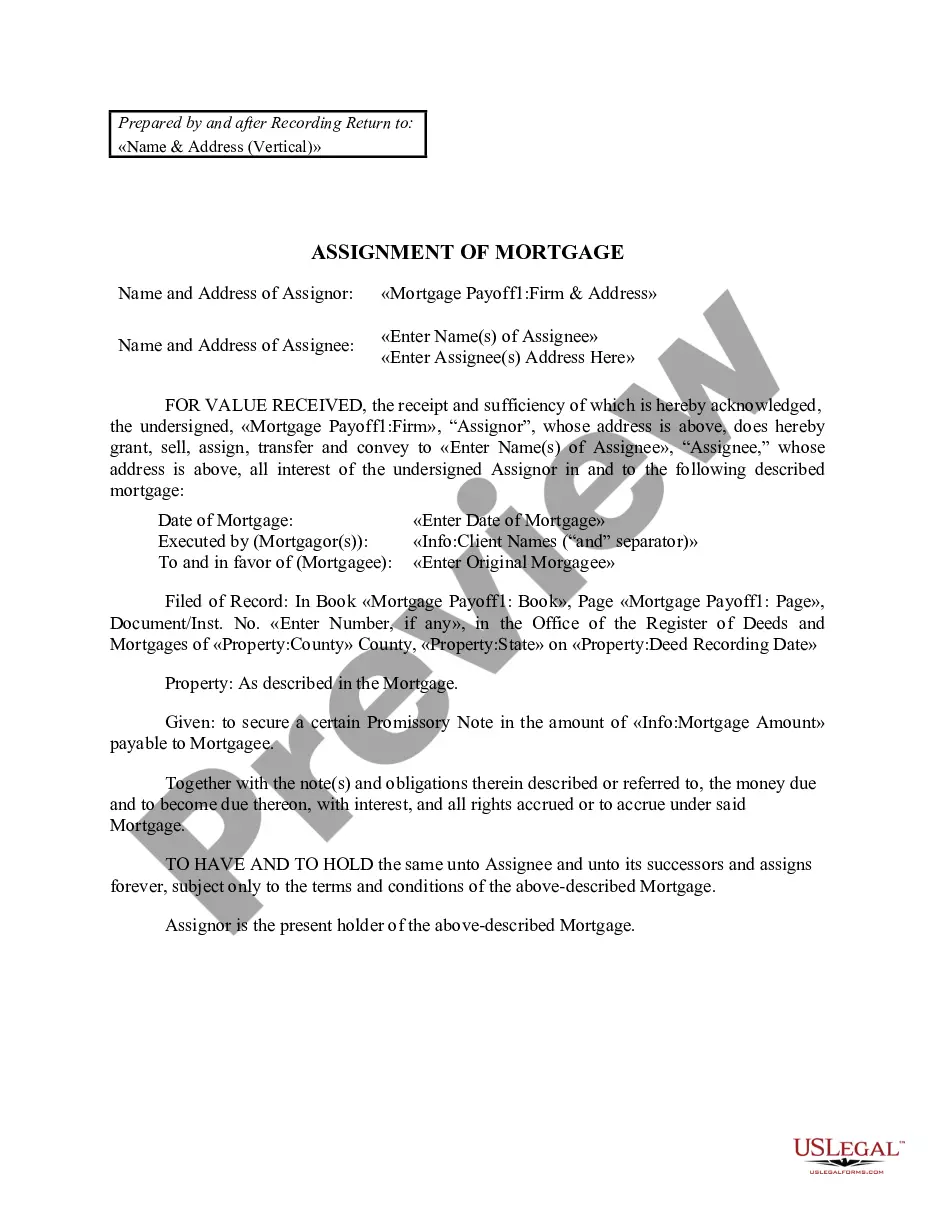
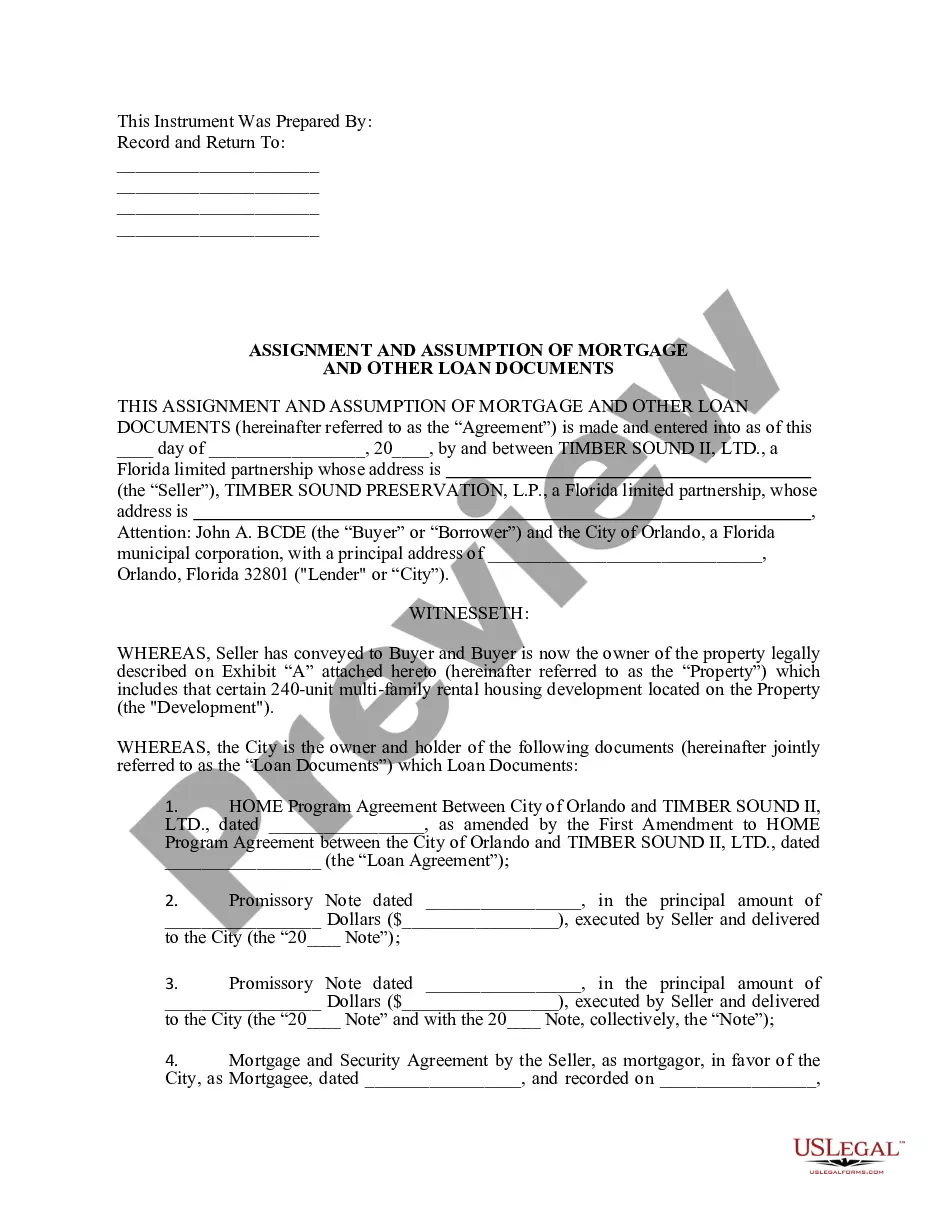
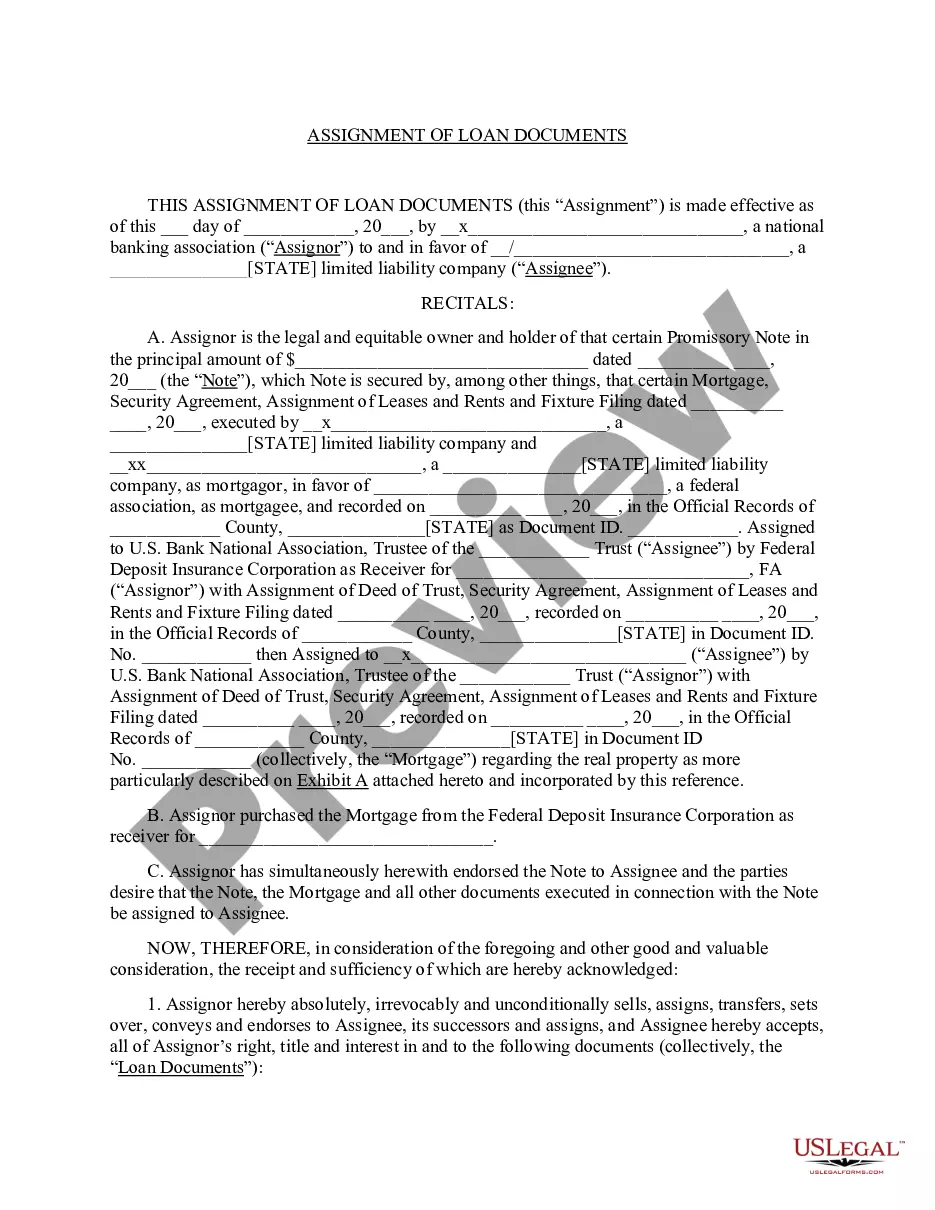
The Oregon Assignment of Mortgage Package includes essential forms and letters designed for the owner of a deed of trust or mortgage to transfer their interest in the mortgage to a third party. This package is particularly useful for both individual and corporate mortgage holders, ensuring that the transfer is conducted smoothly and legally. Unlike other mortgage-related form packages, this one contains specific assignments and notifications that are tailored for use in Oregon, providing users with the necessary documentation for their unique situations.
What’s included in this form package
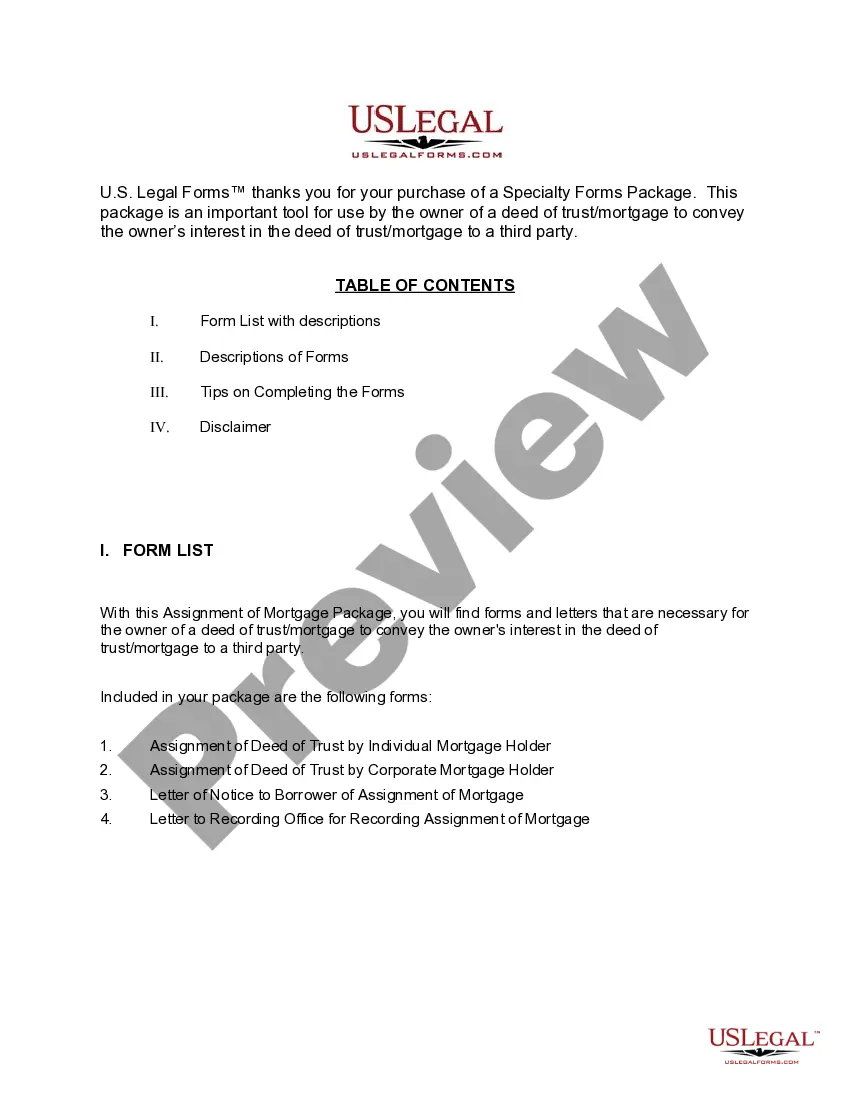
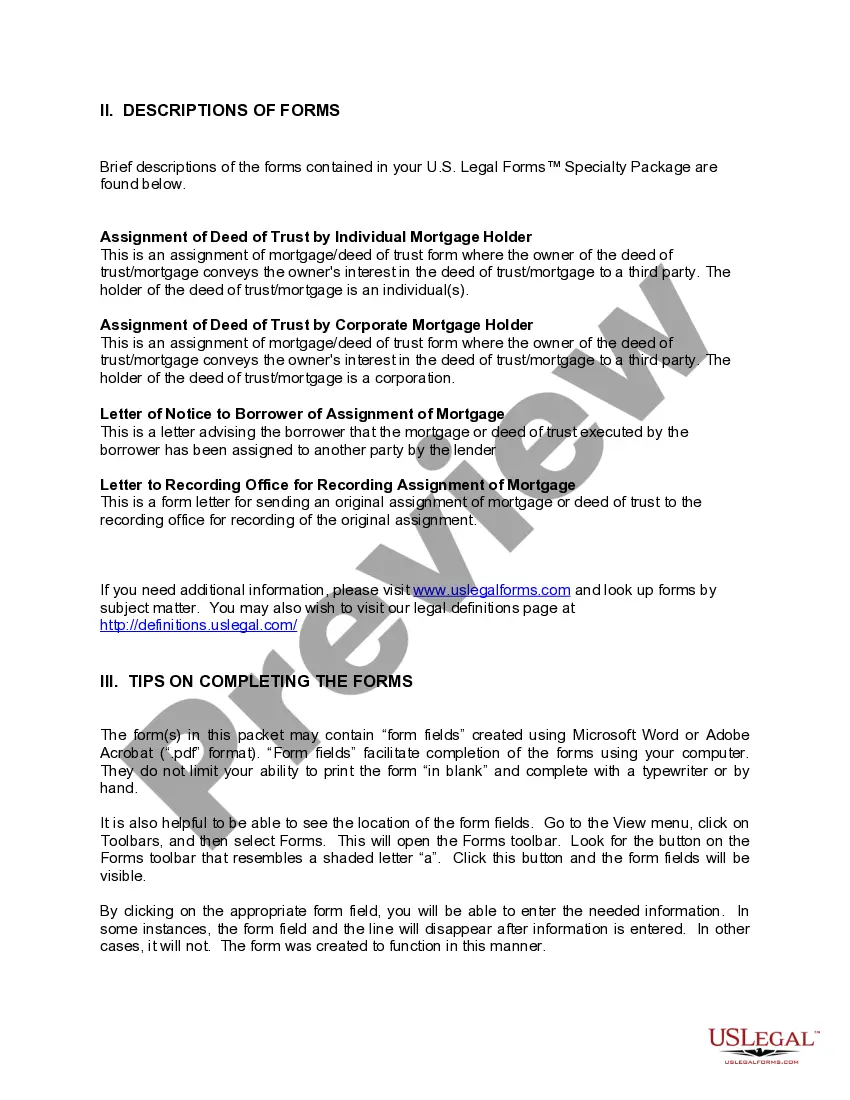
When to use this document
This form package is ideal for various scenarios, including:
- When a property owner wants to sell their mortgage rights to another lender or investor.
- When a corporation is looking to assign its mortgage interest to a different entity.
- In cases where borrowers need to be informed about the transfer of their mortgage to a new servicer.
- When compliance with local recording requirements is necessary for a valid assignment.
Who needs this form package
- Individual mortgage holders transferring their mortgage interest.
- Corporate entities that hold deeds of trust or mortgages.
- Real estate professionals assisting clients with mortgage assignments.
- Borrowers who need to be informed of a mortgage assignment.
How to prepare this document
- Review the included forms to understand their purpose and how they apply to your situation.
- Identify the parties involved in the assignment, including the assignor and assignee.
- Fill in the required information, making sure to provide accurate dates and signatures where needed.
- Complete the Letter of Notice to Borrower to inform the borrower of the mortgage assignment.
- Prepare the Letter to Recording Office if local law requires recording of the assignment.
Notarization details for included forms
Some forms in this package require notarization to be legally valid. US Legal Forms provides secure online notarization powered by Notarize, allowing you to complete the process through a verified video call, available 24/7.
Get your form ready online
Our built-in tools help you complete, sign, share, and store your documents in one place.
Make edits, fill in missing information, and update formatting in US Legal Forms—just like you would in MS Word.
Download a copy, print it, send it by email, or mail it via USPS—whatever works best for your next step.
Sign and collect signatures with our SignNow integration. Send to multiple recipients, set reminders, and more. Go Premium to unlock E-Sign.
If this form requires notarization, complete it online through a secure video call—no need to meet a notary in person or wait for an appointment.
We protect your documents and personal data by following strict security and privacy standards.

Make edits, fill in missing information, and update formatting in US Legal Forms—just like you would in MS Word.

Download a copy, print it, send it by email, or mail it via USPS—whatever works best for your next step.

Sign and collect signatures with our SignNow integration. Send to multiple recipients, set reminders, and more. Go Premium to unlock E-Sign.

If this form requires notarization, complete it online through a secure video call—no need to meet a notary in person or wait for an appointment.

We protect your documents and personal data by following strict security and privacy standards.
Mistakes to watch out for
- Failing to provide accurate property and borrower information on the forms.
- Neglecting to notify the borrower about the mortgage assignment in a timely manner.
- Forgetting to sign and date the Assignment of Deed of Trust.
- Not checking state recording requirements before submitting forms to local offices.
Benefits of completing this package online
- Convenience of accessing forms anytime from any location.
- Editability allows customization to fit your specific needs.
- Reliable legal forms developed by licensed attorneys.
- Quick download, saving valuable time in the documentation process.
Looking for another form?



Form popularity
FAQ
Purpose A gap mortgages allows funding for a property to continue while it is going through the process of selling.Documents required for a mortgage assignment are: Instead of having you pay off your old loan with money from your new lender, your original lender assigns your loan balance to the new one.
When discharging your mortgage, you are paying your current loan in full. The mortgage we have registered on the title of your property is removed, and we will no longer hold it as security.
Often, it is filed directly by the bank or a settlement attorney. However, in some cases, the discharge may be transmitted directly to the person who is paying off the mortgage upon making a final mortgage payment, and that person needs to record the discharge so that clear title can be conveyed to someone else.
A Satisfaction of Mortgage, also known as a Mortgage Lien Release, is a legal document provided by the mortgagee (financial institution) advising that the mortgage has been paid in full, all terms of the loan have been satisfied and there will no longer be a lien on the property.
How long does it take to discharge a mortgage? Generally it takes between 14-21 business days to complete the discharge process. At one stage it took less time, around 10-14 business days, but these days more people are refinancing their home loan so there are more discharges taking place.
An assignment transfers all of the original mortgagee's interest under the mortgage or deed of trust to the new bank. Generally, the mortgage or deed of trust is recorded shortly after the mortgagors sign it and, if the mortgage is subsequently transferred, each assignment is to be recorded in the county land records.
4. What do i need to know? The buyer's representative ensures that the seller's representative has allowed for the Discharge of Mortgage Fee in the adjustments. The Lodgement Fee for the Discharge of Mortgage is paid from the pool of source funds (e.g. loan proceeds or purchaser's equity).
Banks often sell and buy mortgages from each other as a way to liquidate assets and improve their credit ratings. When the original lender sells the debt to another bank or an investor, a mortgage assignment is created and recorded in the public record and the promissory note is endorsed.
A mortgage holder issues a deed of reconveyance to indicate that the borrower has been released from the mortgage debt. The deed transfers the property title from the lender, also called the beneficiary, to the borrower. This document is most commonly used when a mortgage has been paid in full.