Oregon Assignments of Rents
Overview of this form
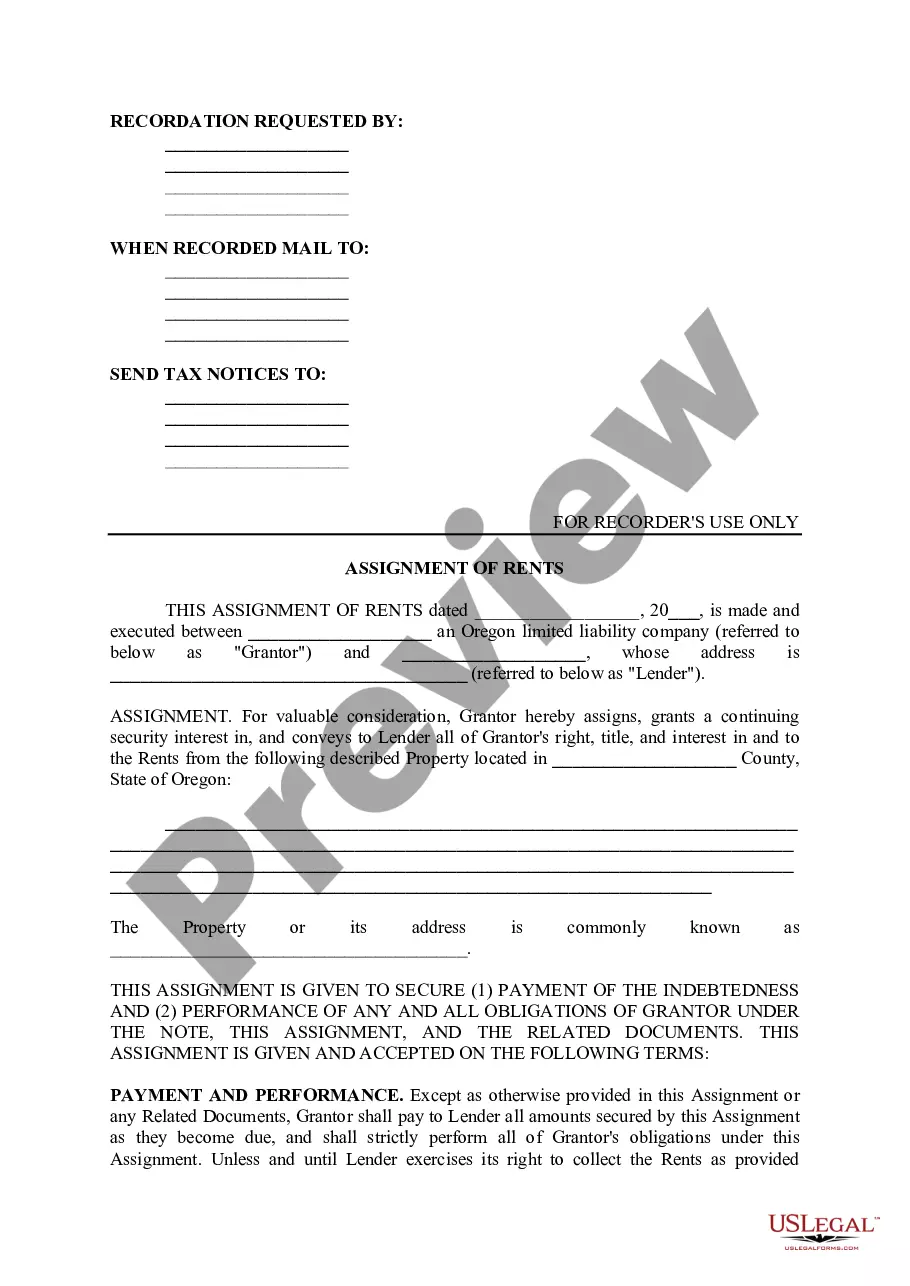
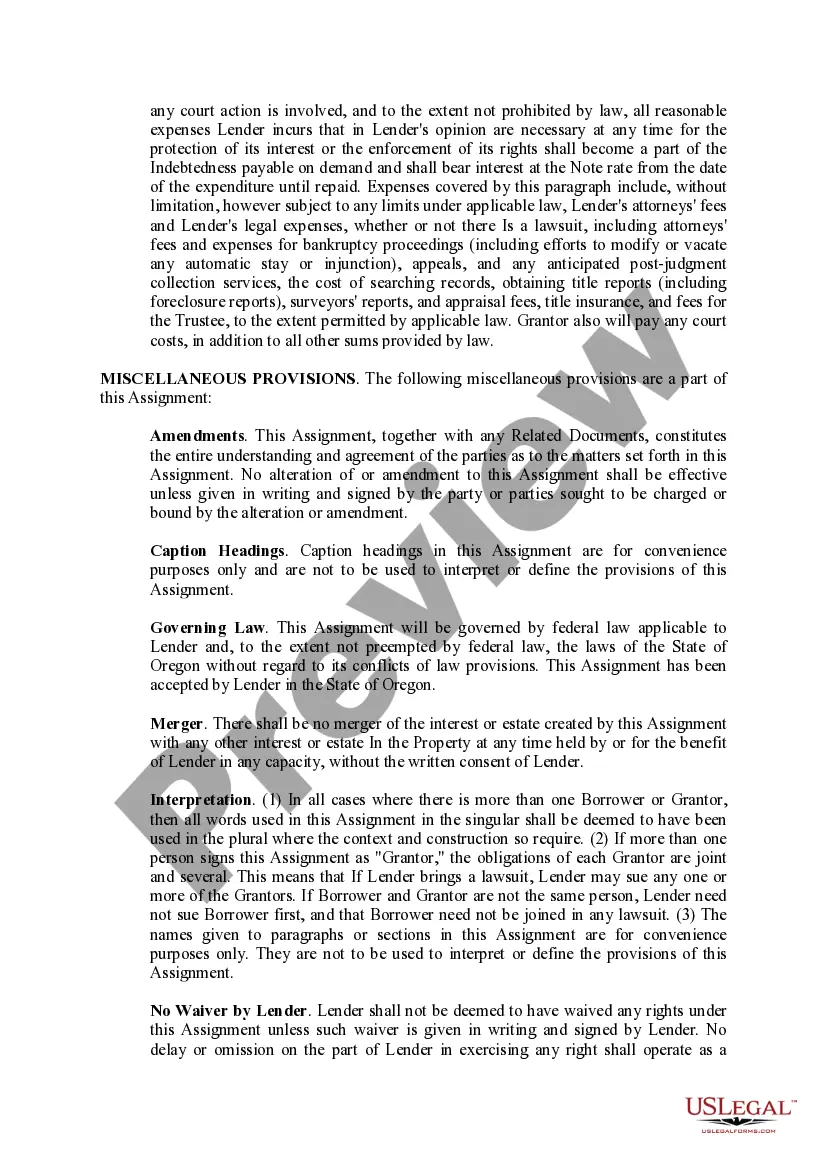
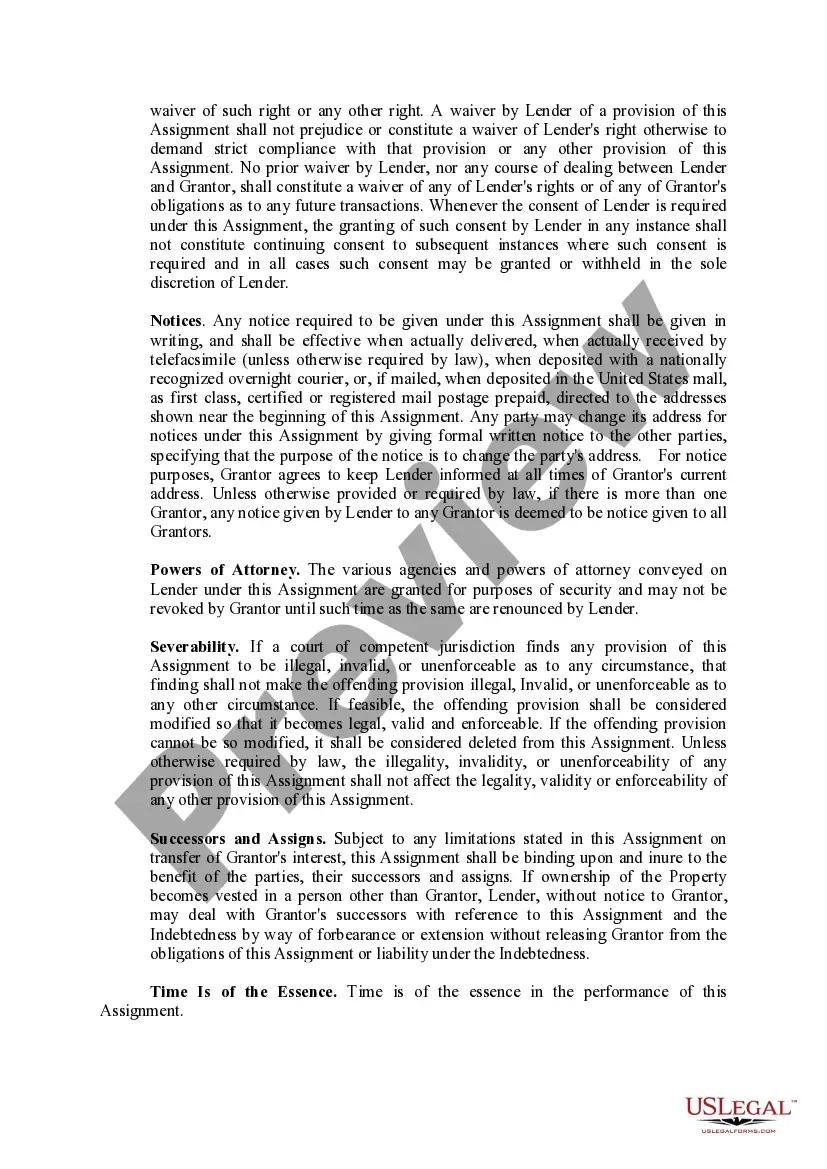
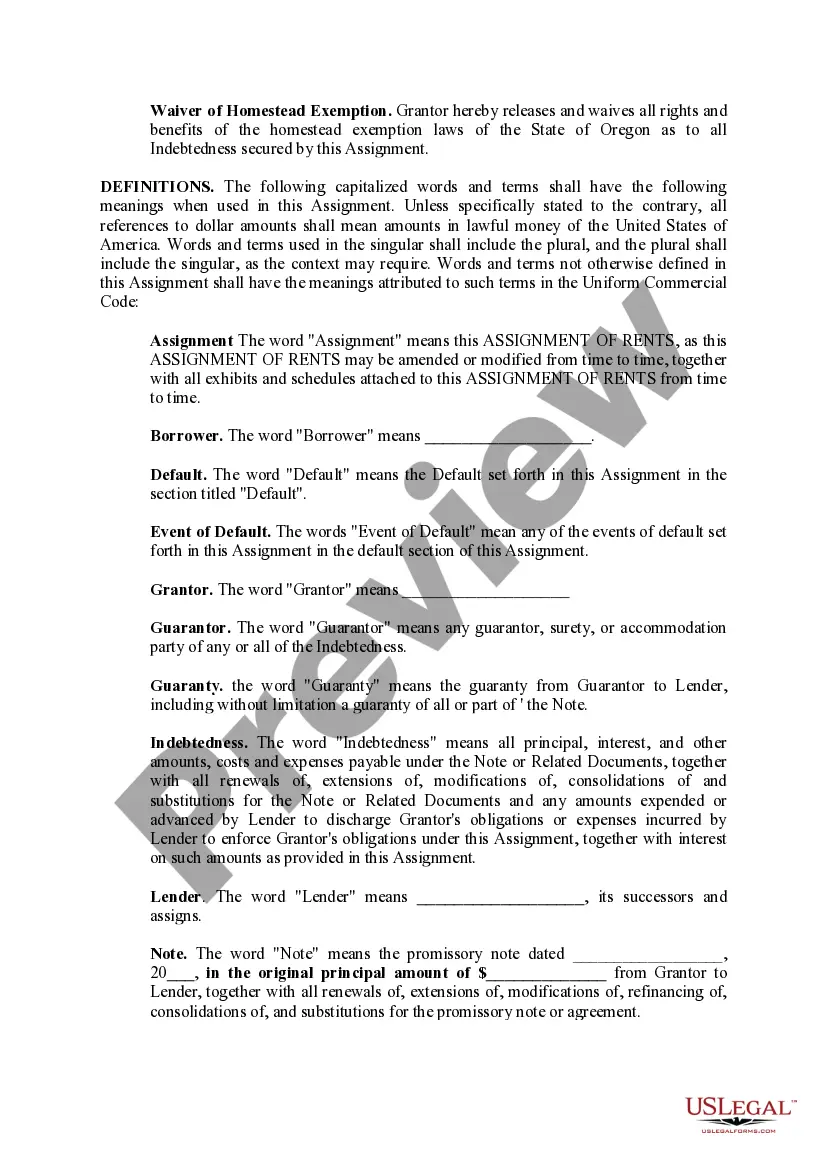
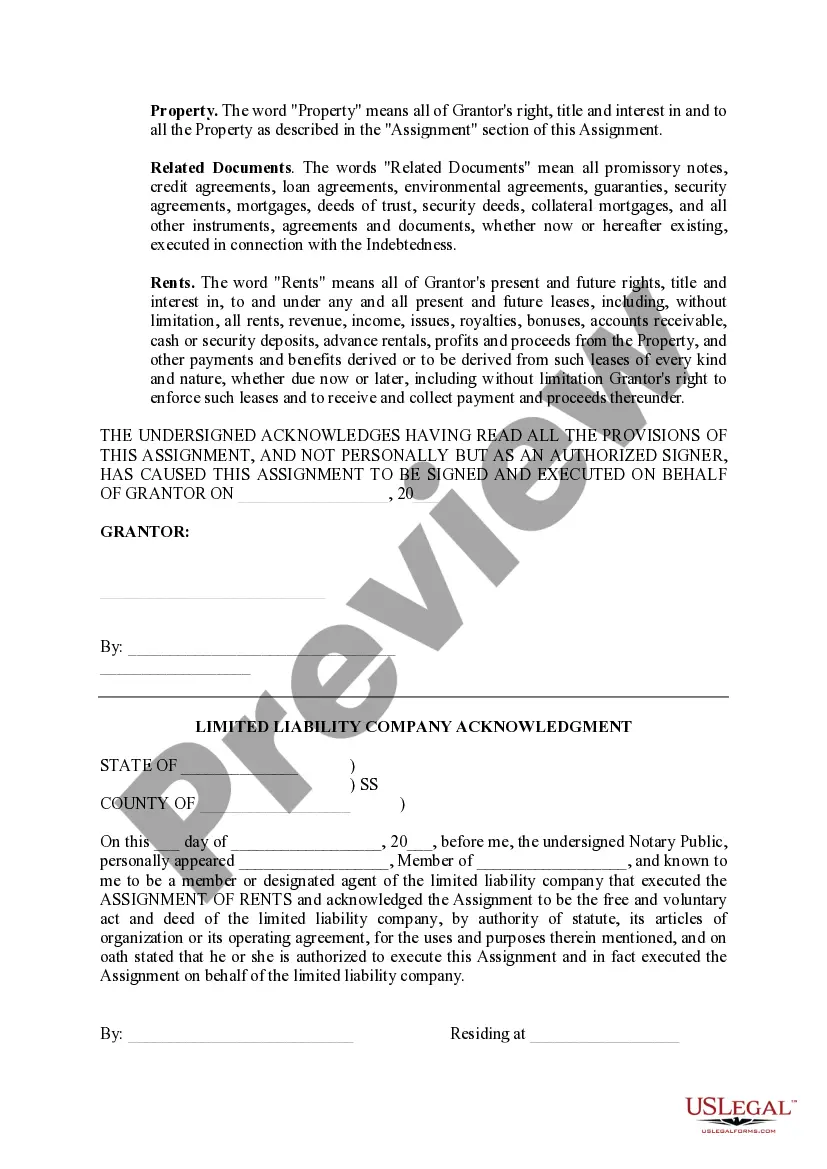
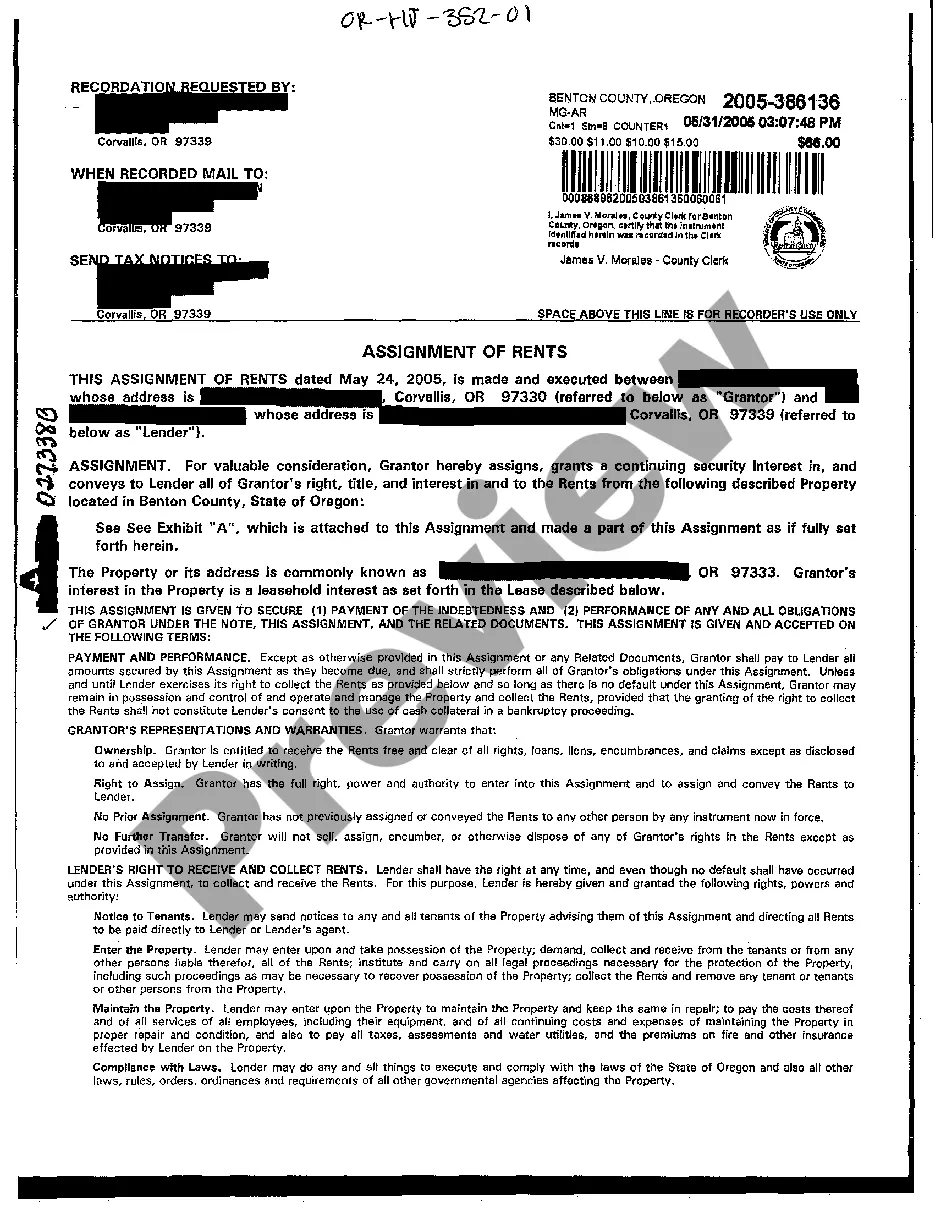
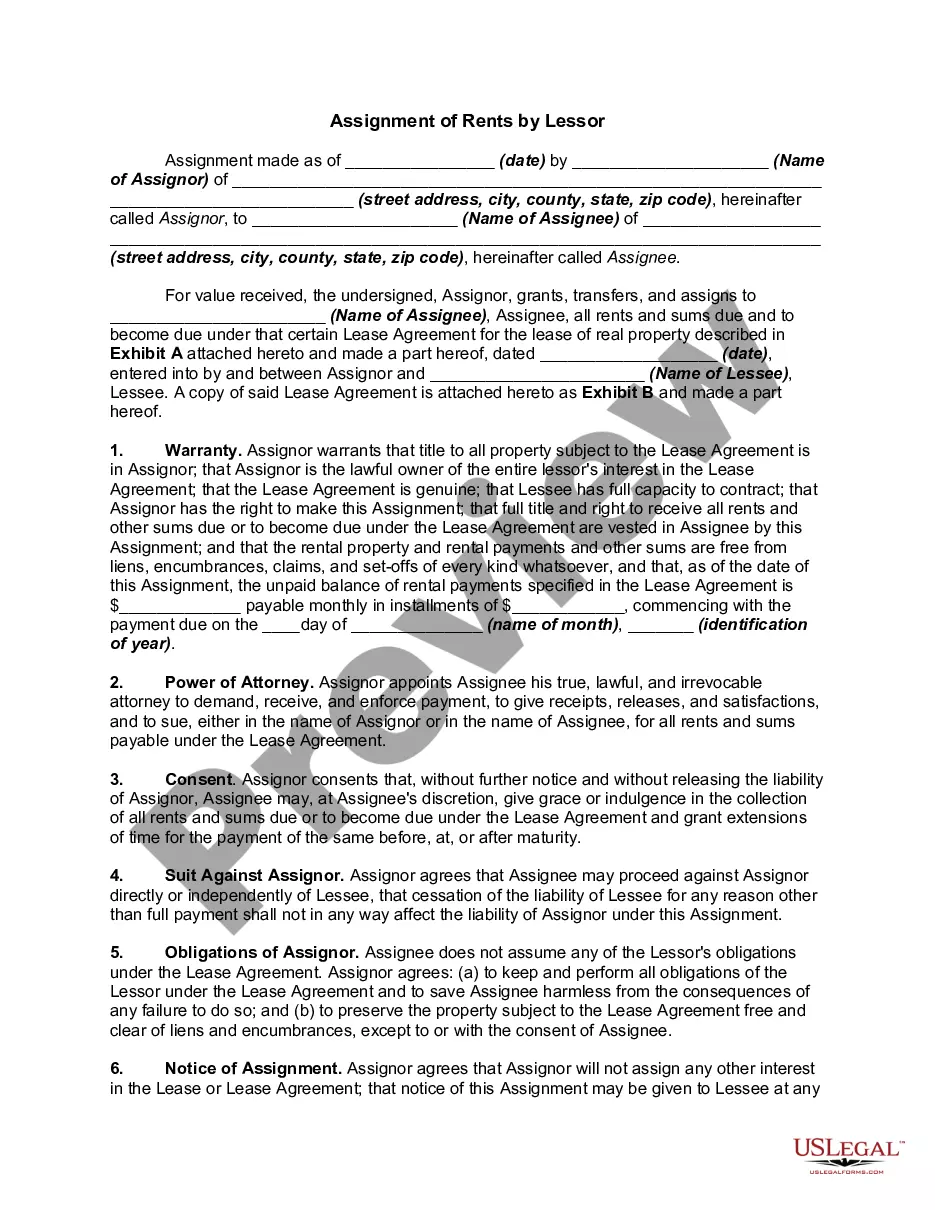
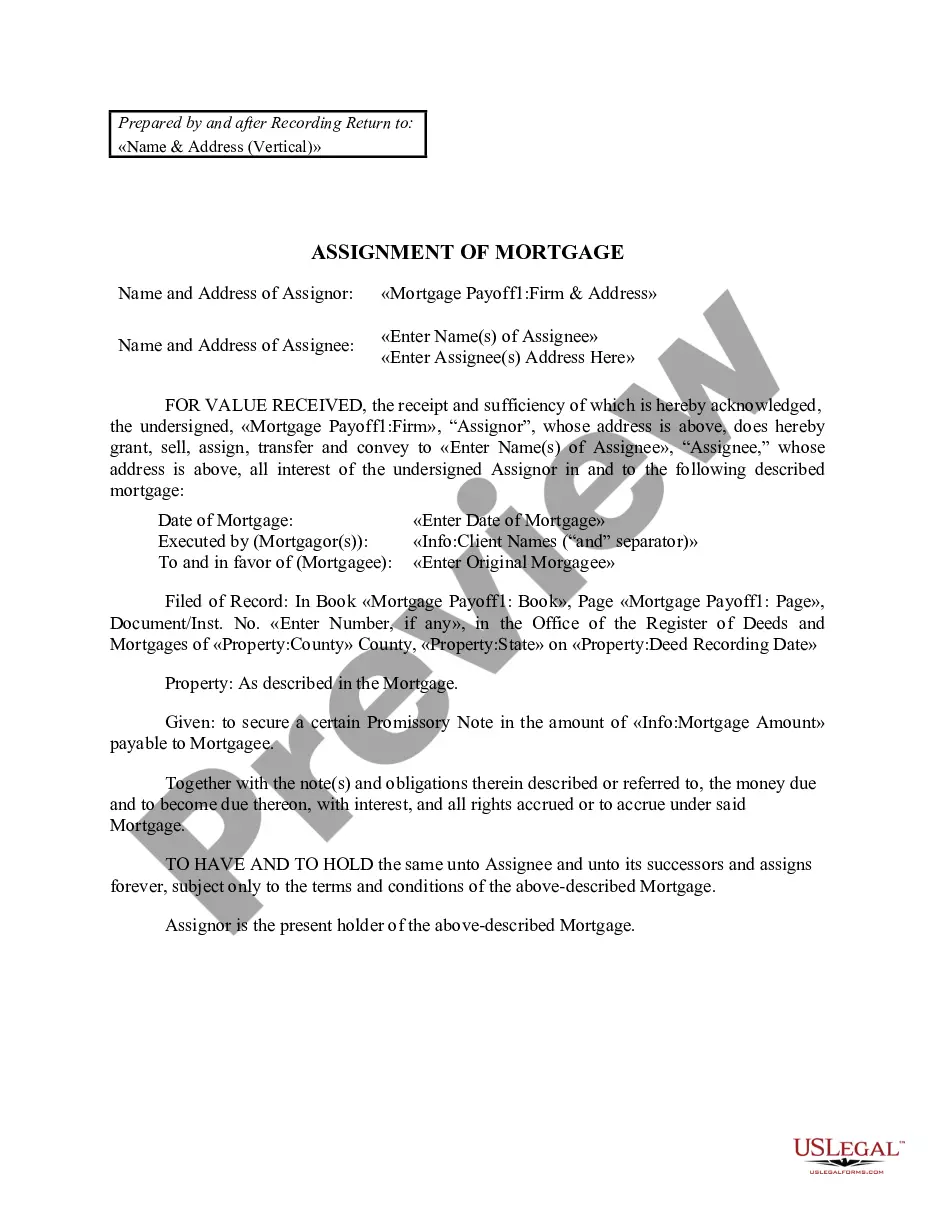
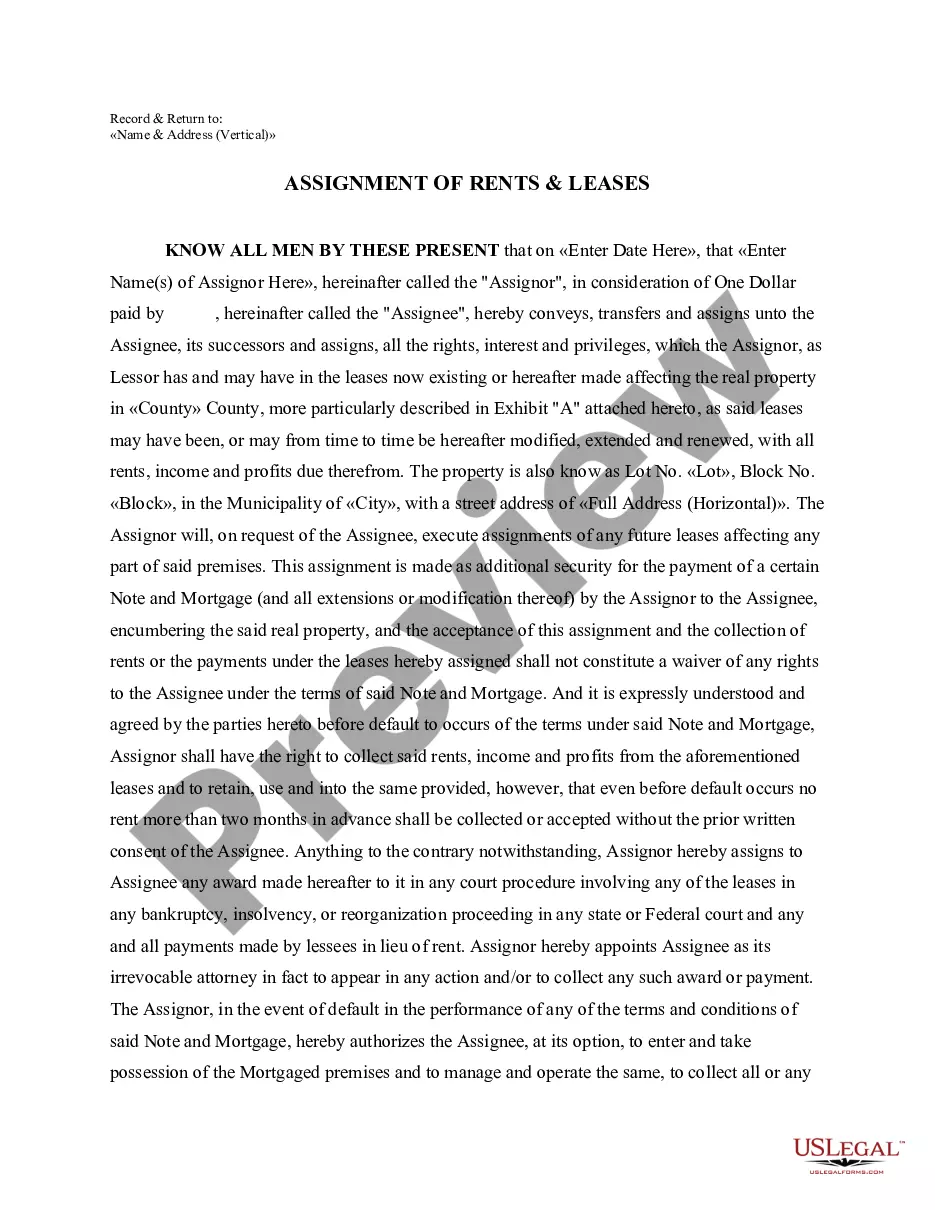
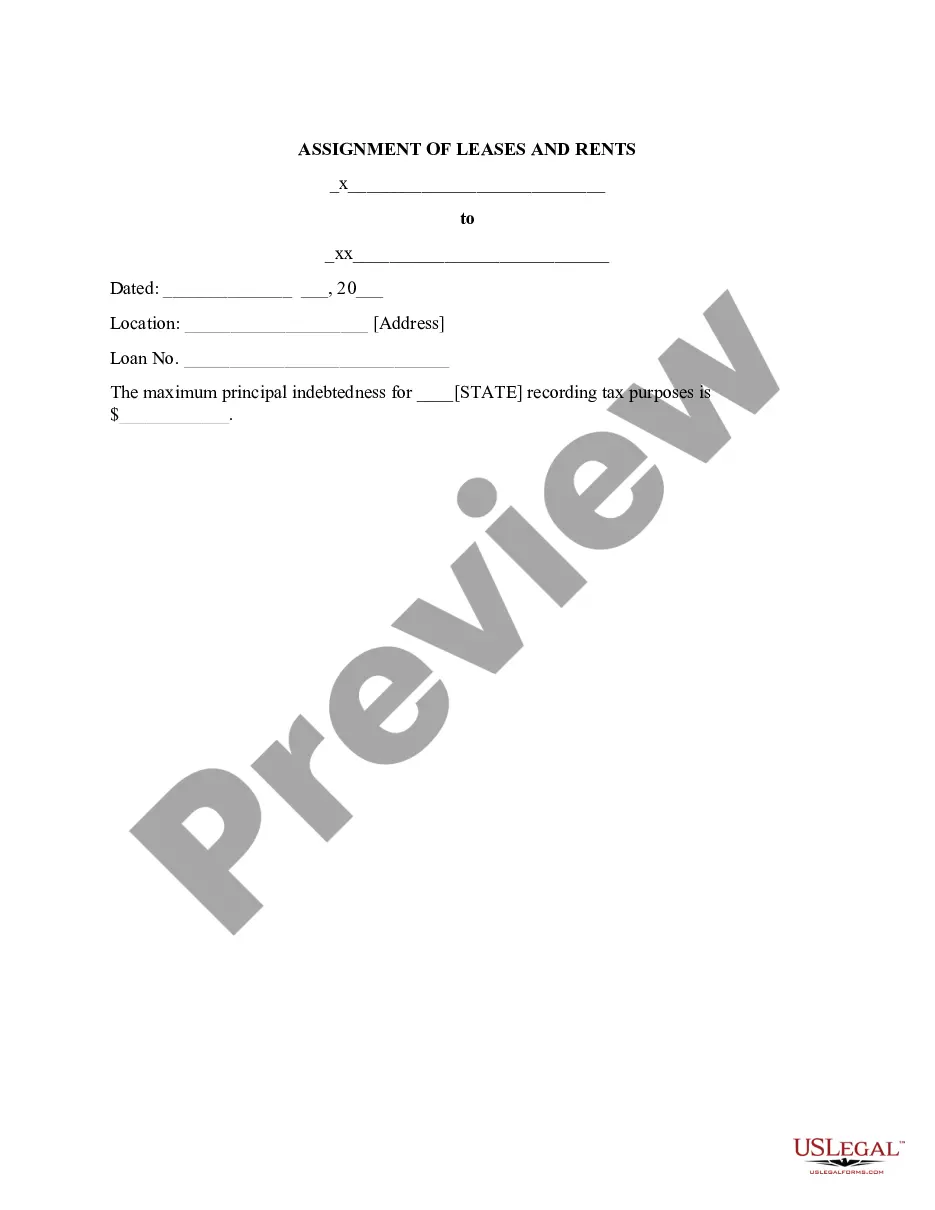
The Assignment of Rents is a legal document that allows a property owner, known as the Grantor, to assign their rights to collect rents from a property to a lender as collateral for a loan. This form serves a crucial purpose in mortgage agreements by providing security for the repayment of a debt. Unlike other property forms, this assignment specifically focuses on rents generated by the property, ensuring that the lender has control over these funds if the Grantor defaults on the loan.
Main sections of this form
- Grantor and Lender Identification: Names and addresses of the parties involved.
- Property Description: Details about the property from which rents will be collected.
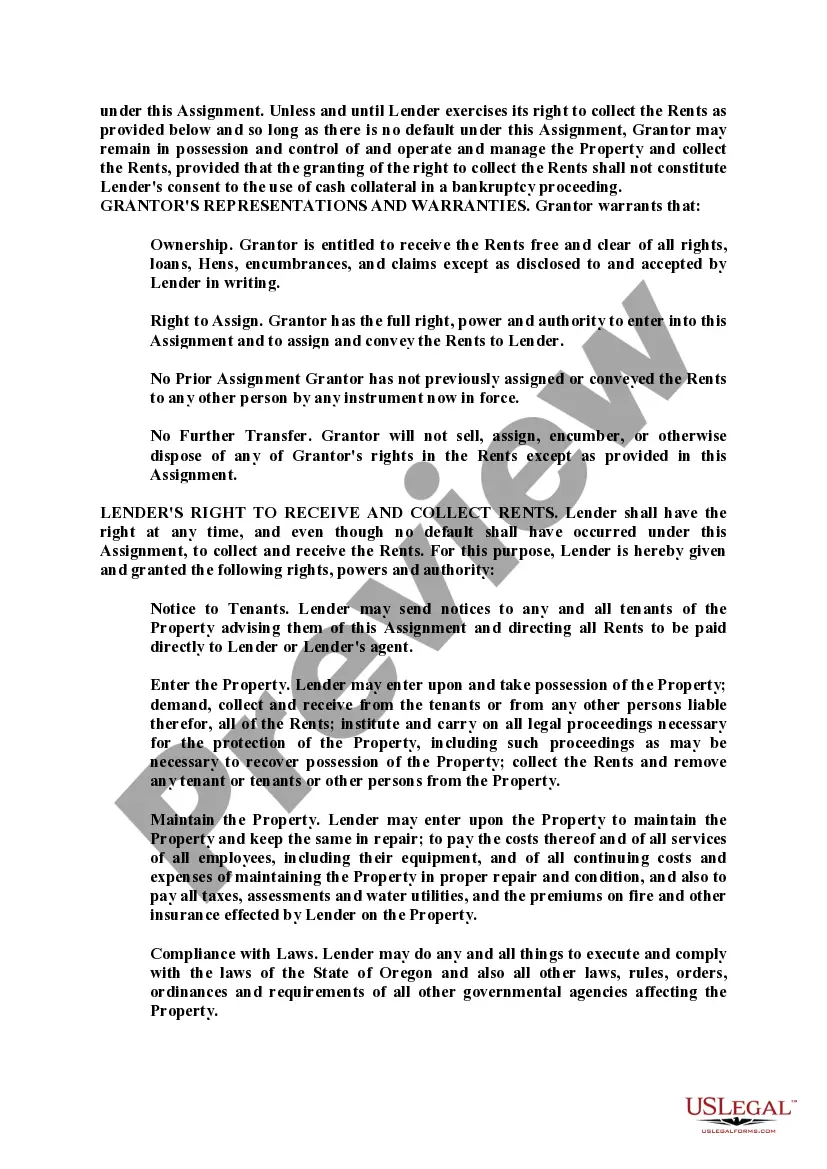
- Grantor's Obligations: Statements outlining the responsibilities of the Grantor related to payments and property management.
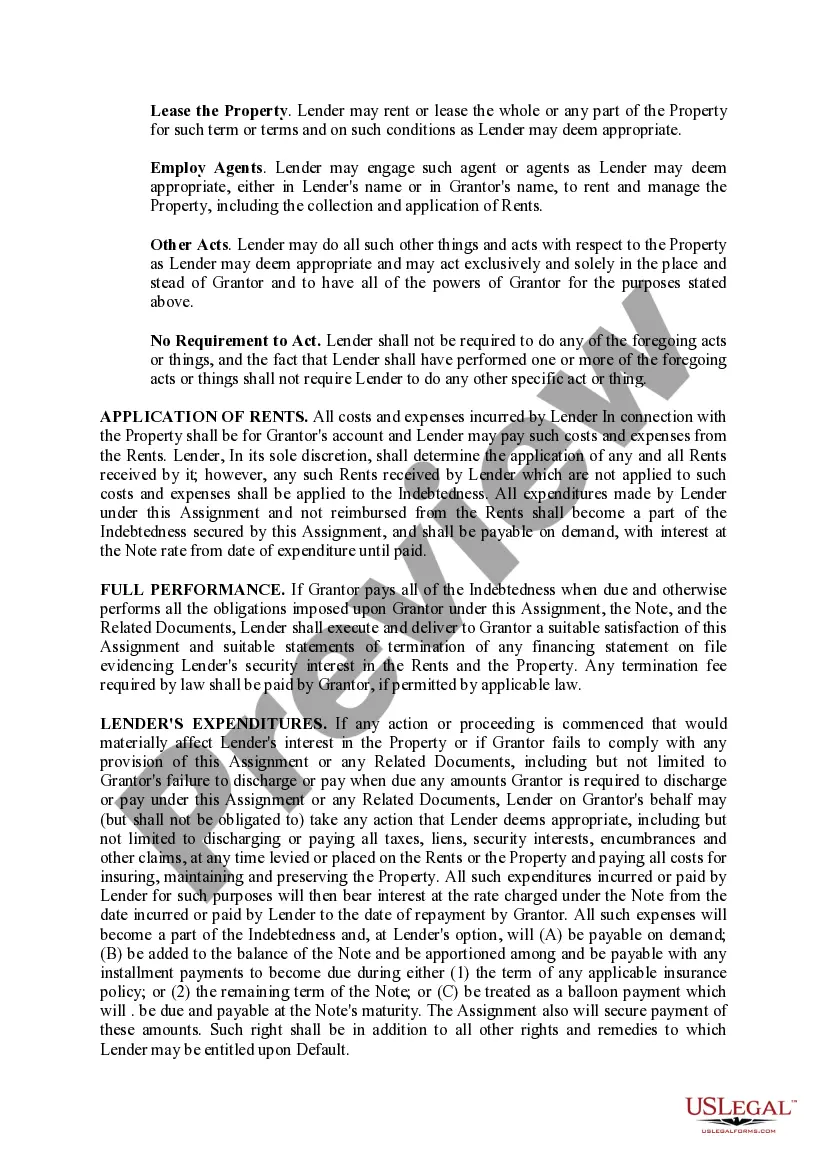
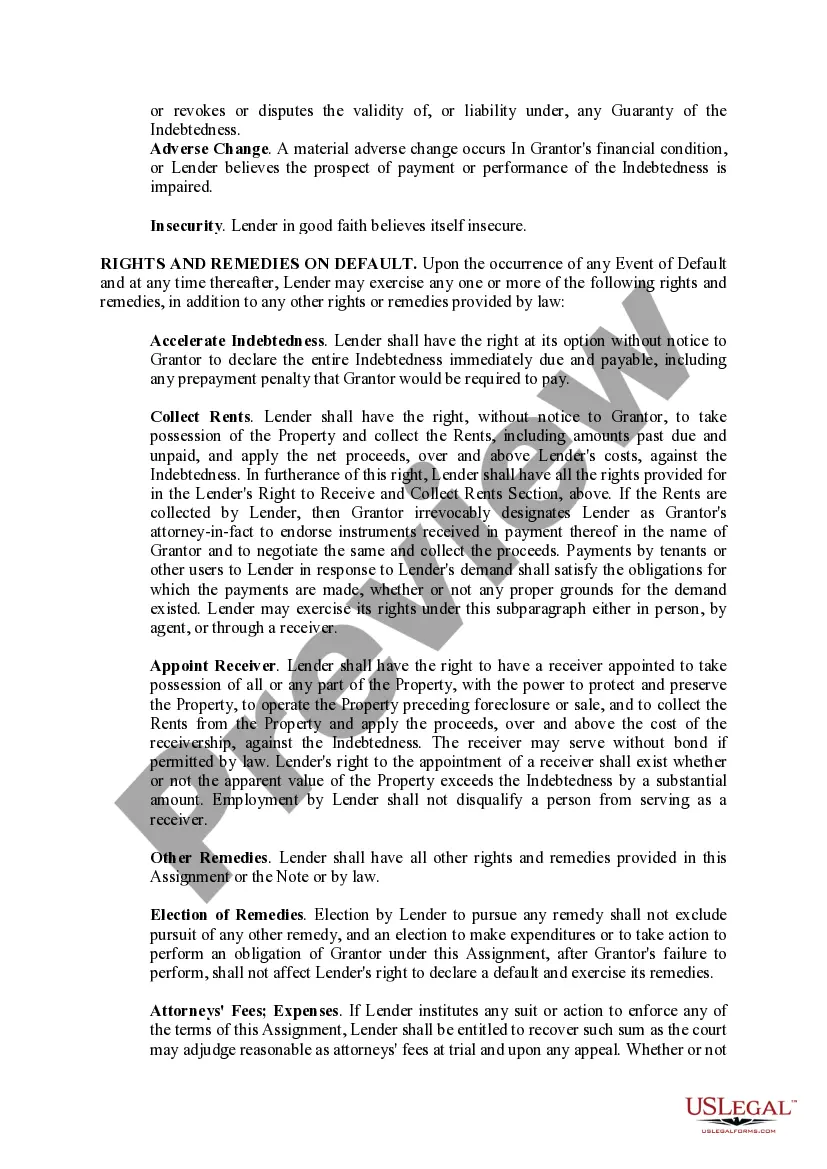
- Lender's Rights: Powers granted to the Lender to collect rents and manage the property in case of default.
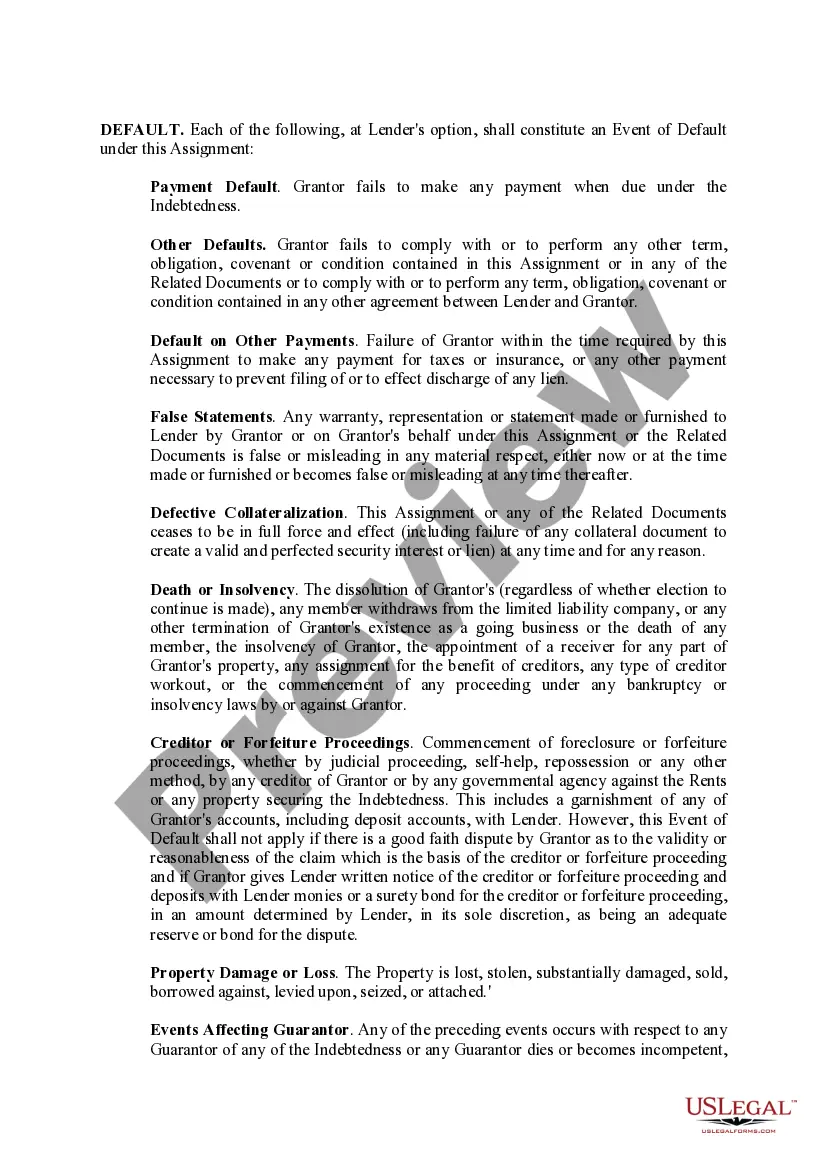
- Default Conditions: Specific events that would constitute a default under the agreement.

When this form is needed
This form should be used when a property owner is securing a loan with rental income from their property. It is particularly beneficial in cases where the property generates sufficient cash flow through rentals, as it provides the lender with assurance that they can collect those rents if the borrower fails to meet their obligations. Typical scenarios include financing for purchasing investment properties or refinancing existing loans.
Who can use this document
- Property owners looking to obtain a loan using rental income as collateral.
- Lenders who require additional security for a property loan.
- Investors in real estate who wish to formalize the rent assignment process.
- Individuals or businesses involved in loan agreements that involve commercial or residential rental properties.
Steps to complete this form
- Identify the parties involved by filling in the names and addresses of the Grantor and Lender.
- Provide a detailed description of the property, including its address and any specific characteristics.
- Specify the terms of the assignment, including rights, responsibilities, and conditions of default.
- Enter the date of the agreement and ensure proper signatures from both parties.
- If required, have the document notarized to ensure its legal validity.
Notarization guidance
Yes, this form must be notarized to be legally valid if required by local law. US Legal Forms offers integrated online notarization services, providing accessible and secure video calls for notarization.
Get your form ready online
Our built-in tools help you complete, sign, share, and store your documents in one place.
Make edits, fill in missing information, and update formatting in US Legal Forms—just like you would in MS Word.
Download a copy, print it, send it by email, or mail it via USPS—whatever works best for your next step.
Sign and collect signatures with our SignNow integration. Send to multiple recipients, set reminders, and more. Go Premium to unlock E-Sign.
If this form requires notarization, complete it online through a secure video call—no need to meet a notary in person or wait for an appointment.
We protect your documents and personal data by following strict security and privacy standards.

Make edits, fill in missing information, and update formatting in US Legal Forms—just like you would in MS Word.

Download a copy, print it, send it by email, or mail it via USPS—whatever works best for your next step.

Sign and collect signatures with our SignNow integration. Send to multiple recipients, set reminders, and more. Go Premium to unlock E-Sign.

If this form requires notarization, complete it online through a secure video call—no need to meet a notary in person or wait for an appointment.

We protect your documents and personal data by following strict security and privacy standards.
Typical mistakes to avoid
- Failing to accurately describe the property, which could cause issues in enforcement.
- Not including all necessary terms regarding the management of rents, leading to misunderstandings.
- Inadequately identifying the parties' roles, which may lead to disputes in the future.
- Neglecting to have the form notarized when required by local law.
Benefits of using this form online
- Convenient access to legal forms without the need for a lawyer appointment.
- Editable templates that allow users to customize the document to their specific situation.
- Secure digital storage options for important legal documents.
- Guidance provided through the completion process to reduce errors and ensure compliance.
Looking for another form?

Form popularity
FAQ
Oregon stands out as one of the most tenant friendly states in the country. Besides requiring long notice periods on every action taken by the landlord, Oregon became the first state to impose a statewide rent control law.
Statewide, landlords cannot raise the rent more than 7% plus inflation annually. Inflation is calculated using the Consumer Price Index published by the U.S. Bureau of Labor Statistics. For 2020, the maximum rent increase is 9.9%.
Starting on January 1, 2021, a landlord can evict for unpaid rent that came due between October 1 and December 31. Under the new law, a landlord can give the tenant a notice saying how much rent the tenant owes and will have to pay back by March 31, 2021. October 1, 2020 to December 31, 2020.
Indiana. Indiana laws allow landlords to hold on to security deposits for 45 days to give them time to determine any damages caused by tenants. Colorado. Colorado is one of few states that allow landlords to access the rental property without an advance notice requirement. Georgia.
On September 17th, the State of Oregon's Office of Economic Analysis debuted the maximum rent increase rate for 2021 to be 9.2%. SB 608 set the maximum rent increase formula to be 7% plus the West Coast Consumer Price Index, which changes every year. For 2020 the maximum increase was 9.9%.
For 2020, the maximum rent increase is 9.9%. Between tenants, there is no limit to how much the rent can go up (except if a short-term tenant was just evicted from the unit, a provision that discourages a revolving door of tenants for rent increases.)
Legal cause is defined by Oregon law. The most common legal cause for eviction is the tenant's failure to pay rent. However, under Oregon law, the landlord can also evict the tenant for violating the lease or rental agreement or committing an illegal act on the premises of the rental unit (among other things).
Your landlord also can't use the right of entry to inspect your belongings. You have the right to refuse entry after receiving a 24-hour notice. You may refuse entry by specifically alerting the landlord of your decision, or you may attach a written notice of refusal to the front of your apartment in a secure manner.
Vermont ranked first among the renter-friendly states, followed closely by Delaware and Hawaii who were tied for second place. Rhode Island, Arizona, D.C., Maine and Alaska Statutes also seem to take good care of their renters according to our analysis.