Oregon Trust Deed
About this form
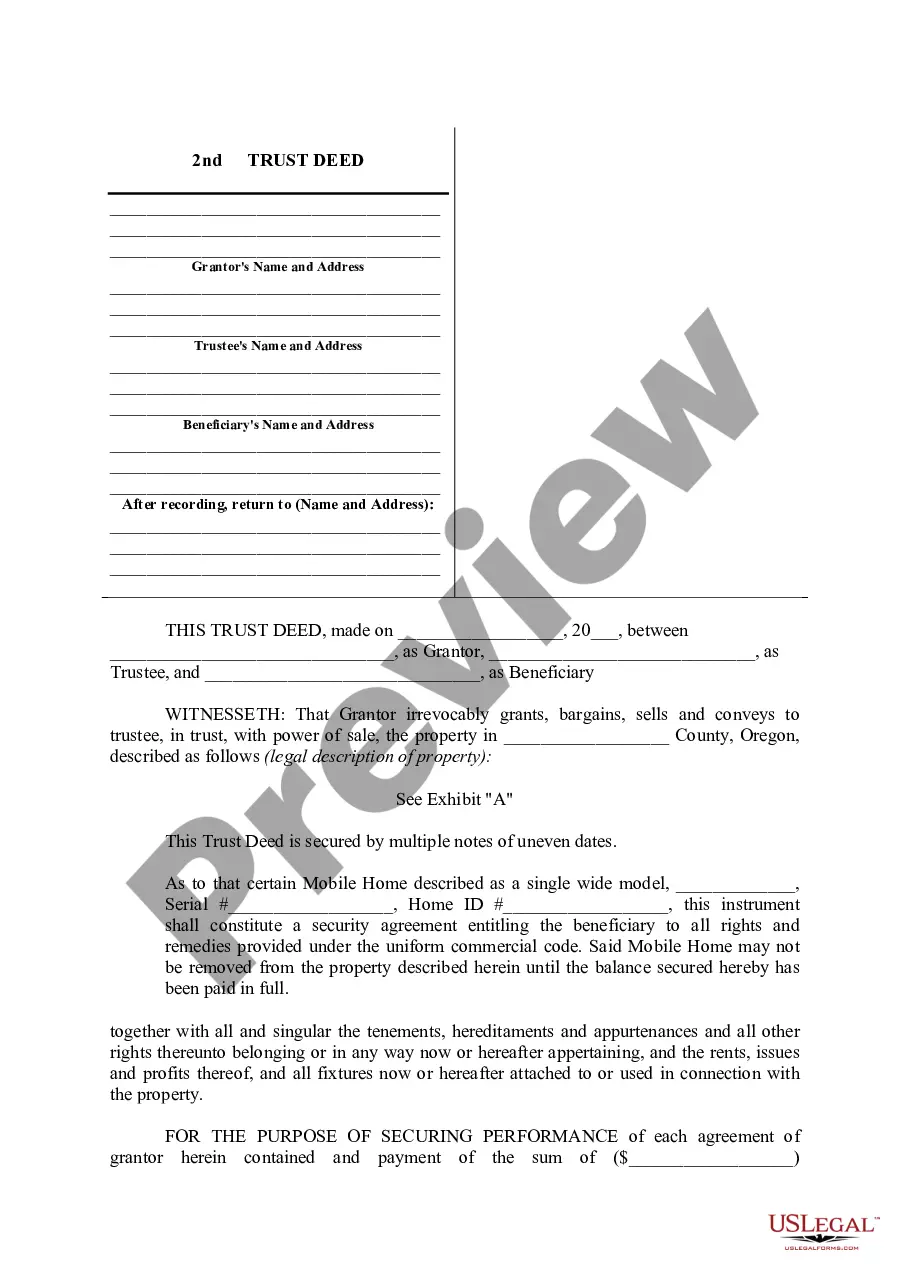
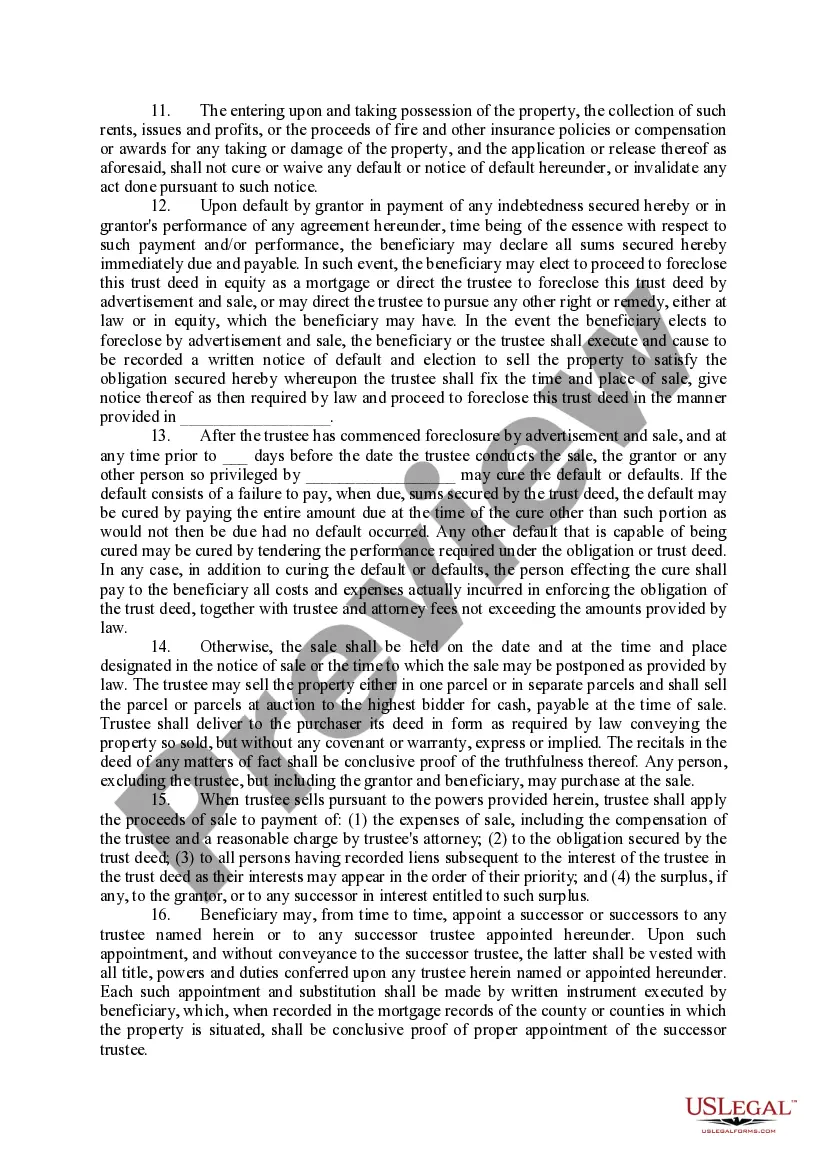
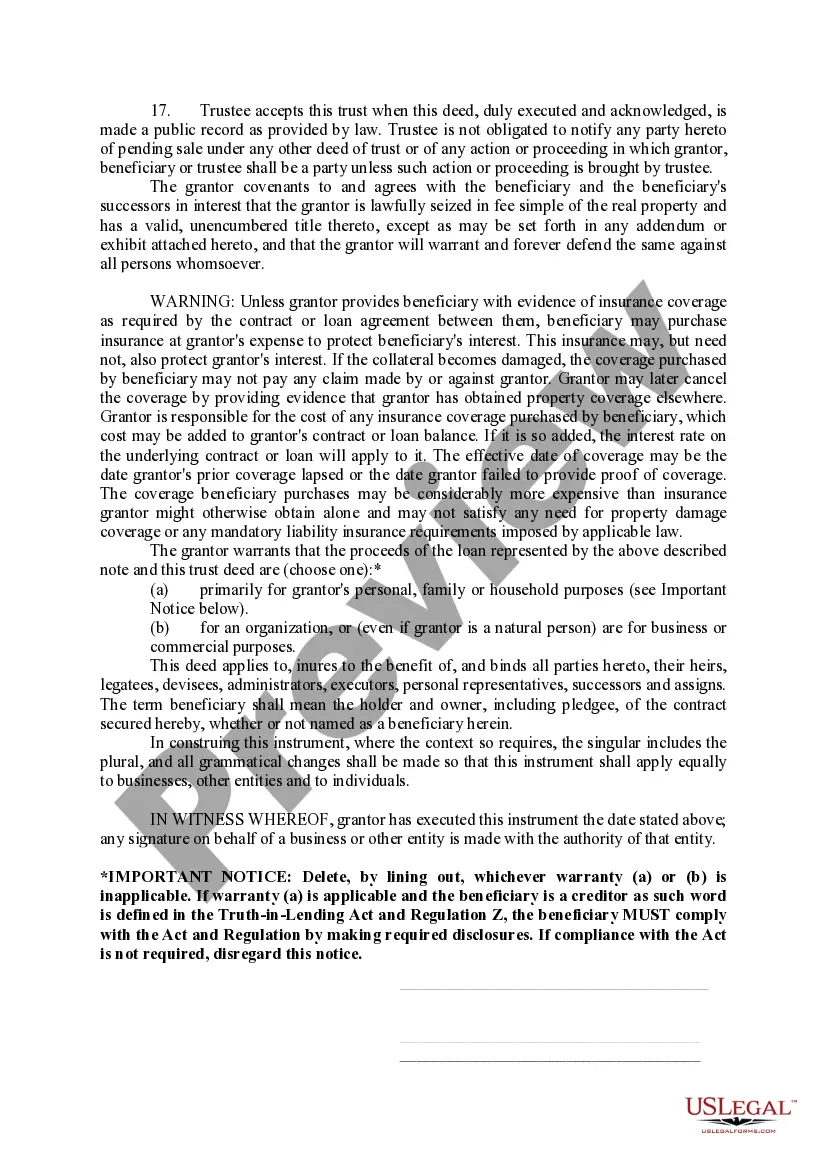
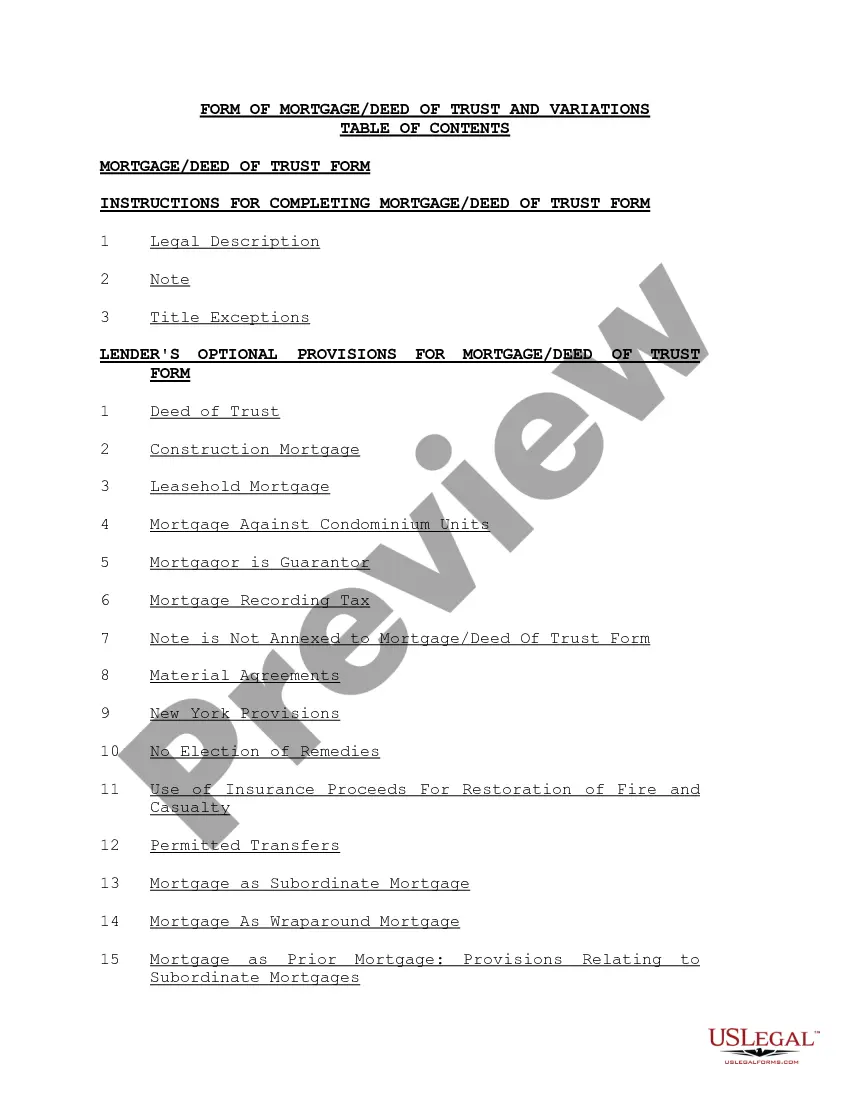
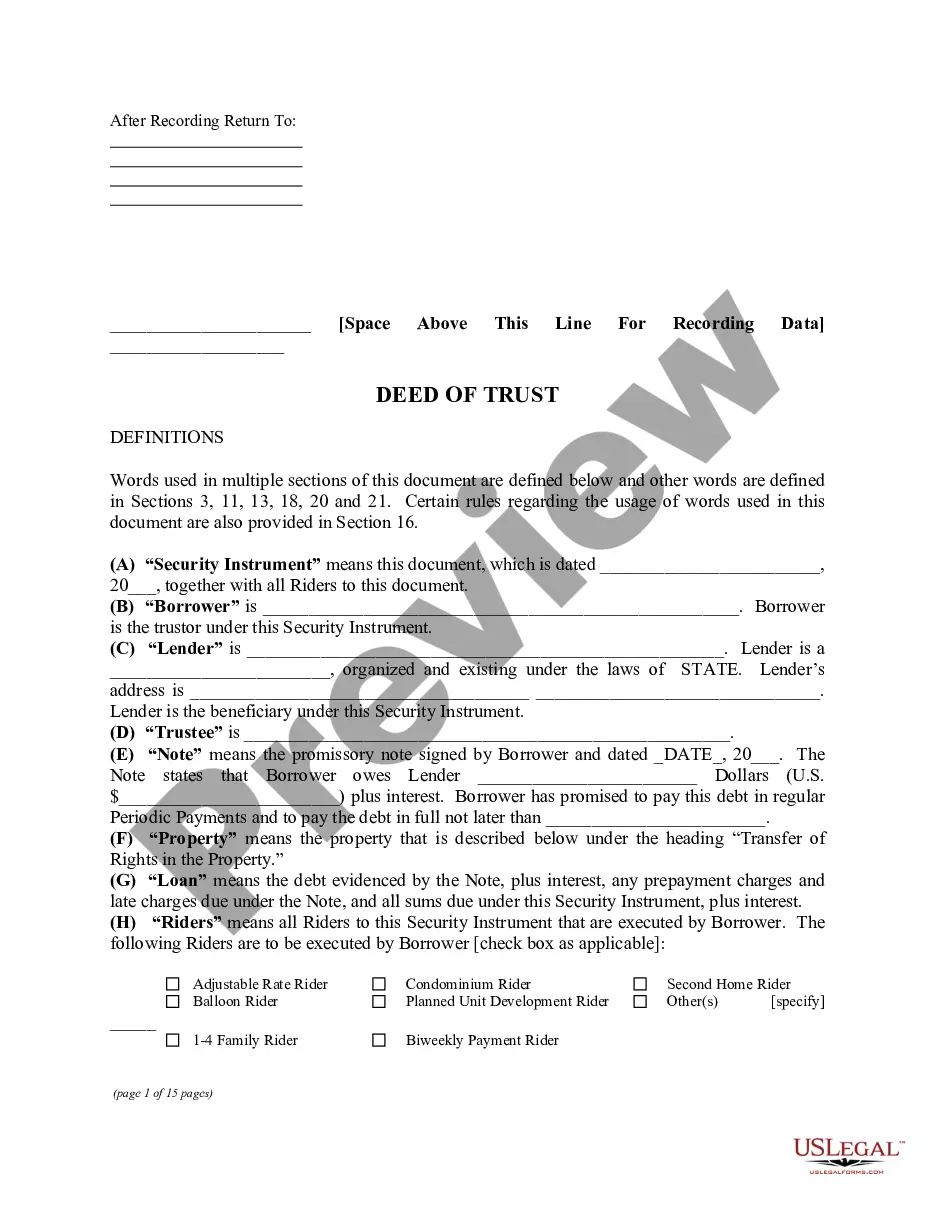
A Trust Deed is a legal document that establishes a security interest in real property by transferring legal title to a trustee. This trustee holds the property as collateral for a loan between a borrower and a lender. Unlike a traditional mortgage, a Trust Deed involves three parties: the grantor (borrower), the trustee, and the beneficiary (lender). This form is essential for securing loans where real estate is used as collateral, ensuring clarity in the agreement between involved parties.
What’s included in this form
- Grantor's information: Name and address of the property owner.
- Trustee's information: Name and address of the appointed trustee.
- Beneficiary's information: Name and address of the lender or financial institution.
- Legal description of the property: Detailed description of the real estate being secured.
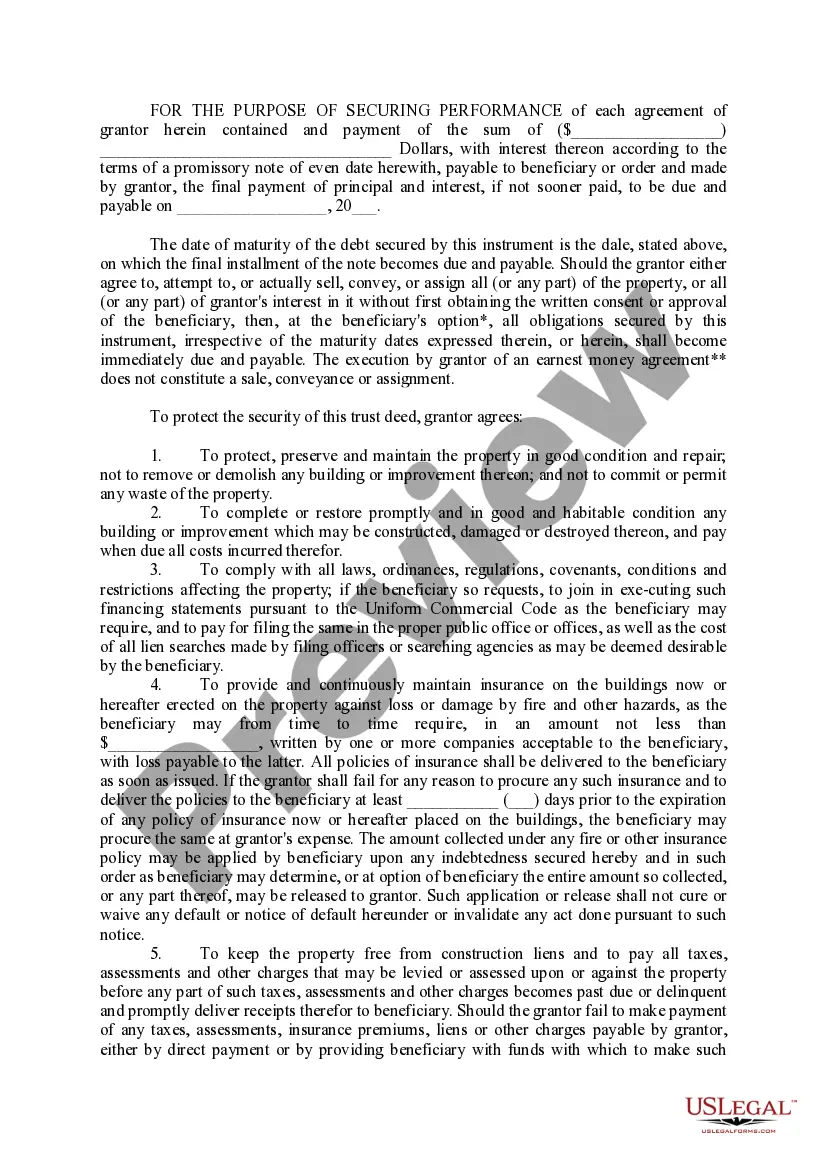
- Terms of the loan: Amount borrowed, interest rate, and payment schedule.
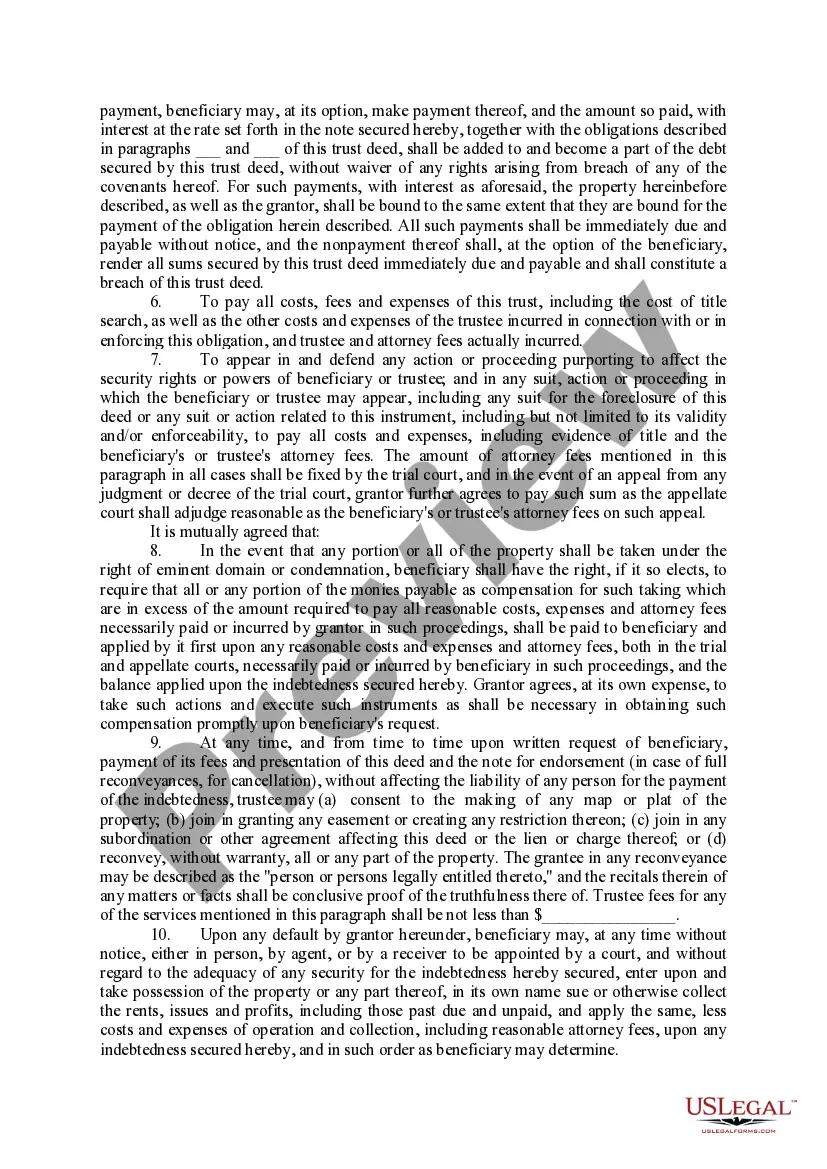
- Conditions for default: Details on what constitutes a default by the borrower.



When to use this form
This Trust Deed should be used when a borrower needs to secure a loan with real estate. It is applicable in scenarios where property ownership is being used to guarantee repayment of a debt. Typical situations include purchasing a home, refinancing existing debt, or when additional loans are needed against existing property equity.
Who should use this form
- Property owners seeking to secure a loan using their real estate as collateral.
- Lenders looking to protect their interest in the loan through a legal claim on the borrower's property.
- Trustees appointed to manage the property on behalf of the lender until the loan obligation is fulfilled.
How to prepare this document
- Identify the parties involved: Fill in the names and addresses of the grantor, trustee, and beneficiary.
- Specify the property: Provide a detailed legal description of the real estate being secured.
- Enter loan details: Specify the amount of the loan, interest rate, and payment terms.
- Sign and date the form: Ensure all parties sign and date the document to validate the agreement.
- Have the document notarized: If required, ensure proper notarization to meet legal standards.
Notarization guidance
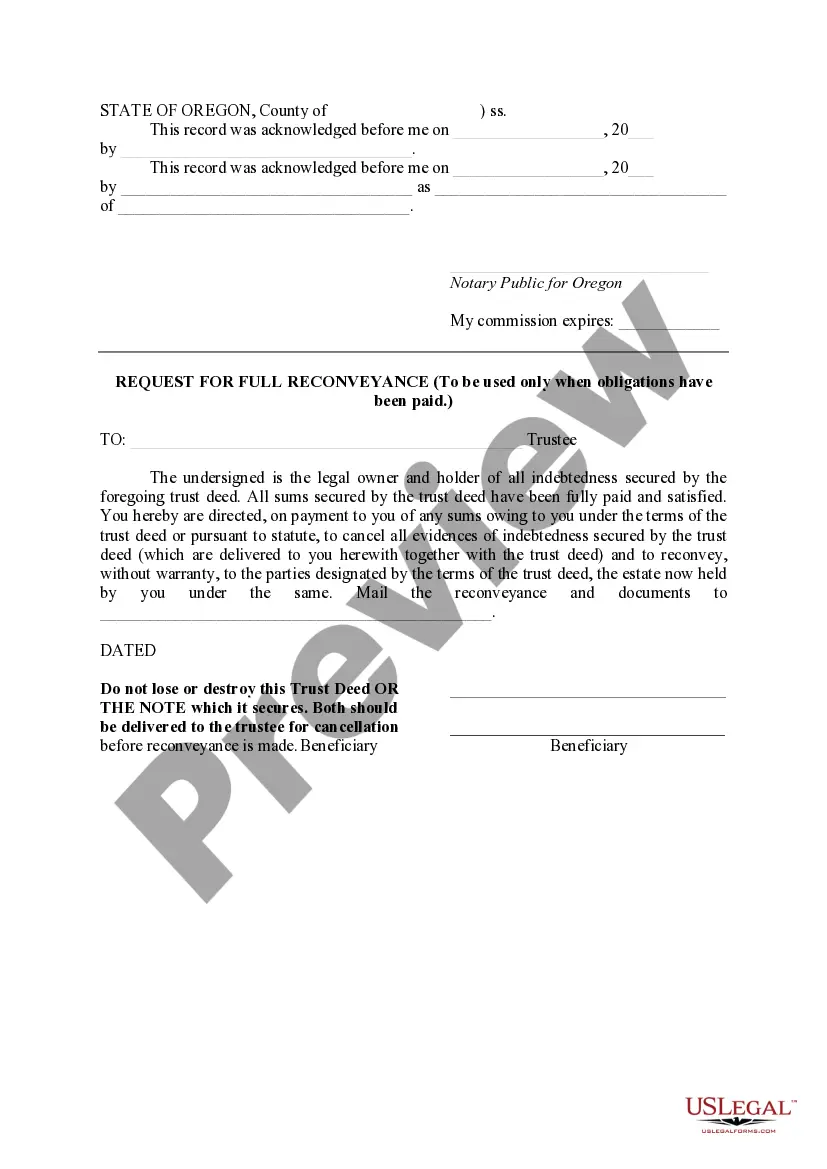
Yes, this form must be notarized to be legally valid. US Legal Forms offers integrated online notarization, allowing you to complete the process via a secure video call, ensuring convenience and compliance without the need for travel.
Get your form ready online
Our built-in tools help you complete, sign, share, and store your documents in one place.
Make edits, fill in missing information, and update formatting in US Legal Forms—just like you would in MS Word.
Download a copy, print it, send it by email, or mail it via USPS—whatever works best for your next step.
Sign and collect signatures with our SignNow integration. Send to multiple recipients, set reminders, and more. Go Premium to unlock E-Sign.
If this form requires notarization, complete it online through a secure video call—no need to meet a notary in person or wait for an appointment.
We protect your documents and personal data by following strict security and privacy standards.

Make edits, fill in missing information, and update formatting in US Legal Forms—just like you would in MS Word.

Download a copy, print it, send it by email, or mail it via USPS—whatever works best for your next step.

Sign and collect signatures with our SignNow integration. Send to multiple recipients, set reminders, and more. Go Premium to unlock E-Sign.

If this form requires notarization, complete it online through a secure video call—no need to meet a notary in person or wait for an appointment.

We protect your documents and personal data by following strict security and privacy standards.
Avoid these common issues
- Failing to accurately describe the property can lead to legal disputes.
- Not obtaining necessary signatures or notarization, which can invalidate the deed.
- Leaving fields blank, such as loan terms or borrower information.
Benefits of using this form online
- Convenience: Access and download the Trust Deed anytime and anywhere.
- Editable: Easily fill in your personal information and customize terms as needed.
- Legal validity: The forms provided are drafted by licensed attorneys to ensure accuracy and compliance.
Looking for another form?

Form popularity
FAQ
A deed conveys ownership; a deed of trust secures a loan.
A trust deed is a real property security instrument created by statute. The relevant statute is the Oregon Trust Deed Act, ORS 86.705-86.795.When the grantor (the property owner) pays the debt owed to the beneficiary (the lender), the trustee re-conveys the property back to the grantor.
The following states may use either Mortgage Agreements or Deed of Trusts: Colorado, Idaho, Illinois, Iowa, Maryland, Montana, Nebraska, Oklahoma, Oregon, Tennessee, Texas, Utah, Wyoming, Washington, and West Virginia.
Deeds of trust are the most common instrument used in the financing of real estate purchases in Alaska, Arizona, California, Colorado, the District of Columbia, Idaho, Maryland, Mississippi, Missouri, Montana, Nebraska, Nevada, North Carolina, Oregon, Tennessee, Texas, Utah, Virginia, Washington, and West Virginia,
Some use deeds of trust instead, which are similar documents, but they have some fundamental differences.With a deed of trust, however, the lender must act through a go-between called the trustee. The beneficiary and the trustee can't be the same person or entity.
A trust deedalso known as a deed of trustis a document sometimes used in real estate transactions in the U.S. It is a document that comes into play when one party has taken out a loan from another party to purchase a property.
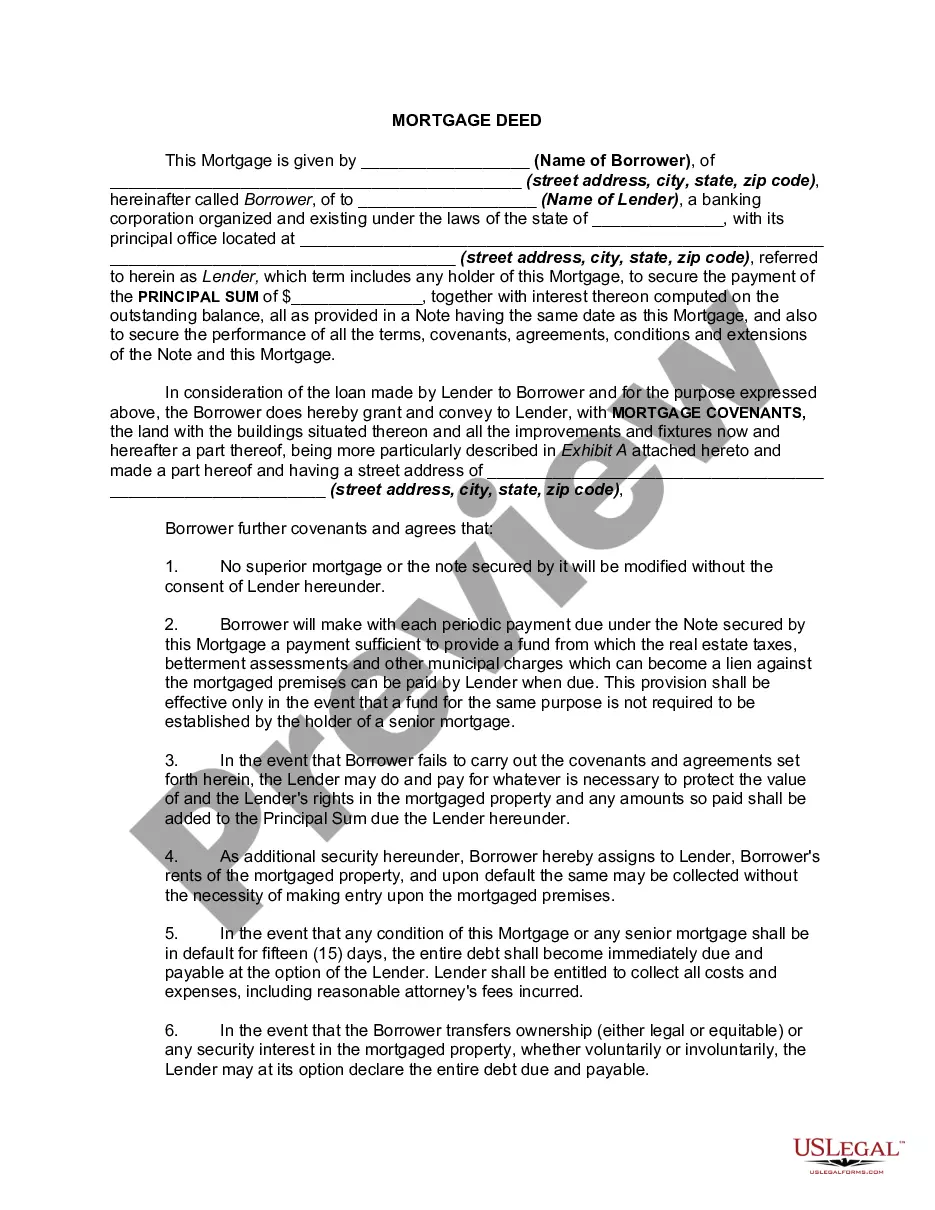
Whether you have a deed of trust or a mortgage, they both serve to assure that a loan is repaid, either to a lender or an individual person. A mortgage only involves two parties the borrower and the lender. A deed of trust adds an additional party, a trustee, who holds the home's title until the loan is repaid.
(2) Beneficiary means a person named or otherwise designated in a trust deed as the person for whose benefit a trust deed is given, or the person's successor in interest, and who is not the trustee unless the beneficiary is qualified to be a trustee under ORS 86.713 (Qualifications of trustee) (1)(b)(D).
Yes, there are key differences between the two. With a deed, you transfer the ownership of the property to one party. In contrast, a deed of trust does not mean the holder owns the property. In an arrangement involving a deed of trust, the borrower signs a contract with the lender with details regarding the loan.