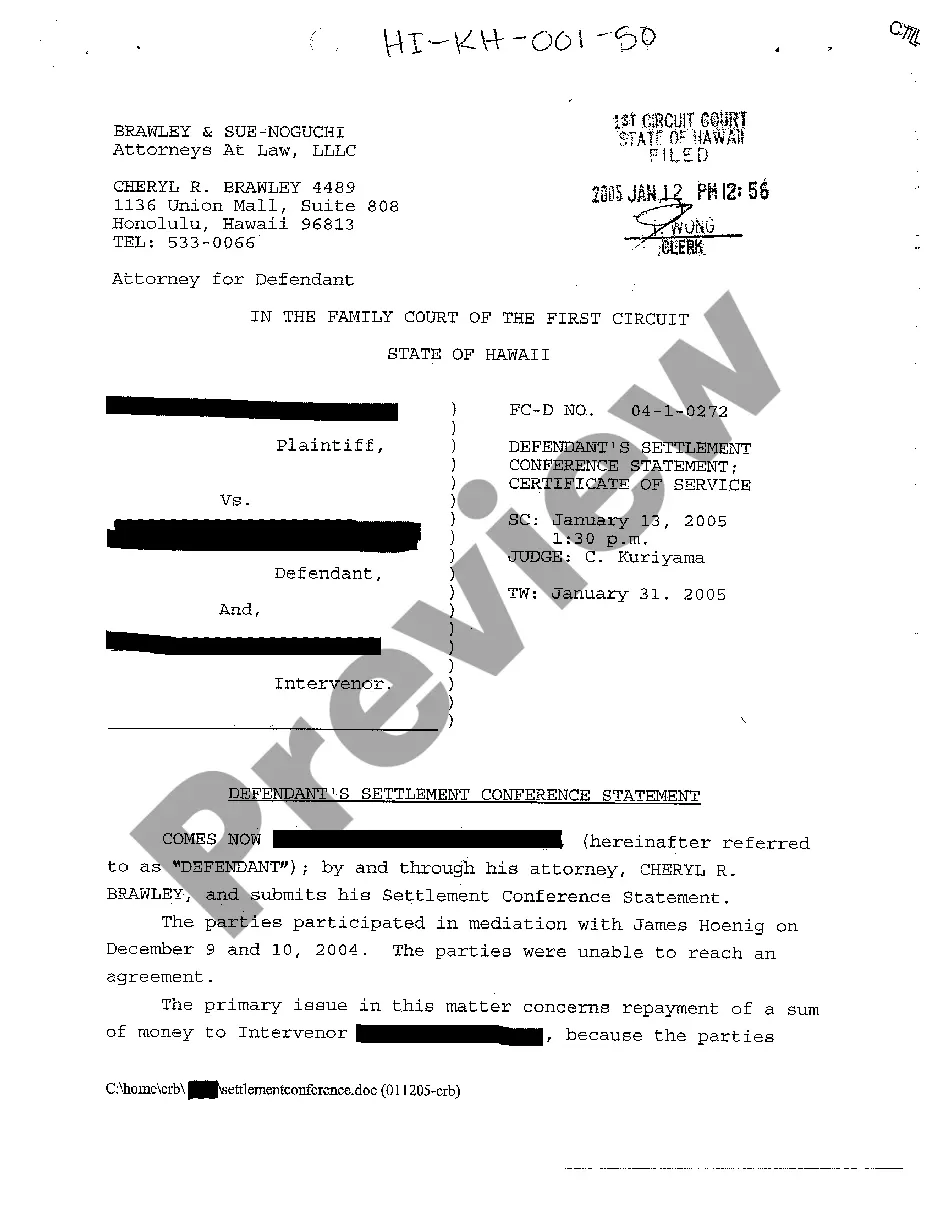
Oregon Summons regarding Marriage Dissolution
About this form
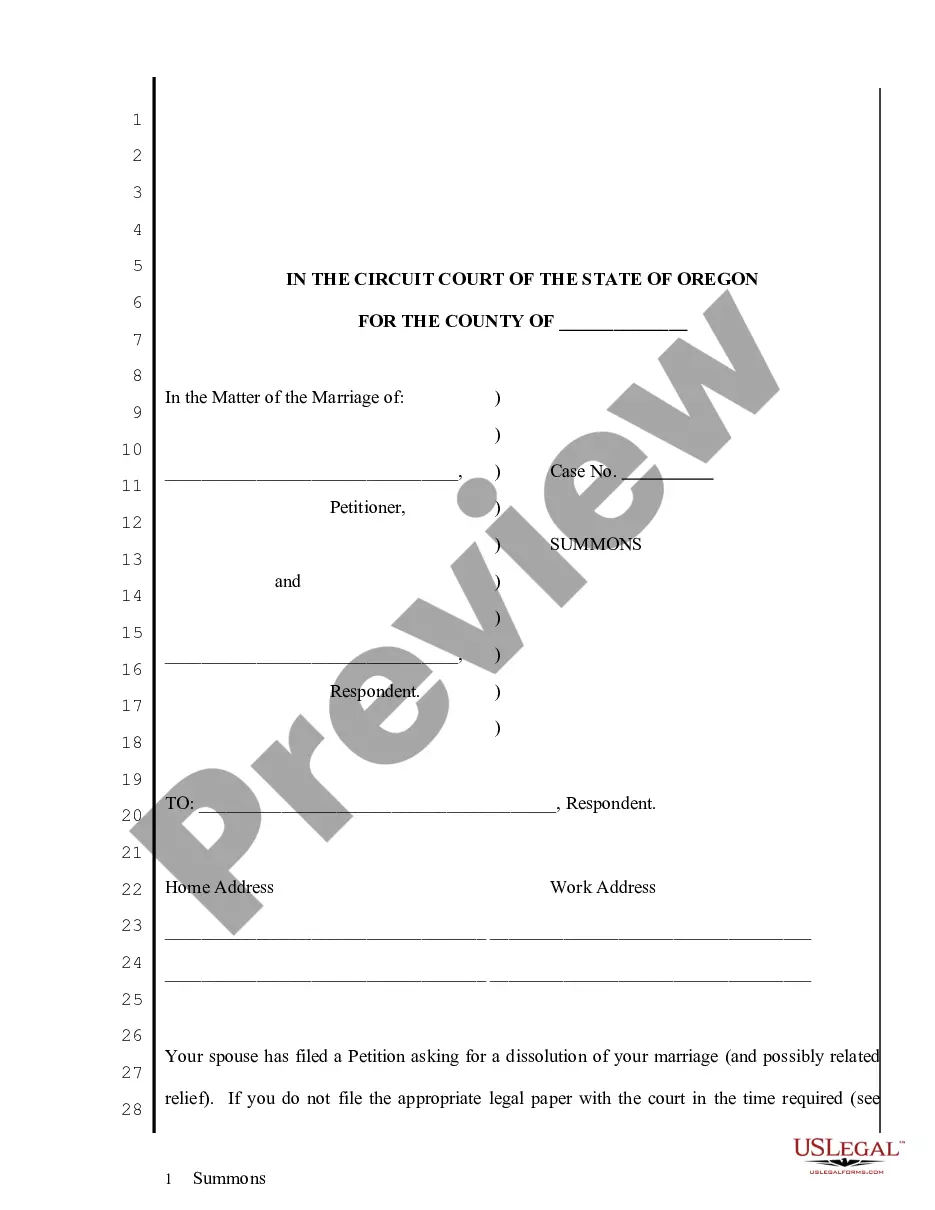
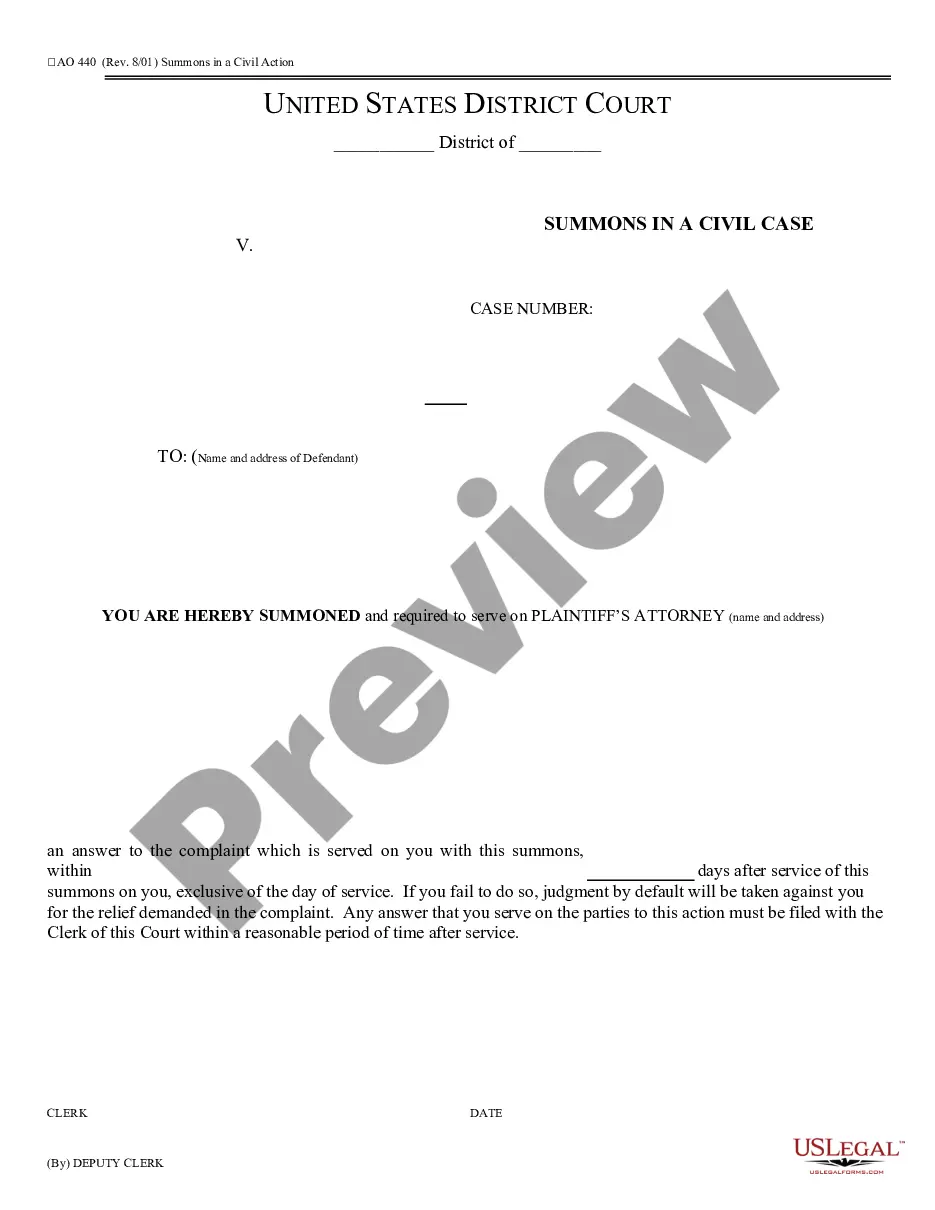
The Summons regarding Marriage Dissolution is a legal document used in Oregon to formally notify a spouse that a petition to dissolve their marriage has been filed. This form is distinct in its purpose, as it outlines the legal obligations of the respondent and the steps required to respond to the petition. Understanding this form is crucial for anyone facing divorce proceedings in Oregon.
Key parts of this document
- Case caption, including court details and parties involved
- Notification of the filed petition and its implications
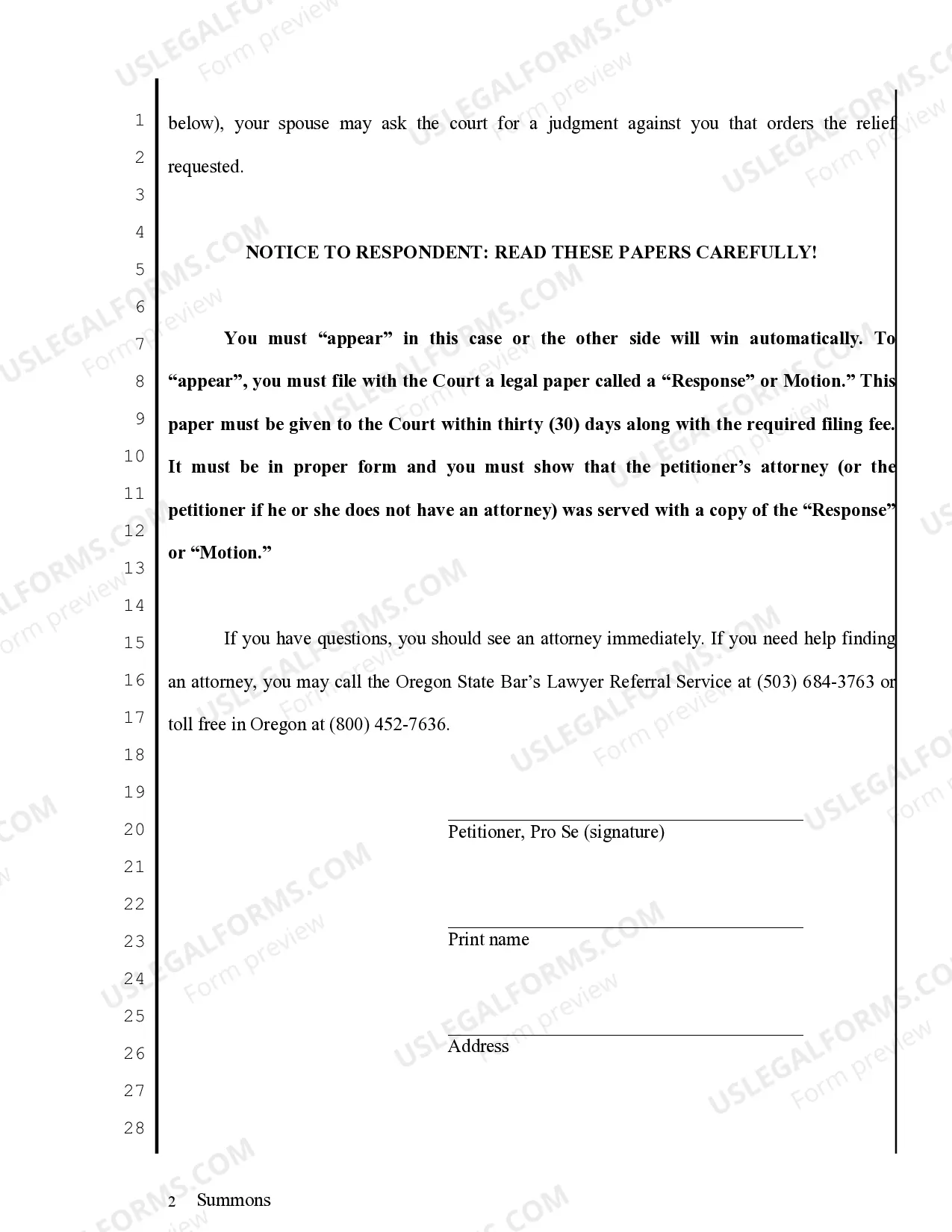
- Instructions for the respondent on how to appear in court
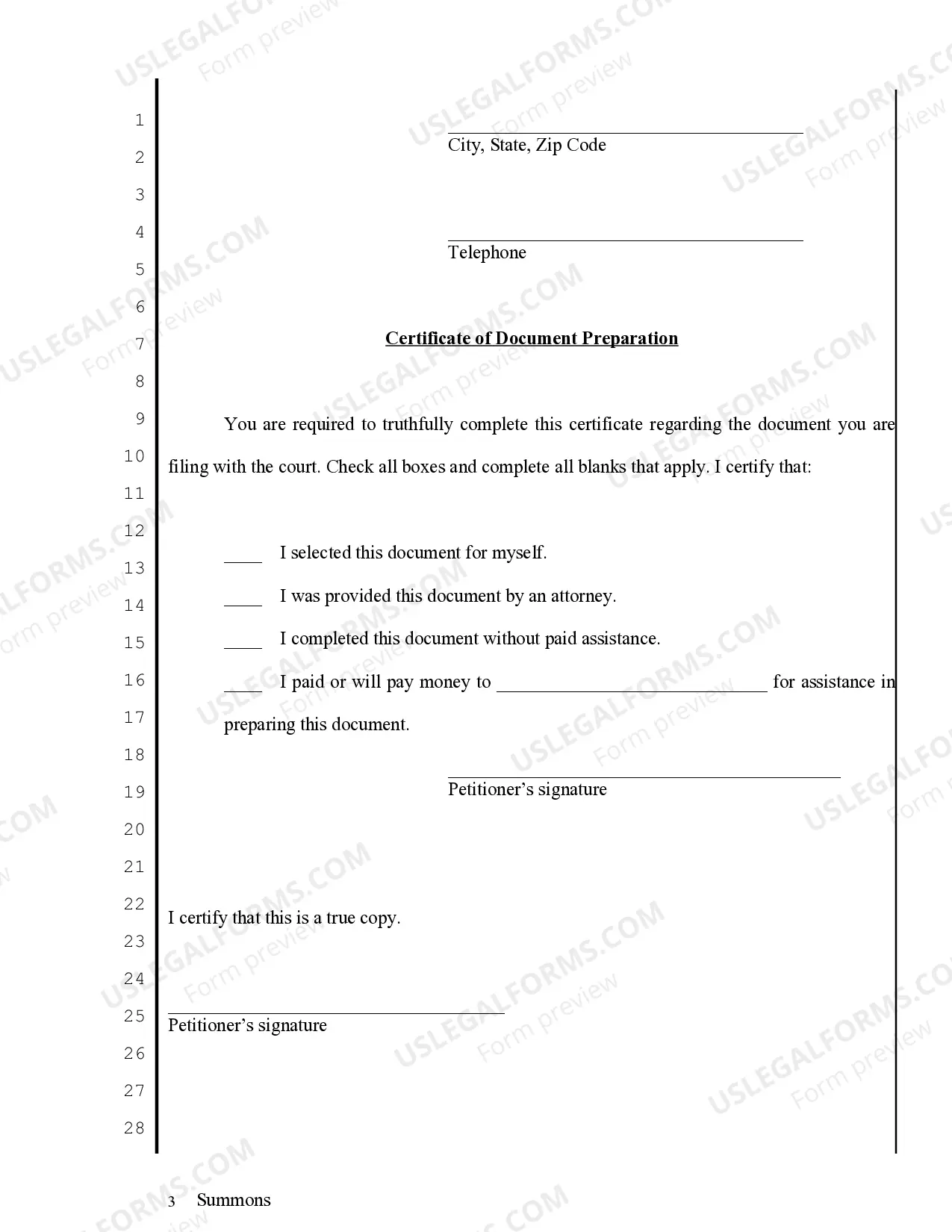
- Certificate of document preparation for accuracy verification
When this form is needed
This form is used when one spouse has filed a petition for marriage dissolution in Oregon. The respondent must receive this summons to understand their legal rights and obligations, including the need to file a response within a specified timeframe to avoid default judgment.
Who can use this document
- Individuals who have received a petition for marriage dissolution in Oregon
- Those processing divorce proceedings who need to respond to the court
- Anyone seeking to understand their rights and obligations during a divorce
Steps to complete this form
- Enter the names of both the petitioner and respondent in the designated fields.
- Provide the case number as assigned by the court.
- Complete the home and work address information for the respondent.
- Review the instructions for filing a response and ensure understanding of associated deadlines.
- Sign and date the document where indicated.
Notarization guidance
Notarization is not commonly needed for this form. However, certain documents or local rules may make it necessary. Our notarization service, powered by Notarize, allows you to finalize it securely online anytime, day or night.
Get your form ready online
Our built-in tools help you complete, sign, share, and store your documents in one place.
Make edits, fill in missing information, and update formatting in US Legal Forms—just like you would in MS Word.
Download a copy, print it, send it by email, or mail it via USPS—whatever works best for your next step.
Sign and collect signatures with our SignNow integration. Send to multiple recipients, set reminders, and more. Go Premium to unlock E-Sign.
If this form requires notarization, complete it online through a secure video call—no need to meet a notary in person or wait for an appointment.
We protect your documents and personal data by following strict security and privacy standards.

Make edits, fill in missing information, and update formatting in US Legal Forms—just like you would in MS Word.

Download a copy, print it, send it by email, or mail it via USPS—whatever works best for your next step.

Sign and collect signatures with our SignNow integration. Send to multiple recipients, set reminders, and more. Go Premium to unlock E-Sign.

If this form requires notarization, complete it online through a secure video call—no need to meet a notary in person or wait for an appointment.

We protect your documents and personal data by following strict security and privacy standards.
Mistakes to watch out for
- Failing to respond within the 30-day deadline.
- Not providing complete or accurate contact information.
- Neglecting to serve the response to the petitioner properly.
Why complete this form online
- Convenient access to the form in a downloadable format.
- Editability allows you to personalize the document to your circumstances.
- Reliability, with forms drafted by licensed attorneys ensuring legal compliance.
Looking for another form?

Form popularity
FAQ
In Oregon, the court will presume that the spouses contributed equally to the acquisition of most property during marriage, regardless of what title says. Property acquired equally will be split equally. The only assets left out of this presumption are gifts to one spouse that are always kept separate.
The marriage is less than 5 years. neither spouse owns real property (except a current residence)
Does it make a difference who files for divorce first in Oregon?The person who files for divorce first is called the Petitioner. This is because the original filing is called a petition. The party who responds to the petition is called the Respondent. There is absolutely no legal significance in who files first.
The date of filing can either be the day that you serve your spouse with the divorce papers, he or she files a response, or if you or your spouse file an Appearance, Stipulation, and Waiver.The court will give you a proof of written judgement that lets you know that your divorce is final.
Oregon is an equitable distribution state and will divide all marital assets in a fair and equitable way. This does not necessarily mean that assets will be divided equally on a 50/50 basis.Courts will look at several factors in determining an equitable distribution.
In Oregon, divorce law follows the rule of equitable distribution, where assets and debts are divided in a manner that is considered fair to both parties. In many instances, marital property is divided equally and each spouse keeps their own separate property.
The duration of payments is determined by a judge in Oregon family court. Alimony length is usually based on length of marriage - one commonly used standard for alimony duration is that 1 year of alimony is paid every three years of marriage (however, this is not always the case in every state or with every judge).
The court will give you a proof of written judgement that lets you know that your divorce is final. You can request a copy of this judgement from the court in your jurisdiction contact the courthouse or visit its website to see what its specific procedures are.
Actually, legally no one can stop their spouse from filing a divorce case because if a person really intends to divorce his/her spouse, it will most possible be granted to them.And then issuing parting can file for a contested divorce case.