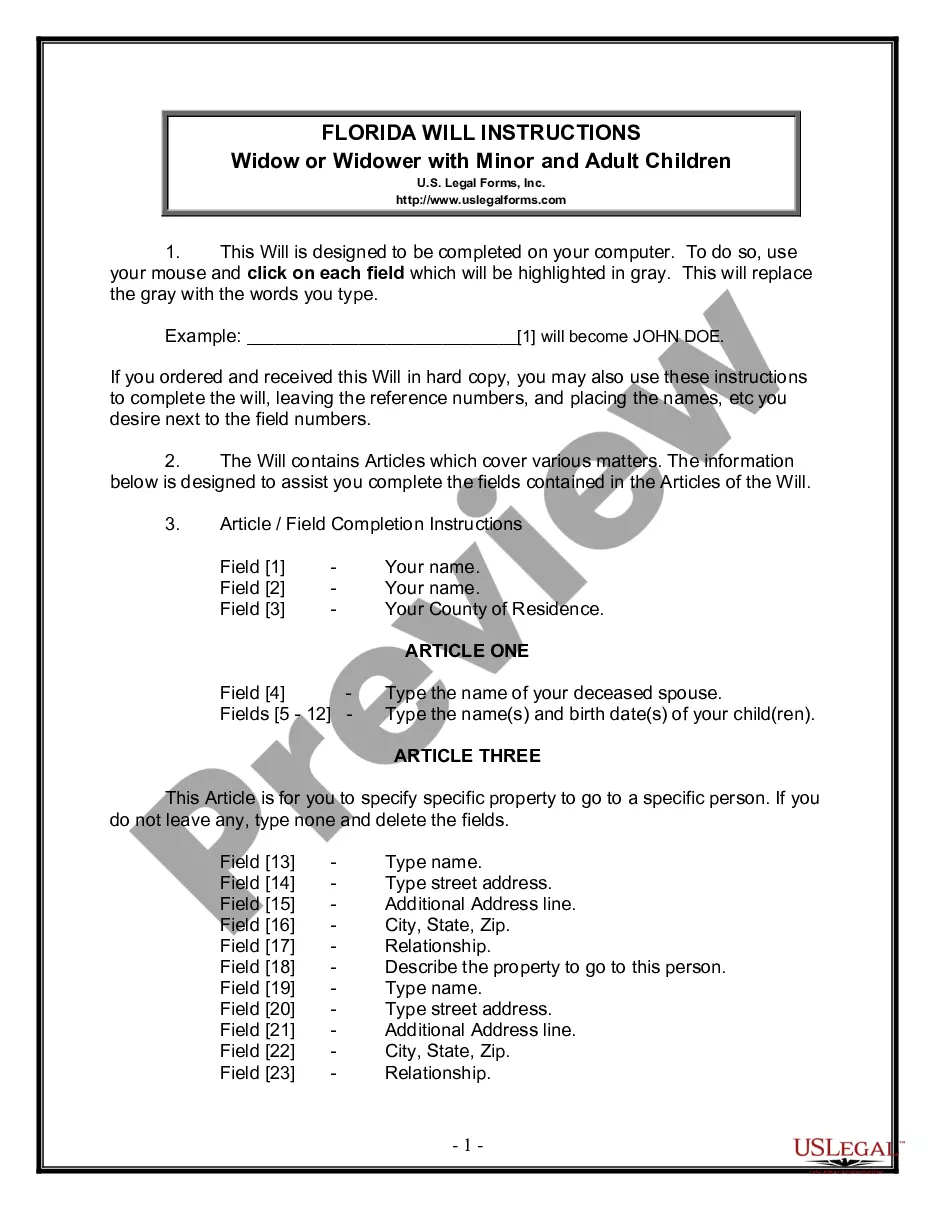
Oregon Letter from Tenant to Landlord responding to Notice to Terminate for Noncompliance - Noncompliant condition caused by Landlord's own deliberate or negligent act
What this document covers
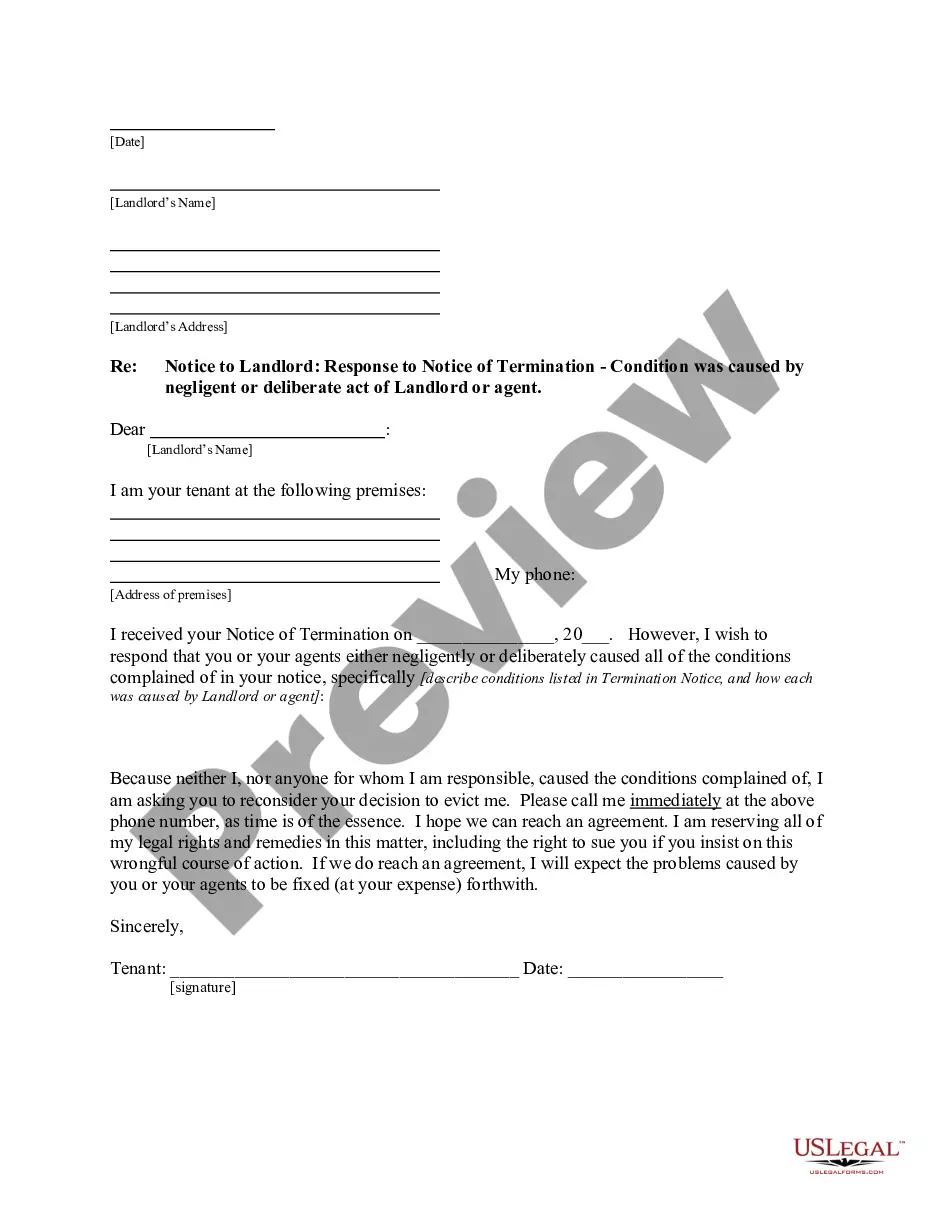
This form is a Letter from Tenant to Landlord responding to a Notice to Terminate for Noncompliance. It is specifically designed for tenants who are facing eviction due to conditions caused by the landlordâs own actions or negligence. Unlike other eviction response letters, this form emphasizes the landlord's responsibility for the issues leading to the noncompliance notice and requests immediate repair action while reserving the tenant's legal rights.
Key parts of this document
- Tenant's identification and signature.
- Details of the eviction notice received from the landlord.
- Assertion that the termination is due to conditions caused by the landlord.
- Request for repairs and non-eviction.
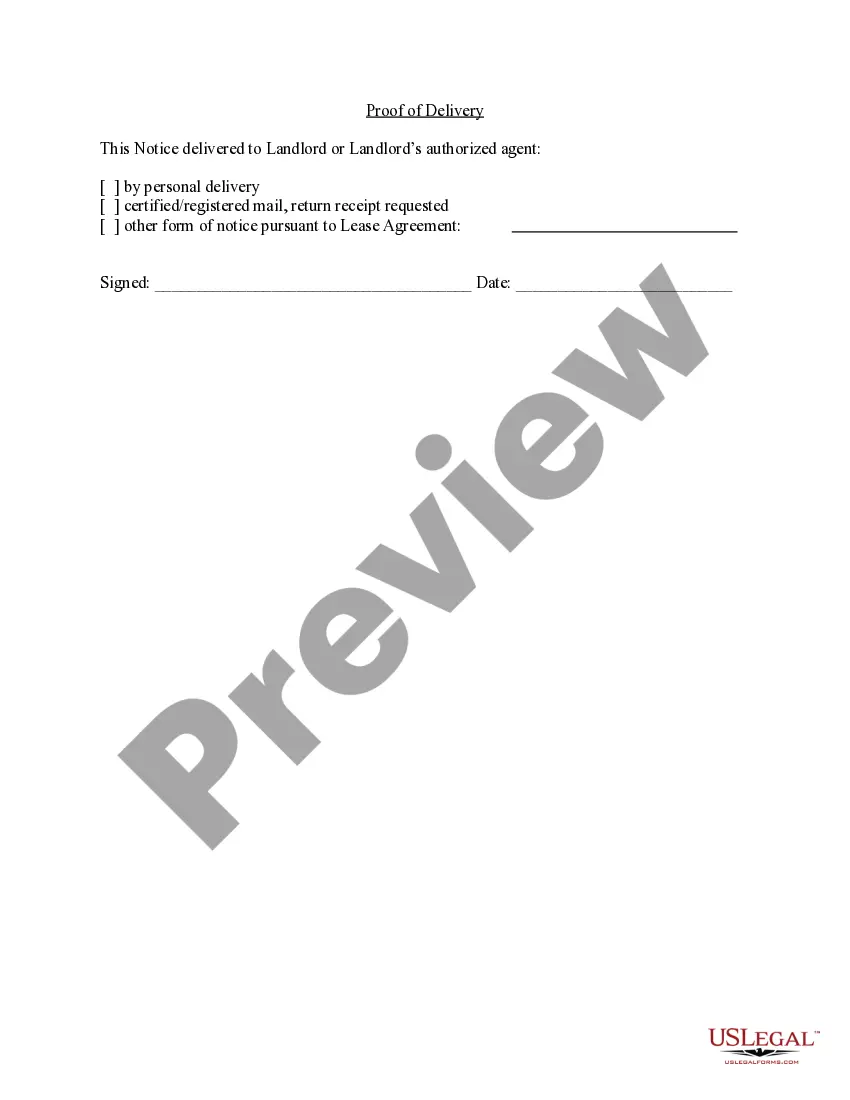
- Proof of delivery of the letter to the landlord.




When to use this document
This form should be used when a tenant receives a notice of eviction due to noncompliance and believes that the grounds for eviction stem from issues created by the landlord. It is particularly useful in situations where the landlord has failed to maintain the property or acted negligently, and the tenant seeks to assert their rights and request necessary repairs while challenging the eviction.
Intended users of this form
- Tenants facing eviction notices due to alleged noncompliance.
- Individuals seeking to document landlord negligence or deliberate actions affecting their tenancy.
- Renters wishing to formally request repairs and avoid eviction.
How to complete this form
- Identify the tenant by entering their full name and address.
- Specify the details of the eviction notice received from the landlord.
- Clearly assert that the noncompliant conditions were caused by the landlordâs actions or negligence.
- Request immediate repairs and indicate the desire to avoid eviction.
- Sign the letter and include the date of completion.
- Choose the method of delivery and ensure proof of delivery to the landlord.
Does this document require notarization?
This form does not typically require notarization unless specified by local law. It is important to verify if your state mandates notarization for such documents to ensure its legal validity.
Get your form ready online
Our built-in tools help you complete, sign, share, and store your documents in one place.
Make edits, fill in missing information, and update formatting in US Legal Forms—just like you would in MS Word.
Download a copy, print it, send it by email, or mail it via USPS—whatever works best for your next step.
Sign and collect signatures with our SignNow integration. Send to multiple recipients, set reminders, and more. Go Premium to unlock E-Sign.
If this form requires notarization, complete it online through a secure video call—no need to meet a notary in person or wait for an appointment.
We protect your documents and personal data by following strict security and privacy standards.

Make edits, fill in missing information, and update formatting in US Legal Forms—just like you would in MS Word.

Download a copy, print it, send it by email, or mail it via USPS—whatever works best for your next step.

Sign and collect signatures with our SignNow integration. Send to multiple recipients, set reminders, and more. Go Premium to unlock E-Sign.

If this form requires notarization, complete it online through a secure video call—no need to meet a notary in person or wait for an appointment.

We protect your documents and personal data by following strict security and privacy standards.
Typical mistakes to avoid
- Failing to include specific details about the conditions causing noncompliance.
- Not signing the letter before delivery.
- Using incorrect addresses for the landlord or the authorized agent.
- Overlooking to document proof of delivery.
Benefits of completing this form online
- Convenient access to legally drafted templates without needing to meet with an attorney.
- Editable format allows tenants to personalize the letter to their situation.
- Instant downloads ensure you can act quickly in response to eviction notices.
Looking for another form?
Form popularity
FAQ
The tenant must give the landlord notice of their intention to move out within 90 days of the event causing the need to move. The notice must be given to the landlord at least 14 days before the tenant intends to move out.
1Pay any delinquent rent that is due to the landlord within the allotted time of the notice.2Move out of the premises within the allotted time of the notice.3File an answer with the judicial court.4File a motion to stay with the court.
A no-cause eviction means that your landlord is not giving any reason for the eviction. The notice must clearly state the date that the tenancy will end.
For 2020, the maximum rent increase is 9.9%. Between tenants, there is no limit to how much the rent can go up (except if a short-term tenant was just evicted from the unit, a provision that discourages a revolving door of tenants for rent increases.)
An eviction notice must state a reason why you are being evicted, otherwise it is invalid.For tenants who lived in the property for more than 12 months, the landlord must provide at least 60 days prior notice to vacate, under California Civil Code 1946.
The tenant will have fourteen days after receiving the thirty-day notice to fix the violation, and if the tenant fixes it, then the landlord must not proceed with the eviction. If the tenant does not fix the violation, then the landlord can proceed with the eviction after the thirty days has expired (see Ore.
You can immediately file an eviction if the tenant refuses to leave the property. However, this is likely only the case if you did not accept any additional payments. If you took a rental payment from the tenant after their lease expired, you'll need to provide all the normal notices.
In the state of Oregon, if tenants hold over, or stay in the rental unit after the rental term has expired, then the landlord must give tenants notice before evicting them. This can include tenants without a written lease and week-to-week and month-to-month tenants.
The landlord/agent must properly send or deliver the notice to you: in person, by post, by email (to an email address you have specified for documents of that kind), or by hand in an addressed envelope to a mailbox at your home or business address.