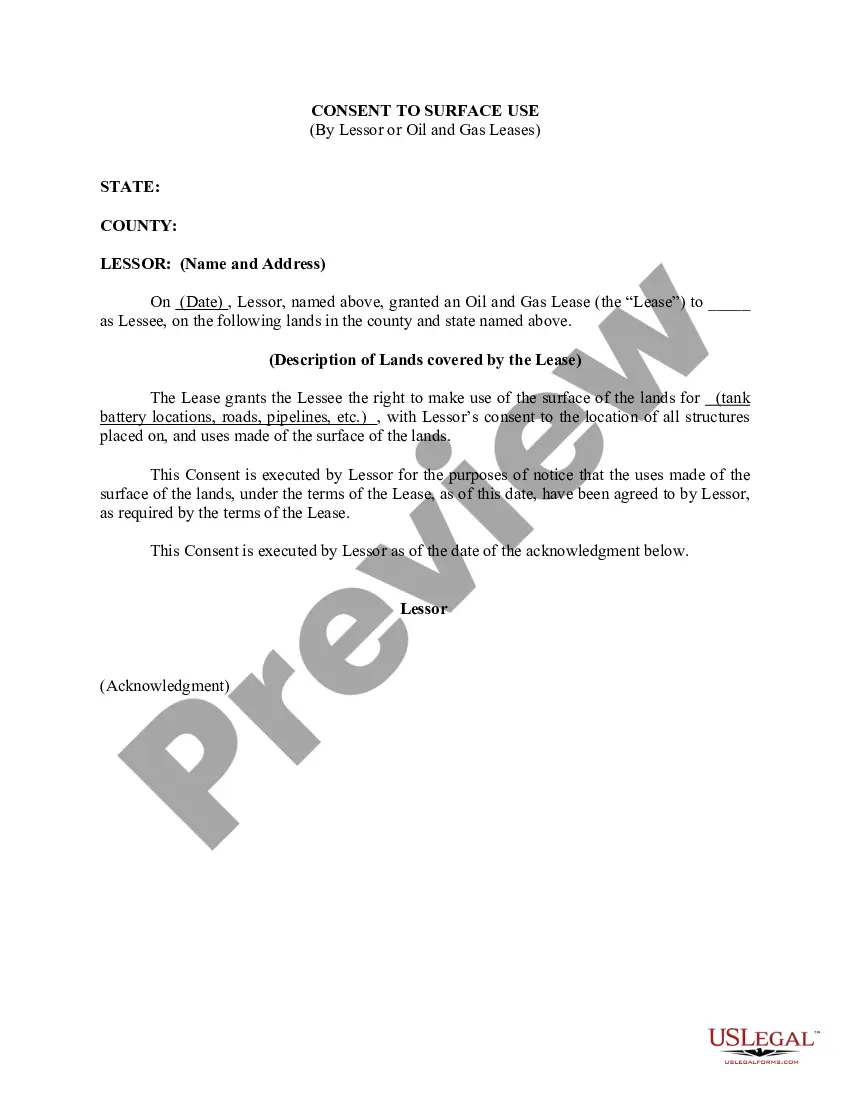
New York Amendment to Right of Way Easement
Understanding this form
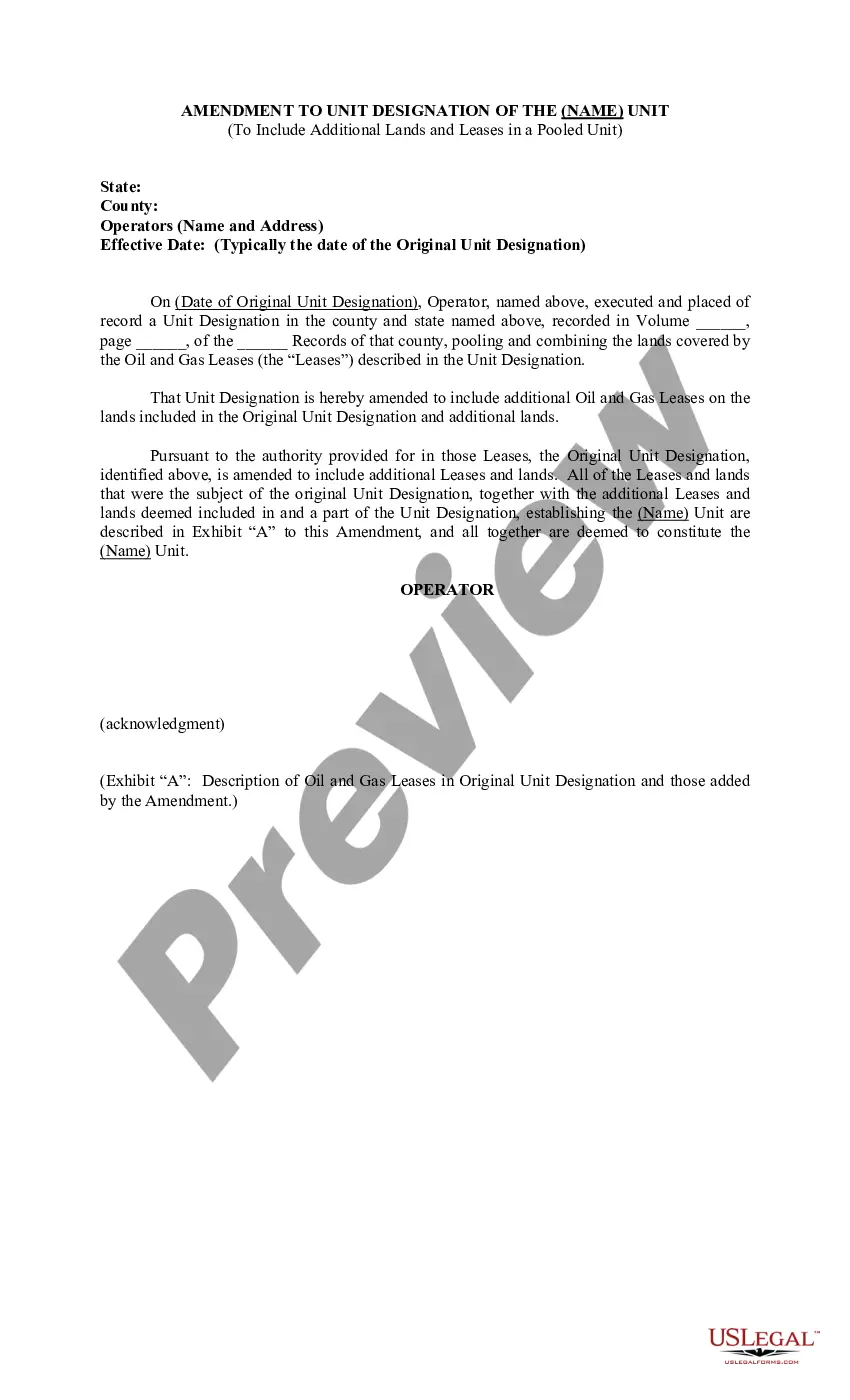
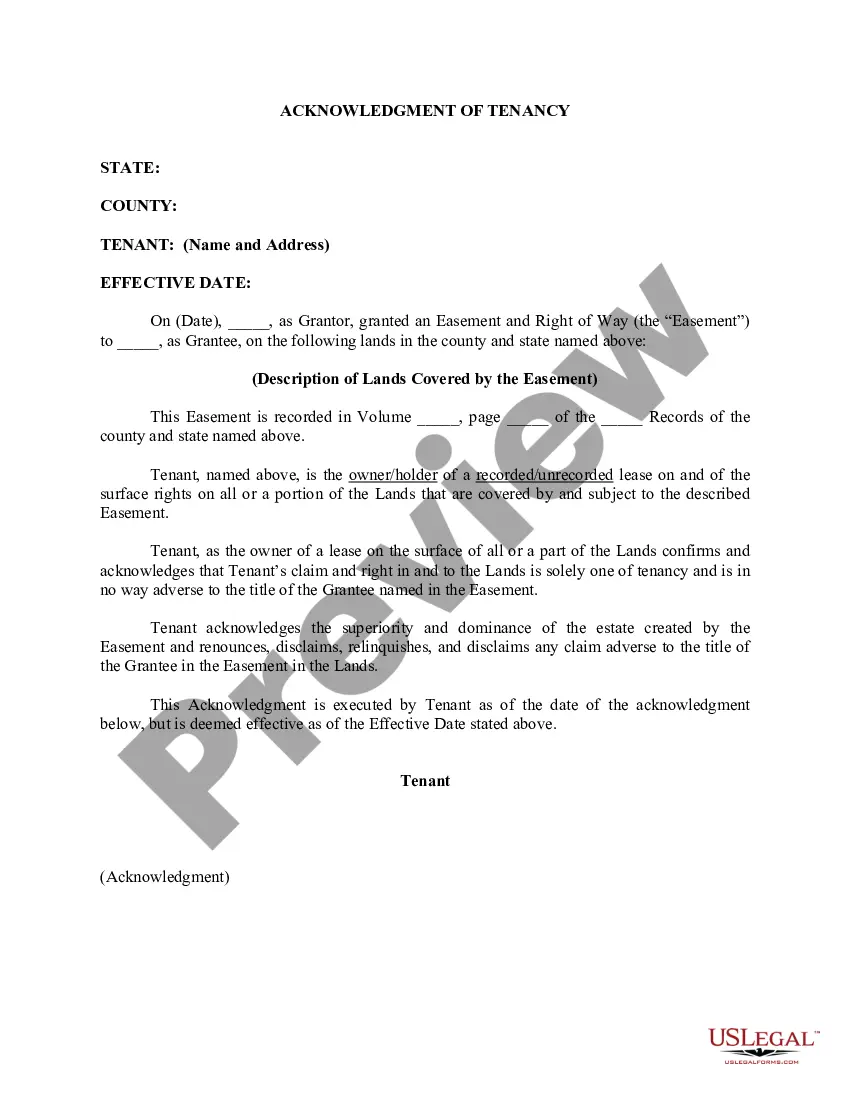
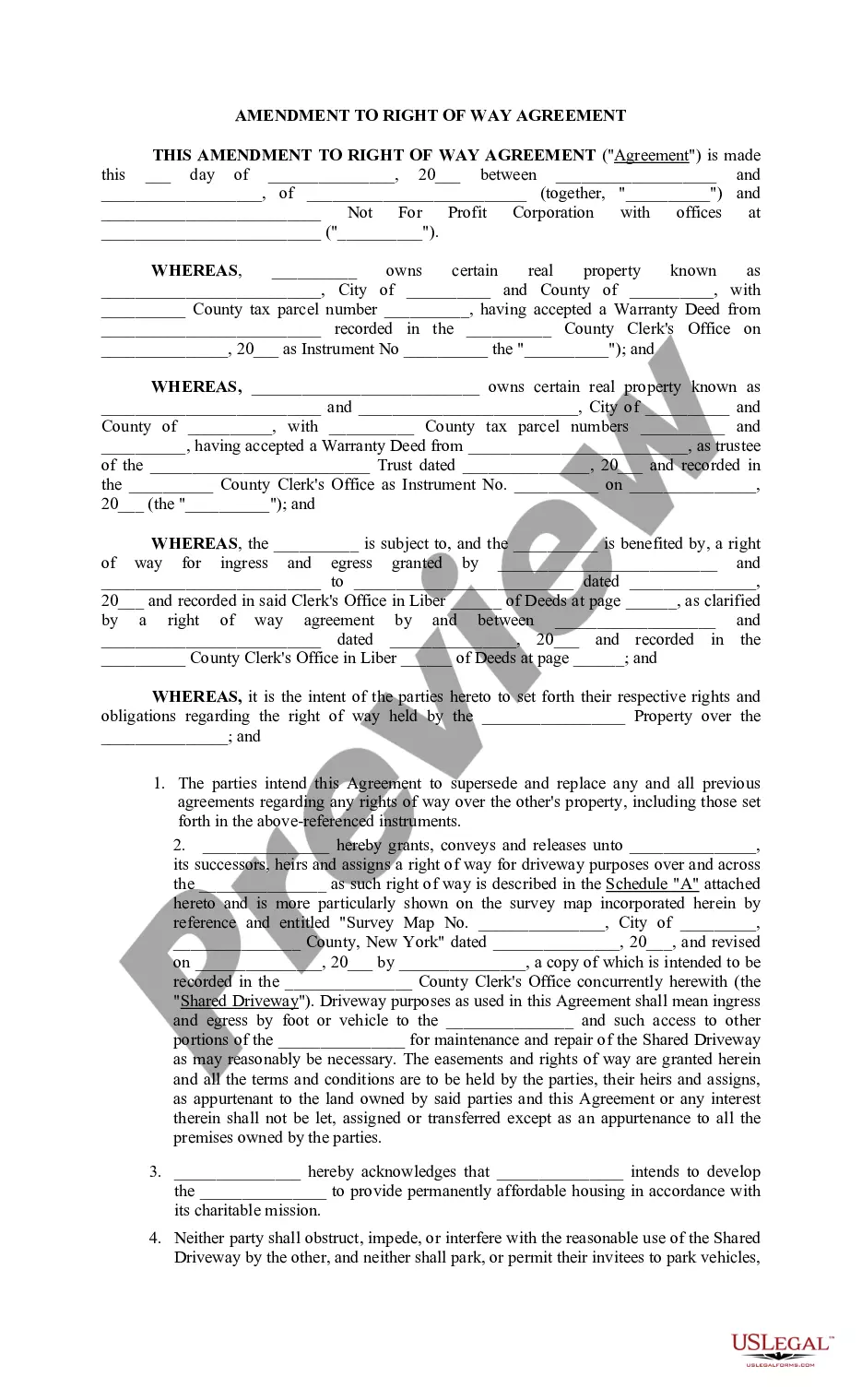
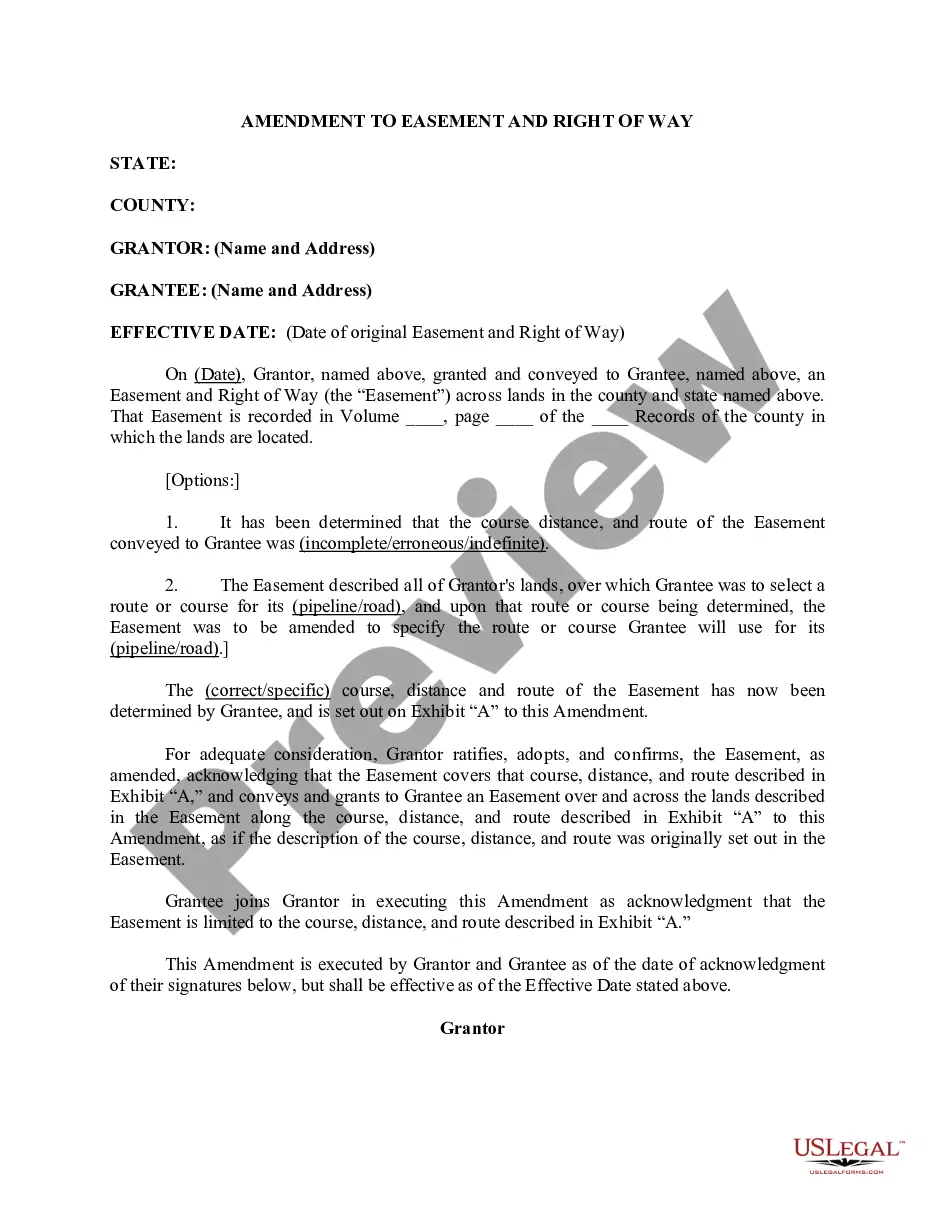
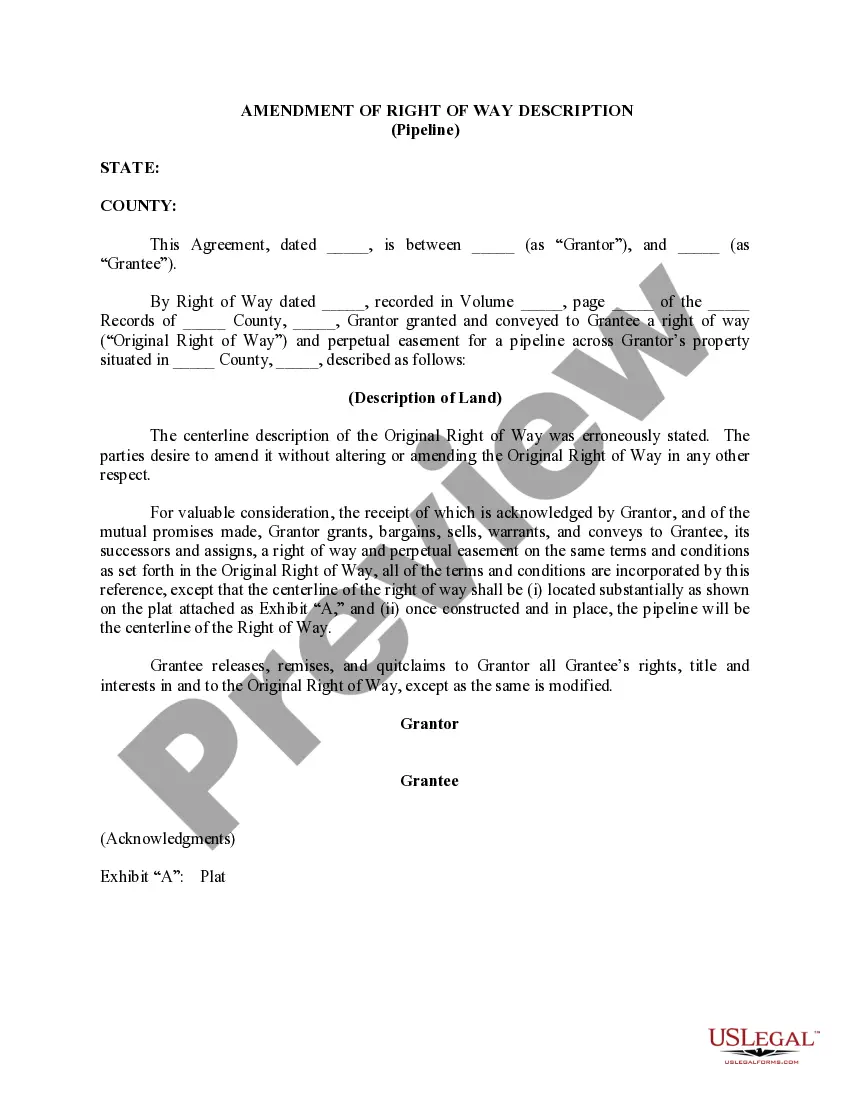
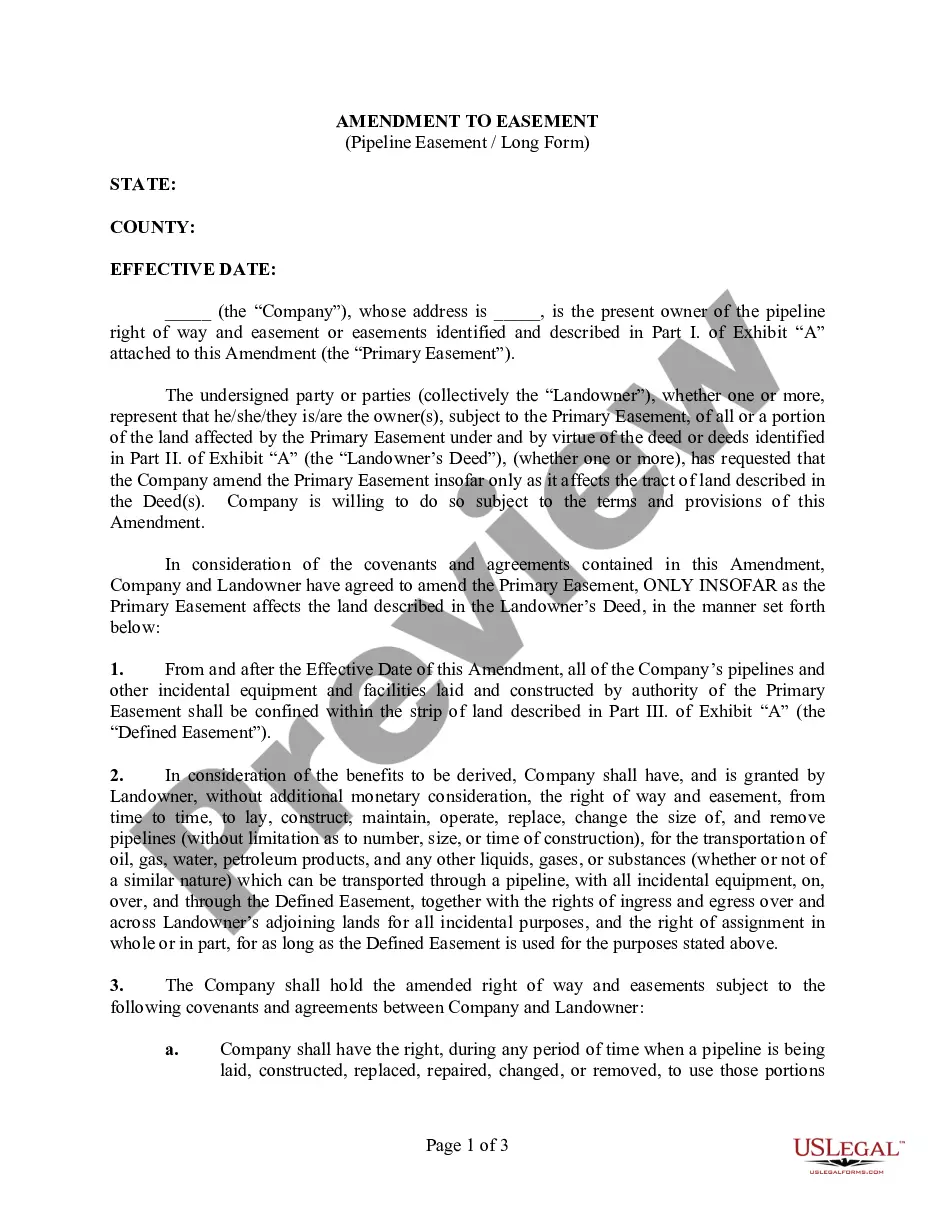
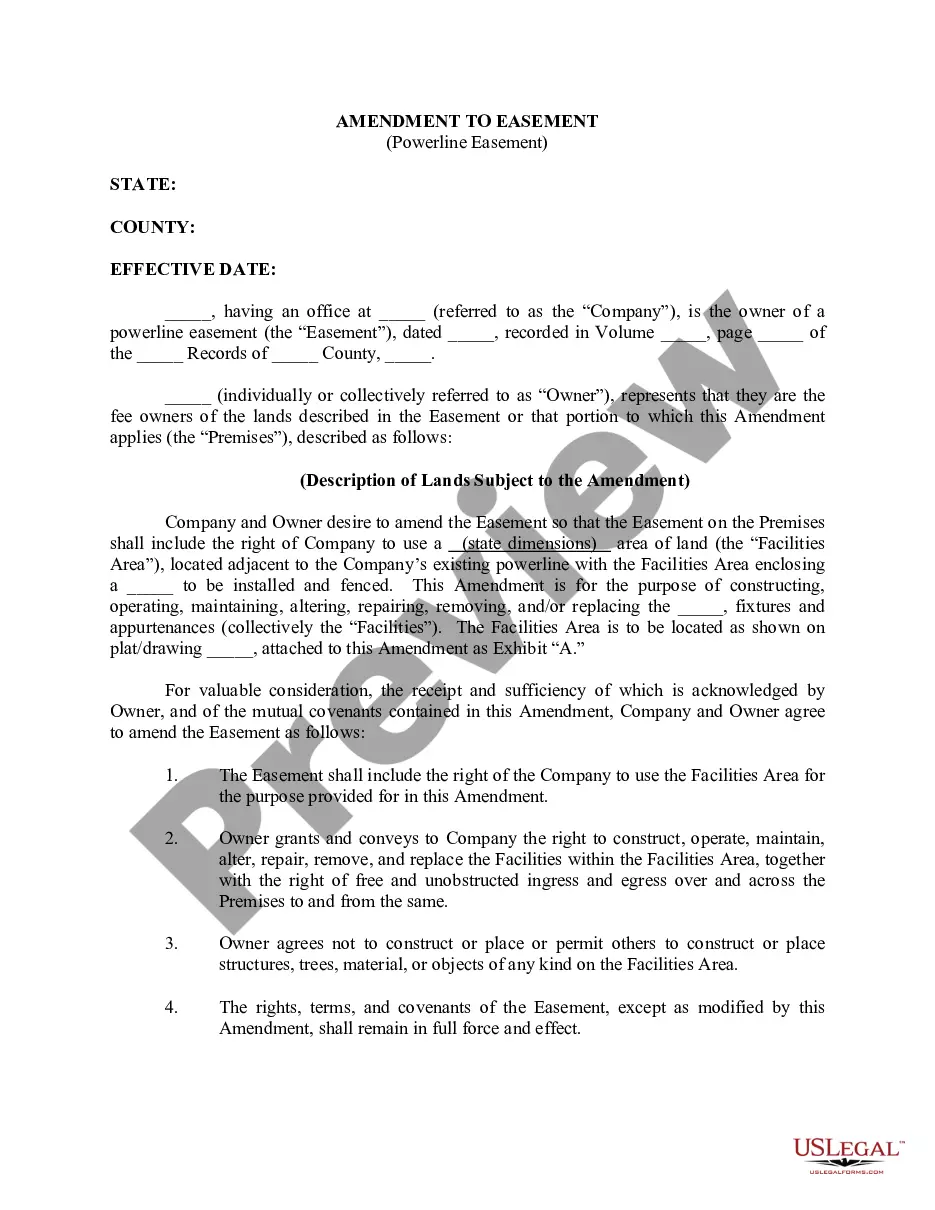
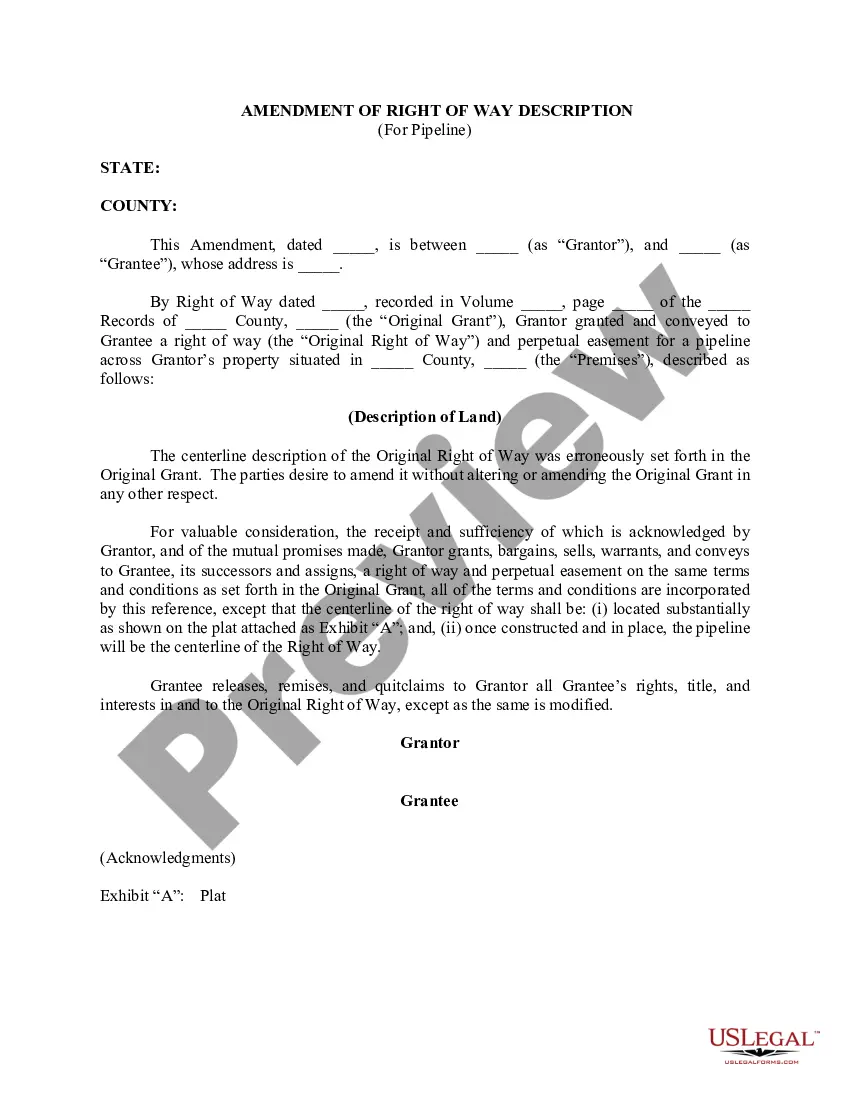
The Amendment to Right of Way Easement is a legal document that modifies the terms of an existing easement between two parties, one of which is a non-profit corporation. This form is used to update the rights and obligations concerning a shared driveway, enabling both parties to continue using the easement for charitable purposes. Unlike standard easement agreements, this amendment specifically accommodates changes in the usage terms and clarifies maintenance responsibilities for the shared property access.
Key parts of this document
- The parties involved, including the non-profit corporation and private property owners.
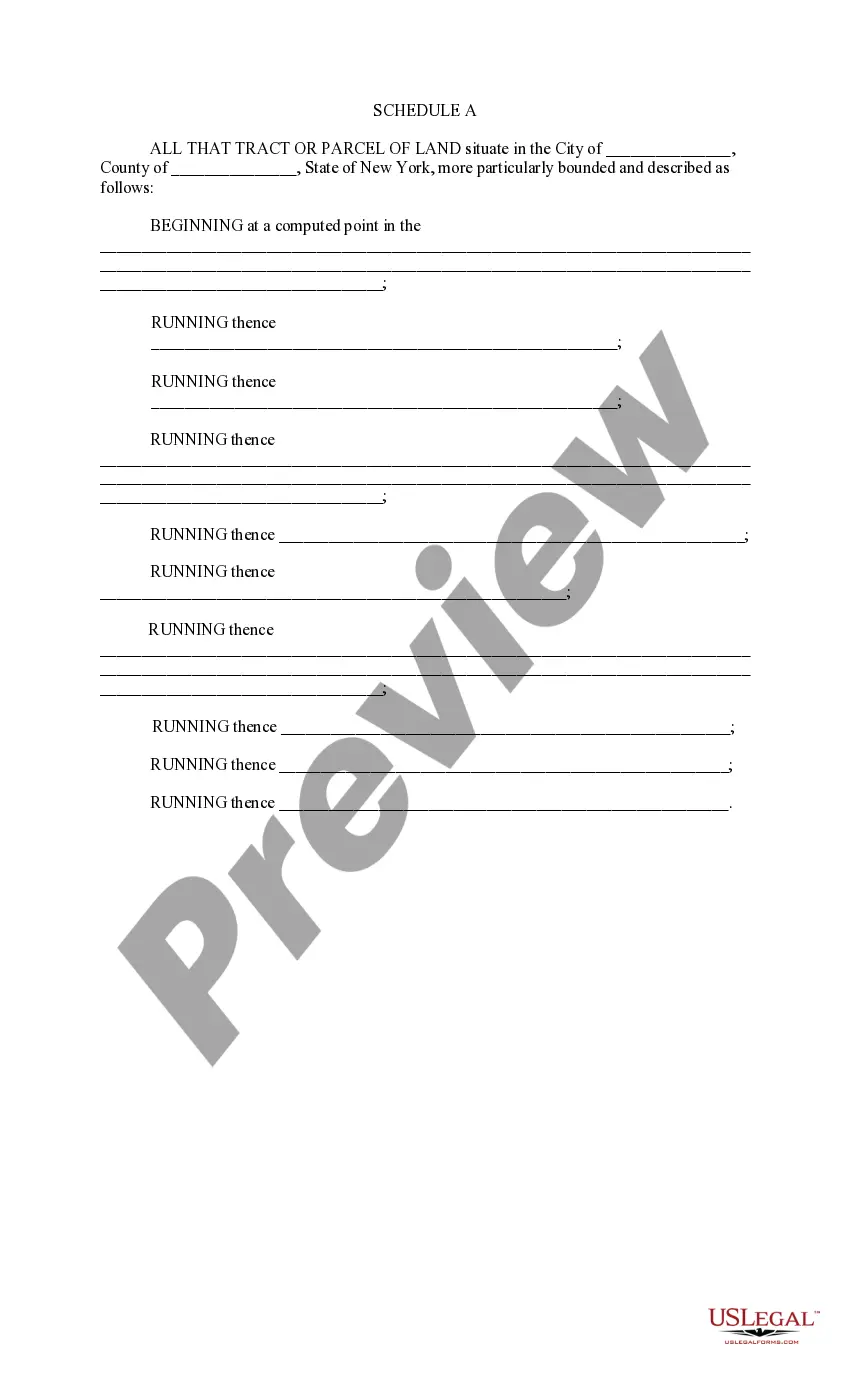
- A clear description of the property and specific location of the shared driveway.
- Rights granted for ingress and egress for maintenance and repair purposes.
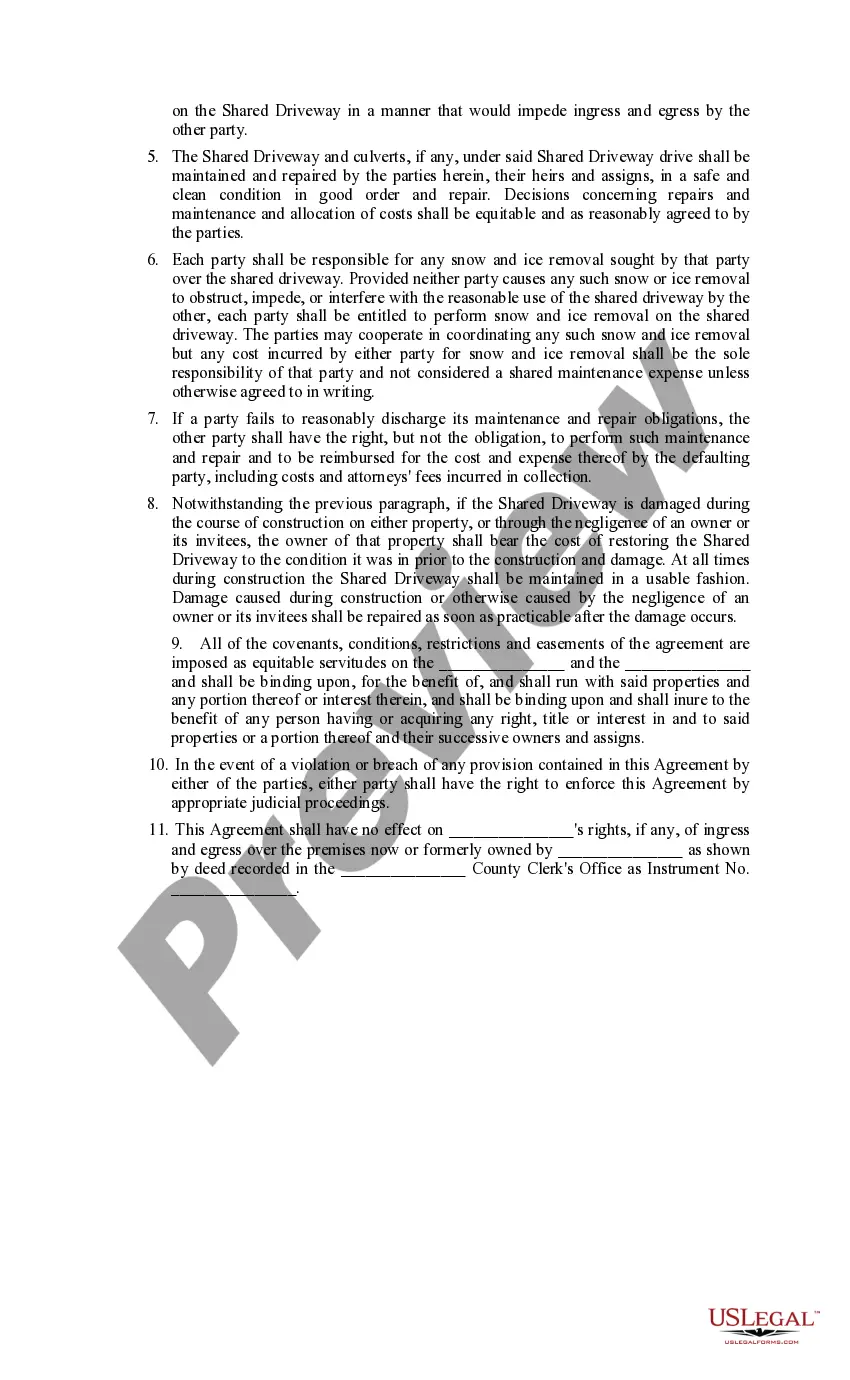
- Maintenance responsibilities, including snow and ice removal obligations.
- Procedures for resolving disputes related to maintenance and use of the shared driveway.
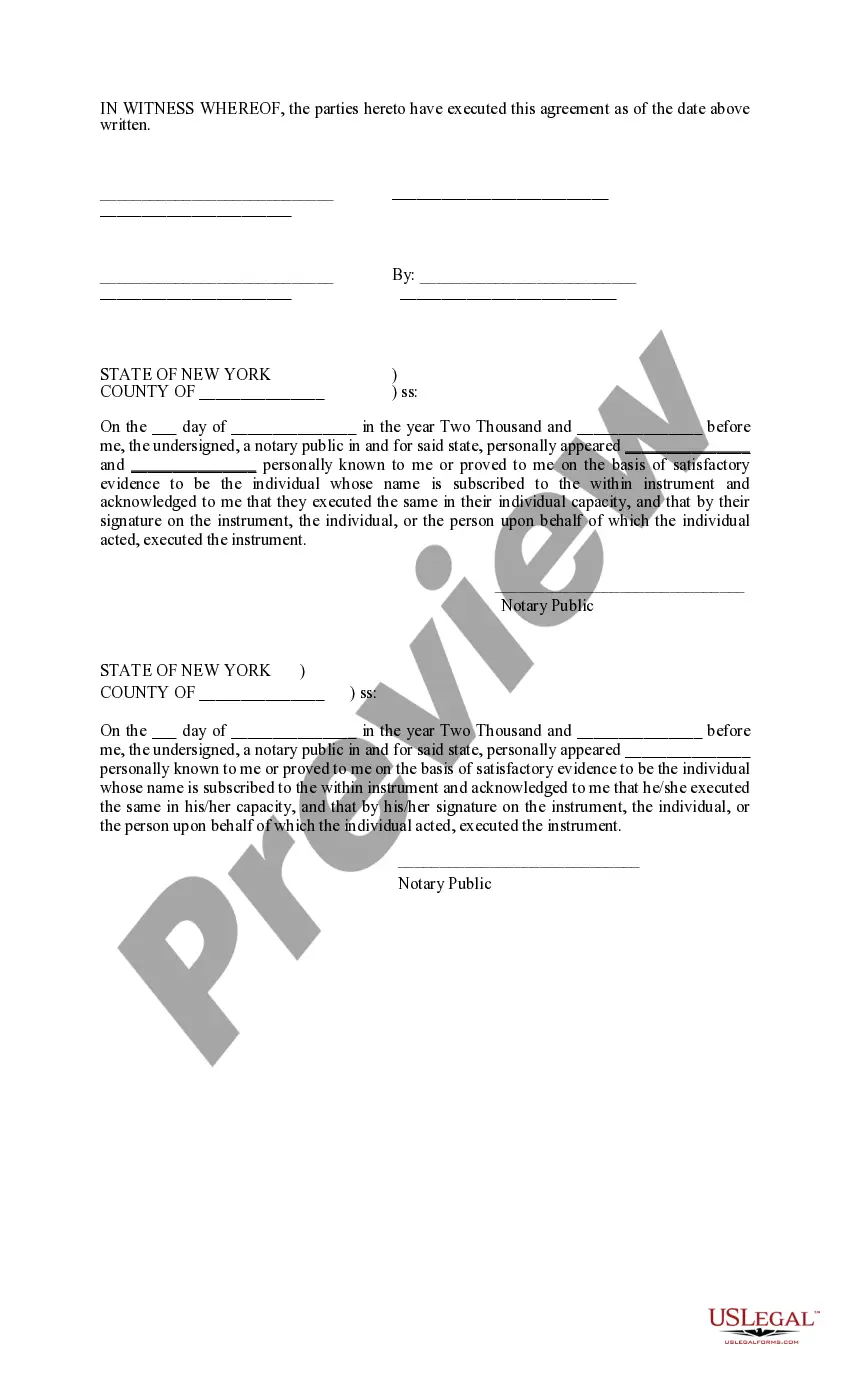
- Notarization requirements to ensure legal validity.
Common use cases
This form should be used when two parties want to formally amend an existing easement agreement regarding a shared driveway. Common scenarios include changes in intended use, such as modifications required for a non-profit's charitable activities, or adjustments needed for maintenance responsibilities. It ensures both parties have a clear understanding of their rights and obligations moving forward.
Who can use this document
- Property owners who currently share an easement with another party.
- Non-profit corporations requiring access through a private property for charitable projects.
- Individuals looking to clarify or modify an existing easement agreement legally.
- Real estate attorneys assisting clients with property access issues.
How to complete this form
- Identify and list the parties involved in the easement agreement.
- Provide a detailed description of the shared property and its location.
- Fill in the specific rights and obligations related to the shared driveway.
- Specify maintenance responsibilities, including snow and ice removal details.
- Review and sign the document in the presence of a notary public.
Notarization requirements for this form
Yes, this form must be notarized to be legally valid. Notarization helps to authenticate the identities of the parties involved and to ensure that the document is executed appropriately. US Legal Forms offers integrated online notarization services available 24/7 through secure video calls, ensuring you can complete the process without needing to travel.
Get your form ready online
Our built-in tools help you complete, sign, share, and store your documents in one place.
Make edits, fill in missing information, and update formatting in US Legal Forms—just like you would in MS Word.
Download a copy, print it, send it by email, or mail it via USPS—whatever works best for your next step.
Sign and collect signatures with our SignNow integration. Send to multiple recipients, set reminders, and more. Go Premium to unlock E-Sign.
If this form requires notarization, complete it online through a secure video call—no need to meet a notary in person or wait for an appointment.
We protect your documents and personal data by following strict security and privacy standards.

Make edits, fill in missing information, and update formatting in US Legal Forms—just like you would in MS Word.

Download a copy, print it, send it by email, or mail it via USPS—whatever works best for your next step.

Sign and collect signatures with our SignNow integration. Send to multiple recipients, set reminders, and more. Go Premium to unlock E-Sign.

If this form requires notarization, complete it online through a secure video call—no need to meet a notary in person or wait for an appointment.

We protect your documents and personal data by following strict security and privacy standards.
Mistakes to watch out for
- Failing to fully describe the properties involved, which can lead to confusion about the easement's scope.
- Not specifying maintenance responsibilities clearly, which can cause disputes later.
- Neglecting to have the document notarized, making it potentially unenforceable.
- Overlooking the need to record the amendment with the county clerk's office.
Why complete this form online
- Convenience of immediate access and downloadable format for easier management.
- Editability allows users to customize the document to fit specific needs.
- Reliable templates drafted by licensed attorneys ensure legal compliance.
- Secure process for documenting legal agreements, minimizing errors.
Looking for another form?
Form popularity
FAQ
A Any substantial interference with a right of way is a nuisance in common law. The owner of the right (known as the dominant owner) can apply to court for an injunction and damages if the landowner (or servient owner) blocks it.
You can terminate an easement by release. A release is a surrender of a right or interest, such as an easement. Only the person holding the right can release it, such as the owner of the dominant estate in an easement appurtenant or the holder of an easement in gross.
If an authority has an easement registered over your land, they have the right to access the easement to maintain or repair the easement land or their equipment on the land.
As stated above, adverse possession generally takes ten years to take effect. However, walls encroaching over the property line by six inches or less, if the wall is part of a building, will accrue adverse possession much faster.
Adverse possession is a legal concept that allows a trespasser sometimes a stranger but more often a neighbor to gain legal title over the land of a property owner.Adverse possession in New York is governed by statute, but also by the courts.
Open and Notorious. The person seeking adverse possession must occupy a parcel of land in a manner that is open and obvious. Exclusive. Hostile. Statutory Period. Continuous and Uninterrupted.
In order to claim adverse possession, there are basic tests you have to meet. You have to prove that your use was open, notorious, hostile, actual, exclusive and continuous.Proving adverse possession is not easy, and you have to go to court to get a judge to rule.
For one, in New York for a party to make an adverse possession claim they must make open and notorious use of the property for 10 continuous years. Obviously, somebody using a private garden courtyard as though it were their own would likely be challenged before they could make any claim to it.
Quiet the Title. Allow the Purpose for the Easement to Expire. Abandon the Easement. Stop Using a Prescriptive Easement. Destroy the Reason for the Easement. Merge the Dominant and Servient Properties. Execute a Release Agreement.