Oregon Letter from Landlord to Tenant about time of intent to enter premises

State:
Oregon
Control #:
OR-1021LT
Format:
Word; 
Rich Text
Instant download

About this form

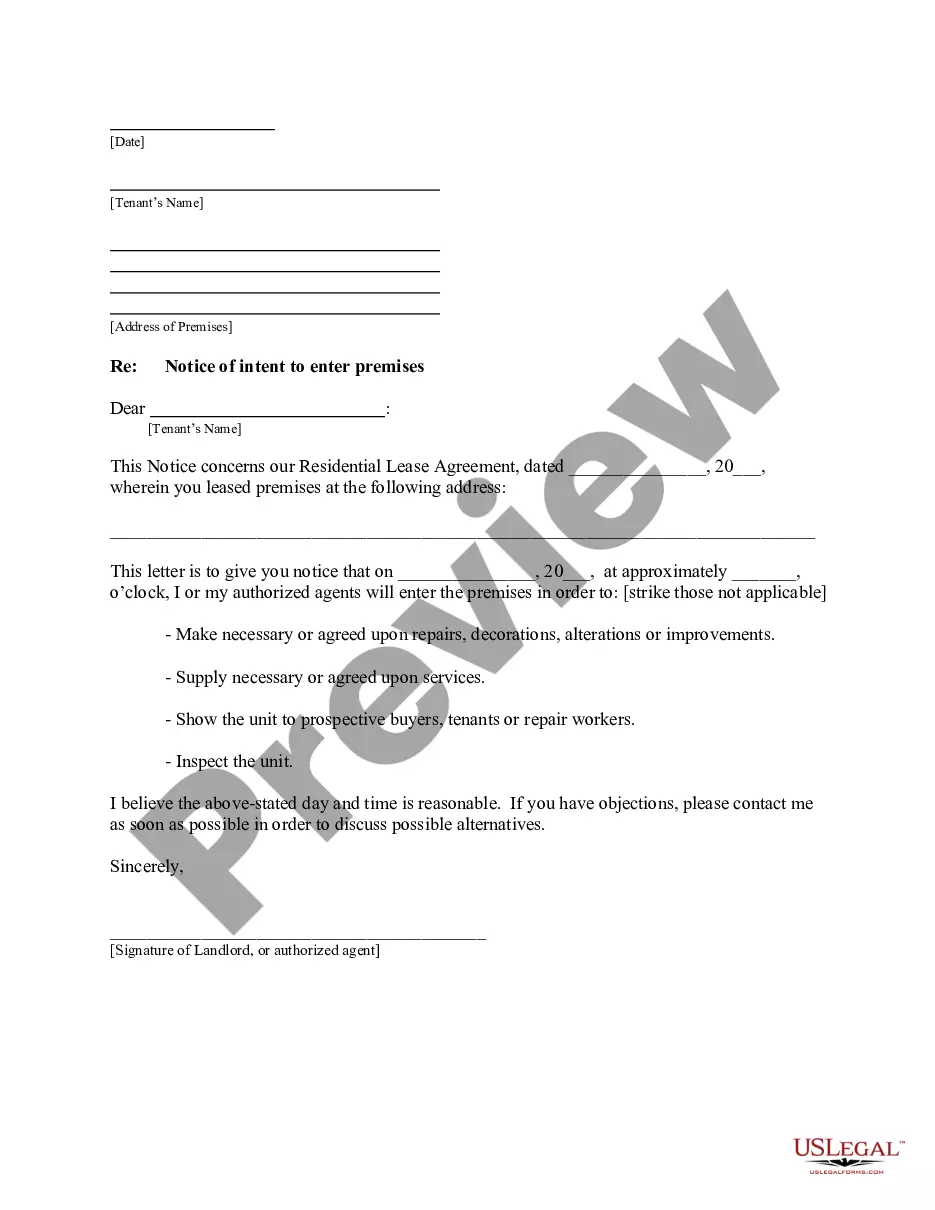
This form is a notice from a landlord to a tenant regarding the landlord's intent to enter the rented premises. It serves to inform the tenant of the date and time the landlord or their agents will access the property for specific purposes, including repairs, inspections, or showings. This form helps to establish clear communication between landlords and tenants while complying with legal requirements, making it distinct from other rental agreements or notices.

Form components explained

  • Date of the Residential Lease Agreement
  • Property address
  • Date and time of entry
  • Purpose of entry (e.g., repairs, inspections)
  • Landlord's signature or authorized agent's signature
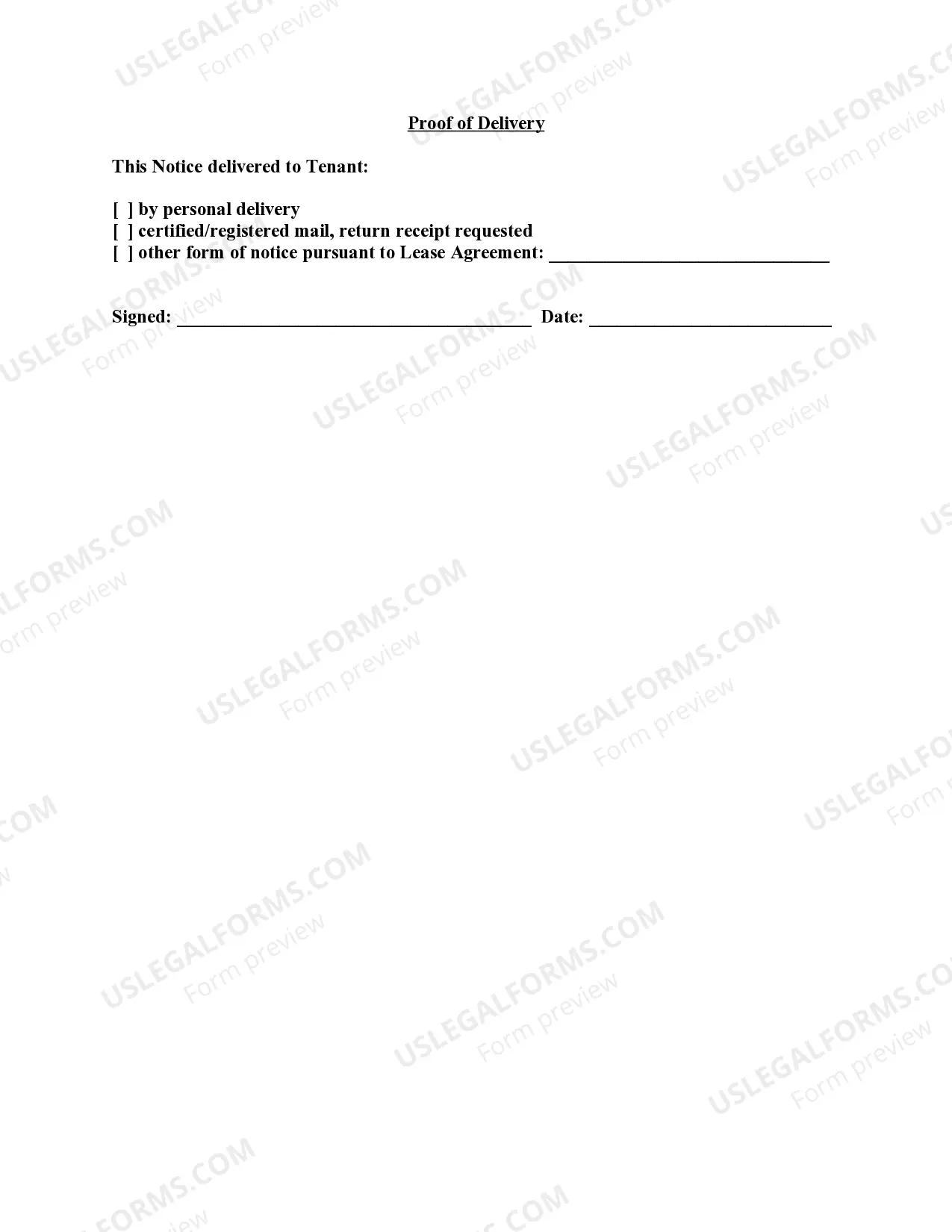
  • Proof of delivery options
Free preview
  • Preview Letter from Landlord to Tenant about time of intent to enter premises
  • Preview Letter from Landlord to Tenant about time of intent to enter premises

Situations where this form applies

Who can use this document

  • Landlords who need to inform tenants of intended entry into the rental property.
  • Property managers acting on behalf of landlords.
  • Tenants wanting to understand their rights regarding landlord entry.

Instructions for completing this form

  • Enter the date of the existing lease agreement.
  • Specify the exact address of the leased property.
  • Provide the date and approximate time of the intended entry.
  • Indicate the purpose for entering the property, striking out unnecessary options.
  • Sign the letter as the landlord or authorized agent.
  • Ensure a method of delivery is noted to confirm the tenant receives the notice.

Notarization guidance

This form does not typically require notarization unless specified by local law. However, it is essential to ensure that it is delivered to the tenant properly to establish proof of receipt.

Get your form ready online

Our built-in tools help you complete, sign, share, and store your documents in one place.

Built-in online Word editor

Make edits, fill in missing information, and update formatting in US Legal Forms—just like you would in MS Word.

Export easily

Download a copy, print it, send it by email, or mail it via USPS—whatever works best for your next step.

E-sign your document

Sign and collect signatures with our SignNow integration. Send to multiple recipients, set reminders, and more. Go Premium to unlock E-Sign.

Notarize online 24/7

If this form requires notarization, complete it online through a secure video call—no need to meet a notary in person or wait for an appointment.

Store your document securely

We protect your documents and personal data by following strict security and privacy standards.

Form selector

Make edits, fill in missing information, and update formatting in US Legal Forms—just like you would in MS Word.

Form selector

Download a copy, print it, send it by email, or mail it via USPS—whatever works best for your next step.

Form selector

Sign and collect signatures with our SignNow integration. Send to multiple recipients, set reminders, and more. Go Premium to unlock E-Sign.

Form selector

If this form requires notarization, complete it online through a secure video call—no need to meet a notary in person or wait for an appointment.

Form selector

We protect your documents and personal data by following strict security and privacy standards.

Common mistakes to avoid

  • Failing to provide adequate notice as required by law.
  • Omitting the purpose of the entry.
  • Not signing the notice, which can invalidate it.
  • Using informal methods of delivery that cannot provide proof of receipt.

Benefits of completing this form online

  • Easy to download and customize to suit your needs.
  • Access to templates drafted by licensed attorneys ensures compliance with legal standards.
  • Convenient and quick to provide notice without delays.

What to keep in mind

  • This form serves to notify tenants of a landlord's intent to enter the premises.
  • Completion of the form ensures legal compliance and clarity in communication.
  • Use this notice in situations involving repairs, inspections, or showings.

Looking for another form?

This field is required
Virginia
Select state

Form popularity

FAQ

The tenant must give the landlord notice of their intention to move out within 90 days of the event causing the need to move. The notice must be given to the landlord at least 14 days before the tenant intends to move out.

Oregon Rent RulesOregon has a statewide rent control law that limits the amount of rent increases, bars landlords from raising rent more than once in any 12-month period, and requires landlords to give tenants proper notice before raising rent.

Step 1: Mention the Reason for Giving a Notice. Step 2: Use Formal Language. Step 3: Mention the Date for Vacating. Step 4: Address the Formalities to Be Taken Care Of. Step 5: Proofread the Letter.

Your landlord also can't use the right of entry to inspect your belongings. You have the right to refuse entry after receiving a 24-hour notice. You may refuse entry by specifically alerting the landlord of your decision, or you may attach a written notice of refusal to the front of your apartment in a secure manner.

You are paying rent to the landlord for exclusive use as the property as your home and as such you have the right to decide who enters it and when. If a landlord enters your home without permission they are, technically, trespassing, unless they have a court order to allow them otherwise.

Your landlord or their representatives may be allowed reasonable access to carry out inspections or repairs, but must first get your permission. According to Section 11, from The Landlord and Tenant Act 1985, your landlord needs to give you at least 24 hour notice before they come around and visit for any reason.

Dear (Name of landlord or manager), This letter constitutes my written (number of days' notice that you need to give based on your lease agreement)-day notice that I will be moving out of my apartment on (date), the end of my current lease. I am leaving because (new job, rent increase, etc.)

The big take-away is that in most circumstances a landlord cannot enter a property without agreement from the tenant. And If the landlord ignores the law and enters the property without permission, the tenant may be able to claim damages or gain an injunction to prevent the landlord doing it again.

Trusted and secure by over 3 million people of the world’s leading companies

Oregon Letter from Landlord to Tenant about time of intent to enter premises