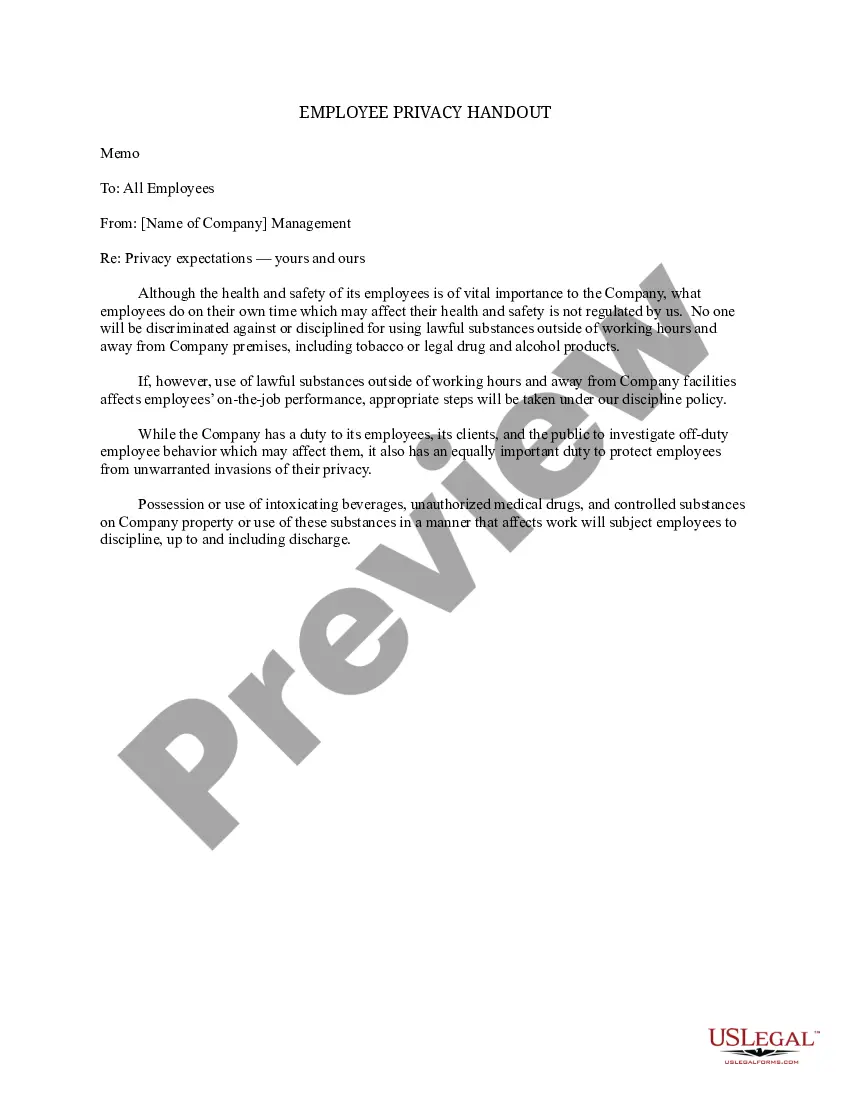
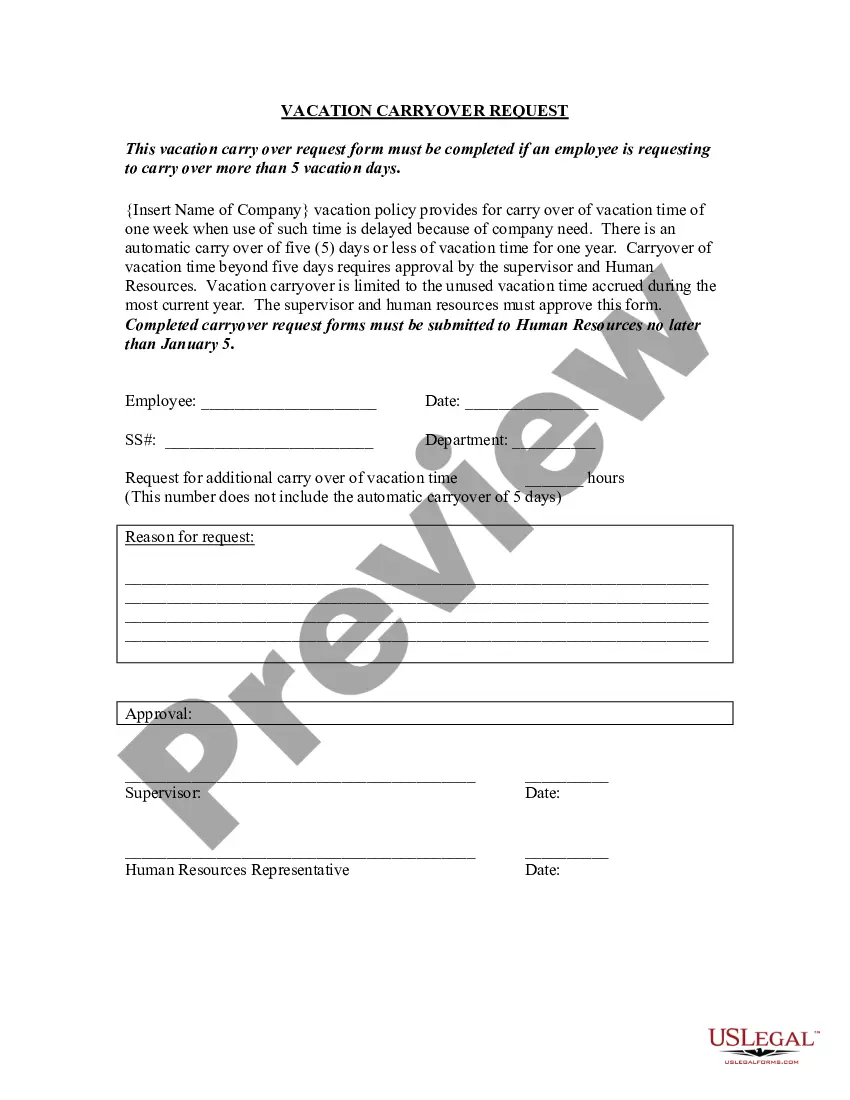
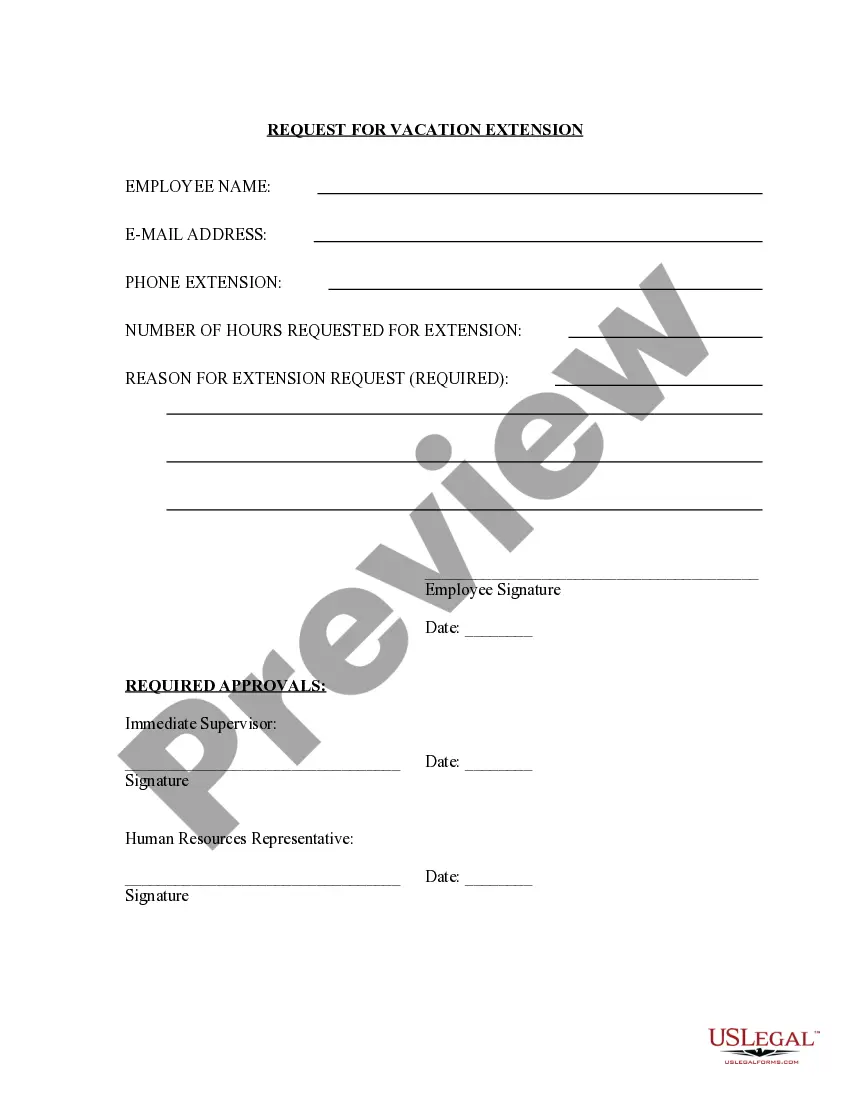
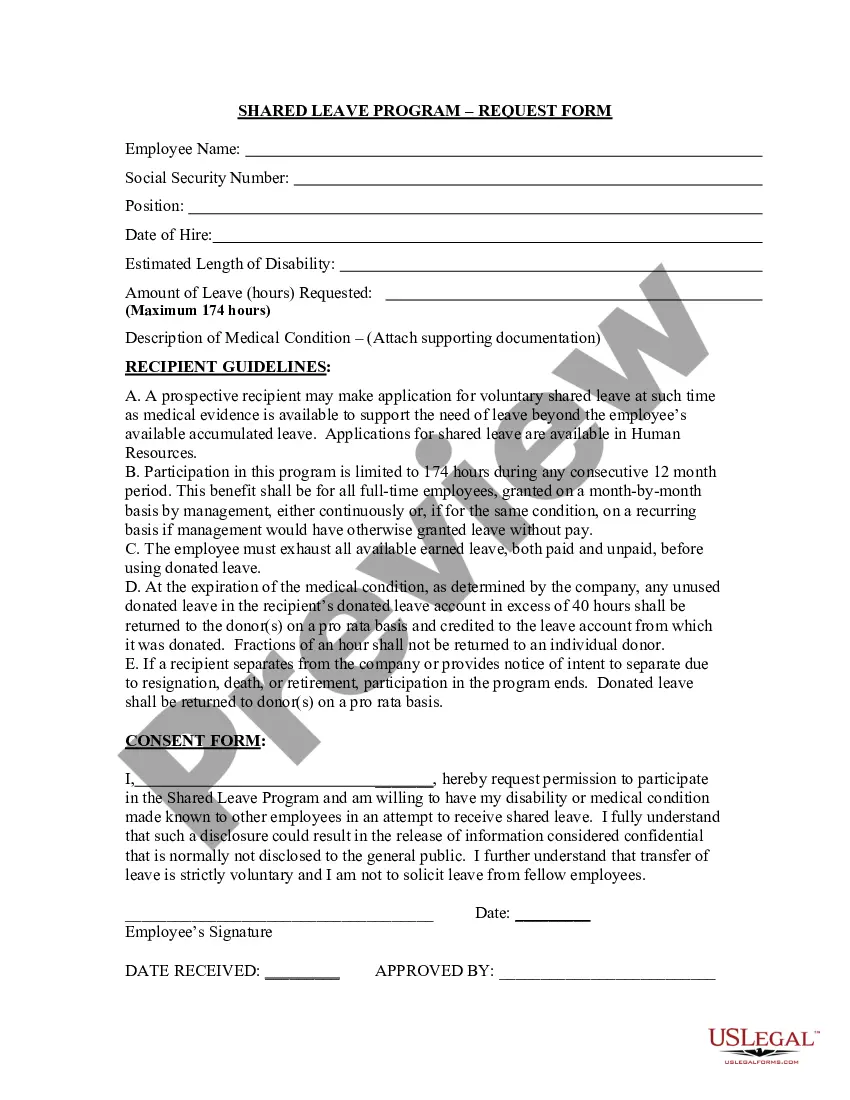
Oklahoma Vacation Carryover Request
Description

Get your form ready online
Our built-in tools help you complete, sign, share, and store your documents in one place.
Make edits, fill in missing information, and update formatting in US Legal Forms—just like you would in MS Word.
Download a copy, print it, send it by email, or mail it via USPS—whatever works best for your next step.
Sign and collect signatures with our SignNow integration. Send to multiple recipients, set reminders, and more. Go Premium to unlock E-Sign.
If this form requires notarization, complete it online through a secure video call—no need to meet a notary in person or wait for an appointment.
We protect your documents and personal data by following strict security and privacy standards.

Make edits, fill in missing information, and update formatting in US Legal Forms—just like you would in MS Word.

Download a copy, print it, send it by email, or mail it via USPS—whatever works best for your next step.

Sign and collect signatures with our SignNow integration. Send to multiple recipients, set reminders, and more. Go Premium to unlock E-Sign.

If this form requires notarization, complete it online through a secure video call—no need to meet a notary in person or wait for an appointment.

We protect your documents and personal data by following strict security and privacy standards.
Looking for another form?


How to fill out Vacation Carryover Request?
If you require to complete, obtain, or produce valid document templates, utilize US Legal Forms, the premier assortment of valid forms available online.
Employ the site’s straightforward and user-friendly search to locate the documents you need.
Various templates for business and personal use are organized by categories and states, or keywords.
If you are a first-time user of US Legal Forms, follow these steps.
Step 1. Ensure you have selected the form for the correct city/state.
- Utilize US Legal Forms to retrieve the Oklahoma Vacation Carryover Request in just a few clicks.
- If you are a current US Legal Forms user.
- log in.
- to your account and then click the.
- Download.
- button to access the Oklahoma Vacation Carryover Request.
- You can also find forms you previously downloaded in the.
- My documents.
- tab of your account.
Form popularity
FAQ
Oklahoma does not have a law that requires employers to pay employees for any unused vacation time or other benefits in the final paycheck. However, Oklahoma courts will enforce any established policy or employment contract that specifies this payout is due with the final paycheck.
Does unused vacation time carry over? The Employment Standards Act requires that employees take their vacation time within 10 months of the end of the vacation entitlement year in which it was earned. This means that vacation time cannot be carried over.
The vacation must be completed no later than 10 months after the end of the vacation entitlement year for which it is given. If an employee is not taking his or her vacation or refusing to schedule his or her vacation, in Ontario, employers are allowed under the ESA to schedule an employee's vacation.
Moreover, employees cannot carry over their statutory minimum vacation time. If there is carry over, the employer has failed to comply with the Employment Standards Act. That means that the time and money are considered to be unpaid wages and a complaint for unpaid wages could be filed.
Vacation Carryover Definition Vacation carryover is a policy some companies have that allows employees to carry unused paid-time-off hours from one year into the next. In many workplaces, eligible employees accrue paid vacation time based on the amount of hours worked.
A maximum of 40 hours of accrued and unused PTO time may be carried over from one calendar year to the next. Employees will not be able to "sell" unused PTO hours back to the company unless authorized by the company president.
No use-it-or-lose-it policies permitted. Under California law, vacation is treated the same as earned wages and vest as the employee performs work. Because vacation is earned proportionally as the employee works, policies requiring employees to lose vacation already earned is illegal under California law.
An employee's vacation will roll over year to year, but once he or she reaches 17.5 days, no more vacation will accrue until the vacation bank falls below that amount.
Under California law, unless otherwise stipulated by a collective bargaining agreement, whenever the employment relationship ends, for any reason whatsoever, and the employee has not used all of his or her earned and accrued vacation, the employer must pay the employee at his or her final rate of pay for all of his or