California Employment Separation Notice
What is this form?
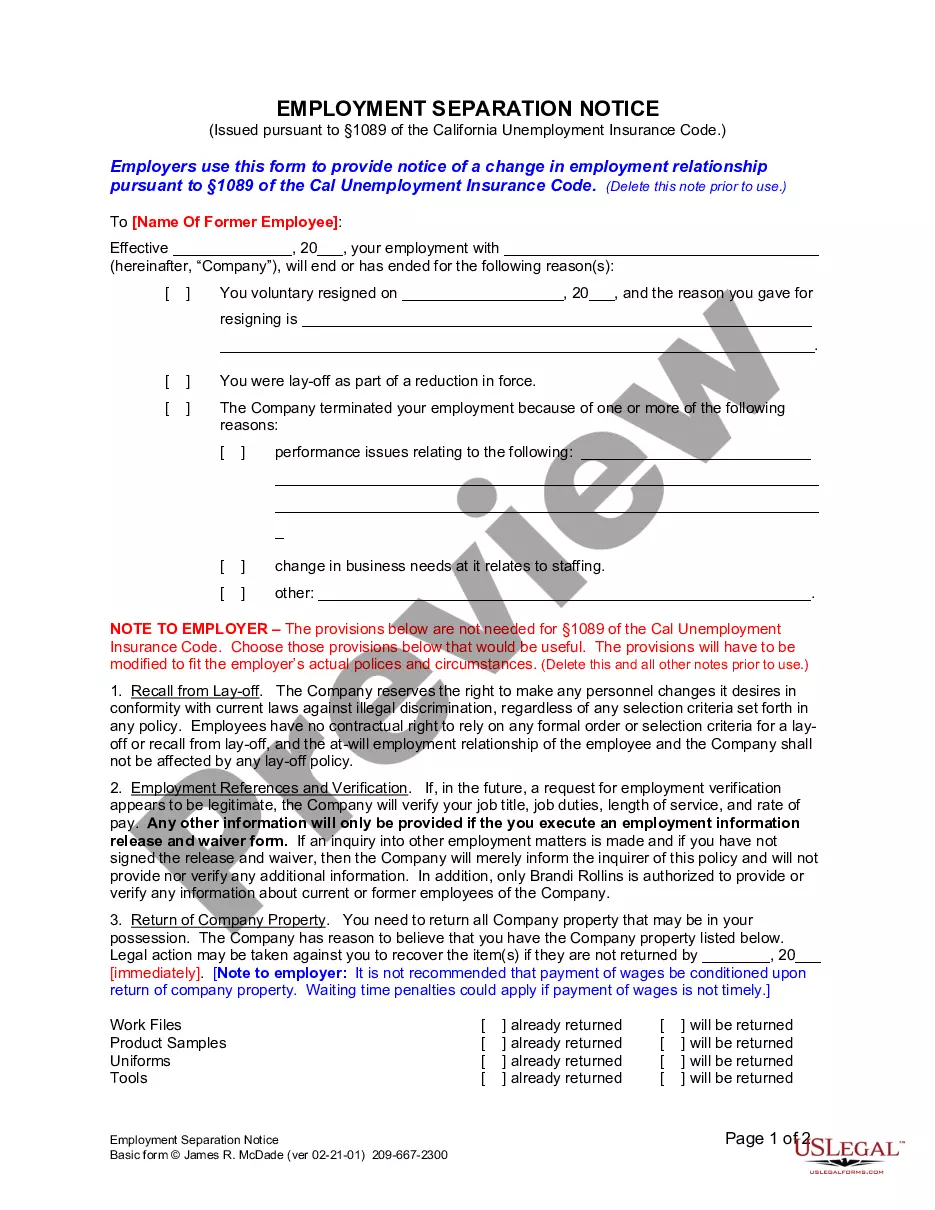
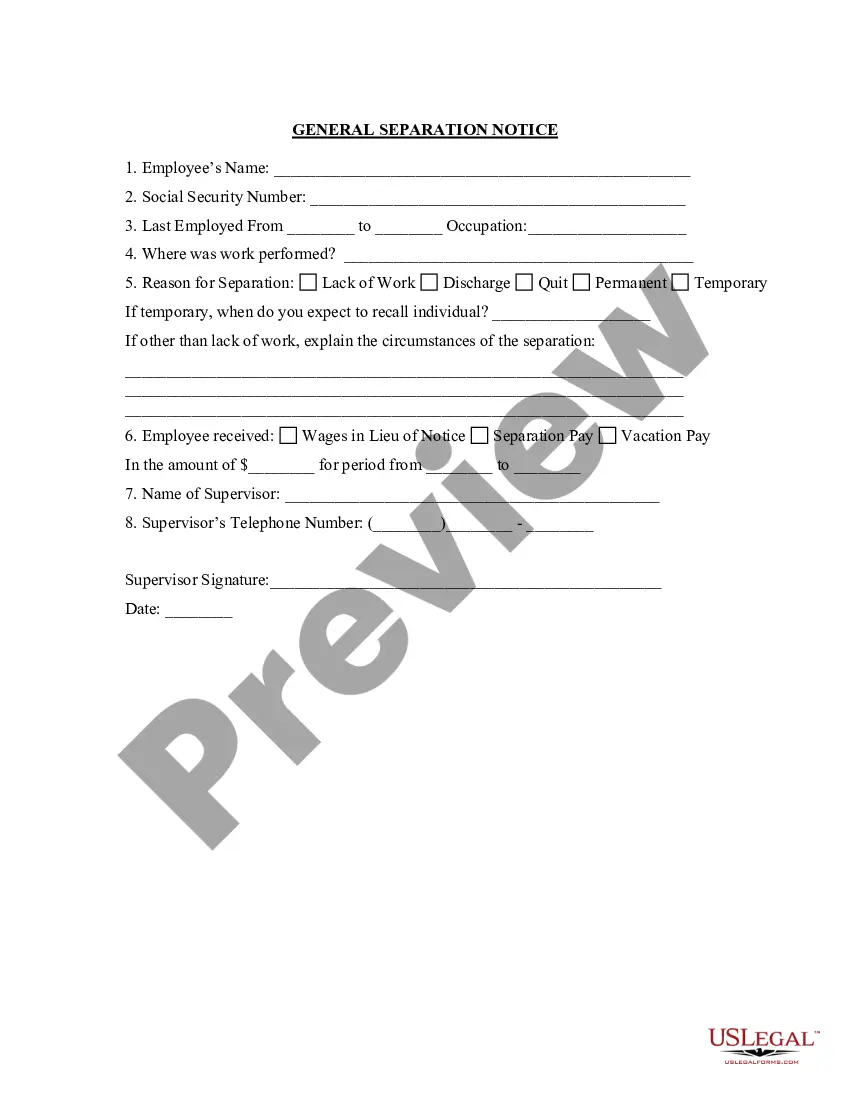
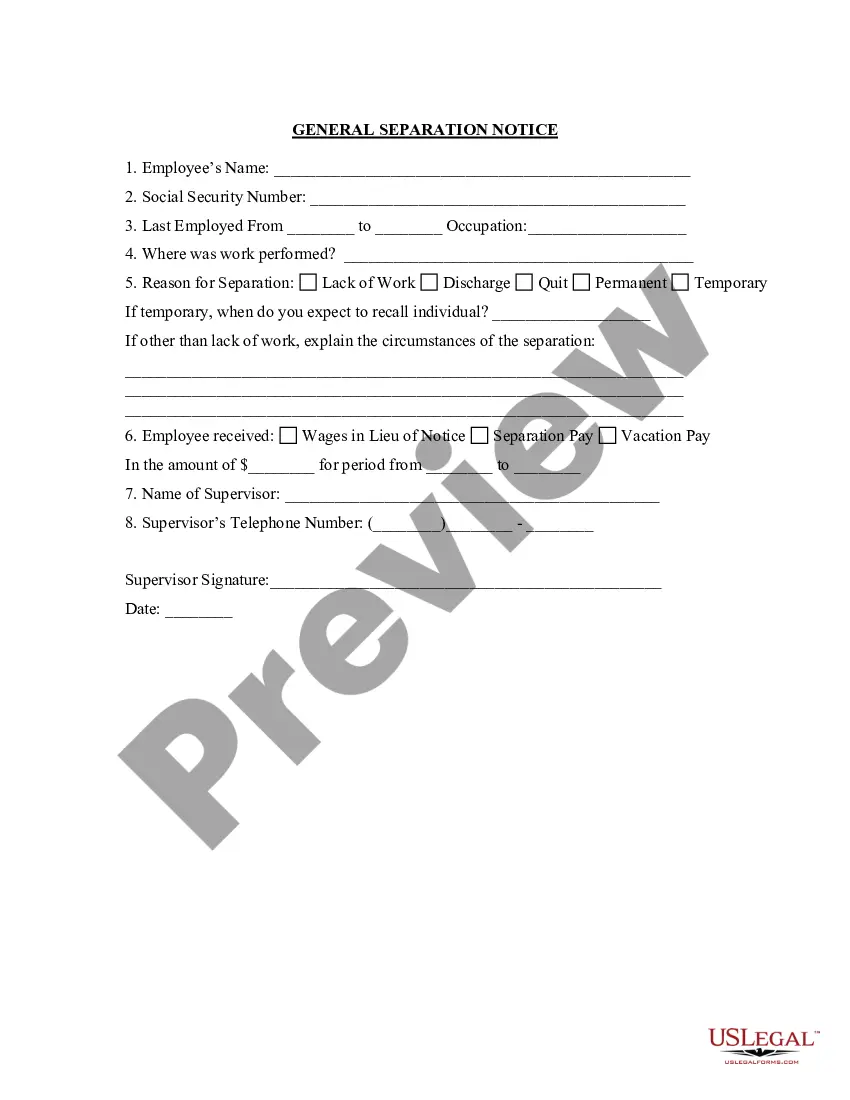
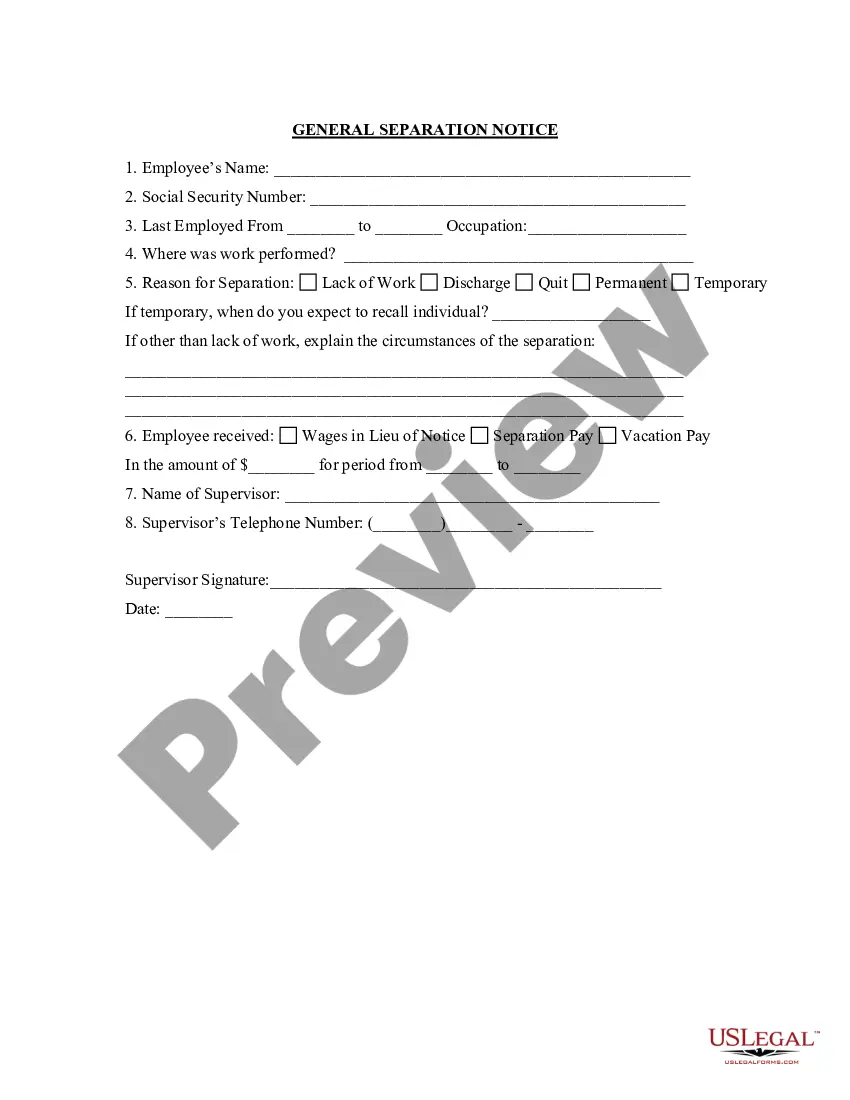
The Employment Separation Notice serves as an official document used by employers to notify employees about changes to their employment status. This form complies with Section 1089 of the California Unemployment Insurance Code. It clarifies the reasons for the separation, details about final pay, return of company property, and additional conditions that may affect the employee after leaving the company. Unlike other termination notices, this form specifically addresses California regulations on unemployment insurance and employment separation.
Key parts of this document
- Employer and employee names and effective separation date
- Reasons for separation (resignation, layoff, termination)
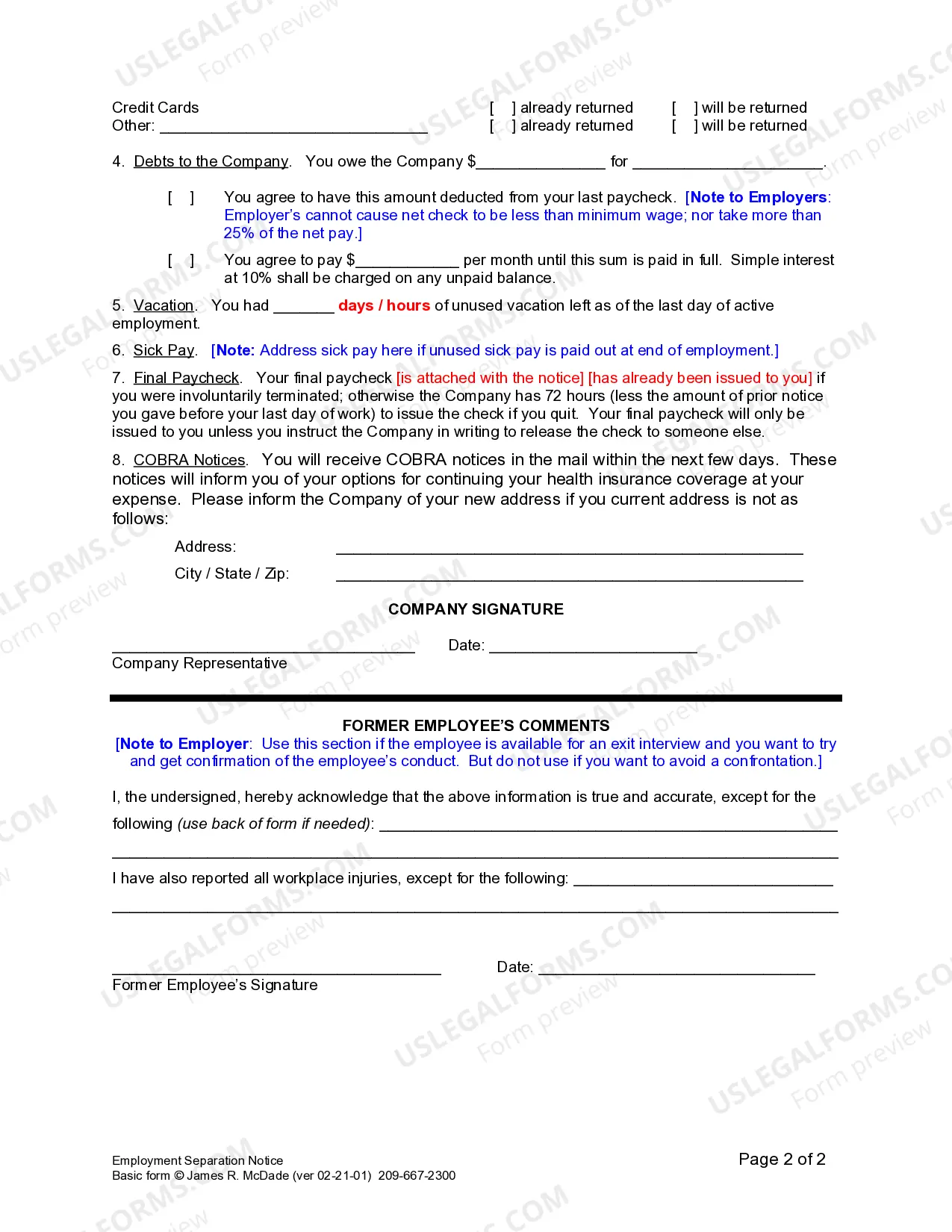
- Details regarding final paycheck and unpaid vacation
- Instructions for the return of company property
- Provisions related to employment references and debts to the company
- COBRA notice information for health insurance coverage continuation
Situations where this form applies
This form should be used when an employee's employment is being terminated, regardless of whether it is voluntary or involuntary. This includes situations such as layoffs due to business restructuring, performance-related terminations, or employee resignations. It helps ensure that both the employer and the employee have a clear understanding of the employment termination terms and any obligations that may follow.
Intended users of this form
- Employers in California who need to formally document the separation of an employee.
- Human resources professionals responsible for managing employee transitions.
- Business owners seeking clarity and compliance in employee termination processes.
Steps to complete this form
- Enter the name of the former employee and the effective date of separation.
- Specify the reason for separation from the provided options or elaborate on other reasons if applicable.
- Indicate any company property that must be returned and set a deadline for its return.
- Detail any outstanding debts owed by the employee, if any, and how they will be processed.
- Assign the final paycheck and provide information regarding COBRA notices and benefits.
Does this document require notarization?
This form does not typically require notarization unless specified by local law. It is important to ensure that all parties have signed the document to maintain its validity.
Get your form ready online
Our built-in tools help you complete, sign, share, and store your documents in one place.
Make edits, fill in missing information, and update formatting in US Legal Forms—just like you would in MS Word.
Download a copy, print it, send it by email, or mail it via USPS—whatever works best for your next step.
Sign and collect signatures with our SignNow integration. Send to multiple recipients, set reminders, and more. Go Premium to unlock E-Sign.
If this form requires notarization, complete it online through a secure video call—no need to meet a notary in person or wait for an appointment.
We protect your documents and personal data by following strict security and privacy standards.

Make edits, fill in missing information, and update formatting in US Legal Forms—just like you would in MS Word.

Download a copy, print it, send it by email, or mail it via USPS—whatever works best for your next step.

Sign and collect signatures with our SignNow integration. Send to multiple recipients, set reminders, and more. Go Premium to unlock E-Sign.

If this form requires notarization, complete it online through a secure video call—no need to meet a notary in person or wait for an appointment.

We protect your documents and personal data by following strict security and privacy standards.
Mistakes to watch out for
- Failing to specify the exact effective date of separation.
- Not providing a signed copy of the notice to the employee.
- Overlooking the requirement to document the return of company property.
- Not clarifying the final payment conditions related to unused vacation or other compensations.
Why use this form online
- Convenient access to a legally compliant template.
- Easy to customize with necessary details about the employee and company.
- Time-efficient process, eliminating the need for legal consultation for straightforward separations.
- Ensures a consistent approach to employment terminations within companies.
Legal use & context
- This form serves as a legally binding notification of employment separation.
- It protects both employer and employee by documenting important details of the termination.
- Employers must adhere to California laws regarding the timing and manner of the final paycheck issuance.
Key takeaways
- The Employment Separation Notice is essential for documenting changes in employment status in California.
- It outlines the terms of separation, responsibility for company property, and final payment details.
- Using this form helps ensure compliance with state law and reduces the risk of misunderstandings or disputes.
Looking for another form?



Form popularity
FAQ
The California Employment Separation Notice is an official document used by California employers to inform employees about changes to their employment status, aligned with California Unemployment Insurance Code Section 1089. It clarifies the reason for separation, final pay details, return of company property, and post-employment conditions, including COBRA and references. It applies to both voluntary and involuntary terminations.
The form records the employer and employee names and the effective separation date, and explains the final paycheck timing and any unpaid vacation. This provides a clear, dated record of the financial terms of departure under California rules.
The form includes instructions for returning company property, including what items to return and any deadlines. Following these steps helps prevent disputes about ownership or condition of items after separation and creates a documented path for compliance.
It includes provisions related to employment references and any debts to the company, establishing expectations for how references will be provided and how outstanding obligations will be handled after the employee leaves.
The form provides COBRA notice information for health insurance continuation, outlining eligibility, enrollment timelines, and responsibilities so the employee can maintain coverage after separation, in line with California guidance.
This form is tailored to California requirements, complying with Section 1089 of the California Unemployment Insurance Code and including California-specific items like a COBRA notice and final pay details, ensuring compliant separation communication for CA employers and HR professionals.