Oklahoma Tax Free Exchange Agreement Section 1031
Description
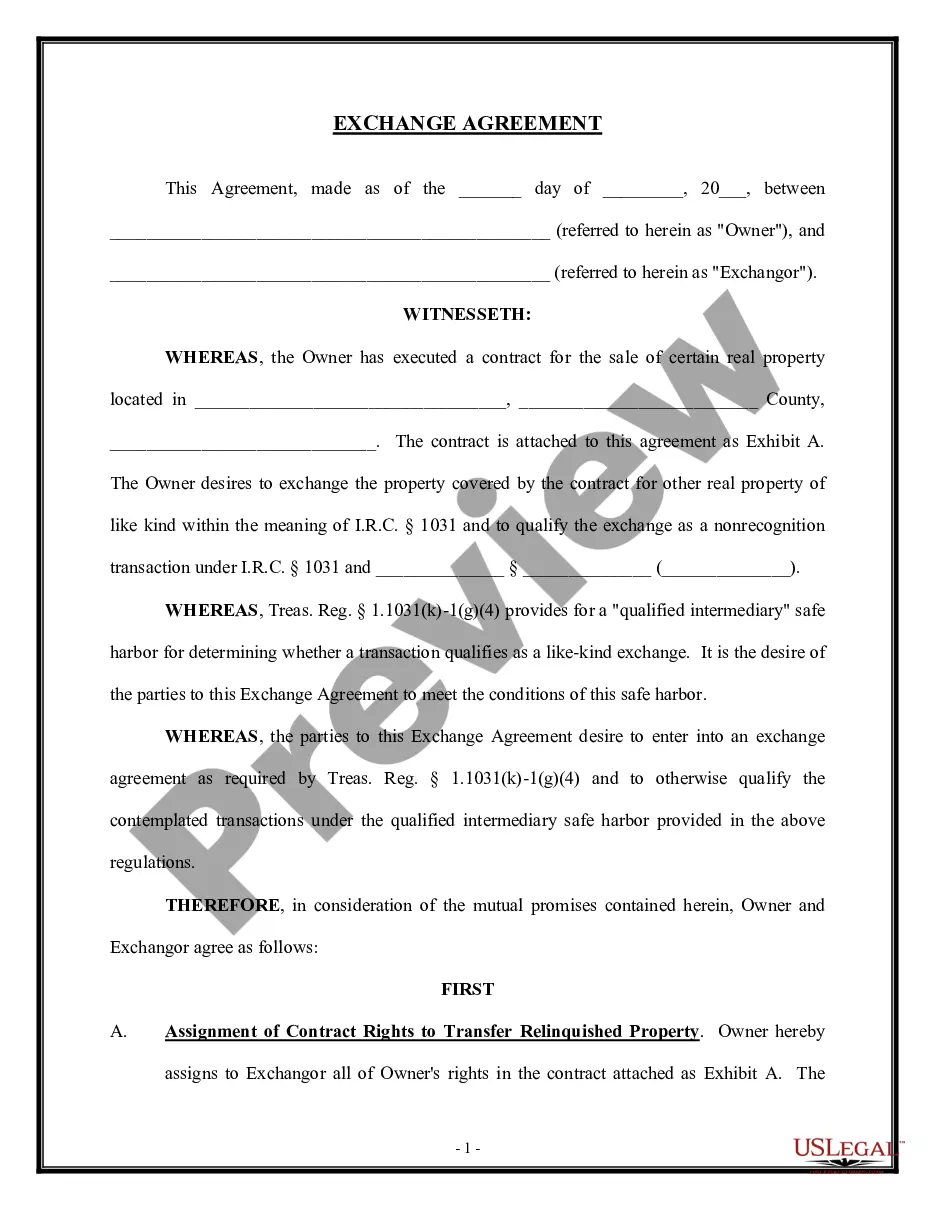
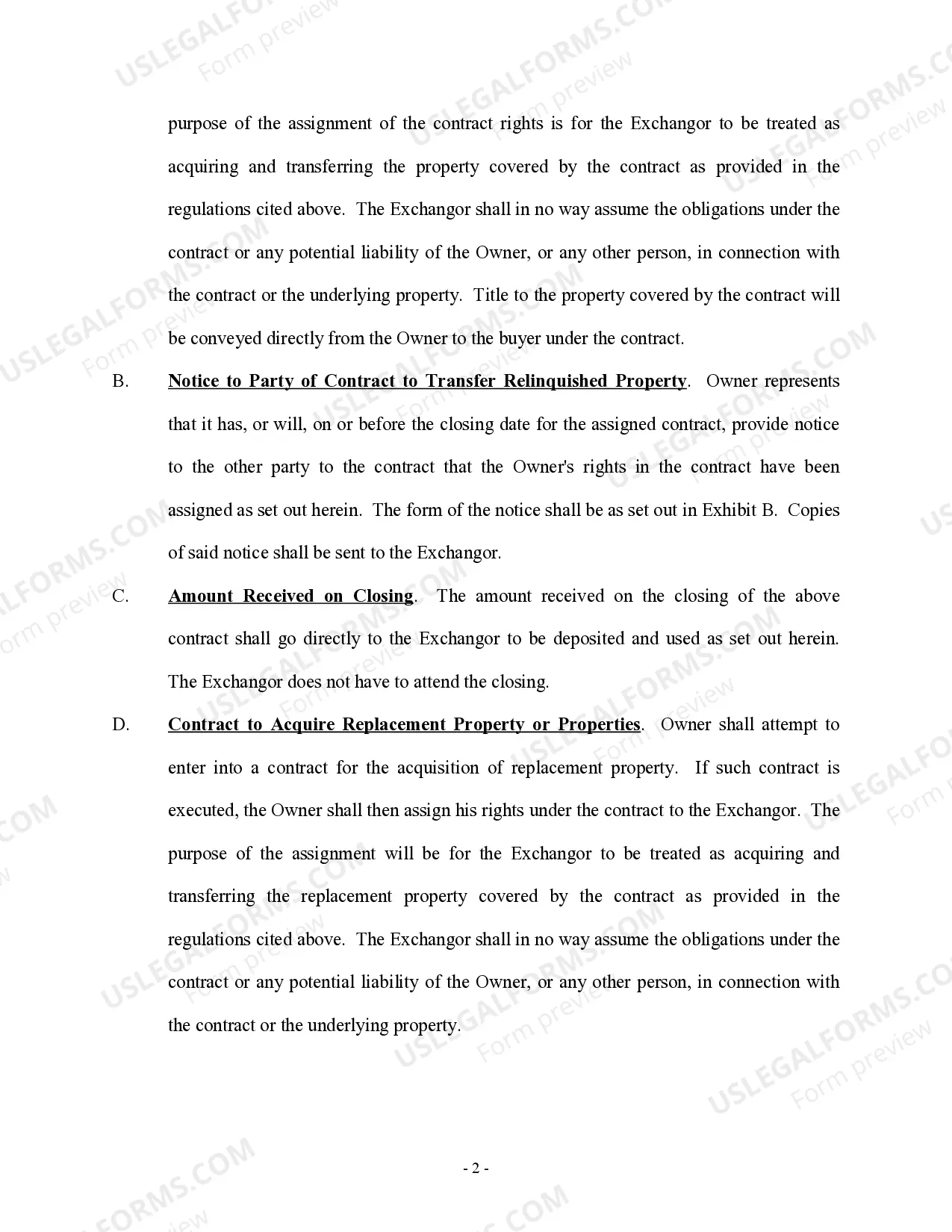
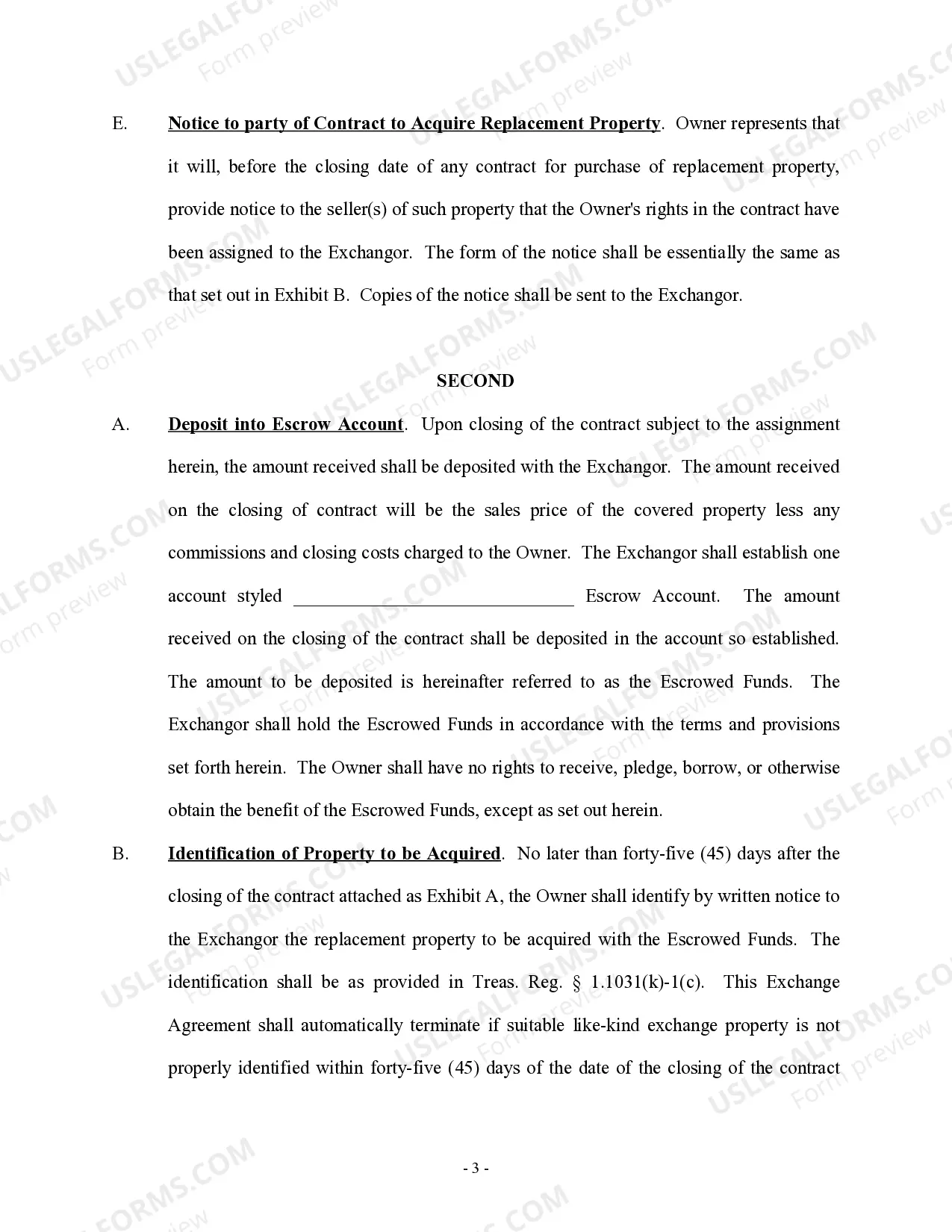
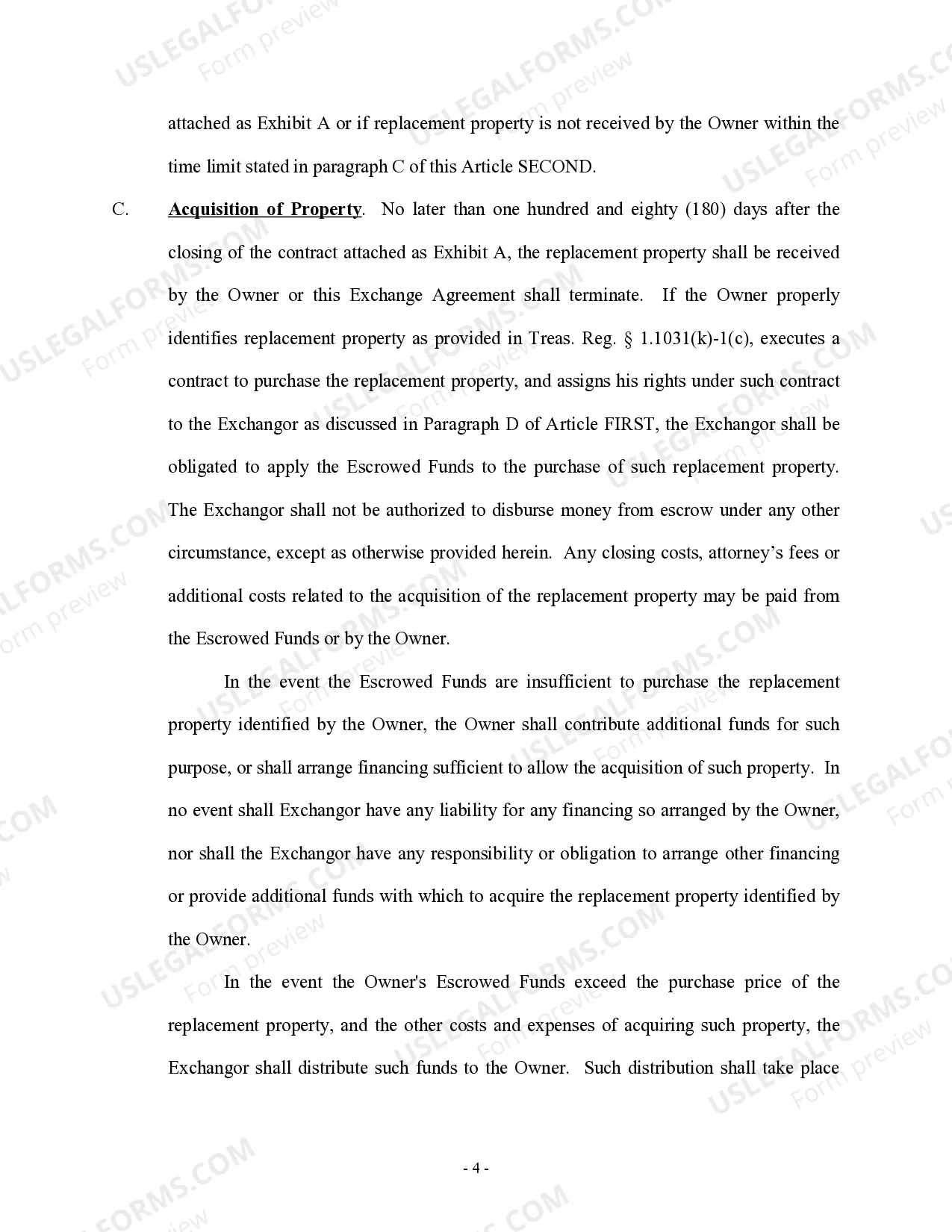
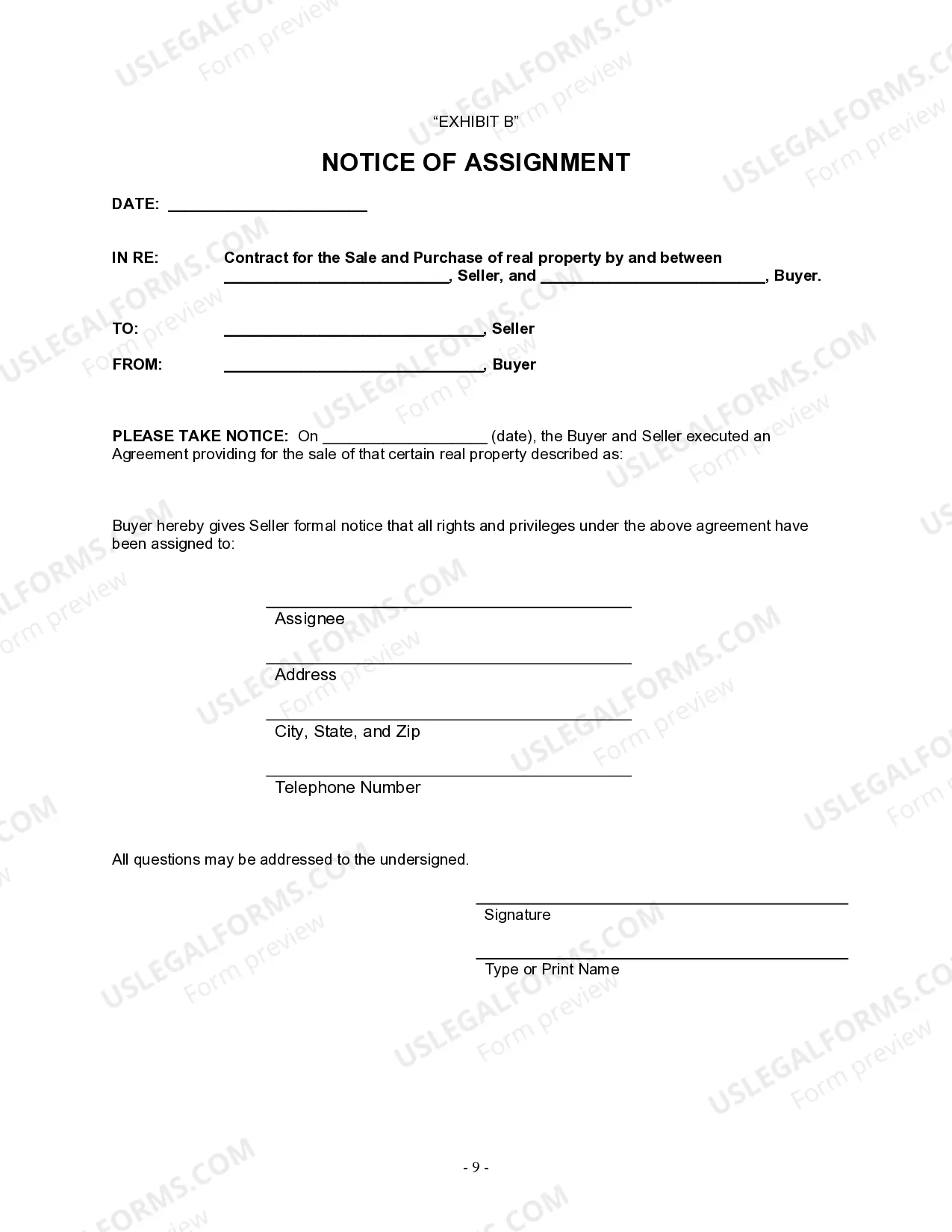

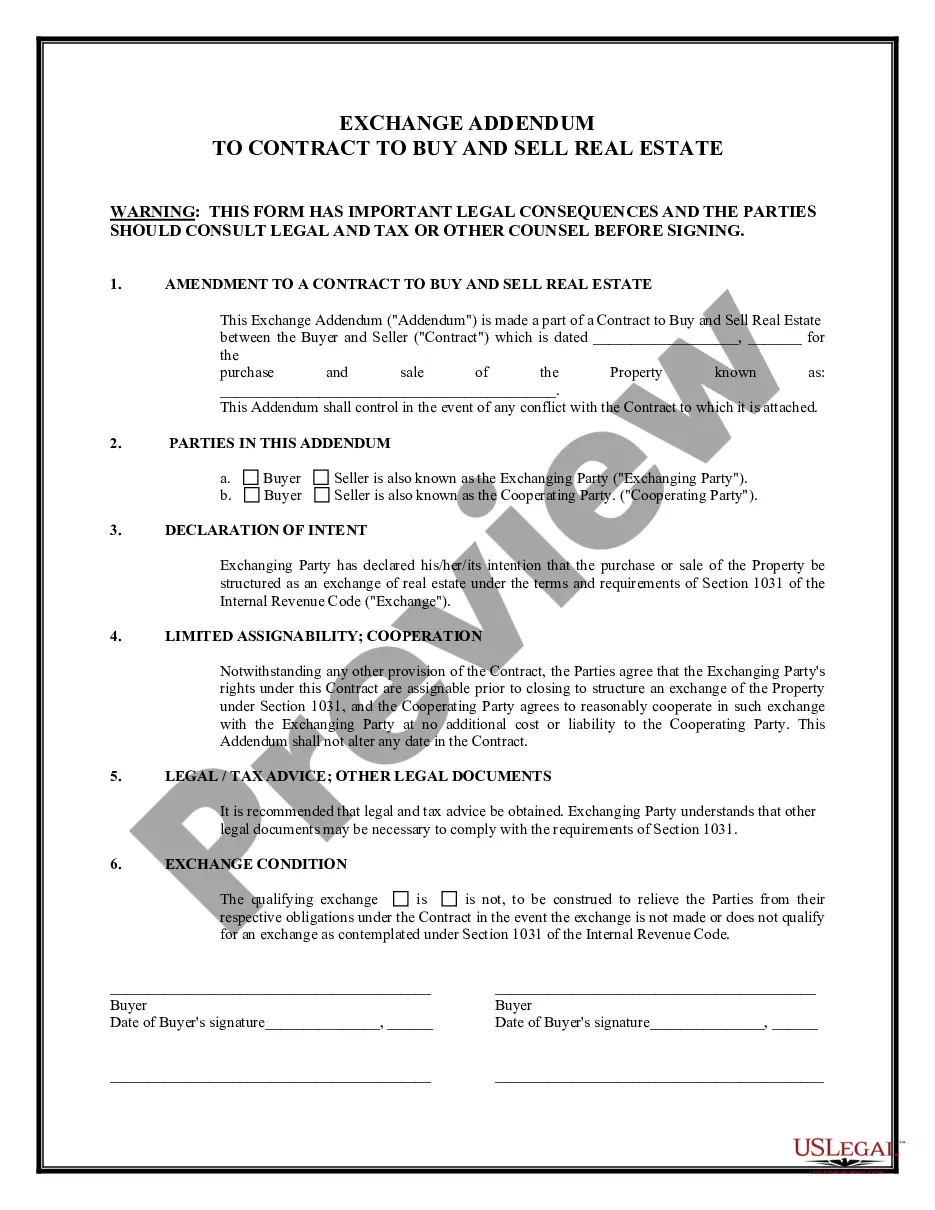
Get your form ready online
Our built-in tools help you complete, sign, share, and store your documents in one place.
Make edits, fill in missing information, and update formatting in US Legal Forms—just like you would in MS Word.
Download a copy, print it, send it by email, or mail it via USPS—whatever works best for your next step.
Sign and collect signatures with our SignNow integration. Send to multiple recipients, set reminders, and more. Go Premium to unlock E-Sign.
If this form requires notarization, complete it online through a secure video call—no need to meet a notary in person or wait for an appointment.
We protect your documents and personal data by following strict security and privacy standards.

Make edits, fill in missing information, and update formatting in US Legal Forms—just like you would in MS Word.

Download a copy, print it, send it by email, or mail it via USPS—whatever works best for your next step.

Sign and collect signatures with our SignNow integration. Send to multiple recipients, set reminders, and more. Go Premium to unlock E-Sign.

If this form requires notarization, complete it online through a secure video call—no need to meet a notary in person or wait for an appointment.

We protect your documents and personal data by following strict security and privacy standards.
Looking for another form?
How to fill out Tax Free Exchange Agreement Section 1031?
It is feasible to spend hours online trying to locate the legal document template that meets the national and local requirements you seek.
US Legal Forms offers thousands of legal forms that have been reviewed by experts.
You can easily download or print the Oklahoma Tax-Free Exchange Agreement Section 1031 from this service.
If available, use the Preview option to view the document template as well.
- If you already have a US Legal Forms account, you can Log In and click on the Obtain option.
- After that, you can complete, edit, print, or sign the Oklahoma Tax-Free Exchange Agreement Section 1031.
- Every legal document template you obtain is yours indefinitely.
- To obtain another copy of the purchased form, visit the My documents tab and click on the corresponding option.
- If you are using the US Legal Forms website for the first time, follow the simple instructions outlined below.
- First, ensure that you have selected the correct document template for the state/region of your choice.
- Review the form information to make sure you have selected the correct form.
Form popularity
FAQ
Gain deferred in a like-kind exchange under IRC Section 1031 is tax-deferred, but it is not tax-free. The exchange can include like-kind property exclusively or it can include like-kind property along with cash, liabilities and property that are not like-kind.
Any rental property sold by those who qualify in accordance with IRS rules as real estate professionals is not considered passive and thus will not be counted as net investment income. The gain deferred in a 1031 exchange is not included in your Adjusted Gross income (AGI) or Net Investment Income (NII).
While you can't do a 1031 exchange directly into a personal residence -- exchanges are limited to real property that is held strictly for investment or business purposes -- you can convert an investment property into personal property so long as you follow the IRS' rules to the letter.
Also, Section 121 has a special rule for 1031 property that states that you have to own the home for at least 5 years (either as 1031 property or principal residence) before you sell it.
What is a 1031 Exchange? The sale of a business or investment asset can create a large tax liability. A properly structured tax deferred exchange under Internal Revenue Code §1031 allows businesses and individuals to defer the recognition of capital gains and other taxes associated with the sale.
The main requirements for a 1031 exchange are: (1) must purchase another like-kind investment property; (2) replacement property must be of equal or greater value; (3) must invest all of the proceeds from the sale (cannot receive any boot); (4) must be the same title holder and taxpayer; (5) must identify new
Potential Drawbacks of a 1031 DST Exchange1031 DST investors give up control.The 1031 DST properties are illiquid.Costs, fees and charges.You must be an accredited investor.You cannot raise new capital in a 1031 DST.Small offering size.DSTs must adhere to strict prohibitions.
Nontaxable Exchanges - A nontaxable exchange is an exchange in which any gain is not taxed and any loss can not be deducted. If you receive property in a nontaxable exchange, its basis is usually the same as the basis of the property you exchanged.
HOW TO REPORT THE EXCHANGE. Your 1031 exchange must be reported by completing Form 8824 and filing it along with your federal income tax return. If you completed more than one exchange, a different form must be completed for each exchange.
You may rent your exchange property to a relative provided that you strictly follow three basic rules: 1) the rent you charge has to be fair market value for that property, 2) your rental agreement must be in writing and you must enforce the terms of the agreement (most importantly the clause dealing with the late