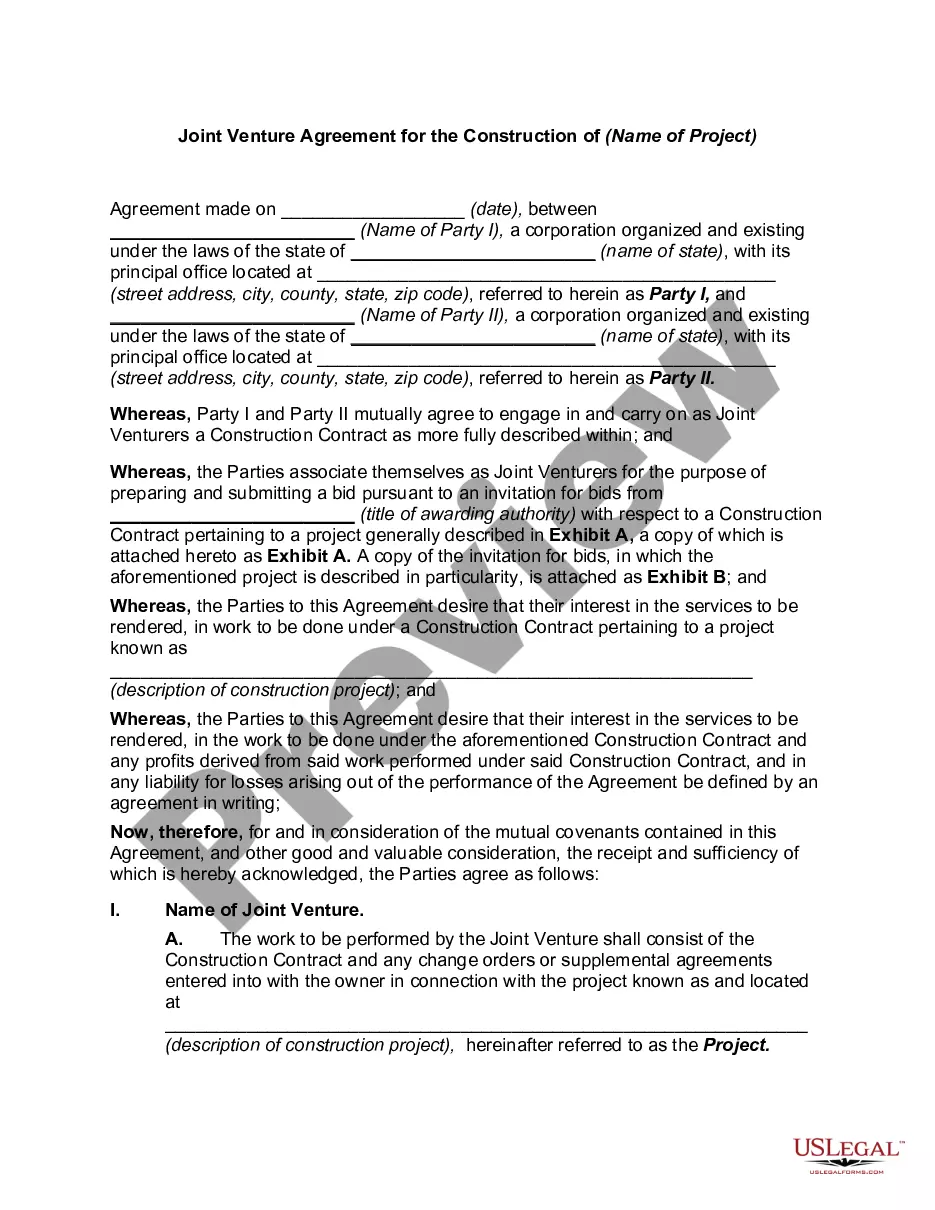
Arizona Exchange Agreement for Real Estate
Description

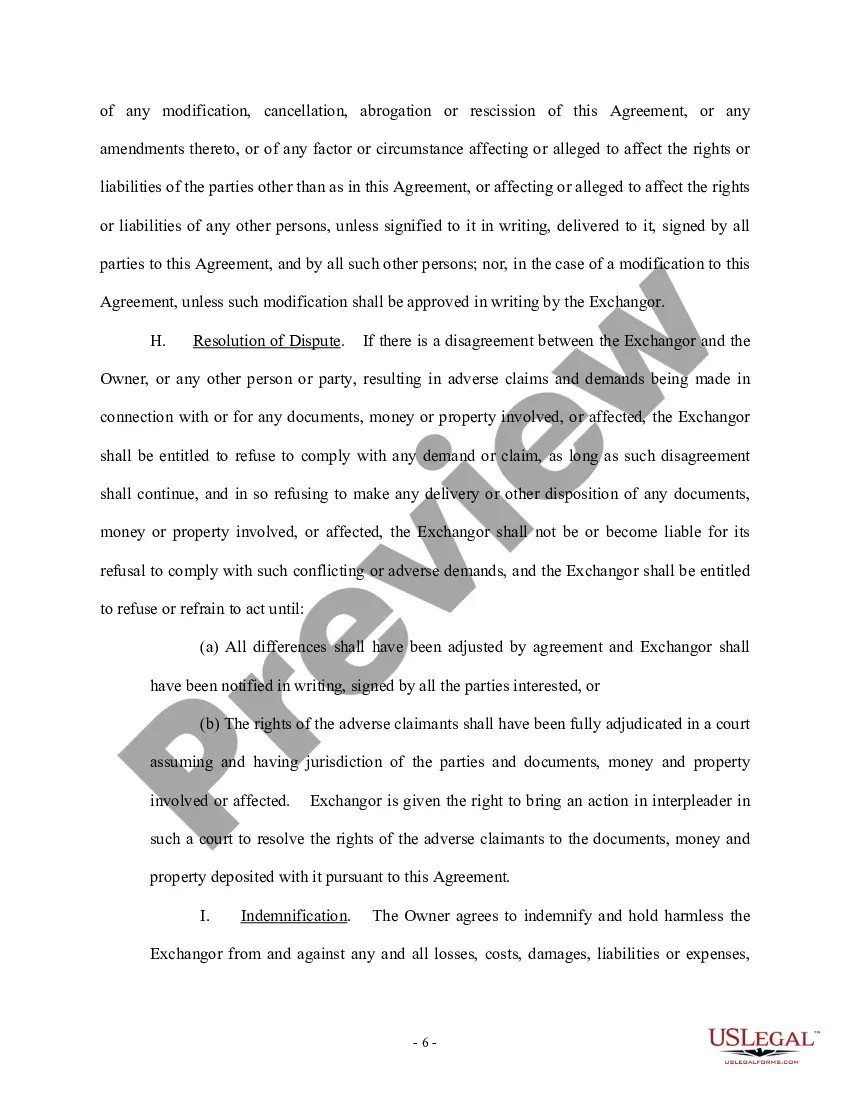
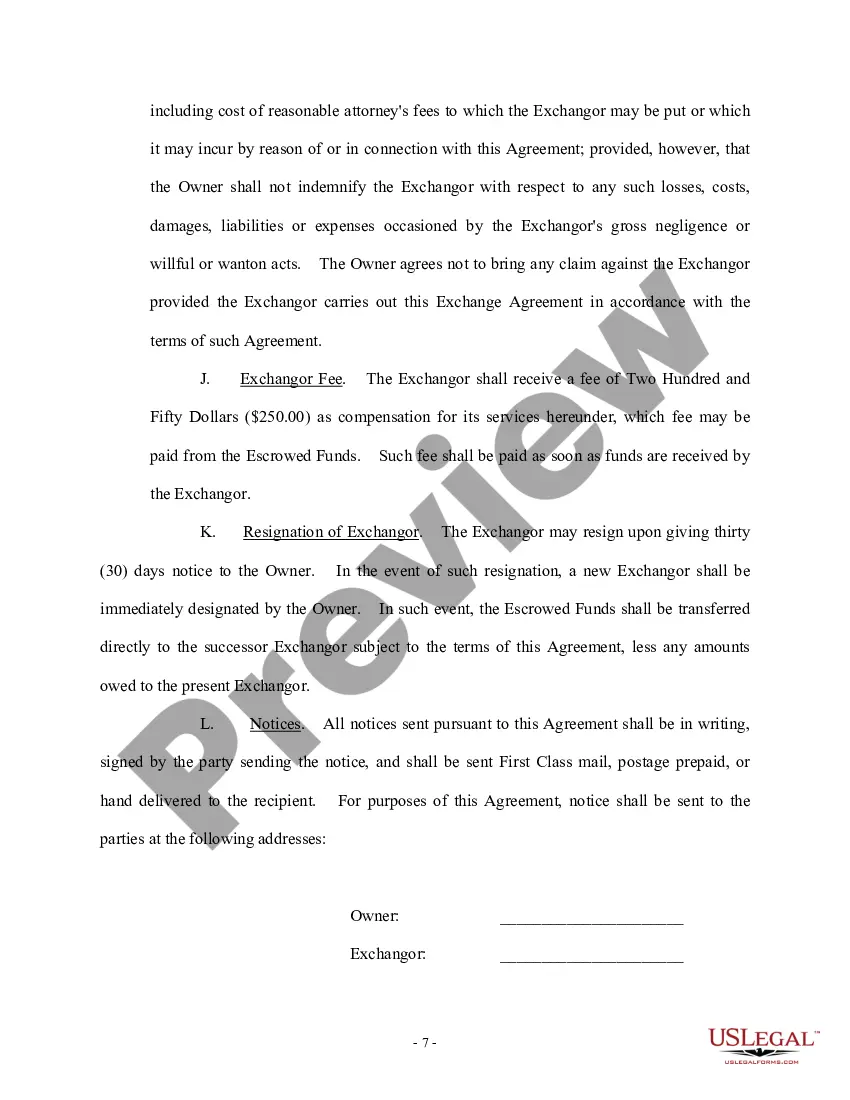
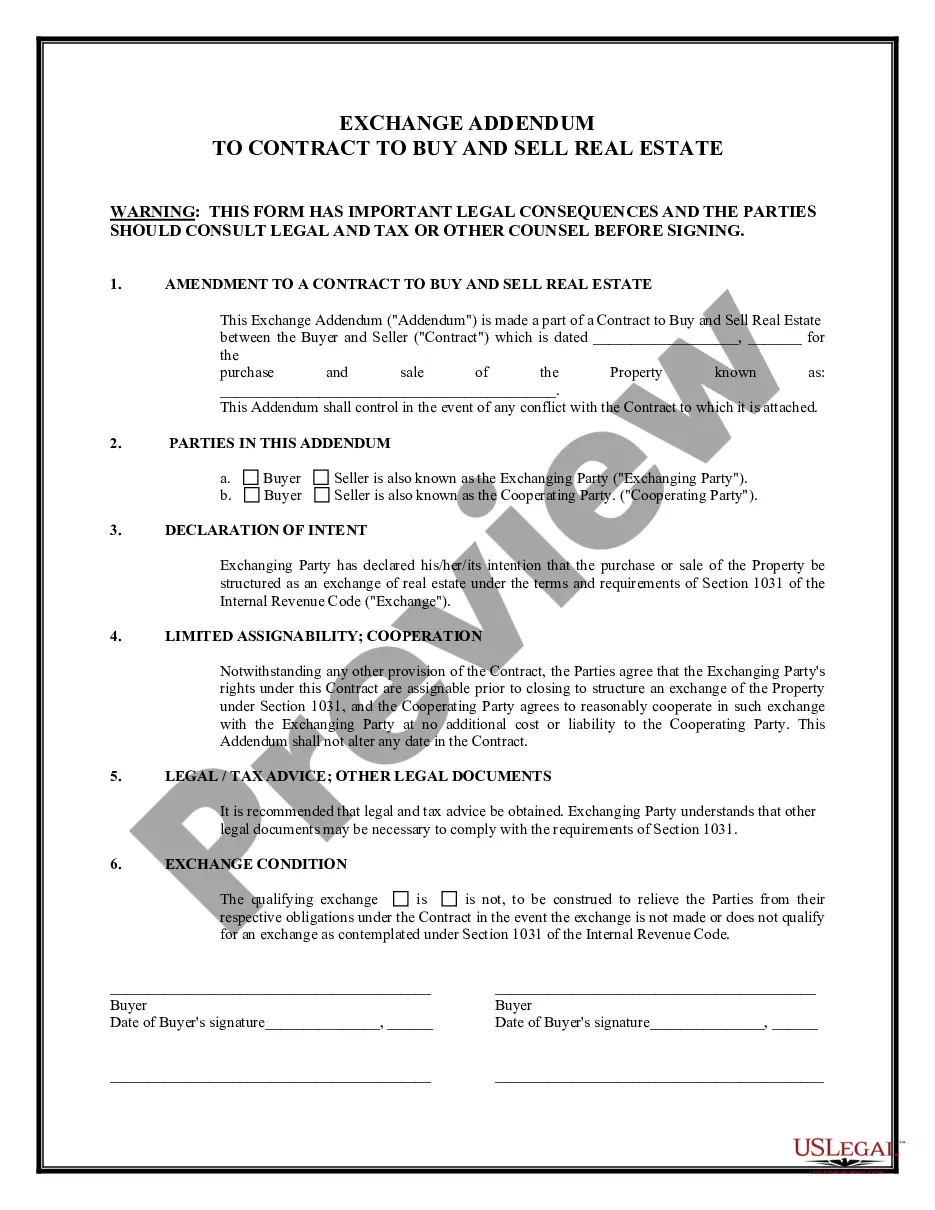
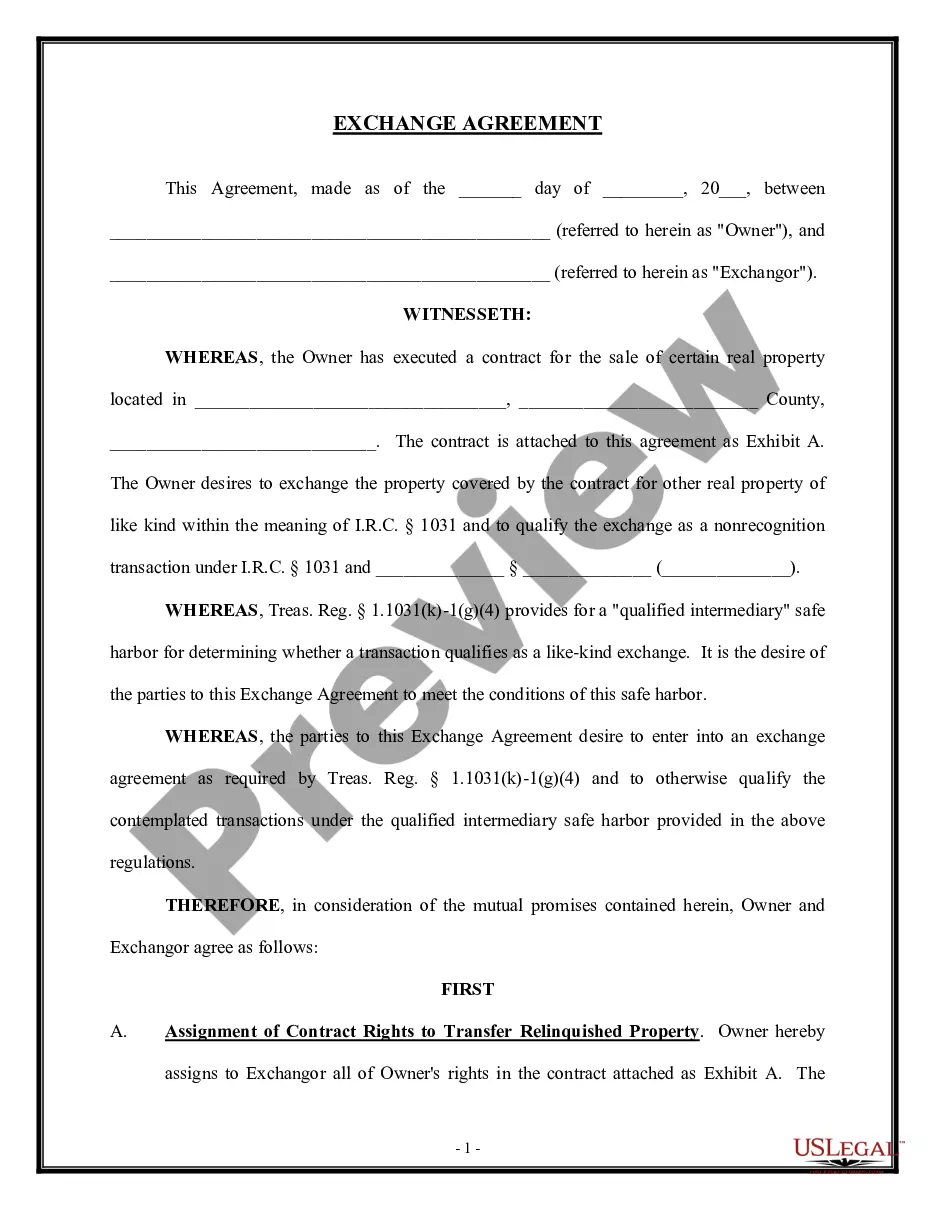
Get your form ready online
Our built-in tools help you complete, sign, share, and store your documents in one place.
Make edits, fill in missing information, and update formatting in US Legal Forms—just like you would in MS Word.
Download a copy, print it, send it by email, or mail it via USPS—whatever works best for your next step.
Sign and collect signatures with our SignNow integration. Send to multiple recipients, set reminders, and more. Go Premium to unlock E-Sign.
If this form requires notarization, complete it online through a secure video call—no need to meet a notary in person or wait for an appointment.
We protect your documents and personal data by following strict security and privacy standards.

Make edits, fill in missing information, and update formatting in US Legal Forms—just like you would in MS Word.

Download a copy, print it, send it by email, or mail it via USPS—whatever works best for your next step.

Sign and collect signatures with our SignNow integration. Send to multiple recipients, set reminders, and more. Go Premium to unlock E-Sign.

If this form requires notarization, complete it online through a secure video call—no need to meet a notary in person or wait for an appointment.

We protect your documents and personal data by following strict security and privacy standards.
Looking for another form?

How to fill out Exchange Agreement For Real Estate?
Selecting the appropriate legal documents template can be an ordeal.
Clearly, there are numerous templates accessible online, but how do you acquire the legal document you require.
Make use of the US Legal Forms website.
If you are a new user of US Legal Forms, here are simple instructions for you to follow: First, make sure you have selected the correct document for your city/region. You can examine the form using the Review button and read the form details to confirm it is suitable for you. If the form does not meet your needs, use the Search area to find the right form. Once you are sure the form is acceptable, click the Get now button to retrieve the form. Choose the payment plan you prefer and enter the necessary information. Create your account and pay for the order using your PayPal account or credit card. Select the file format and download the legal documents template to your device. Complete, edit, print, and sign the acquired Arizona Exchange Agreement for Real Estate. US Legal Forms is the largest repository of legal forms wherein you can discover various document templates. Utilize the service to download professionally crafted documents that comply with state regulations.
- The service offers a wide array of templates, including the Arizona Exchange Agreement for Real Estate, which can be utilized for both business and personal purposes.
- All the forms are reviewed by experts and comply with state and federal requirements.
- If you are already registered, Log In to your account and click on the Download button to access the Arizona Exchange Agreement for Real Estate.
- Use your account to check the legal forms you have previously purchased.
- Navigate to the My documents tab in your account to obtain another copy of the documents you need.
Form popularity
FAQ
As mentioned, a 1031 exchange is reserved for property held for productive use in a trade or business or for investment. This means that any real property held for investment purposes can qualify for 1031 treatment, such as an apartment building, a vacant lot, a commercial building, or even a single-family residence.
Both parties have to agree on the price before the purchase agreement is signed. Furthermore, terms such as earnest money, escrow company, down payment, financing, warranties and contingencies, and the closing date will be outlined in the contract.
A 1031 exchange gets its name from Section 1031 of the U.S. Internal Revenue Code, which allows you to avoid paying capital gains taxes when you sell an investment property and reinvest the proceeds from the sale within certain time limits in a property or properties of like kind and equal or greater value.
There are also states that have withholding requirements if the seller of a piece of property in these states is a non-resident of any of the following states: California, Colorado, Hawaii, Georgia, Maryland, New Jersey, Mississippi, New York, North Carolina, Oregon, West Virginia, Maine, South Carolina, Rhode Island,
Tom: The short answer is yes. Section 1031 is a federal tax code, so it is recognized in all states, so you can exchange from state to state. We regularly are dealing with transactions from our home state of Oregon and into California, Washington, and vice versa.
Under the Tax Cuts and Jobs Act, Section 1031 now applies only to exchanges of real property and not to exchanges of personal or intangible property. An exchange of real property held primarily for sale still does not qualify as a like-kind exchange.
Section 1031 of the Internal Revenue Service Code gives individuals and businesses the option to invest the money from the sale of business or investment property into a similar property with the benefit of a postponement of paying capital gains taxes.
Unlike some other states, Arizona does not have state-specific 1031 exchange rules, but of course, the federal rules apply. One of these rules is that the properties being exchanged must be like-kind, which means that they must be similar in nature or characteristics, although they can differ in quality.
A 1035 exchange provides a means for exchanging an annuity contract or life insurance policy without being treated as if it had been surrendered or sold. Keep in mind that a 1035 exchange can be used only when it involves the same contract or policyholder and the same type of product.
Another reason someone would not want to do a 1031 exchange is if they have a loss, since there will be no capital gains to pay taxes on. Or if someone is in the 10% or 12% ordinary income tax bracket, they would not need to do a 1031 exchange because, in that case, they will be taxed at 0% on capital gains.