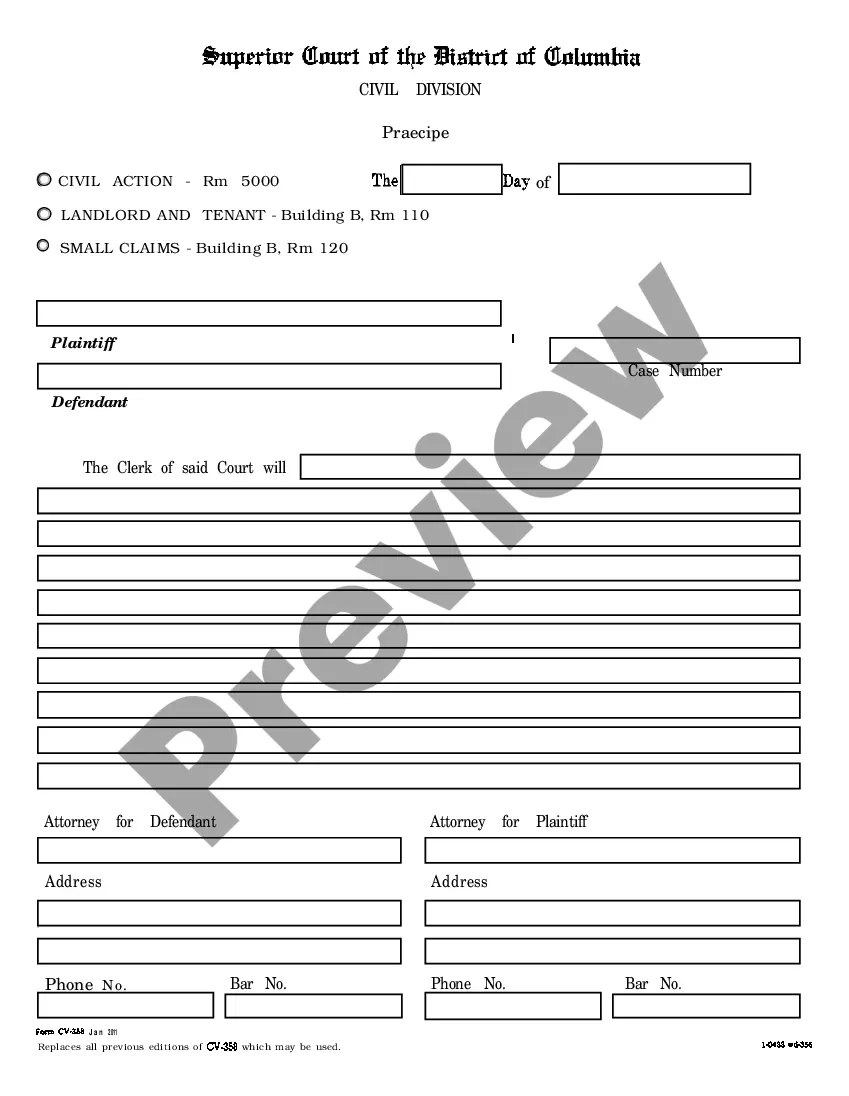
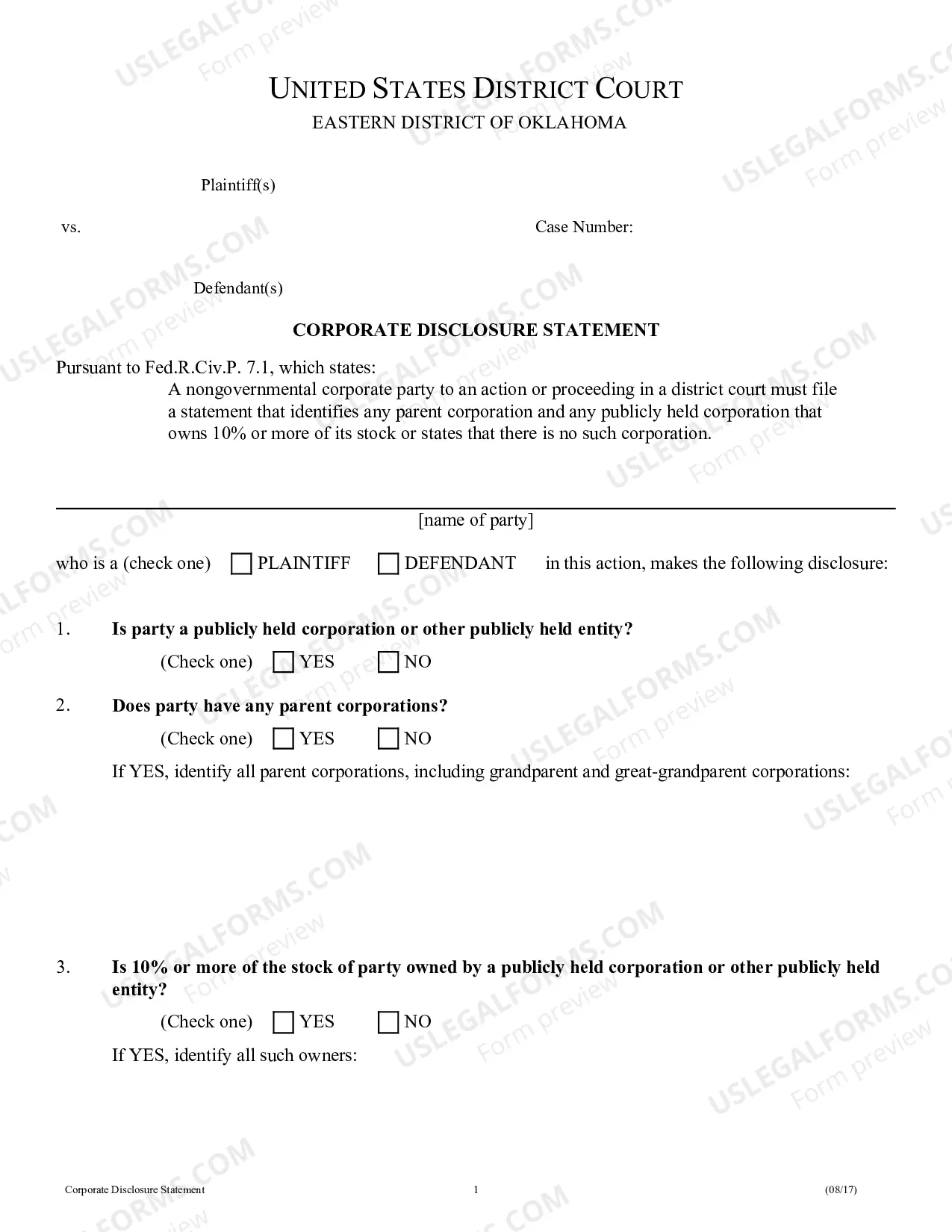
Oklahoma Corporate Disclosure Statement (CV-24)
Description
Get your form ready online
Our built-in tools help you complete, sign, share, and store your documents in one place.
Make edits, fill in missing information, and update formatting in US Legal Forms—just like you would in MS Word.
Download a copy, print it, send it by email, or mail it via USPS—whatever works best for your next step.
Sign and collect signatures with our SignNow integration. Send to multiple recipients, set reminders, and more. Go Premium to unlock E-Sign.
If this form requires notarization, complete it online through a secure video call—no need to meet a notary in person or wait for an appointment.
We protect your documents and personal data by following strict security and privacy standards.

Make edits, fill in missing information, and update formatting in US Legal Forms—just like you would in MS Word.

Download a copy, print it, send it by email, or mail it via USPS—whatever works best for your next step.

Sign and collect signatures with our SignNow integration. Send to multiple recipients, set reminders, and more. Go Premium to unlock E-Sign.

If this form requires notarization, complete it online through a secure video call—no need to meet a notary in person or wait for an appointment.

We protect your documents and personal data by following strict security and privacy standards.
Looking for another form?

How to fill out Oklahoma Corporate Disclosure Statement (CV-24)?
Preparing official paperwork can be a real burden if you don’t have ready-to-use fillable templates. With the US Legal Forms online library of formal documentation, you can be certain in the blanks you find, as all of them correspond with federal and state laws and are checked by our specialists. So if you need to fill out Oklahoma Corporate Disclosure Statement (CV-24), our service is the best place to download it.
Getting your Oklahoma Corporate Disclosure Statement (CV-24) from our catalog is as easy as ABC. Previously registered users with a valid subscription need only sign in and click the Download button after they find the proper template. Later, if they need to, users can get the same document from the My Forms tab of their profile. However, even if you are new to our service, registering with a valid subscription will take only a few minutes. Here’s a brief guide for you:
- Document compliance verification. You should attentively examine the content of the form you want and check whether it satisfies your needs and complies with your state law regulations. Previewing your document and reviewing its general description will help you do just that.
- Alternative search (optional). Should there be any inconsistencies, browse the library through the Search tab on the top of the page until you find a suitable blank, and click Buy Now when you see the one you want.
- Account creation and form purchase. Register for an account with US Legal Forms. After account verification, log in and select your most suitable subscription plan. Make a payment to continue (PayPal and credit card options are available).
- Template download and further usage. Choose the file format for your Oklahoma Corporate Disclosure Statement (CV-24) and click Download to save it on your device. Print it to fill out your papers manually, or use a multi-featured online editor to prepare an electronic copy faster and more effectively.
Haven’t you tried US Legal Forms yet? Subscribe to our service now to obtain any formal document quickly and easily every time you need to, and keep your paperwork in order!
Form popularity
FAQ
The objective of disclosure is to enable investors to value the share and to assess the firm's ability to create value. Real disclosure in such a sense is when the information provided by the company can be used by the person who receives it in daily decision-making (Fagotto et al., 2006).
A Disclosure Statement is a written description of a contractor's cost accounting practices and procedures. (A blue print if you will.)
Corporate disclosure is giving relevant information about the company to the public with the help of the financial reports.
(a) Who Must File. Any nongovernmental corporate party to a proceeding in a court of appeals must file a statement identifying all its parent corporations and listing any publicly held company that owns 10% or more of the party's stock.
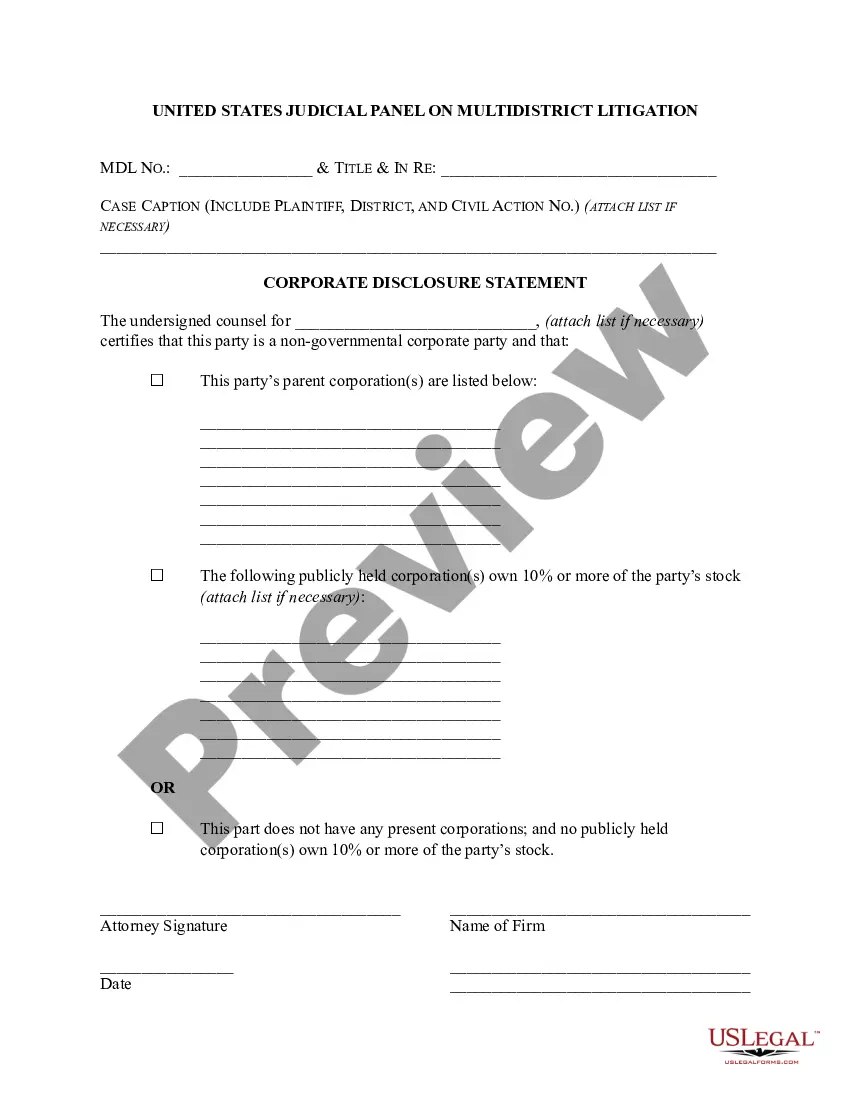
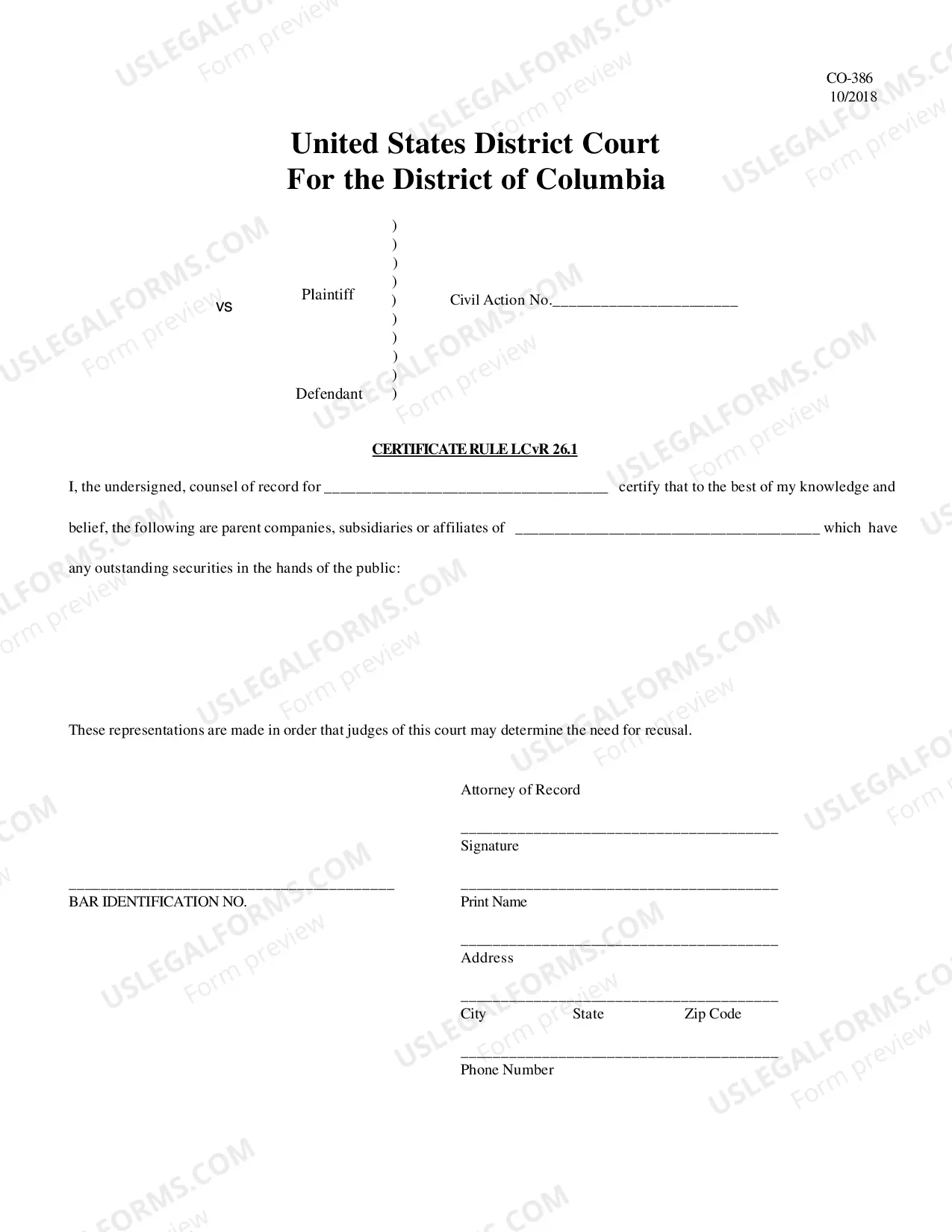
The corporate disclosure statement is intended to assist judges in determining whether they must recuse themselves by reason of ?a financial interest in the subject matter in controversy.? Code of Judicial Conduct, Canon 3C(1)(c) (1972).
A disclosure statement is a financial document given to a participant in a transaction explaining key information in plain language. Disclosure statements for retirement plans must clearly spell out who contributes to the plan, contribution limits, penalties, and tax status.
The Certificate of Interested Entities or Persons is a form that each party must prepare in order to identify for the Court of Appeal other entities and/or persons that the party knows has a financial or other interest in the outcome of their proceeding. (CRC rule 8.208(a).)
A disclosure statement assists a judge in ascertaining whether or not the judge has an interest that should cause the judge to recuse himself or herself from the case. Given that purpose, disclosure of entities that would not be adversely affected by a decision in the case is unnecessary.