Oklahoma Permanent Private Drainage, Access andMaintenance EasementPermanent Private Drainage, Access andMaintenance Easement
About this form
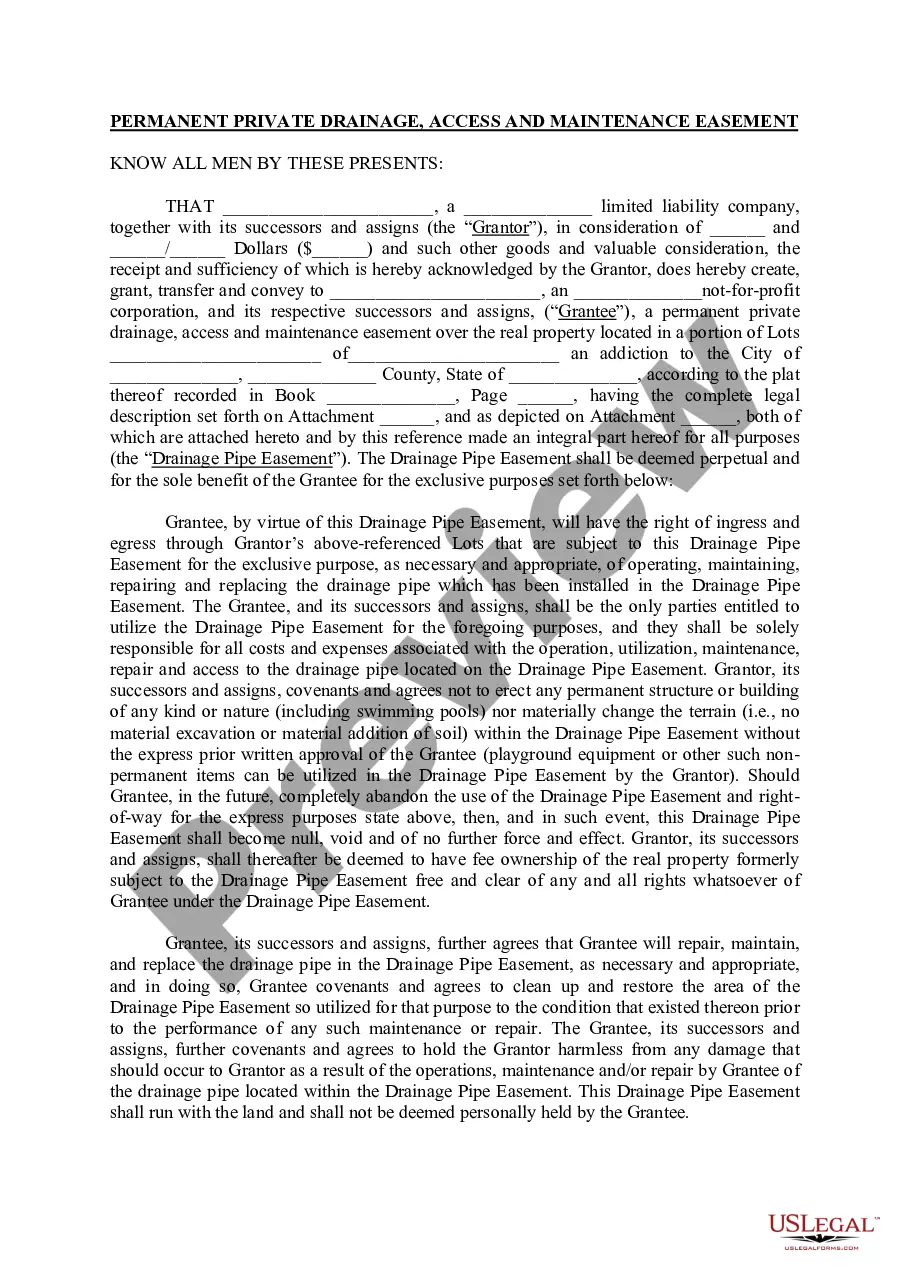
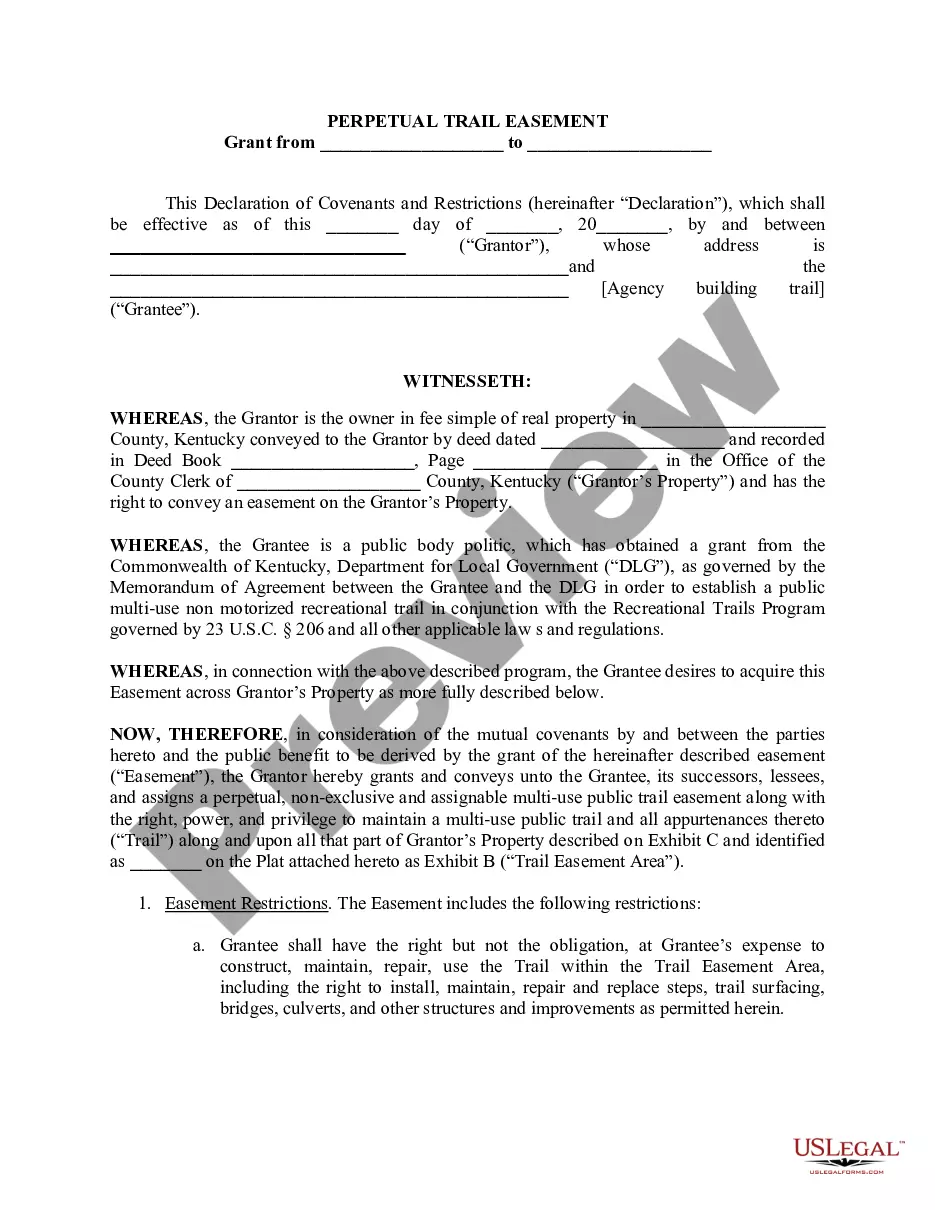
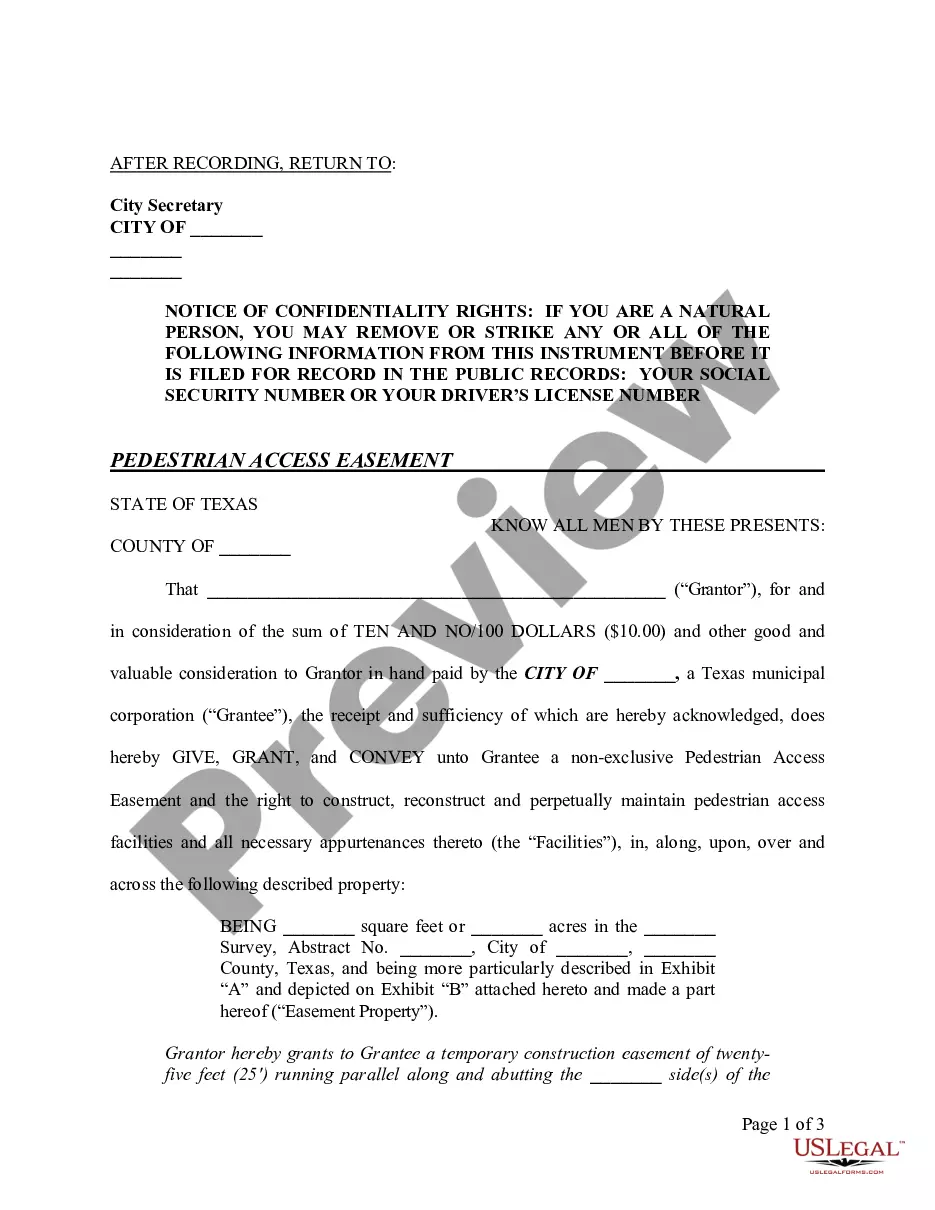
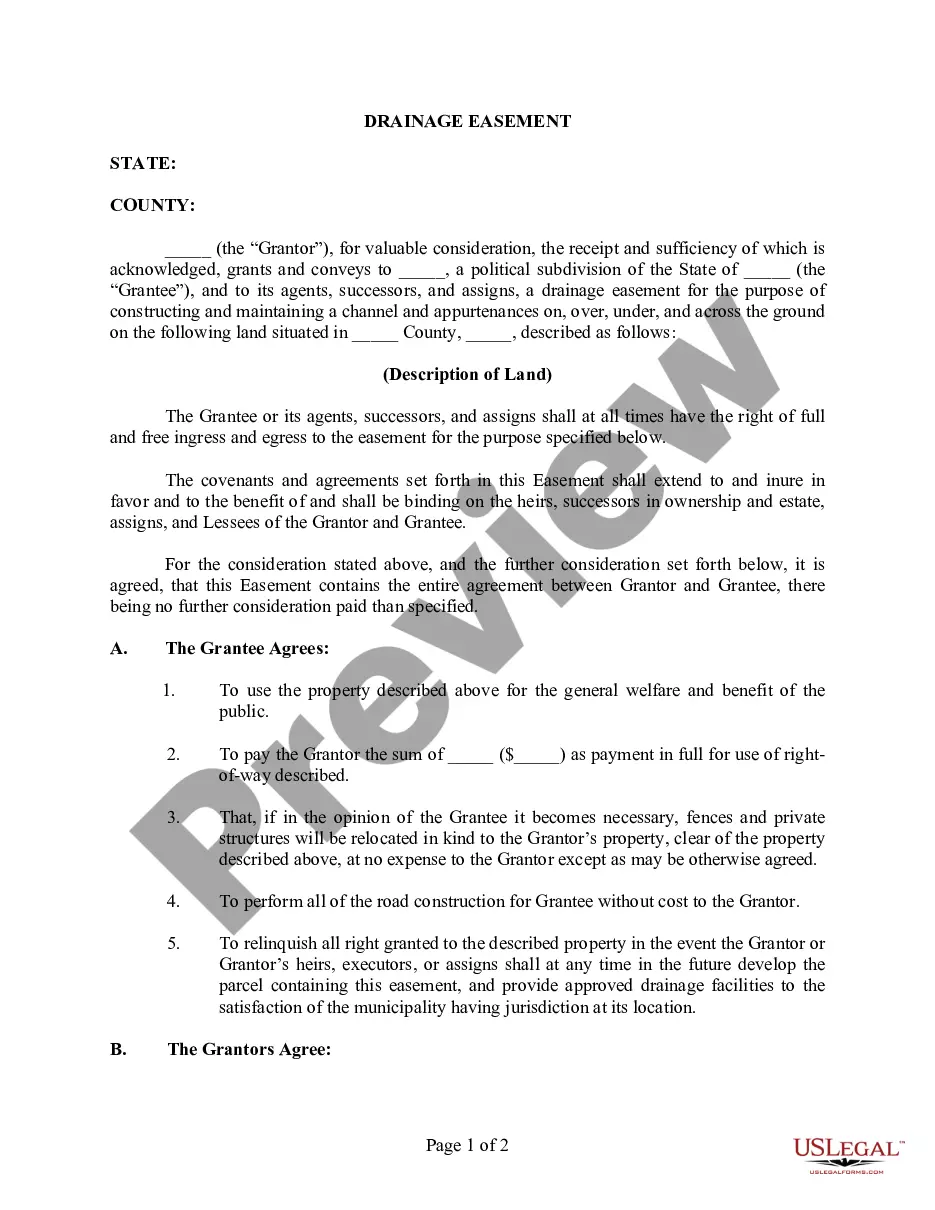
The Permanent Private Drainage, Access and Maintenance Easement is a legal document that establishes a designated easement allowing access for the construction, operation, maintenance, and replacement of drainage facilities. This easement differs from similar forms as it specifically addresses drainage needs, providing the Grantee exclusive rights to maintain the drainage path while imposing restrictions on the Grantor to ensure accessibility and functionality.
Main sections of this form
- Grantor and Grantee details: Identification of the parties involved in the easement.
- Property description: Detailed legal description of the real property affected by the easement.
- Terms of access: Specification of the rights granted to the Grantee for maintenance and operation of drainage facilities.
- Restrictions on the Grantor: Provisions preventing the Grantor from erecting permanent structures within the easement area.
- Maintenance responsibilities: Details outlining the Granteeâs obligations to maintain and restore the easement area.
- Legal acknowledgment: Notary sections for confirmation of the execution of the easement.


Common use cases
This form is typically used when a property owner (Grantor) needs to grant another party (Grantee) the right to access their property to maintain drainage systems. It is particularly relevant in situations where drainage concerns exist, such as in community developments, where proper drainage is essential for land use and property maintenance.
Intended users of this form
- Property owners who require maintenance of drainage systems on their real estate.
- Homeowners in communities with shared drainage systems needing formal access permissions.
- Developers establishing easements for drainage in new subdivisions.
- Corporations or non-profits responsible for maintaining drainage in public or shared spaces.
How to complete this form
- Identify the parties: Fill in the names and legal structure of both the Grantor and Grantee.
- Specify the property: Include the detailed legal description of the property being affected.
- Enter compensation details: Note the value being exchanged for the ease of use regarding the drainage system.
- Outline maintenance responsibilities: Clarify the obligations regarding maintenance and repair of the drainage easement.
- Obtain signatures and notarization: Ensure that both parties sign the document and have it notarized appropriately.
Is notarization required?
Yes, this form must be notarized to be legally valid. This adds an extra layer of verification ensuring that the document is officially recognized. US Legal Forms offers integrated online notarization that is available 24/7, providing a secure and convenient method to notarize your documents without needing to travel.
Get your form ready online
Our built-in tools help you complete, sign, share, and store your documents in one place.
Make edits, fill in missing information, and update formatting in US Legal Forms—just like you would in MS Word.
Download a copy, print it, send it by email, or mail it via USPS—whatever works best for your next step.
Sign and collect signatures with our SignNow integration. Send to multiple recipients, set reminders, and more. Go Premium to unlock E-Sign.
If this form requires notarization, complete it online through a secure video call—no need to meet a notary in person or wait for an appointment.
We protect your documents and personal data by following strict security and privacy standards.

Make edits, fill in missing information, and update formatting in US Legal Forms—just like you would in MS Word.

Download a copy, print it, send it by email, or mail it via USPS—whatever works best for your next step.

Sign and collect signatures with our SignNow integration. Send to multiple recipients, set reminders, and more. Go Premium to unlock E-Sign.

If this form requires notarization, complete it online through a secure video call—no need to meet a notary in person or wait for an appointment.

We protect your documents and personal data by following strict security and privacy standards.
Common mistakes
- Failing to provide a detailed legal description of the property involved.
- Not having the document notarized when required.
- Omitting important restrictions on the Grantor's use of the easement.
- Not specifying maintenance obligations for the Grantee.
- Using unclear language that could lead to misunderstandings in the agreement.
Why use this form online
- Convenience: Download and complete the form at your own pace without needing to visit a legal office.
- Editability: Easily modify sections to meet your specific circumstances before finalizing.
- Reliability: Ensures that the information is provided by licensed attorneys, reducing the risk of legal errors.
Key takeaways
- The Permanent Private Drainage, Access and Maintenance Easement is crucial for managing drainage rights between property owners.
- It details the responsibilities and rights of both parties involved, ensuring proper maintenance of drainage facilities.
- Understanding this form is essential to prevent future disputes related to drainage access and property usage.
Looking for another form?
Form popularity
FAQ
Easements are specified in a property deed, which is typically recorded at the county courthouse. However, deeds may be kept in other locations, such as a county tax assessor's office or county clerk's office.
An easement holder is not allowed to occupy or exclude others from using the land unless they interfere with the easement holder's use.The owner of the land may continue to use it, according to . Easements are usually held to be permanent unless the agreement states otherwise.
Express Grant by Instrument. An express grant by written instrument is the most common source of an easement. Implied. The owner of a large tract of land splits up the land with one or more parcels that do not abut a public highway or road. Necessity. Dedication.
Permanent easement means an easement that lasts in perpetuity.
Types of Easements An easement may be classified as either an easement appurtenant or an easement in gross. Easement Appurtenant. An easement appurtenant is an easement that benefits one parcel of land, known as the dominant tenement, to the detriment of another parcel of land, known as the servient tenement.
Basically, the person or party using an easement, known as an easement holder, has a duty to maintain it. Easement holders don't become owners of the land attached to their easements, though, and within limits the actual landowners retain most rights over it.
So, having an easement on a property may have a permanent outcome on the property with rights of the home owner. But not all easements are bad.If you live in a rural area, you run into bad easement issues more often, typically where the easement was created by a parcel owner next to your land.
Setback, is the distance a building has to be from the property line. Easement, is a Designated part of the property, usually at one side or back of the property to allow someone else to pass over this part of the property to access another property, or to access utility lines located over or under this easement.
An easement usually is written so that it lasts forever. This is known as a perpetual easement. Where state law allows, an easement may be written for a specified period of years; this is known as a term easement. Only gifts of perpetual easement, however, can qualify a donor for income- and estate-tax benefits.