Oklahoma Temporary Easement for Access
What this document covers
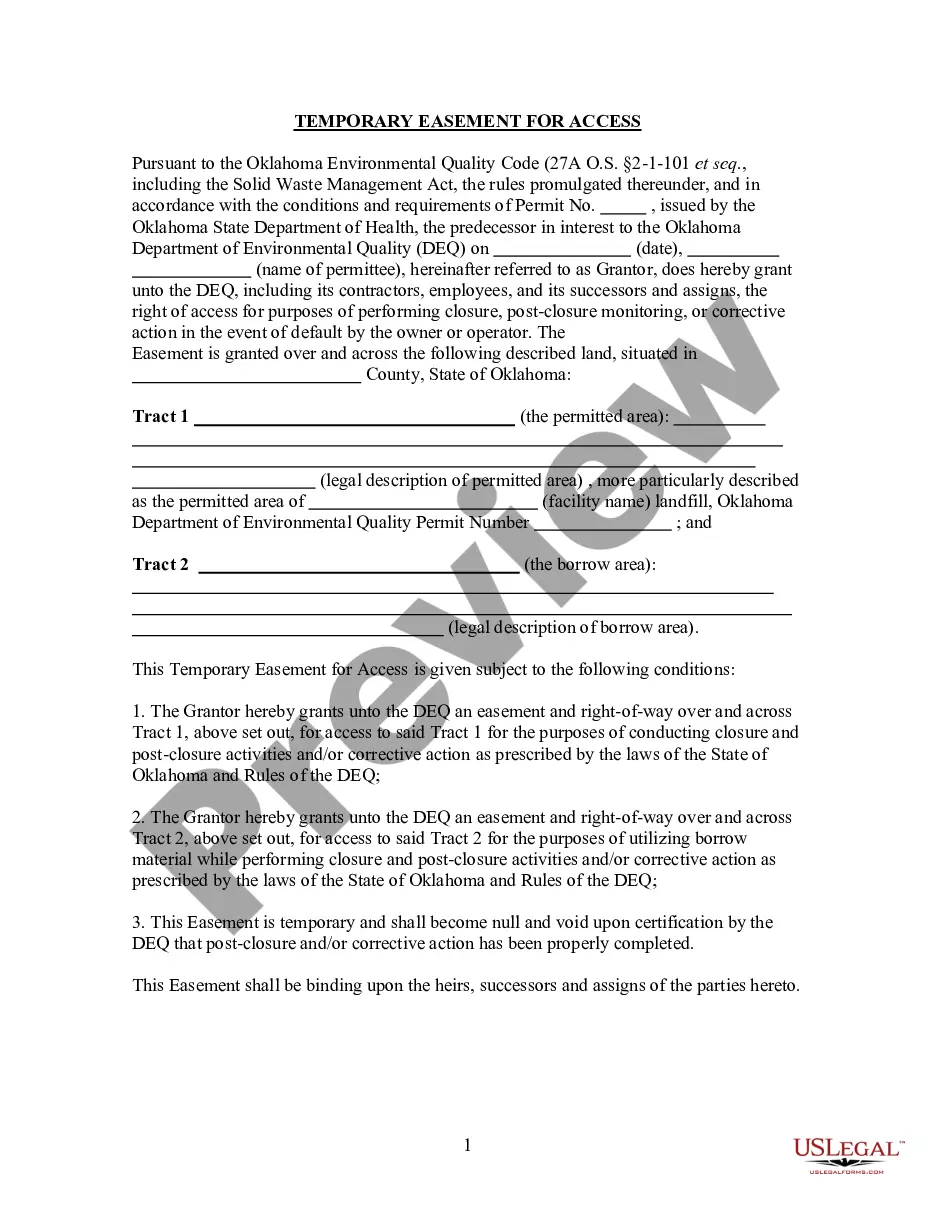
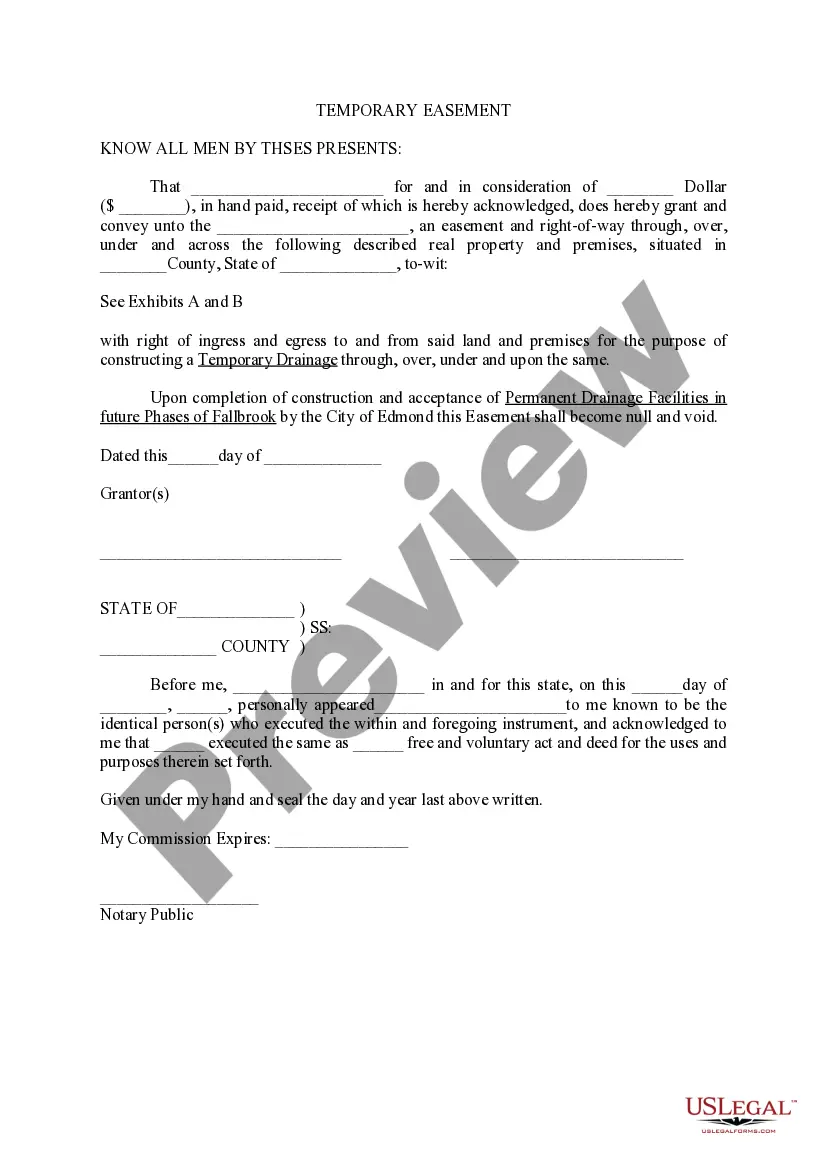
The Temporary Easement for Access form grants one party the right to enter another party's property for specific purposes related to closure and post-closure activities as required by Oklahoma law. This form is important for activities such as utilizing borrow material while fulfilling obligations set by the Department of Environmental Quality (DEQ). Unlike permanent easements, this is a temporary measure that expires once the designated actions have been completed and certified by the DEQ.
Form components explained
- Identification of the Grantor and Grantee involved in the easement.
- Description of the specific property (Tract 2) where the easement applies.
- Details about the purposes for which the easement is granted, including closure and post-closure activities.
- Certification clause indicating when the easement becomes void.
- Binding nature of the easement on heirs, successors, and assigns.
When to use this form
This form should be used when a party needs temporary access to another party's property to engage in specific legal activities. Common scenarios include construction, environmental remediation, or utility work that necessitates entering private property. It is essential in situations where such access is legally required to complete mandated closure and post-closure responsibilities governed by state regulations.
Who can use this document
- Property owners granting access to governmental or third-party entities for legal activities.
- Businesses, construction companies, or environmental organizations needing temporary access for compliance purposes.
- Legal professionals involved in real estate or environmental law who need to facilitate temporary easement arrangements.
How to prepare this document
- Identify and enter the names of the Grantor and Grantee.
- Clearly describe the property, specifying it as Tract 2.
- Outline the purposes for which the easement is being granted.
- Provide any required dates, including the timeframe of the easement.
- Ensure all parties sign the document to finalize the agreement.
Notarization requirements for this form
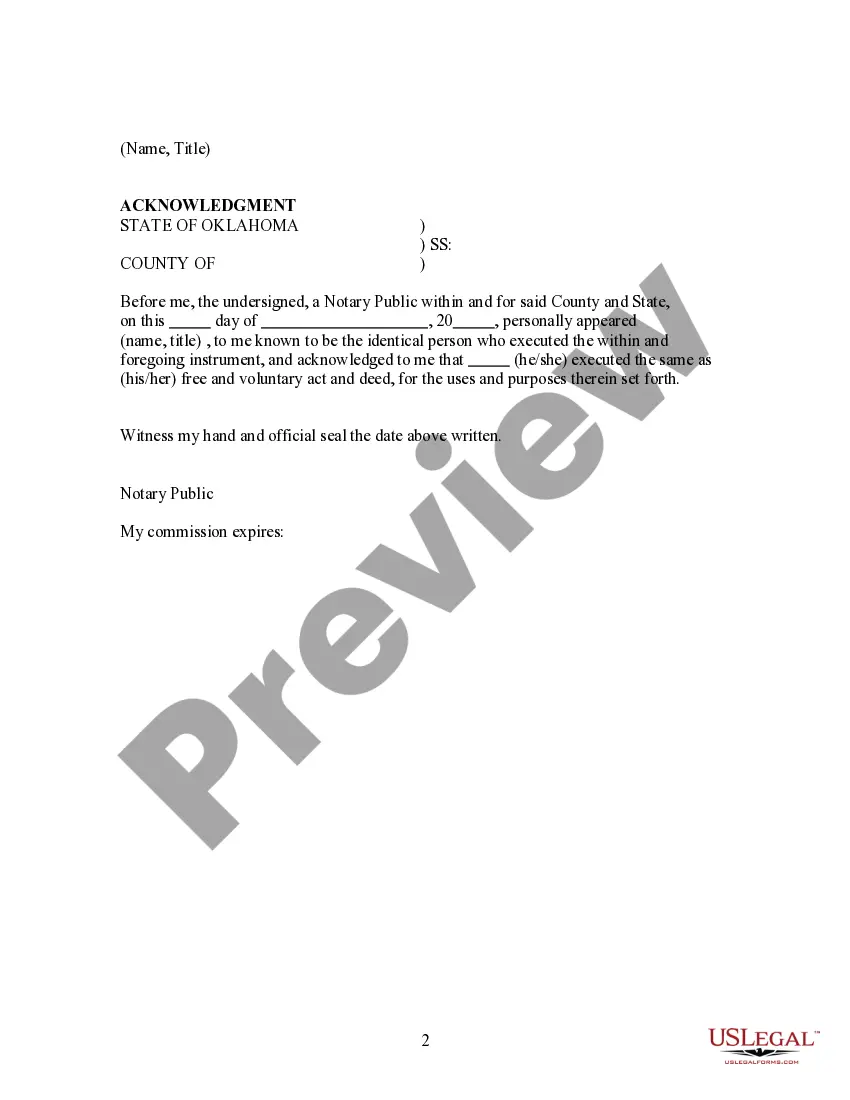
This form does not typically require notarization unless specified by local law. Users should verify any additional legal requirements related to their specific situation before finalizing the document.
Get your form ready online
Our built-in tools help you complete, sign, share, and store your documents in one place.
Make edits, fill in missing information, and update formatting in US Legal Forms—just like you would in MS Word.
Download a copy, print it, send it by email, or mail it via USPS—whatever works best for your next step.
Sign and collect signatures with our SignNow integration. Send to multiple recipients, set reminders, and more. Go Premium to unlock E-Sign.
If this form requires notarization, complete it online through a secure video call—no need to meet a notary in person or wait for an appointment.
We protect your documents and personal data by following strict security and privacy standards.

Make edits, fill in missing information, and update formatting in US Legal Forms—just like you would in MS Word.

Download a copy, print it, send it by email, or mail it via USPS—whatever works best for your next step.

Sign and collect signatures with our SignNow integration. Send to multiple recipients, set reminders, and more. Go Premium to unlock E-Sign.

If this form requires notarization, complete it online through a secure video call—no need to meet a notary in person or wait for an appointment.

We protect your documents and personal data by following strict security and privacy standards.
Typical mistakes to avoid
- Failing to accurately identify the parties involved in the easement.
- Omitting clear descriptions of the property and easement purposes.
- Not including necessary signatures from all involved parties.
- Neglecting to specify any time limits relevant to the easement.
Why use this form online
- Convenience of downloading and completing the form from any location.
- Editability to customize the form according to specific needs.
- Reliability of a template prepared by licensed attorneys.
- Immediate access to legal documents without the need for in-person consultations.
Legal use & context
- The easement created is a legally recognized interest in real property, allowing access for defined purposes.
- The form outlines specific rights, obligations, and limitations to minimize disputes.
- Temporary easements are enforced by local authorities as per the regulations of the State of Oklahoma.
What to keep in mind
- A Temporary Easement for Access allows for limited use of anotherâs property for specific activities.
- The form is tailored to Oklahoma law and should be used when environmental access is required
- Complete the form carefully to avoid common mistakes that could lead to legal issues.
Looking for another form?




Form popularity
FAQ
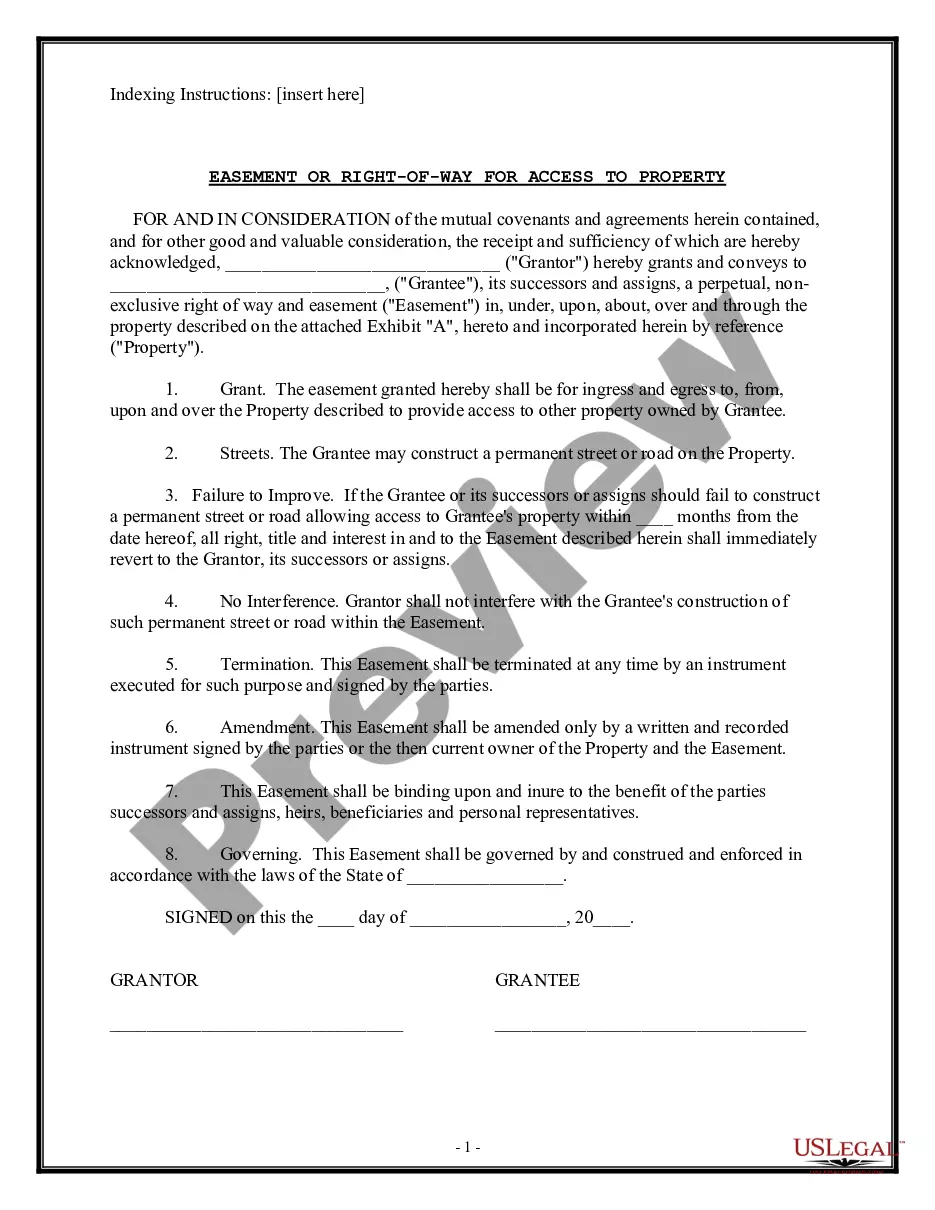
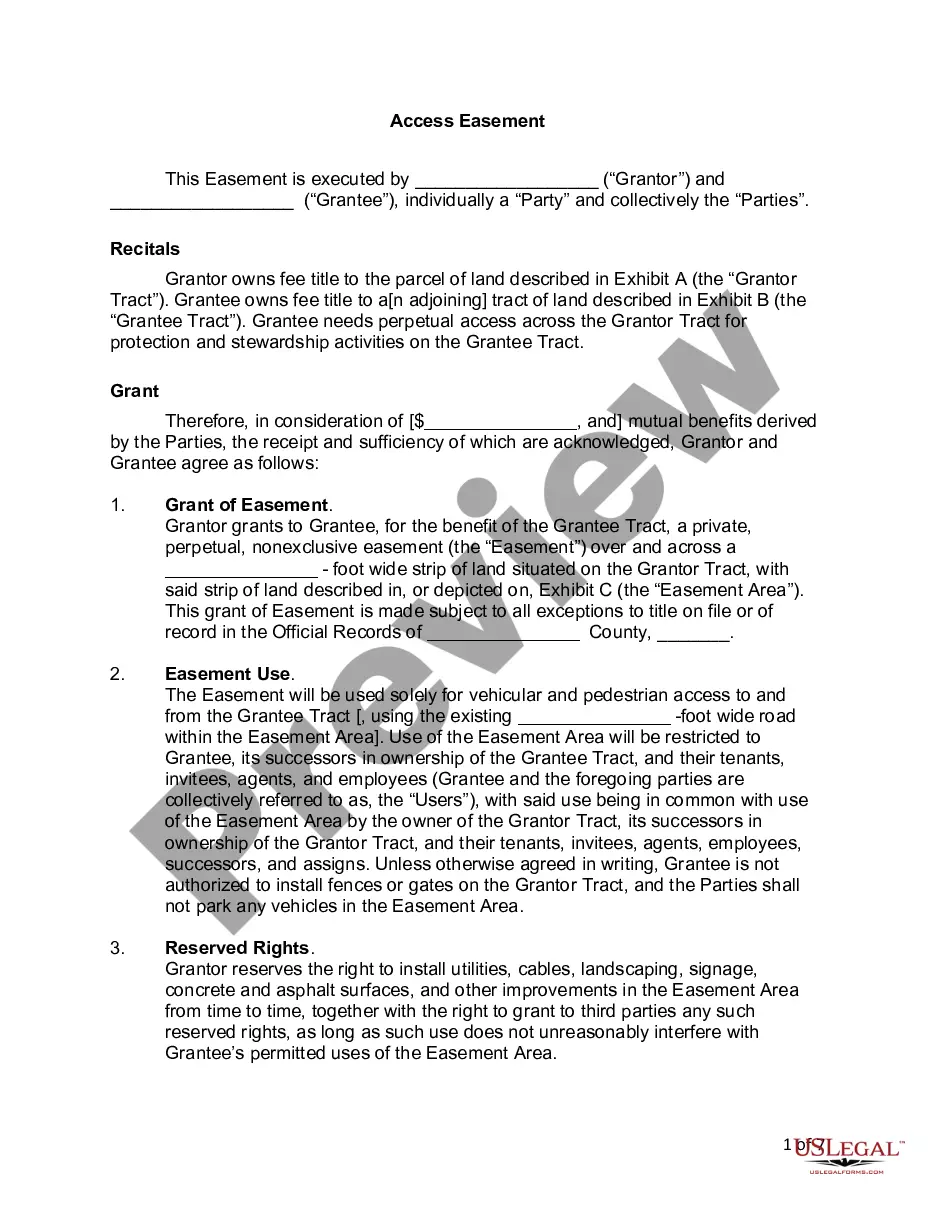
An access easement is a key link in the legal chain when builders need to cross another's land to develop property.If at all possible, specifically describe the easement area and location of the access road. If the location is not specific, the parties could be left with dispute, delay or an undesirable location.
Courts generally assume easements are created to last forever unless otherwise indicated in the document creating the easement. Despite this, an individual granting an easement should avoid any potential problems by expressly providing that the easement is permanent.
An easement is a limited right to use another person's land for a stated purpose. Examples of easements include the use of private roads and paths, or the use of a landowner's property to lay railroad tracks or electrical wires.
An easement is a nonpossessory right to use and/or enter onto the real property of another without possessing it. It is "best typified in the right of way which one landowner, A, may enjoy over the land of another, B".
Give the document a simple title: Grant of Easement is sufficient. Identify the parties. You need to explain who the parties are to the agreement. The person granting the easement to his property is the Grantor and the person gaining access to the property is the Grantee.
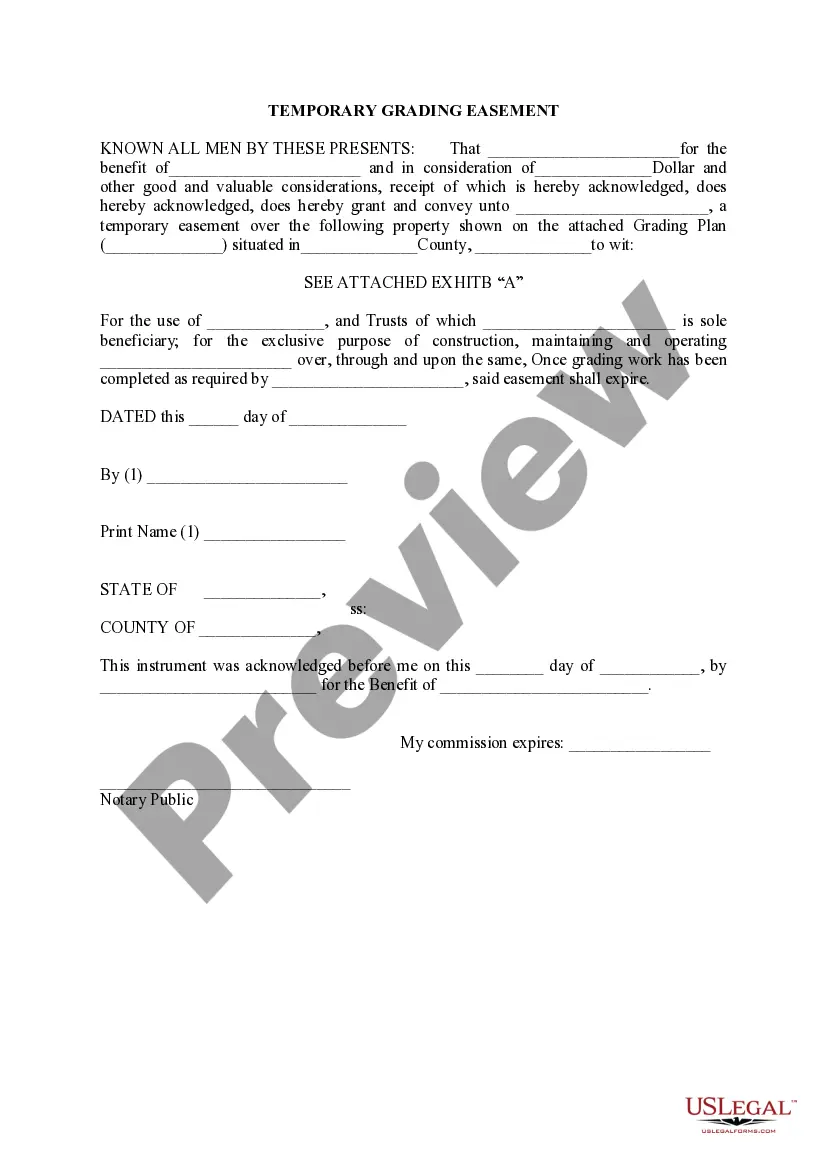
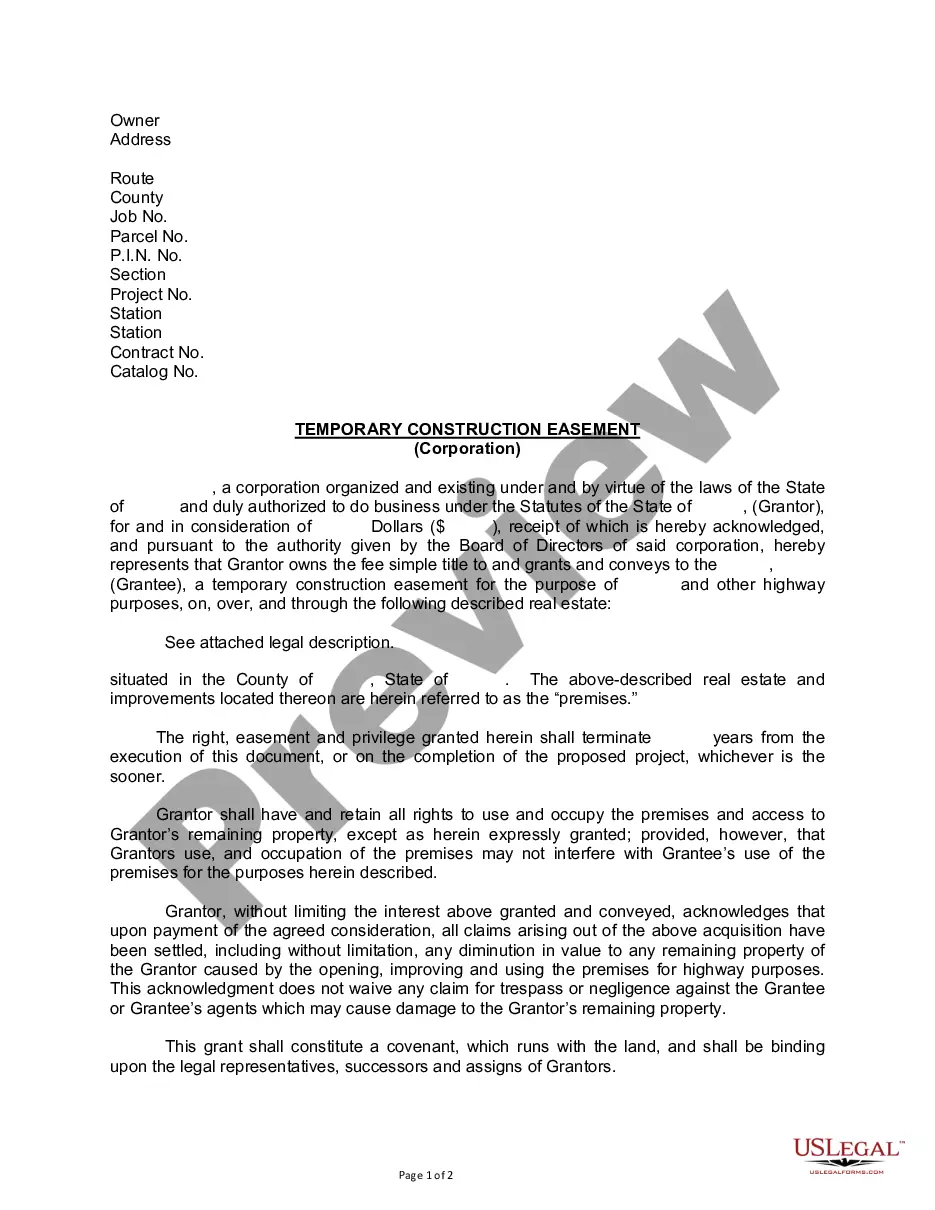
Temporary Easement means a grant in the manner of a permission to enter, easements of a limited duration or time or other similar written permission for the purposes of temporary access or in the case of the District temporary access, construction, repair or maintenance.
An easement is a limited right to use another person's land for a stated purpose. Examples of easements include the use of private roads and paths, or the use of a landowner's property to lay railroad tracks or electrical wires.
Rights of way (similar to the driveway example, but also including walkways or pathways); Public utilities, such as gas, electricity or water and sewer mains; Parking areas; Access to light and air; and. Shared walls.
The right to walk is the easement and lawful use cannot be trespassing. If the easement sets out a right to walk, then the owner of the land is bound to abide by that and allow use.