Oklahoma Judgments and Sentences
Understanding this form
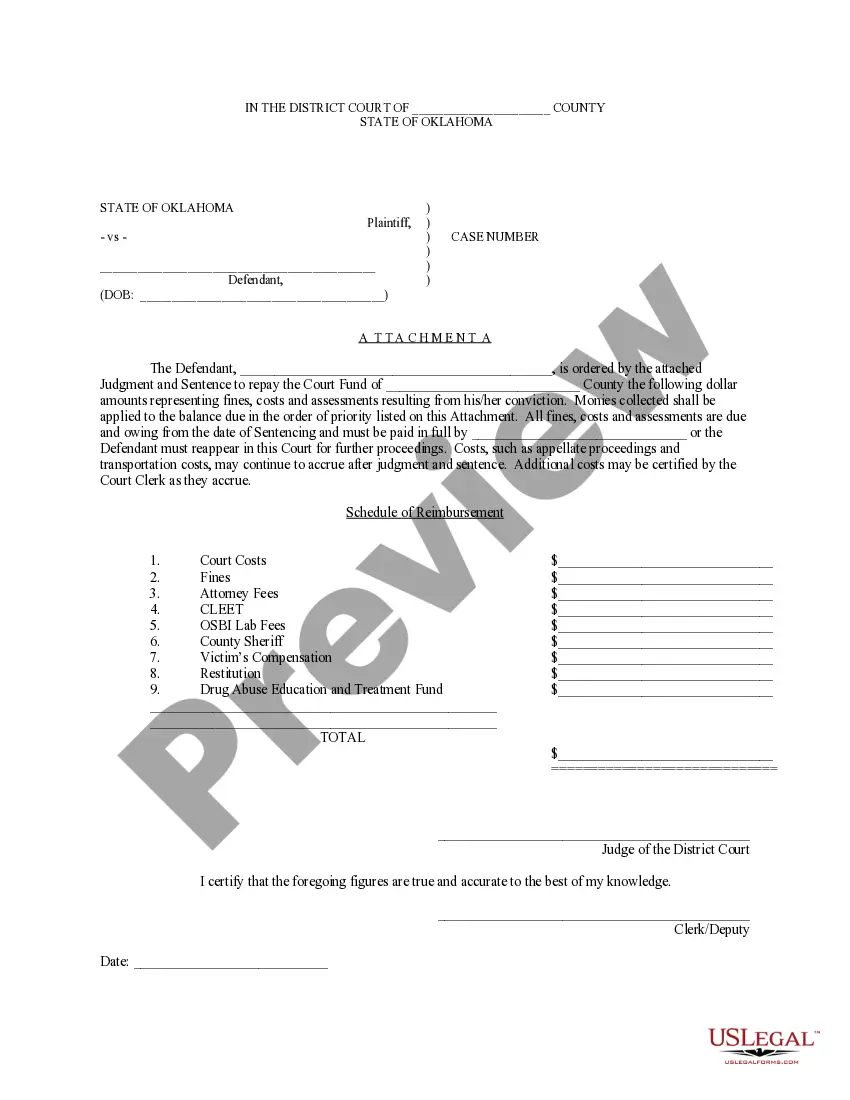
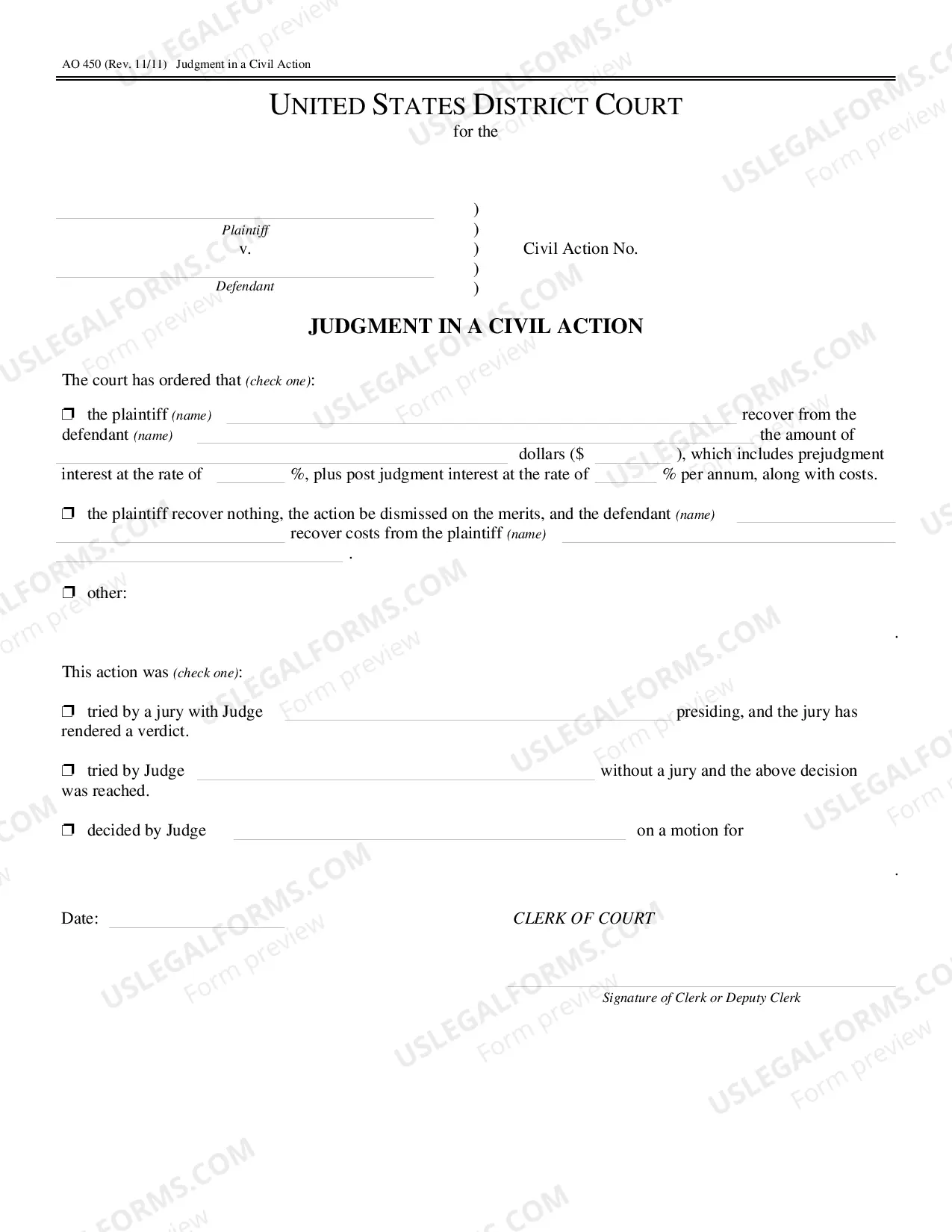
The Judgments and Sentences form is a legal document used in the state of Oklahoma. It details the costs associated with a defendant's conviction, including fines, court costs, and assessments. This official form serves as Attachment A to a judgment and outlines the specific financial obligations imposed on the defendant, differentiating it from general court judgment forms by providing a clear breakdown of all financial components required after sentencing.
Key components of this form
- Defendant's name and date of birth
- Specification of the county's court fund repayment amount
- Individual costs, fines, and assessments arising from the conviction
- Deadline for repayment and consequences of non-compliance
- Certification of accuracy by the court clerk and judge
When this form is needed
This form should be used when a court has convicted an individual and issued a judgment that includes financial obligations, such as fines and costs. It is essential in situations where the defendant must understand and comply with their payment obligations set forth by the court. Using this form ensures clarity and serves as an official record of these obligations.
Who can use this document
The following individuals should use the Judgments and Sentences form:
- Defendants who have been convicted and received a judgment from the court
- Legal representatives of the defendant involved in the case
- Court clerks responsible for processing judgments and ensuring compliance
Instructions for completing this form
- Enter the names and date of birth of the defendant in the appropriate fields.
- Specify the total amount owed to the court fund for fines, costs, and other assessments.
- List each individual cost, such as fines and attorney fees, along with their amounts.
- Indicate the payment deadline clearly and any consequences for non-payment.
- Have the judge and clerk sign and date the form to certify its accuracy.
Does this form need to be notarized?
This form does not typically require notarization to be legally valid. However, some jurisdictions or document types may still require it. US Legal Forms provides secure online notarization powered by Notarize, available 24/7 for added convenience.
Get your form ready online
Our built-in tools help you complete, sign, share, and store your documents in one place.
Make edits, fill in missing information, and update formatting in US Legal Forms—just like you would in MS Word.
Download a copy, print it, send it by email, or mail it via USPS—whatever works best for your next step.
Sign and collect signatures with our SignNow integration. Send to multiple recipients, set reminders, and more. Go Premium to unlock E-Sign.
If this form requires notarization, complete it online through a secure video call—no need to meet a notary in person or wait for an appointment.
We protect your documents and personal data by following strict security and privacy standards.

Make edits, fill in missing information, and update formatting in US Legal Forms—just like you would in MS Word.

Download a copy, print it, send it by email, or mail it via USPS—whatever works best for your next step.

Sign and collect signatures with our SignNow integration. Send to multiple recipients, set reminders, and more. Go Premium to unlock E-Sign.

If this form requires notarization, complete it online through a secure video call—no need to meet a notary in person or wait for an appointment.

We protect your documents and personal data by following strict security and privacy standards.
Common mistakes
- Failing to accurately list all costs and fines due.
- Not providing the correct payment deadline on the form.
- Inadequate signatures from required officials, such as the judge or clerk.
Why complete this form online
- Convenient access to the official form allows for immediate download and completion.
- Templates are created by licensed attorneys, ensuring legal accuracy and compliance.
- Easy to edit, ensuring that all necessary information can be promptly updated.
Legal use & context
- The Judgments and Sentences form serves as a binding agreement between the defendant and the court's requirements for repayment.
- Non-compliance can lead to further legal actions, including the possibility of additional hearings.
- This form ensures that all financial obligations are documented and clear, aiding in collection efforts by the court.
Looking for another form?



Form popularity
FAQ
A judge must impose a sentence that is sufficient, but not greater than necessary, to: reflect the seriousness of the offense; promote respect for the law; provide just punishment for the offense; adequately deter criminal conduct; protect the public from further crimes by the defendant; and provide the defendant with
Reflect the seriousness of the offense. Promote respect for the law. Provide just punishment. Provide for adequate deterrence. Protect the public from further crimes by the defendant.
For instance, judges may typically consider factors that include the following: the defendant's past criminal record, age, and sophistication. the circumstances under which the crime was committed, and. whether the defendant genuinely feels remorse.
I trust your judgment better than I do my own. "Hold judgment until you meet her this afternoon," he answered. Making judgment after the fact is far easier than before. He had created her dependency on his judgment and now it was up to him to make sure she learned to defend herself.
As nouns the difference between judgment and sentence is that judgment is the act of judging while sentence is (obsolete) one's opinion; manner of thinking.
The heart of what every judge wants to hear at sentencing is: what happened then, and what's different now. What happened then is usually easy: "I was drunk" "I was on drugs" "I was having a horrible day" "I really needed money", etc., the tricky part is what's different now.
Judges also use the Federal Sentencing Guidelines Manual. As its name suggests, the manual guides judges toward a sentence based on the facts that led to the conviction. Unlike mandatory minimums, the sentencing guidelines are advisory, not mandatory.
If you've been convicted at trial or you've taken a plea agreement in a felony criminal case then the last hearing that will conclude your case is called a Judgment and Sentencing Hearing.If a defendant goes to trial and is found guilty, either by a jury or a judge in a bench trial, that is the determination of guilt.