Oklahoma Request for Reasonable Accommodation - Employee or Applicant for Employment
Overview of this form
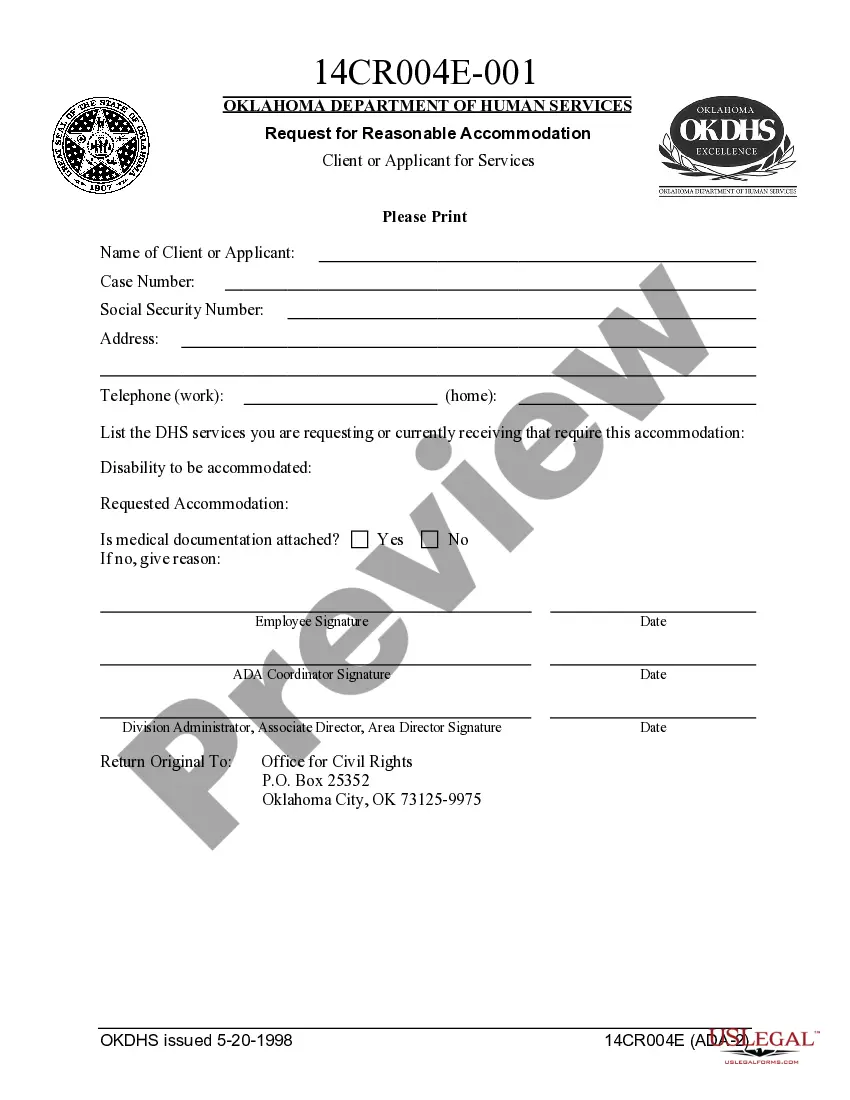
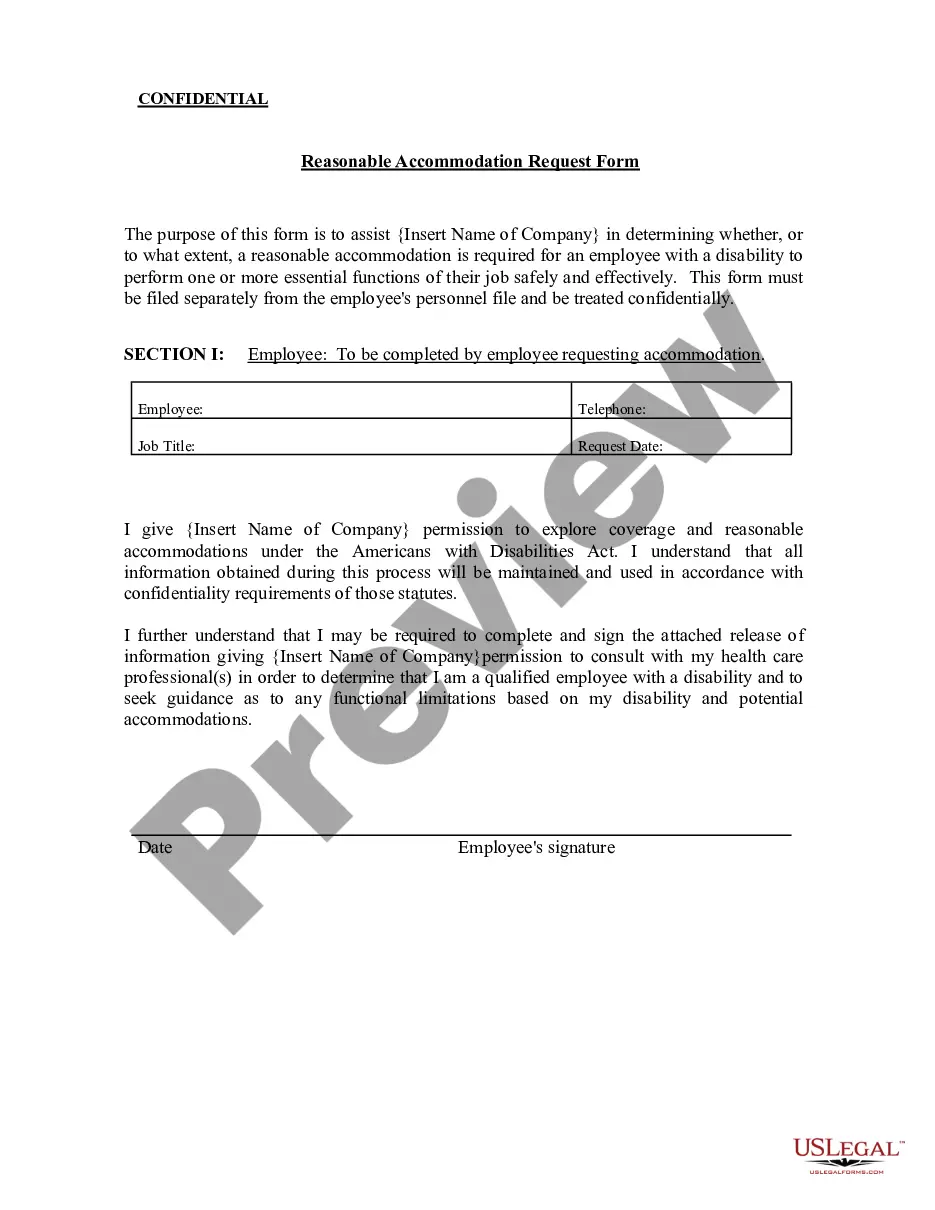
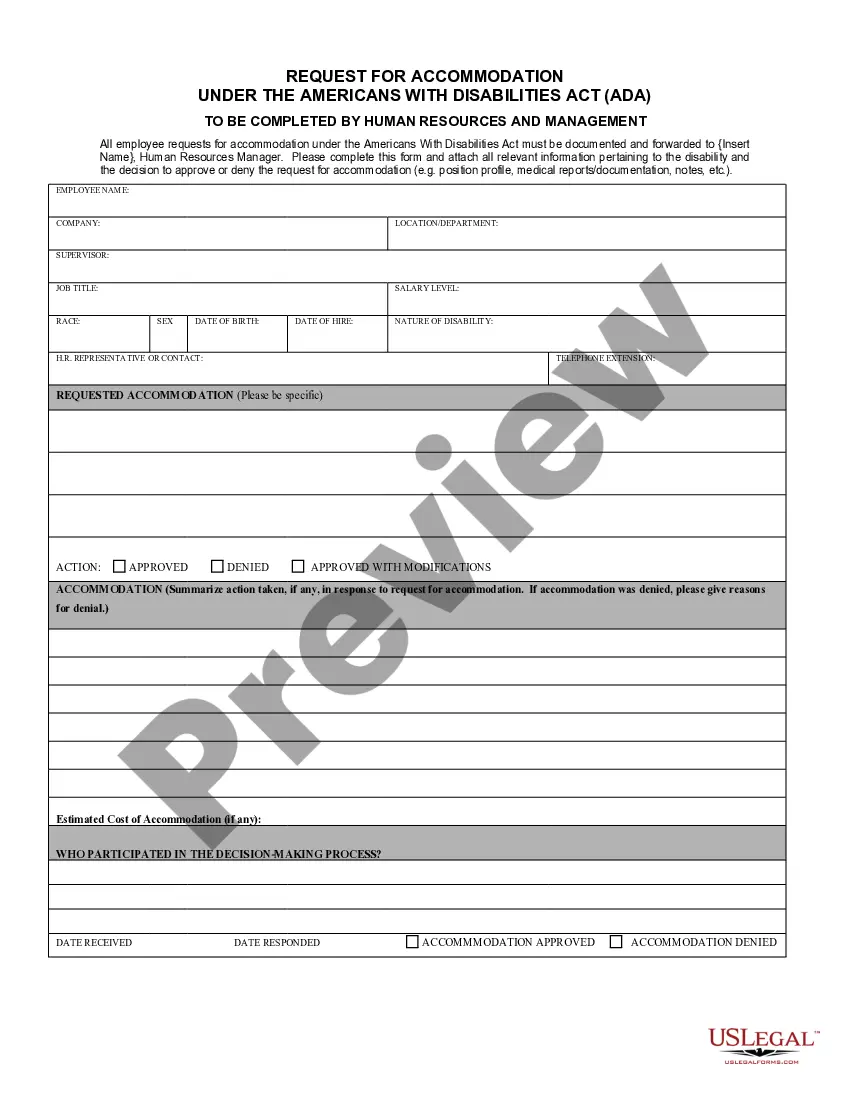
The Request for Reasonable Accommodation is an official document that employees or job applicants can use to formally request modifications or adjustments in the workplace due to a disability. This form helps ensure compliance with laws concerning equal opportunity employment by allowing individuals to specify their needs clearly. Unlike similar forms, this one is tailored for requests specifically related to employment settings in Oklahoma, making it a vital tool for those seeking support in their work environment.
What’s included in this form
- Employee or applicant details: Area for personal identification information.
- Description of the disability: Section to explain the nature of the disability affecting job performance.
- Requested accommodations: Place to list specific modifications being requested.
- Supporting documentation: Space for attaching any required medical or professional recommendations.
- Contact information: Details for communication regarding the request.

Common use cases
This form should be used when an employee or job applicant identifies a need for reasonable accommodations due to a disability that impacts their work capabilities. Examples include needing modified work schedules, special equipment, or accessibility adjustments in the workplace. Submitting this form can initiate the process for obtaining necessary support and ensuring compliance with applicable employment laws.
Intended users of this form
- Current employees seeking accommodations for a disability.
- Job applicants who require adjustments in the application or interview process.
- Any individual looking to formally document their needs related to workplace accessibility.
How to prepare this document
- Fill in your personal details, including name, address, and contact information.
- Clearly describe your disability and how it affects your job or job application.
- Specify the accommodations you are requesting to address your needs.
- Attach any supporting documentation that verifies your disability and the requested accommodations.
- Submit the completed form to your employer or the relevant hiring manager.
Notarization requirements for this form
This form does not typically require notarization unless specified by local law. Ensure to check your specific requirements to confirm whether notarization is necessary for your situation.
Get your form ready online
Our built-in tools help you complete, sign, share, and store your documents in one place.
Make edits, fill in missing information, and update formatting in US Legal Forms—just like you would in MS Word.
Download a copy, print it, send it by email, or mail it via USPS—whatever works best for your next step.
Sign and collect signatures with our SignNow integration. Send to multiple recipients, set reminders, and more. Go Premium to unlock E-Sign.
If this form requires notarization, complete it online through a secure video call—no need to meet a notary in person or wait for an appointment.
We protect your documents and personal data by following strict security and privacy standards.

Make edits, fill in missing information, and update formatting in US Legal Forms—just like you would in MS Word.

Download a copy, print it, send it by email, or mail it via USPS—whatever works best for your next step.

Sign and collect signatures with our SignNow integration. Send to multiple recipients, set reminders, and more. Go Premium to unlock E-Sign.

If this form requires notarization, complete it online through a secure video call—no need to meet a notary in person or wait for an appointment.

We protect your documents and personal data by following strict security and privacy standards.
Common mistakes to avoid
- Leaving out necessary personal information, which may delay processing.
- Failing to provide adequate documentation to support the accommodation request.
- Not clearly stating the specific accommodations needed.
- Submitting the form without proper signatures or dates.
Advantages of online completion
- Convenience: Easily access and download the form from any device.
- Editability: Fill out the form at your own pace, allowing for corrections and updates.
- Reliability: Obtain a legally valid document that adheres to Oklahoma laws and guidelines.
Quick recap
- The Request for Reasonable Accommodation is crucial for employees and applicants with disabilities.
- It helps ensure compliance with employment laws and facilitates necessary workplace adjustments.
- Accurate completion of this form is essential for timely processing of your request.
Looking for another form?
Form popularity
FAQ
According to the EEOC, there is no specific amount of time that employers have to respond to an accommodation request, but they should respond as quickly as possible. Unnecessary delays in responding or implementing an accommodation can result in a violation of the ADA.
One issue I am facing is accommodation, as you know I had to move from (City name) to (present city name) just because of this job opportunity which I definitely did not want to miss. (Explain the actual cause and situation). I request you to kindly give me accommodation.
The EEOC's Enforcement Guidance: Reasonable Accommodation and Undue Hardship Under the Americans with Disabilities Act provides that as a general rule, the individual with a disability who has the most knowledge about the need for reasonable accommodation must inform the employer than an accommodation is needed.
An employer can legally deny the requested accommodation under certain circumstances.The EEOC has provided guidelines for employers to help with identifying what qualifies as an undue hardship and what does not in the context of disability discrimination.
Rather, an individual with a disability should request a reasonable accommodation when s/he knows that there is a workplace barrier that is preventing him/her, due to a disability, from effectively competing for a position, performing a job, or gaining equal access to a benefit of employment.
According to the Equal Employment Opportunity Commission (EEOC), when an individual decides to request an accommodation, the individual or his/her representative must let the employer know that s/he needs an adjustment or change at work for a reason related to a medical condition.
Step One: Determine whether an individual has a disability and meets minimum qualification standards. Step Two: Determine the essential functions of the job. Step Three: Identify the abilities and limitations of the individual. Step Four: Identify potential accommodations.
Can employers ask an employee whether he/she needs an accommodation? According to the EEOC, an employer may ask an employee with a known disability whether he/she needs a reasonable accommodation when it reasonably believes that the employee may need an accommodation.