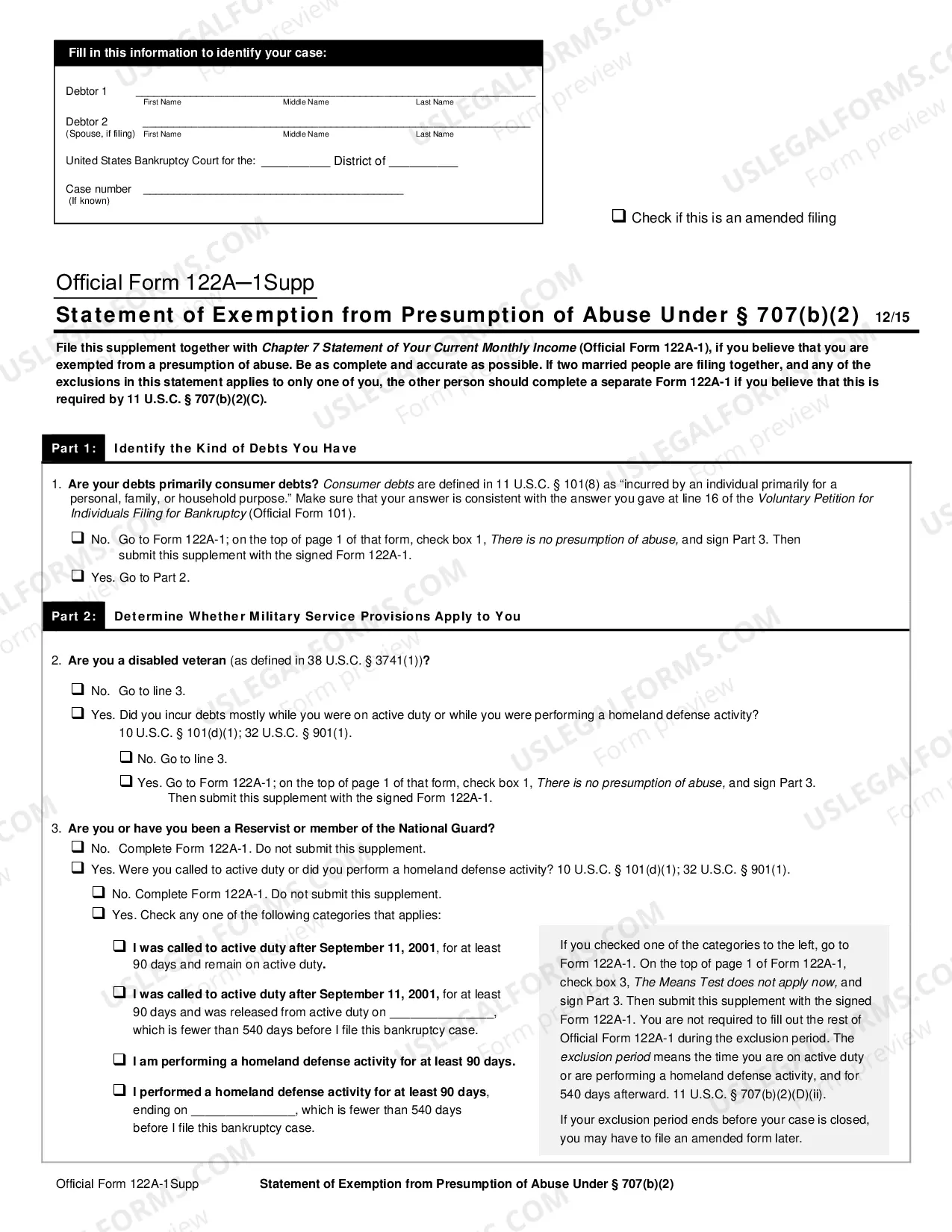
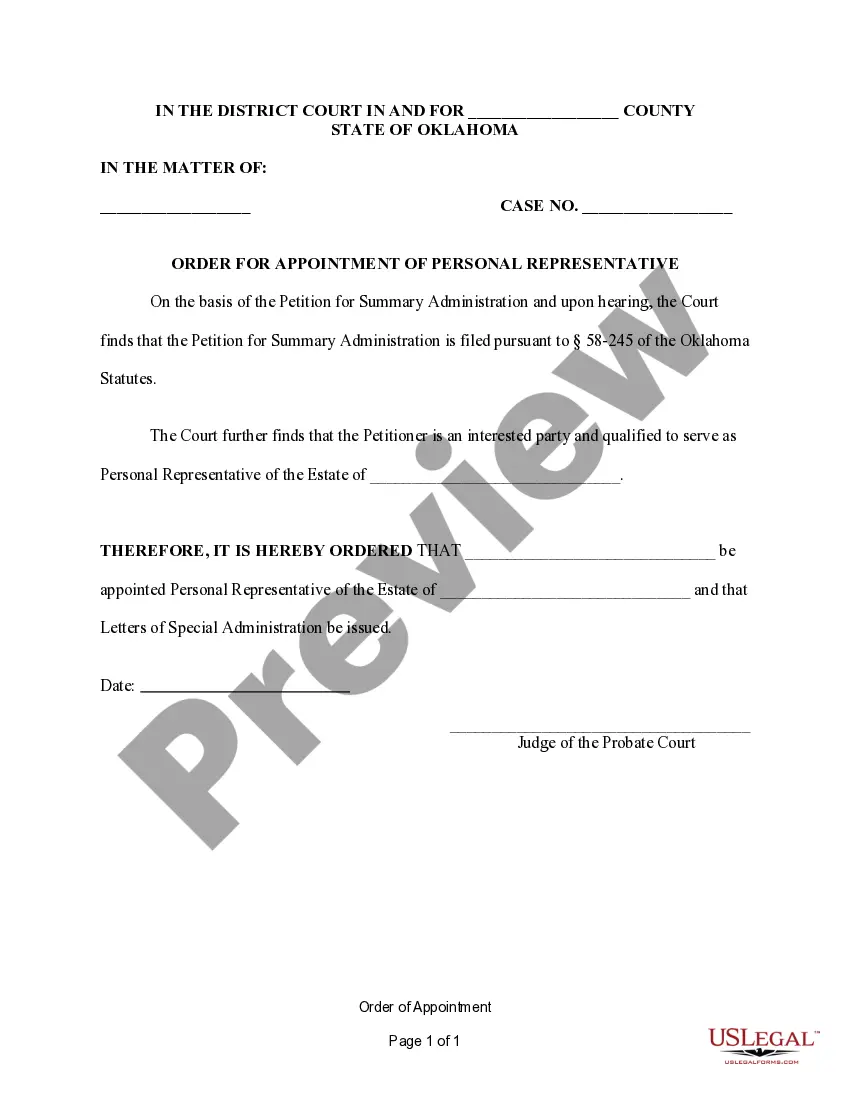
Oklahoma Order for Appointment of Personal Representative
What is this form?
The Order for Appointment of Personal Representative is a legal document issued by a court that appoints an individual to serve as the personal representative of an estate following the filing of a Petition for Summary Administration. This form is essential for initiating the probate process in Oklahoma, allowing the appointed representative to manage and distribute the deceased's assets according to the law. Unlike other estate forms, this order specifically outlines the court's approval of the appointment, which is a key step in ensuring the legality of the process.
What’s included in this form
- Case number: Identifies the specific court case related to the estate.
- Petition details: References the Petition for Summary Administration filed by the interested party.
- Findings of the court: Affirms that the petitioner is qualified to serve as the personal representative.
- Order of appointment: Officially designates the individual as the personal representative.
When to use this document
This form should be used when a Petition for Summary Administration has been filed in Oklahoma, and the court needs to appoint a personal representative for the estate. It is usually required when the deceased has a limited value of assets or specific debts that must be settled, and a streamlined administrative process is preferred. Using this form facilitates a quicker resolution to estate matters, allowing the appointed representative to act on behalf of the estate without the need for a full probate proceeding.
Who should use this form
- Individuals who have been identified as personal representatives in the Petition for Summary Administration.
- Family members of the deceased seeking to manage the estate efficiently.
- Legal representatives handling the estate on behalf of the appointed personal representative.
Steps to complete this form
- Begin by identifying the case number relevant to the estate proceeding.
- Fill in the petitioner's details as stated in the Petition for Summary Administration.
- State the findings of the court regarding the petitioner's qualifications.
- Clearly state the order appointing the personal representative.
- Ensure all required signatures are collected and dated appropriately.
Does this form need to be notarized?
This form needs to be notarized to ensure legal validity. US Legal Forms provides secure online notarization powered by Notarize, allowing you to complete the process through a verified video call, available anytime.
Get your form ready online
Our built-in tools help you complete, sign, share, and store your documents in one place.
Make edits, fill in missing information, and update formatting in US Legal Forms—just like you would in MS Word.
Download a copy, print it, send it by email, or mail it via USPS—whatever works best for your next step.
Sign and collect signatures with our SignNow integration. Send to multiple recipients, set reminders, and more. Go Premium to unlock E-Sign.
If this form requires notarization, complete it online through a secure video call—no need to meet a notary in person or wait for an appointment.
We protect your documents and personal data by following strict security and privacy standards.

Make edits, fill in missing information, and update formatting in US Legal Forms—just like you would in MS Word.

Download a copy, print it, send it by email, or mail it via USPS—whatever works best for your next step.

Sign and collect signatures with our SignNow integration. Send to multiple recipients, set reminders, and more. Go Premium to unlock E-Sign.

If this form requires notarization, complete it online through a secure video call—no need to meet a notary in person or wait for an appointment.

We protect your documents and personal data by following strict security and privacy standards.
Mistakes to watch out for
- Failing to include the case number, which is essential for court identification.
- Inaccurately stating the petitioner's relationship to the deceased.
- Not obtaining necessary signatures before filing the order.
Benefits of using this form online
- Convenient access to legal forms at any time without the need for in-person visits.
- Editable templates that can be tailored to meet specific needs easily.
- Reliability of professionally drafted forms that comply with legal standards.
Main things to remember
- The Order for Appointment of Personal Representative is crucial for handling a deceased person's estate in Oklahoma.
- Ensure all required information is accurately completed to avoid delays.
- Understanding when and how to use this form can facilitate the estate management process efficiently.
Looking for another form?
Form popularity
FAQ
Locate Documents. Record the preferences of the testator. Check status of property and accounts. Confirm beneficiaries are correct. Make a list of personal possessions. Create a schedule of assets. Make a list of credit cards and debts. Electronic access to information.
4% of the first $100,000. 3% of the next $100,000. 2% of the next $800,000. 1% of the next $9,000,000. 0.5% of the next $15,000,000. and reasonable compensation as determined by the California Probate Court for any amount above $25,000,000.
Under California Probate Code, the executor typically receives 4% on the first $100,000, 3% on the next $100,000 and 2% on the next $800,000, says William Sweeney, a California-based probate attorney. For an estate worth $600,000 the fee works out at approximately $15,000.
An executor is someone named in your will, or appointed by the court, who is given the legal responsibility to take care of any remaining financial obligations. Typical duties include: Distributing assets according to the will. Maintaining property until the estate is settled (e.g., upkeep of a house)
You can administer an estate even if the deceased died without a will or failed to specify an executor. If your relationship to the deceased doesn't make you the probate court's default choice for administrator, you'll need to get permission from the relatives ahead of you in the priority order.
An administrator is a person who has been appointed by a probate court to manage a deceased person's estate.If you are an executor, you were nominated to serve in the decedent's will and appointed by a probate court. Administrators and executors are commonly referred to as personal representatives.
A personal representative usually is named in a will. However, courts sometimes appoint a personal representative. Usually, whether or not the deceased left a will, the probate court will issue a finding of fact that a will has or has not been filed and a personal representative or administrator has been appointed.
Step 1 Fill in the county in which you are signing the document. Step 2 Write in your name as successor in interest of decedent. Step 3 Write in your relationship to decedent and decedent's name and date of death in Section 1. Make sure to attach a certified death certificate.
Determine Your Priority for Appointment. Receive Written Waivers From Other Candidates. Contact Court in the County Where Deceased Resided. File the Petition for Administration. Attend the Probate Hearing. Secure a Probate Bond.