Oklahoma Schedule Of Basic Child Support Obligations
About this form
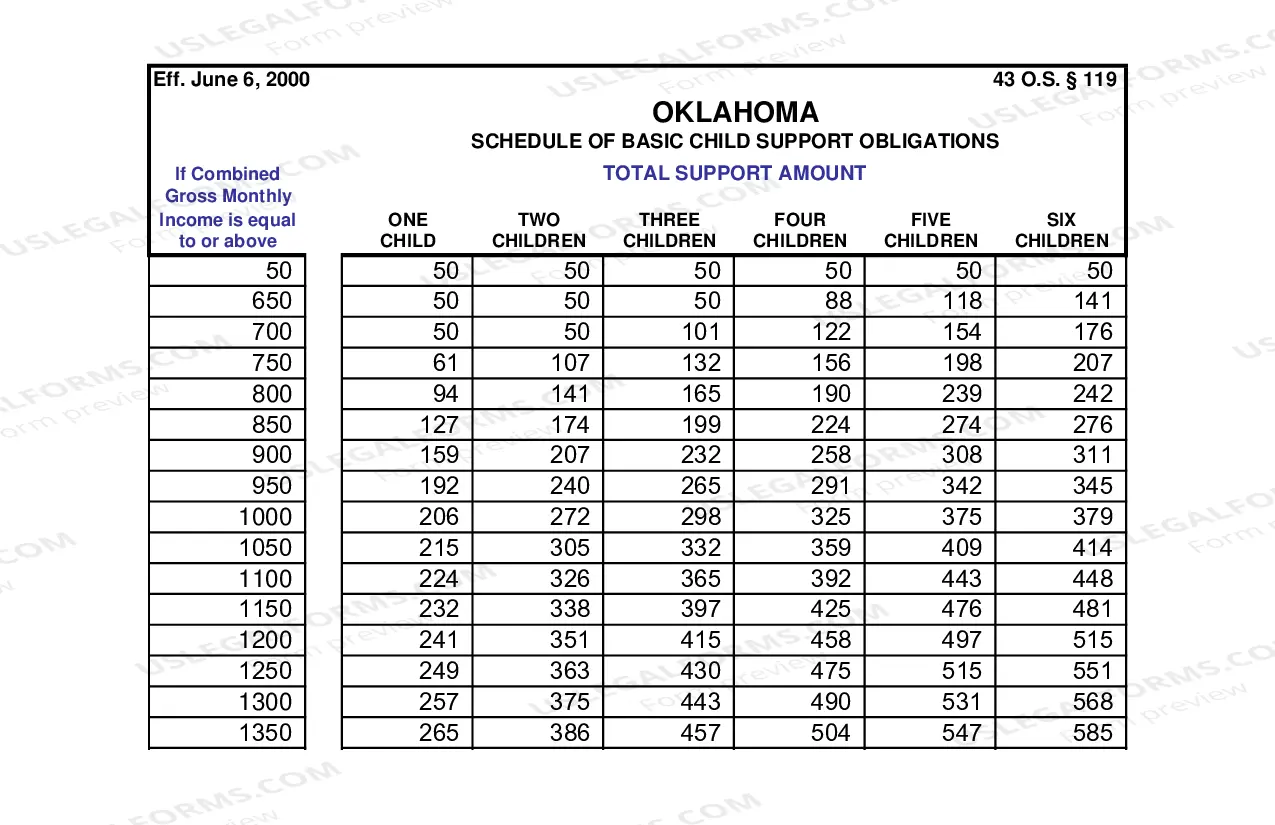
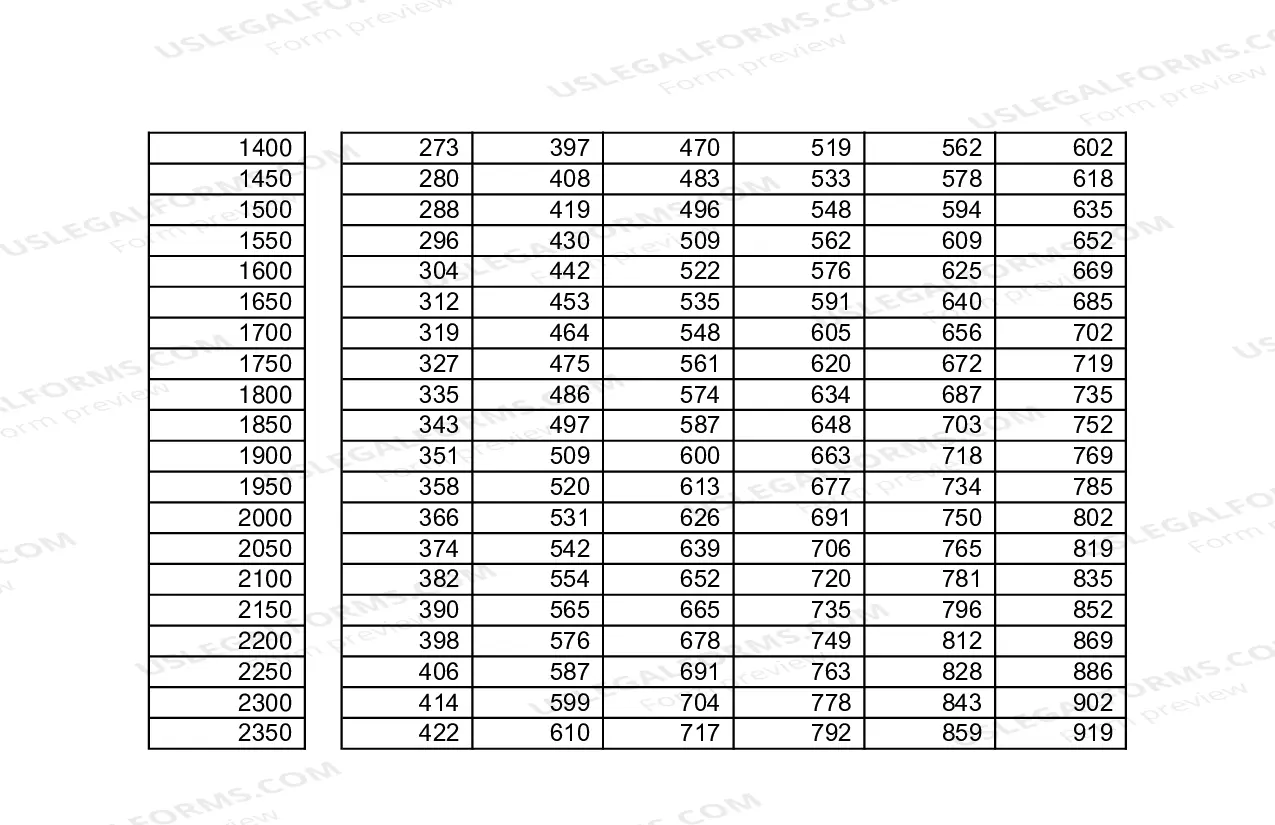
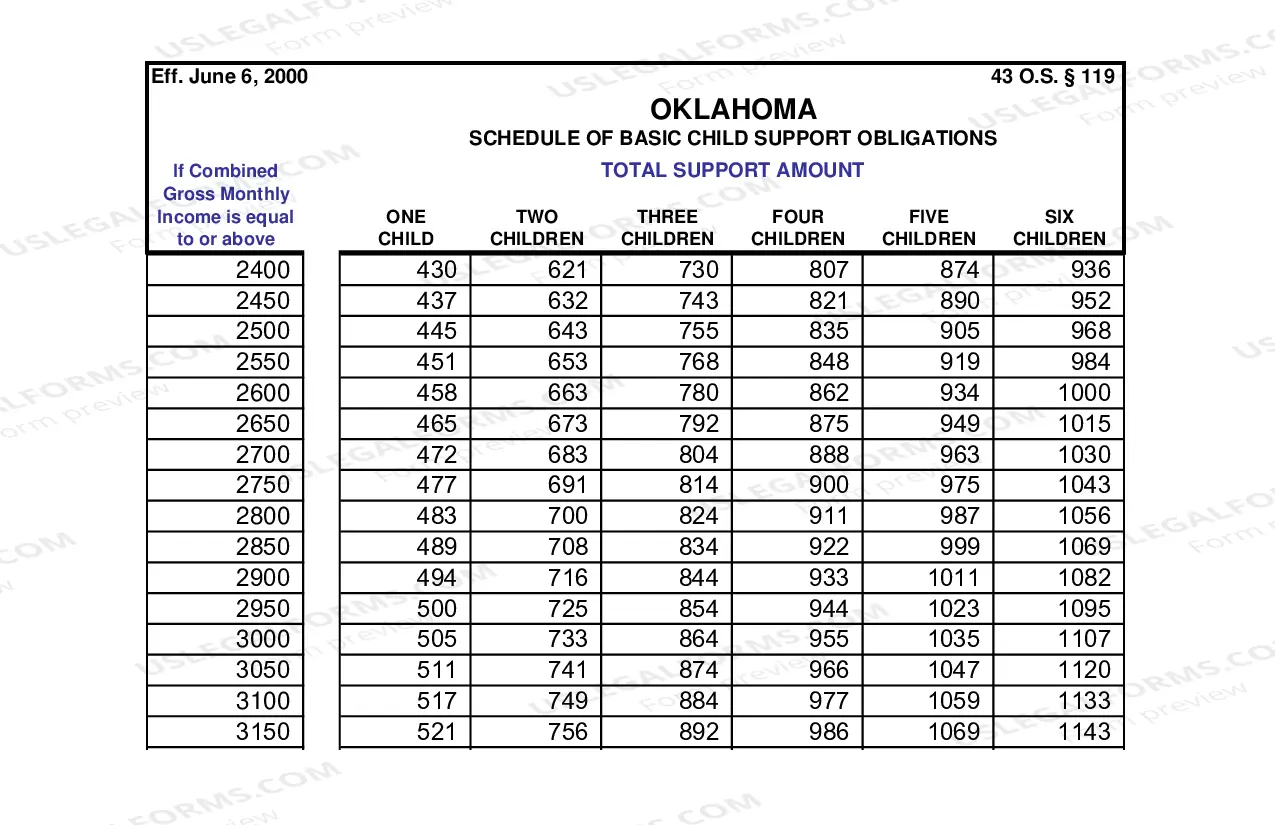
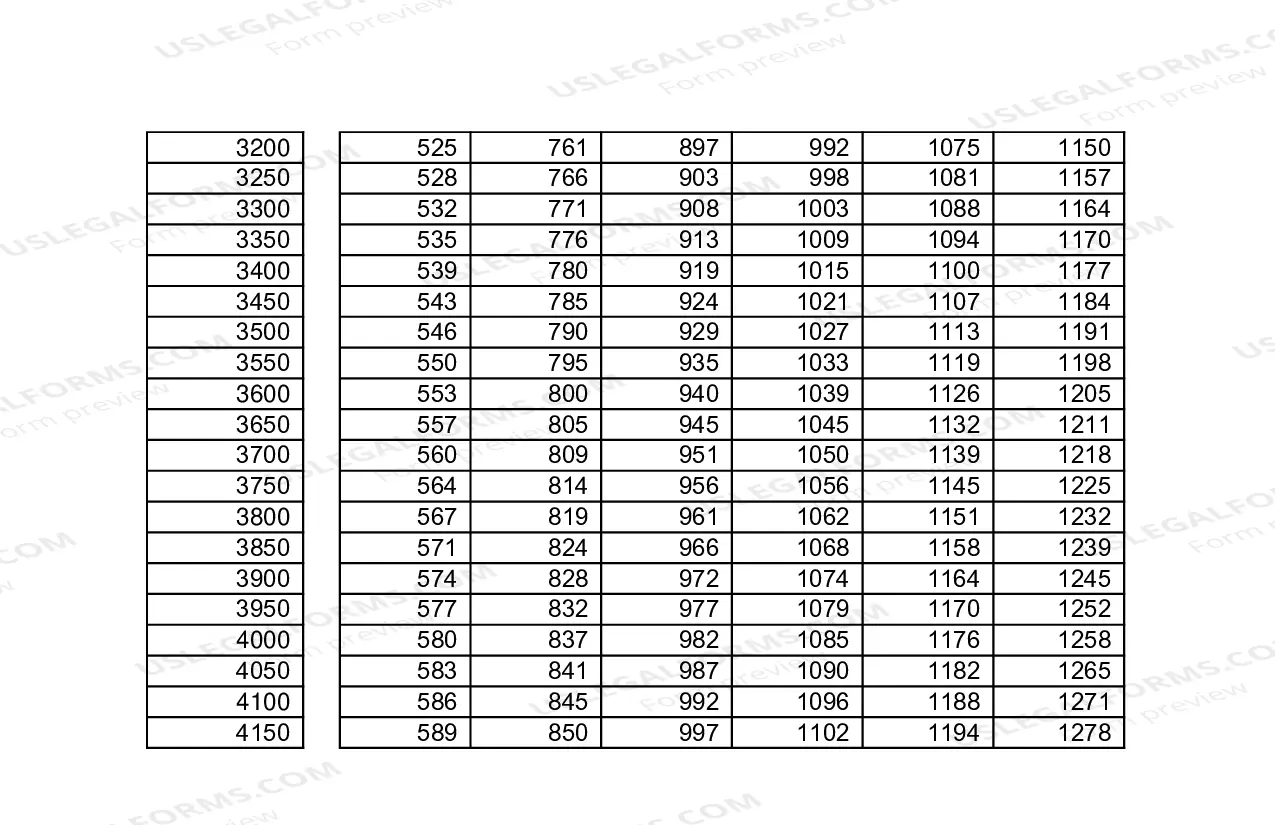
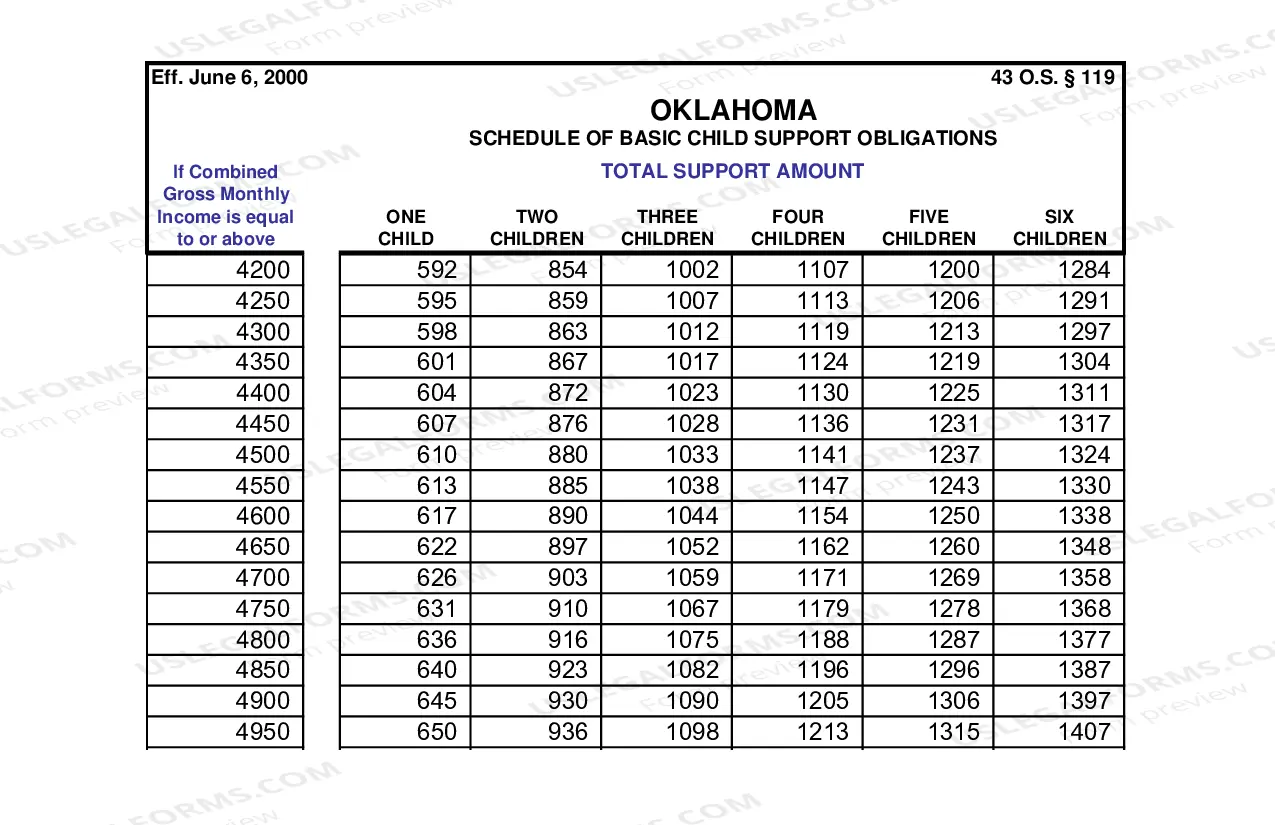
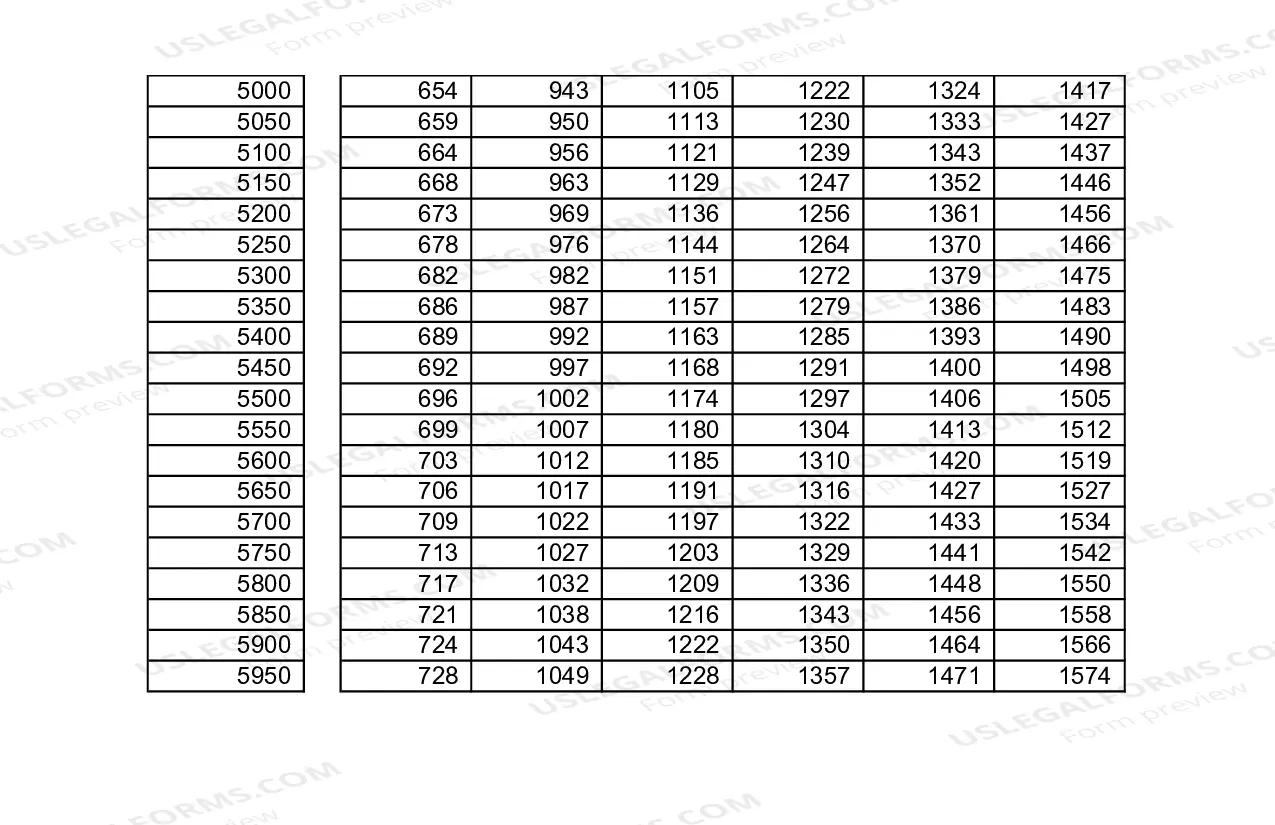
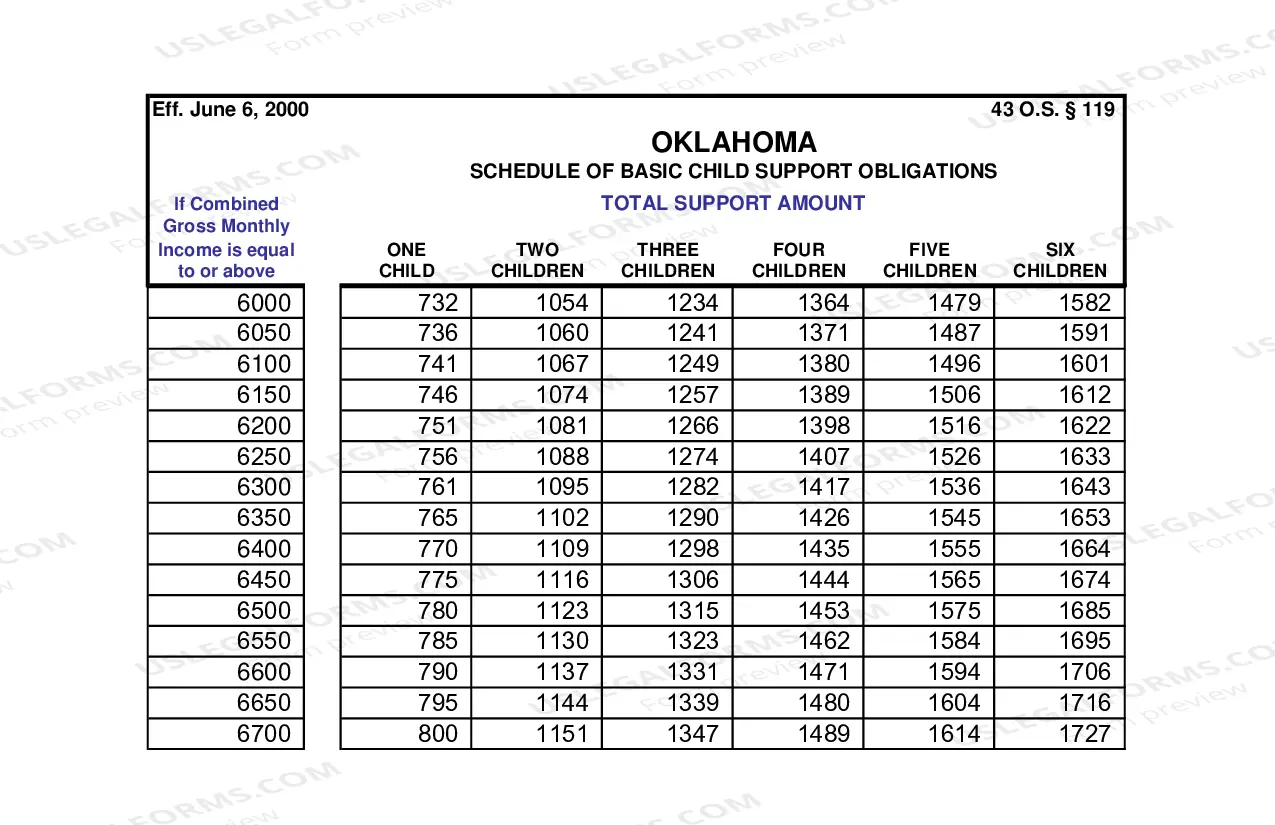
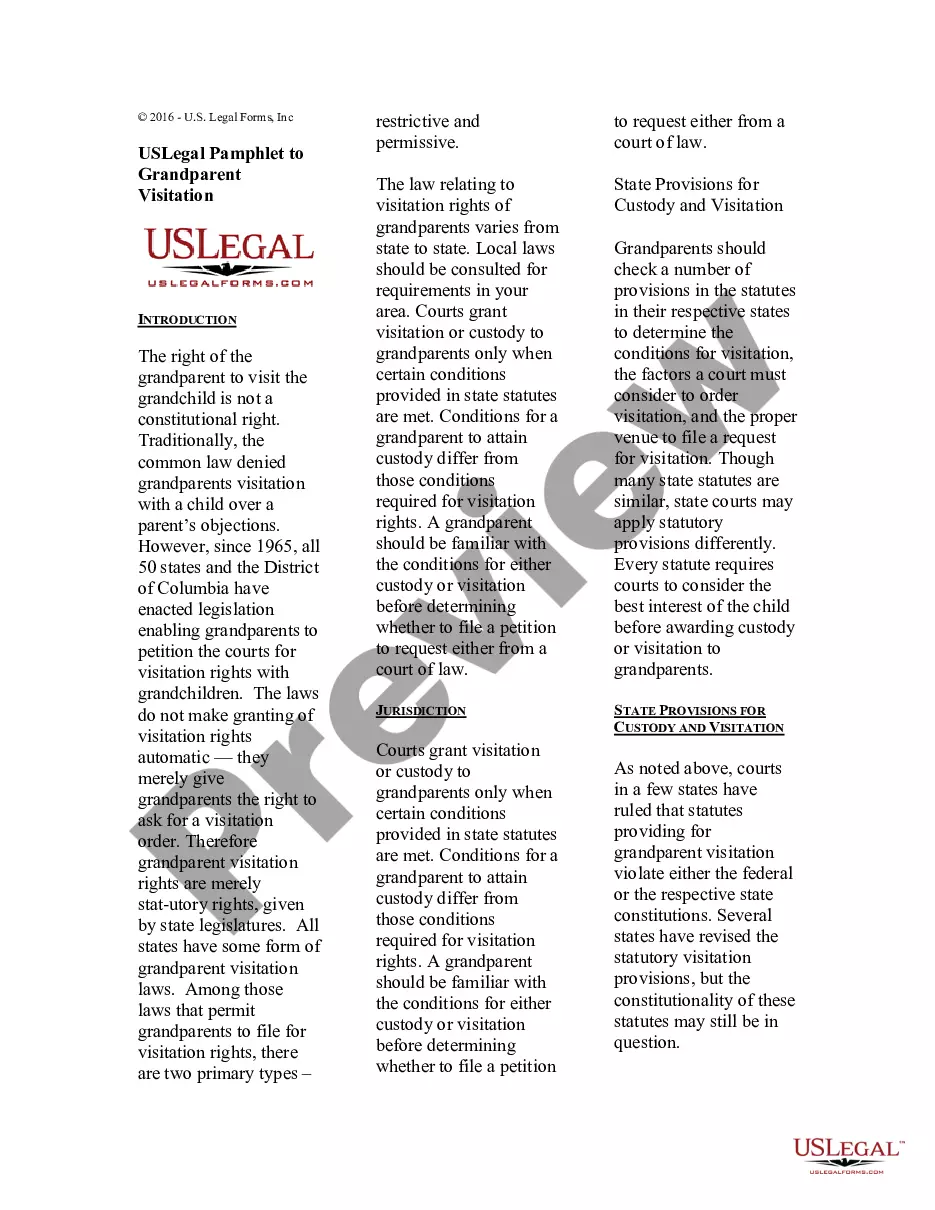
The Schedule of Basic Child Support Obligations is an official document used to determine the basic child support amount owed by a parent based on their combined gross monthly income and the number of children involved. This form is specifically tailored for use within Oklahoma and provides clear guidelines, differentiating it from other child support forms by incorporating wage and age tables pertinent to Oklahoma law.
Key parts of this document
- Combined gross monthly income calculation: Indicates income levels for both parents.
- Child support obligation schedule: Specifies the support amount for one to six children based on income.
- Medical support guidelines: Details cash medical obligations based on income and number of children.
- Child age consideration: Provides a table to determine when a child turns eighteen and the duration of support required.
- Contact information: Lists relevant Oklahoma Child Support Services for assistance.



When this form is needed
This form is utilized when parents are establishing or modifying child support payments in Oklahoma. It is essential when determining the financial responsibilities of a non-custodial parent, especially during divorce proceedings, custody arrangements, or any legal matters concerning child support. This form can also be referenced in court when disputes arise regarding the payment amounts.
Who this form is for
This form is primarily intended for use by:
- Non-custodial parents obligated to pay child support.
- Custodial parents seeking to establish or modify child support arrangements.
- Legal representatives or attorneys involved in family law cases.
- Individuals looking to understand their financial obligations related to child support in Oklahoma.
How to prepare this document
- Identify the parties: Enter the names of both parents involved in the child support case.
- Determine combined gross monthly income: Calculate and enter the total income from both parents.
- Refer to the child support obligation schedule: Find the appropriate support amount based on combined income and number of children.
- Complete the medical support guidelines section: Enter any obligations related to cash medical support as necessary.
- Review and sign: Ensure all information is accurate and both parents sign the form where required.
Does this document require notarization?
This form does not typically require notarization unless specified by local law. It is advisable to check with local court requirements for any specific needs regarding notarization for legal submissions.
Get your form ready online
Our built-in tools help you complete, sign, share, and store your documents in one place.
Make edits, fill in missing information, and update formatting in US Legal Forms—just like you would in MS Word.
Download a copy, print it, send it by email, or mail it via USPS—whatever works best for your next step.
Sign and collect signatures with our SignNow integration. Send to multiple recipients, set reminders, and more. Go Premium to unlock E-Sign.
If this form requires notarization, complete it online through a secure video call—no need to meet a notary in person or wait for an appointment.
We protect your documents and personal data by following strict security and privacy standards.

Make edits, fill in missing information, and update formatting in US Legal Forms—just like you would in MS Word.

Download a copy, print it, send it by email, or mail it via USPS—whatever works best for your next step.

Sign and collect signatures with our SignNow integration. Send to multiple recipients, set reminders, and more. Go Premium to unlock E-Sign.

If this form requires notarization, complete it online through a secure video call—no need to meet a notary in person or wait for an appointment.

We protect your documents and personal data by following strict security and privacy standards.
Avoid these common issues
- Failing to report total combined gross income accurately.
- Not referencing the appropriate support amount based on the current income level.
- Neglecting to consider additional children when calculating obligations.
- Misunderstanding medical support obligations related to insurance coverage.
Advantages of online completion
- Convenient access: Easily download and complete the form from anywhere.
- Editability: Make necessary changes and updates quickly without hassle.
- Reliable source: Ensure compliance with the latest state guidelines and regulations.
- Time-efficient: Save time by avoiding unnecessary trips to legal offices or courthouses.
Looking for another form?



Form popularity
FAQ
In Alberta, the basic amount of child support that someone with an income of $150,000 would have to pay for one child is $1318.00 per month.
Typically, the court will permit the parties to agree that no child support will be paid to either party.The court may consider a change in income or living expenses or child's activities as a change in circumstances that would warrant an award of child support or a modification of an existing child support order.
I Have 50/50 Custody, Why Am I still Required to Pay Child Support? 50/50 custody arrangements do not necessarily absolve parents of child support obligations.A court will consider the income and earning potential of both parents and order the spouse with the higher income to pay child support.
Minimum basic child support obligation is $100 per month.
Oklahoma Statute of Limitations on Back Child Support Payments (Arrears) Enforcement of past due child support in Oklahoma is not subject to a Statute of Limitations.
Oklahoma's child support guideline schedule goes to $15,000 per month total combined income.
(b) Notification requirements.At least once every three years after a child support order is established, reviewed, or modified, Oklahoma Department of Human Services (DHS) Child Support Services (CSS) notifies all parties in a full-service case of the right to request a review of the child support order and the
All child support orders within the state of Oklahoma are based upon this guideline. The guidelines were established to calculate the minimum amount of child support to be paid by a parent.Unless the custodial parent agrees otherwise, child support is typically paid by a wage assignment.
Parents have a legal duty to provide financial support for their children. The court may order either or both parents to make regular payments for a child's living and medical expenses.