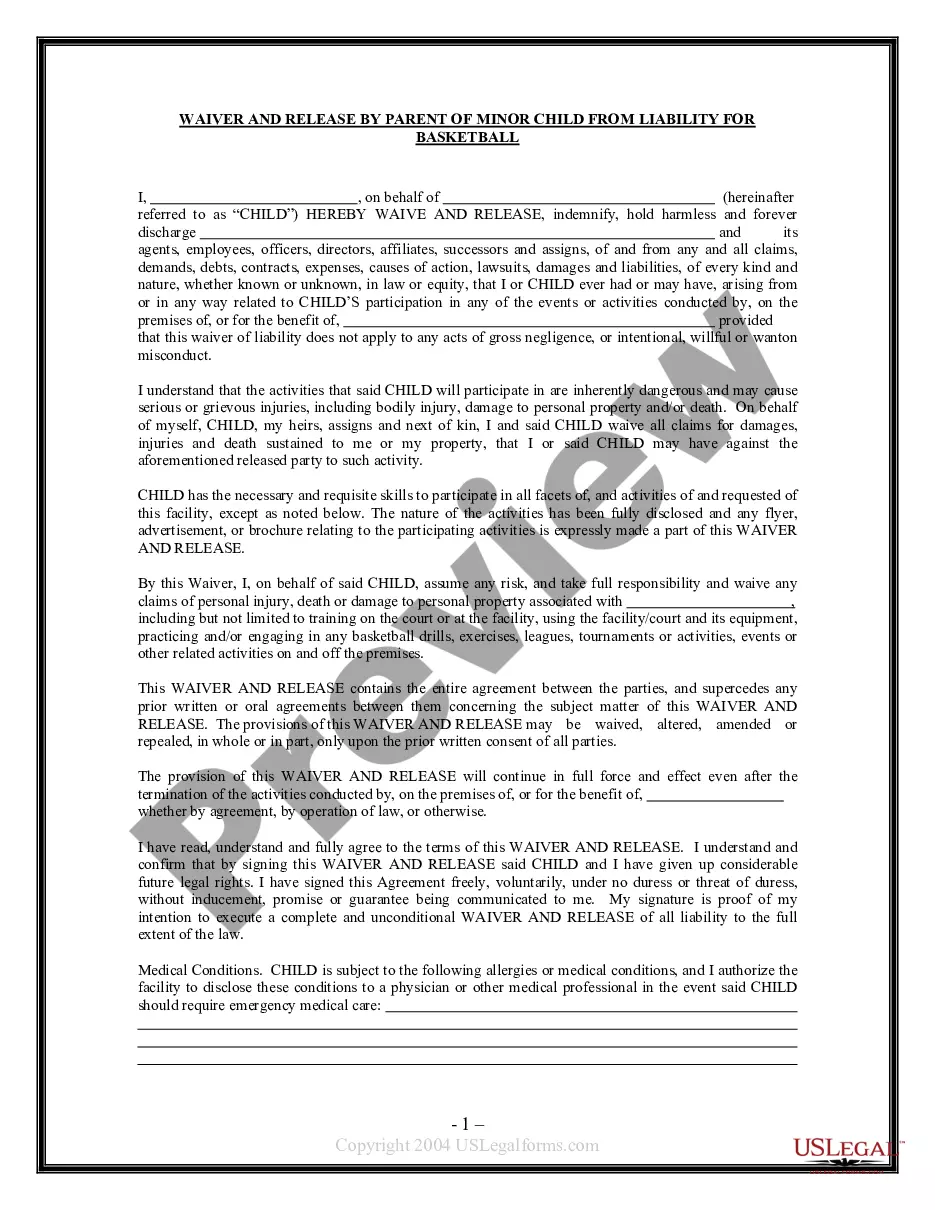
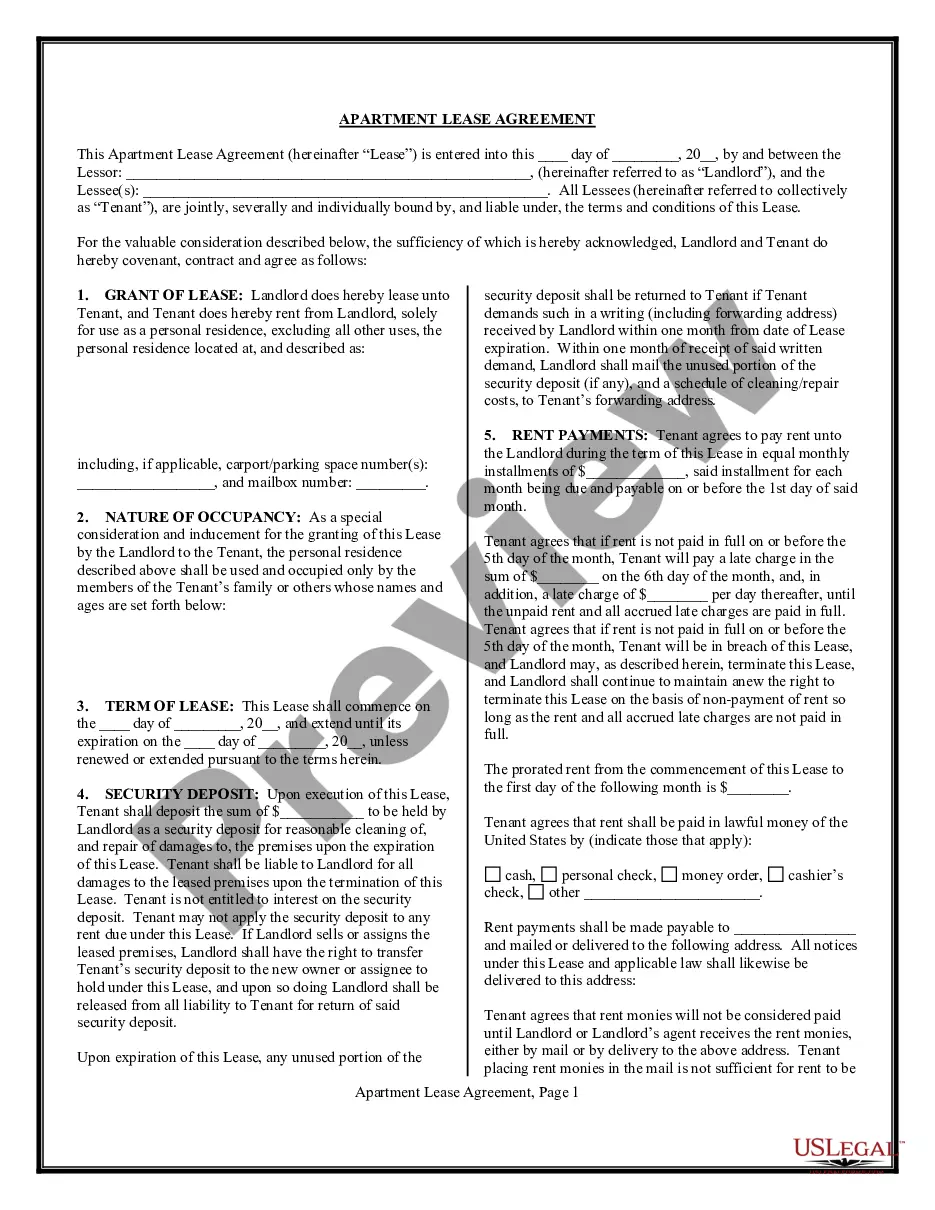
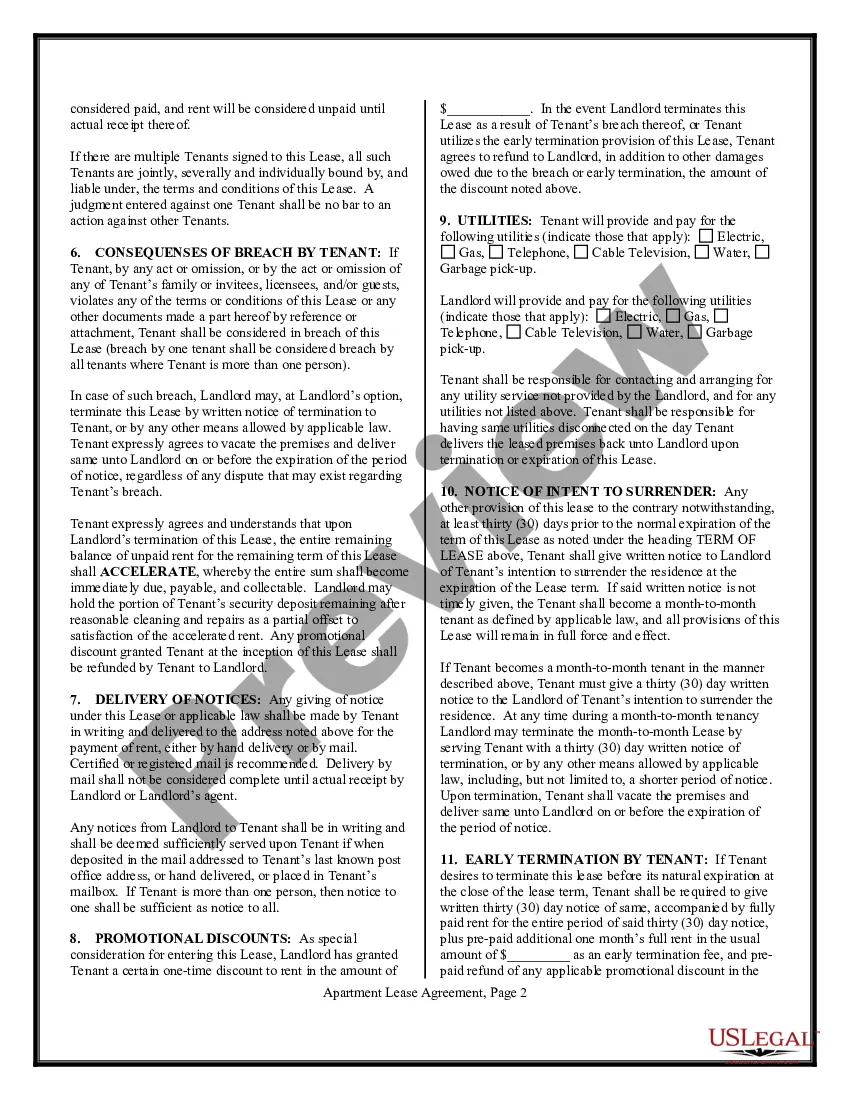
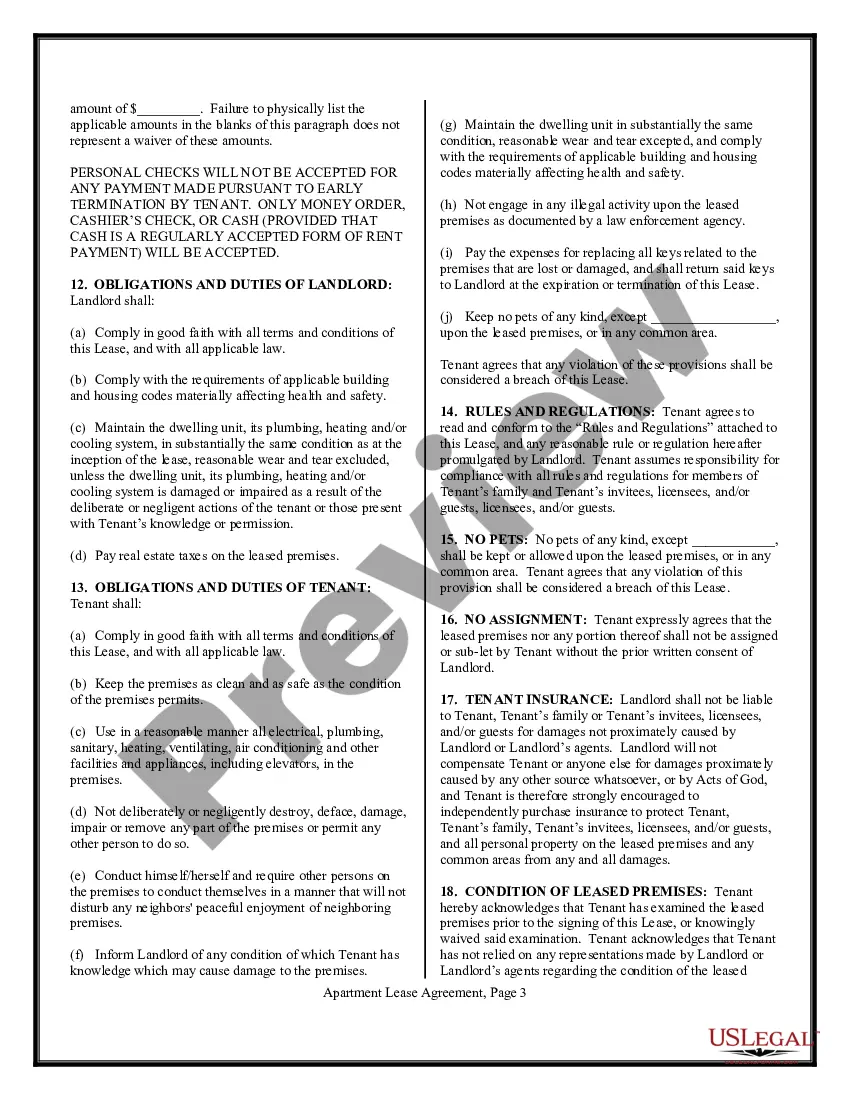
This is a sample apartment lease form. You may use it as a guide for creating an appartment lease form for your state. You must ensure that you comply with all applicable laws in your state.
Ohio Apartment Lease Agreement
State:
Multi-State
Control #:
US-846LT
Format:
Word;
Rich Text
Instant download
Description
Free preview
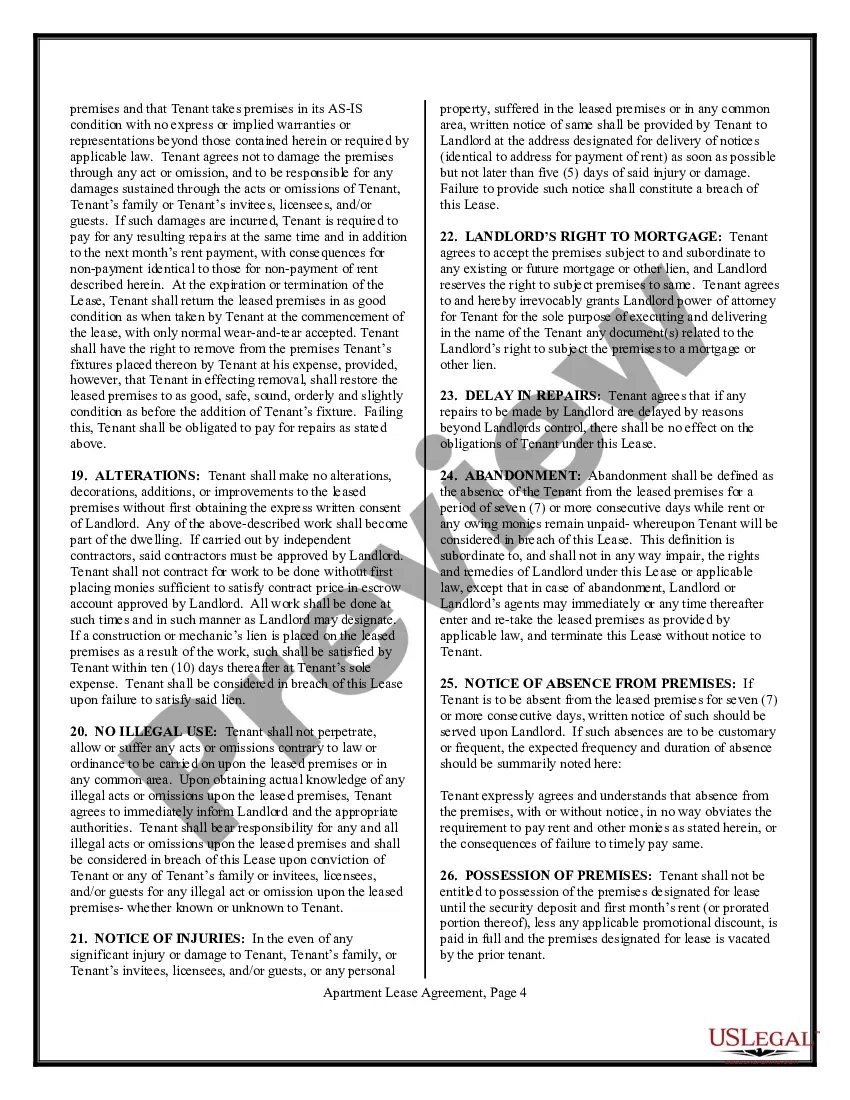
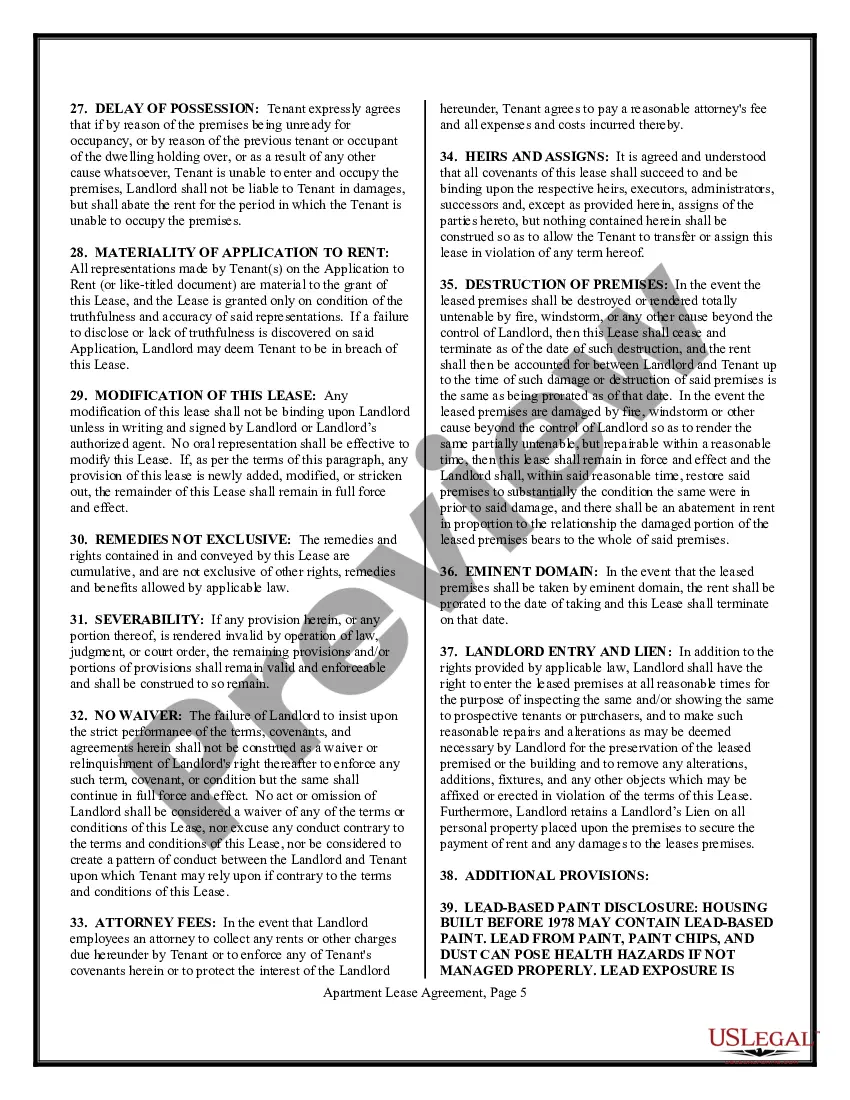
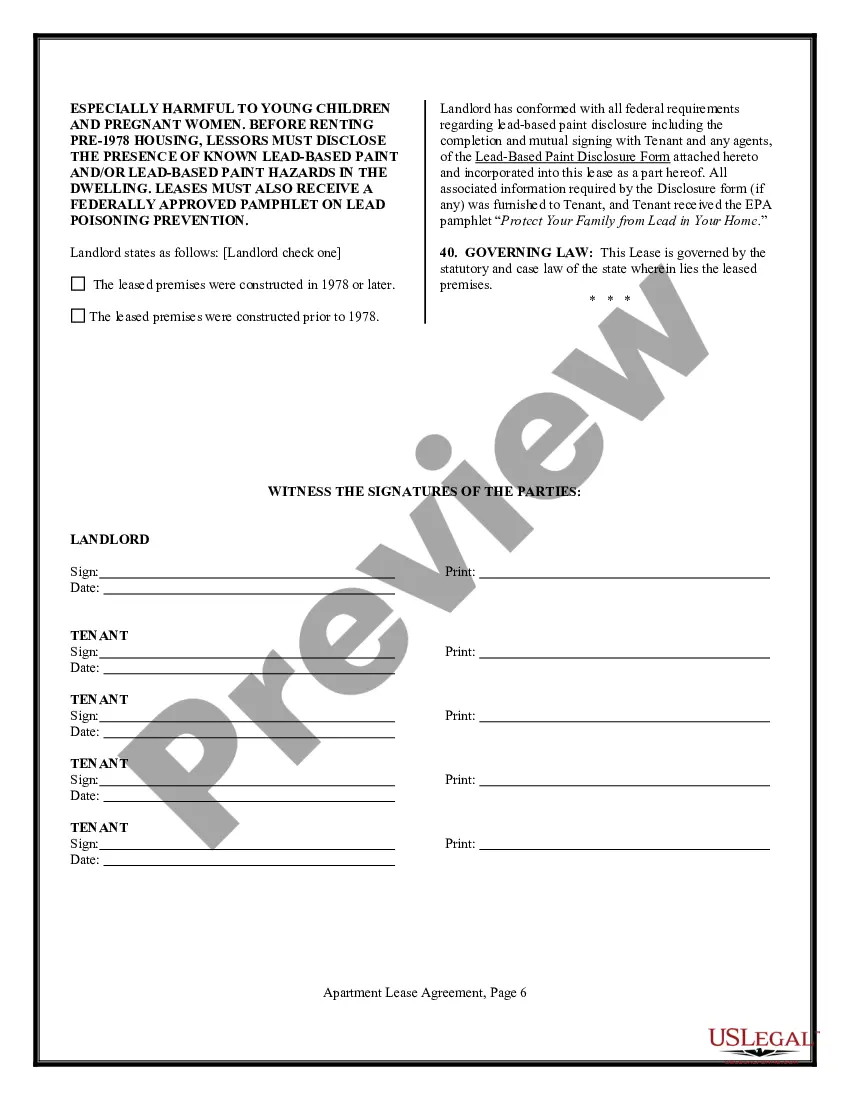
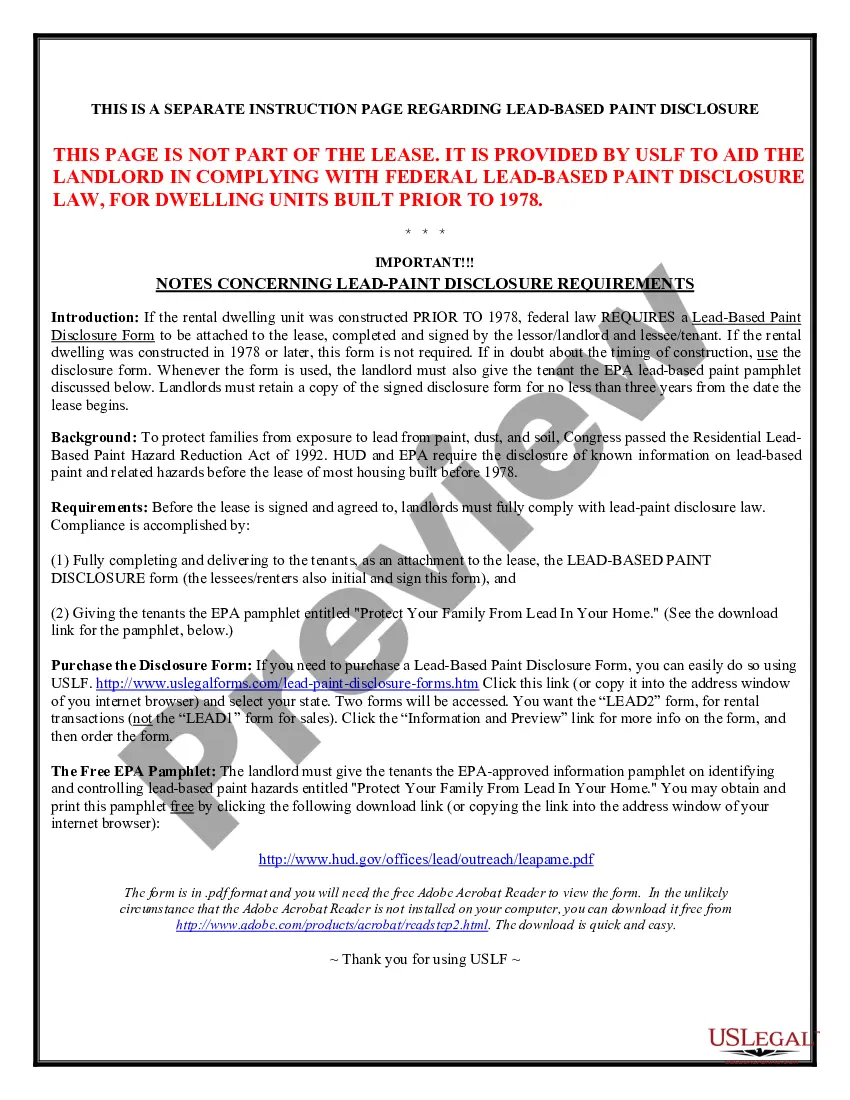
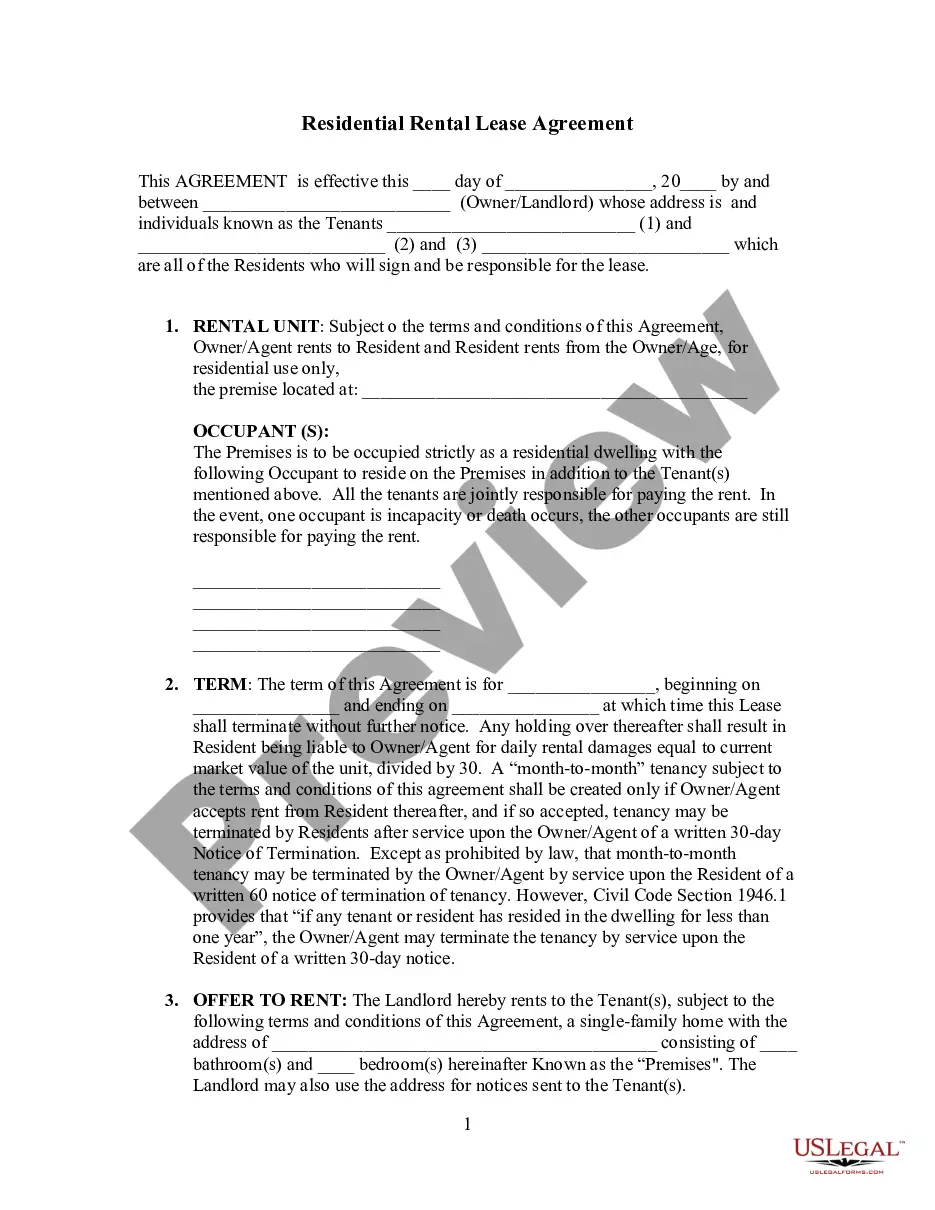
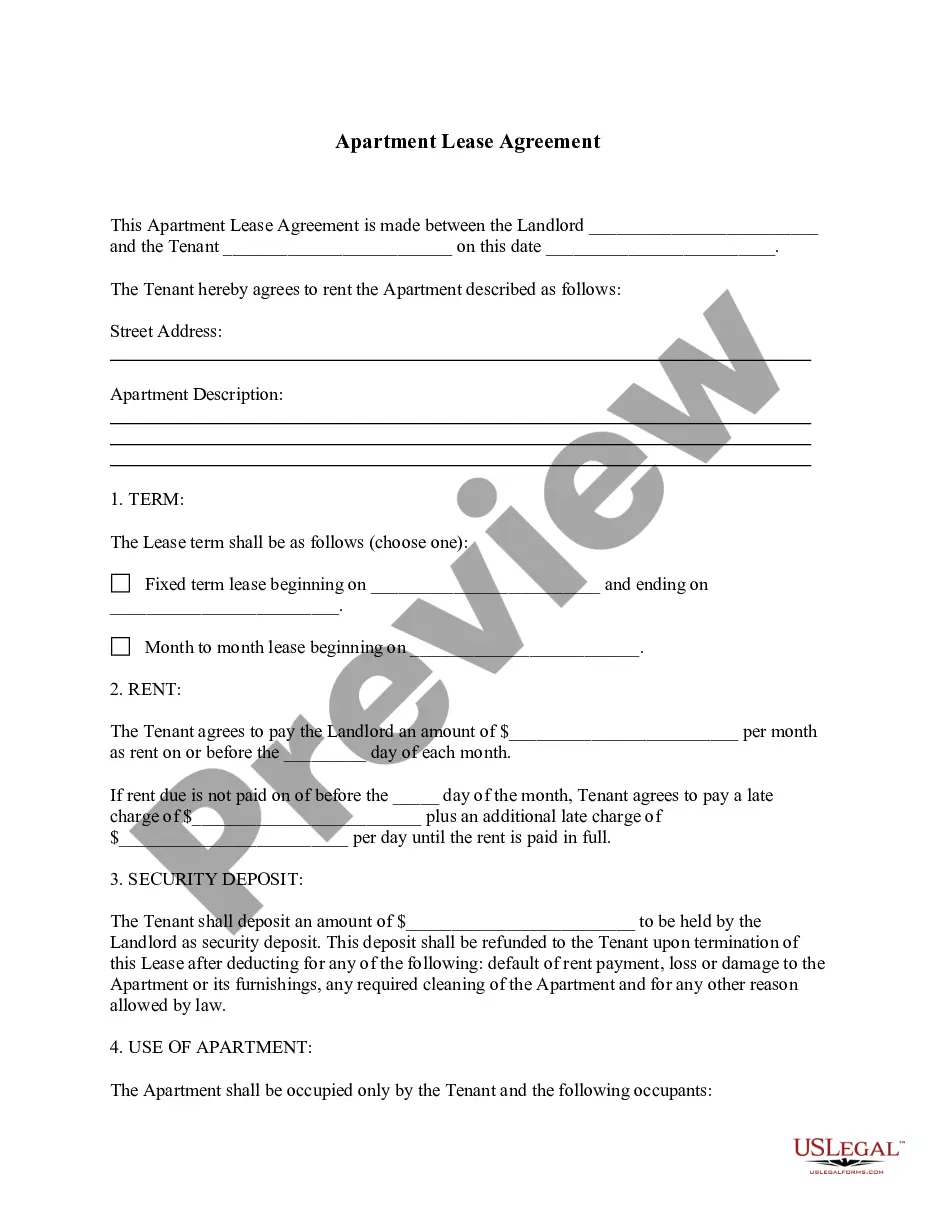
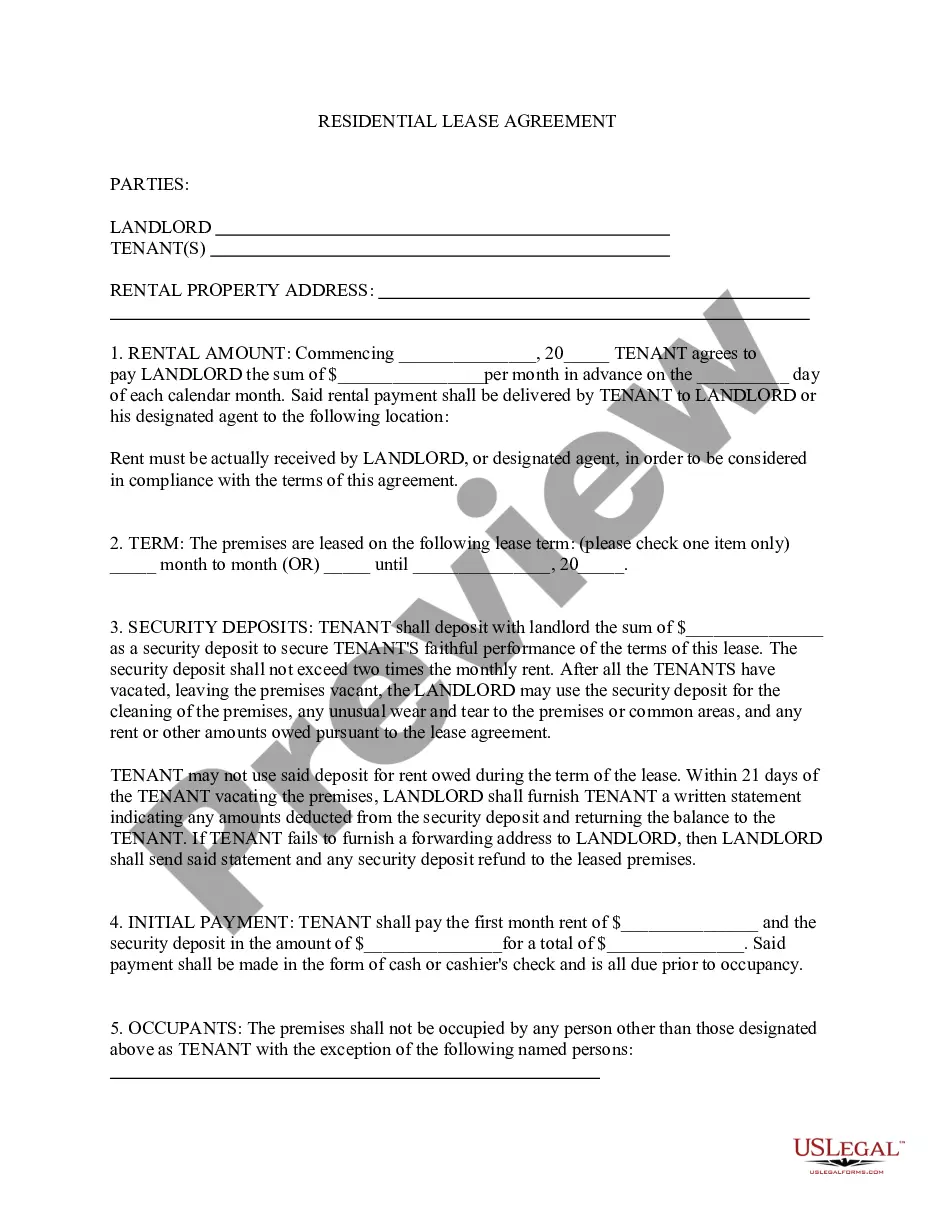
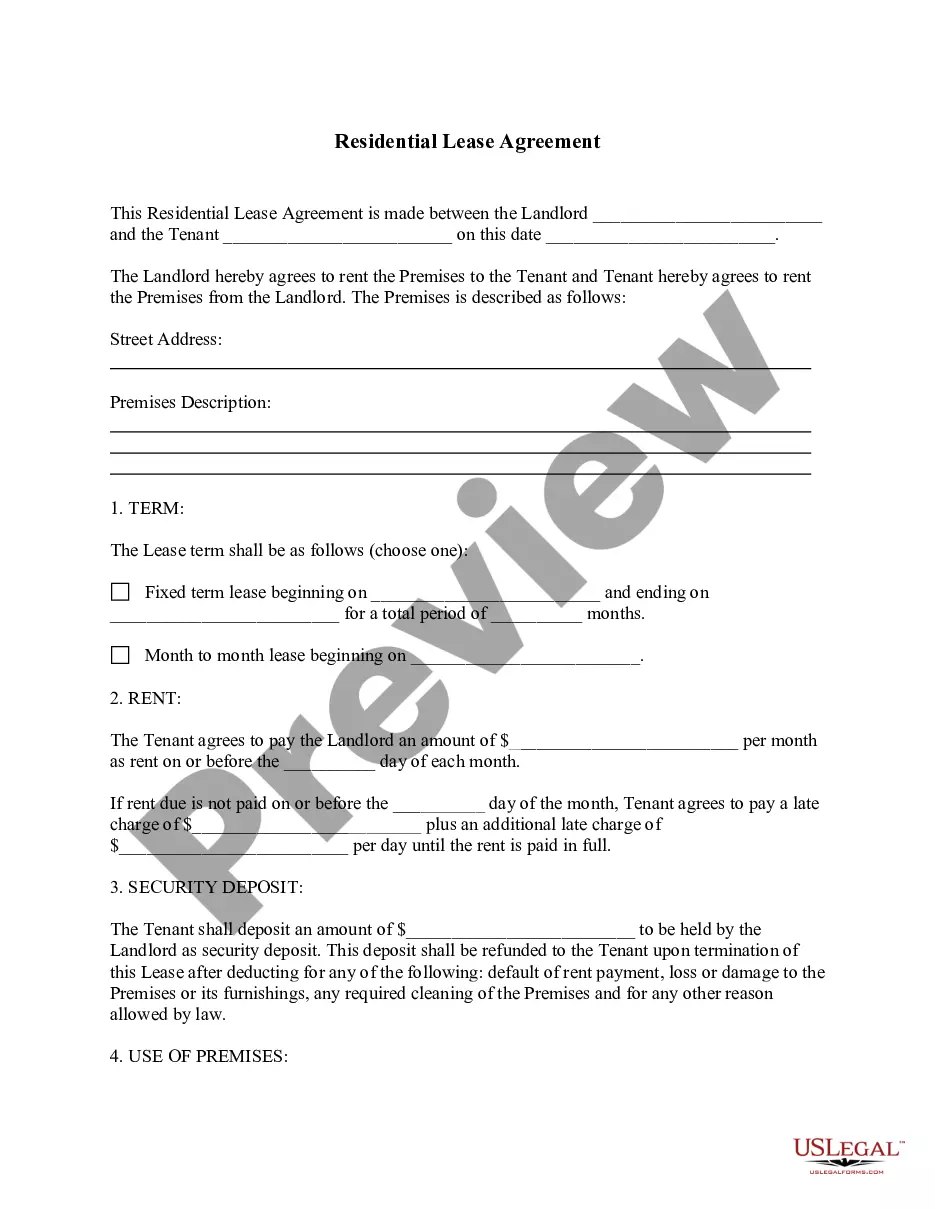
Get your form ready online
Our built-in tools help you complete, sign, share, and store your documents in one place.
Built-in online Word editor
Make edits, fill in missing information, and update formatting in US Legal Forms—just like you would in MS Word.
Export easily
Download a copy, print it, send it by email, or mail it via USPS—whatever works best for your next step.
E-sign your document
Sign and collect signatures with our SignNow integration. Send to multiple recipients, set reminders, and more. Go Premium to unlock E-Sign.
Notarize online 24/7
If this form requires notarization, complete it online through a secure video call—no need to meet a notary in person or wait for an appointment.
Store your document securely
We protect your documents and personal data by following strict security and privacy standards.

Make edits, fill in missing information, and update formatting in US Legal Forms—just like you would in MS Word.

Download a copy, print it, send it by email, or mail it via USPS—whatever works best for your next step.

Sign and collect signatures with our SignNow integration. Send to multiple recipients, set reminders, and more. Go Premium to unlock E-Sign.

If this form requires notarization, complete it online through a secure video call—no need to meet a notary in person or wait for an appointment.

We protect your documents and personal data by following strict security and privacy standards.
Looking for another form?

How to fill out Apartment Lease Agreement?
Have you been in a situation where you need documents for either business or specific purposes almost every day.
There are numerous legal document templates accessible online, but finding reliable ones can be challenging.
US Legal Forms offers thousands of form templates, such as the Ohio Apartment Lease Agreement, which can be tailored to meet state and federal requirements.
If you find the right form, simply click Buy now.
Choose the pricing plan you prefer, fill in the required information to create your account, and complete your purchase using PayPal or credit card.
- If you are already acquainted with the US Legal Forms website and have an account, simply Log In.
- Afterward, you can download the Ohio Apartment Lease Agreement template.
- If you don’t have an account and want to start using US Legal Forms, follow these steps.
- Locate the form you require and ensure it is for the correct city/state.
- Utilize the Preview button to examine the form.
- Read the description to confirm that you have selected the correct form.
- If the form isn’t what you are looking for, use the Search section to find the document that meets your needs and specifications.
Form popularity
FAQ
Tenants in the state of Ohio are granted certain rights by the state's landlord-tenant code, including the right to fair housing, the right to a return of the security deposit, and the right to notice before landlord entry. Other laws control habitability and retaliation.
The Ohio Statute of Conveyances requires that all leases of three years or more be signed and notarized. Leases not exceeding three years are exempt from these requirements. In other words, if a lease is for exactly three years or less, it does not have to be notarized.
Written leases must be signed by the landlord and should be signed by the tenant. Leases for four years or more must be notarized to be valid. Additionally, a lease memorandum should be recorded for long-term leases to protect the tenant in the event the land is sold.
Early Termination Clause Read over the lease and look for language that outlines agreed-upon terms for ending the lease before the end of the fixed period, such as the amount of the fee (i.e., equal to 2 month's rent) and the amount of notice required (i.e., 30 days).
Reach a settlement or buyout agreement. To end the lease early, you might agree to give up, or forfeit, your security deposit and pay an extra month's rent. You're agreeing to pay more in exchange for your landlord agreeing to accept less than the full amount of rent you owe.
Landlords CANNOT:Shut off utilities or other services, change locks, remove doors or windows, or take tenants possessions in order to try to force them to move, even if the tenant is behind on rent payments or their lease has expired.
So you may not have to pay much, if any additional rent, if you break your lease. You need pay only the amount of rent the landlord loses because you moved out early. This is because Ohio requires landlords to take reasonable steps to keep their losses to a minimumor to "mitigate damages" in legal terms.
As a tenant, you can terminate your tenancy (whether fixed-term or periodic) without giving a reason, but you must provide a valid notice of termination to your landlord.
Wait a reasonable amount of time. Your landlord has up to 30 days to make requested repairs. Emergency repairs (like no heat in the winter) must be finished faster.
According to Ohio landlord tenant law, breaking lease agreements is allowed if your landlord entered your home without at least a 24-hour notice. Your landlord is legally required to tell you he or she will enter the rental property at least 24 hours in advance.