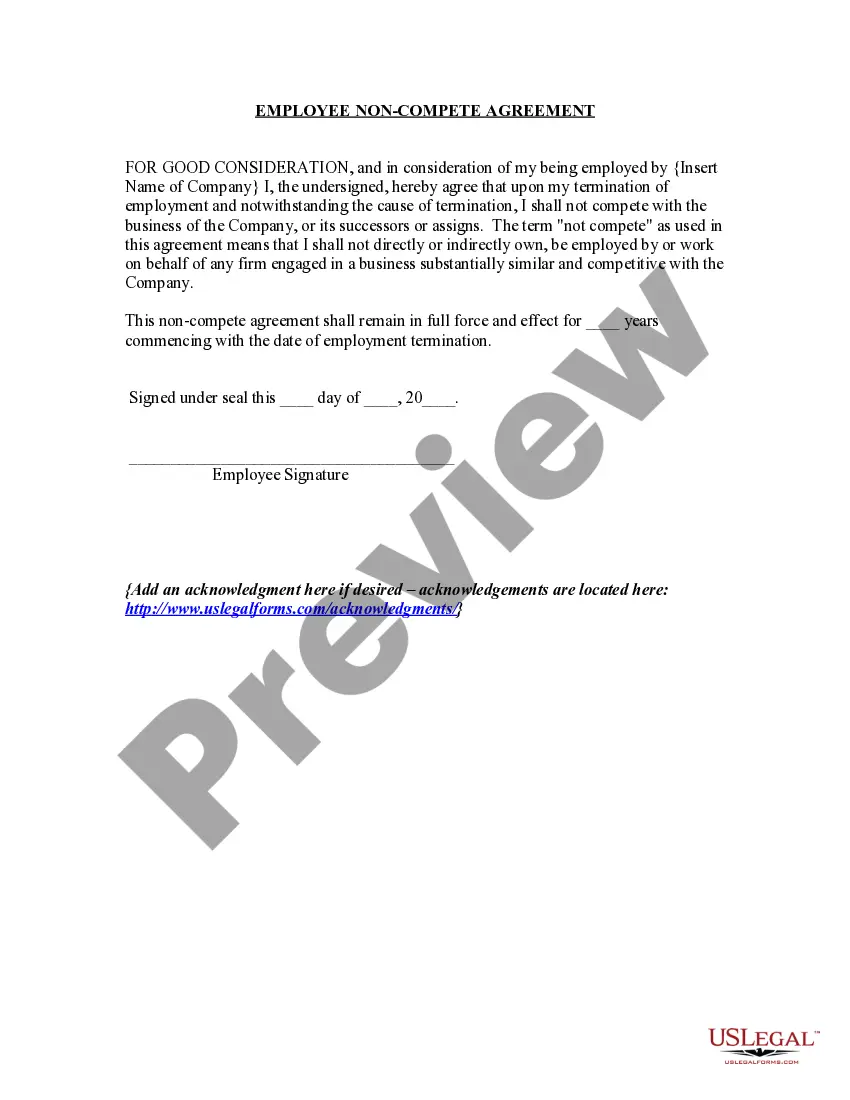
Ohio Employee Noncompete (Noncompetition) Agreement
Description
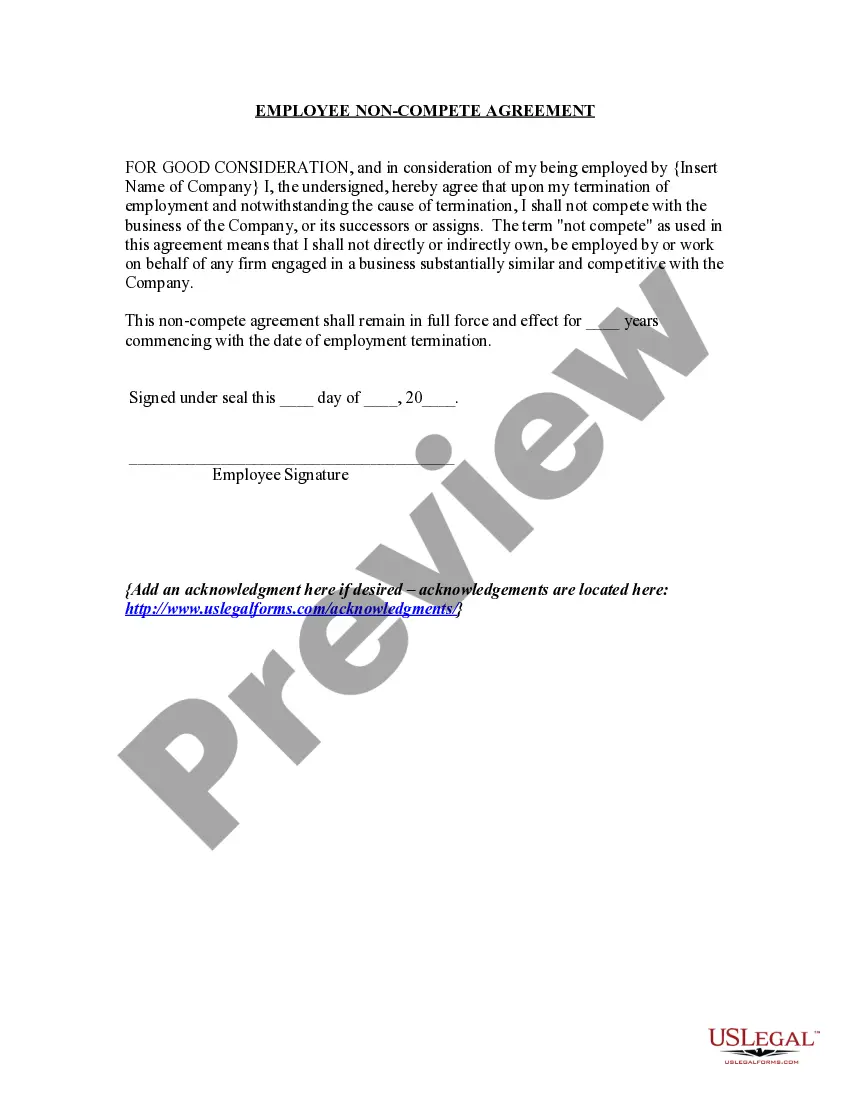
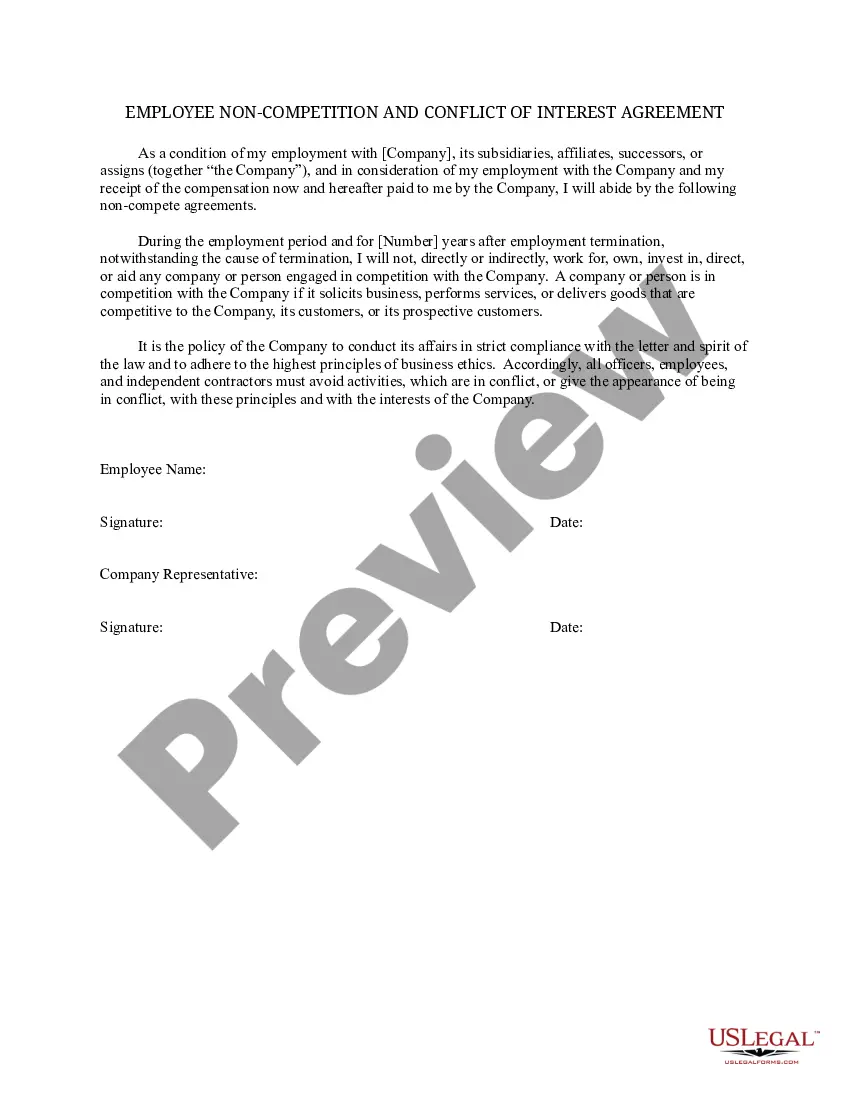
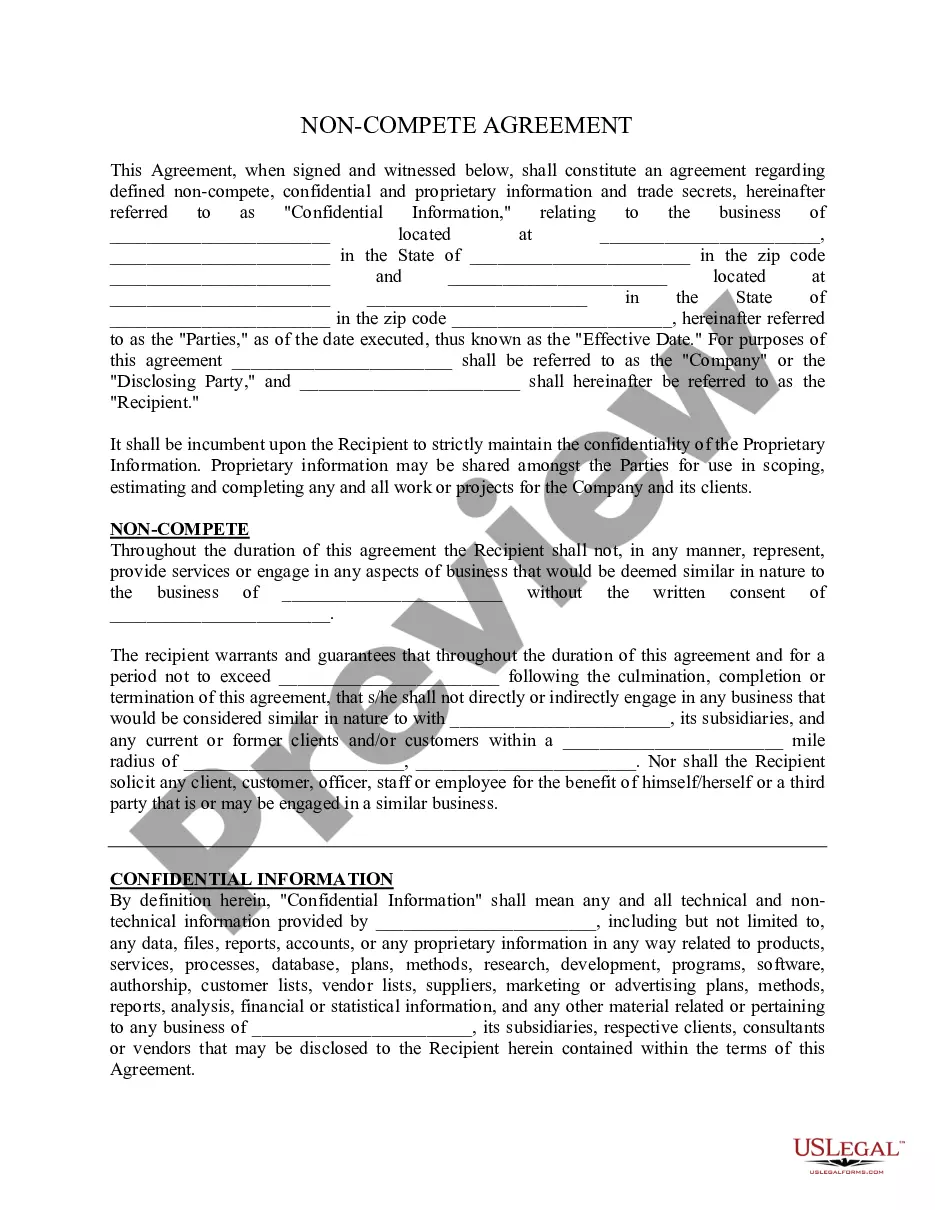

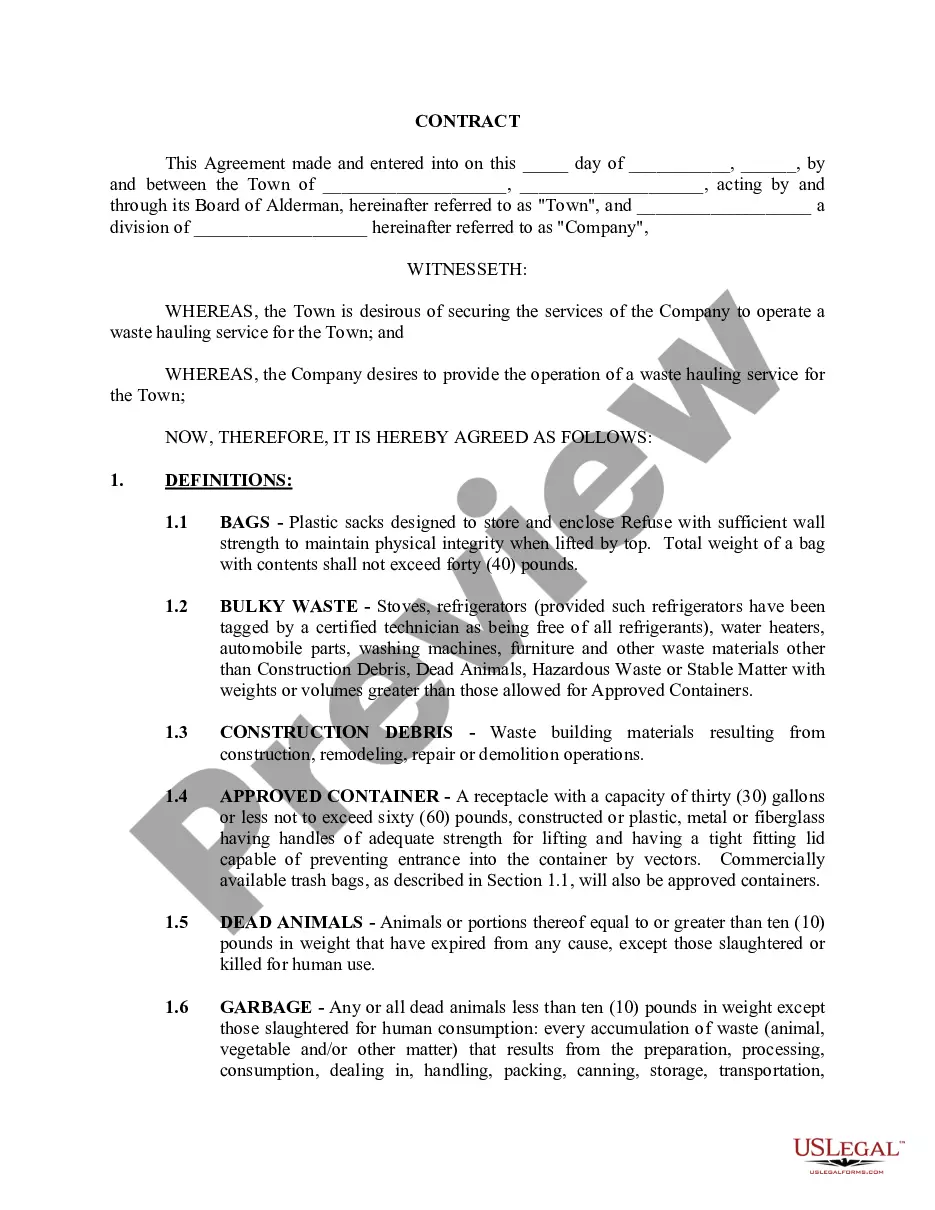

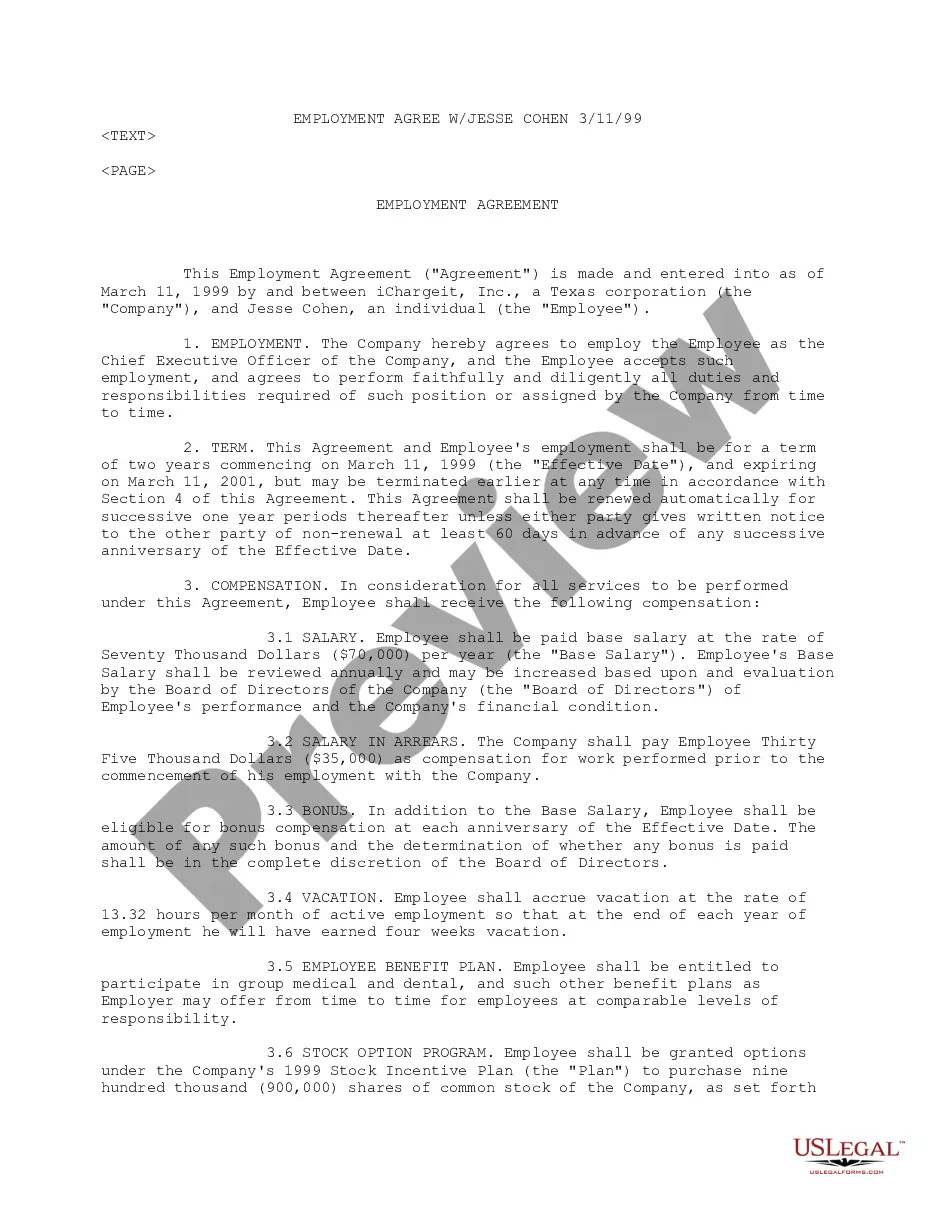
How to fill out Employee Noncompete (Noncompetition) Agreement?
If you wish to compile, retrieve, or generate authentic legal document templates, utilize US Legal Forms, the top choice for legal forms that are available online.
Take advantage of the site’s straightforward and convenient search feature to find the documents you require.
Various templates for commercial and personal uses are categorized by types and regions, or keywords.
Step 4. Once you have identified the form you need, click the Get now button. Choose the pricing plan you prefer and enter your information to create an account.
Step 5. Complete the transaction. You can use your credit card or PayPal account to finalize the purchase.
- Employ US Legal Forms to access the Ohio Employee Noncompete (Noncompetition) Agreement with just a few clicks.
- If you are already a US Legal Forms customer, Log Into your account and click the Download button for the Ohio Employee Noncompete (Noncompetition) Agreement.
- You can also view forms you've previously downloaded in the My documents section of your account.
- If you’re using US Legal Forms for the first time, follow the steps outlined below.
- Step 1. Ensure you have selected the template for the correct city/state.
- Step 2. Utilize the Preview option to review the form’s details. Be sure to read the summary.
- Step 3. If you are not satisfied with the form, use the Search field at the top of the screen to find other variations of the legal form template.
Form popularity
FAQ
Courts have enforced one year or, for some employees, even two year non-competes. When you get beyond two years, the time frame is problematic and is likely an uphill battle to enforce.
Non-solicitation clauses that are clear, carefully drafted, and suitably retrained in temporal and spatial terms, are often enforceable.
You Can Void a Non-Compete by Proving Its Terms Go Too Far or Last Too Long. Whether a non-compete is unenforceable because it covers too large of a geographical area or it lasts too long can depend on many factors. Enforceability can depend on your industry, skills, location, etc.
While non-competition agreements are legal in Ohio, they are scrutinized carefully by the courts. Such restrictive covenants are lawful if the restraints are reasonably necessary to protect the employer's legitimate business interests.
Under Ohio law, noncompetition contracts are generally enforceable if they are reasonable. The question of what's reasonable is a very fact-specific one though. It depends on the particular circumstances of a given situation, and the Ohio Supreme Court has set out a legal test for courts to apply.
Are Non-Competes Enforceable in Ohio? Non-compete agreements are enforceable in Ohio. However, there are laws in place that dictate that a non-compete agreement must be reasonable in order to protect the employee.
Here are five ways to beat a non-compete agreement.Prove your employer is in breach of contract.Prove there is no legitimate interest to enforce the non-compete agreement.Prove the agreement is not for a reasonable amount of time.Prove that the confidential information you had access to isn't special.More items...
Typically, the only way to fight a non-compete agreement is to go to court. If you are an employee (or former employee) who signed such an agreement, this means you must violate the agreement and wait to be sued. It may be that your former employer has never sued another employee to enforce the non-compete agreement.
Accordingly, Ohio courts enforce non-solicitation provisions if they are both: Necessary to protect employers' legitimate business interests. Reasonable.