Ohio Personnel File Inspection Requirements for Companies
Description




How to fill out Personnel File Inspection Requirements For Companies?
If you wish to finalize, obtain, or print valid document formats, utilize US Legal Forms, the largest collection of legal forms available online.
Make use of the site's user-friendly and convenient search to locate the documents you need.
Numerous formats for business and personal purposes are organized by categories and states, or keywords.
Step 4. Once you have found the form you need, click the Buy now button. Choose your preferred pricing plan and provide your credentials to register for an account.
Step 5. Complete the transaction. You can use your credit card or PayPal account to finalize the payment.
- Utilize US Legal Forms to find the Ohio Personnel File Inspection Requirements for Businesses with just a couple of clicks.
- If you are already a US Legal Forms customer, Log In to your account and click the Download button to obtain the Ohio Personnel File Inspection Requirements for Businesses.
- You can also access forms you have previously downloaded in the My documents section of your account.
- If you're using US Legal Forms for the first time, refer to the instructions below.
- Step 1. Ensure you have selected the form for the correct city/state.
- Step 2. Use the Review option to examine the form's content. Don't forget to check the summary.
- Step 3. If you are dissatisfied with the form, use the Search area at the top of the screen to find alternative versions of the legal form format.
Form popularity
FAQ
1) A company is under no obligation to provide anyone, including the affected employee, with a copy of any write-ups, disciplinary notes, the personnel file more generally, etc. 2) The company's notes or write-up is not a legal document, and so have not legal effect per se.
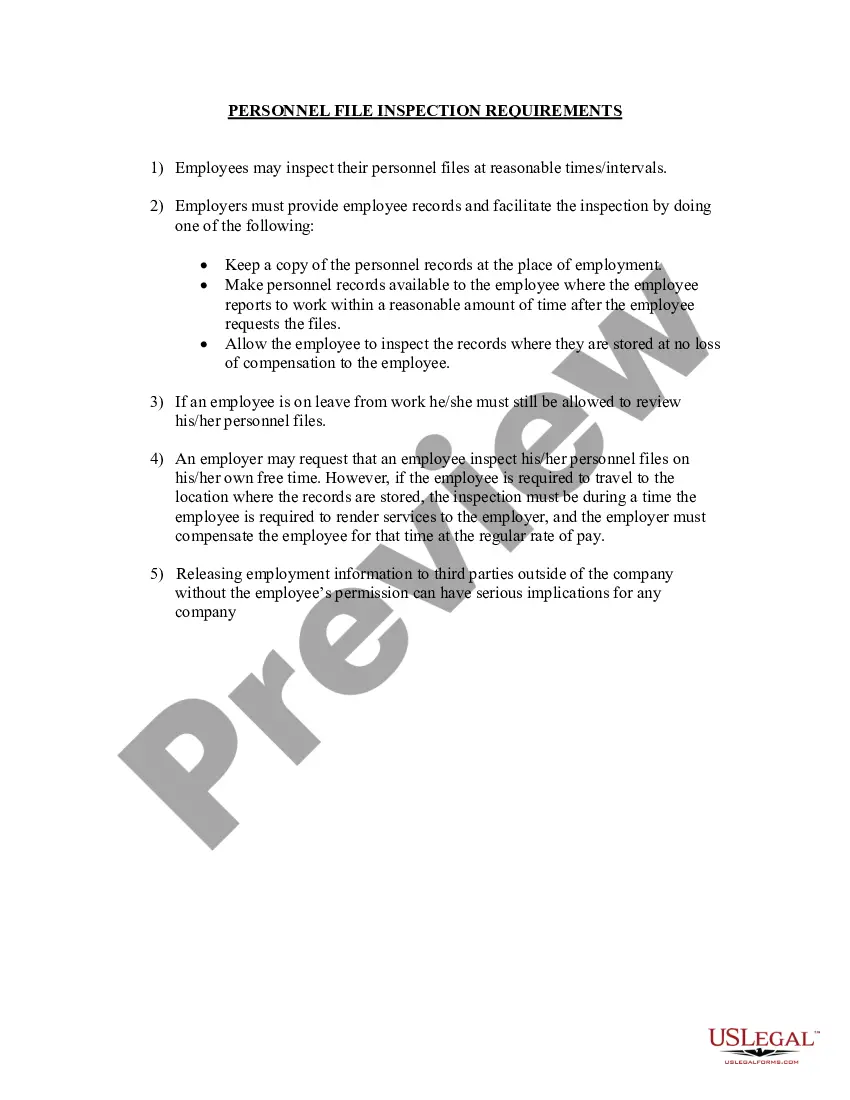
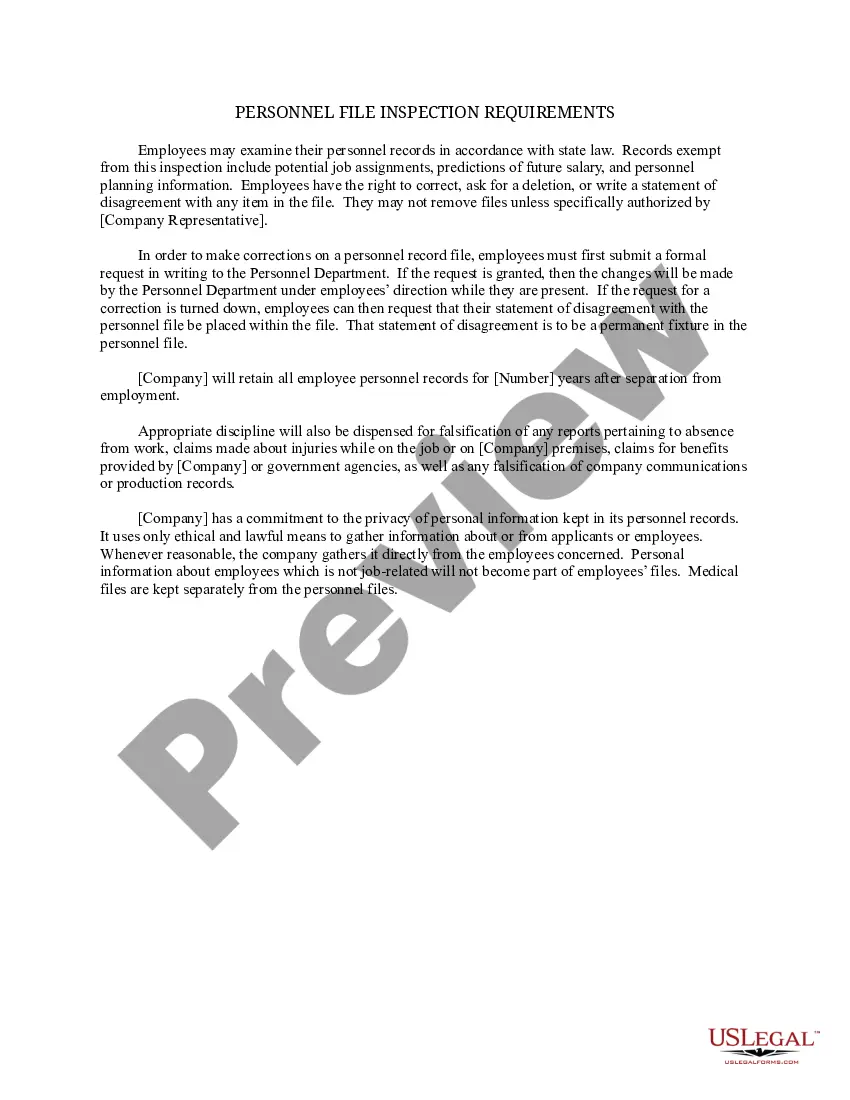
There is no law in Ohio that requires an employer to grant an employee access to his or her personnel file. There are, however, two key exceptions: medical records and wage and hour records.
Employees have no right to access to personnel files. There is no law in Ohio that requires an employer to grant an employee access to his or her personnel file. There are, however, two key exceptions: medical records and wage and hour records.
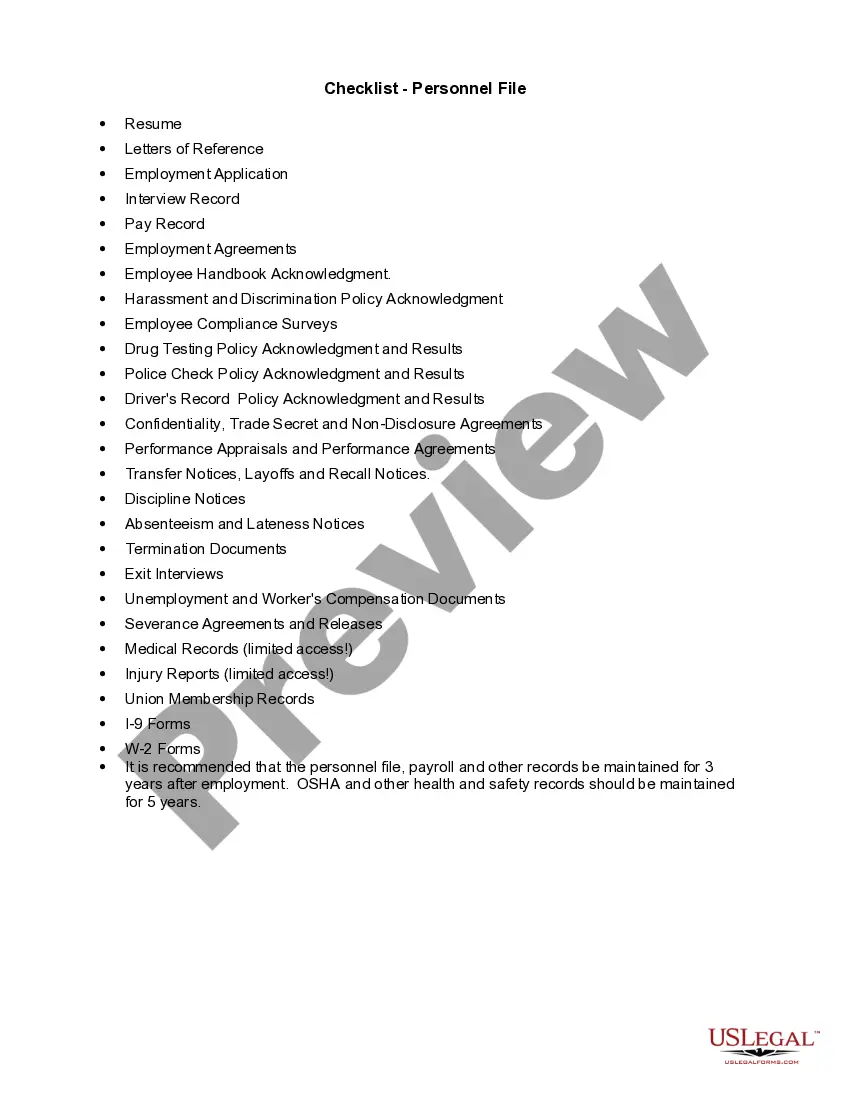
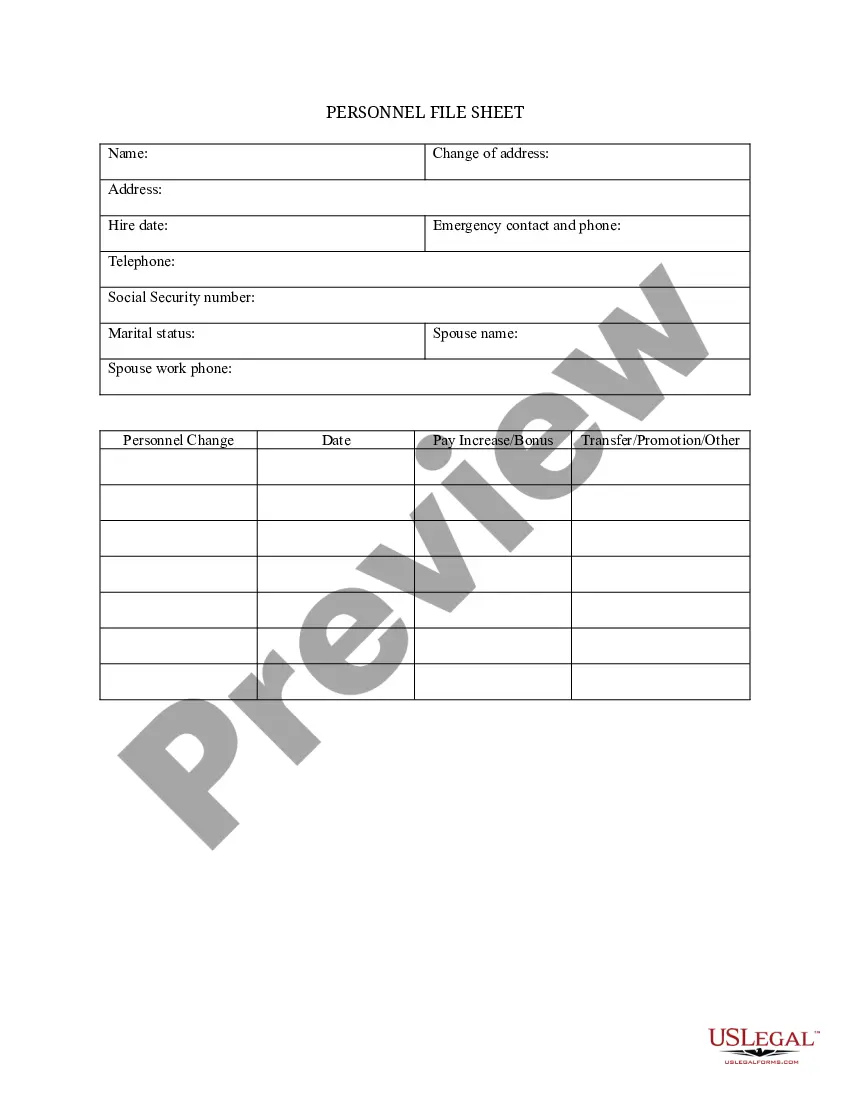
The legal documents that every employee personnel file must have are: Basic employee information: Name, address, phone number, and emergency contact details. IRS tax withholding forms: W-4s and/or W-9s. Payroll and compensation information: Any paycheck or pay card data.
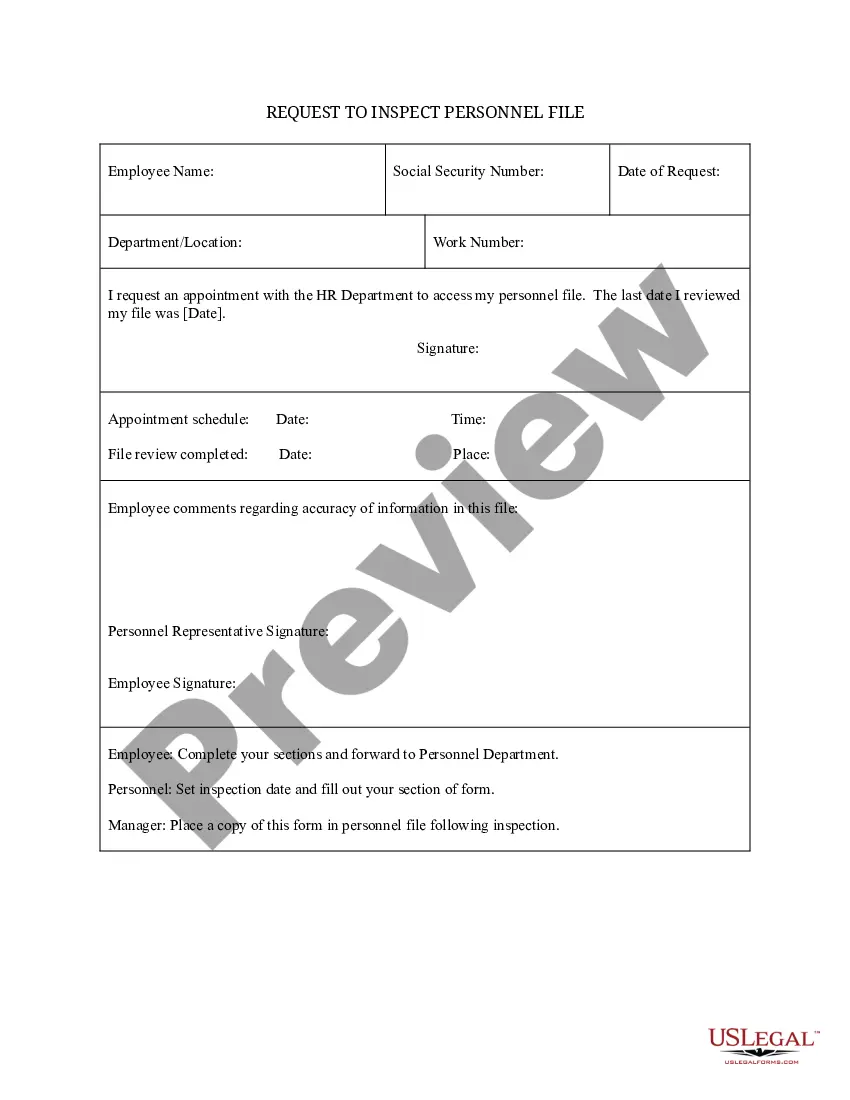
As an employee, do I have a right to see my personnel files? The short answer is 'yes'. You have a right to make a SAR to your employer, asking to see your personnel files, at any time. Your employer has the right to ask why you want to see your files, but must then provide all your records to you.
The short answer is 'yes'. You have a right to make a SAR to your employer, asking to see your personnel files, at any time. Your employer has the right to ask why you want to see your files, but must then provide all your records to you.
- In Ohio the answer is no. There is no law which would require an employer to permit an employee or former employee to view their entire personnel file. In other states, there may be statutes which provide an employee access to his or her personnel folder.
There is no law in Ohio that requires an employer to grant an employee access to his or her personnel file. There are, however, two key exceptions: medical records and wage and hour records.
Employers should keep all job-related documentation such as hiring records, performance reviews, disciplinary actions and job descriptions in an employee's general personnel file. Consider whether the document would be relevant to a supervisor who may review this file when making employment decisions.