Ohio Fence Line Agreement
Description
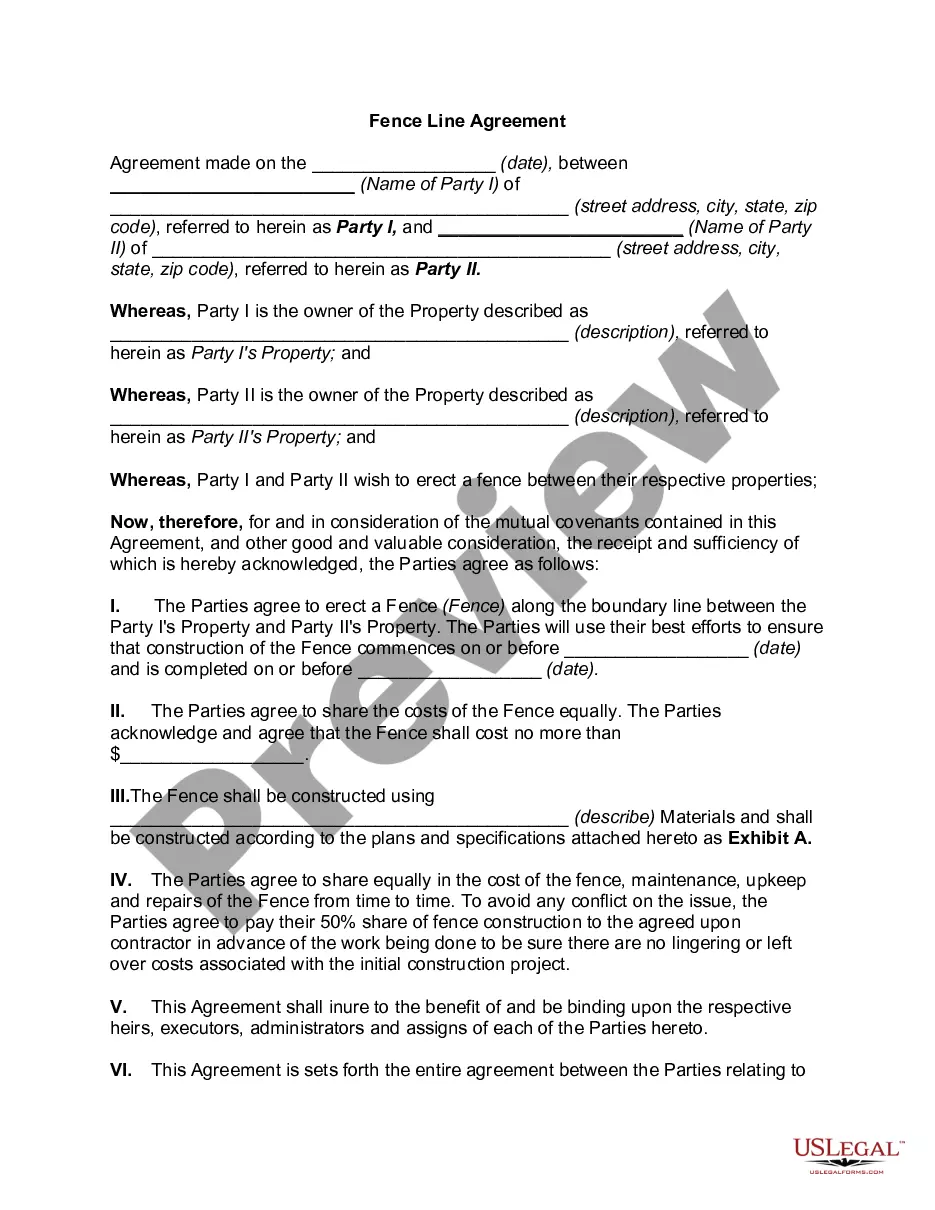
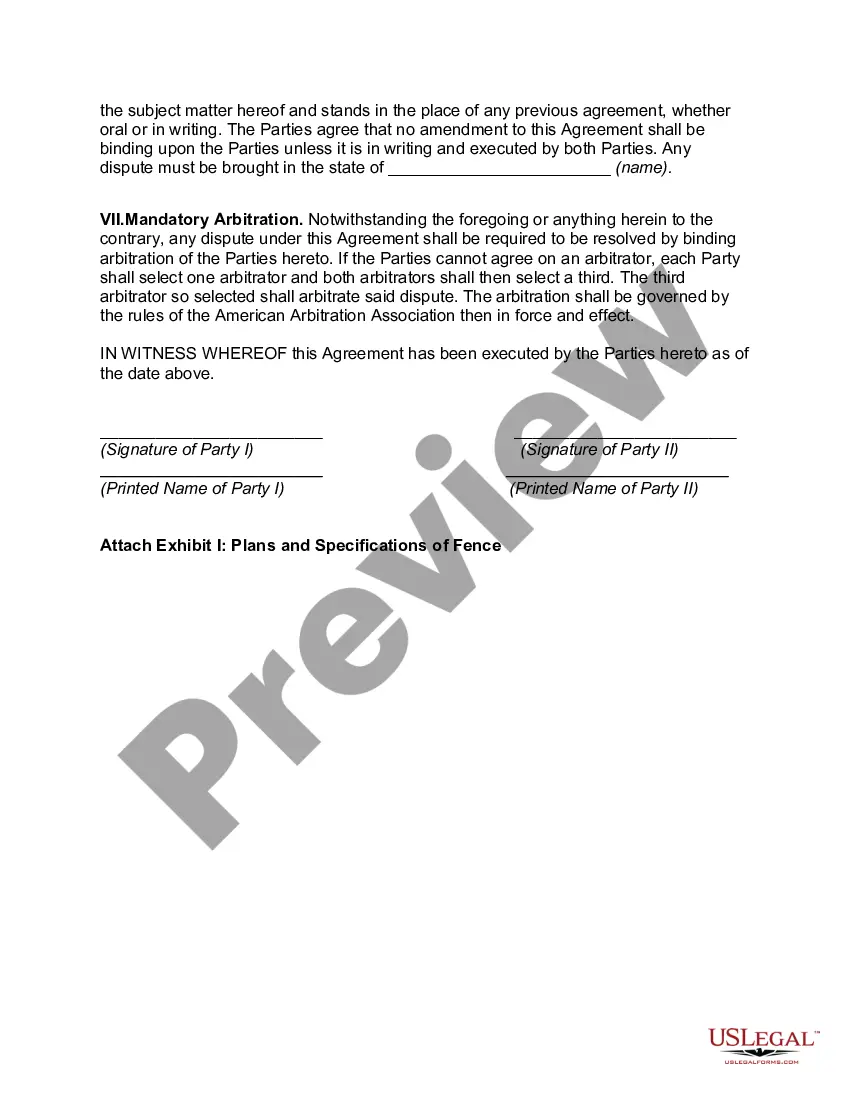

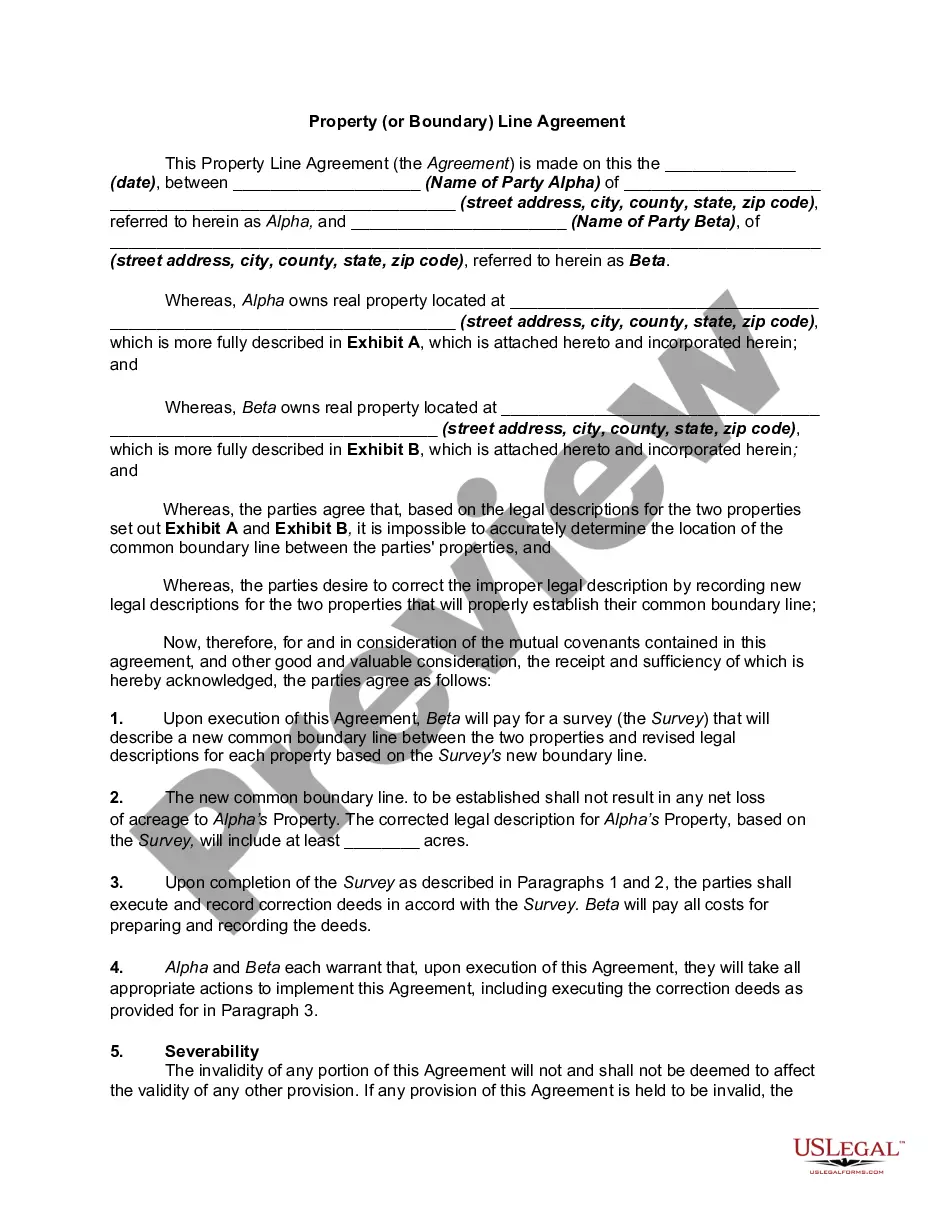
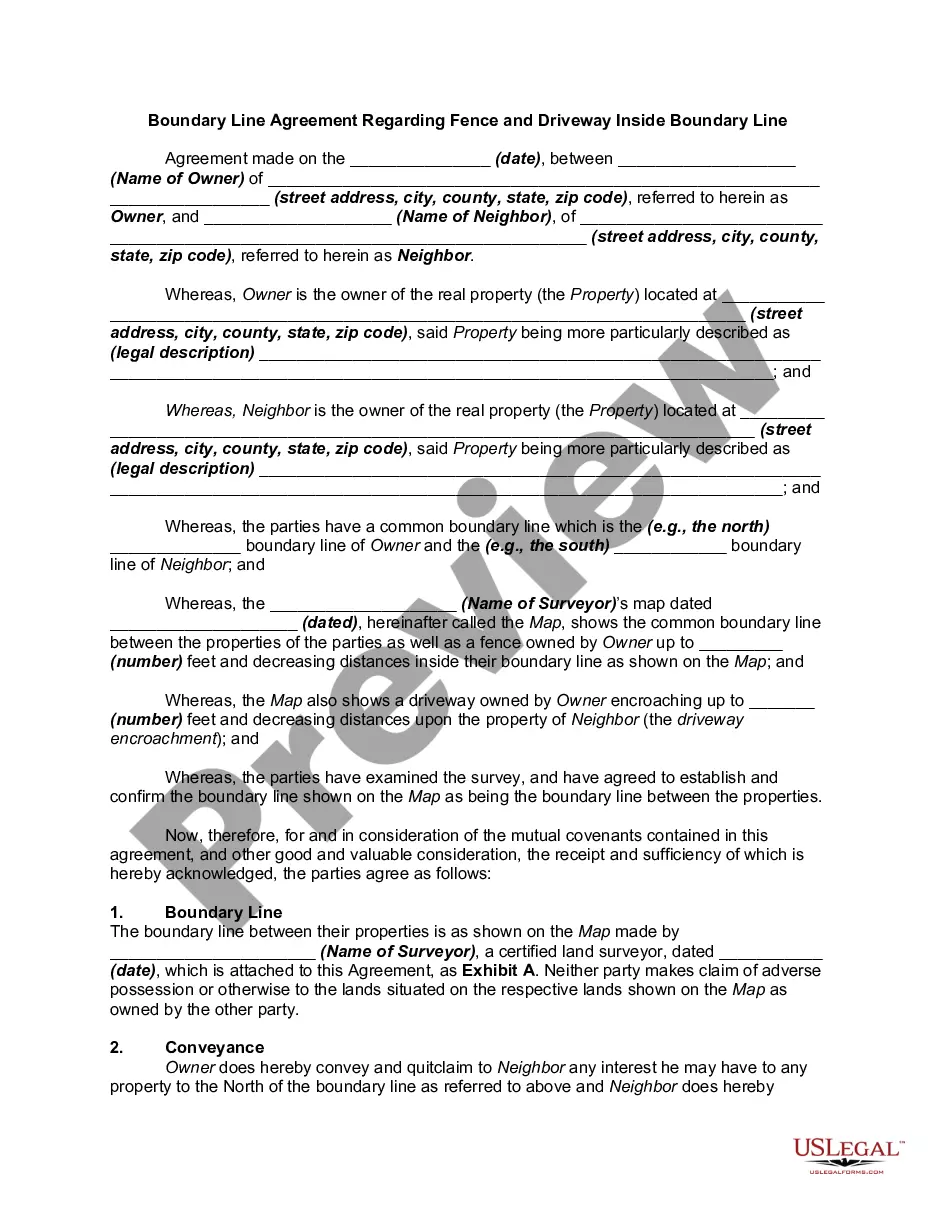
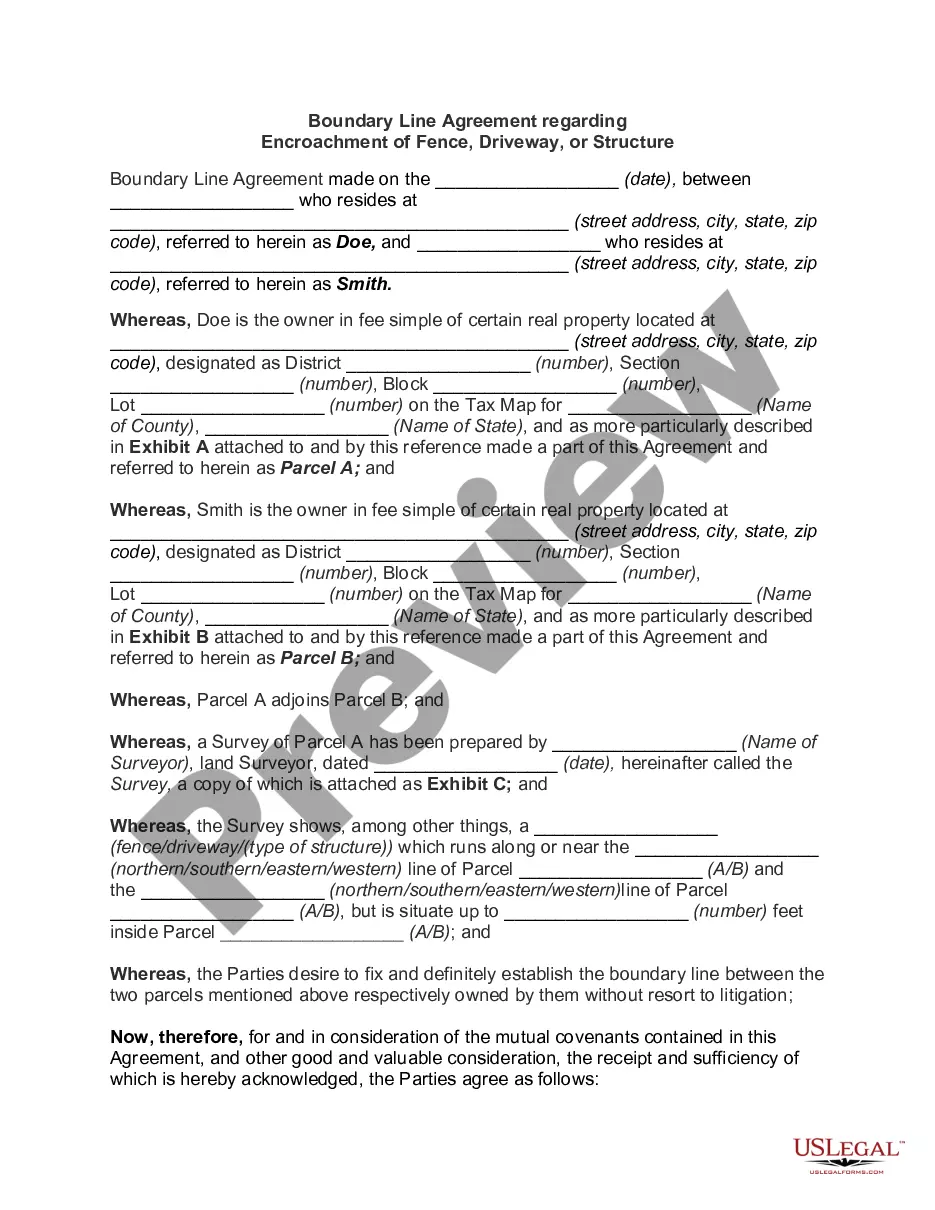
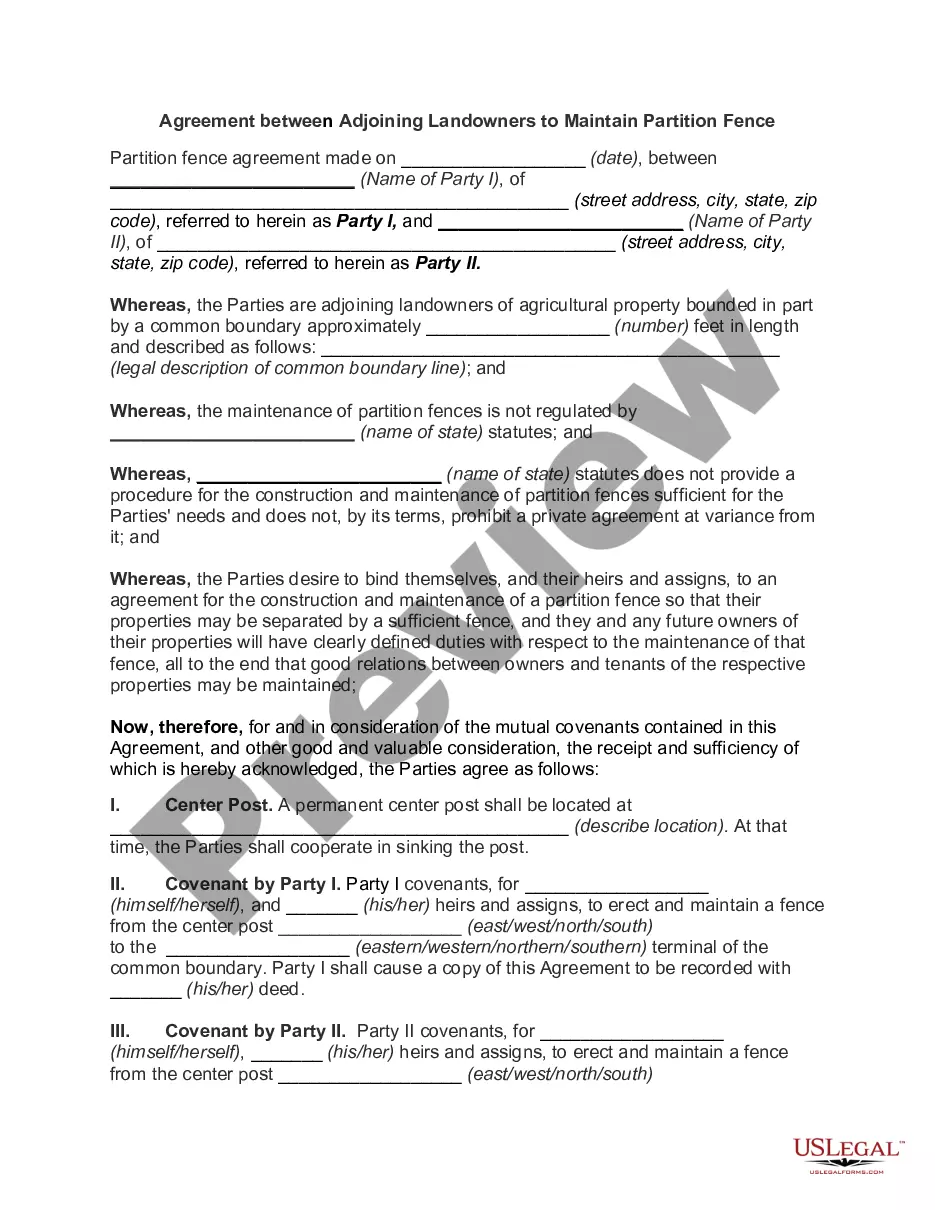




How to fill out Fence Line Agreement?
Finding the appropriate legal document template can be a challenge.
Certainly, there are numerous templates accessible online, but how do you locate the legal form you need.
Utilize the US Legal Forms website. The service offers a multitude of templates, including the Ohio Fence Line Agreement, which can be utilized for business and personal purposes.
You can browse the template using the Preview option and review the form description to confirm it suits your needs.
- All forms are reviewed by professionals and comply with both state and federal regulations.
- If you're already registered, Log Into your account and select the Download option to obtain the Ohio Fence Line Agreement.
- Use your account to access the legal documents you may have purchased previously.
- Visit the My documents section of your account to download another copy of the required document.
- If you are a new user of US Legal Forms, here are simple steps for you to follow.
- First, ensure you have selected the correct form for your city/state.
Form popularity
FAQ
A fence 6 feet or less in height does not require a building permit, but the Zoning Code regulates the placement of fences even if they are less than 6 feet tall under certain circumstances related to safe visibility for motor vehicle operation. 3.
How Close To The Property Line Can I Build? Fences are typically built between 2 and 8 inches from the line between properties. Some areas will allow the building of fences directly on the property line, but in this case, you'll have to cooperate with your neighbor and potentially share the cost of the fence.
Typically, fences are installed anywhere from 2 to 8 inches from a property line in most areas. Some areas might allow to go right up to a property line, especially if you live in an urban row house where every inch makes a difference!
Landowners must now allow access for a neighbor to build or maintain a line fence. The new law grants rights to a neighbor or his or her contractor to enter upon up to ten feet of the adjoining property to construct and maintain a line fence. The ten foot width runs the entire length of the fence.
Each land owner is responsible for the cost of building and maintaining the fence based on what is "fair." The more a landowner benefits from a fence, the more they must pay. For instance, one owner may keep livestock and need a fence, whereas the other owner has not animals of any type.
The building distance limit depends on the structure you intend on building. It usually ranges between five to 15 feet. It is important to communicate property boundaries with your neighbor before beginning any permanent or semi-permanent projects, due to the risk of township or county penalties.
In most cases, if you add an outdoor structure such as a fence, you need a permit. However, it specifically depends on the codes, zoning and regulations of where you live. In some cases, you may not need a permit but you must adhere to the local regulations regarding height limits and specific fence materials.
Customers having new fencing installed often ask us exactly where they should position their new fence. Getting it right avoids (potentially costly) disputes over encroachment in the future. As a rule of thumb, the outer face of the fence should be placed along the boundary. The posts should stand on your land.
Ohio's line fence law, also referred to as the partition fence law, establishes rights and obligations for fences that are placed on the division line between properties in Ohio's unincorporated areas. In times past, rural neighbors were typically farmers who had similar needs and uses for line fences.