Ohio Private Annuity Agreement
Description
Get your form ready online
Our built-in tools help you complete, sign, share, and store your documents in one place.
Make edits, fill in missing information, and update formatting in US Legal Forms—just like you would in MS Word.
Download a copy, print it, send it by email, or mail it via USPS—whatever works best for your next step.
Sign and collect signatures with our SignNow integration. Send to multiple recipients, set reminders, and more. Go Premium to unlock E-Sign.
If this form requires notarization, complete it online through a secure video call—no need to meet a notary in person or wait for an appointment.
We protect your documents and personal data by following strict security and privacy standards.

Make edits, fill in missing information, and update formatting in US Legal Forms—just like you would in MS Word.

Download a copy, print it, send it by email, or mail it via USPS—whatever works best for your next step.

Sign and collect signatures with our SignNow integration. Send to multiple recipients, set reminders, and more. Go Premium to unlock E-Sign.

If this form requires notarization, complete it online through a secure video call—no need to meet a notary in person or wait for an appointment.

We protect your documents and personal data by following strict security and privacy standards.
Looking for another form?

How to fill out Private Annuity Agreement?
Selecting the ideal legal document web template can be a challenge.
It's obvious that there is an assortment of web templates available online, but how can you find the legal document you need.
Utilize the US Legal Forms website.
If you are a new user of US Legal Forms, here are easy steps to follow: First, ensure you have chosen the correct form for your area/region. You can browse the form using the Preview option and review the form summary to confirm it is right for you. If the form does not fulfill your requirements, use the Search box to find the proper form. Once you are confident that the form is suitable, select the Get now button to obtain the form. Choose the pricing plan you prefer and enter the necessary information. Create your account and complete the purchase using your PayPal account or credit card. Select the file format and download the legal document web template to your device. Complete, edit, print, and sign the acquired Ohio Private Annuity Agreement. US Legal Forms is the largest repository of legal forms where you can find numerous document templates. Use the service to obtain professionally crafted paperwork that adheres to state requirements.
- The service offers a vast collection of templates, including the Ohio Private Annuity Agreement, suitable for both business and personal needs.
- All forms are reviewed by experts and comply with federal and state regulations.
- If you are already registered, Log In to your account and then click the Download button to obtain the Ohio Private Annuity Agreement.
- Use your account to browse the legal forms you have purchased previously.
- Visit the My documents tab in your account to download another copy of the documents you need.
Form popularity
FAQ
The payout from a $100,000 annuity will vary based on several factors, including the duration of payments and the current interest rates. Generally, an annuity can provide monthly payments ranging from a few hundred to several thousand dollars. To get a clear estimate, consider using tools available on our platform that help calculate potential monthly payouts based on your specific Ohio Private Annuity Agreement.
Insuring the life of the transferee is an available option; however, any connection of the life insurance policy to the private annuity will be deemed as a secured transaction.
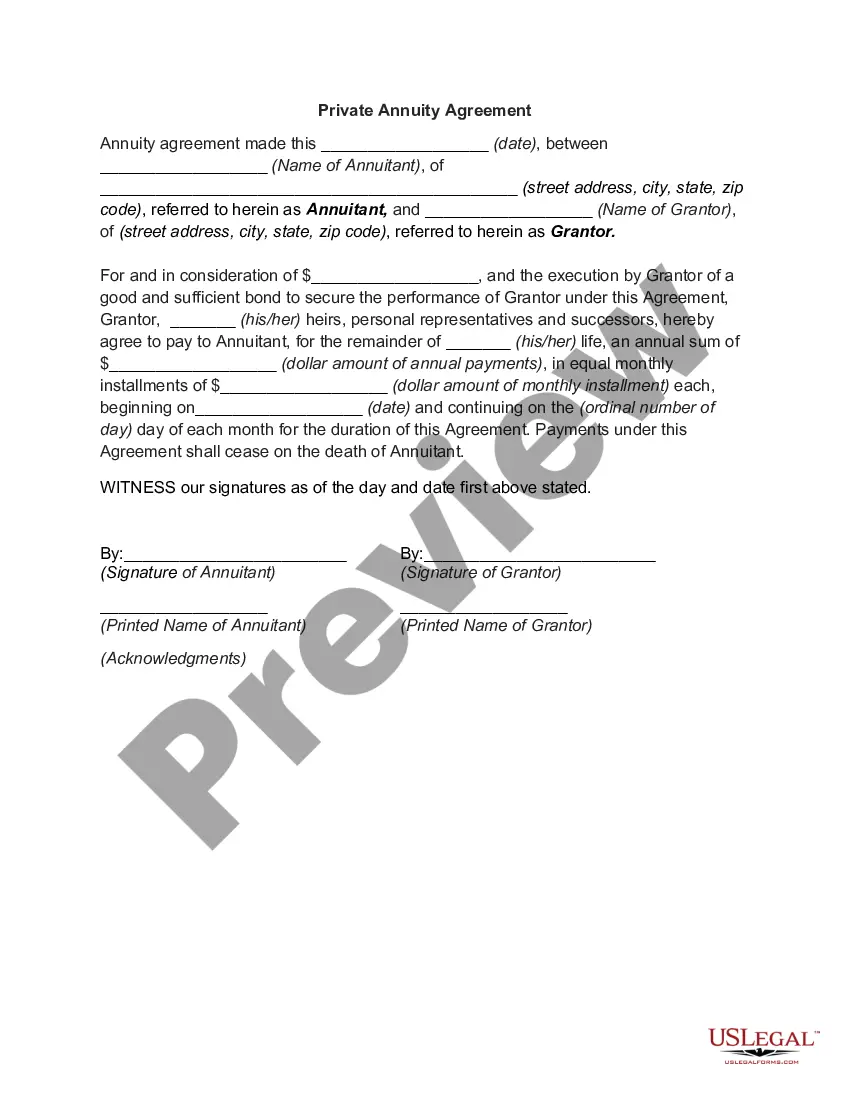
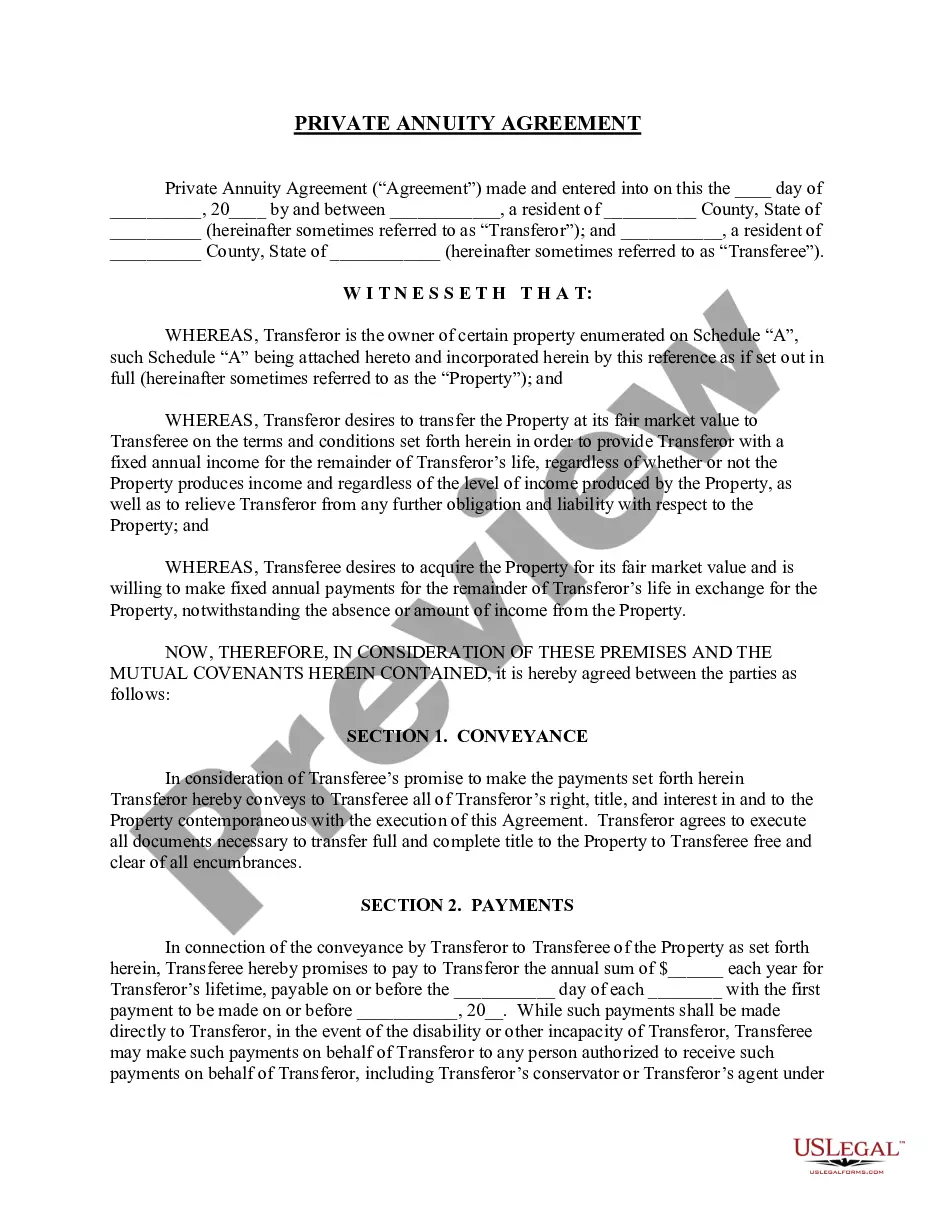
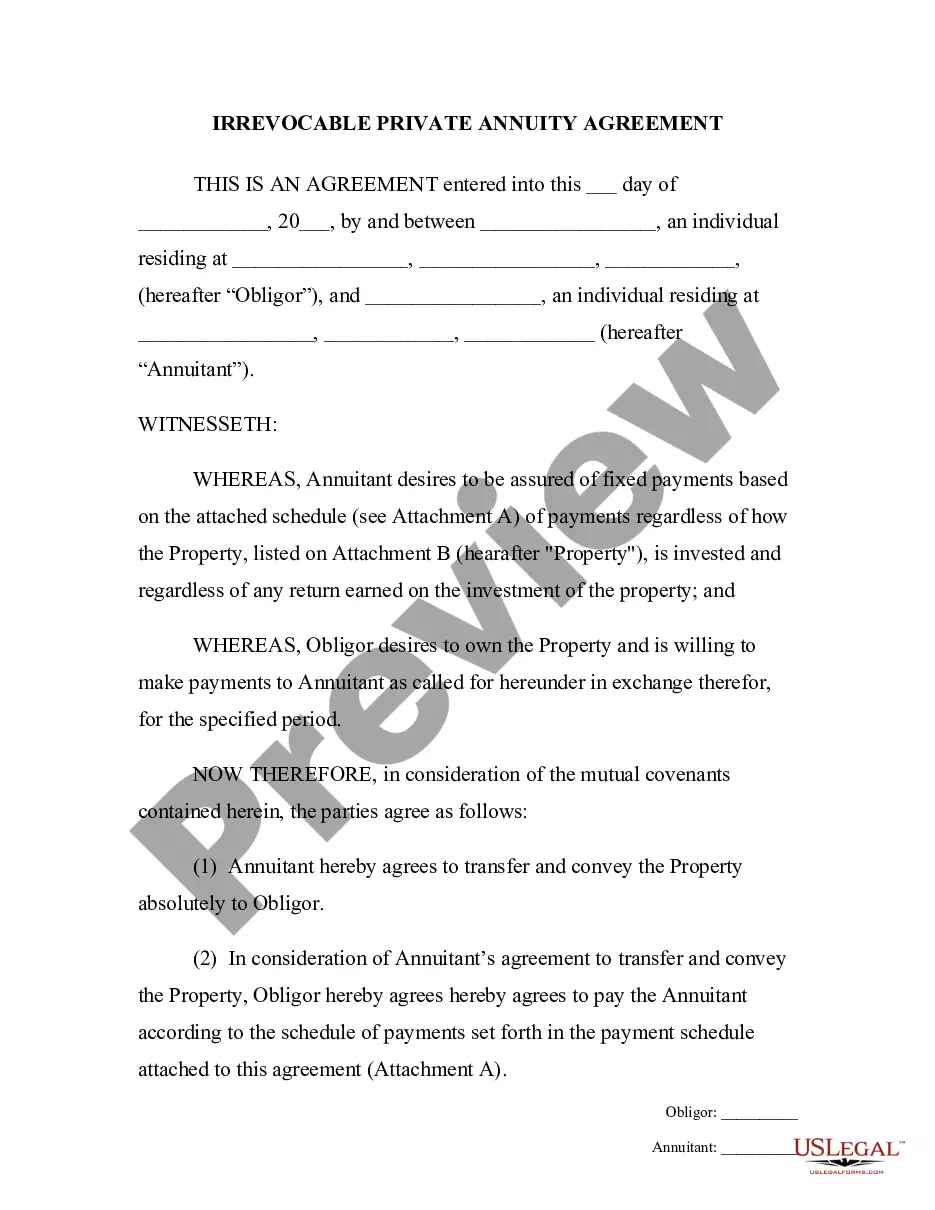
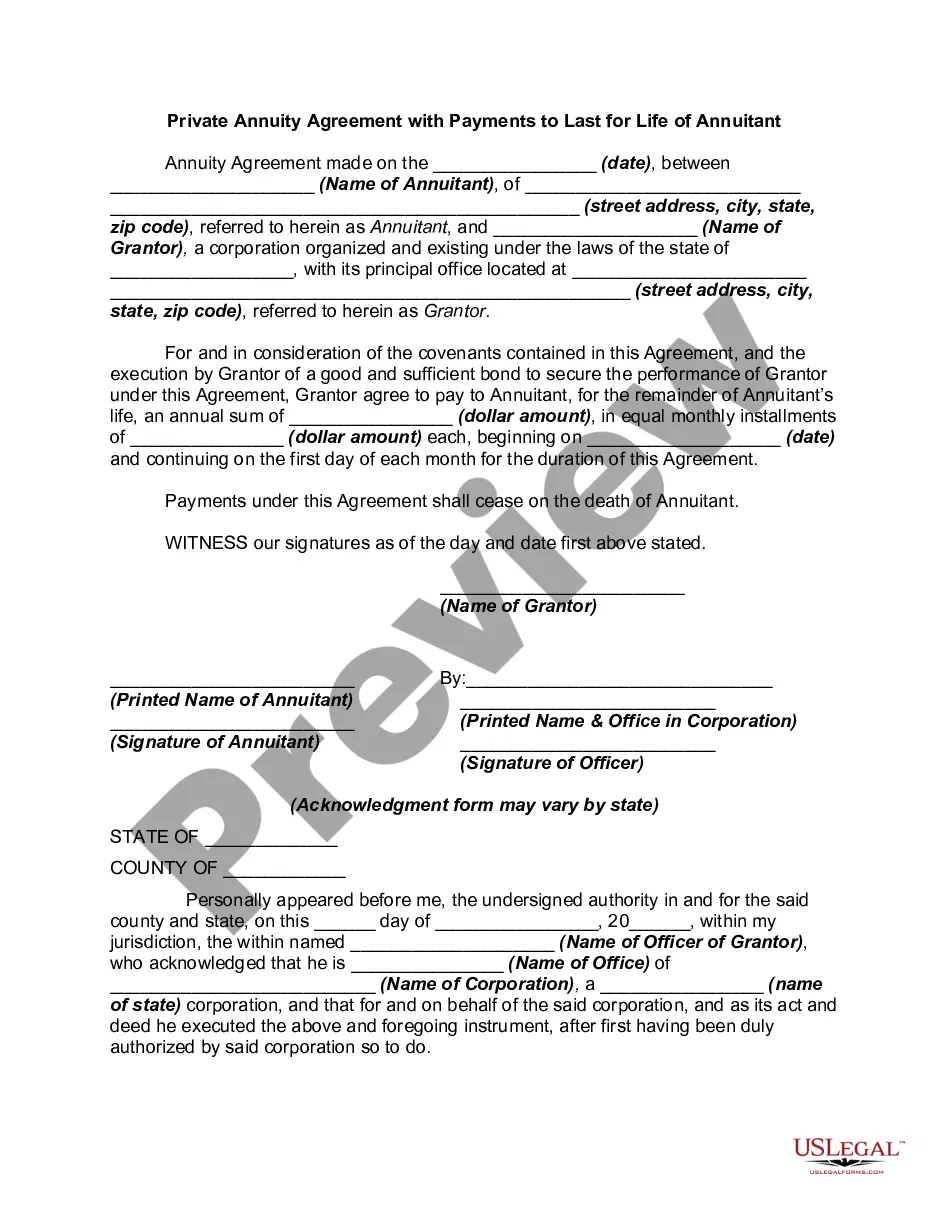
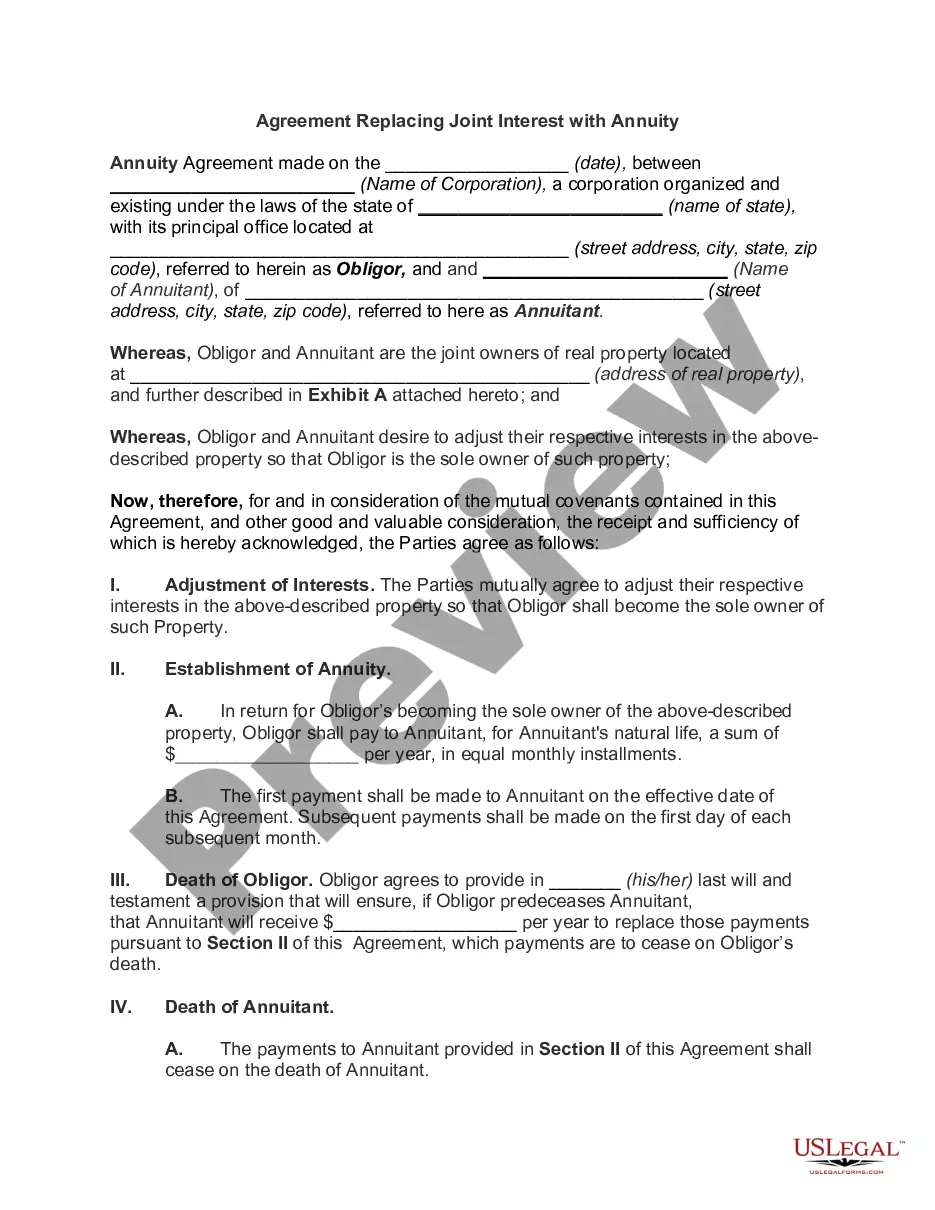
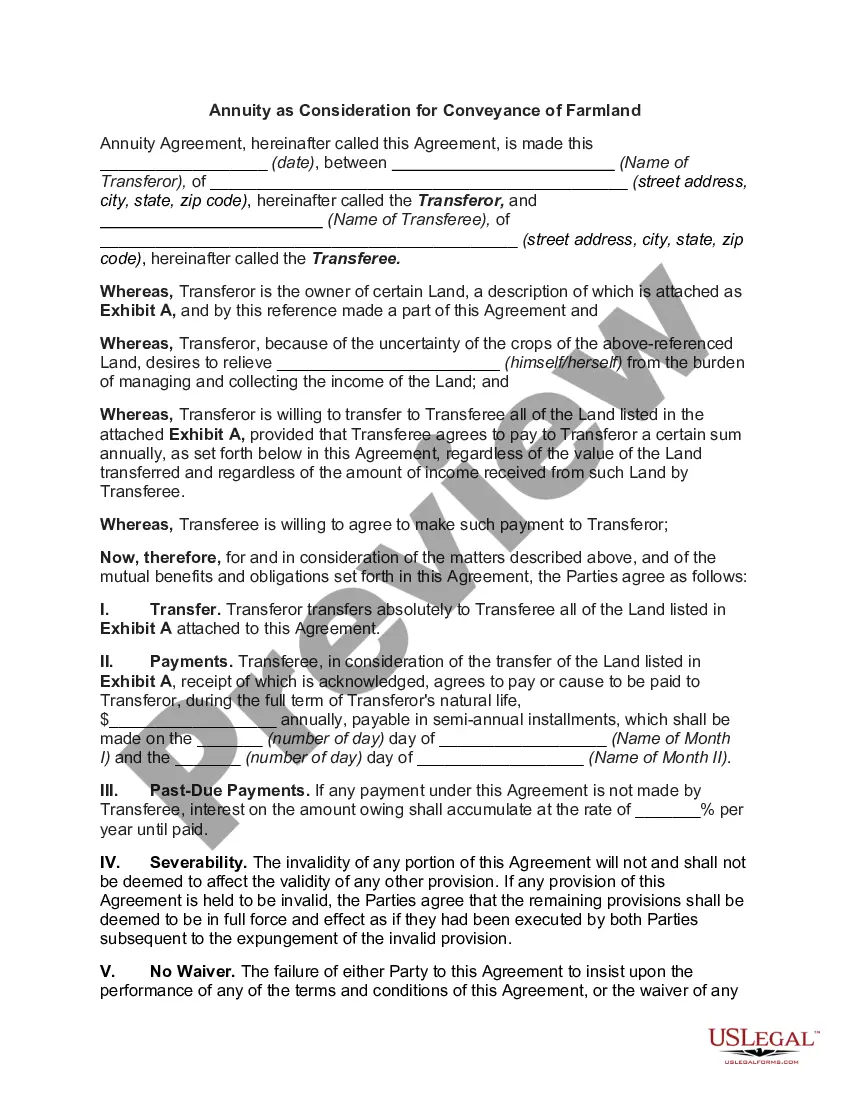
A private annuity is a special agreement in which an individual (annuitant) transfers property to an obligor. The obligor agrees to make payments to the annuitant according to an agreed-upon schedule in exchange for the property transfer.
The annuity contract owner is the person who owns the contract, pays the premiums, and has various rights, including the power to choose a beneficiary to receive any survivor payments. The owner may take money out of the contract at any time and give it to someone else, sell it, or surrender it.
For estate tax purposes, the value of property sold for a private annuity is removed from the Annuitant's gross estate.
Each annuity payment is treated as part tax-free return of basis, part capital gain, and part ordinary income until your entire basis is recovered. Once your basis is recovered, the entire annuity is treated as part capital gain and part ordinary income until you have surpassed your life expectancy.