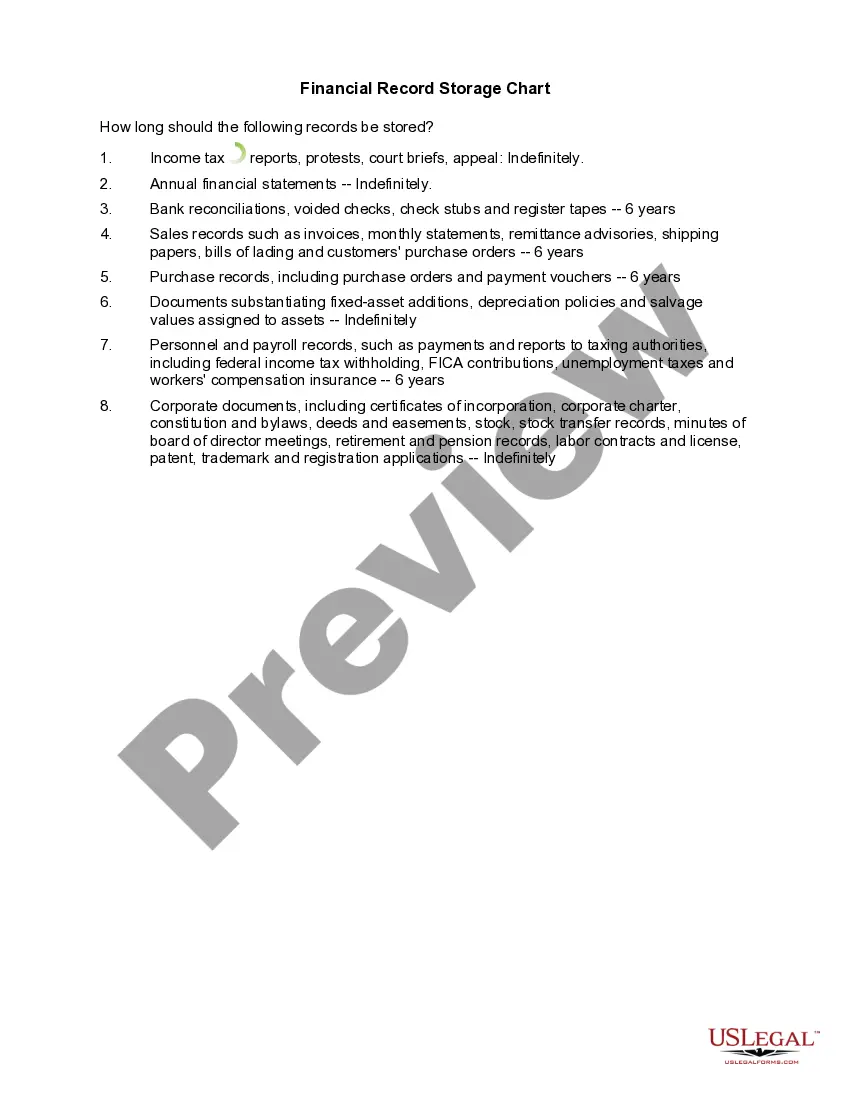
Ohio Financial Record Storage Chart
Description
Get your form ready online
Our built-in tools help you complete, sign, share, and store your documents in one place.
Make edits, fill in missing information, and update formatting in US Legal Forms—just like you would in MS Word.
Download a copy, print it, send it by email, or mail it via USPS—whatever works best for your next step.
Sign and collect signatures with our SignNow integration. Send to multiple recipients, set reminders, and more. Go Premium to unlock E-Sign.
If this form requires notarization, complete it online through a secure video call—no need to meet a notary in person or wait for an appointment.
We protect your documents and personal data by following strict security and privacy standards.

Make edits, fill in missing information, and update formatting in US Legal Forms—just like you would in MS Word.

Download a copy, print it, send it by email, or mail it via USPS—whatever works best for your next step.

Sign and collect signatures with our SignNow integration. Send to multiple recipients, set reminders, and more. Go Premium to unlock E-Sign.

If this form requires notarization, complete it online through a secure video call—no need to meet a notary in person or wait for an appointment.

We protect your documents and personal data by following strict security and privacy standards.
Looking for another form?






How to fill out Financial Record Storage Chart?
Are you presently in a circumstance where you require documents for both your company or particular activities nearly every day.
There are numerous legal document templates accessible online, but finding reliable ones can be challenging.
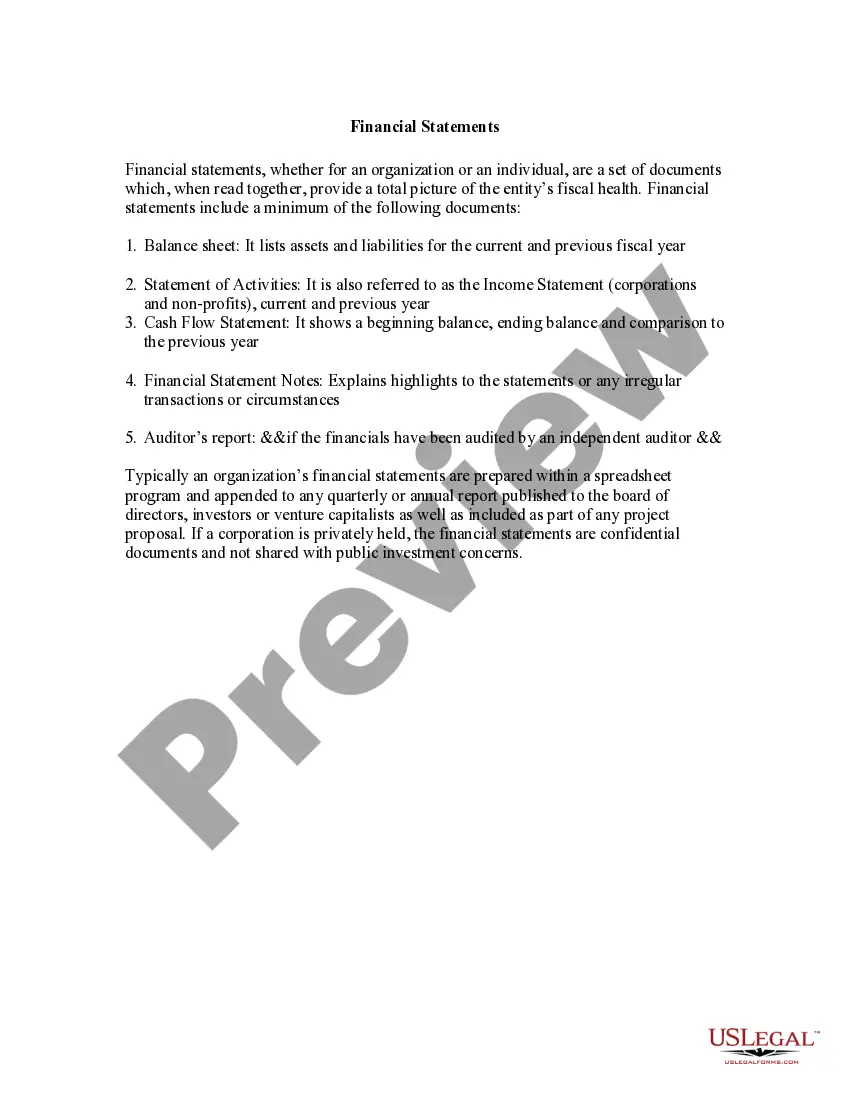
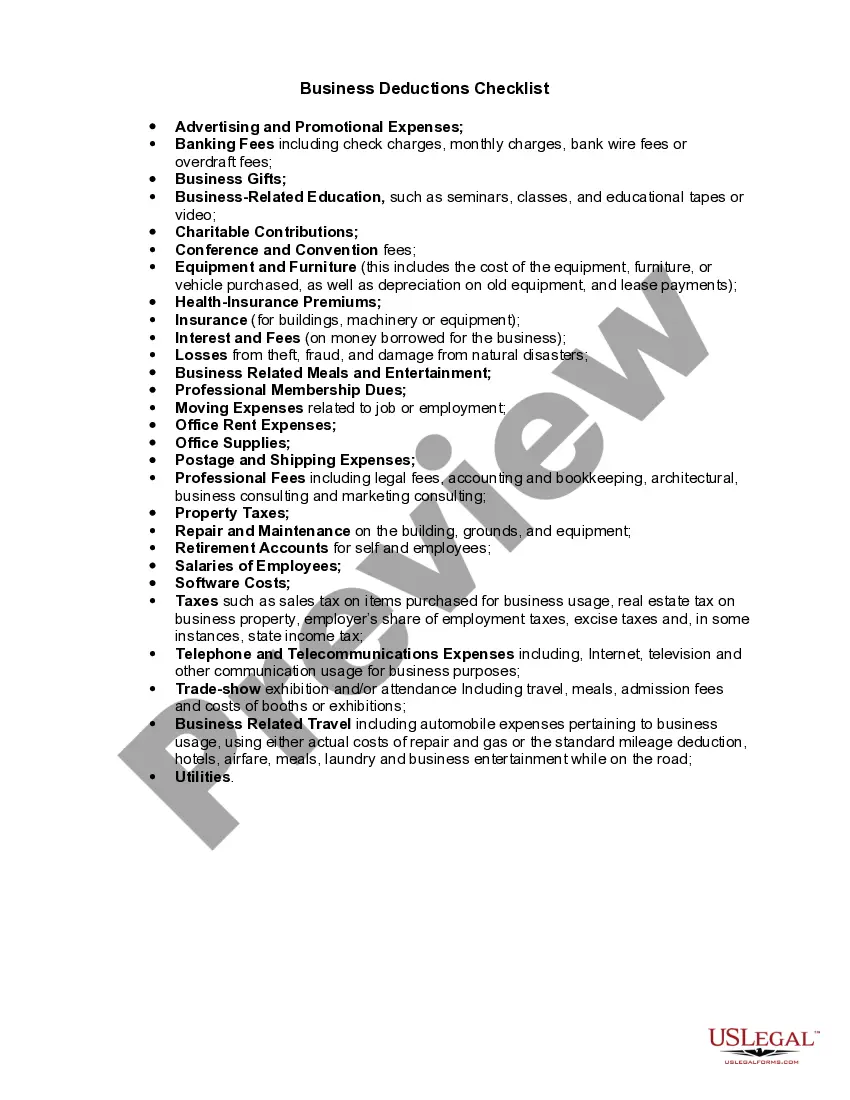
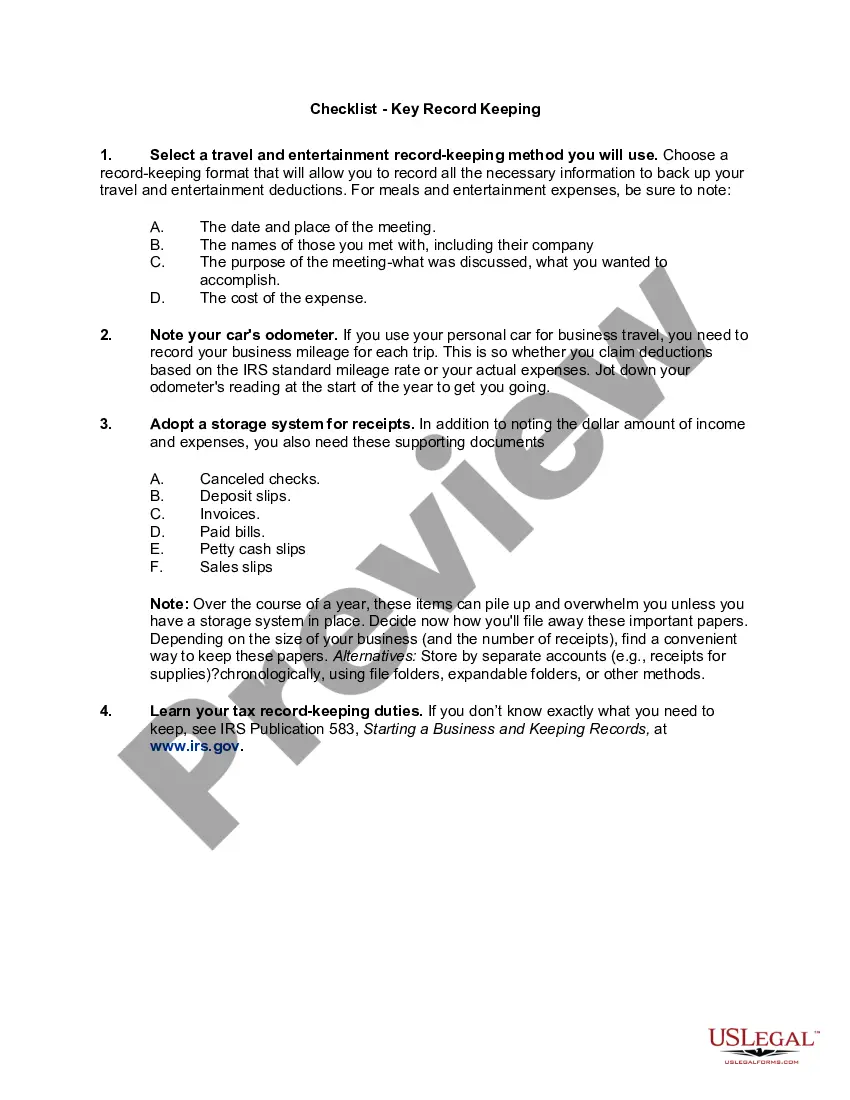
US Legal Forms provides a vast collection of form templates, including the Ohio Financial Record Storage Chart, designed to comply with state and federal regulations.
Upon finding the right form, click Get now.
Select the pricing plan you prefer, complete the necessary information to create your account, and pay for your order using PayPal or Visa or Mastercard.
- If you are already familiar with the US Legal Forms website and possess an account, simply Log In.
- Then, you can download the Ohio Financial Record Storage Chart template.
- If you do not have an account and wish to start using US Legal Forms, follow these instructions.
- Obtain the form you need and ensure it is for the correct city/state.
- Utilize the Review button to inspect the form.
- Read the description to confirm that you have selected the right form.
- If the form does not match your requirements, use the Search area to find the form that fits your needs.
Form popularity
FAQ
In a business setting, the responsibility for keeping financial records often falls to the accounting department or the designated financial manager. These individuals ensure the accuracy and integrity of financial documents and manage the documentation process. It is crucial for businesses to have reliable systems in place for record keeping to avoid penalties. The Ohio Financial Record Storage Chart can help you understand the requirements for maintaining these records.
Financial record keeping is typically the responsibility of the accounting department or financial officer within an organization. Business owners and managers may also take an active role in overseeing record keeping to ensure compliance with legal standards. Proper financial record keeping is essential for making informed decisions and maintaining transparency. The Ohio Financial Record Storage Chart can provide useful insights into required practices.
The responsibility for storing financial records usually lies with the individual or organization that generates the documents. This may include business owners, accountants, or designated administrative staff. It is important to utilize secure storage methods to protect sensitive information from unauthorized access. Referencing the Ohio Financial Record Storage Chart can guide your storage practices effectively.
Maintaining financial records is primarily the duty of business owners, financial officers, and designated record keepers. These individuals must ensure that records are accurate, up-to-date, and accessible when needed. Effective management of financial records can facilitate better decision-making and compliance with legal obligations. Relying on tools like the Ohio Financial Record Storage Chart can assist you in your record-keeping duties.
In Ohio, tax records should generally be kept for a minimum of four years from the date of filing. This retention period is in line with the statute of limitations. However, if you have unreported income or fraudulent activity is suspected, you may need to keep records for longer. Utilizing the Ohio Financial Record Storage Chart ensures you are following state-specific guidelines.
The responsibility for storing financial documents typically falls on the entity or individual who generated the documents. This means businesses, organizations, and individuals must take accountability for their financial records. Proper organization and secure storage are crucial for meeting legal requirements and protecting sensitive information. The Ohio Financial Record Storage Chart can guide you on best practices for storage.
The guidelines for financial document retention vary based on the type of documents and jurisdiction. In Ohio, the Ohio Financial Record Storage Chart serves as a helpful reference for determining how long to keep specific types of financial documents. Generally, it is advisable to retain records for a minimum of three years, although some documents may require longer retention periods. Using a reliable service like US Legal Forms can help you stay informed and compliant.
For seven years, employers should maintain records that include payroll documents, time sheets, and any documentation related to grievances or complaints. Keeping these records helps safeguard against future disputes. The Ohio Financial Record Storage Chart serves as a helpful resource, guiding employers on the critical records to retain for this duration.
Yes, HR typically retains certain employee records beyond the six-year mark, especially when it comes to records related to discrimination claims or benefits. These documents are vital for protecting both the employee's and the employer's legal rights. The Ohio Financial Record Storage Chart can help HR departments decide what to keep, ensuring compliance and proper management of sensitive information.
The Ohio employee record retention law governs how long employers must keep employee records, which often varies depending on the type of document. Generally, payroll records need to be maintained for three years, while some records may require longer retention periods. By referring to the Ohio Financial Record Storage Chart, employers can ensure compliance with local laws and protect their business interests.