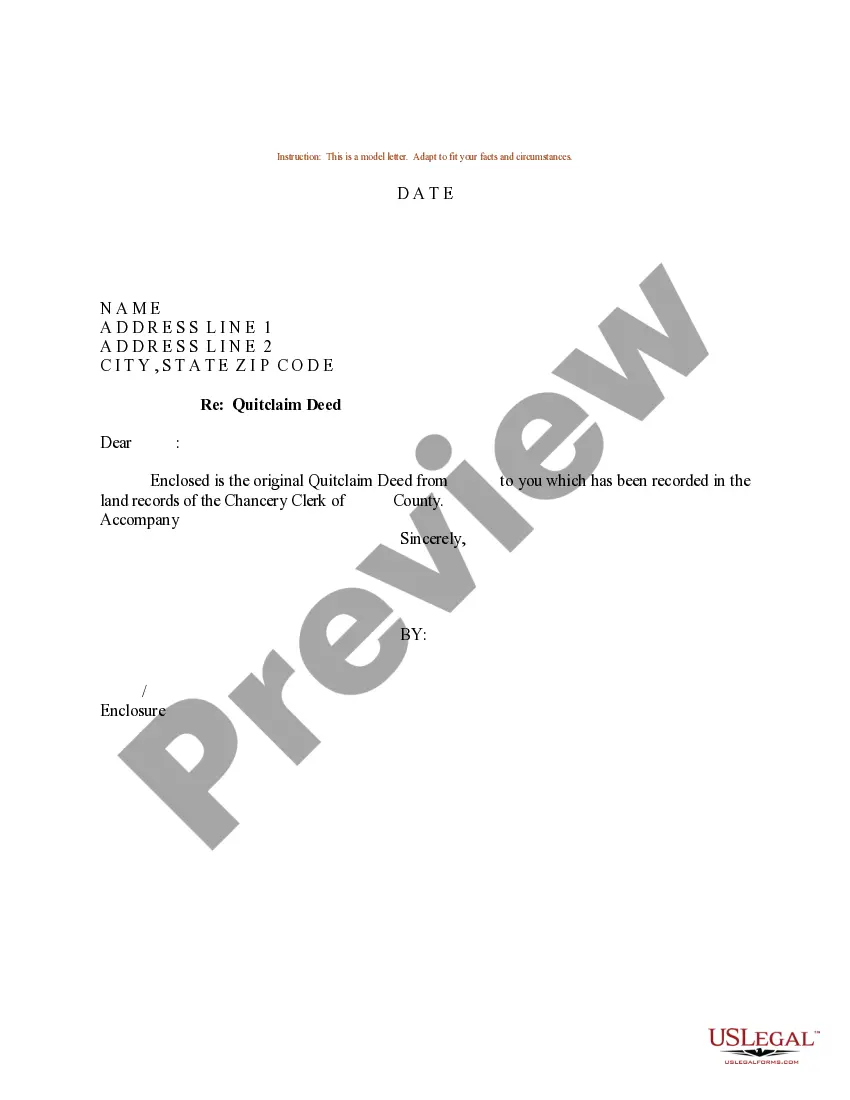
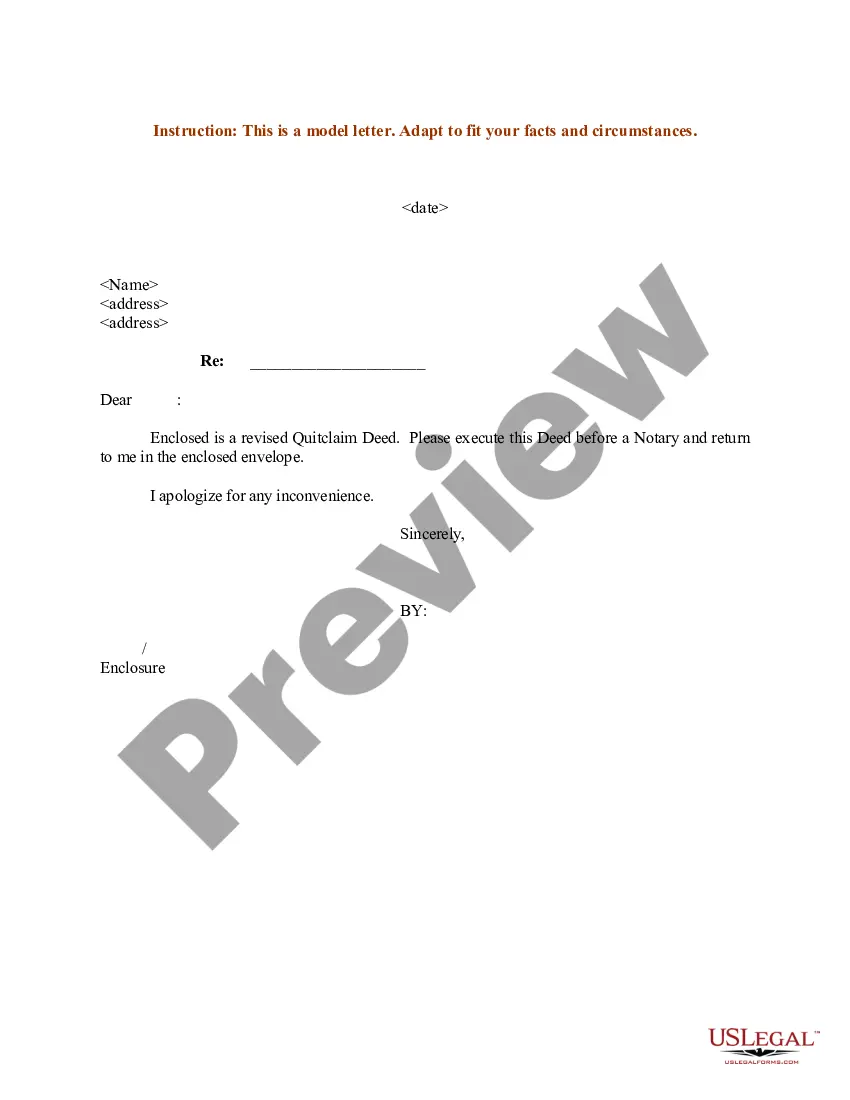
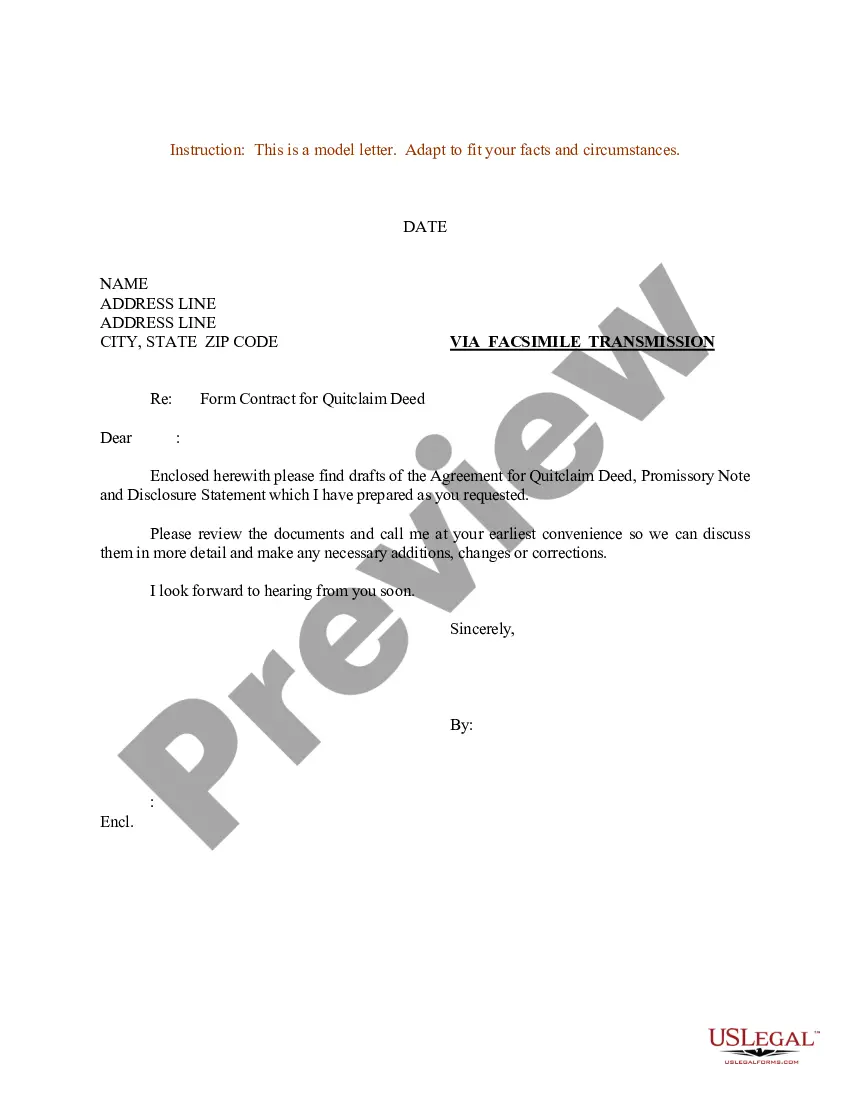
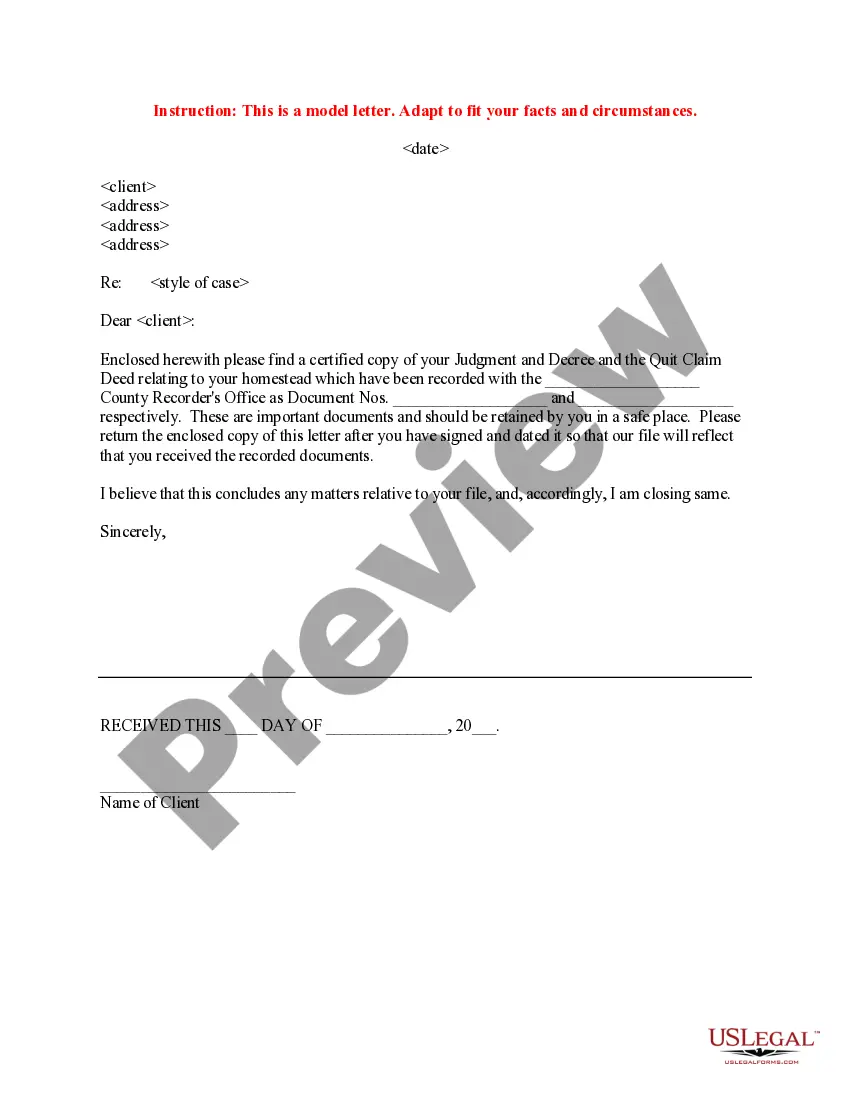
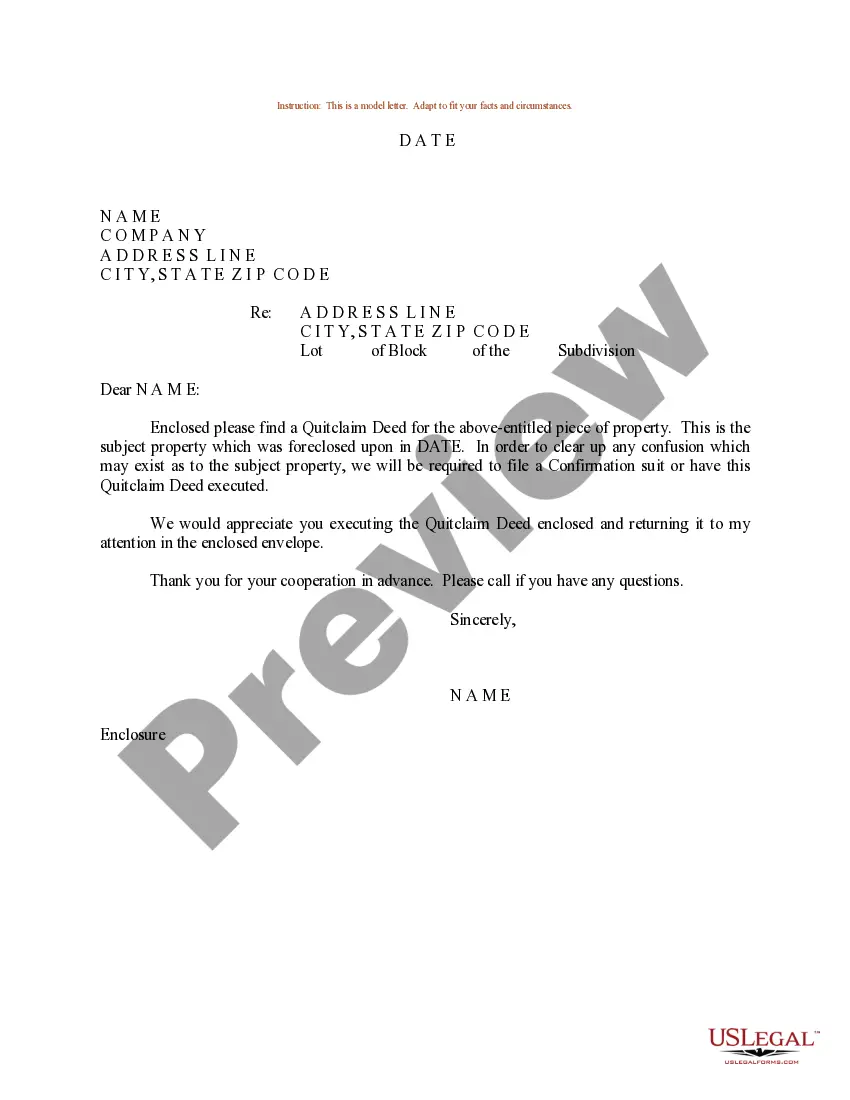
Ohio Sample Letter for Quitclaim Deed
Description
Get your form ready online
Our built-in tools help you complete, sign, share, and store your documents in one place.
Make edits, fill in missing information, and update formatting in US Legal Forms—just like you would in MS Word.
Download a copy, print it, send it by email, or mail it via USPS—whatever works best for your next step.
Sign and collect signatures with our SignNow integration. Send to multiple recipients, set reminders, and more. Go Premium to unlock E-Sign.
If this form requires notarization, complete it online through a secure video call—no need to meet a notary in person or wait for an appointment.
We protect your documents and personal data by following strict security and privacy standards.

Make edits, fill in missing information, and update formatting in US Legal Forms—just like you would in MS Word.

Download a copy, print it, send it by email, or mail it via USPS—whatever works best for your next step.

Sign and collect signatures with our SignNow integration. Send to multiple recipients, set reminders, and more. Go Premium to unlock E-Sign.

If this form requires notarization, complete it online through a secure video call—no need to meet a notary in person or wait for an appointment.

We protect your documents and personal data by following strict security and privacy standards.
Looking for another form?



How to fill out Sample Letter For Quitclaim Deed?
You may spend hrs on the Internet trying to find the authorized document web template that suits the federal and state specifications you require. US Legal Forms provides 1000s of authorized varieties which can be evaluated by professionals. You can actually down load or print out the Ohio Sample Letter for Quitclaim Deed from my support.
If you already possess a US Legal Forms profile, you can log in and click the Obtain key. Afterward, you can complete, edit, print out, or sign the Ohio Sample Letter for Quitclaim Deed. Every single authorized document web template you purchase is your own property eternally. To have yet another duplicate of any purchased form, proceed to the My Forms tab and click the related key.
If you work with the US Legal Forms web site for the first time, keep to the easy recommendations beneath:
- Initial, make certain you have chosen the best document web template for your state/town of your choosing. Read the form description to make sure you have selected the correct form. If readily available, take advantage of the Review key to check through the document web template as well.
- If you want to find yet another model of your form, take advantage of the Research field to find the web template that fits your needs and specifications.
- Once you have located the web template you need, just click Get now to carry on.
- Choose the prices program you need, type your credentials, and register for a merchant account on US Legal Forms.
- Complete the financial transaction. You should use your Visa or Mastercard or PayPal profile to cover the authorized form.
- Choose the file format of your document and down load it to the gadget.
- Make alterations to the document if possible. You may complete, edit and sign and print out Ohio Sample Letter for Quitclaim Deed.
Obtain and print out 1000s of document themes while using US Legal Forms Internet site, which offers the most important selection of authorized varieties. Use professional and status-particular themes to deal with your company or personal needs.
Form popularity
FAQ
To transfer title, you must deliver the executed and acknowledged deed to the grantee. This means that you must give up control over the deed during your lifetime and intend to transfer title to the grantee. To complete the transfer, the grantee must accept the delivered deed.
To change, add or remove a name on your deed a new deed needs to be recorded reflecting the change. Many people think they can come into the office and change the present recorded deed with a form, but that is not the case. Once a deed is recorded it cannot be changed.
If you want to obtain a copy of the deed to your home, contact your local county recorder. In Ohio, county recorders are responsible for maintaining land records and making them accessible to the public. The Ohio Revised Code establishes fees recorders may charge for various services.
Record the deed at the recorder's office in the county where the property is located for a valid transfer. Contact the same office to confirm accepted forms of payment. A Conveyance Fee Statement (Form DTE 100, or DTE 100EX if claiming an exemption) must be signed by the grantee and filed with the deed.
Deed not recognized in Ohio: Ohio does not recognize joint tenancy with right of survivorship?a common-law form of joint ownership under which a surviving co-owner automatically receives a deceased co-owner's interest.
A quitclaim deed is a legal instrument which is used to transfer interest in real property. The entity transferring its interest is called the grantor, and when the quitclaim deed is properly completed and executed, it transfers any interest the grantor has in the property to a recipient, called the grantee.
Grantor must sign deed in front of a notary, or before a judge or clerk of a court of record in this state, or a county auditor, county engineer, or mayor. An instrument conveying real property shall not be considered defective because the dower interest of the spouse of any grantor was not specifically released.
The conveyance fee consists of two parts. A statewide mandatory tax of 1 mill ($1 per $1,000 dollars of the value of property sold or transferred) applies in all 88 of Ohio's coun ties. In addition, counties may also impose a permissive real property transfer tax of up to 3 additional mills.
In Ohio, only an attorney can draft a deed for others. All title companies must use an attorney to draft deeds. Many clients ask why they need to engage a lawyer to draft a deed if they can download a form off the Internet.
An attorney licensed to practice law in Ohio must prepare deeds, powers of attorney, and other instruments that are to be recorded. One exception is that a party to the transaction may prepare an instrument in which they are a party.