Ohio Personal Monthly Budget Worksheet
Description
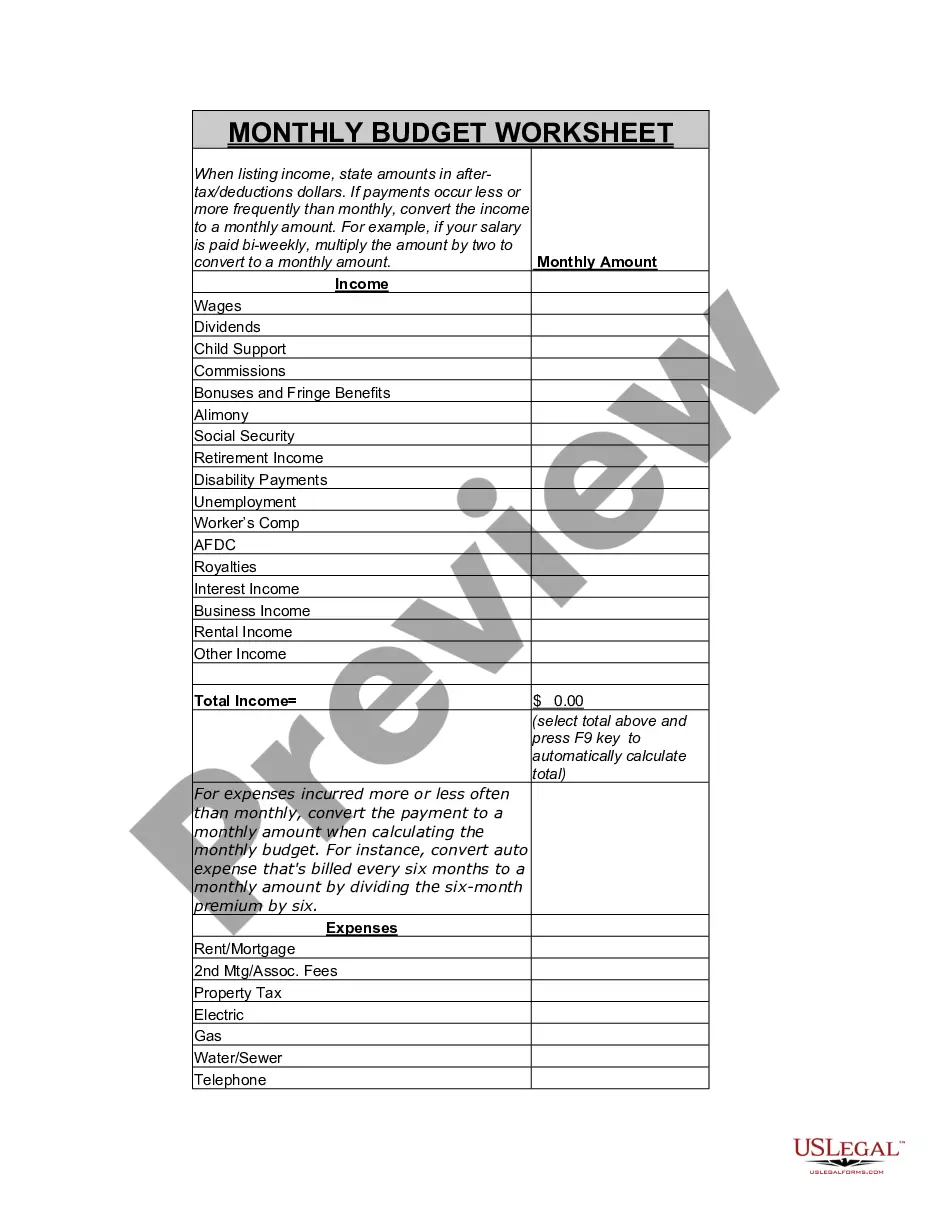
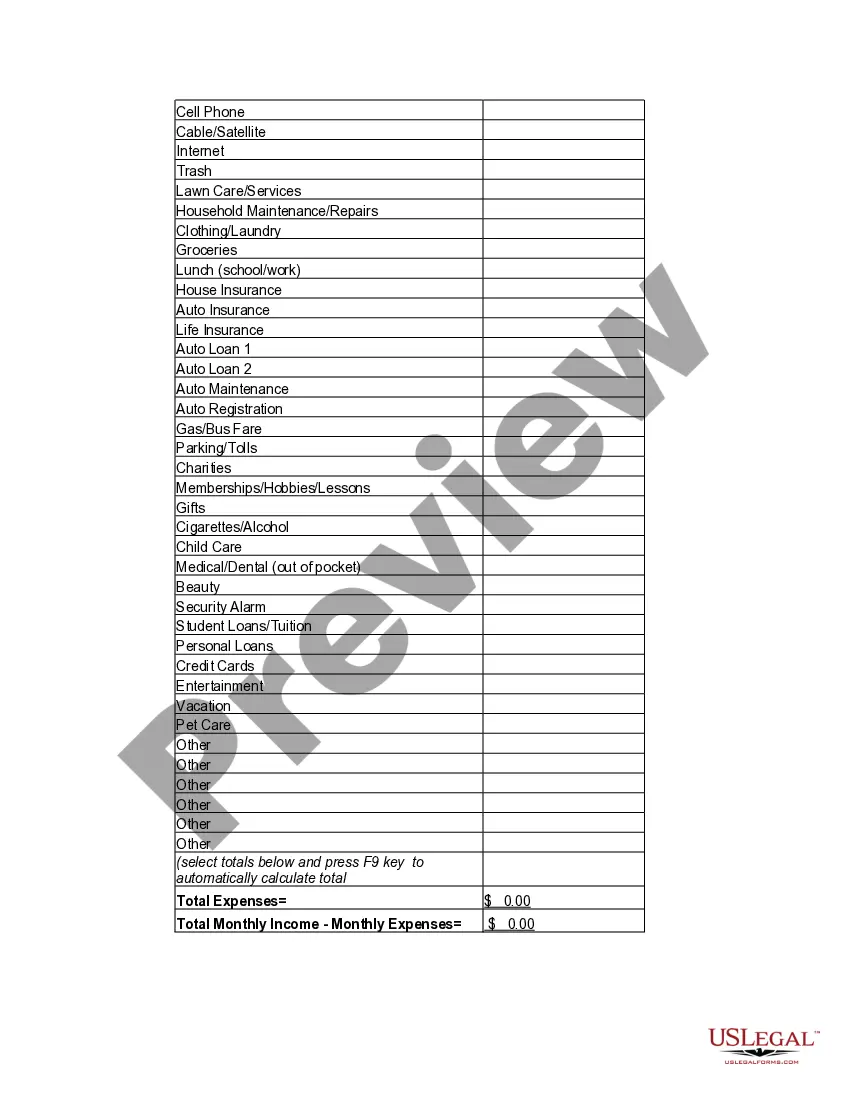
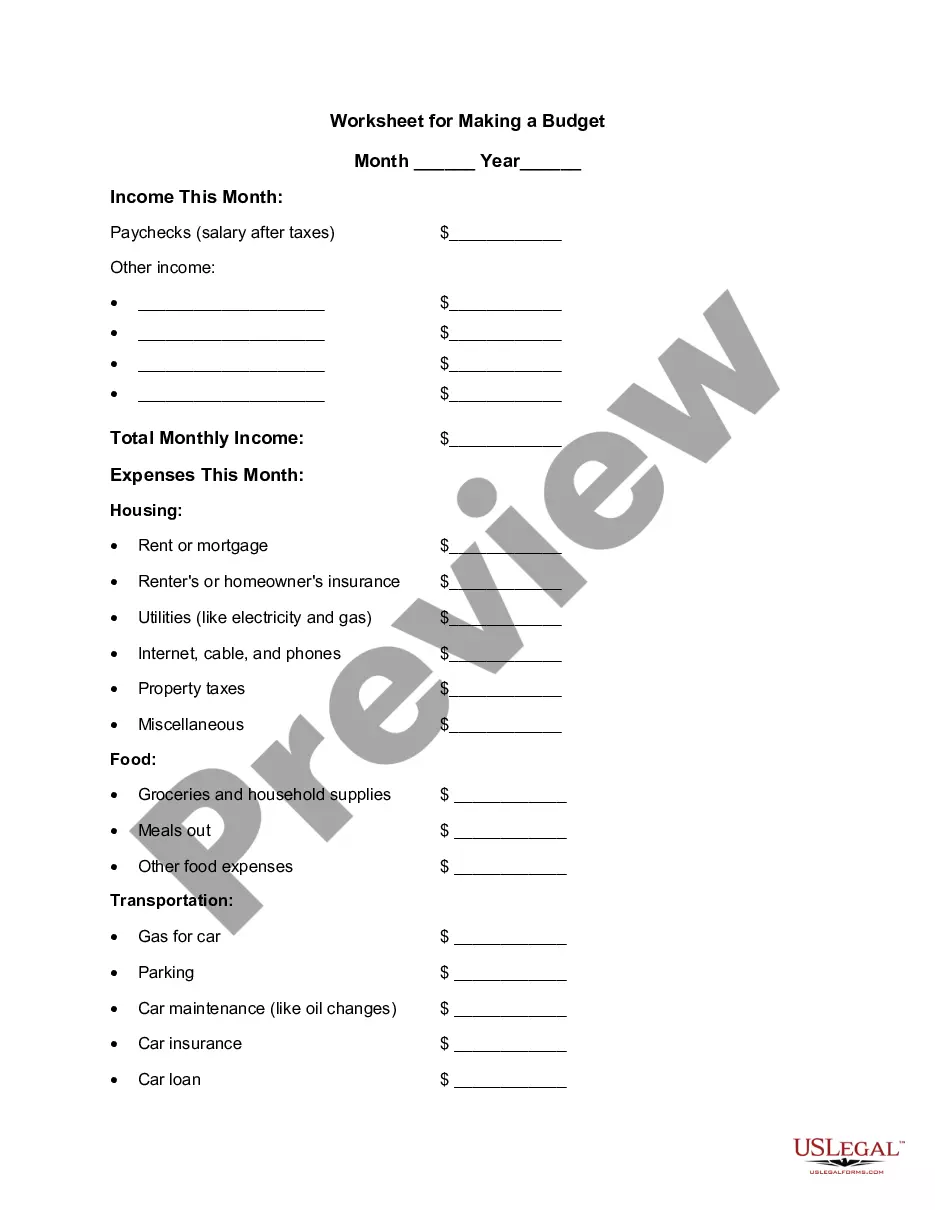
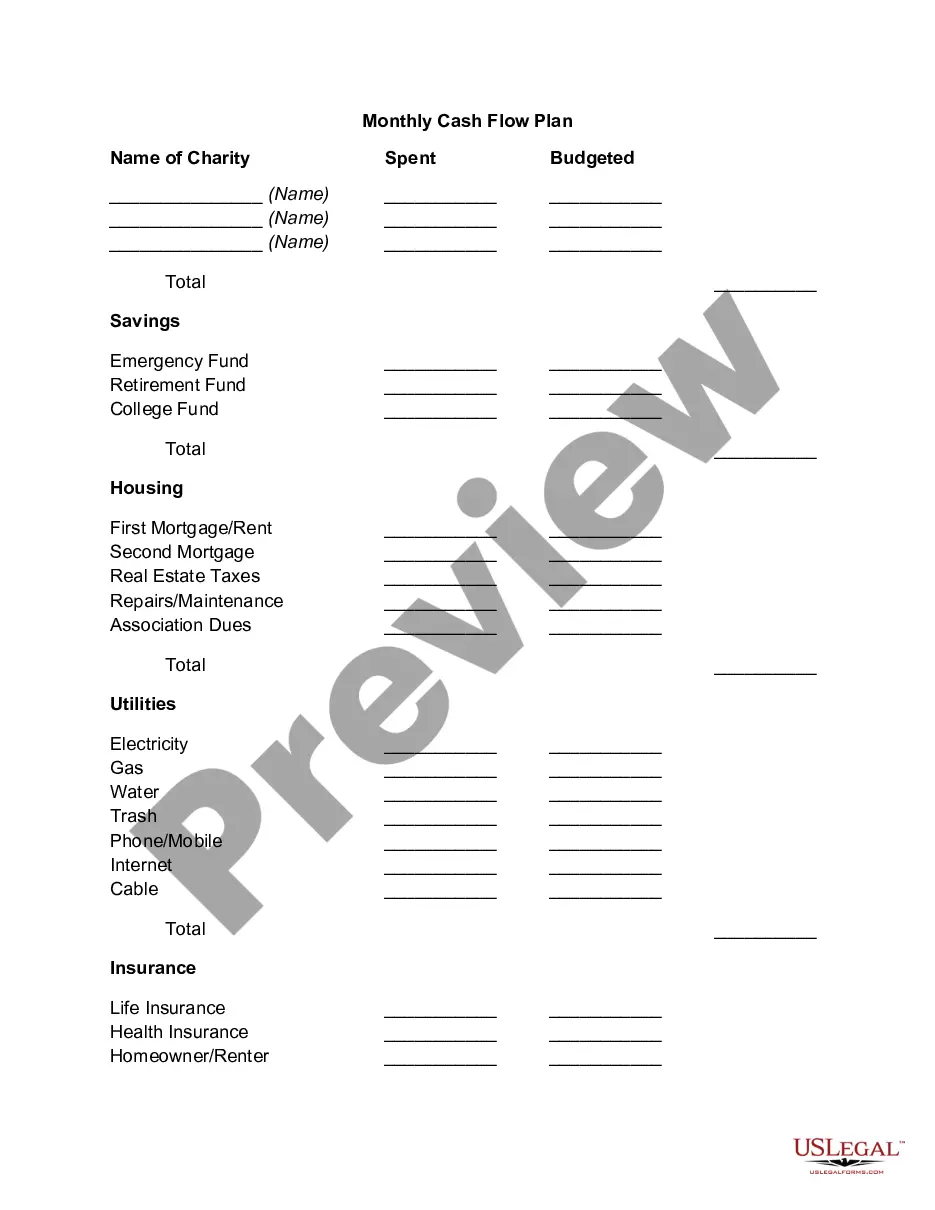


How to fill out Personal Monthly Budget Worksheet?
If you require to complete, acquire, or create legal document templates, utilize US Legal Forms, the largest collection of legal forms available online.
Utilize the site's straightforward and convenient search to obtain the documents you need.
A variety of templates for business and personal purposes are sorted by categories and jurisdictions, or keywords. Utilize US Legal Forms to access the Ohio Personal Monthly Budget Worksheet in just a few clicks.
Every legal document template you purchase is yours indefinitely. You will have access to every form you downloaded in your account. Click the My documents section and choose a form to print or download again.
Complete and download, and print the Ohio Personal Monthly Budget Worksheet using US Legal Forms. There are numerous professional and state-specific forms you can utilize for your business or personal needs.
- If you are already a US Legal Forms customer, Log In to your account and then click the Download button to get the Ohio Personal Monthly Budget Worksheet.
- You can also access forms you previously downloaded in the My documents tab of your account.
- If this is your first time using US Legal Forms, follow the instructions below.
- Step 1. Verify that you have selected the form for your appropriate city/state.
- Step 2. Use the Preview feature to review the form's details. Don’t forget to read the description.
- Step 3. If you are unsatisfied with the form, use the Search area at the top of the screen to find alternative forms in the legal document format.
- Step 4. Once you have located the form you need, click the Buy now button. Choose the payment method you prefer and enter your credentials to register for an account.
- Step 5. Process the payment. You can use your Visa or MasterCard or PayPal account to finalize the transaction.
- Step 6. Select the format of the legal form and download it to your device.
- Step 7. Complete, modify, and print or sign the Ohio Personal Monthly Budget Worksheet.
Form popularity
FAQ
Creating a monthly budget spreadsheet can be simple and effective. Start by listing your income sources and expected expenses in rows, followed by columns for each category. Utilize the Ohio Personal Monthly Budget Worksheet format to categorize your spending and allow for comparisons between planned and actual expenses. By organizing your financial information in this way, you gain better insight into your spending patterns and can make informed financial decisions.
Yes, Excel offers several monthly budget templates that can simplify your budgeting process. These templates are customizable and can help you organize your financial data in a straightforward manner, aligning seamlessly with the Ohio Personal Monthly Budget Worksheet structure. You can easily input your income and expenses, allowing for clearer tracking and planning. Make sure to explore these options to enhance your budgeting experience.
Many users find that spreadsheets such as Microsoft Excel or Google Sheets serve as excellent tools for tracking monthly expenses. These platforms allow for personalized formatting and easy data entry, making them ideal for creating a thorough Ohio Personal Monthly Budget Worksheet. Additionally, they often offer templates and functionalities to help you visualize your spending habits effectively. You can take control of your finances with a well-structured expense spreadsheet.
The 50/30/20 rule of budgeting worksheet helps you allocate your income into three main categories: needs, wants, and savings. Under this guideline, you dedicate 50% of your income towards essential expenses, 30% towards discretionary spending, and 20% towards savings. This approach can help you maintain a balanced budget and is particularly useful when using the Ohio Personal Monthly Budget Worksheet for clarity and organization. Utilizing this rule in your budgeting can lead to better financial health.
Individuals who earn below the minimum income thresholds or qualify under specific exemptions may not need to file state taxes in Ohio. This includes certain low-income earners, seniors, and those receiving specific benefits. To establish your eligibility, consider using our Ohio Personal Monthly Budget Worksheet to review your financial standing in detail.
In Ohio, the requirement to file a tax return typically starts at a gross income level around $22,050 for single filers, but this amount can vary. Factors like age, filing status, and dependency also influence this threshold. Consulting our Ohio Personal Monthly Budget Worksheet can clarify your income situation and help you determine whether you need to file.
Most residents must file an Ohio state tax return if their income exceeds certain levels. It applies to various income sources, and failing to file can result in penalties. To navigate through this process smoothly, use the Ohio Personal Monthly Budget Worksheet to track your income and determine your filing status.
Ohio does not tax Social Security benefits, which is a relief for many residents on fixed incomes. This means that if Social Security forms a significant part of your income, you can include this in your Ohio Personal Monthly Budget Worksheet without worrying about additional state taxes. However, remember that other sources of income may still be taxed.
Filing an SD 100 is necessary for individuals who earn income from sources inside a school district that imposes income tax. If your income aligns with criteria set by the state, you must file this form. Using tools such as the Ohio Personal Monthly Budget Worksheet can help you better understand your income sources and tax obligations.
Determining your exemption from Ohio or school district income tax hinges on several factors, including your income level and the nature of your employment. Generally, if you earn below a certain threshold, you may qualify for an exemption. It’s best to consult the latest guidelines or utilize resources like our Ohio Personal Monthly Budget Worksheet to help assess your situation.