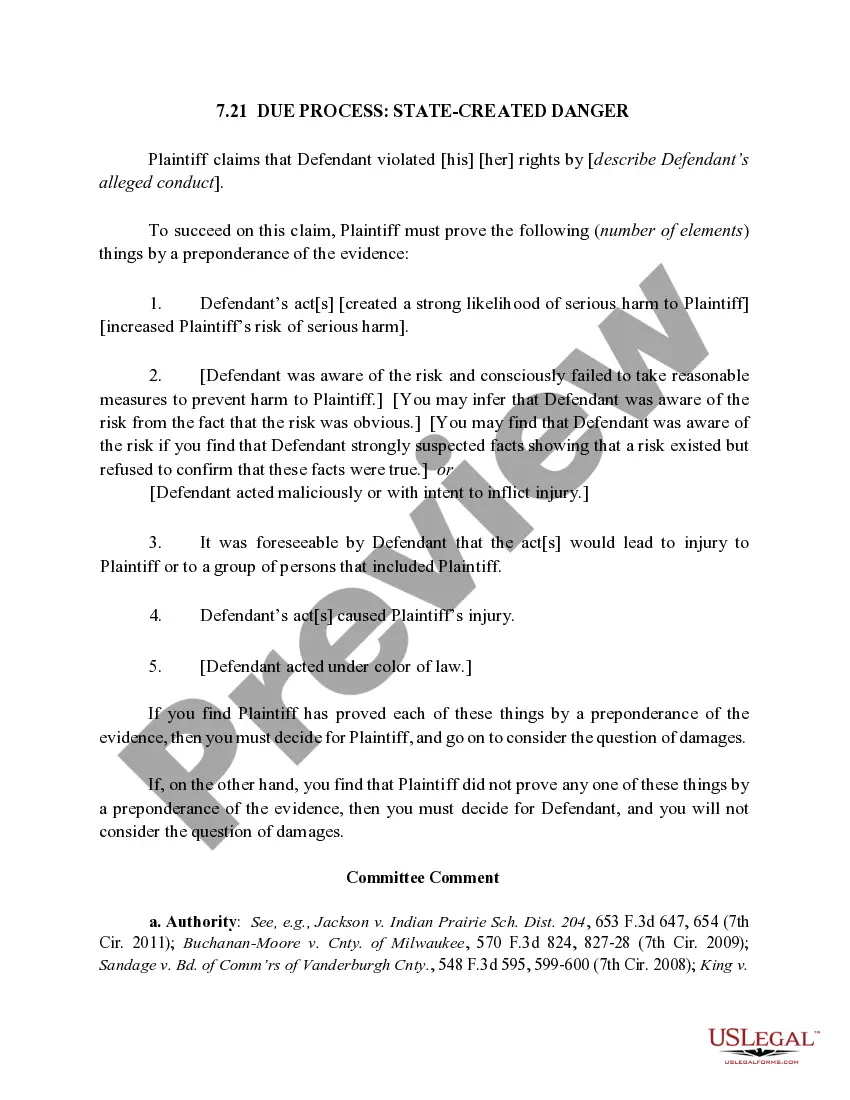
7.21 Due Process: State-created Danger
Overview of this form
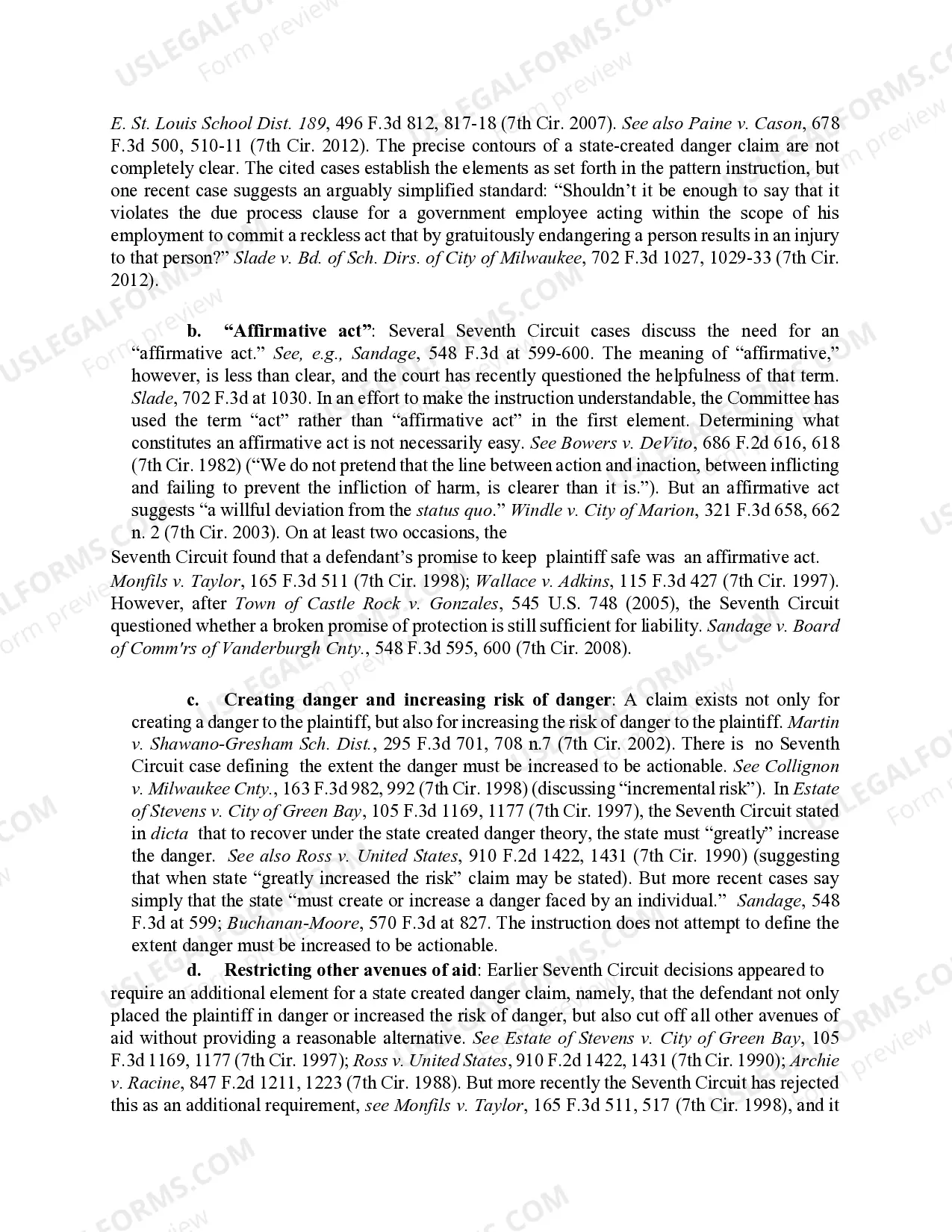
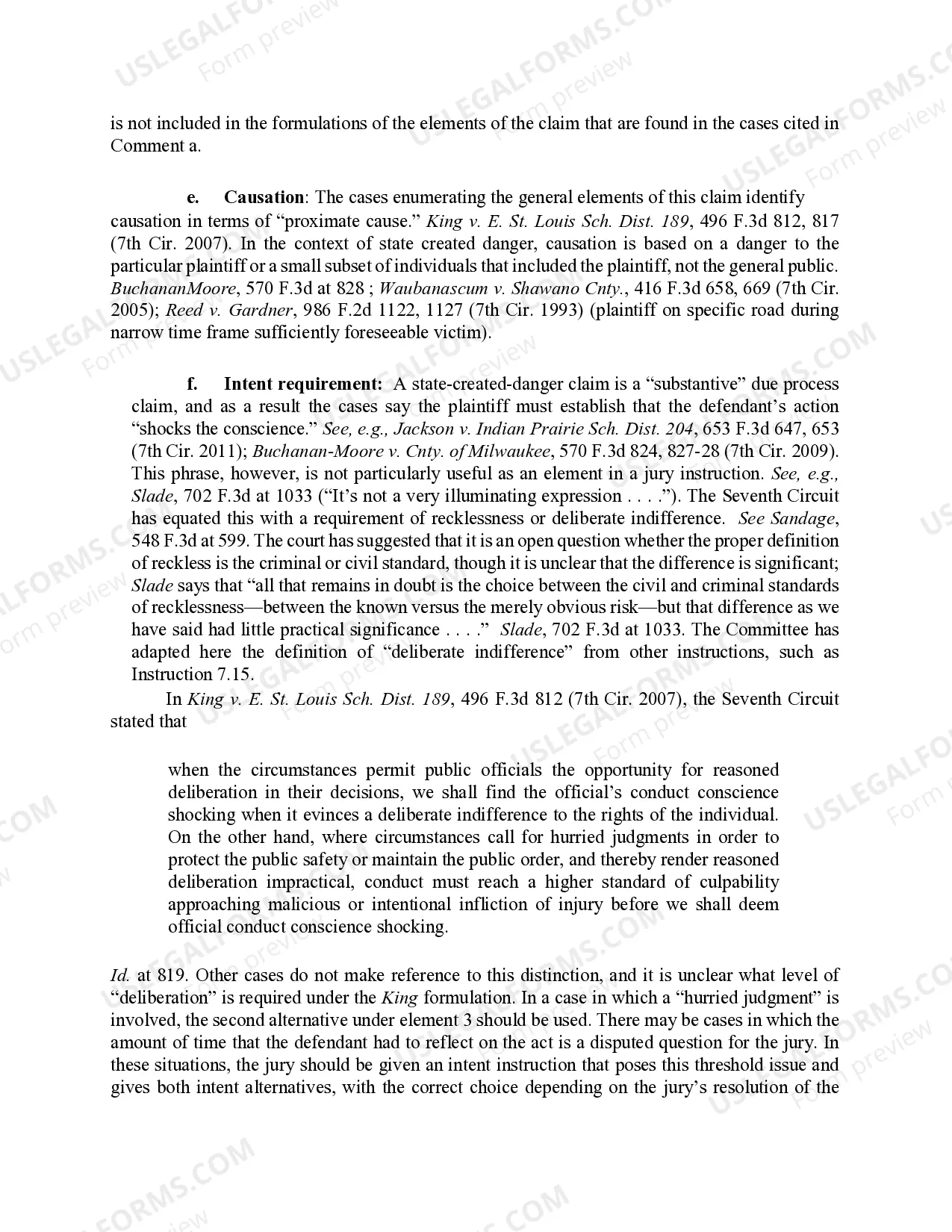
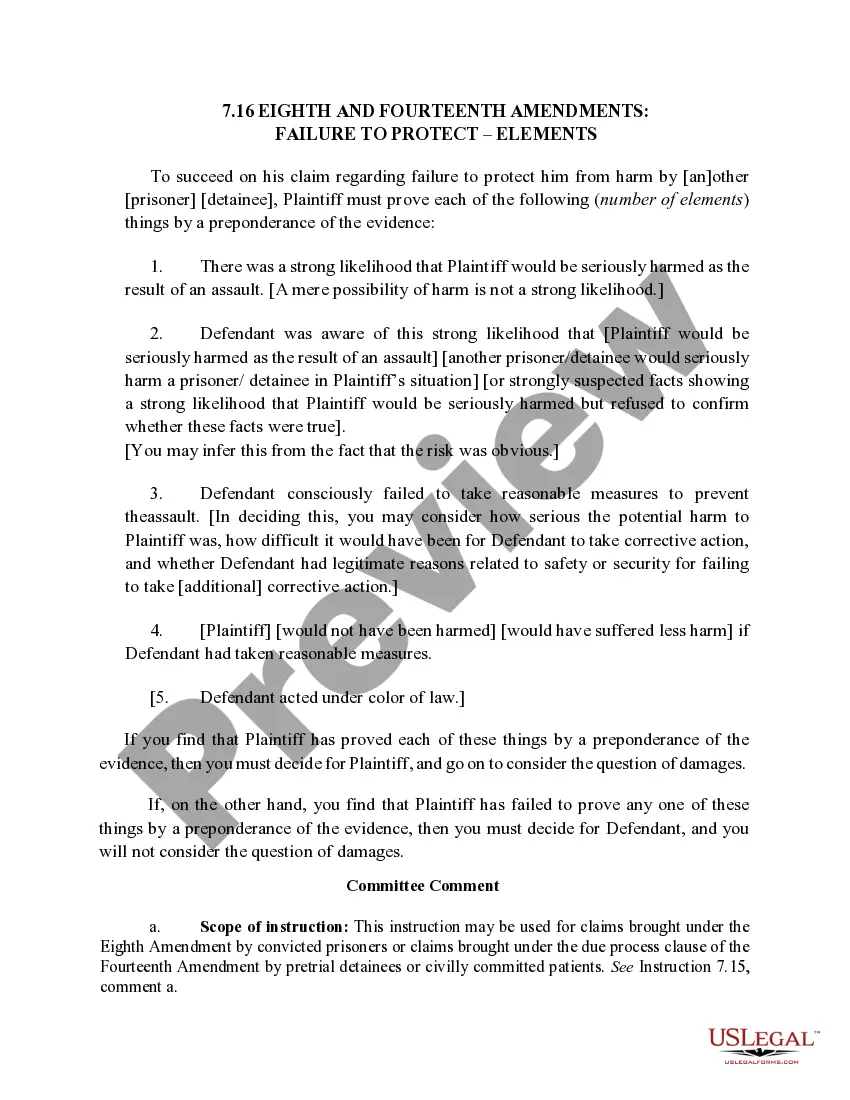
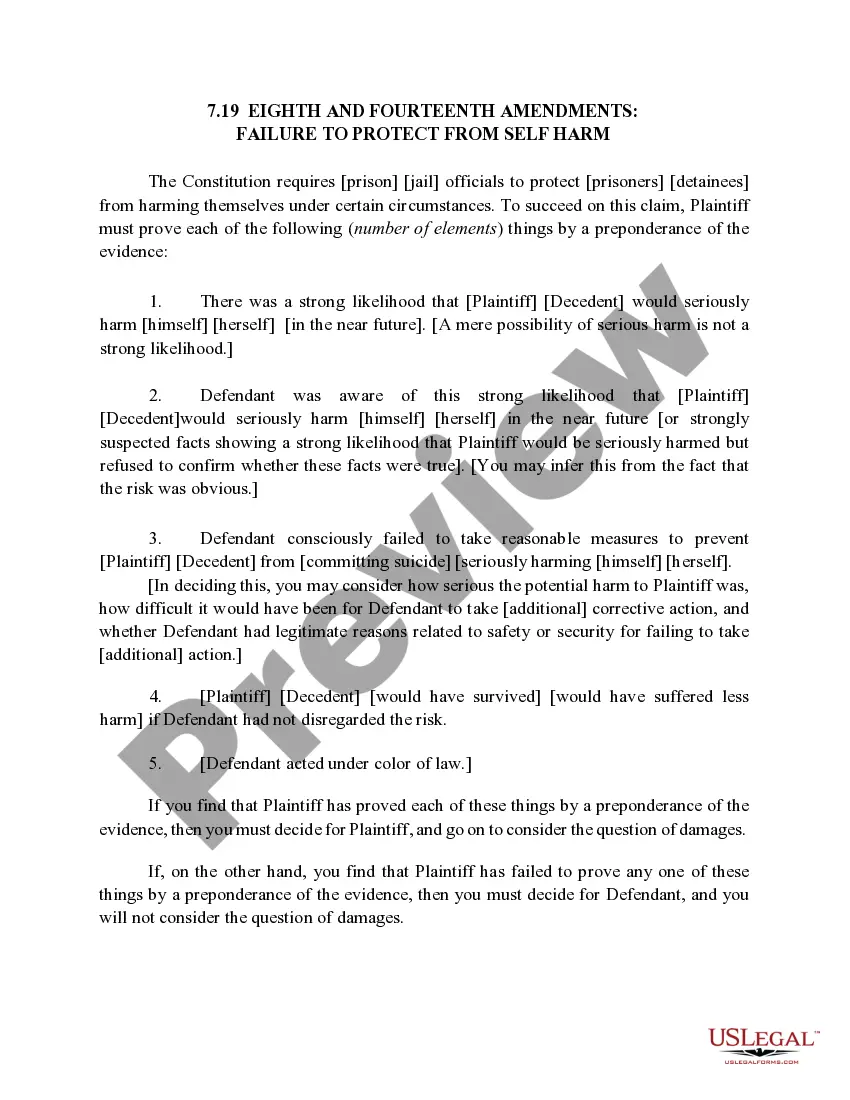
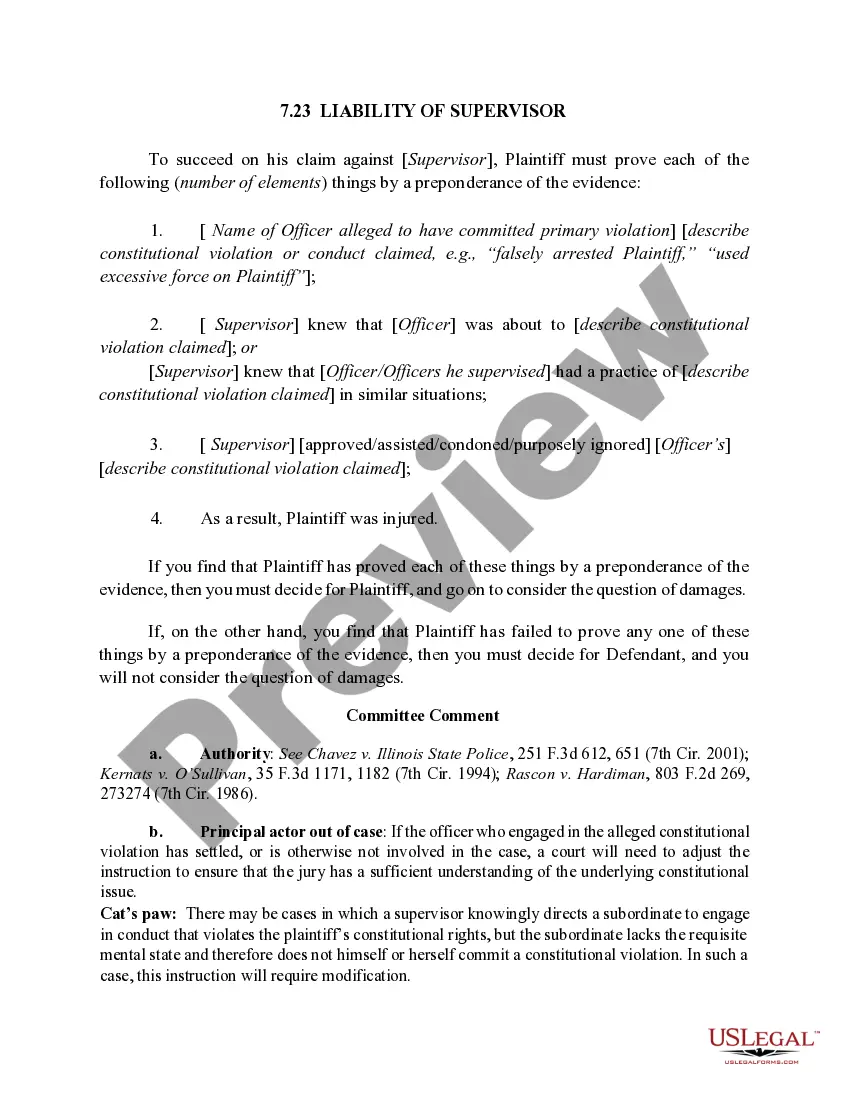
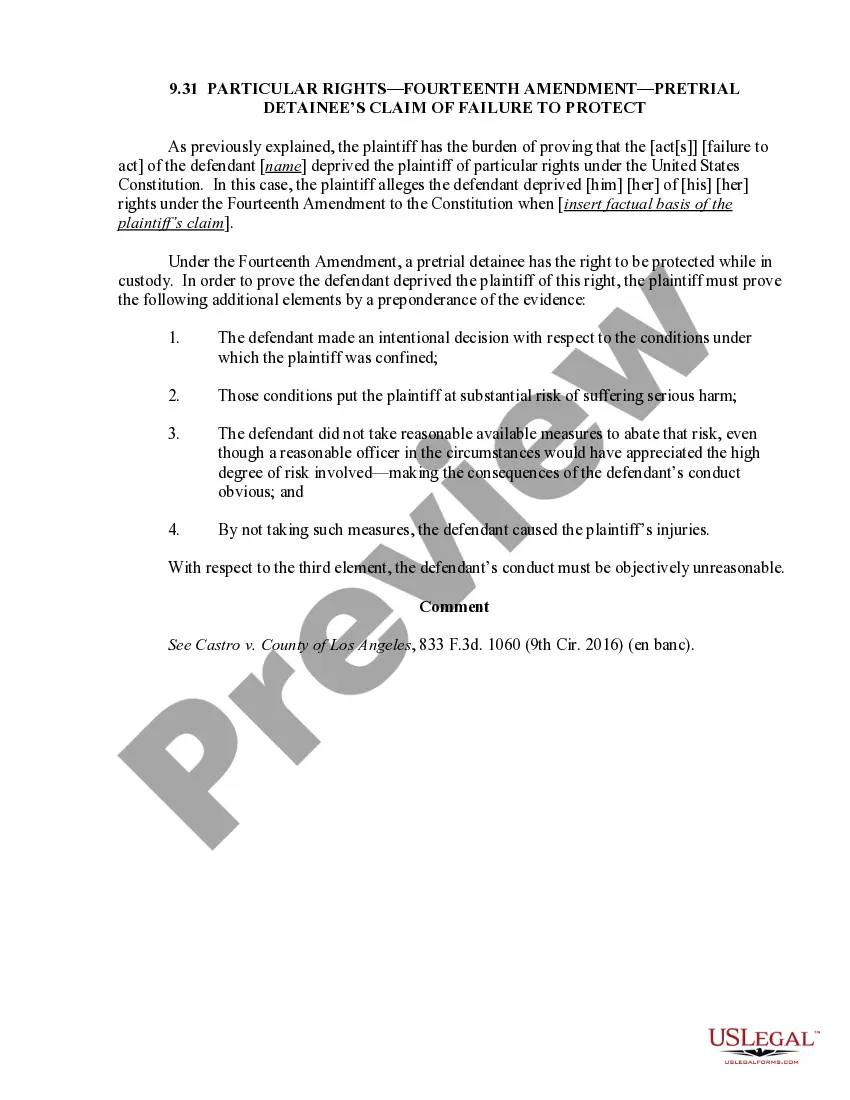
The 7.21 Due Process: State-Created Danger form is a legal instruction used in cases where a plaintiff alleges that a defendant, typically a government official, violated their due process rights through actions that created or increased their risk of harm. This form outlines the necessary elements that must be established for a claim to be successful, distinguishing it from other forms related to personal injury or civil rights violations.
Key parts of this document
- Definition of Plaintiff's claim against the Defendant
- Elements required to prove state-created danger, including foreseeability and causation
- Criteria establishing the Defendant's awareness of the risk posed to the Plaintiff
- Requirement for the Defendant to have acted under color of law
- Guidance on concluding damages if Plaintiff's claim is successful


Common use cases
This form is necessary in legal situations where the actions or inaction of a government official may have put an individual at risk of harm. Examples include cases involving law enforcement, public school officials, or other state agents whose conduct could foreseeably lead to injury to a person they are meant to protect.
Who needs this form
This form is intended for use by:
- Individuals seeking redress for due process violations related to state actions.
- Legal professionals representing plaintiffs in state-created danger claims.
- Government officials needing to understand the implications of their conduct under civil rights laws.
Steps to complete this form
To complete the 7.21 Due Process: State-Created Danger form, follow these steps:
- Identify the plaintiff and defendant involved in the case.
- Clearly describe the defendant's alleged actions that led to the risk of harm.
- Establish that the defendant was aware of this risk and failed to act accordingly.
- Demonstrate that the actions taken were foreseeable and resulted in injury to the plaintiff.
- Complete any necessary statements regarding whether the defendant acted under color of law.
Does this form need to be notarized?
In most cases, this form does not require notarization. However, some jurisdictions or signing circumstances might. US Legal Forms offers online notarization powered by Notarize, accessible 24/7 for a quick, remote process.
Get your form ready online
Our built-in tools help you complete, sign, share, and store your documents in one place.
Make edits, fill in missing information, and update formatting in US Legal Forms—just like you would in MS Word.
Download a copy, print it, send it by email, or mail it via USPS—whatever works best for your next step.
Sign and collect signatures with our SignNow integration. Send to multiple recipients, set reminders, and more. Go Premium to unlock E-Sign.
If this form requires notarization, complete it online through a secure video call—no need to meet a notary in person or wait for an appointment.
We protect your documents and personal data by following strict security and privacy standards.

Make edits, fill in missing information, and update formatting in US Legal Forms—just like you would in MS Word.

Download a copy, print it, send it by email, or mail it via USPS—whatever works best for your next step.

Sign and collect signatures with our SignNow integration. Send to multiple recipients, set reminders, and more. Go Premium to unlock E-Sign.

If this form requires notarization, complete it online through a secure video call—no need to meet a notary in person or wait for an appointment.

We protect your documents and personal data by following strict security and privacy standards.
Mistakes to watch out for
- Failing to clearly establish the defendant's awareness of the risk.
- Neglecting to show how the defendant's actions directly caused the injury.
- Misunderstanding the definition of acting under color of law.
Advantages of online completion
- Easy access to professionally drafted legal instruction template.
- Convenient format allows for quick customization and completion.
- Reliable source for ensuring adherence to legal standards.
- This form is legally recognized in federal courts under the jurisdiction of the Seventh Circuit.
- It is crucial for establishing claims of due process violations based on state-created dangers.
- The outcome of a claim depends on clear evidence meeting all outlined elements.
Summary of main points
- The 7.21 Due Process: State-Created Danger form is essential for asserting claims against government officials.
- Understanding the elements required for a successful claim is key to utilizing this form effectively.
- Legal representation can enhance the chances of a favorable outcome in state-created danger cases.
Looking for another form?
Form popularity
FAQ
§ 1983 through which a plaintiff may allege a constitutional violation by the state under the Due Process Clause of the Fourteenth Amendment. Under this doctrine, courts attach liability when state actors either create or enhance a danger that deprives the plaintiff of his or her right to substantive due process.
The Sixth Circuit's test includes showing that the law enforcement officer acted in an affirmative manner to create a danger or increase the potential danger a plaintiff encountered, the specific plaintiff was placed at risk and the law enforcement officer knew or should have known that such conduct would put the
Under the Fourteenth Amendment, a person has the constitutional right to be free from a government employee affirmatively placing that person in a position of actual, particularized danger (or in a situation of actual, particularized danger that is more dangerous than the position that the person already faced) if the
That the act or acts created or enhanced a danger specific to the plaintiff and distinct from the danger to the general public; that the act or acts caused the plaintiff's harm; and. that the state actor's conduct, when viewed in total, shocks the conscience.
The state-created danger doctrine provides the basis for a potential claim when a state actor creates a danger that results in an injury to the plaintiff. The doctrine may be interpreted as an exception to the general rule that a state has no duty to protect one private citizen from another.
The state-created danger doctrine provides the basis for a potential claim when a state actor creates a danger that results in an injury to the plaintiff. The doctrine may be interpreted as an exception to the general rule that a state has no duty to protect one private citizen from another.