Ohio Recording Cover Page for Workers' Compensation Lien
What this document covers
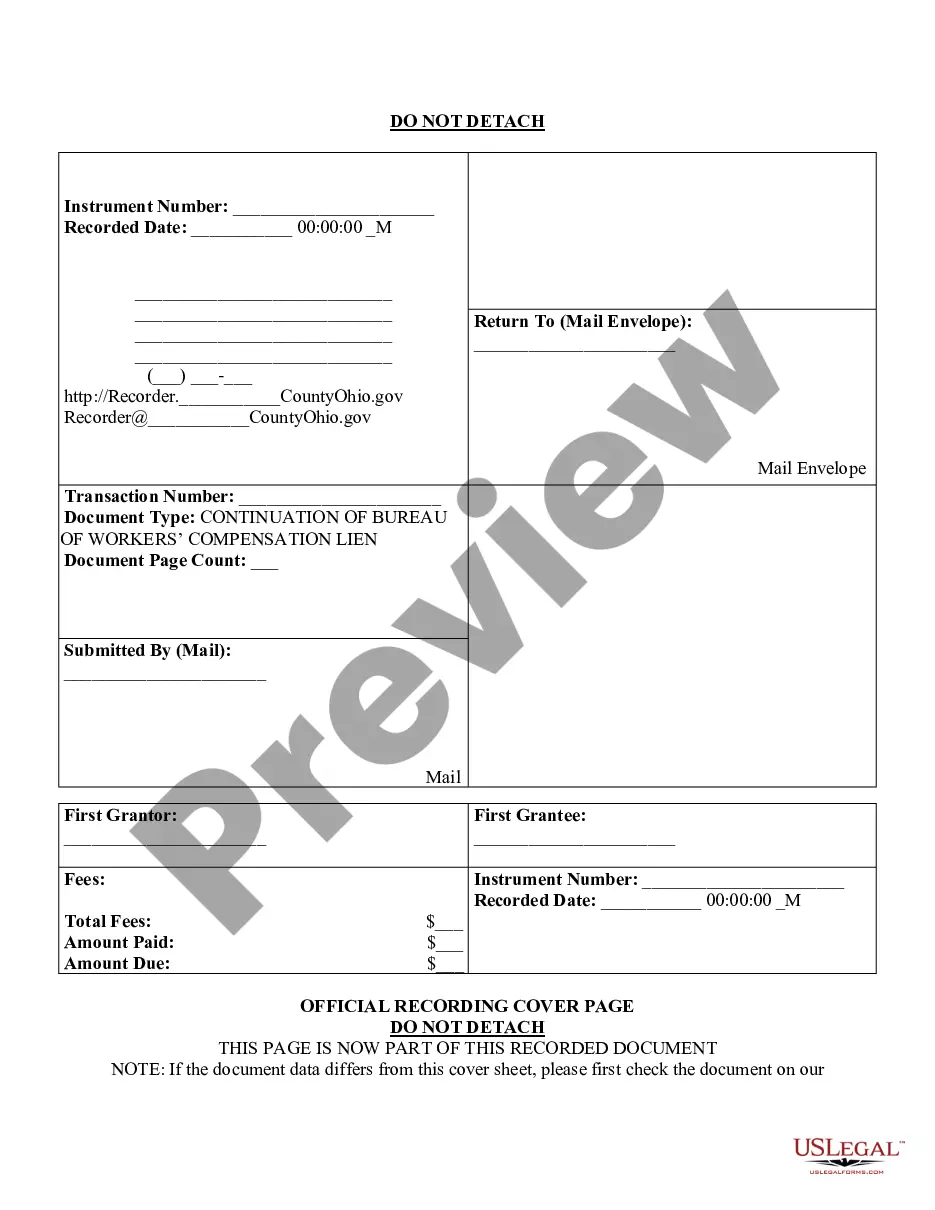
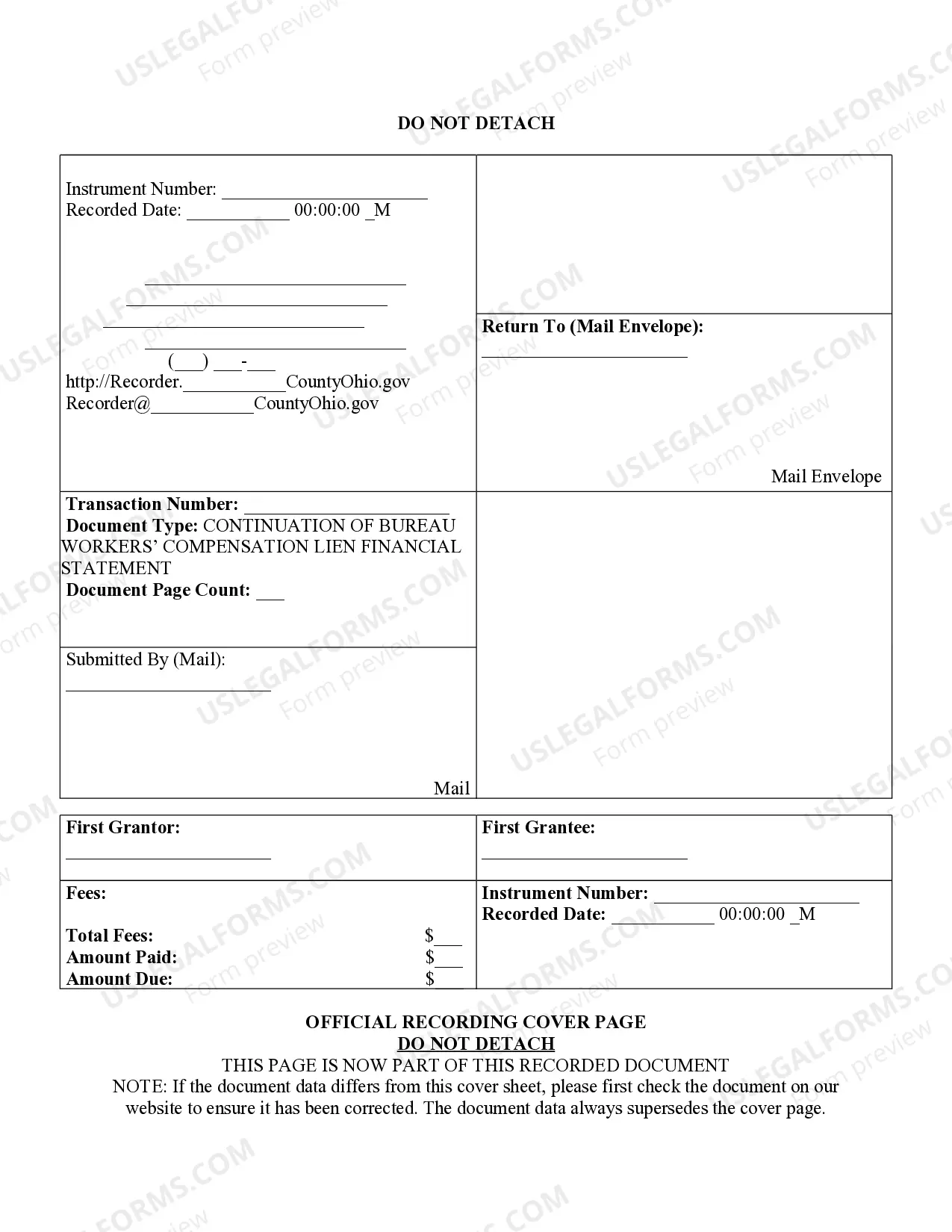
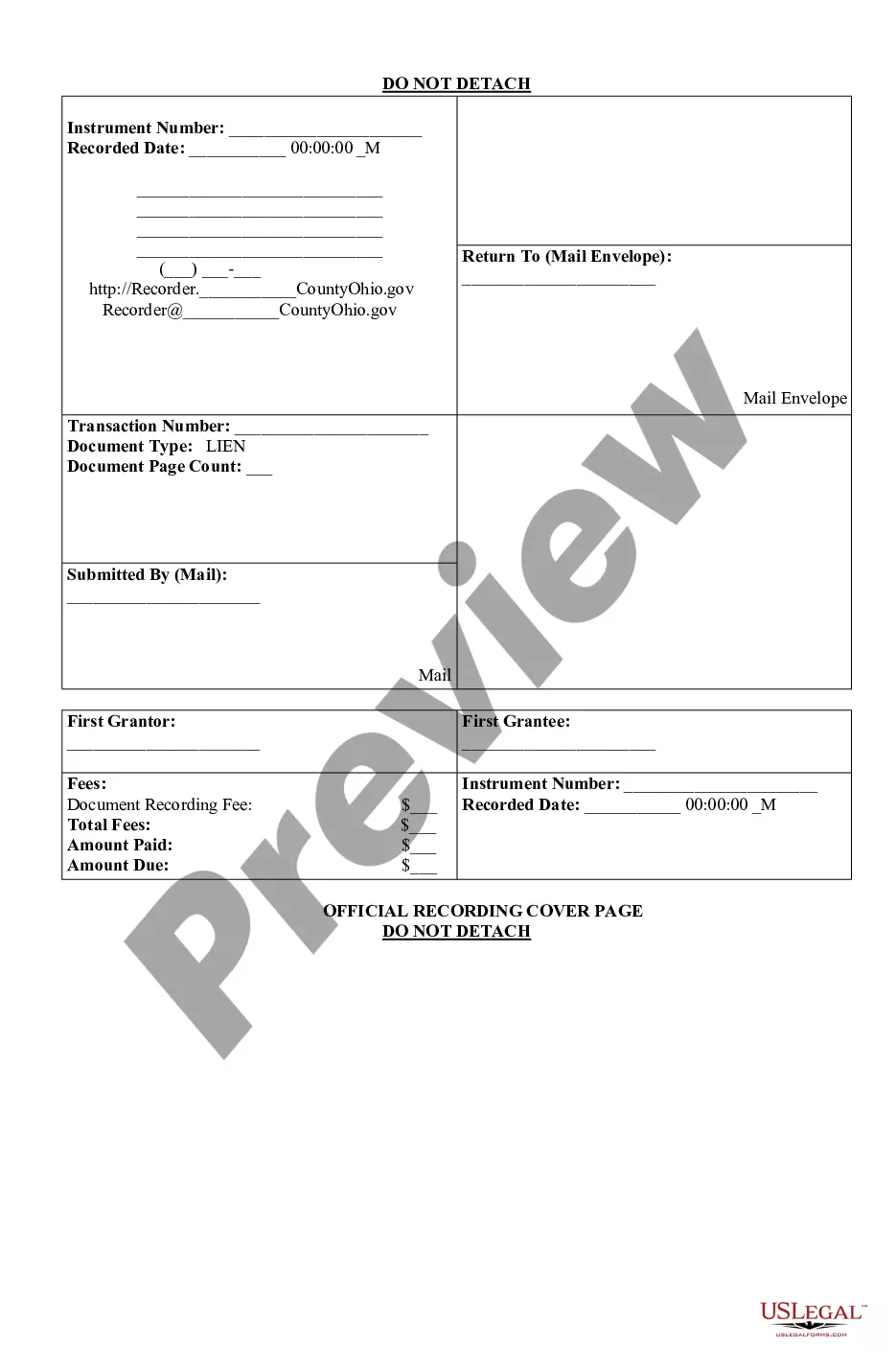
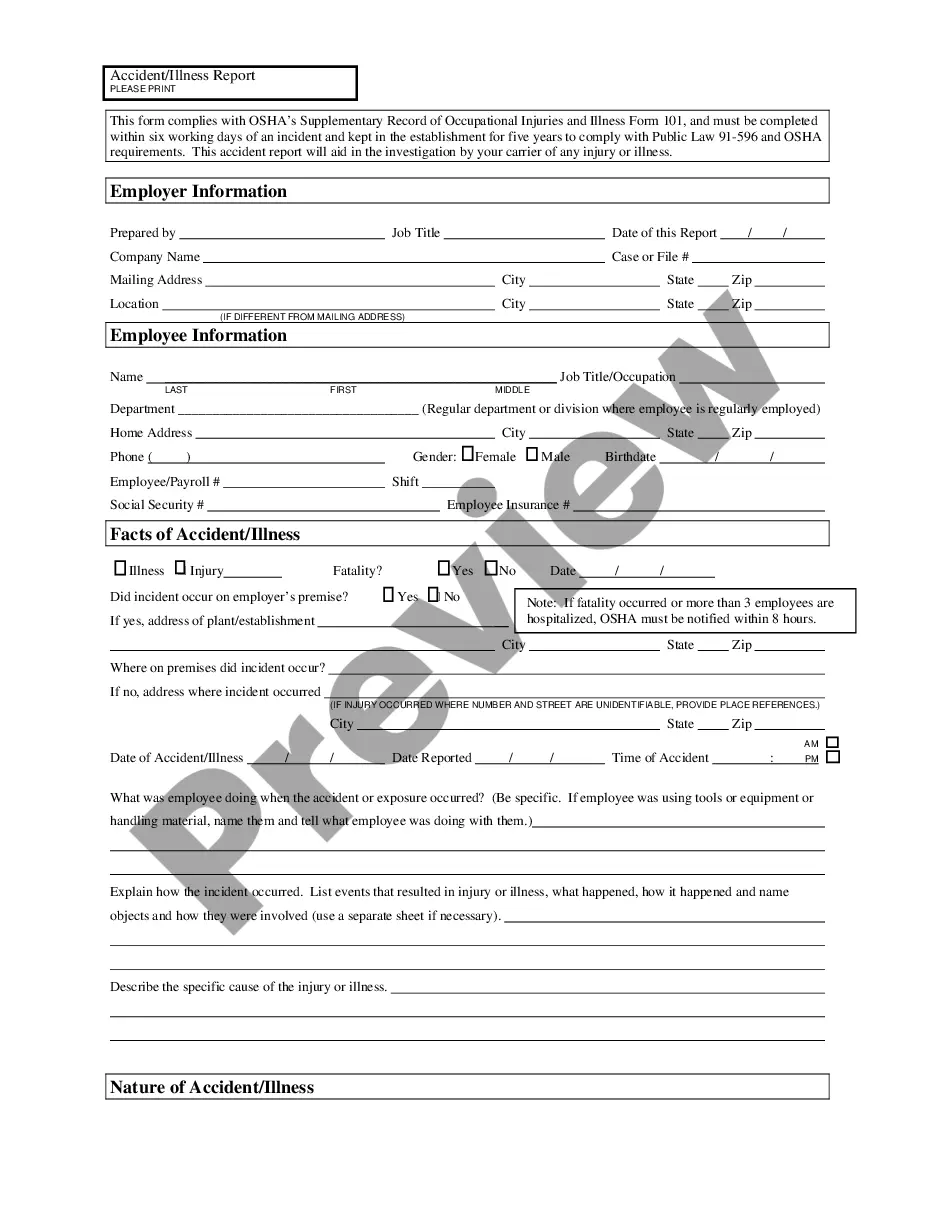
The Recording Cover Page for Workers' Compensation Lien serves as the official first page of your document when filing a lien related to workers' compensation. This form is essential for ensuring that all pertinent information associated with the lien is accurately recorded with the appropriate county recorder's office. It stands out from other forms due to its specific focus on workers' compensation claims and related financial documentation. Properly completing this cover page is crucial for the successful recording of your lien.
Key parts of this document
- Instrument Number: A unique identifier assigned to the document upon recording.
- Recorded Date: The date when the lien is officially registered.
- Transaction Number: A reference number for tracking the specific filing.
- Document Type: Indicates the nature of the document as a continuation of the Bureau of Workersâ Compensation lien.
- Fees: Details about the total fees, amount paid, and amount due.
- Return To Address: Indicates where to send the recorded document after processing.


When to use this form
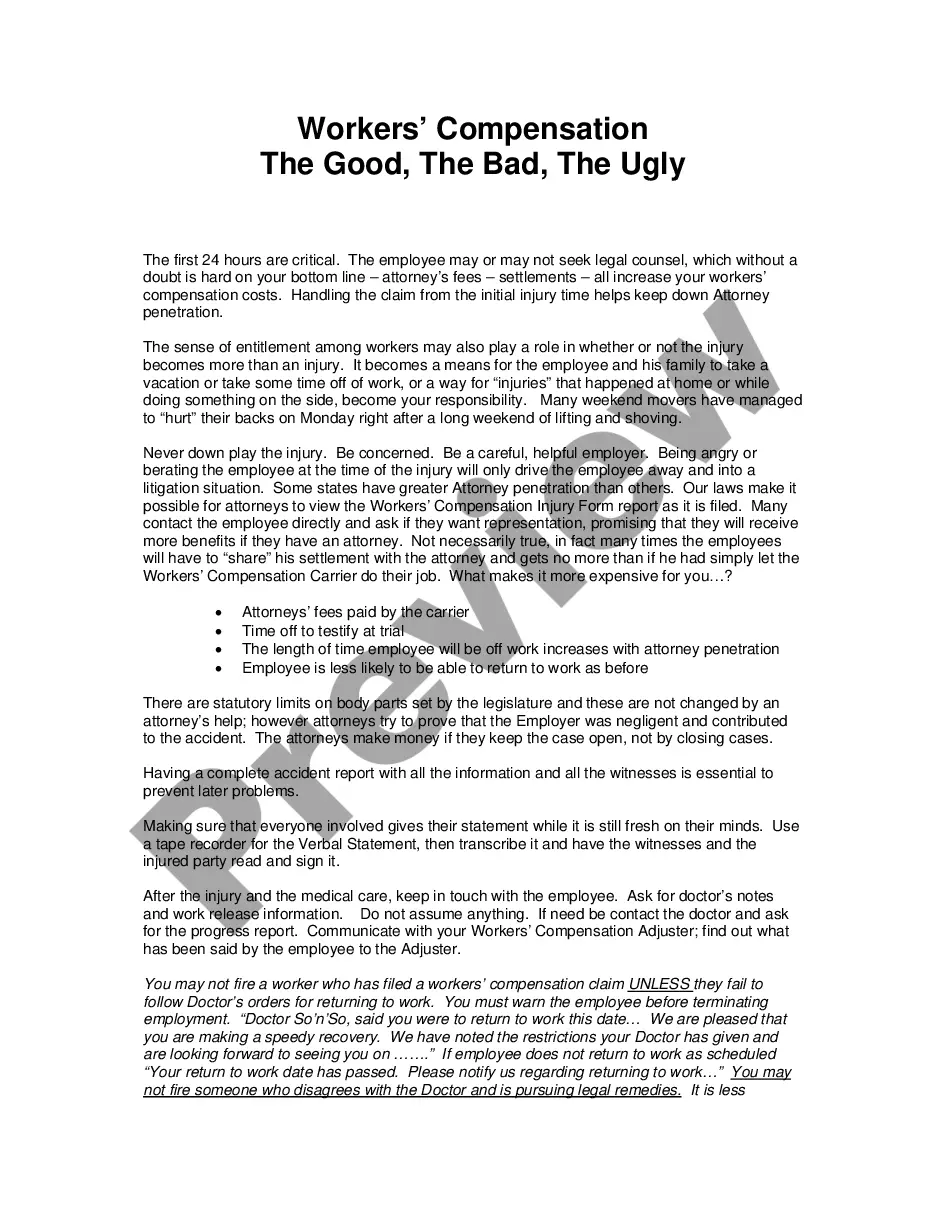
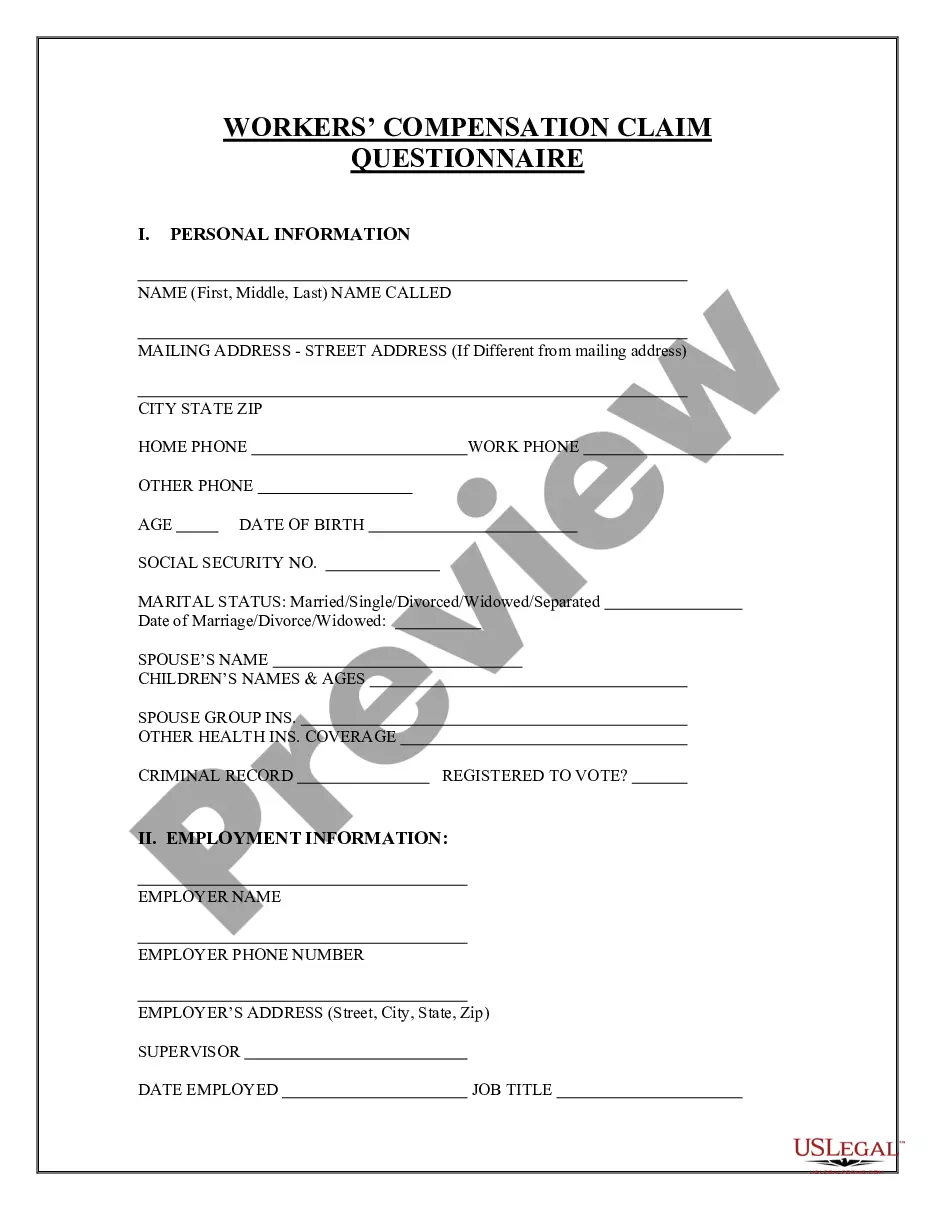
You should use the Recording Cover Page for Workers' Compensation Lien when you are submitting a lien related to a workers' compensation claim. This form is typically required in scenarios such as when a medical provider seeks reimbursement for services rendered to an injured worker or when an insurance company files a lien against a settlement or award related to a workers' compensation case. Proper use of this form ensures that your lien is recorded correctly and is enforceable.
Intended users of this form
- Medical providers and practitioners seeking to file a lien for unpaid services provided to an injured worker.
- Insurance companies that wish to establish a lien for reimbursement concerning workers' compensation claims.
- Legal representatives acting on behalf of clients involved in workers' compensation disputes.
- Any individual or entity with a vested interest in recovering costs associated with workers' compensation claims.
How to complete this form
- Fill in the Instrument Number, which will be provided by the recording office after submission.
- Enter the Recorded Date as assigned upon filing your lien.
- Provide the Transaction Number for reference, which you will receive when submitting the document.
- Specify the Document Type as 'Continuation of Bureau of Workersâ Compensation Lien'.
- List the Total Fees, Amount Paid, and Amount Due for the recording of your lien.
- Fill out the Return To address, indicating where the recorded document should be sent after processing.
Does this document require notarization?
This form does not typically require notarization unless specified by local law. However, it is important to verify any state-specific requirements for additional documentation prior to submission.
Get your form ready online
Our built-in tools help you complete, sign, share, and store your documents in one place.
Make edits, fill in missing information, and update formatting in US Legal Forms—just like you would in MS Word.
Download a copy, print it, send it by email, or mail it via USPS—whatever works best for your next step.
Sign and collect signatures with our SignNow integration. Send to multiple recipients, set reminders, and more. Go Premium to unlock E-Sign.
If this form requires notarization, complete it online through a secure video call—no need to meet a notary in person or wait for an appointment.
We protect your documents and personal data by following strict security and privacy standards.

Make edits, fill in missing information, and update formatting in US Legal Forms—just like you would in MS Word.

Download a copy, print it, send it by email, or mail it via USPS—whatever works best for your next step.

Sign and collect signatures with our SignNow integration. Send to multiple recipients, set reminders, and more. Go Premium to unlock E-Sign.

If this form requires notarization, complete it online through a secure video call—no need to meet a notary in person or wait for an appointment.

We protect your documents and personal data by following strict security and privacy standards.
Common mistakes to avoid
- Leaving fields blank, especially those pertaining to fees and identifying numbers.
- Incorrectly entering the recorded date or instrument number, which can lead to processing delays.
- Not including the correct return address, resulting in important documents being sent to the wrong location.
- Failing to check the document data against the cover page before submission.
Benefits of completing this form online
- Convenience of completing the form from any location at your own pace.
- Editable templates allow users to make adjustments easily without extensive legal knowledge.
- Access to reliable, attorney-drafted forms that minimize errors and omissions.
- Secure storage and easy download options for your completed forms.
Key takeaways
- The Recording Cover Page for Workers' Compensation Lien is essential for filing liens related to workers' compensation claims.
- Accurate completion is vital for the enforceability of the lien and to avoid processing delays.
- Key components include Instrument Number, Recorded Date, and fee details.
- Use this form to ensure all pertinent information is recorded accurately in the appropriate jurisdiction.
Looking for another form?


Form popularity
FAQ
Lien Release Bond (Ohio) An owner of property in the State of Ohio that discovers or is notified of a mechanic's lien filed against his or her property may force a resolution of the matter by filing a notice to bring suit and posting an Ohio lien release bond with the county recorder in which the property is located.
To obtain more information about the lien, contact the Attorney General's Office. For business taxes call 1-888-246-0488, for individual taxes call 1-888-301-8885.
According to the Ohio Revised Code (ORC), it is the duty of the County Recorder to record all deeds, mortgages, plats or other instruments of writing that are required or authorized by the ORC.
Therefore, liens are not officially recorded, and personal property could be sold off to a third party who is unaware of the lien's existence. In most states, judgment liens must be filed by the creditor through the county or state.
In Ohio you can find out if your property has a lien on it by simply checking the records of the local county recorder and the local clerk of courts.
Fill out an Abstract Of Judgment form. Bring or mail the two paper copies to the court. Bring or mail two copies of the Abstract Of Judgment to the county recorder where the judgment debtor's property is located.
Online through your AMA Account. By calling toll-free 1-866-989-6370 within Canada and the U.S.
Creating a voluntary lien on real estate usually means granting a mortgage to a lender.In either instance, you'll need a mortgage document prepared, and the mortgage will need to be recorded with the county.
A judgment lien in Ohio will remain attached to the debtor's property (even if the property changes hands) for five years.