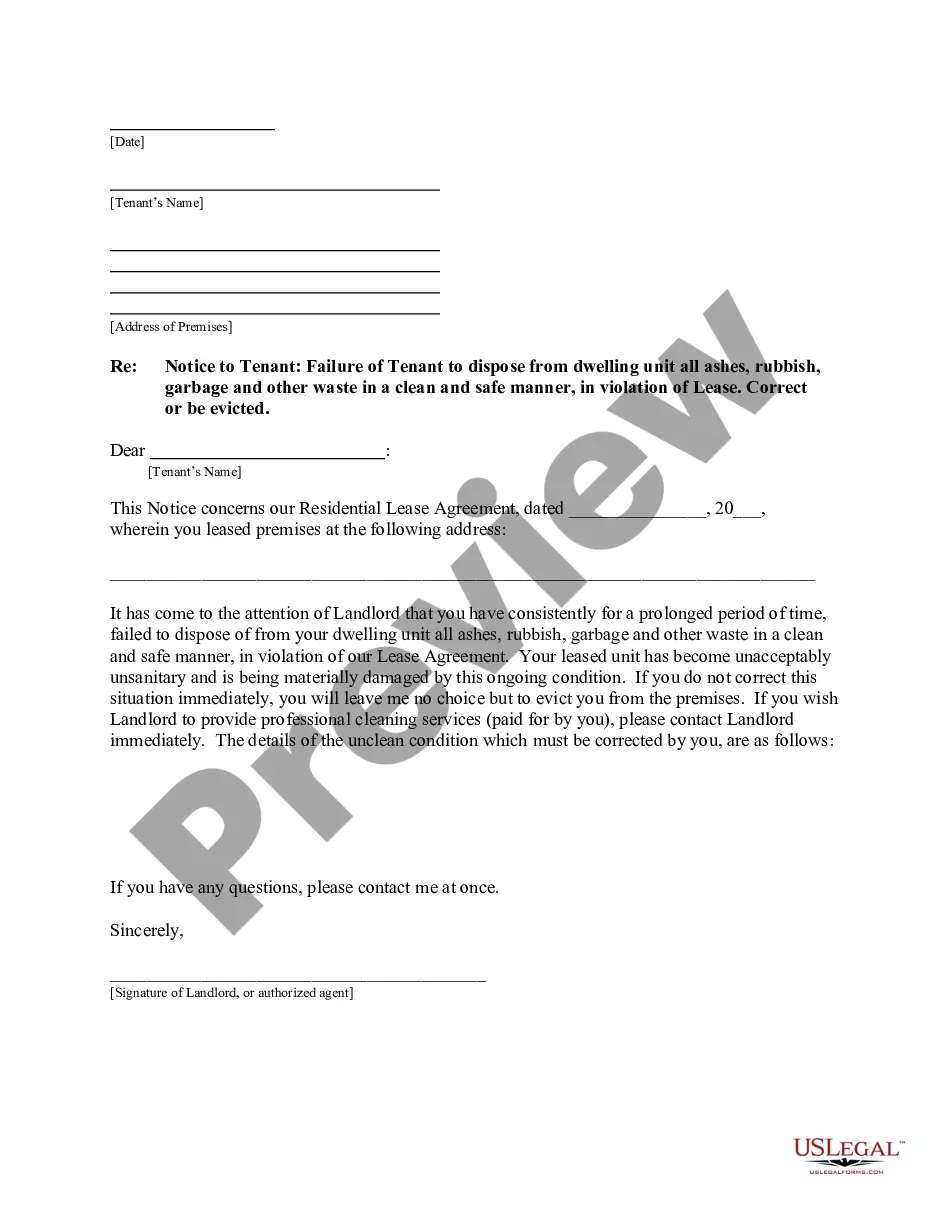
Ohio Gas Pipeline - Utility Easement
About this form
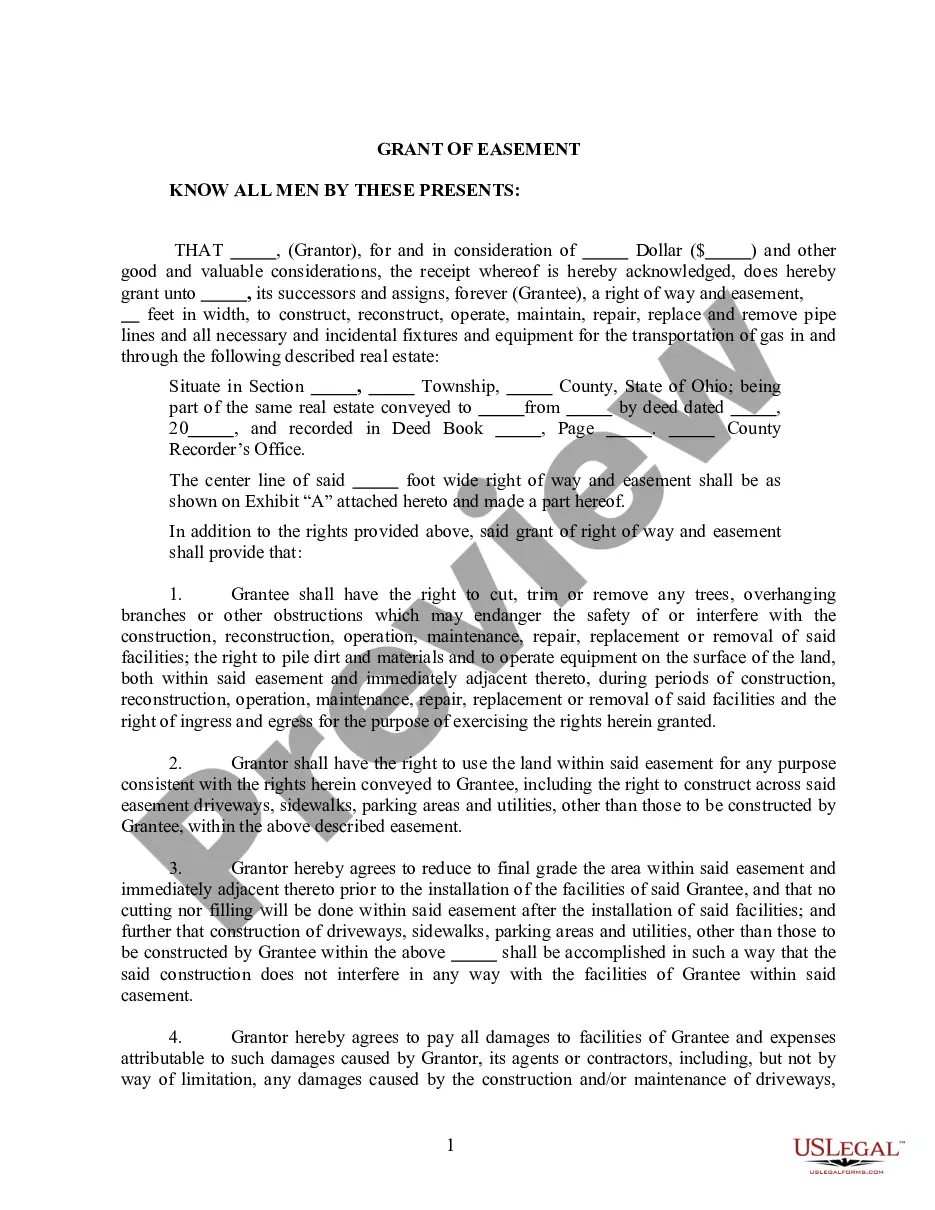
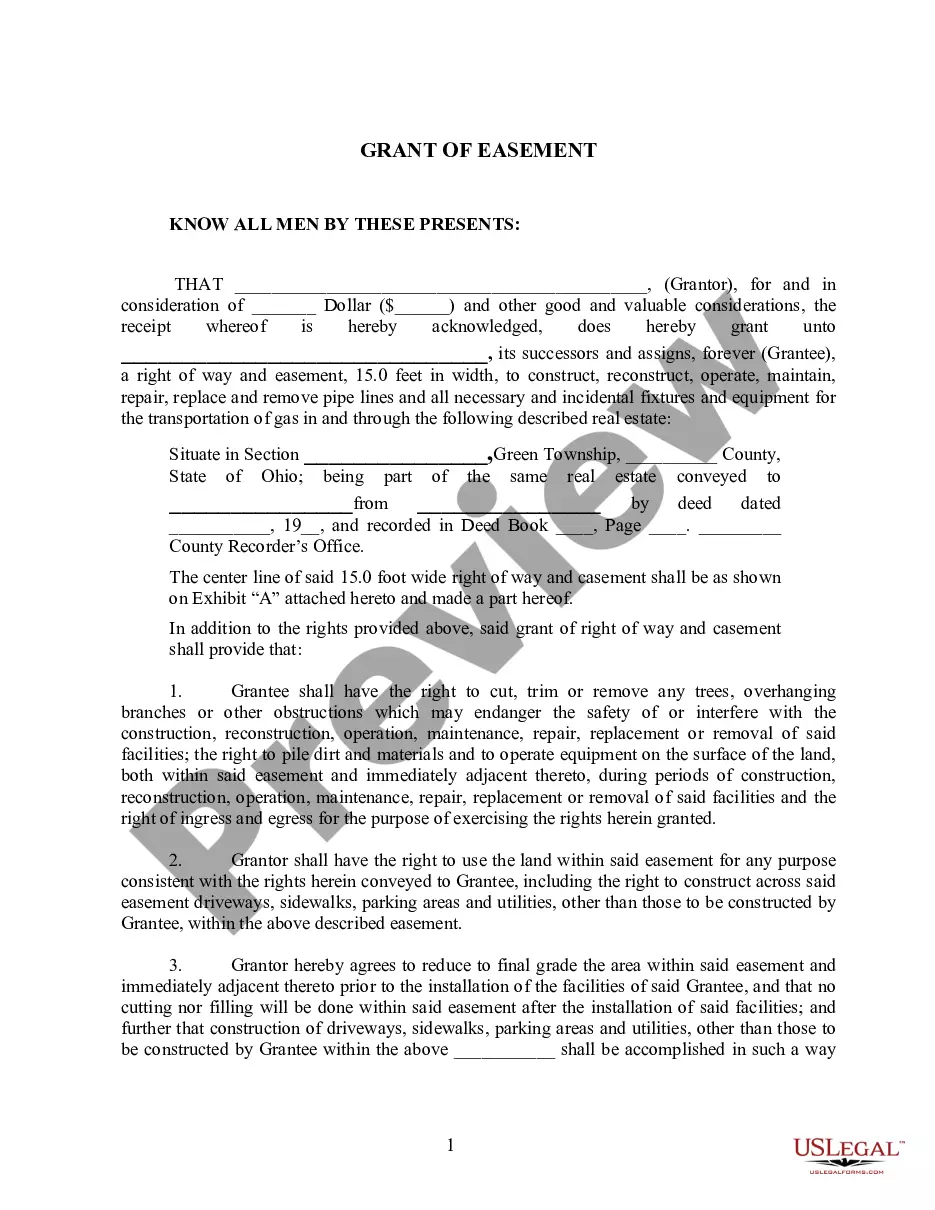
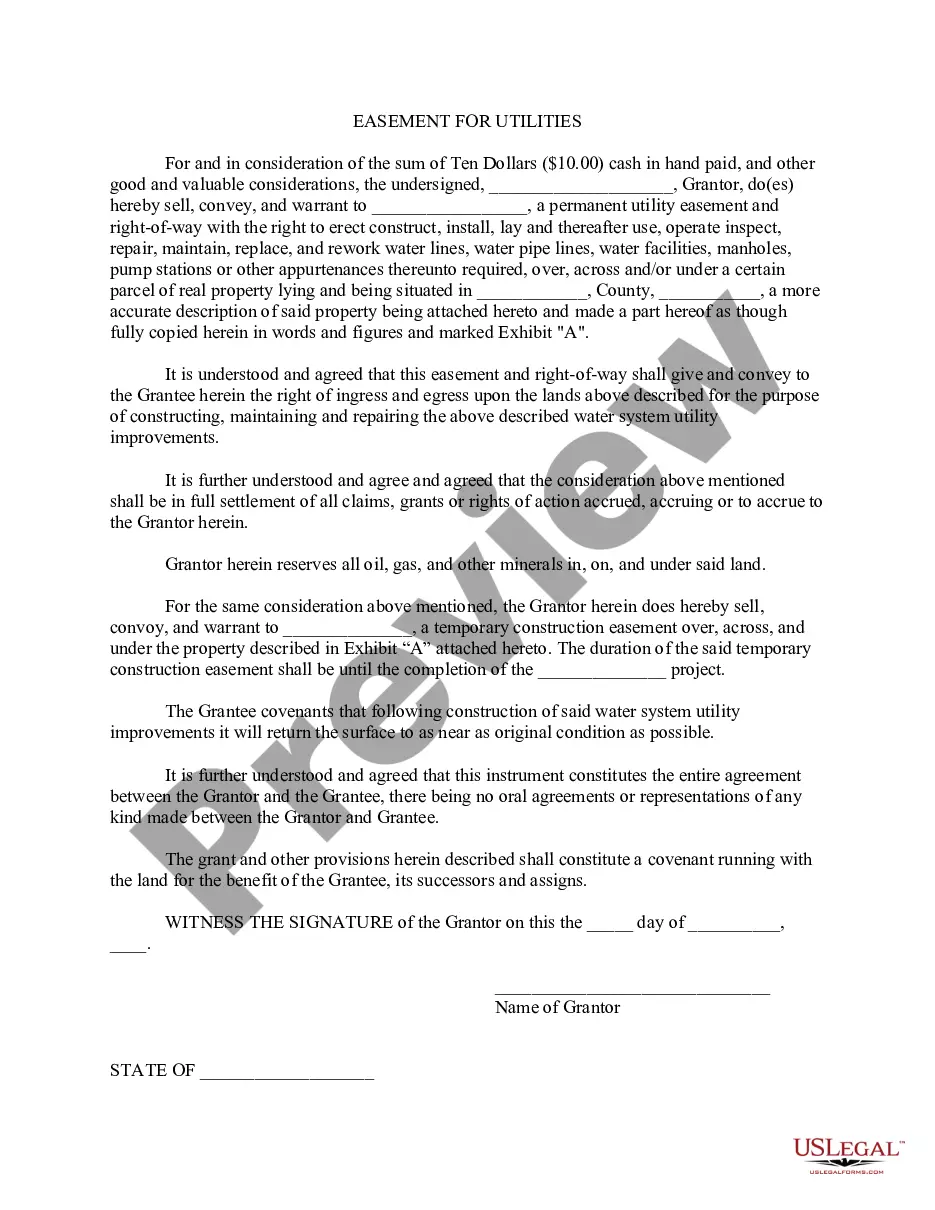
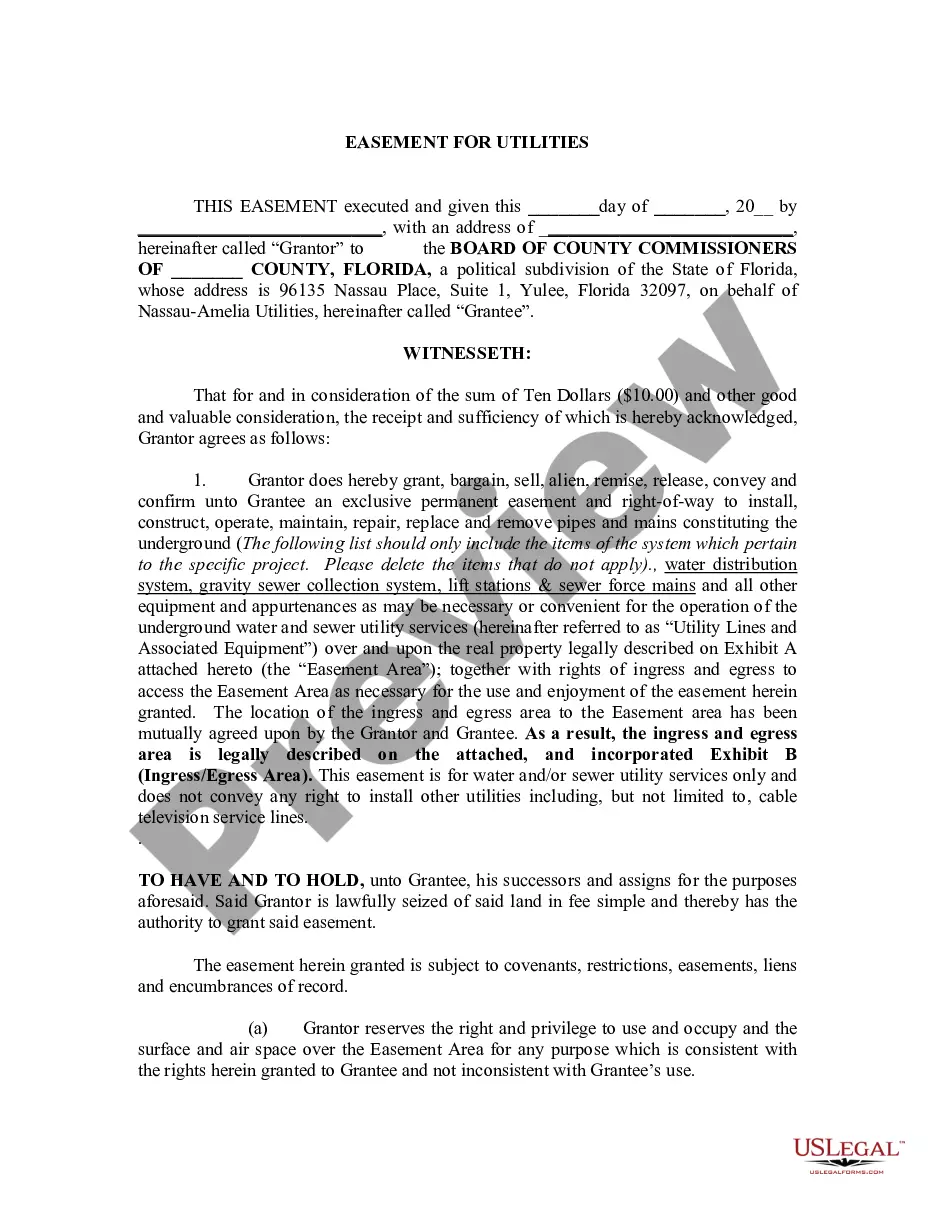
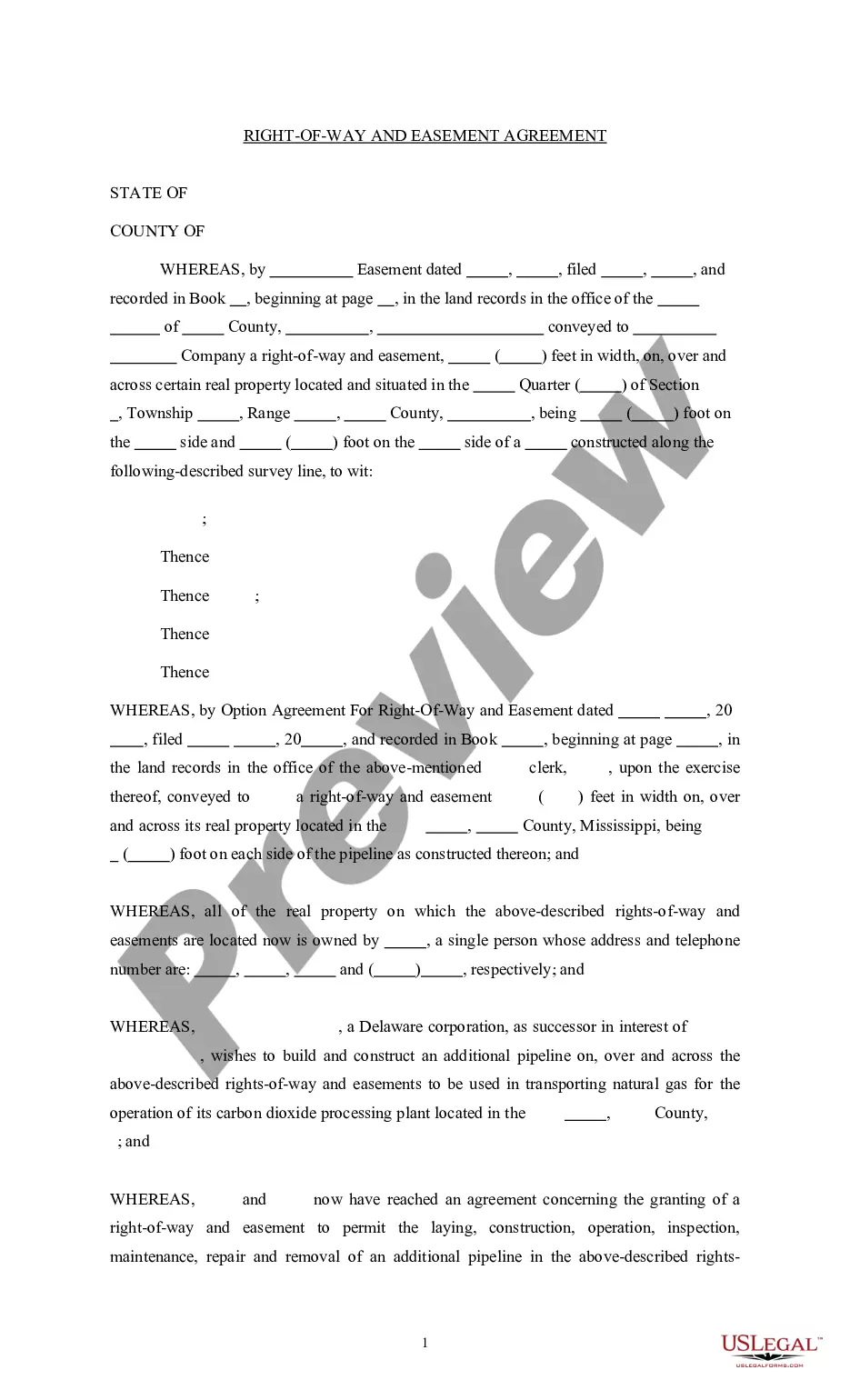
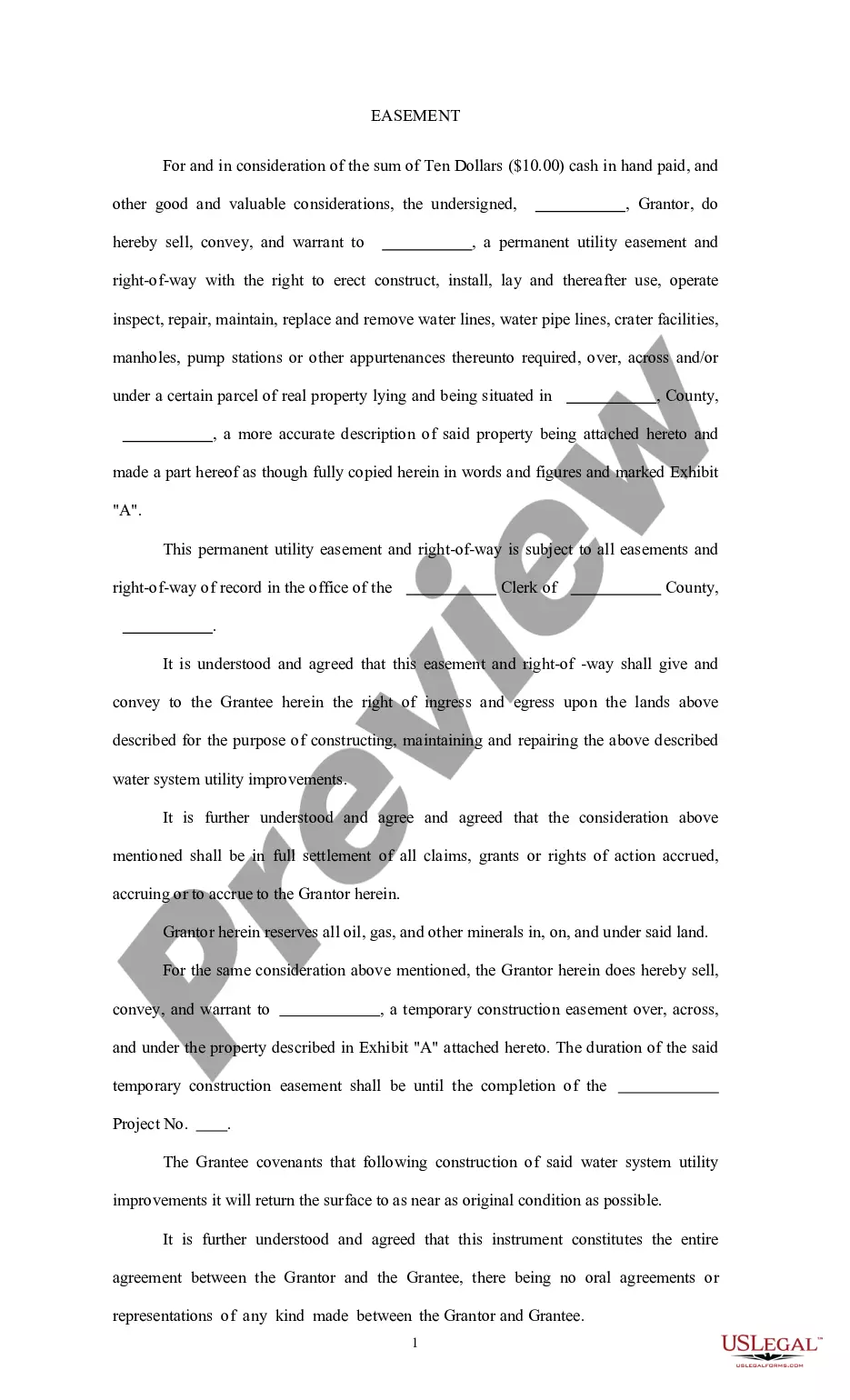
The Gas Pipeline - Utility Easement is a legal document that grants a utility company the right to use a specified area of your property for the transportation of gas. Unlike other property agreements, this easement allows utility providers to install and maintain gas pipelines while ensuring property owners retain certain rights to their land. Easements are essential for utility services and play a vital role in property law.
Key parts of this document
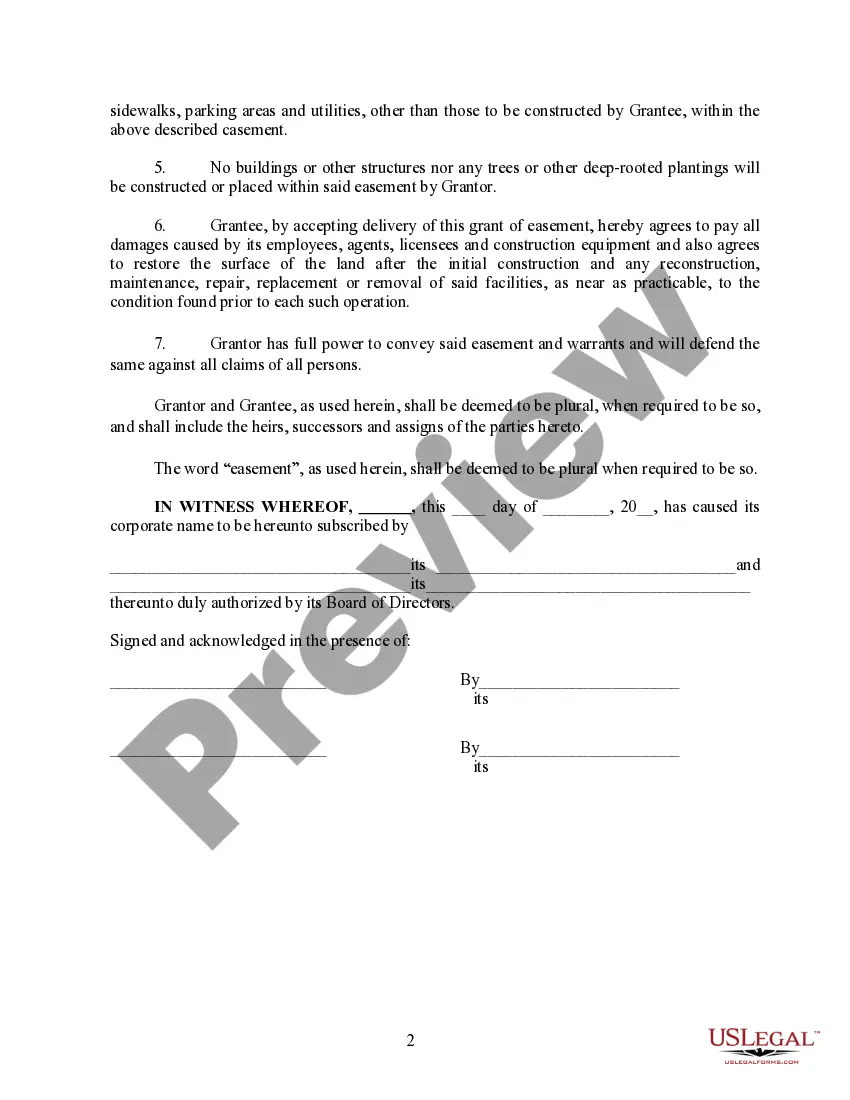
- Grantor rights: Describes the rights retained by the property owner, including the ability to utilize the land within the easement for certain purposes.
- Restrictions on structures: States that the property owner cannot construct buildings or deep-rooted plants within the easement area.
- Liability and restoration: Details the responsibilities of the utility company regarding damages and the requirement to restore the land after any construction work.
- Authority to grant easement: Asserts that the grantor has the legal right to create the easement.
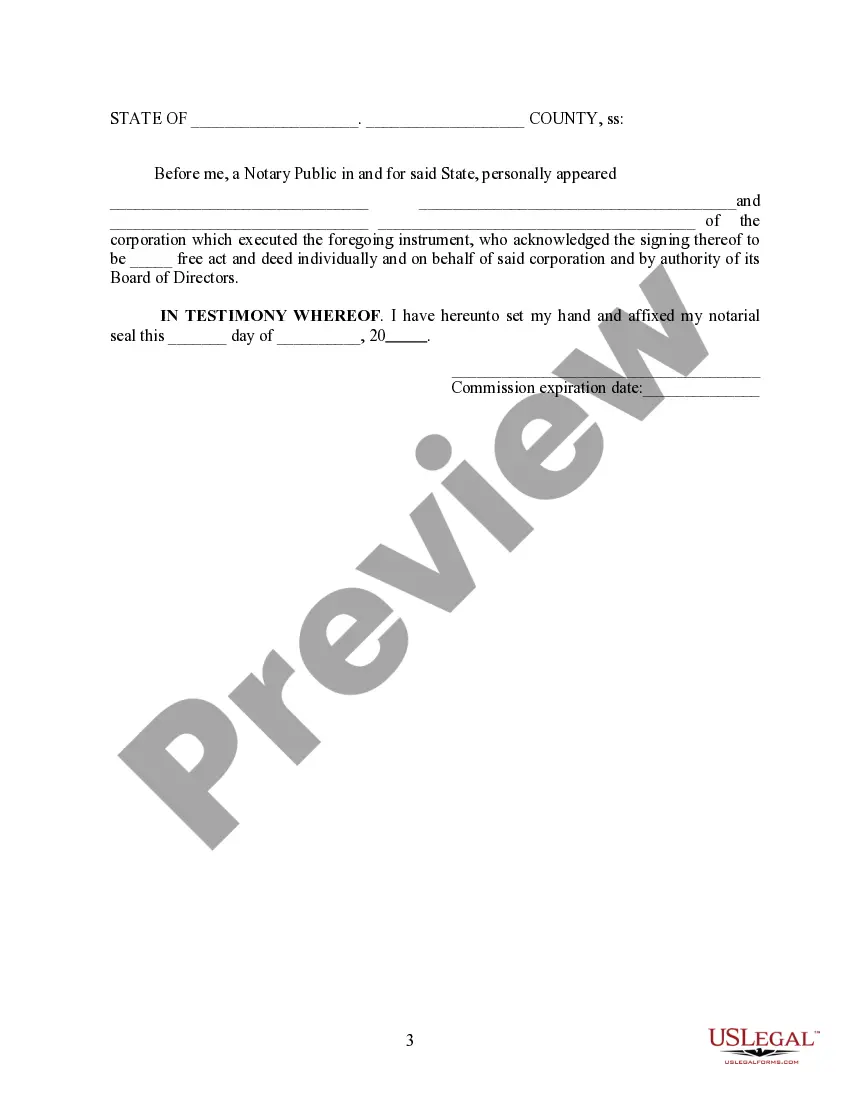
- Notary acknowledgment: Requires notarization to confirm the authenticity of the document and the authority of signers.
When to use this form
This easement form should be used when a utility company requests permission to install gas pipelines on your property. It's essential when you want to formalize your agreement on the use of your land while protecting your rights and ensuring compliance with local regulations. This form is applicable during property development, utility upgrades, or when existing pipelines require maintenance.
Intended users of this form
- Property owners who are approached by a utility company for pipeline installation.
- Businesses that require gas services and need to formalize their easement agreements.
- Developers looking to set up utility infrastructure on new properties.
- Anyone involved in legal negotiations regarding property use rights.
How to prepare this document
- Identify the parties involved: Enter the names of the grantor (property owner) and grantee (utility company).
- Specify the property: Clearly describe the location and boundaries of the easement area on your property.
- Include any conditions: State any limitations on the use of easement by the utility company.
- Detail the restoration obligations: Define the requirements for restoring the land after utility work is completed.
- Obtain signatures and notarization: Ensure all parties sign the document in the presence of a notary public.
Notarization guidance
This form needs to be notarized to ensure legal validity. US Legal Forms provides secure online notarization powered by Notarize, allowing you to complete the process through a verified video call, available anytime.
Get your form ready online
Our built-in tools help you complete, sign, share, and store your documents in one place.
Make edits, fill in missing information, and update formatting in US Legal Forms—just like you would in MS Word.
Download a copy, print it, send it by email, or mail it via USPS—whatever works best for your next step.
Sign and collect signatures with our SignNow integration. Send to multiple recipients, set reminders, and more. Go Premium to unlock E-Sign.
If this form requires notarization, complete it online through a secure video call—no need to meet a notary in person or wait for an appointment.
We protect your documents and personal data by following strict security and privacy standards.

Make edits, fill in missing information, and update formatting in US Legal Forms—just like you would in MS Word.

Download a copy, print it, send it by email, or mail it via USPS—whatever works best for your next step.

Sign and collect signatures with our SignNow integration. Send to multiple recipients, set reminders, and more. Go Premium to unlock E-Sign.

If this form requires notarization, complete it online through a secure video call—no need to meet a notary in person or wait for an appointment.

We protect your documents and personal data by following strict security and privacy standards.
Avoid these common issues
- Failing to clearly define the easement area, leading to potential disputes.
- Not obtaining all required signatures or notarization, making the document invalid.
- Overlooking local regulations that may require specific provisions.
Benefits of using this form online
- Convenience: Access the form at any time from anywhere.
- Editability: Easily customize the document to fit your specific situation.
- Reliability: Ensure you have a professionally drafted form that conforms to legal standards.
Looking for another form?



Form popularity
FAQ
The Ohio Gas Pipeline - Utility Easement is a legal instrument that grants a utility company the right to use a defined area of your property for transporting gas, including installation and maintenance of the pipeline. It preserves certain land rights for the property owner and requires notarization. Key provisions cover grantor rights, restrictions on structures, liability and restoration, authority to grant, and notary acknowledgment.
A gas line itself is not an easement; the Gas Pipeline - Utility Easement creates the easement—the legal permission for the utility to place and operate the pipeline on your property. The easement is the right granted, while the gas line is the physical installation you allow within that right.
This form does not specify compensation. The Gas Pipeline - Utility Easement defines the rights granted and responsibilities of the utility, but payment terms, if any, would be determined separately by negotiation between the grantor and the utility company. Consult a licensed attorney for specific guidance in Ohio.
The form does not assign tax responsibilities. In general, property taxes follow the land, including areas subject to an easement, and tax details depend on local rules and any separate agreement. The Ohio Gas Pipeline - Utility Easement focuses on use rights and obligations, not tax allocations.
The form includes a 'Restrictions on structures' clause prohibiting buildings or deep-rooted plants within the easement area. It does not explicitly mention fences. Because these issues depend on the specific document language, review your copy or consult a licensed attorney in Ohio.
This form is tailored for gas pipeline infrastructure in Ohio. Unlike a generic easement, it centers on installing and maintaining gas pipelines and includes provisions on grantor rights, restrictions on structures, liability and restoration, authority to grant the easement, and a notary acknowledgment, all focused on utility use.