Ohio Grant of Conservation Easement from Husband and Wife
What this document covers
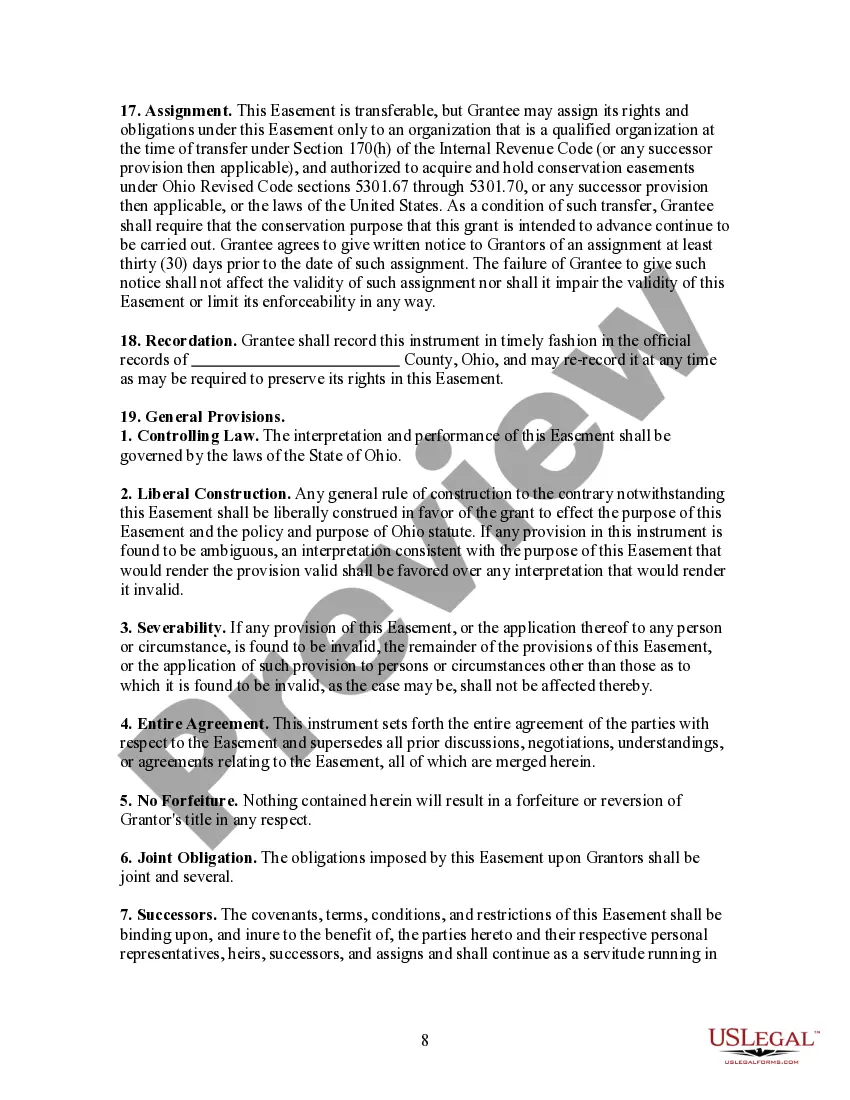
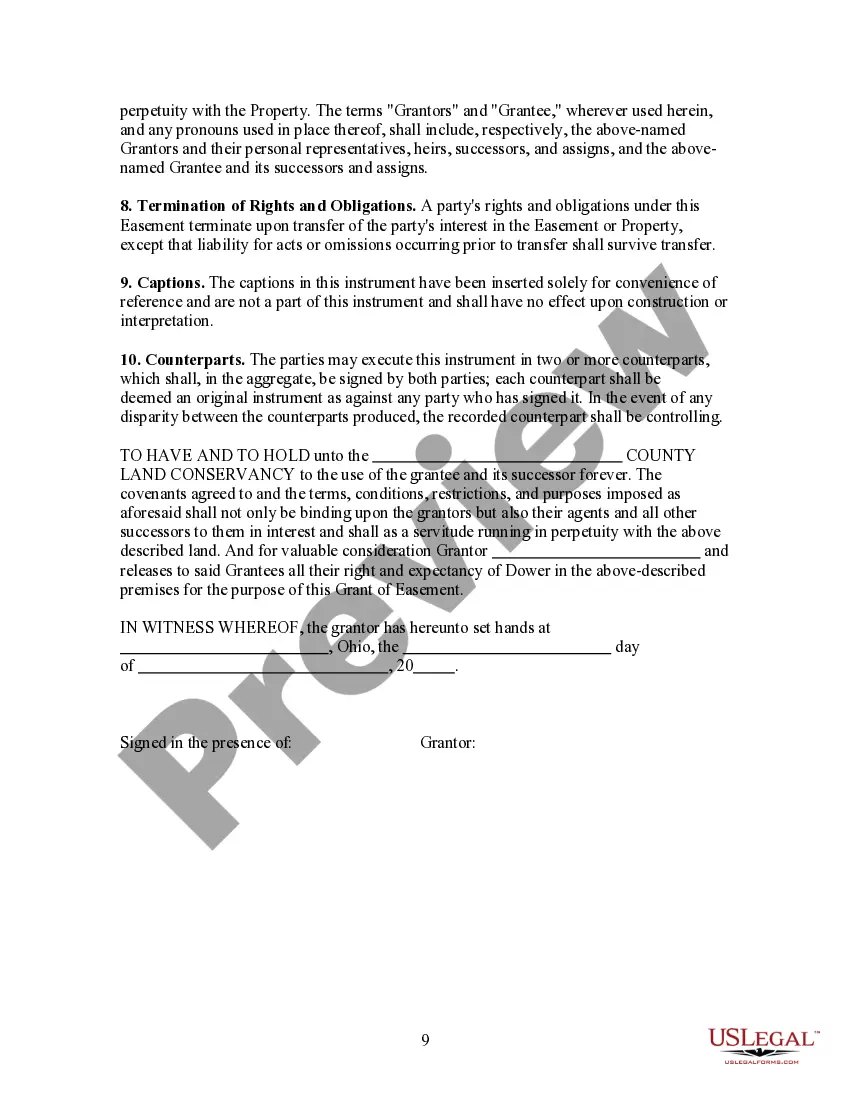
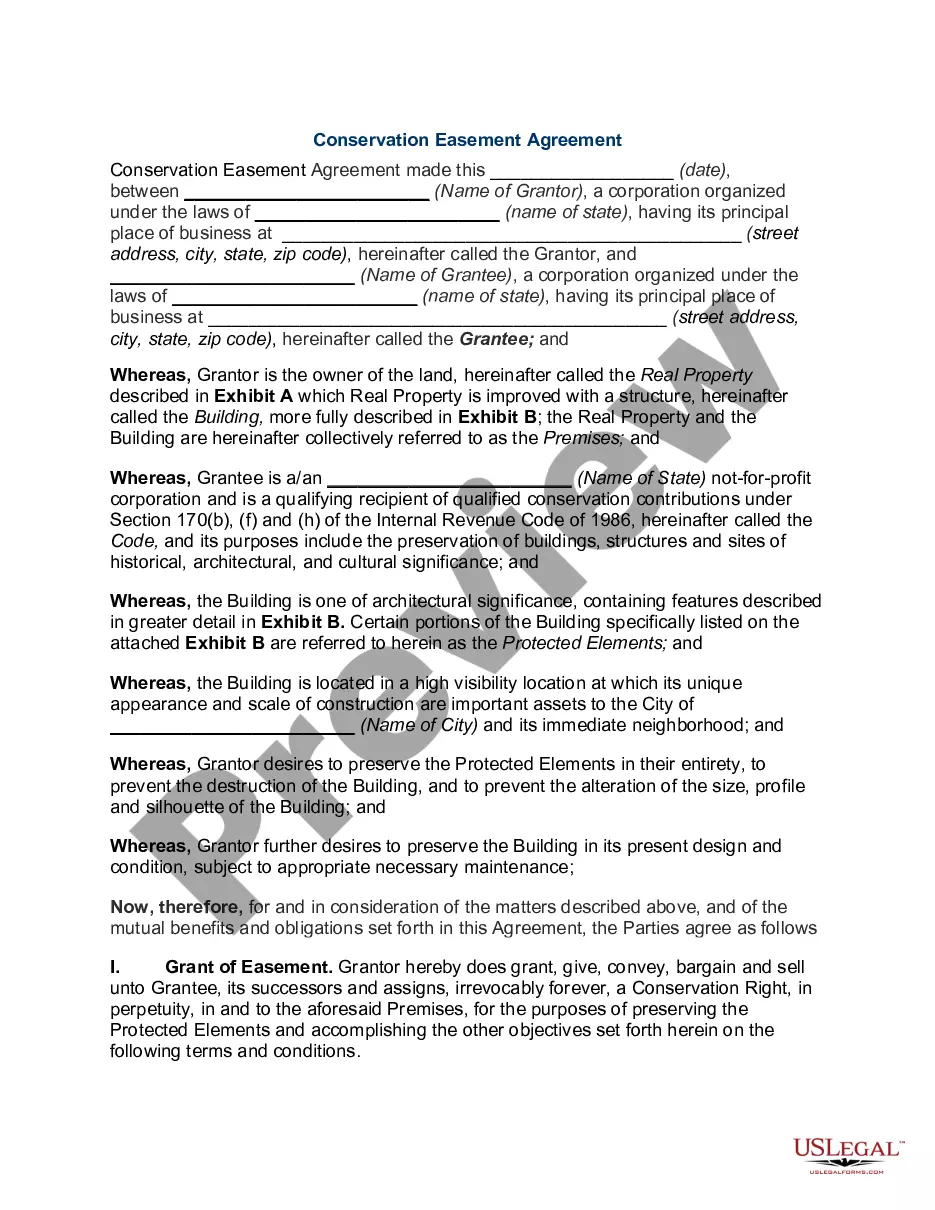
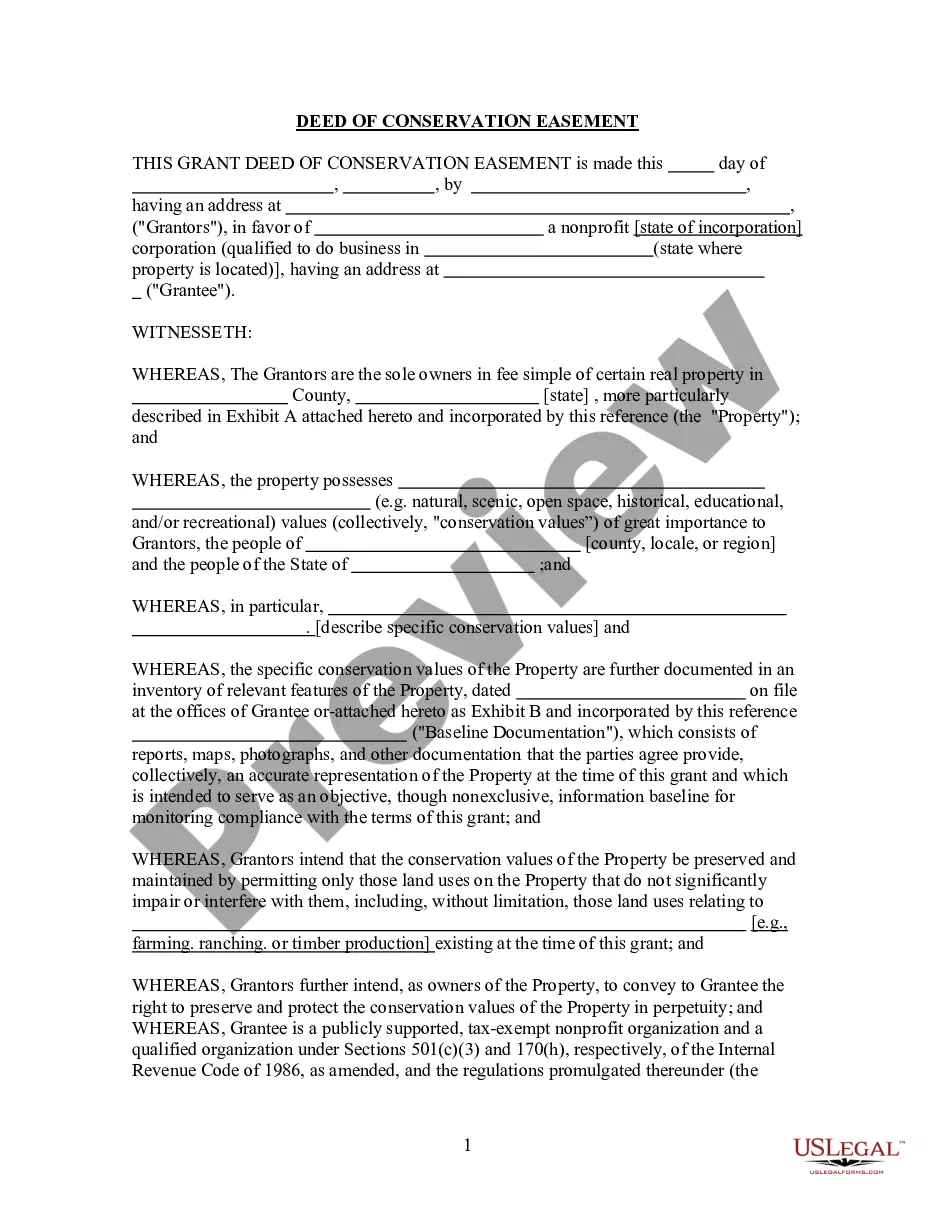
The Grant of Conservation Easement from Husband and Wife is a legal document that establishes a permanent restriction on the use of a specified property. Its primary purpose is to ensure that the property is preserved in its natural state, supporting native wildlife and biodiversity. Unlike general property deeds, this conservation easement specifically focuses on environmental protection and limits types of development or alteration that can take place on the property.
Main sections of this form
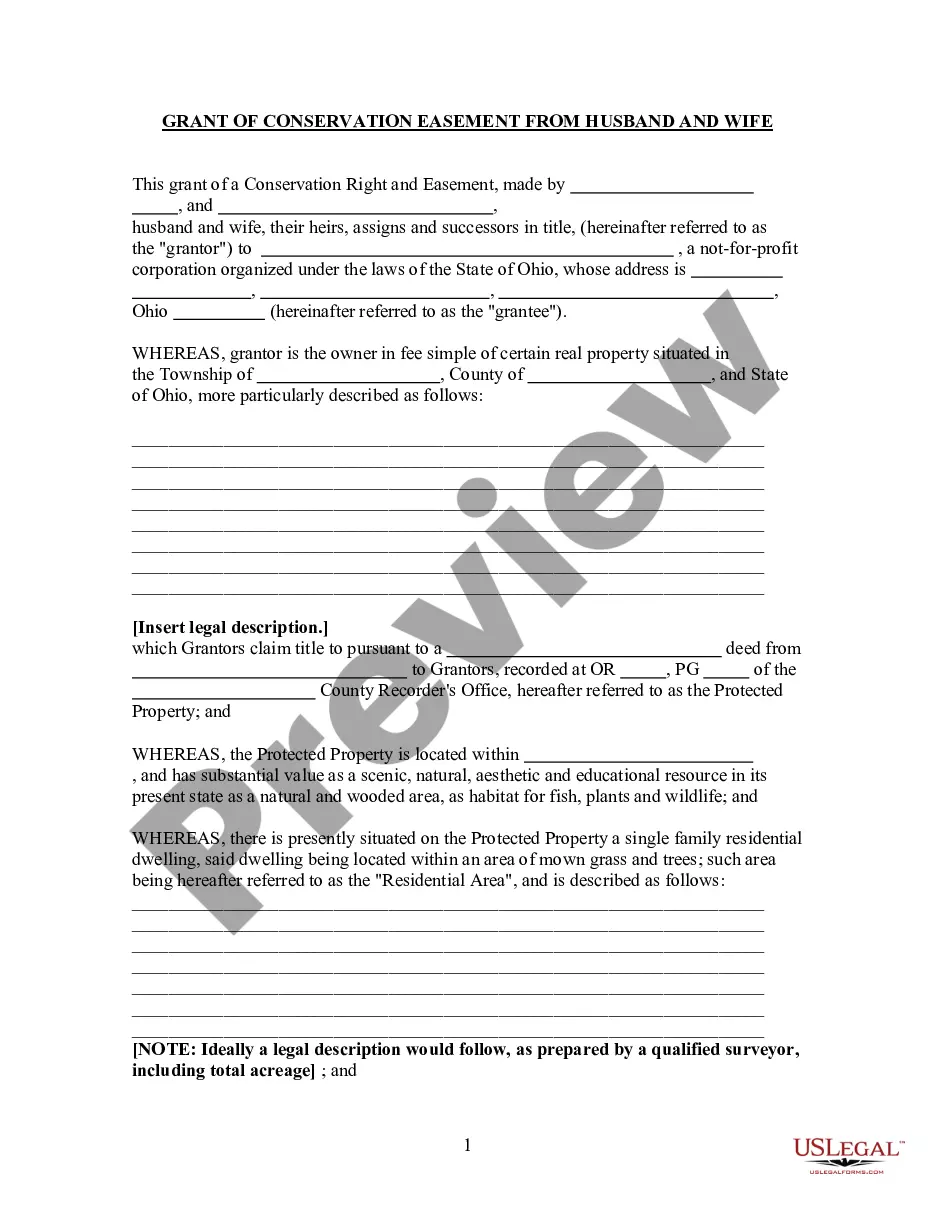
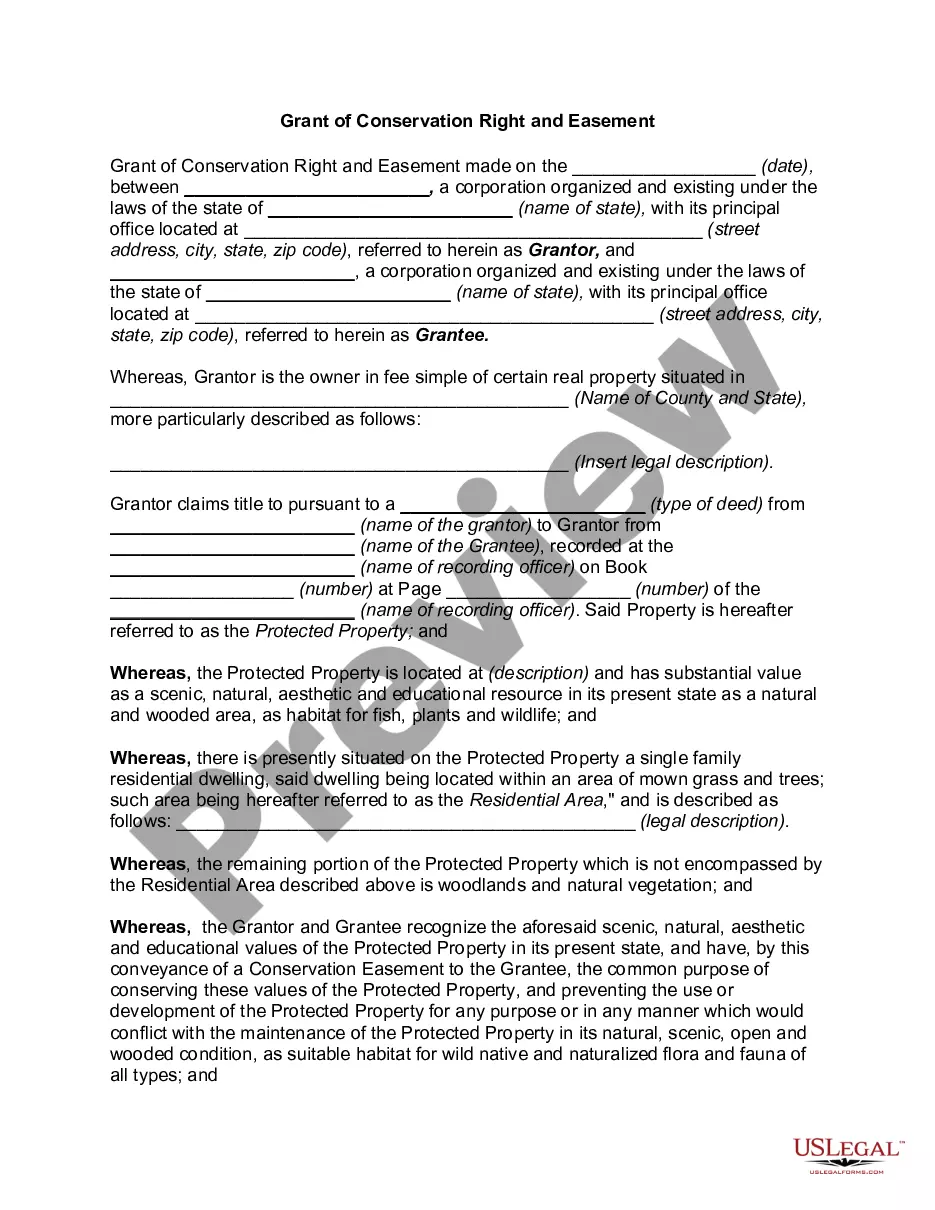
- Identification of grantors (husband and wife) and grantee (charitable organization).
- Legal description of the Protected Property, including total acreage.
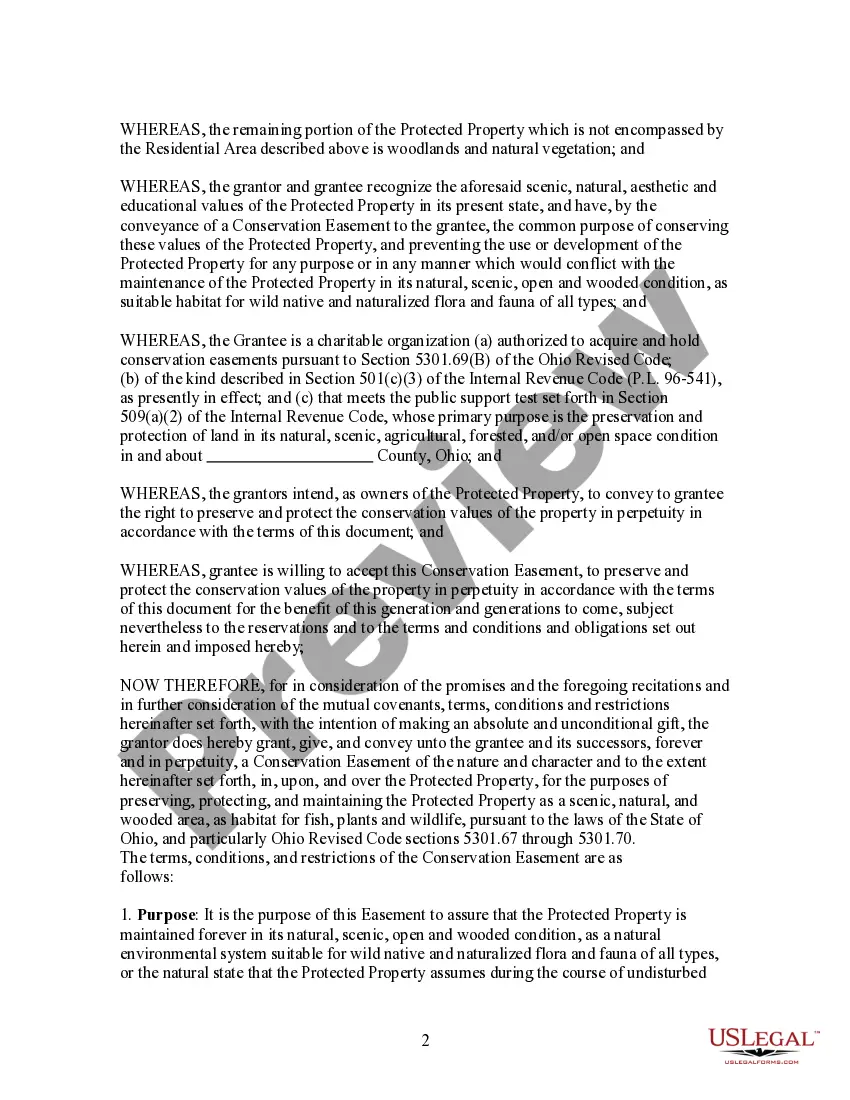
- Purpose of the easement and conservation values being protected.
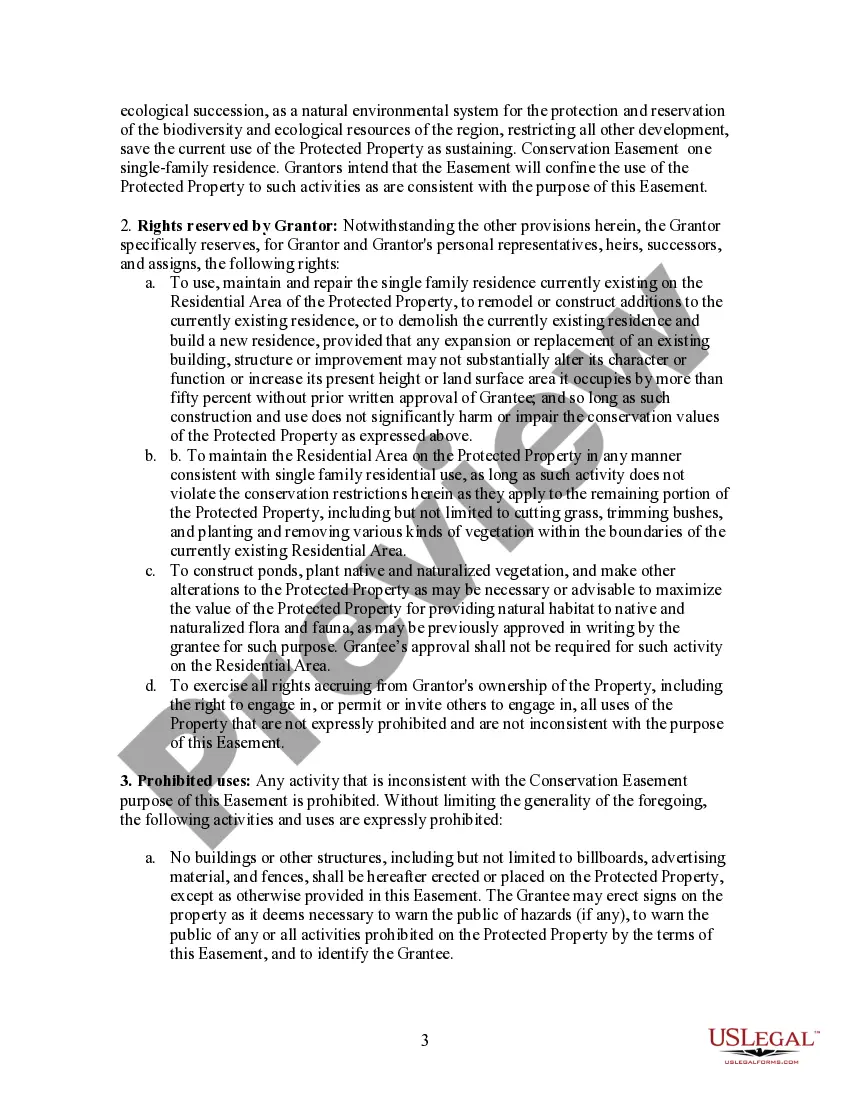
- Details on rights reserved by the grantor, such as maintaining a residence.
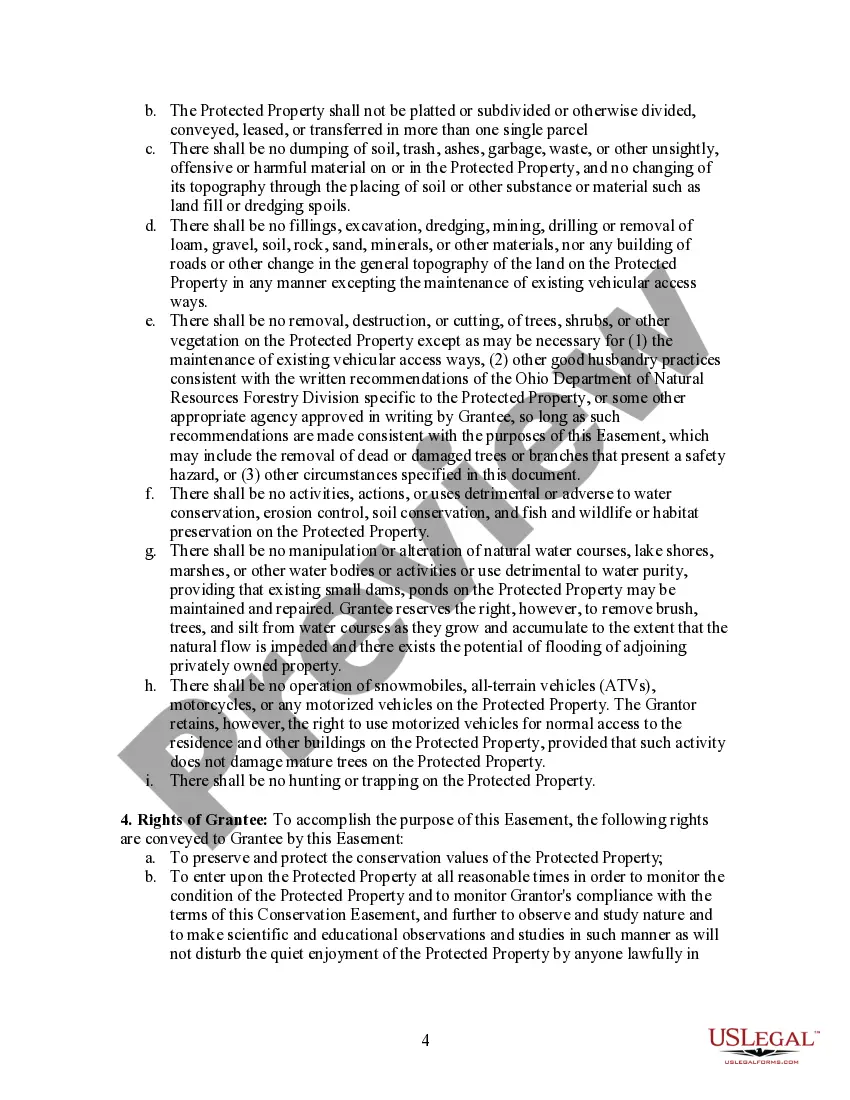
- A comprehensive list of prohibited uses that could harm the property's conservation value.
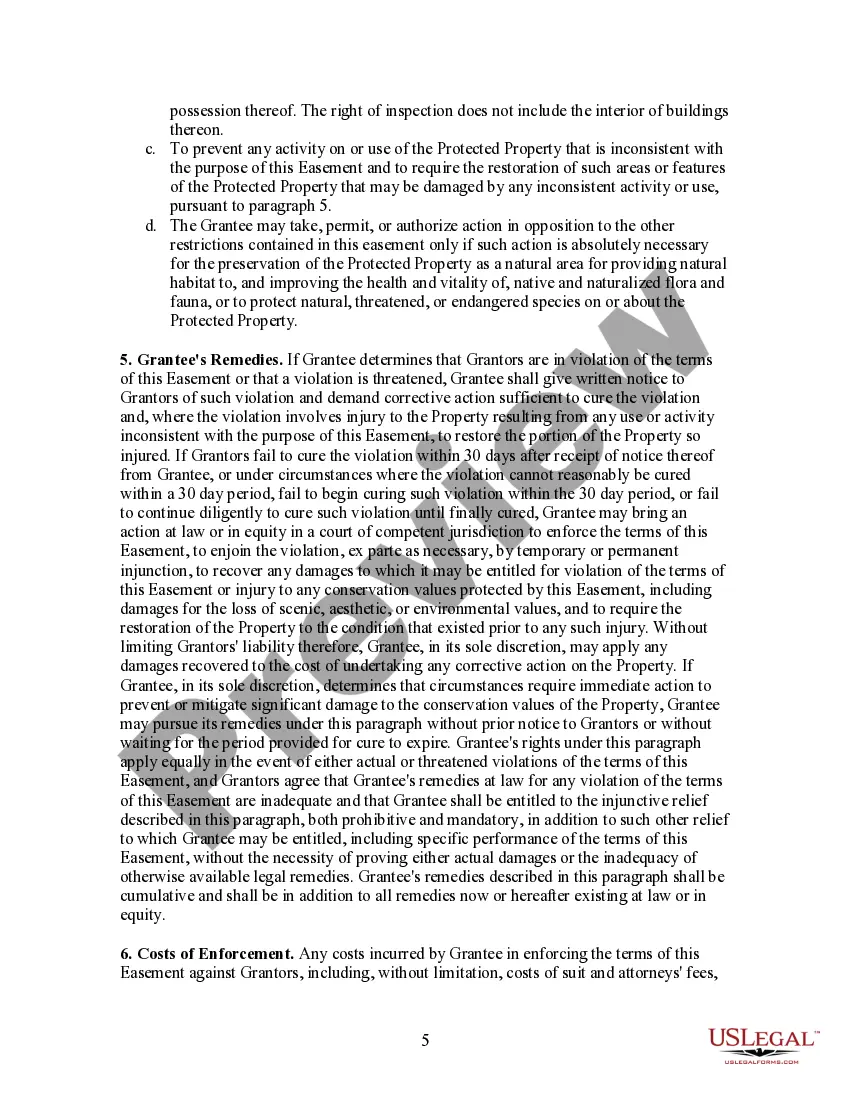
- Rights granted to the grantee for monitoring and enforcing the easement terms.

When this form is needed
You should use the Grant of Conservation Easement when you, as property owners, wish to protect land from development or alteration that could disrupt its natural ecosystem. This form is appropriate if you want to convey loved land to a charitable organization dedicated to environmental conservation while retaining certain rights for property use.
Who should use this form
- Property owners (husband and wife) seeking to preserve land for ecological benefits.
- Trustees or representatives of a conservation organization interested in acquiring easements.
- Individuals or couples committed to environmental protection as part of estate planning.
Instructions for completing this form
- Identify the parties involved: grantors (husband and wife) and the grantee (charity or organization).
- Provide a detailed legal description of the Protected Property, including acreage.
- Specify the environmental purpose and values being conserved.
- Outline the rights being retained by the grantors under the easement.
- List prohibited activities that could harm the conservation values of the property.
- Sign and date the form in the presence of witnesses, if required.
Does this form need to be notarized?
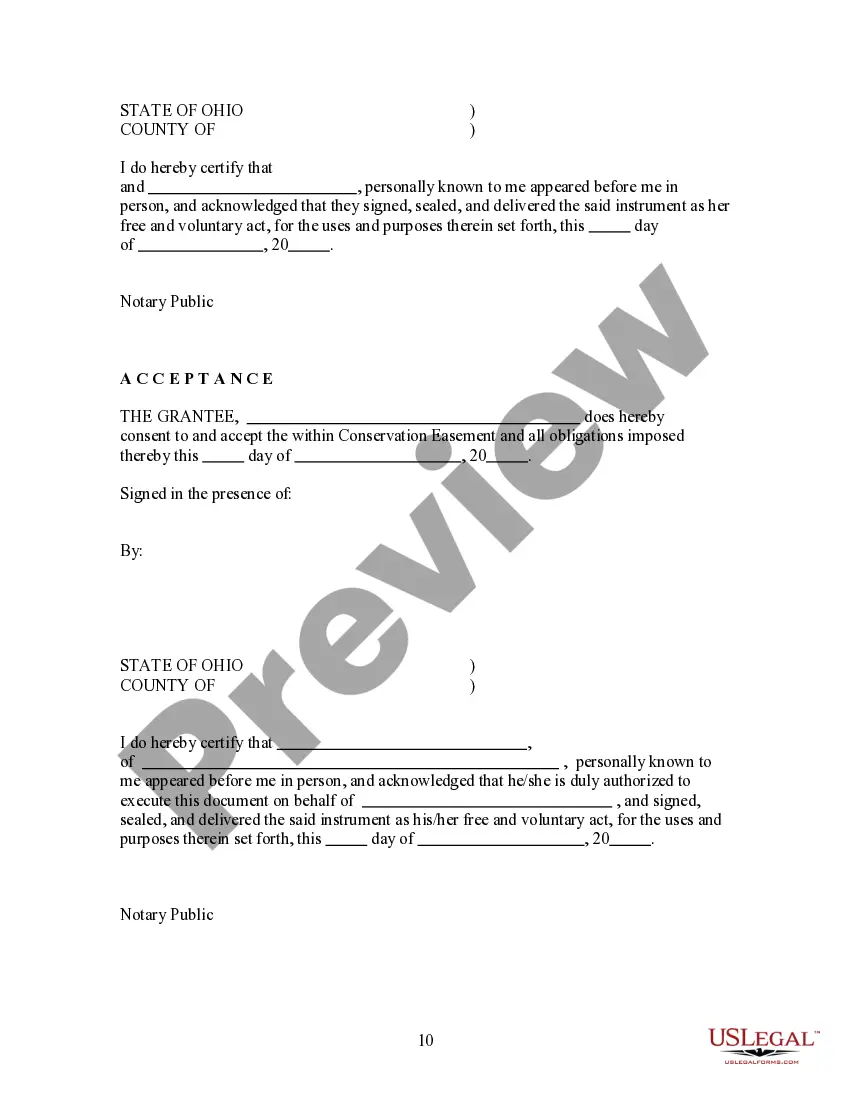
This form needs to be notarized to ensure legal validity. US Legal Forms provides secure online notarization powered by Notarize, allowing you to complete the process through a verified video call, available anytime.
Get your form ready online
Our built-in tools help you complete, sign, share, and store your documents in one place.
Make edits, fill in missing information, and update formatting in US Legal Forms—just like you would in MS Word.
Download a copy, print it, send it by email, or mail it via USPS—whatever works best for your next step.
Sign and collect signatures with our SignNow integration. Send to multiple recipients, set reminders, and more. Go Premium to unlock E-Sign.
If this form requires notarization, complete it online through a secure video call—no need to meet a notary in person or wait for an appointment.
We protect your documents and personal data by following strict security and privacy standards.

Make edits, fill in missing information, and update formatting in US Legal Forms—just like you would in MS Word.

Download a copy, print it, send it by email, or mail it via USPS—whatever works best for your next step.

Sign and collect signatures with our SignNow integration. Send to multiple recipients, set reminders, and more. Go Premium to unlock E-Sign.

If this form requires notarization, complete it online through a secure video call—no need to meet a notary in person or wait for an appointment.

We protect your documents and personal data by following strict security and privacy standards.
Mistakes to watch out for
- Failing to provide a detailed legal description of the property.
- Not clearly specifying the conservation purpose and values.
- Overlooking rights reserved by the grantors that may conflict with easement goals.
- Missing required signatures or notarization, if applicable.
Advantages of online completion
- Convenience of downloading the document from anywhere at any time.
- Editability allows customization to fit specific property and grantor needs.
- Access to reliable, attorney-drafted templates ensures legal compliance.
Looking for another form?
Form popularity
FAQ
While no conservation easement will ever be terminated, there are times where it can be amended. Ken says although an amendment can be made to an easement, these are rare and the only way they can happen is if the landowner is willing to donate other retained rights they own.
A conservation easement is a legal agreement between a landowner and a nonprofit land trust or governmental entity that permanently limits the uses of the land in order to protect specified conservation values. It does this by restricting the amount of development and activities that can take place in the future.
An agricultural conservation easement is a voluntary, legally recorded deed restriction that is placed on a specific property used for agricultural production.Because the easement is a restriction on the deed of the property, the easement remains in effect even when the land changes ownership.
When you create a conservation easement, you may lose access to certain rights. While you'll likely retain certain surface rights like farming and ranching, development is almost always limited.
When a conservation easement is placed on a property, it typically lowers the property's value for federal estate tax purposes and may decrease estate tax liability. Therefore, easements may help heirs avoid being forced to sell off land to pay estate taxes and enable land to stay in the family.
One big advantage of buying a home or land with an easement is that it could result in major savings. Conservation land is restrictive by nature, and that's often a big sticking point for buyers. But if you're willing to deal with those restrictions, it could be a good way to buy land or property on the cheap.
Syndicated conservation easement transactions basically involve the use of a pass-through entity (for example, a partnership) to acquire property.