Ohio Application for Sublease
What this document covers
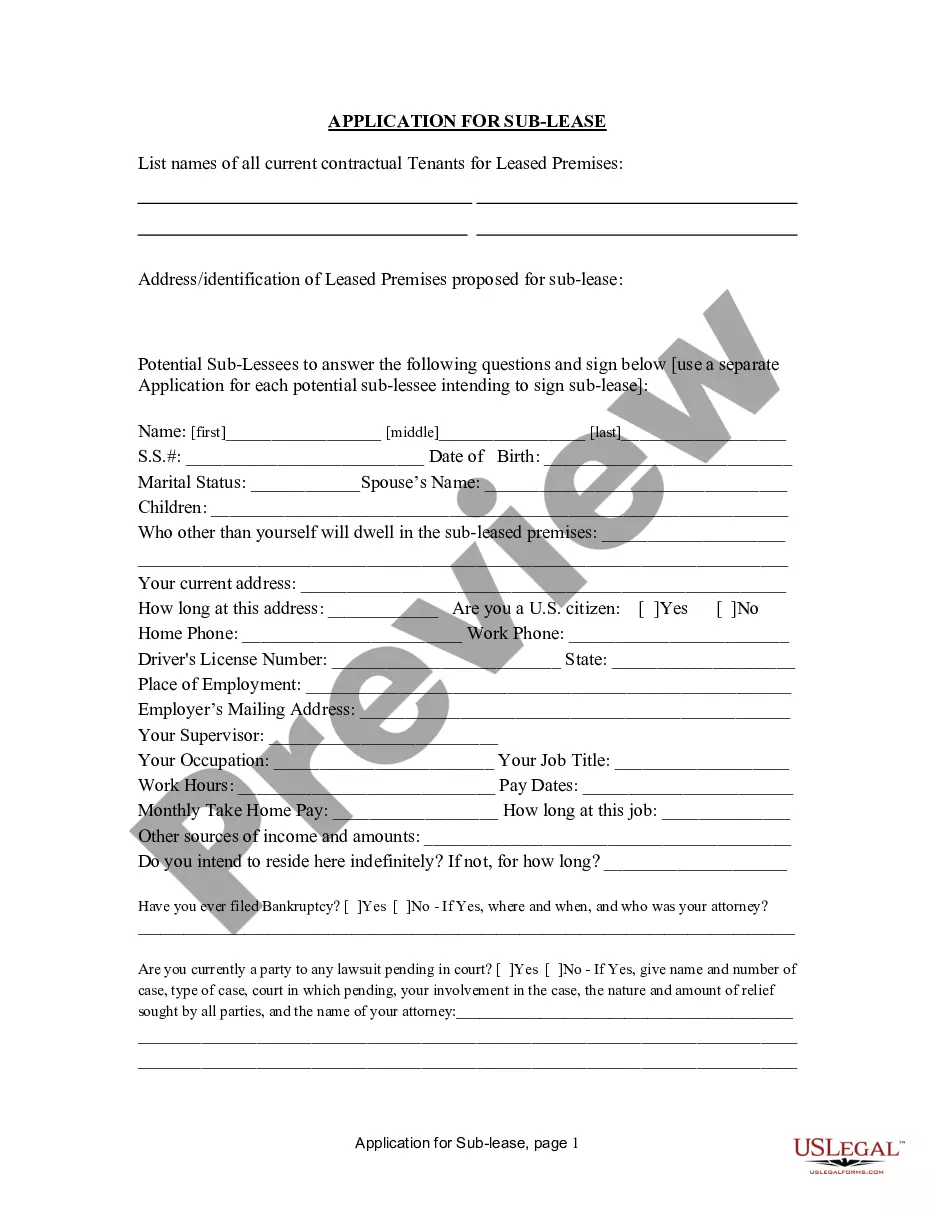
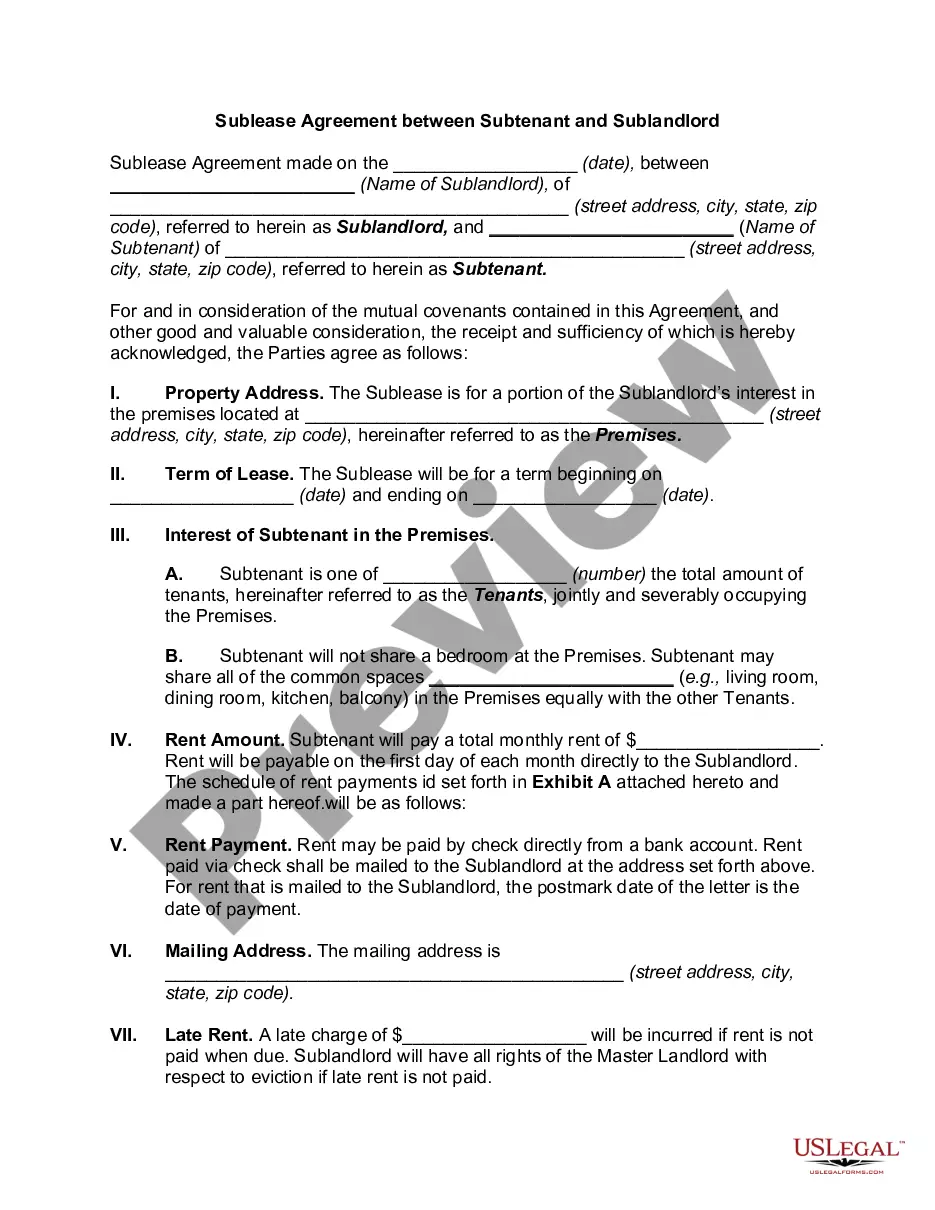
The Application for Sublease is a document that a potential sub-tenant uses to request permission from the landlord to sublet a rental unit. This form helps the landlord assess the sub-tenant's suitability based on provided personal and financial information. Unlike a standard lease agreement, the application specifically targets the approval of subleasing rights, which may vary depending on the original lease terms.
Key parts of this document
- Personal information: Includes name, marital status, children, and current address.
- Employment details: Information about current employment, including employer's address and income.
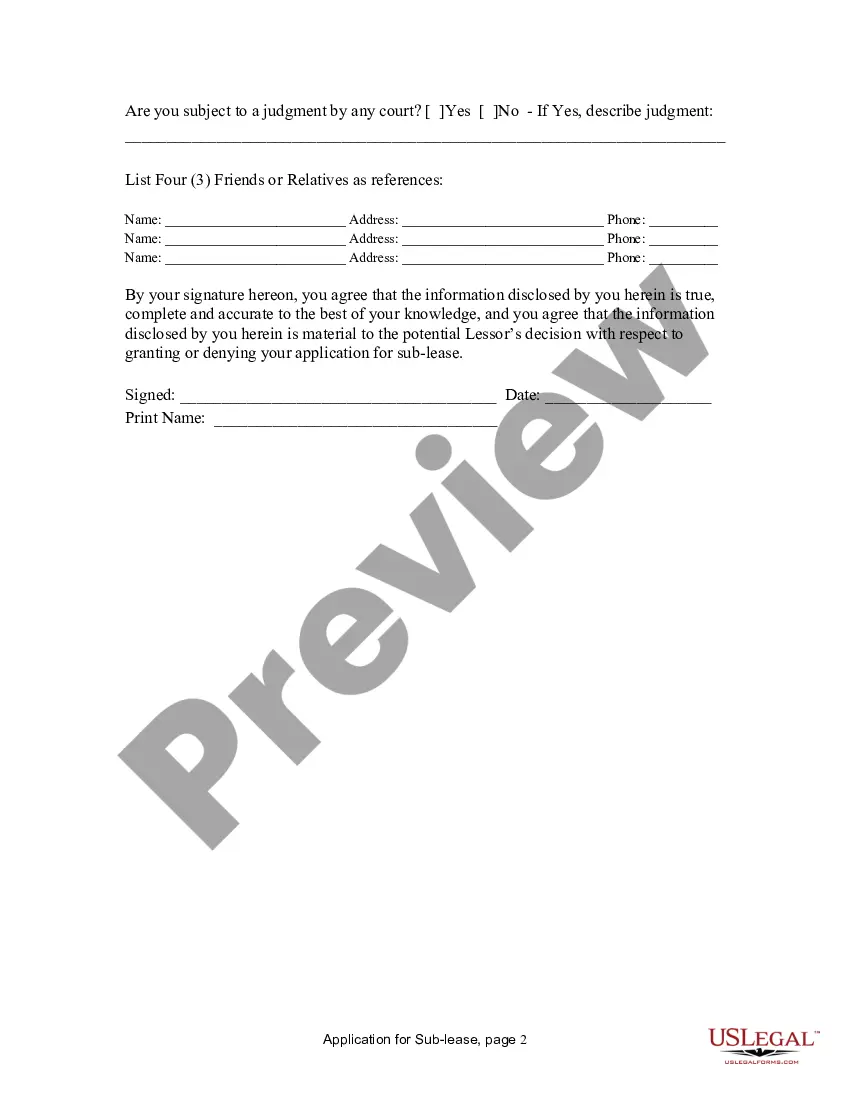
- Background questions: Inquiries about bankruptcy, lawsuits, and court judgments.
- References: Requirement to list three friends or relatives for character verification.
- Agreement clause: A section where the applicant confirms the truthfulness of their information.
Situations where this form applies
This form is essential when a tenant wishes to sublet their apartment or rental home. It is commonly used in situations such as a temporary job relocation, when a tenant is studying away from home, or when a tenant needs to downsize their living space. Subleasing often requires landlord approval, making this application critical for legal compliance and to maintain the rental property's integrity.
Who should use this form
- Current tenants who want to sublet their rental unit.
- Individuals seeking a rental space through subleasing arrangements.
- Landlords who require a formal request for subleasing approval from their tenants.
Instructions for completing this form
- Provide personal details, including your name, marital status, and children if applicable.
- Enter your current address and length of residence.
- Fill in employment information, including your employer's name, address, and your income details.
- Answer background questions honestly regarding bankruptcy and any legal issues.
- List three references, including their contact information, for verification purposes.
- Sign and date the application to confirm the accuracy of the provided information.
Is notarization required?
This form does not typically require notarization unless specified by local law. It is advisable to check your jurisdiction's requirements to ensure compliance.
Get your form ready online
Our built-in tools help you complete, sign, share, and store your documents in one place.
Make edits, fill in missing information, and update formatting in US Legal Forms—just like you would in MS Word.
Download a copy, print it, send it by email, or mail it via USPS—whatever works best for your next step.
Sign and collect signatures with our SignNow integration. Send to multiple recipients, set reminders, and more. Go Premium to unlock E-Sign.
If this form requires notarization, complete it online through a secure video call—no need to meet a notary in person or wait for an appointment.
We protect your documents and personal data by following strict security and privacy standards.

Make edits, fill in missing information, and update formatting in US Legal Forms—just like you would in MS Word.

Download a copy, print it, send it by email, or mail it via USPS—whatever works best for your next step.

Sign and collect signatures with our SignNow integration. Send to multiple recipients, set reminders, and more. Go Premium to unlock E-Sign.

If this form requires notarization, complete it online through a secure video call—no need to meet a notary in person or wait for an appointment.

We protect your documents and personal data by following strict security and privacy standards.
Mistakes to watch out for
- Failing to provide complete and accurate employment information.
- Not including all required references or using unverified contacts.
- Omitting signatures or dates, which can invalidate the application.
- Neglecting to review the original lease for any specific subletting requirements.
Why use this form online
- Convenience: Download and complete the form at your own pace without needing to visit a physical location.
- Editability: Easily make changes and updates as required before submission.
- Reliability: Access to forms drafted by licensed attorneys ensures the document complies with legal standards.
Looking for another form?
Form popularity
FAQ
Oftentimes, sub-tenants have the right to be presented with an eviction notice in advance of having to move out and, in some jurisdictions, may be able to bring a lawsuit against the landlord.
If a court finds you guilty of the first offence of unlawful subletting, you can be fined in the magistrates' court.At the magistrates' court, you can get up to six months in prison or a fine, or both. At the Crown Court the maximum penalty is imprisonment for two years or a fine, or both.
If a tenant is subletting without consent, it's likely they will have broken terms in their tenancy agreement. This breach of contract means that the landlord can take action to evict them from their home.
Get organized before you start searching. Provide verifiable references. Submit a resume with your application. Address problems and offer solutions. Treat the inspection as an interview.
You lack references or have poor references Not providing any references, or having someone give you a poor reference, could cause the apartment manager or landlord to deny your application.
Ohio is another state that's relatively landlord-friendly. Rental property is affordable, and returns are decent.Landlords must pay the interest to the tenant annually, even if it's only a few dollars. Still, Ohio is a decent place to own rental property.
The Tenant Doesn't Make Enough Income. The Tenant Smokes. The Tenant Has a Pet. The Tenant's Income Isn't Verified. The Tenant Has Been Convicted of a Crime. The Tenant Does Not Have Rental History. The Tenant Has a History of Damaging Property and Not Paying Rent. The Tenant Provides False Information.
Without a written lease, the landlord or the tenant may end a week-to-week tenancy by giving the other party at least seven days' notice before the termination date.Ohio law prohibits a landlord from shifting certain responsibilities or liabilities to a tenant.
Ohio laws do not forbid subletting, but most likely your rental agreement contains the section that obligates you to gain the landlord's approval prior to subletting.You mail a letter to your landlord and ask a permission to sublet your place.