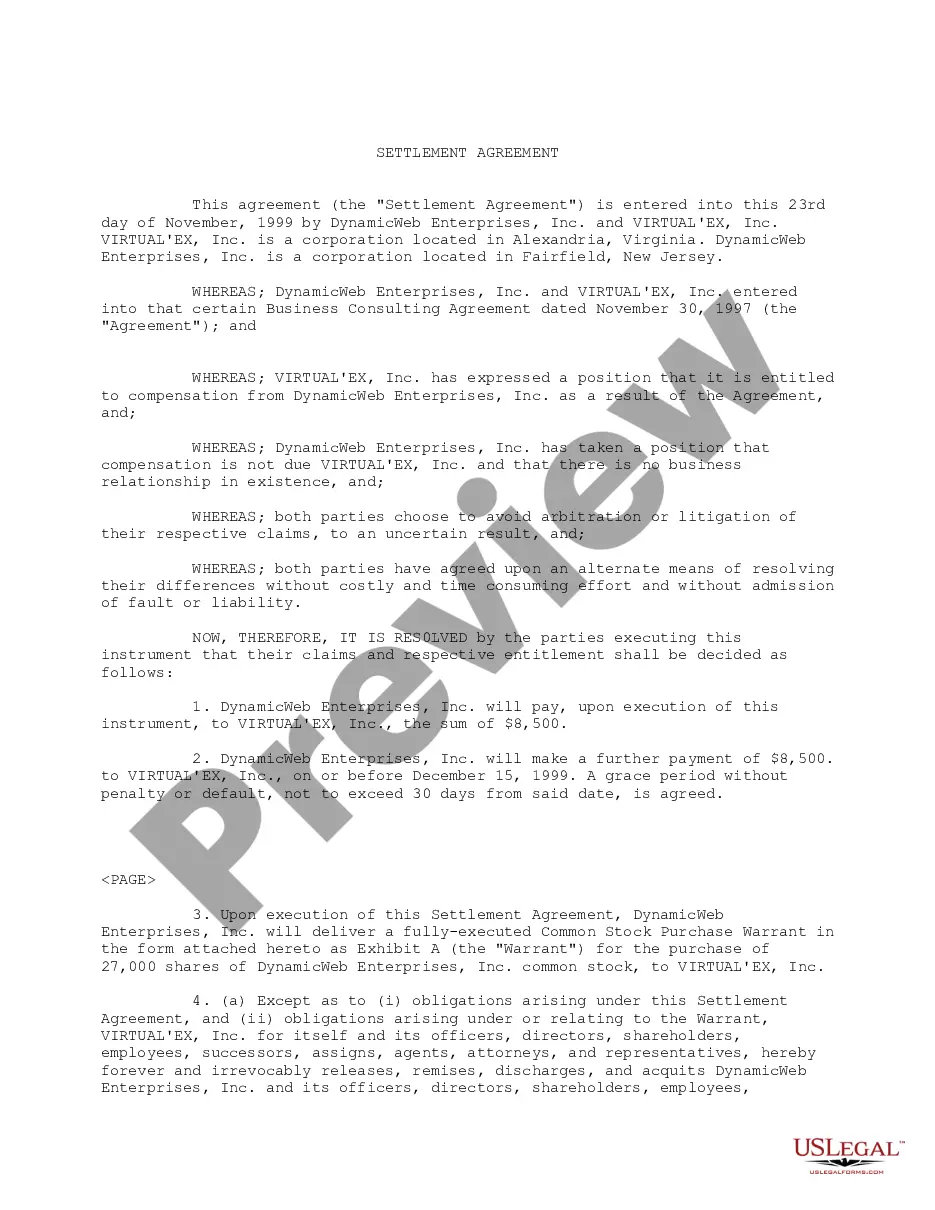
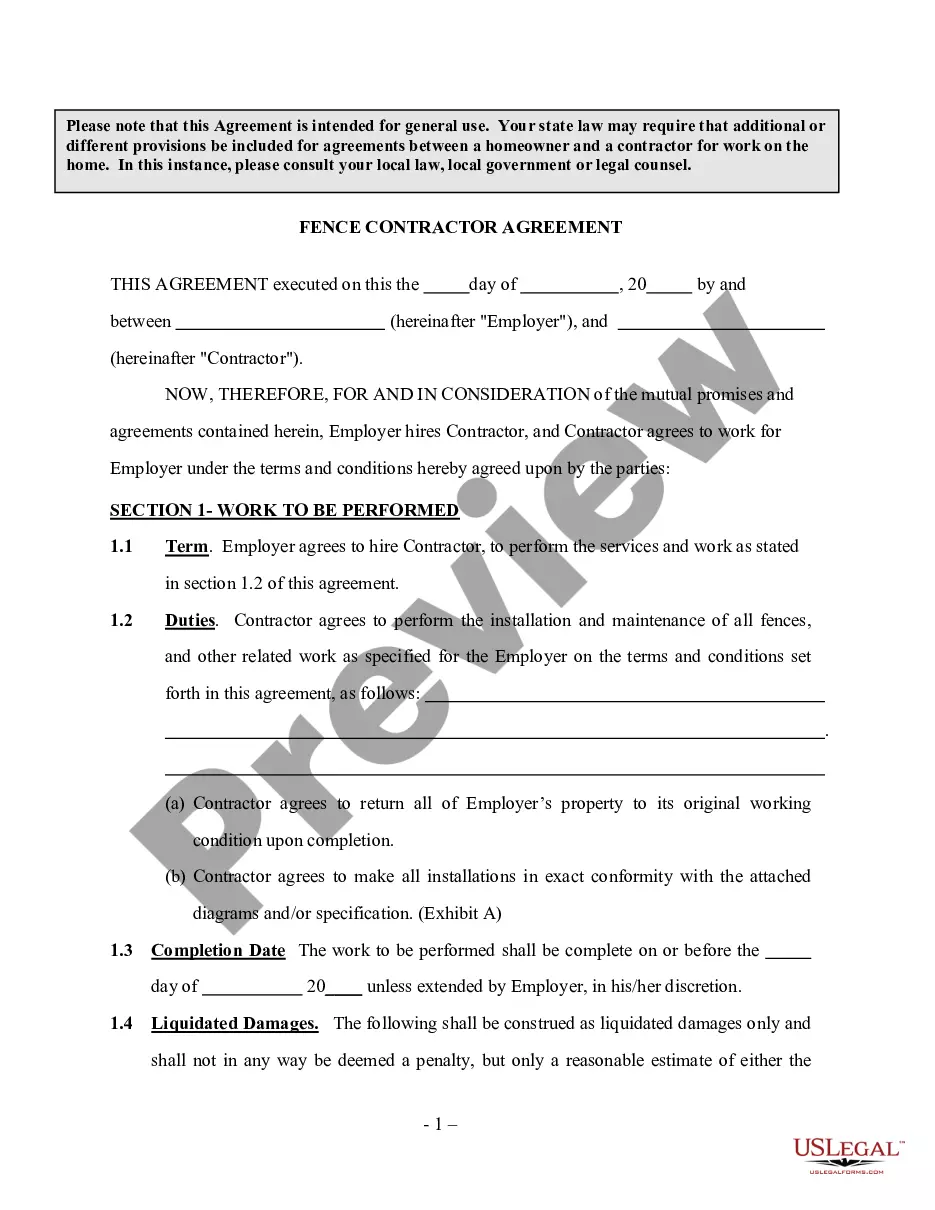
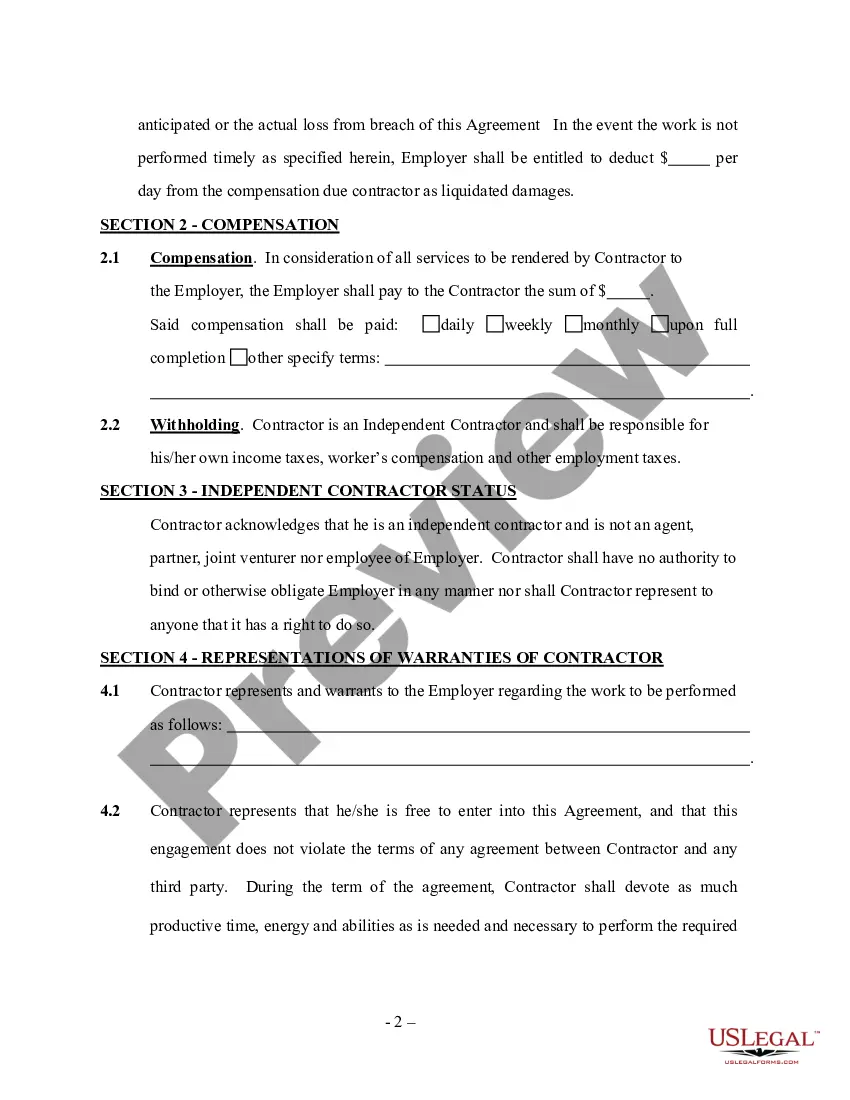
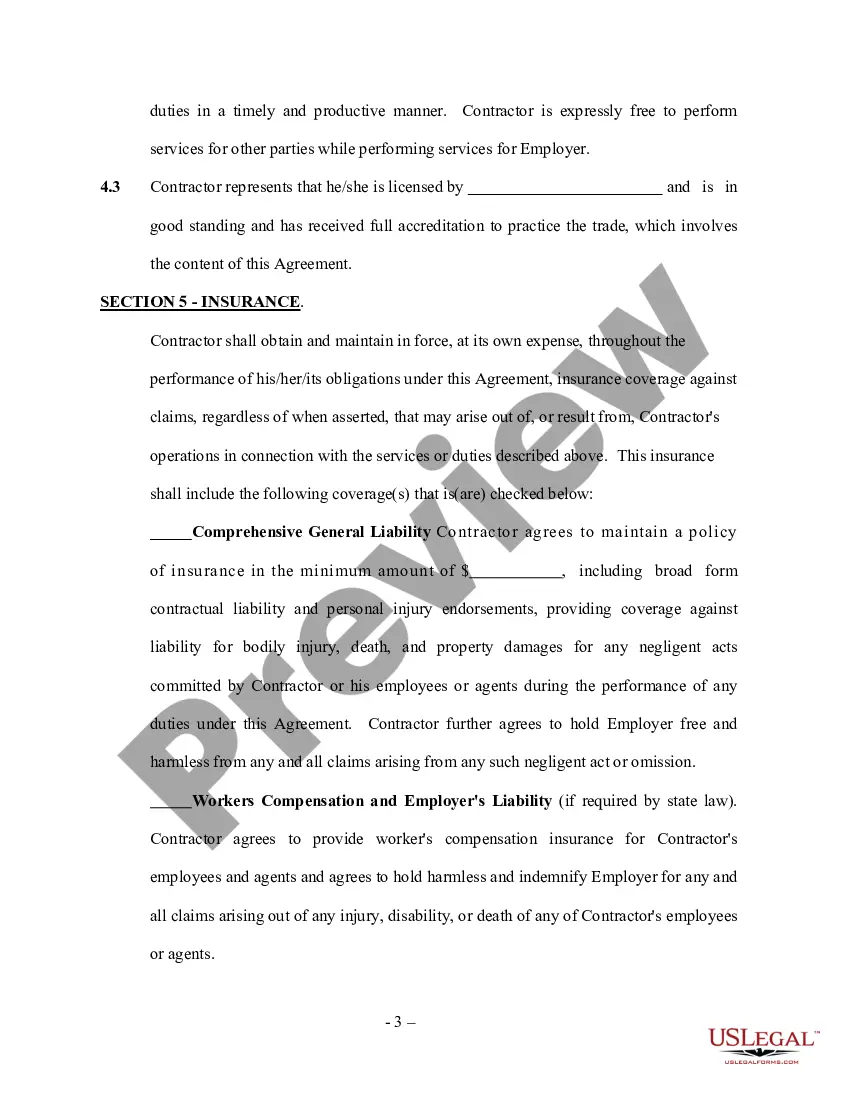
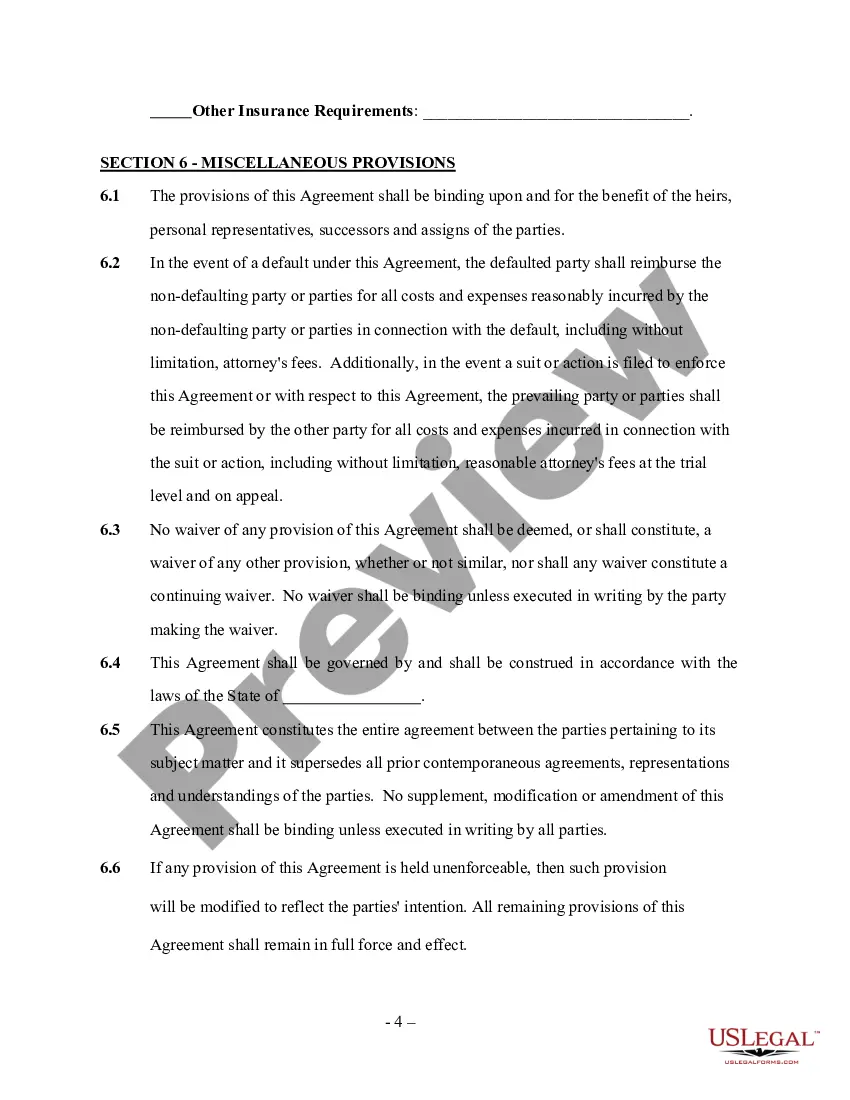
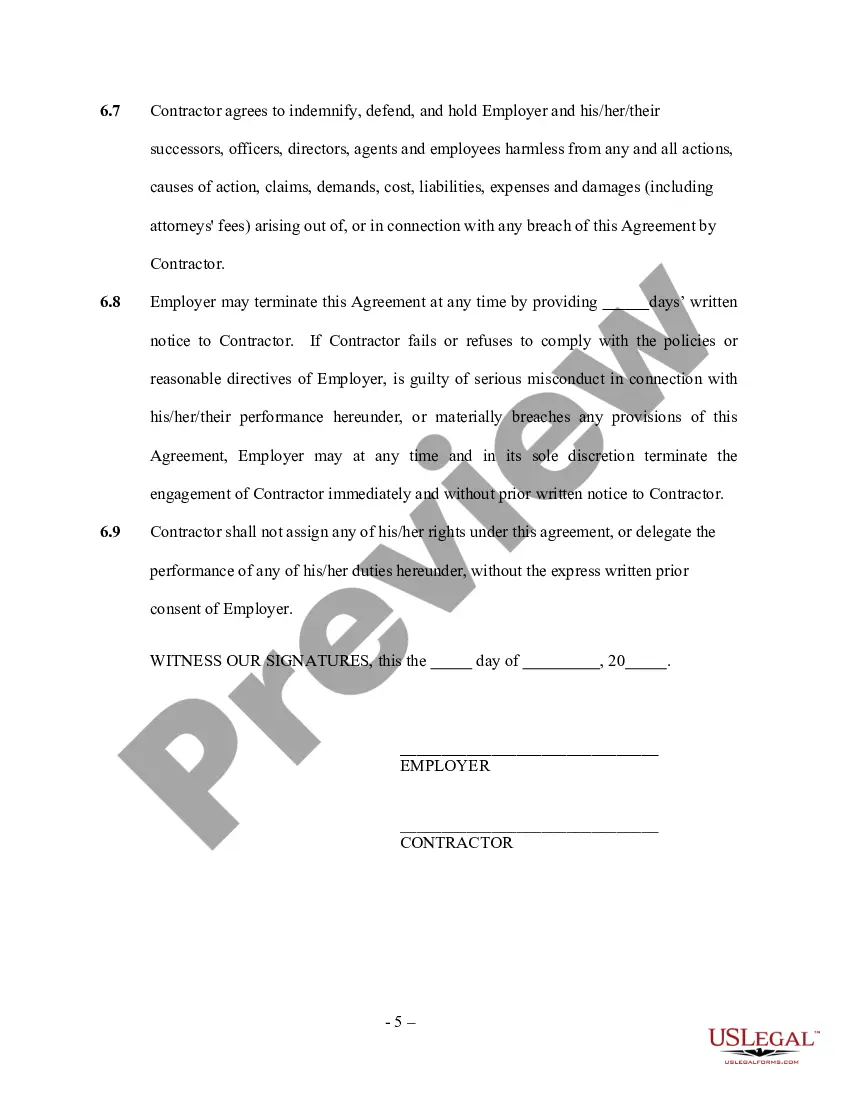
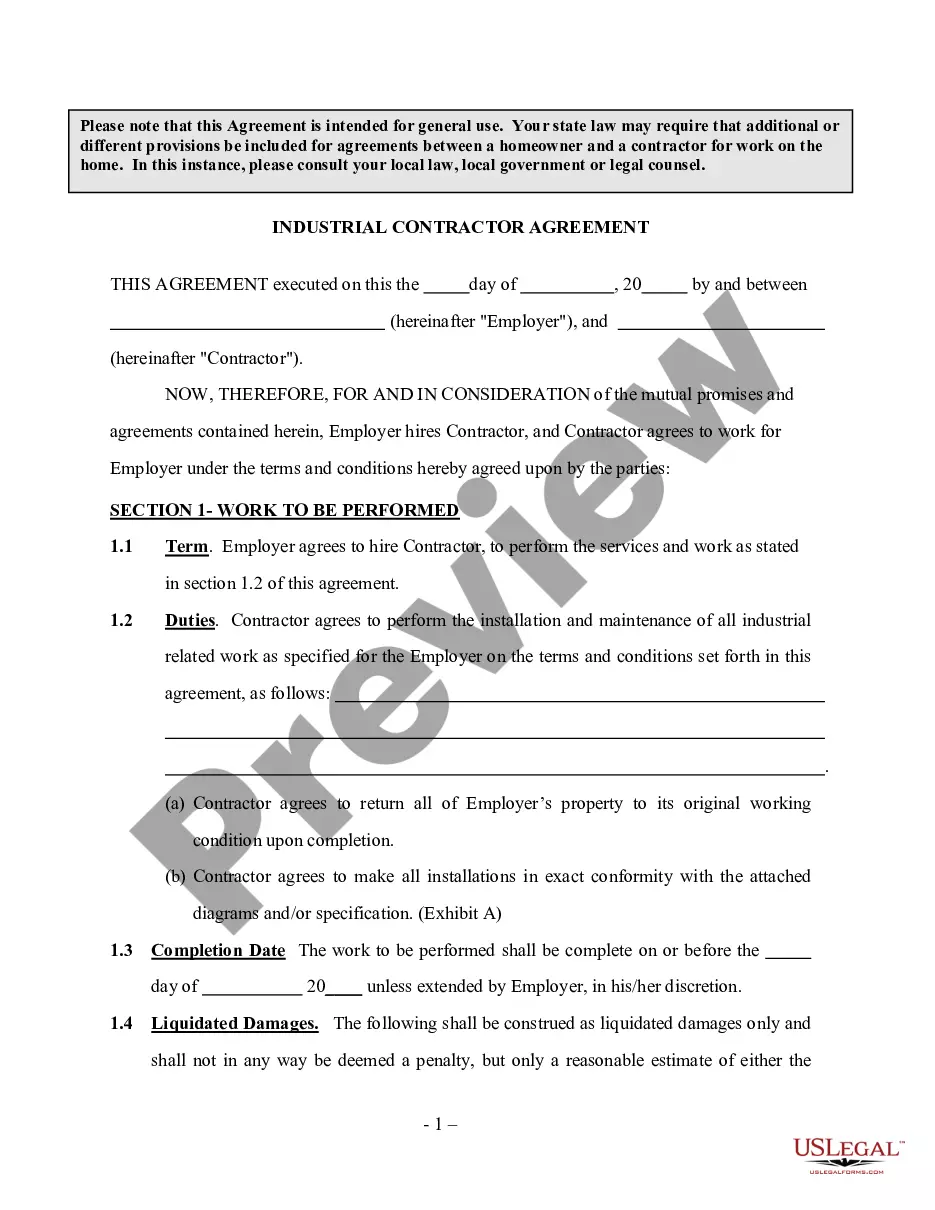
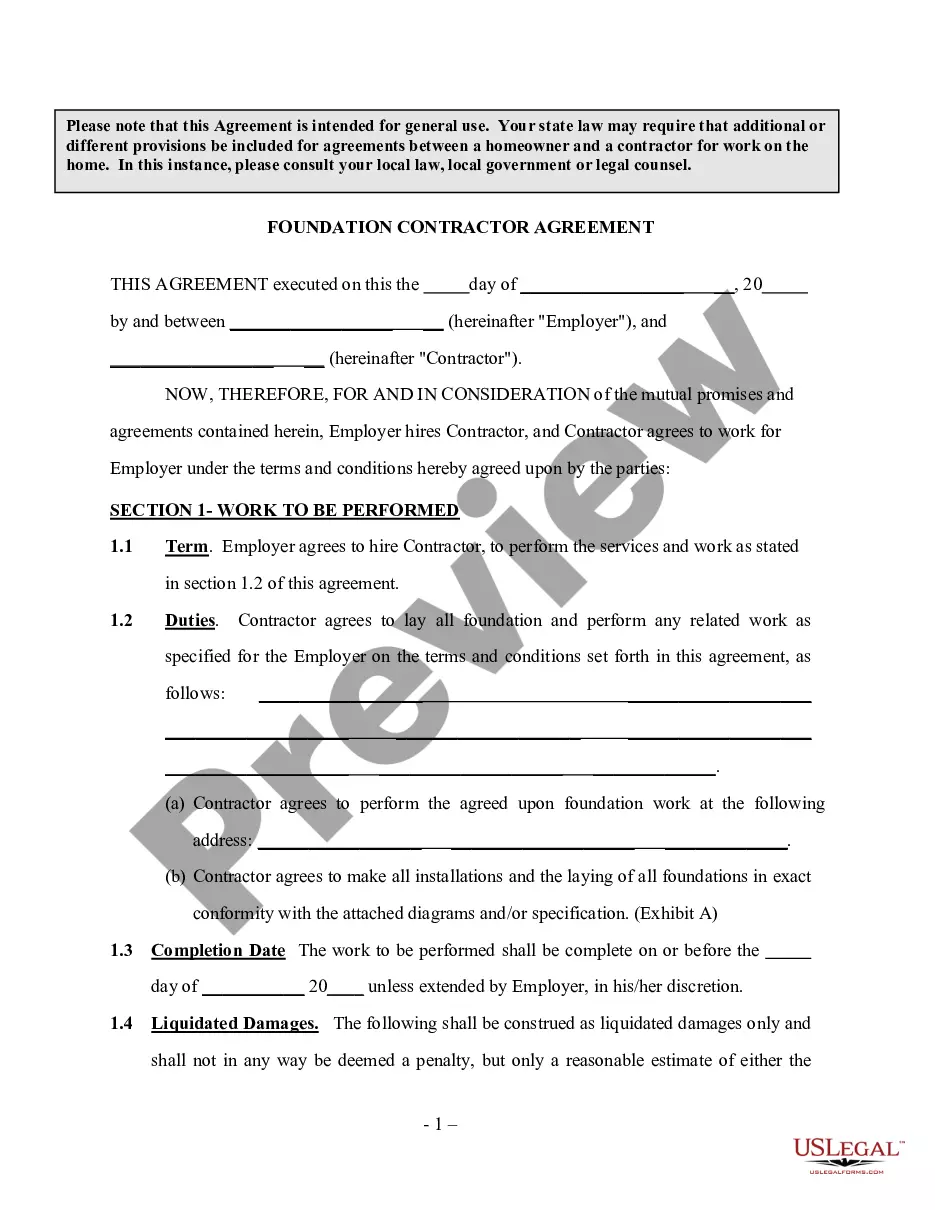
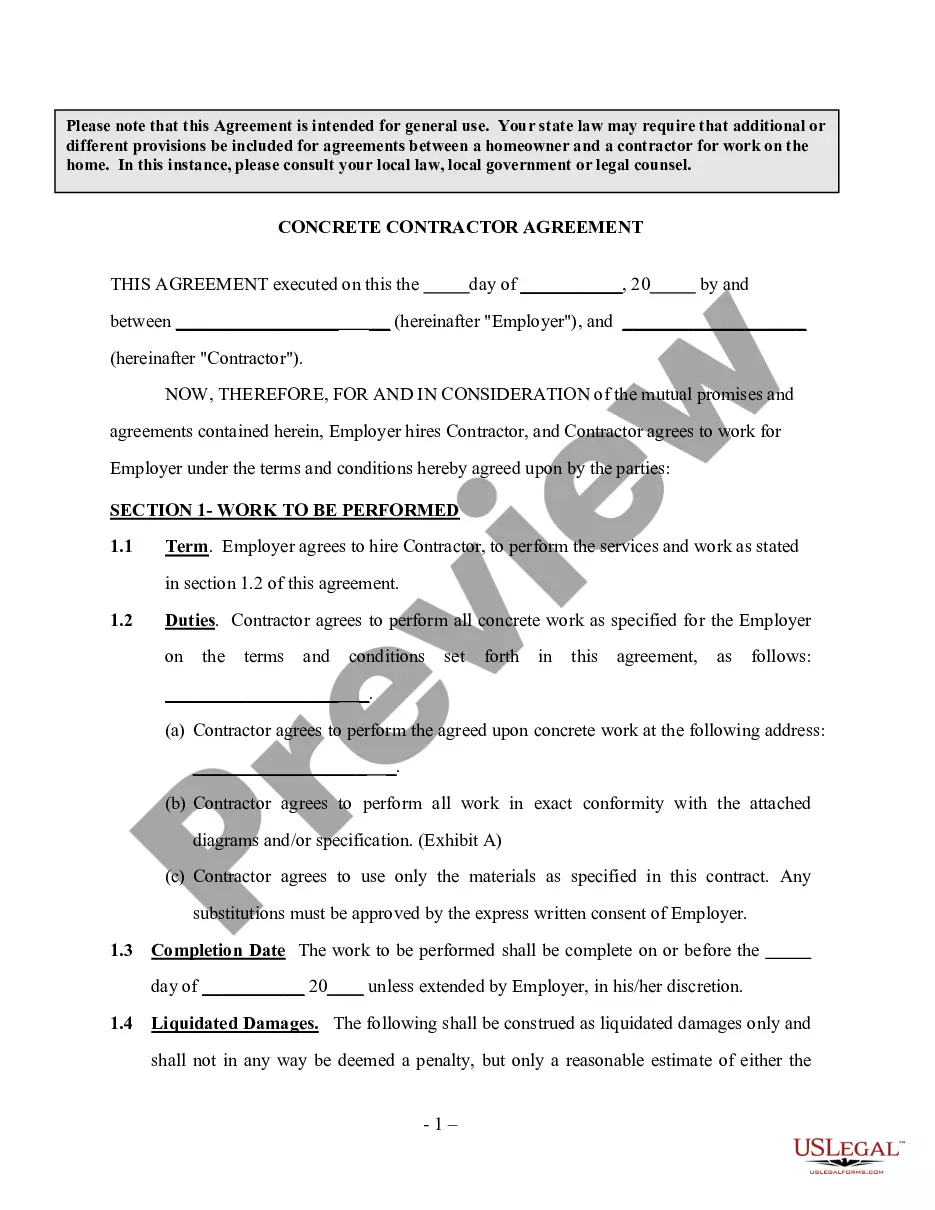
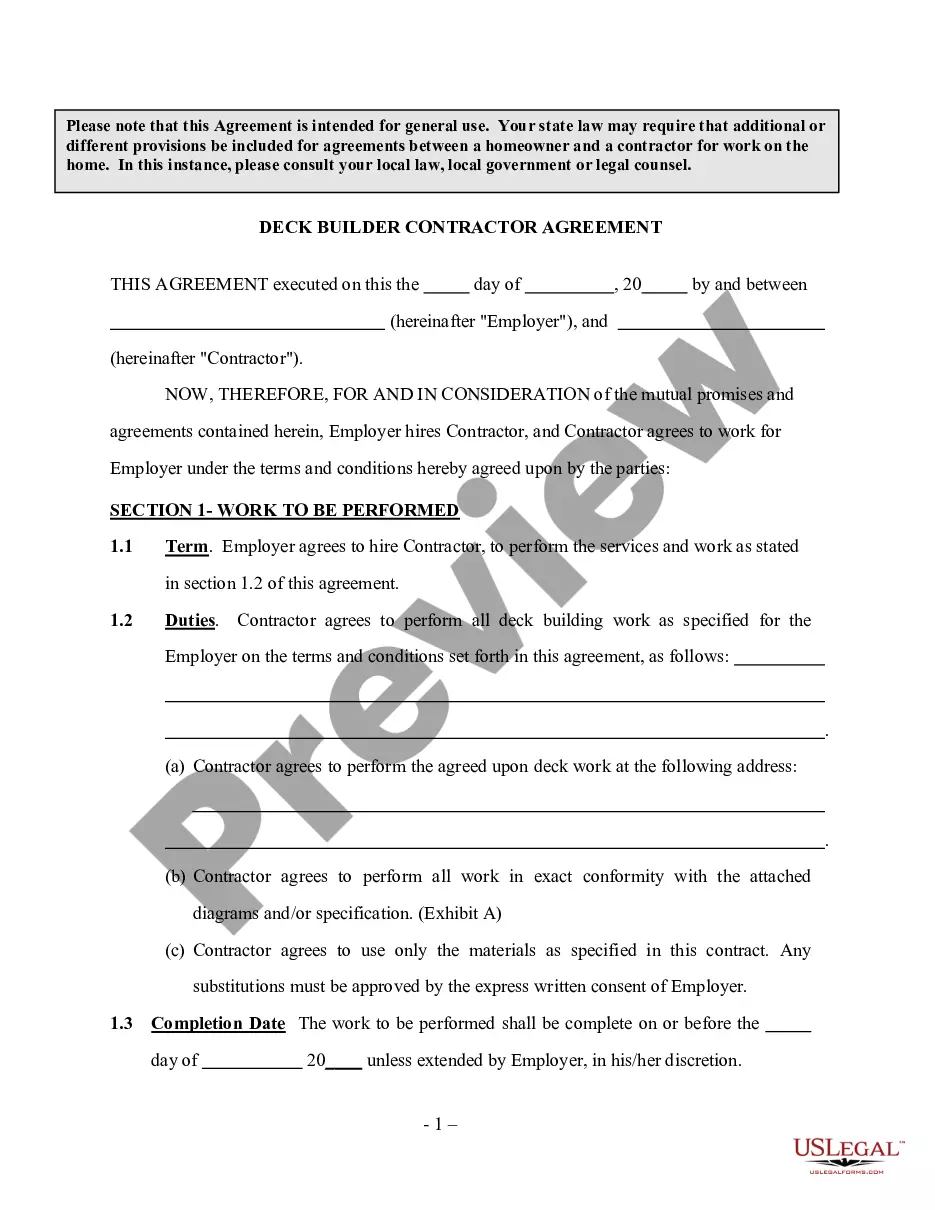
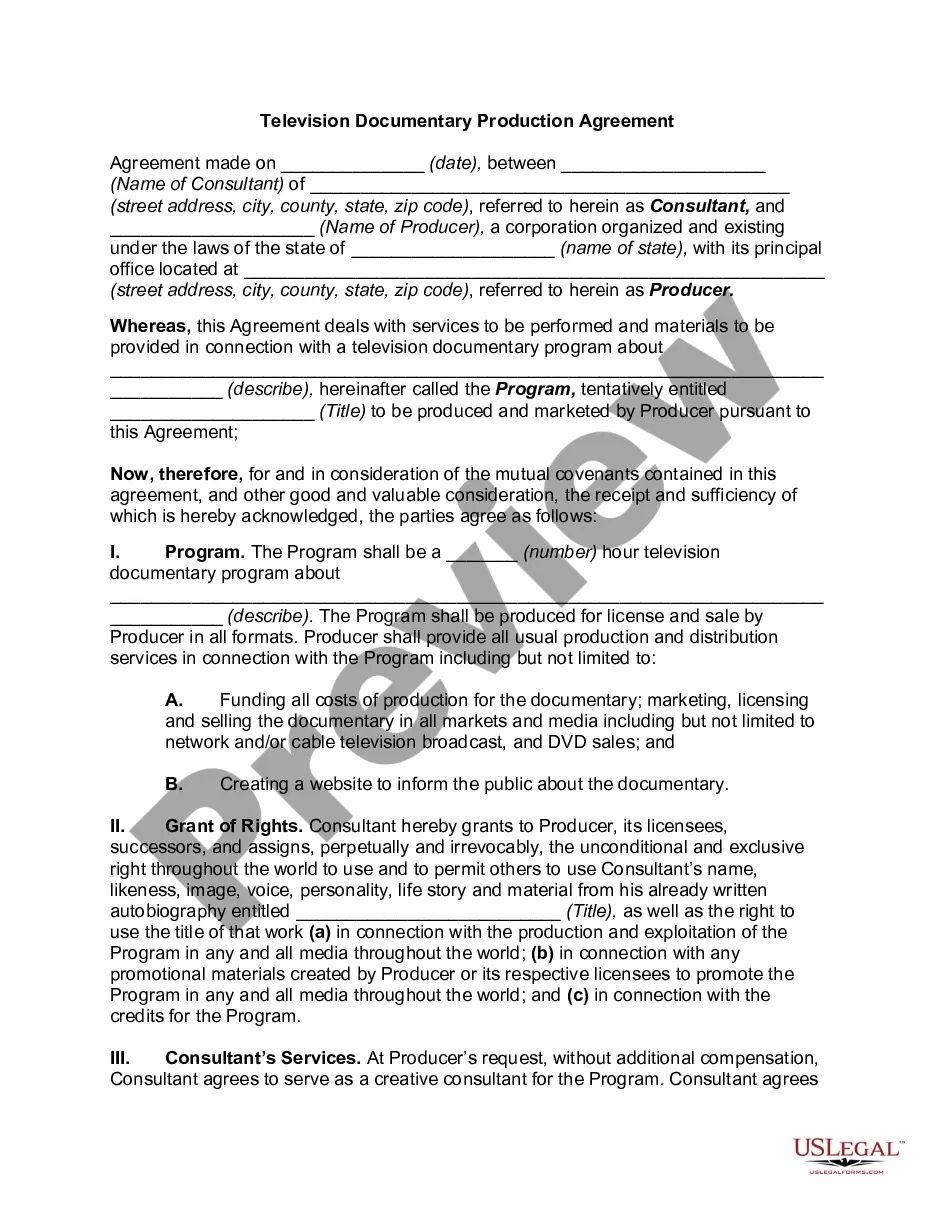
Employer contracts with an independent contractor to provide, install a fence as specified and agreed upon in the contract. Please note that this Agreement is intended for general use. Your state law may require that additional or different provisions be included for agreements between a homeowner and a contractor for work on the home. In this instance, please consult your local law, local government or legal counsel.
New York Fence Contractor Agreement - Self-Employed
State:
Multi-State
Control #:
US-INDC-107
Format:
Word;
Rich Text
Instant download
Description
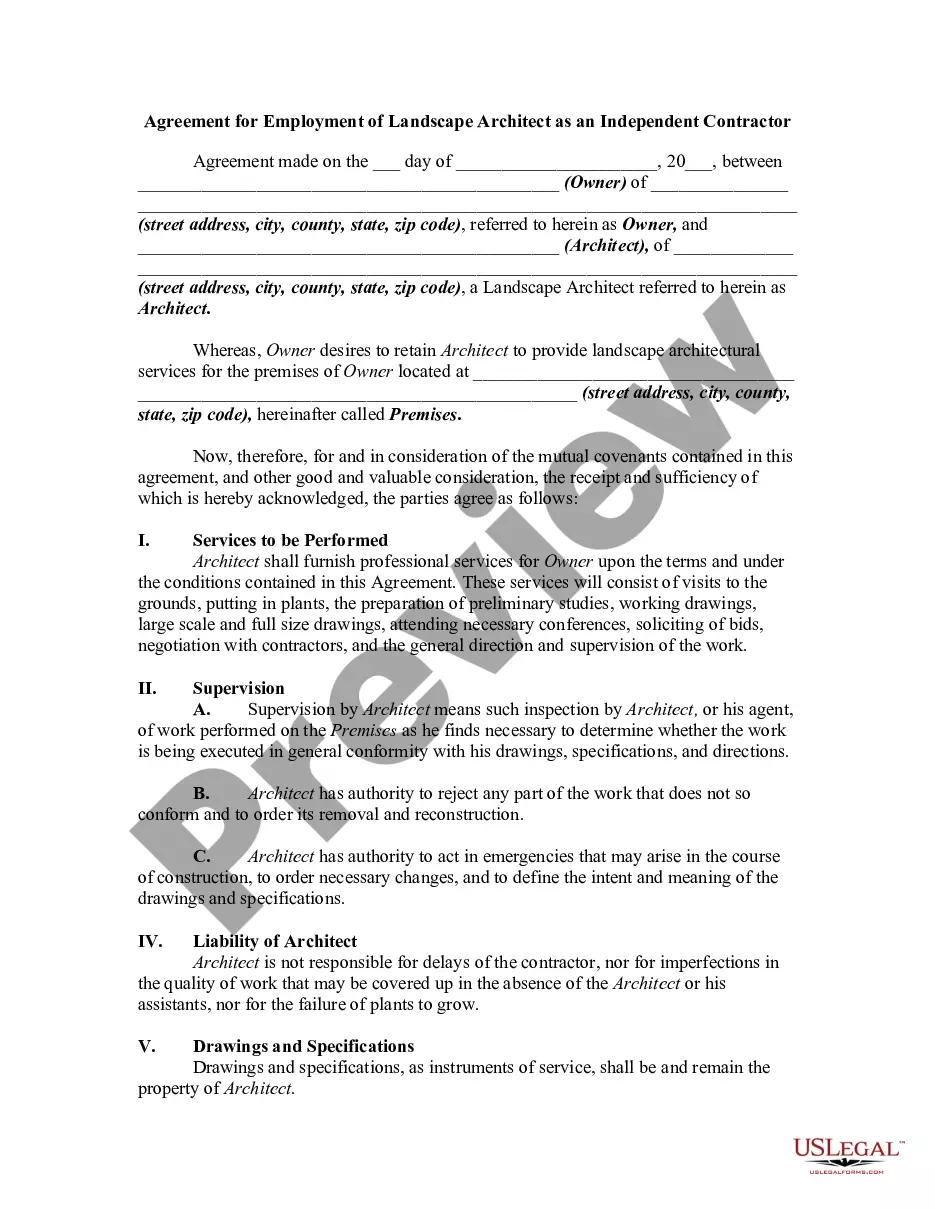
Free preview

Get your form ready online
Our built-in tools help you complete, sign, share, and store your documents in one place.
Built-in online Word editor
Make edits, fill in missing information, and update formatting in US Legal Forms—just like you would in MS Word.
Export easily
Download a copy, print it, send it by email, or mail it via USPS—whatever works best for your next step.
E-sign your document
Sign and collect signatures with our SignNow integration. Send to multiple recipients, set reminders, and more. Go Premium to unlock E-Sign.
Notarize online 24/7
If this form requires notarization, complete it online through a secure video call—no need to meet a notary in person or wait for an appointment.
Store your document securely
We protect your documents and personal data by following strict security and privacy standards.

Make edits, fill in missing information, and update formatting in US Legal Forms—just like you would in MS Word.

Download a copy, print it, send it by email, or mail it via USPS—whatever works best for your next step.

Sign and collect signatures with our SignNow integration. Send to multiple recipients, set reminders, and more. Go Premium to unlock E-Sign.

If this form requires notarization, complete it online through a secure video call—no need to meet a notary in person or wait for an appointment.

We protect your documents and personal data by following strict security and privacy standards.
Looking for another form?


How to fill out Fence Contractor Agreement - Self-Employed?
Selecting the optimal legal document format can be a challenge.
Of course, there are numerous templates accessible online, but how do you find the legal form you require.
Utilize the US Legal Forms website. This service provides thousands of templates, such as the New York Fence Contractor Agreement - Self-Employed, which can be used for business and personal purposes.
First, ensure you have selected the correct form for your city/county. You can review the form using the Preview button and read the form description to confirm it's the correct one for you.
- All of the forms are vetted by professionals and comply with state and federal regulations.
- If you are already registered, Log In to your account and click the Download button to receive the New York Fence Contractor Agreement - Self-Employed.
- Use your account to browse through the legal forms you have purchased previously.
- Visit the My documents tab in your account and obtain another copy of the document you need.
- If you are a new user of US Legal Forms, here are simple instructions you should follow.
Form popularity
FAQ
Creating an independent contractor agreement is straightforward. Start by clearly defining the scope of work, payment terms, and any necessary timelines. Be sure to include a clause that addresses confidentiality and dispute resolution. For a solid foundation, consider using resources like UsLegalForms, which offers customizable templates for a New York Fence Contractor Agreement - Self-Employed, ensuring you cover all essential legal aspects.
In New York, independent contractors generally do not require workers' compensation insurance, as they are not classified as employees. However, if you are a self-employed fence contractor, obtaining this insurance can protect you from potential liabilities. It is wise to check with your clients, as some may ask for proof of coverage. A comprehensive New York Fence Contractor Agreement - Self-Employed can also outline these requirements clearly.
Filing taxes as a private contractor involves gathering all income documents, such as your New York Fence Contractor Agreement - Self-Employed, invoices, and expense receipts. You will then report your earnings on Schedule C and determine your self-employment tax using Schedule SE. Consider using online tax software or consulting a tax professional to navigate the process for maximum deductions and compliance.
Proof of self-employed income can include various documents, such as contracts, invoices, and bank statements reflecting payments received. For those working under a New York Fence Contractor Agreement - Self-Employed, maintaining clear and organized records is essential. This documentation will be crucial for tax filings and for verifying income when applying for loans or other financial services.
Independent contractors in New York are responsible for paying their own taxes, which include federal income tax, state income tax, and self-employment tax. It’s crucial for contractors to accurately estimate their tax obligations throughout the year. Utilizing a New York Fence Contractor Agreement - Self-Employed can help in tracking earnings, which is vital for effective tax management.
In New York, independent contractors must ensure they comply with local and federal regulations. This includes having a proper New York Fence Contractor Agreement - Self-Employed that outlines the nature of their work and responsibilities. Contractors must also adhere to state licensing requirements, and successfully manage their business taxes according to regulations.
When filling out an independent contractor form, such as the New York Fence Contractor Agreement - Self-Employed, include essential information like your name, business name, address, and contractor details. Clearly describe the services you plan to provide and specify payment rates along with any deadlines. After reviewing the form for accuracy, both parties should sign it to ensure mutual understanding and agreement.
Independent contractors typically need to fill out a New York Fence Contractor Agreement - Self-Employed, tax forms like the IRS W-9, and any applicable local business licenses. Additionally, they may require proof of insurance or bonding depending on the project requirements. Gathering all necessary paperwork not only keeps your project on track but also protects both parties involved.
To fill out a New York Fence Contractor Agreement - Self-Employed, start by entering your personal information and the contractor’s details. Clearly outline the scope of work, payment terms, and deadlines to avoid any confusion. Make sure to review the agreement carefully to ensure all terms reflect your understanding. Finally, both parties should sign and date the document to formalize the agreement.
To protect yourself when paying a contractor, always use a written agreement that specifies payment schedules and completion milestones. This approach creates accountability in the transaction. A well-crafted New York Fence Contractor Agreement - Self-Employed will help you manage expectations and backup your interests.