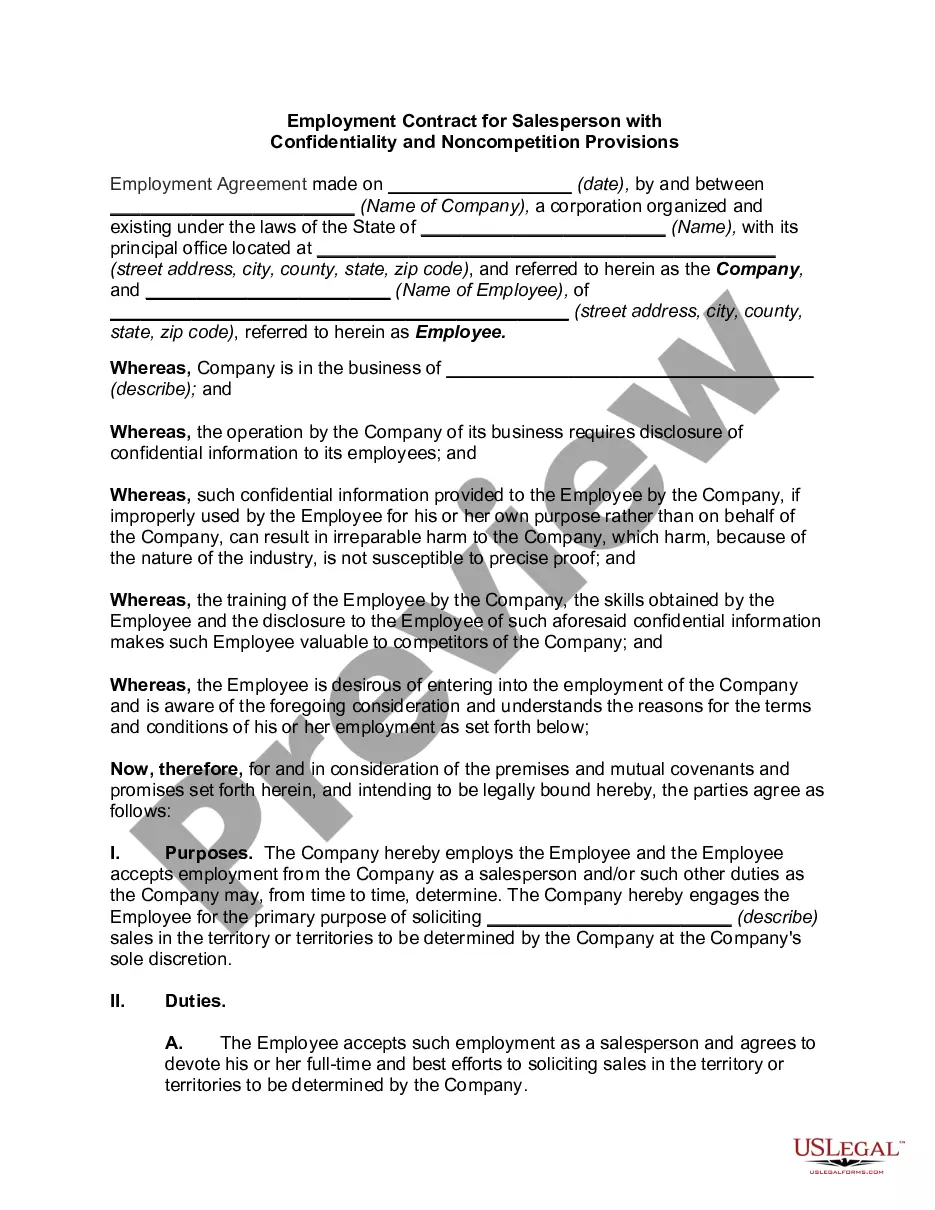
New York Employment Agreement with Provisions for Noncompetition, Confidentiality, and Termination on Disability or Discontinuance of Business
Description
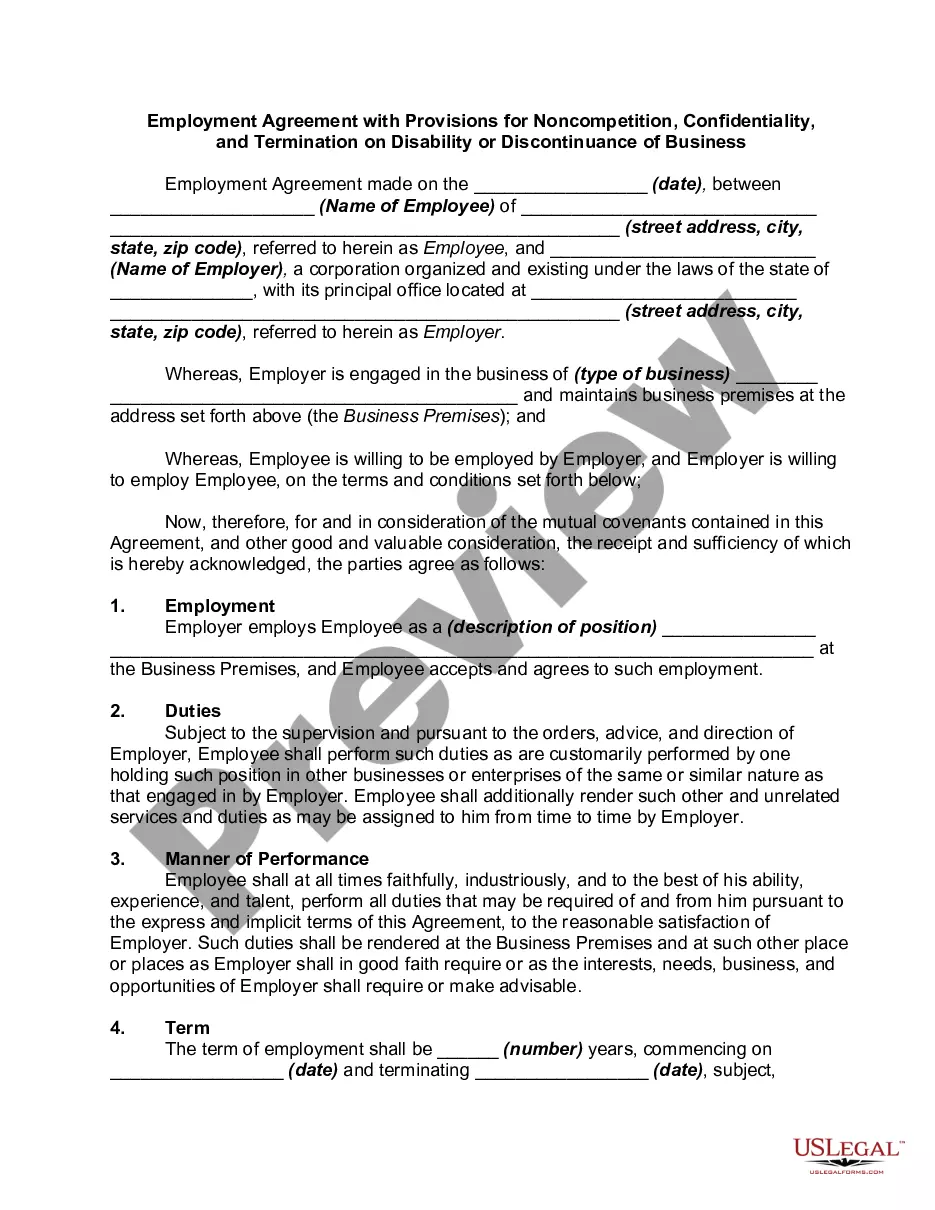
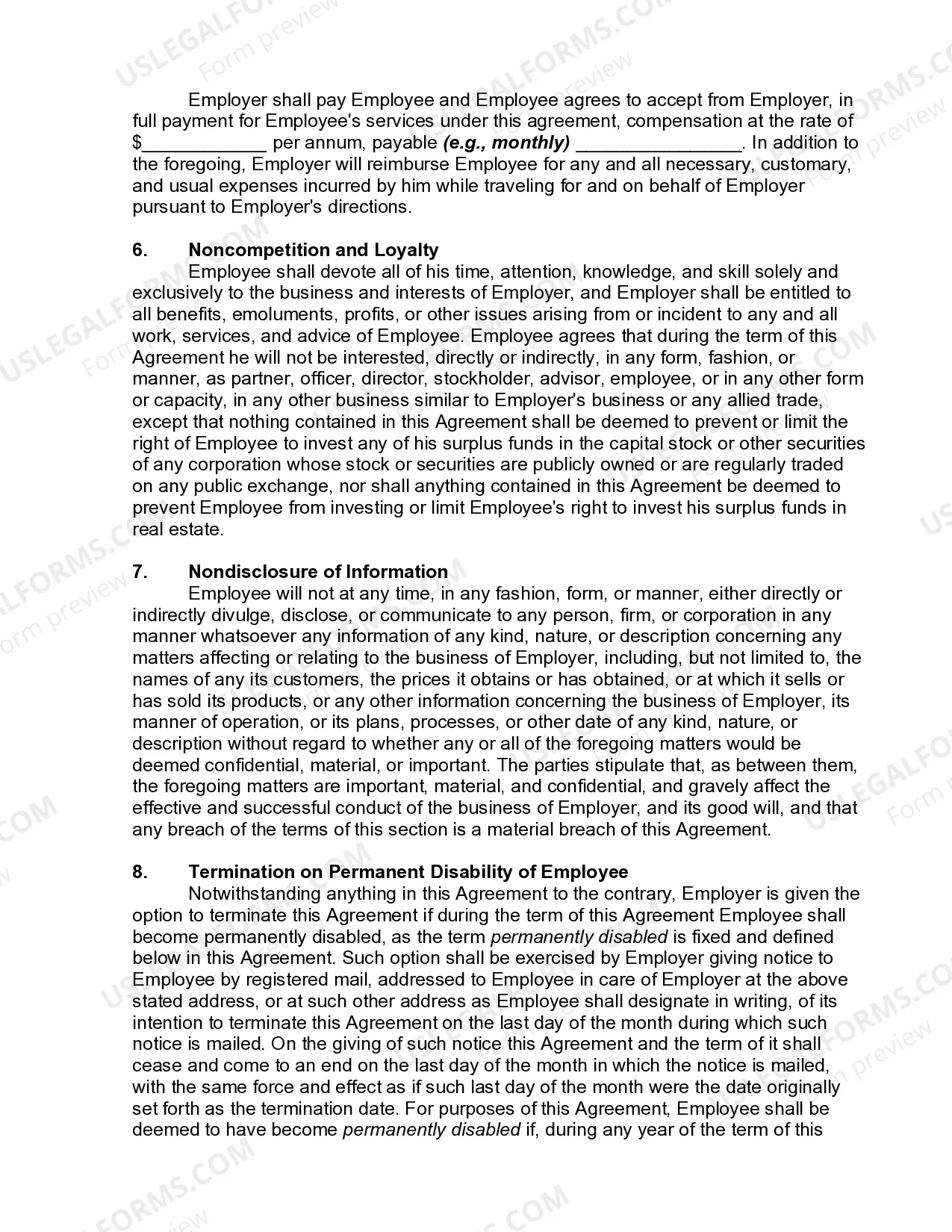
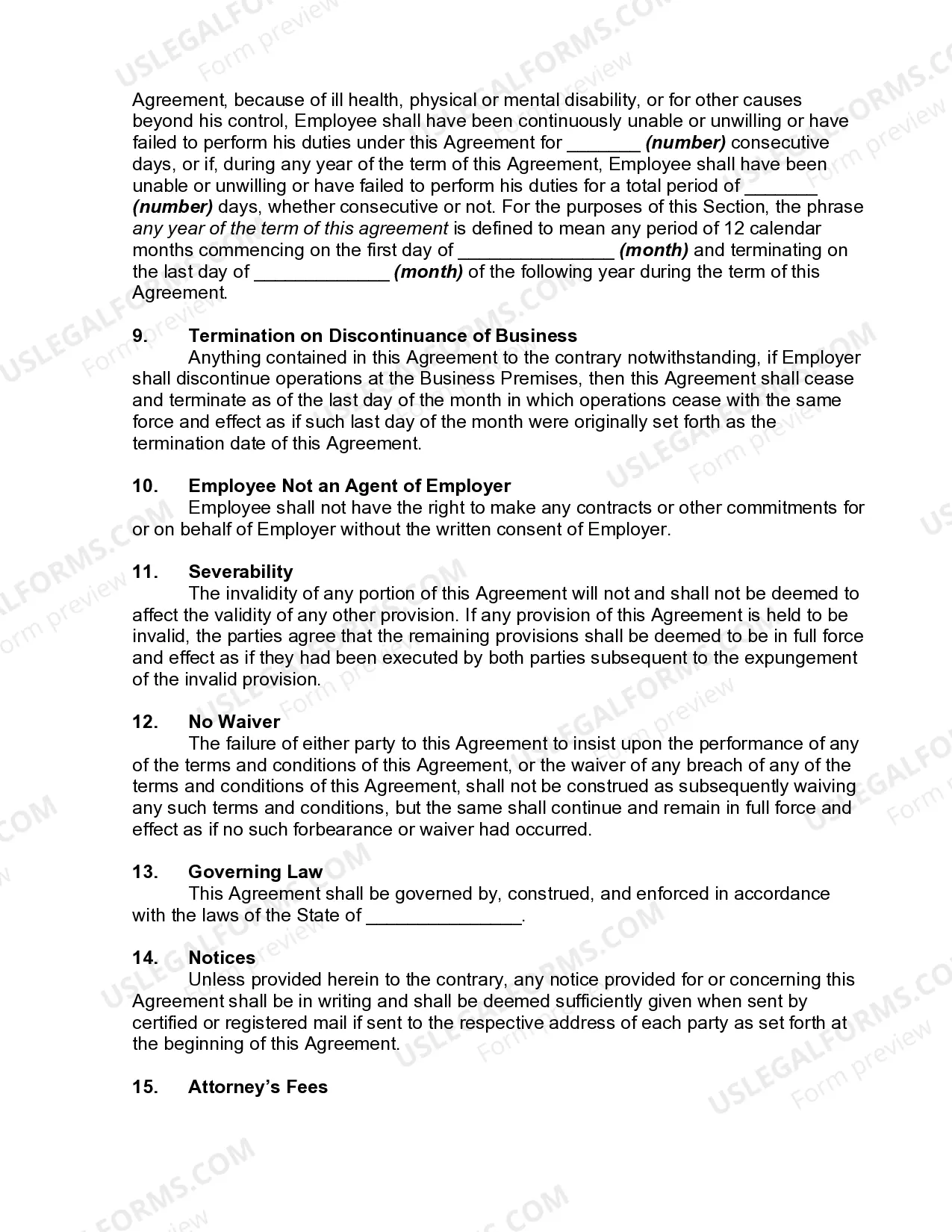
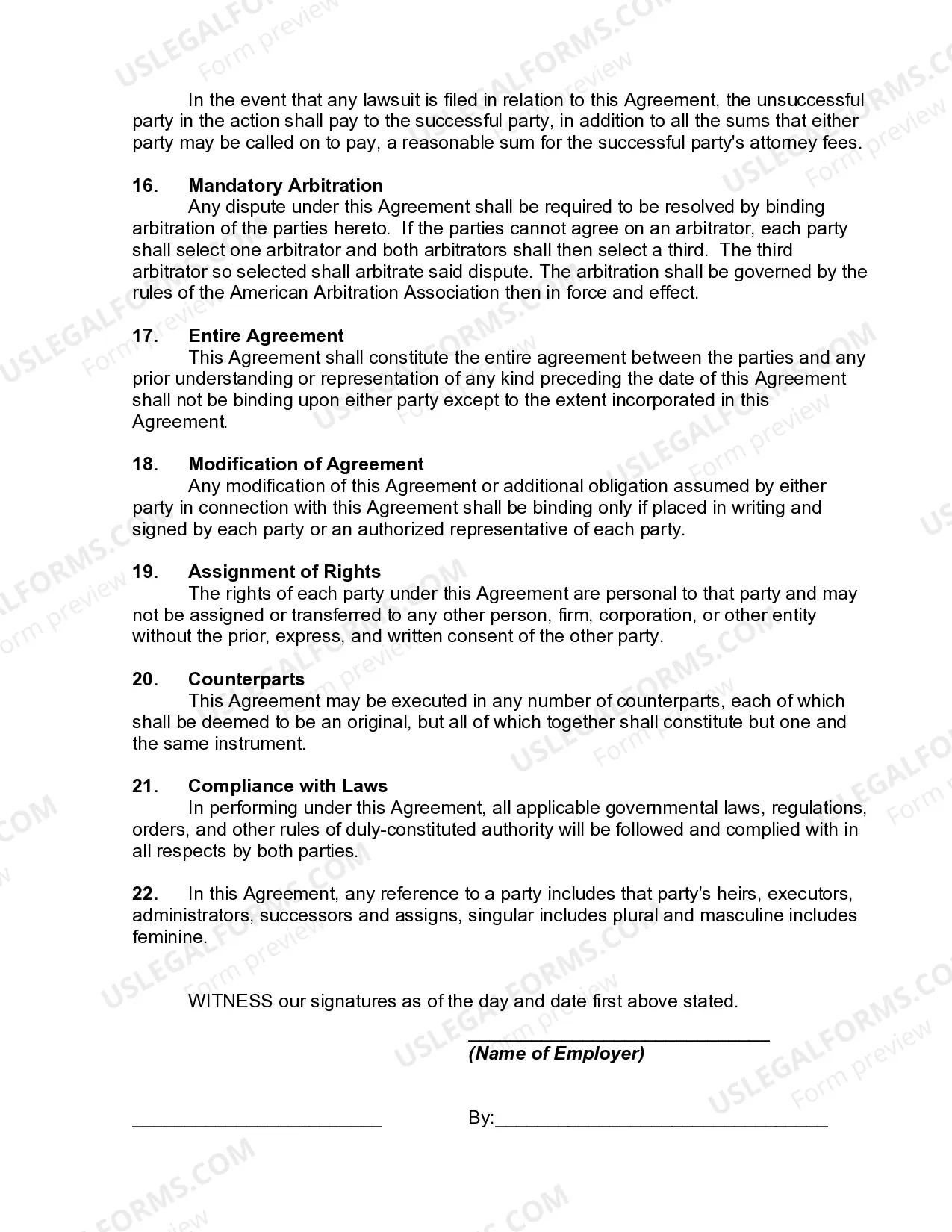
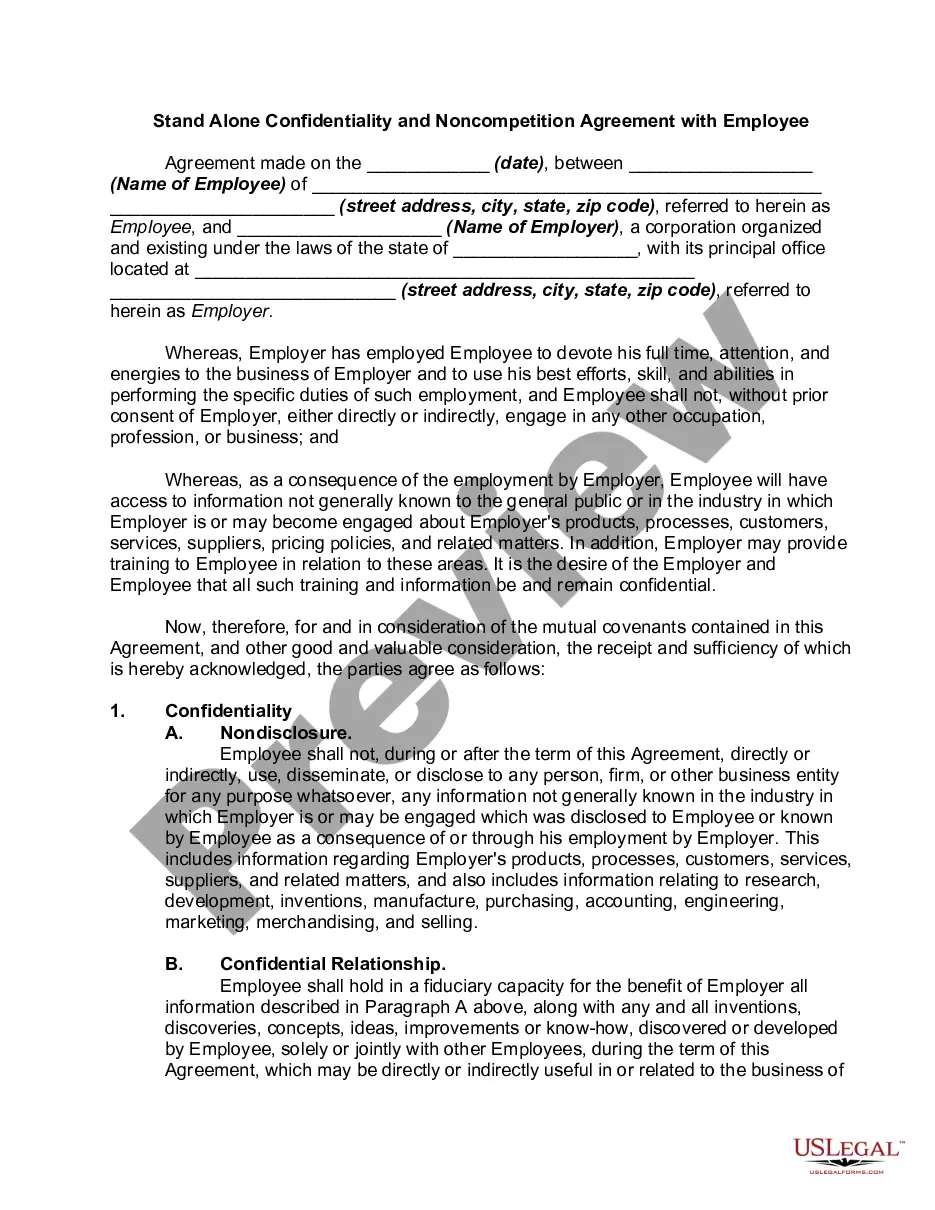
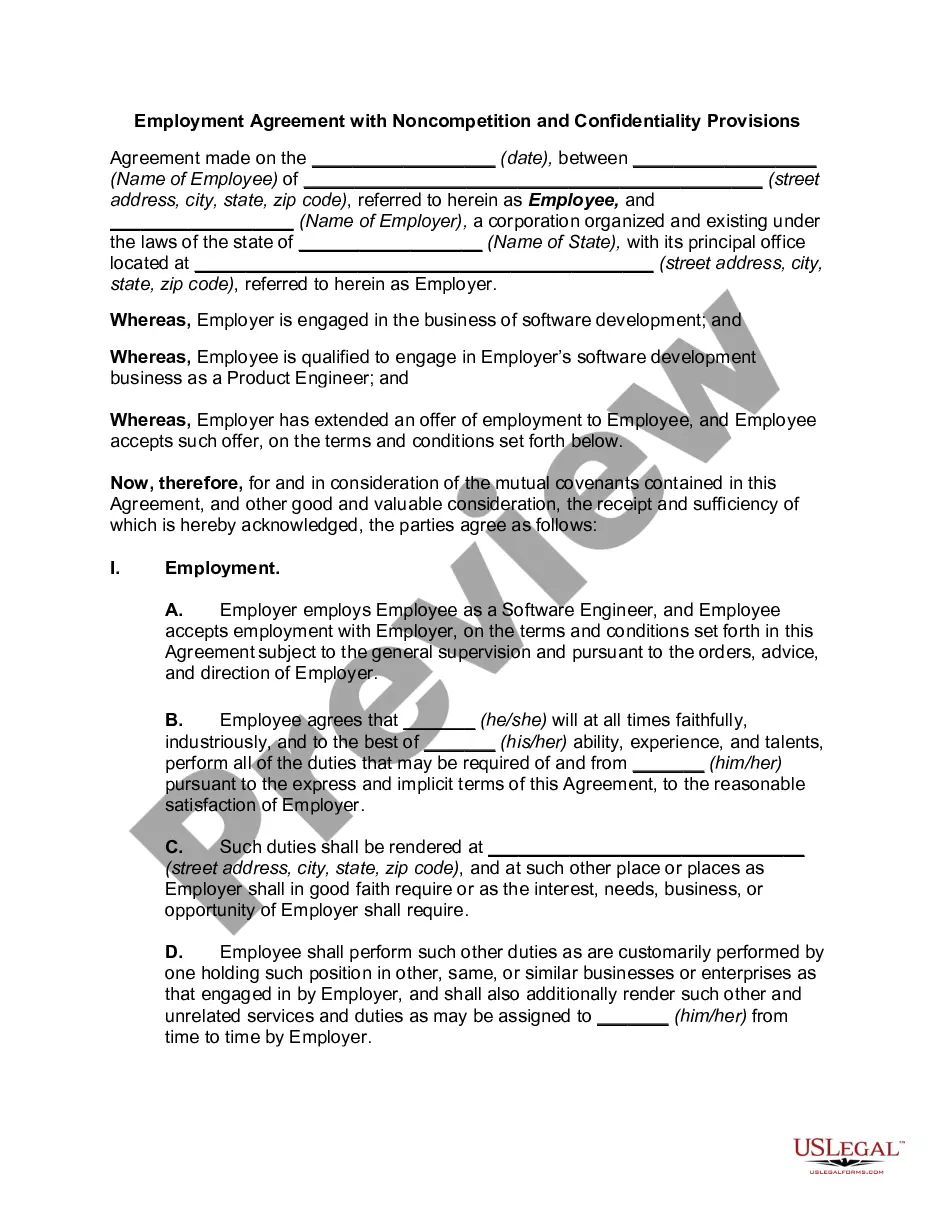
How to fill out Employment Agreement With Provisions For Noncompetition, Confidentiality, And Termination On Disability Or Discontinuance Of Business?
US Legal Forms - one of the largest repositories of legal documents in the United States - offers a diverse array of legal document templates that you can download or print.
By utilizing the site, you can access a vast collection of forms for business and personal use, organized by categories, states, or keywords.
You can discover the latest versions of forms like the New York Employment Agreement with Clauses for Non-compete, Confidentiality, and Termination due to Disability or Business Discontinuation in just minutes.
If the form does not meet your requirements, use the Search field at the top of the screen to find one that does.
Once you are happy with the form, confirm your selection by clicking the Purchase button. Then, choose the payment plan you prefer and provide your credentials to register for the account.
- If you already have an account, Log In to download the New York Employment Agreement with Clauses for Non-compete, Confidentiality, and Termination due to Disability or Business Discontinuation from the US Legal Forms library.
- The Download button will appear on each form you view.
- You gain access to all previously saved forms in the My documents tab of your profile.
- If you are using US Legal Forms for the first time, here are simple steps to get started.
- Ensure you have selected the appropriate form for your city/state.
- Click the Review button to examine the form’s content.
Form popularity
FAQ
Yes, a non-compete can prevent you from working for a competitor, but its enforceability depends on various factors such as the terms of your New York Employment Agreement with Provisions for Noncompetition, Confidentiality, and Termination on Disability or Discontinuance of Business. These agreements often include specific geographic and time limitations that courts assess for fairness. Understanding the exact clauses in your agreement is crucial for determining your options, and our platform can assist you in navigating these complex scenarios.
In New York, whether a non-compete holds up after being fired largely depends on the reason for your termination. Your New York Employment Agreement with Provisions for Noncompetition, Confidentiality, and Termination on Disability or Discontinuance of Business may still be enforceable, provided the conditions under which you were fired do not infringe upon labor laws. Reviewing the specific terms and conditions with a legal expert can provide you with the best insight into your unique situation.
If you are laid off, the enforceability of a non-compete clause in your New York Employment Agreement with Provisions for Noncompetition, Confidentiality, and Termination on Disability or Discontinuance of Business can be complex. Generally, layoffs can weaken the enforceability of such clauses, especially if the layoff was due to company downsizing. You may want to consult with a legal professional to evaluate the specifics of your situation and seek clarity on your rights.
In New York, the enforceability of a non-compete clause after termination depends on the circumstances surrounding your employment. If a New York Employment Agreement with Provisions for Noncompetition, Confidentiality, and Termination on Disability or Discontinuance of Business exists, it may still be enforceable. However, the courts often consider issues like the reason for termination and the duration of the non-compete. Therefore, it is essential to review the specific terms outlined in your agreement.
Another name for a confidentiality agreement is a ‘non-disclosure agreement’ or NDA. This agreement ensures that any shared confidential information remains protected and is not disclosed to unauthorized parties. The New York Employment Agreement with Provisions for Noncompetition, Confidentiality, and Termination on Disability or Discontinuance of Business typically features such provisions to enhance trust and security in business relationships. Utilizing legal resources can help create effective NDAs tailored to your needs.
compete agreement is also known as a ‘restrictive covenant.’ This term refers to any contract that limits an individual’s freedom to operate in a particular industry or region after leaving a job. The New York Employment Agreement with Provisions for Noncompetition, Confidentiality, and Termination on Disability or Discontinuance of Business often includes these types of agreements to safeguard trade secrets and business interests. To create effective agreements, consulting with a professional can be beneficial.
Confidentiality agreements protect sensitive information, ensuring that employees do not disclose proprietary business details. On the other hand, non-compete agreements restrict employees from engaging in similar business activities after leaving their position. While both serve to protect a business, the New York Employment Agreement with Provisions for Noncompetition, Confidentiality, and Termination on Disability or Discontinuance of Business integrates these elements to provide comprehensive protection for employers. Understanding these differences is vital for both employers and employees.
To write an effective non-compete agreement, clearly define the scope, duration, and geographic area of the restriction. Specify the activities prohibited and ensure the agreement is reasonable and enforceable under state laws. Utilizing templates from uslegalforms can simplify this process, ensuring your New York Employment Agreement with Provisions for Noncompetition, Confidentiality, and Termination on Disability or Discontinuance of Business is both compliant and tailored to your needs.
The non-compete clause in a confidentiality agreement typically restricts the employee from disclosing or utilizing proprietary information in any competing venture. This clause strengthens the overall protection of confidential business information by deterring former employees from engaging in competitive activities. Including this in a New York Employment Agreement with Provisions for Noncompetition, Confidentiality, and Termination on Disability or Discontinuance of Business provides comprehensive protection.
An example of a covenant not to compete could be a clause that limits a former employee from engaging in a similar profession within the state for up to two years. This is intended to prevent the use of sensitive company insights to gain a competitive edge. In a New York Employment Agreement with Provisions for Noncompetition, Confidentiality, and Termination on Disability or Discontinuance of Business, such covenants help protect both the employer and the industry.