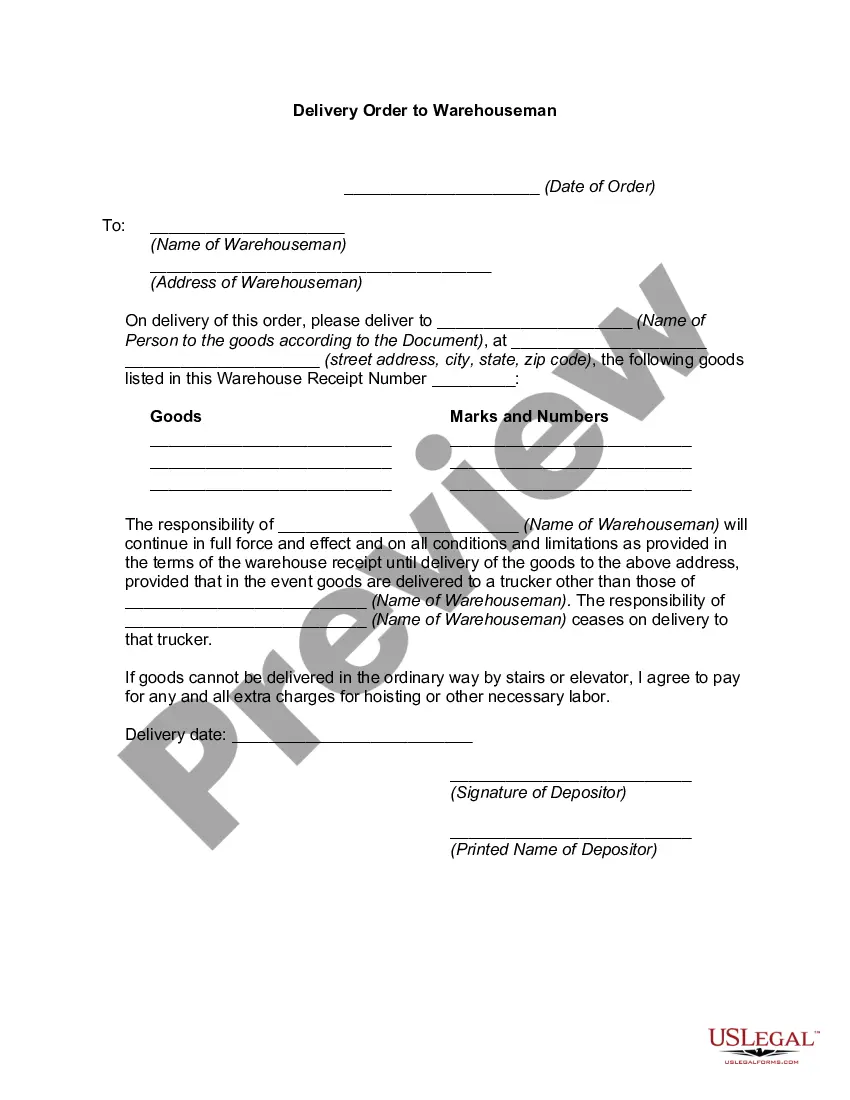
New York Delivery Order to Warehouseman
Description
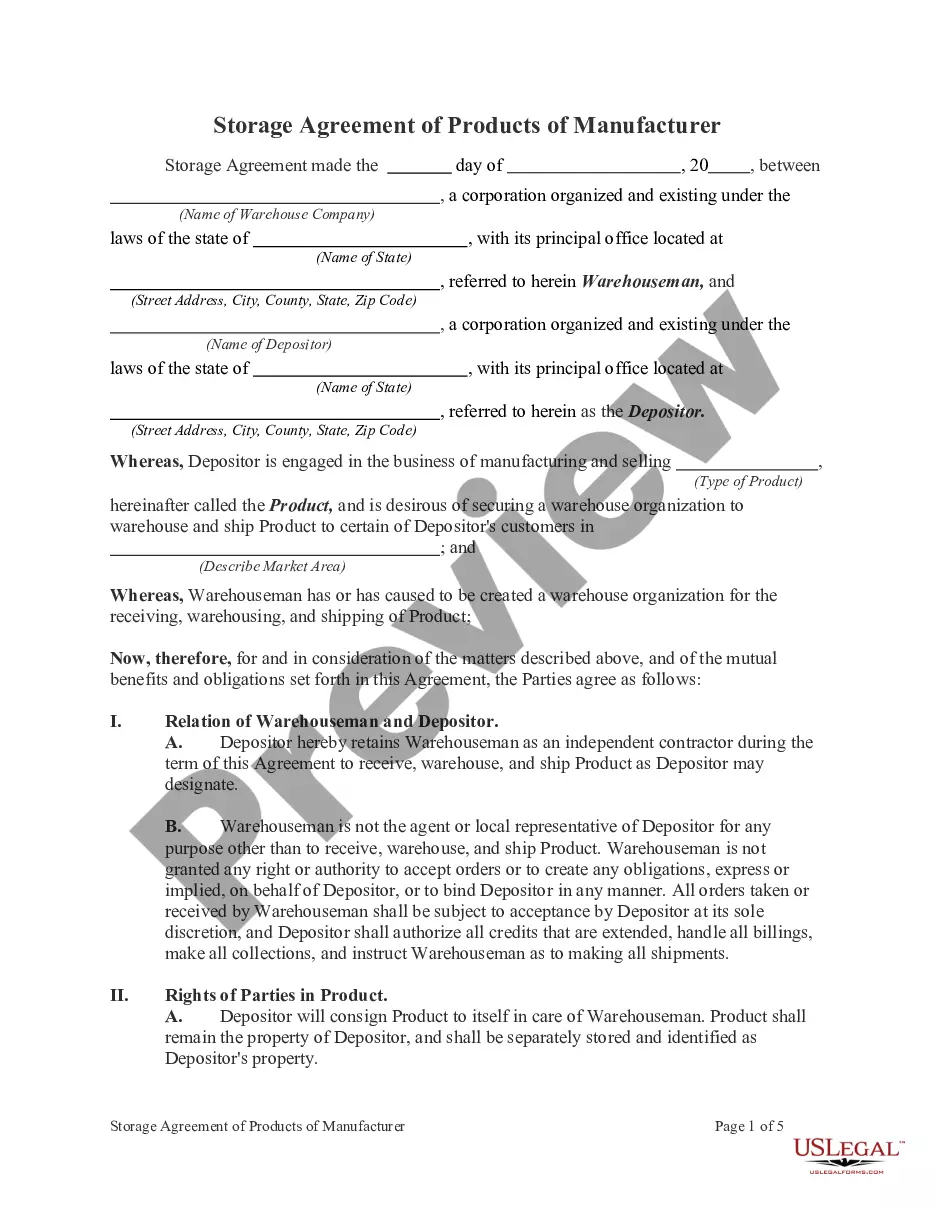
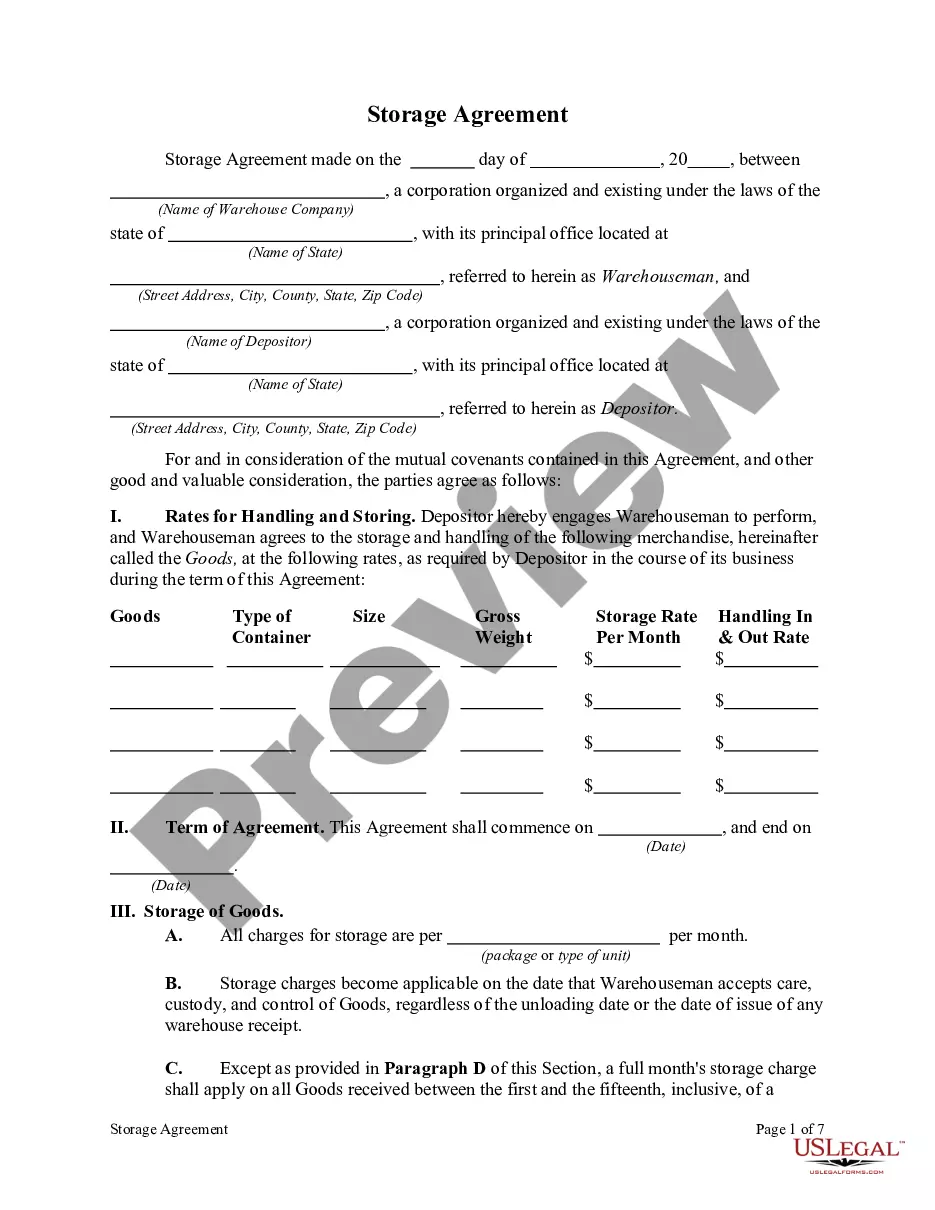
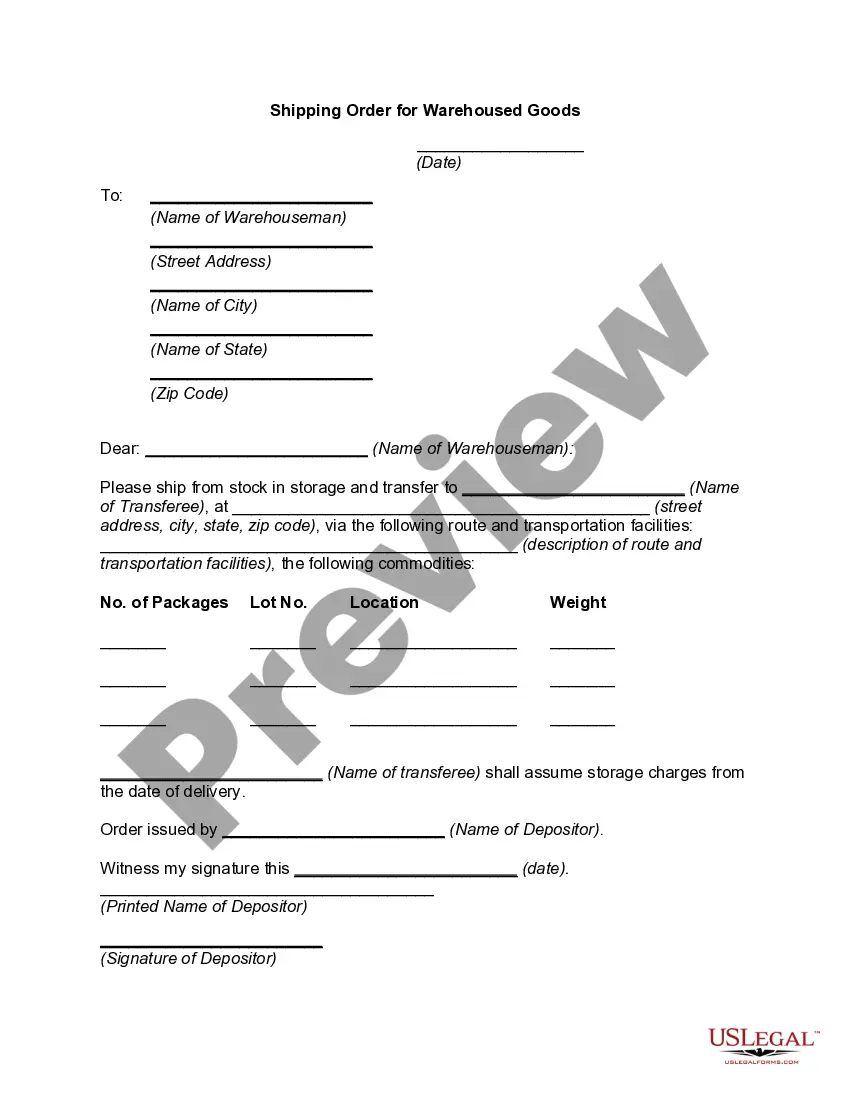
Get your form ready online
Our built-in tools help you complete, sign, share, and store your documents in one place.
Make edits, fill in missing information, and update formatting in US Legal Forms—just like you would in MS Word.
Download a copy, print it, send it by email, or mail it via USPS—whatever works best for your next step.
Sign and collect signatures with our SignNow integration. Send to multiple recipients, set reminders, and more. Go Premium to unlock E-Sign.
If this form requires notarization, complete it online through a secure video call—no need to meet a notary in person or wait for an appointment.
We protect your documents and personal data by following strict security and privacy standards.

Make edits, fill in missing information, and update formatting in US Legal Forms—just like you would in MS Word.

Download a copy, print it, send it by email, or mail it via USPS—whatever works best for your next step.

Sign and collect signatures with our SignNow integration. Send to multiple recipients, set reminders, and more. Go Premium to unlock E-Sign.

If this form requires notarization, complete it online through a secure video call—no need to meet a notary in person or wait for an appointment.

We protect your documents and personal data by following strict security and privacy standards.
Looking for another form?




How to fill out Delivery Order To Warehouseman?
Selecting the most suitable authentic document template can be a challenge.
Clearly, there are numerous templates accessible online, but how can you find the authentic form you need.
Utilize the US Legal Forms website. The service offers a vast array of templates, including the New York Delivery Order to Warehouseman, which you can use for both business and personal purposes.
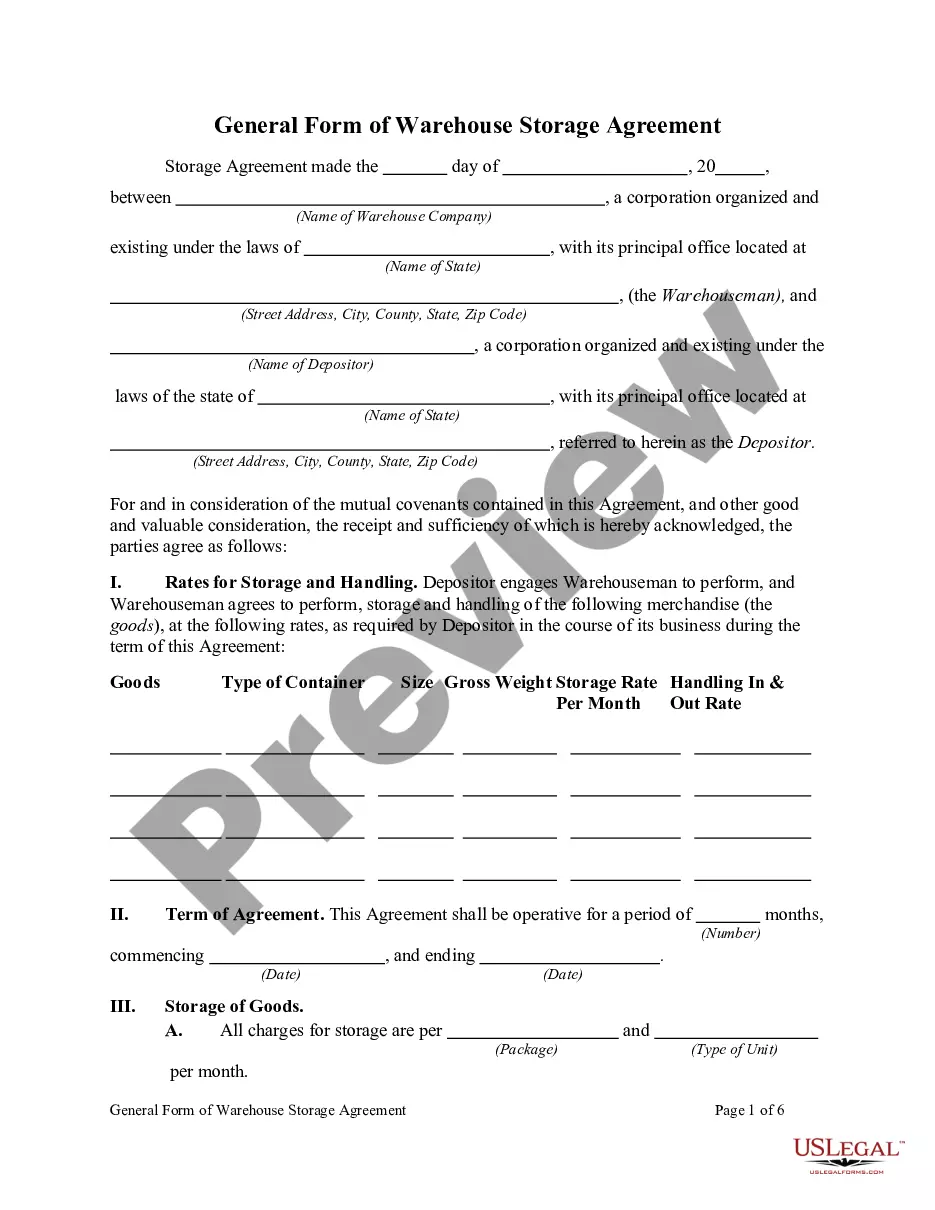
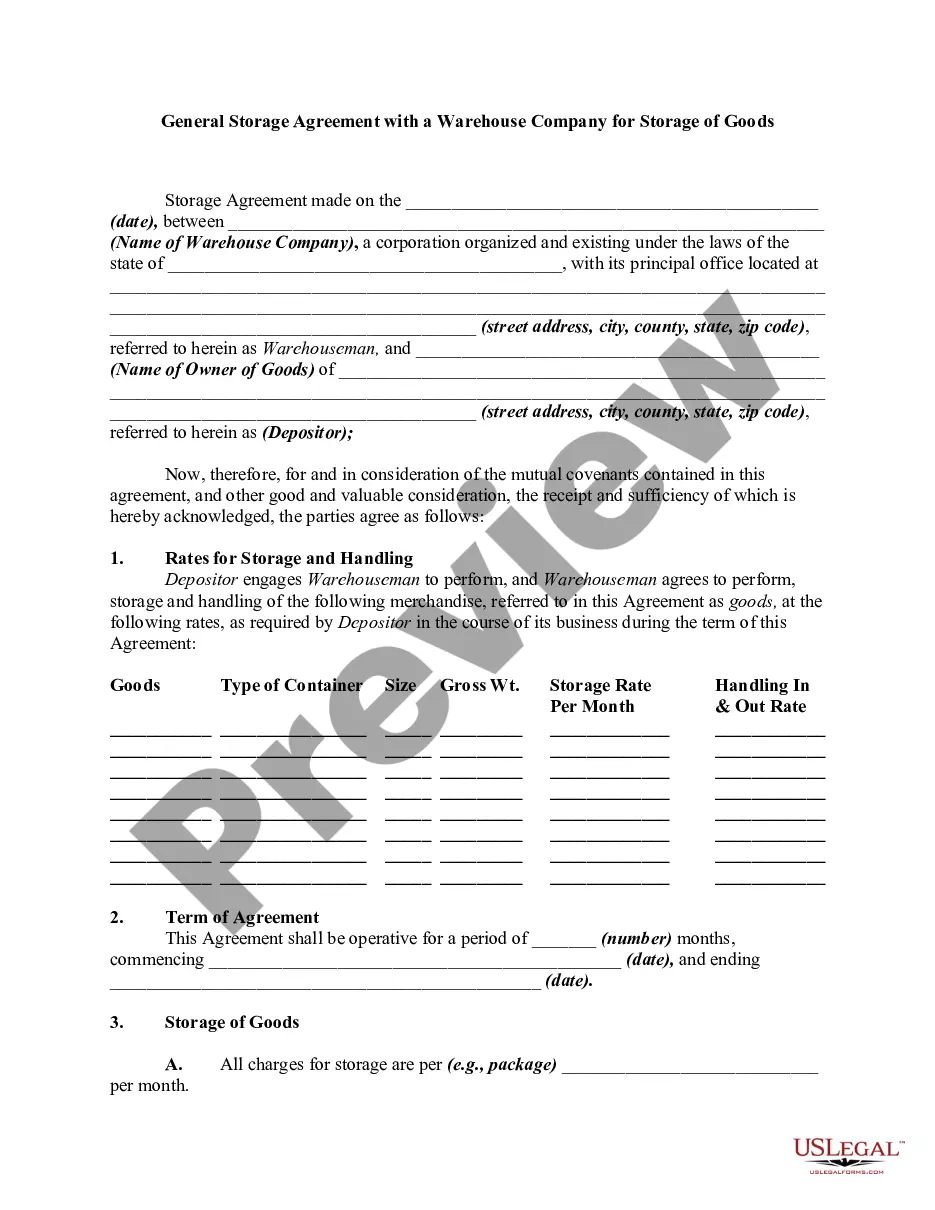
You can browse the form using the Review button and examine the form details to confirm it is the right one for you.
- All of the forms are reviewed by experts and comply with state and federal regulations.
- If you are already registered, Log In to your account and then click the Obtain button to retrieve the New York Delivery Order to Warehouseman.
- Leverage your account to search through the legal forms you have previously purchased.
- Navigate to the My documents tab in your account to download another copy of the document you need.
- If you are a new user of US Legal Forms, here are simple instructions you should follow.
- First, ensure you have chosen the correct form for your locality.
Form popularity
FAQ
A negotiable warehouse receipt allows the holder to transfer ownership of the goods without requiring the physical items to be moved. This type of receipt can facilitate trading and financing in a more streamlined manner. By utilizing a New York Delivery Order to Warehouseman, you can take advantage of negotiable receipts to enhance your business transactions.
The goods receipt process involves inspecting and documenting items as they arrive at the warehouse. Warehouse personnel assess the quality and quantity, generating a receipt for confirmed delivery. For a New York Delivery Order to Warehouseman, this process guarantees that your goods meet the requirements for safe storage and can be managed efficiently.
Warehouse receipt financing allows you to secure loans using your stored goods as collateral. Lenders verify the warehouse receipts to assess the value of the goods involved. By utilizing a New York Delivery Order to Warehouseman, you can smoothly navigate the financing process, ensuring your goods play a key role in obtaining necessary funds.
The receipt for goods delivered and stored indicates that your items are under the care of a warehouseman. This document details the type, quantity, and condition of the goods, providing assurance of safety. It is a vital part of a New York Delivery Order to Warehouseman, as it acts as a legally binding record of your inventory.
The warehouse receipt process begins when goods arrive at the facility. After inspection and acceptance, the warehouseman generates a receipt that outlines the details of the goods stored. This process ensures that you maintain a clear record of ownership, essential for a New York Delivery Order to Warehouseman.
Warehouse receipts serve as proof of ownership for goods stored in a warehouse. When you deliver goods, the warehouseman issues a receipt confirming your items are safely stored. In the context of a New York Delivery Order to Warehouseman, this receipt can be crucial for transactions, allowing you to use your stored goods as collateral.
The Warehouse Workers Protection Act in New York establishes protections focused on fair labor practices within the warehouse industry. This law addresses issues such as working conditions and employee rights, ensuring workers have a safe, equitable environment. For those managing logistics and the New York Delivery Order to Warehouseman, compliance with this act is vital for maintaining legal and ethical operations.
The New York warehouse ergonomics law requires warehouse operators to implement ergonomic practices that reduce strain and injury risks among workers. This law encourages employers to evaluate work processes and make adjustments that promote a healthy workplace. By understanding ergonomics, businesses dealing with the New York Delivery Order to Warehouseman can create a safer and more efficient environment.
The 4 hour rule in New York relates to the maximum working hours for certain warehouse workers without mandated breaks. This rule aims to prevent fatigue and promotes worker safety, thereby increasing productivity. For businesses involved in the New York Delivery Order to Warehouseman, awareness and adherence to this rule can streamline operations and enhance employee well-being.
The Warehouse Worker Protection Act in Illinois focuses on the rights of workers employed in warehouse settings, emphasizing fair treatment and safeguarding against exploitation. While this act does not directly impact New York, its principles resonate in warehouse practices across states. For operators managing deliveries, understanding such laws can improve overall compliance when handling the New York Delivery Order to Warehouseman.