New York Agreement between Certified Disability Advocate and Client

State:
Multi-State
Control #:
US-01812BG
Format:
Word
Instant download

Description

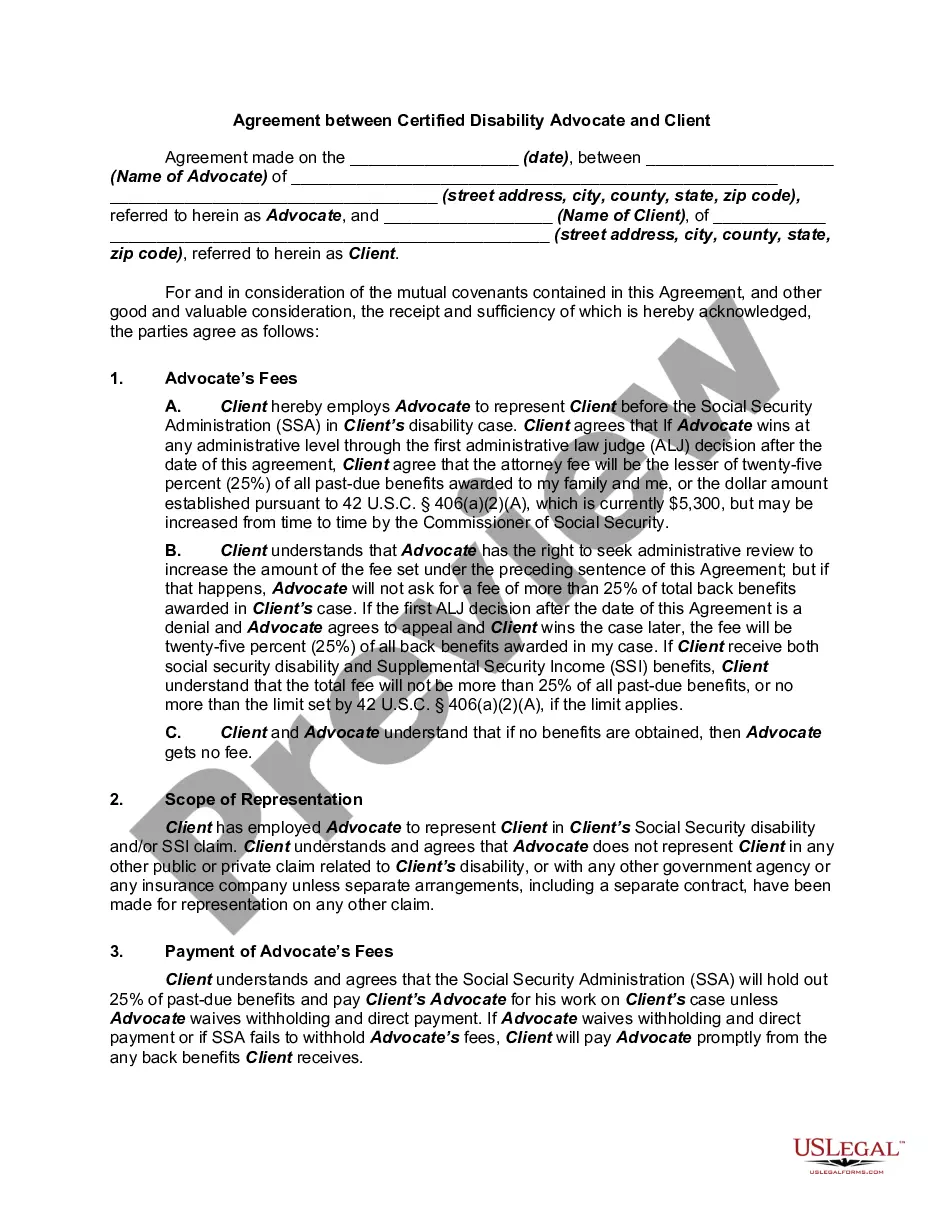
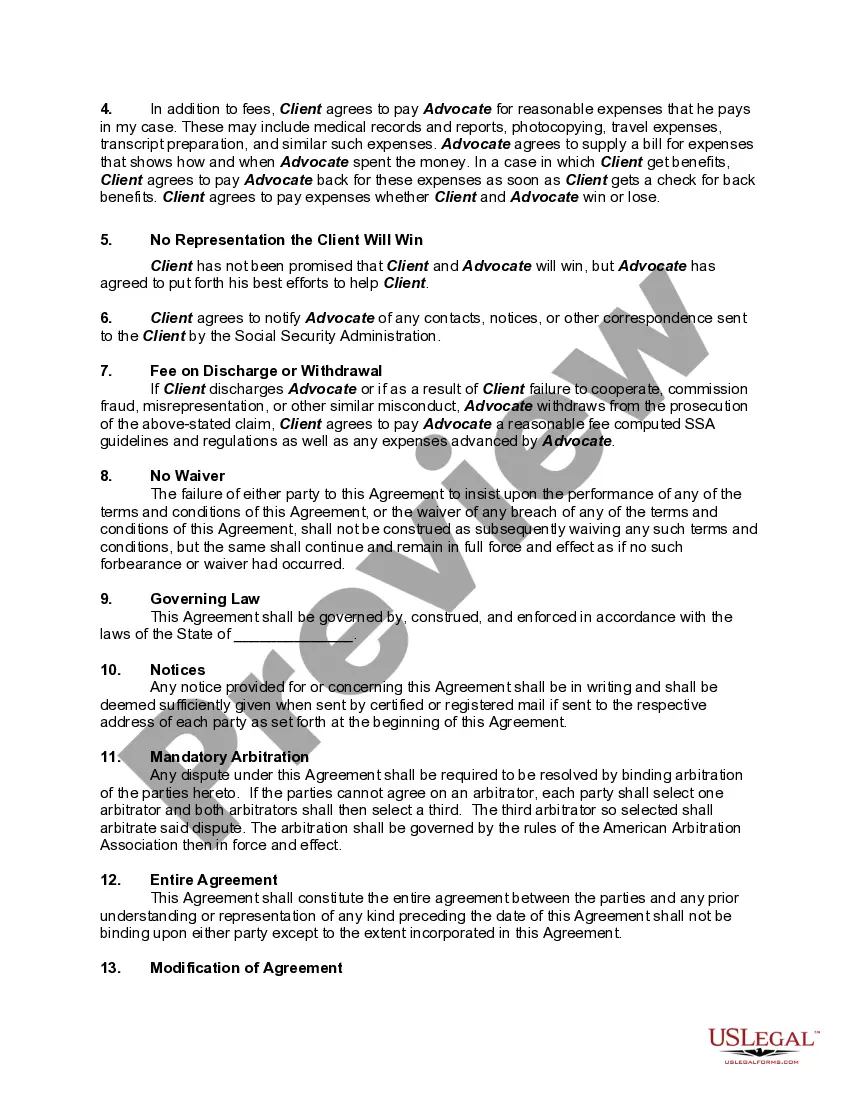
A Disability Advocate, also known as a Disability Consultant or non-attorney Representative, is a specially trained individual who assists others who are applying for Social Security disability benefits.


The duties of a Disability Advocate involve the execution of both formal and informal procedures on behalf of an applicant for Social Security disability benefits. These actions include, but are not limited to, the assessment of a case to determine the approximate percent chance of winning, and the development of a case by requesting copies of the client's medical records. By law, Social Security must consider the advocate's argument before making a final decision. If the advocate's argument is properly structured and supported by the evidence, it can greatly enhance the client's chances of winning benefits.
Free preview
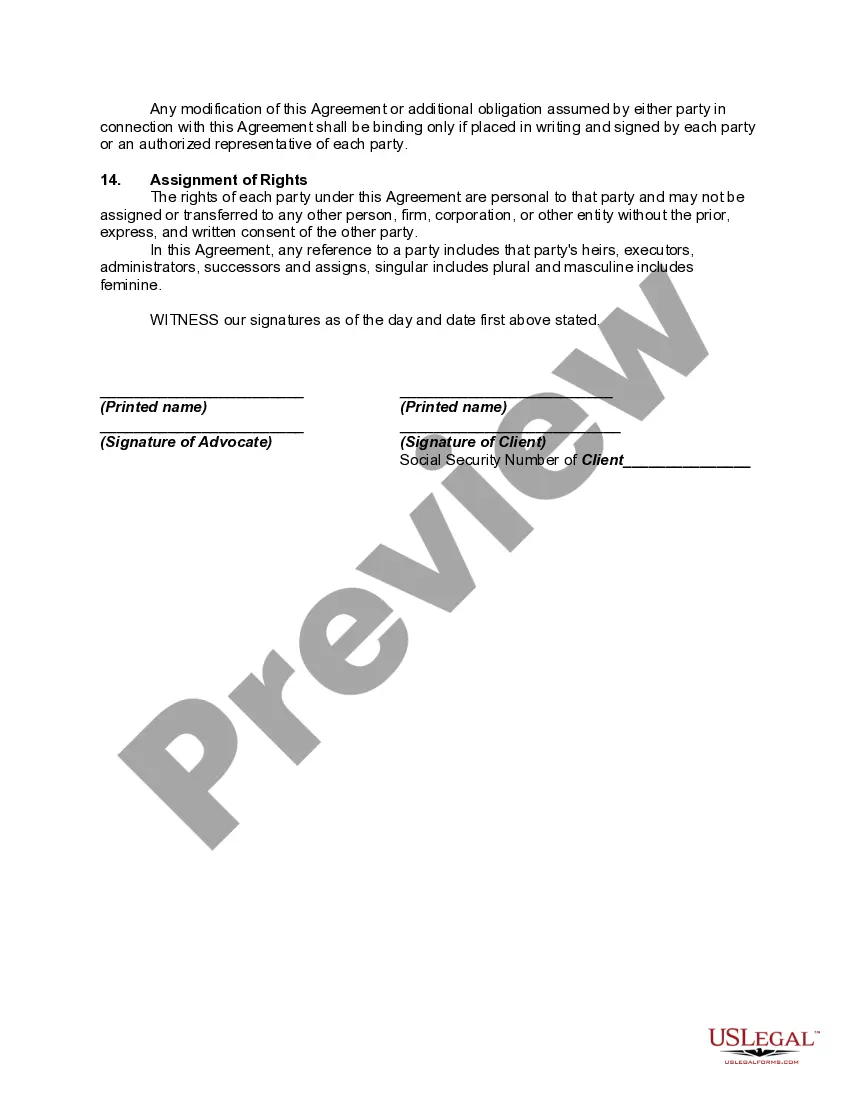
  • Preview Agreement between Certified Disability Advocate and Client
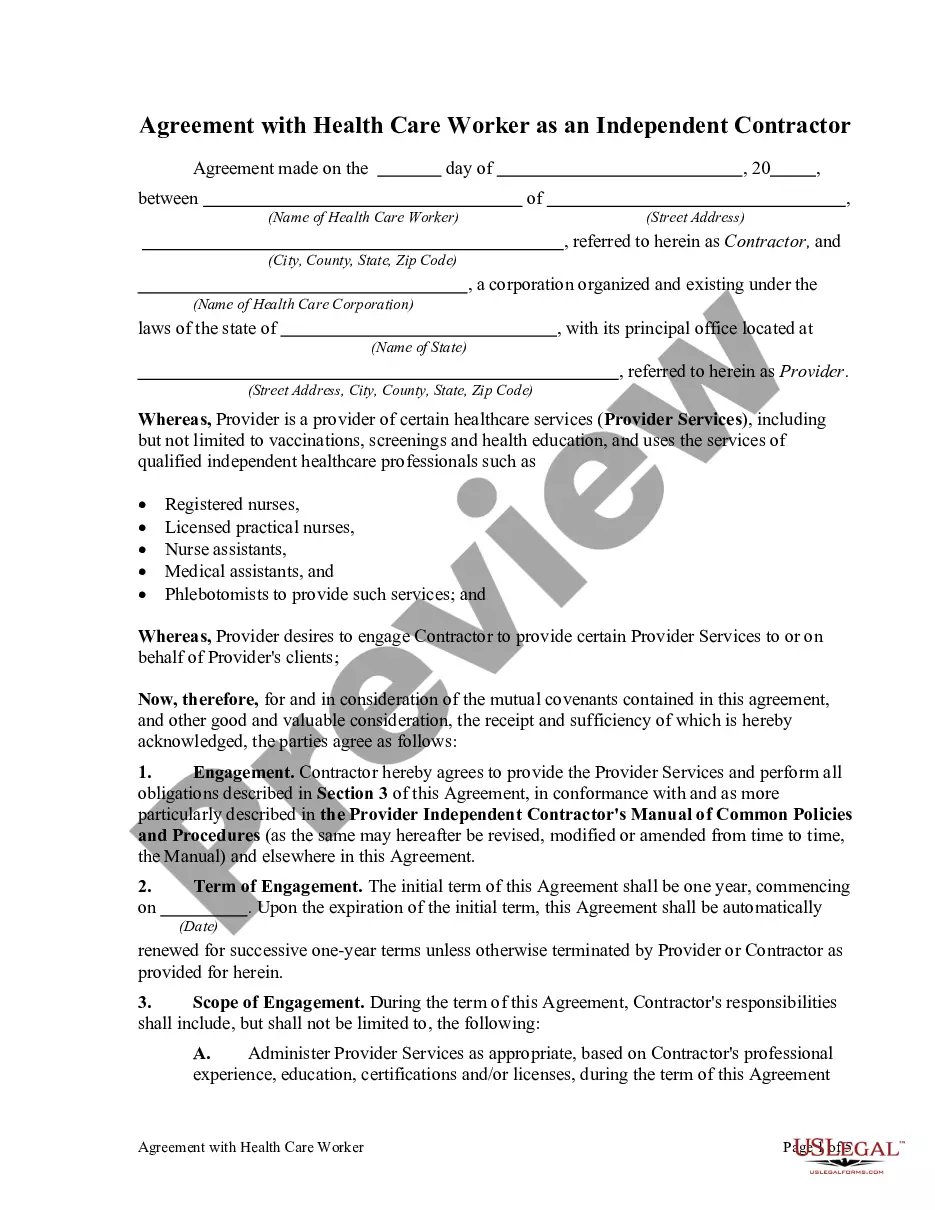
  • Preview Agreement between Certified Disability Advocate and Client
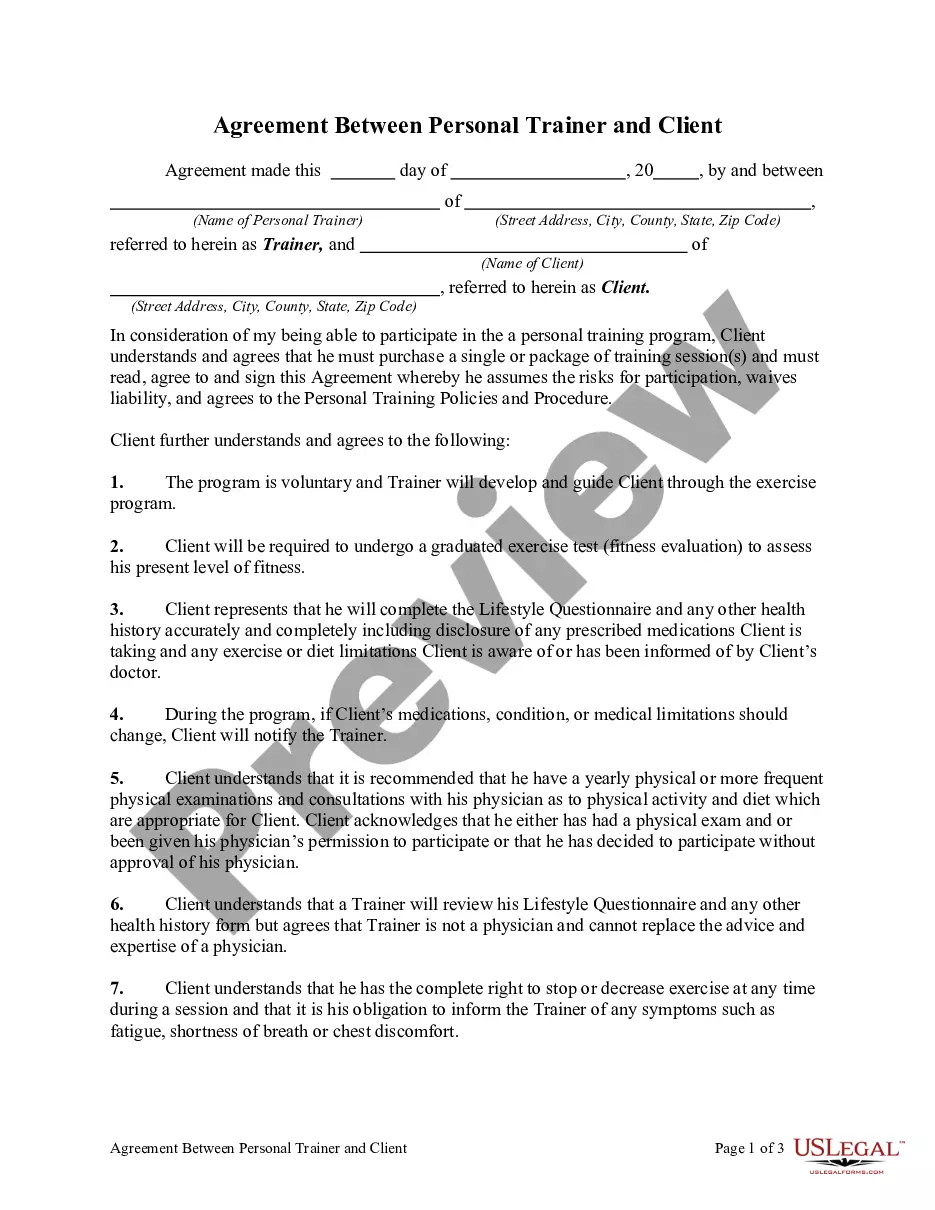
  • Preview Agreement between Certified Disability Advocate and Client

How to fill out Agreement Between Certified Disability Advocate And Client?

Finding the appropriate legal document template can be quite challenging.

Clearly, there are numerous templates accessible online, but how do you obtain the legal form you require.

Utilize the US Legal Forms website. The service offers thousands of templates, including the New York Agreement between Certified Disability Advocate and Client, which you can utilize for business and personal needs.

You can view the form using the Review button and read the form summary to confirm it is right for you.

  1. All the forms are reviewed by professionals and comply with federal and state regulations.
  2. If you are already registered, Log In to your account and click the Download button to locate the New York Agreement between Certified Disability Advocate and Client.
  3. Use your account to browse through the legal forms you've previously acquired.
  4. Go to the My documents tab in your account to obtain another copy of the document you require.
  5. If you are a new user of US Legal Forms, here are some simple instructions to follow.
  6. First, ensure you have selected the correct form for your city/state.

Form popularity

FAQ

Rule 1.9 addresses the duties of attorneys regarding conflicts of interest, specifically concerning former clients. It emphasizes that a lawyer must not represent a new client if it materially conflicts with the interests of a former client without their consent. This rule is critical when forming a New York Agreement between Certified Disability Advocate and Client, ensuring ethical practices and protecting all parties involved.

Rule 1.12 in New York pertains to the conduct of attorneys who serve as judges or adjudicators. This rule highlights the importance of maintaining integrity in the legal process and ensures that former judges do not represent clients in cases they were previously involved with. Understanding this rule is essential for ensuring a fair New York Agreement between Certified Disability Advocate and Client, especially when navigating complex legal landscapes.

Yes, New York law requires that retainer agreements be in writing to be enforceable. A written agreement clarifies the terms between the advocate and the client, protecting both parties. This is particularly important in a New York Agreement between Certified Disability Advocate and Client, as it ensures that all expectations and responsibilities are clearly outlined.

The no contact rule in New York prohibits direct communication with individuals represented by counsel in legal matters. This is designed to protect the rights of parties in legal proceedings. Adhering to this rule is critical in scenarios involving the New York Agreement between Certified Disability Advocate and Client, ensuring compliance with legal standards for communication.

An attorney in New York generally has 10 days to respond to another attorney's communication, unless the message specifies a different time frame. This timeframe is especially important in ensuring efficient communication regarding agreements like the New York Agreement between Certified Disability Advocate and Client, as timely responses can facilitate smoother negotiations.

In the context of New York professional conduct, rule 4.2 emphasizes the importance of upholding an attorney's duty to communicate respectfully with others in the legal process. This rule essentially protects the integrity of legal proceedings and is particularly relevant when engaged in a New York Agreement between Certified Disability Advocate and Client where clear communication is crucial.

The rule 4.2 control group refers to the specific parties within an organization who are deemed to be represented by legal counsel. Generally, this includes individuals whose actions could bind the organization. Understanding this is essential for anyone working within the framework of a New York Agreement between Certified Disability Advocate and Client, as it guides who can be contacted directly.

Rule 4.2 in New York relates to communication with a person represented by counsel. It prohibits direct communication with a represented party without the consent of their lawyer. This is vital in maintaining professional integrity, especially in contexts like the New York Agreement between Certified Disability Advocate and Client, ensuring that all interactions are properly managed.

In New York, qualification for disability typically involves demonstrating a physical or mental impairment that significantly limits one or more major life activities. It often requires medical documentation and, sometimes, legal assistance. The New York Agreement between Certified Disability Advocate and Client helps clients gather the necessary information and resources to support their claims. By working closely with a certified advocate, individuals can enhance their chances of successfully navigating the application process.

New York state law for disability encompasses various legislations aimed at protecting the rights and improving the lives of individuals with disabilities. Under this framework, the New York Agreement between Certified Disability Advocate and Client plays a crucial role in helping clients understand how these laws apply to their situations. The laws cover areas such as accessibility, employment rights, and public accommodations. Knowing these laws can empower individuals to advocate for themselves and seek appropriate support.

Trusted and secure by over 3 million people of the world’s leading companies

New York Agreement between Certified Disability Advocate and Client