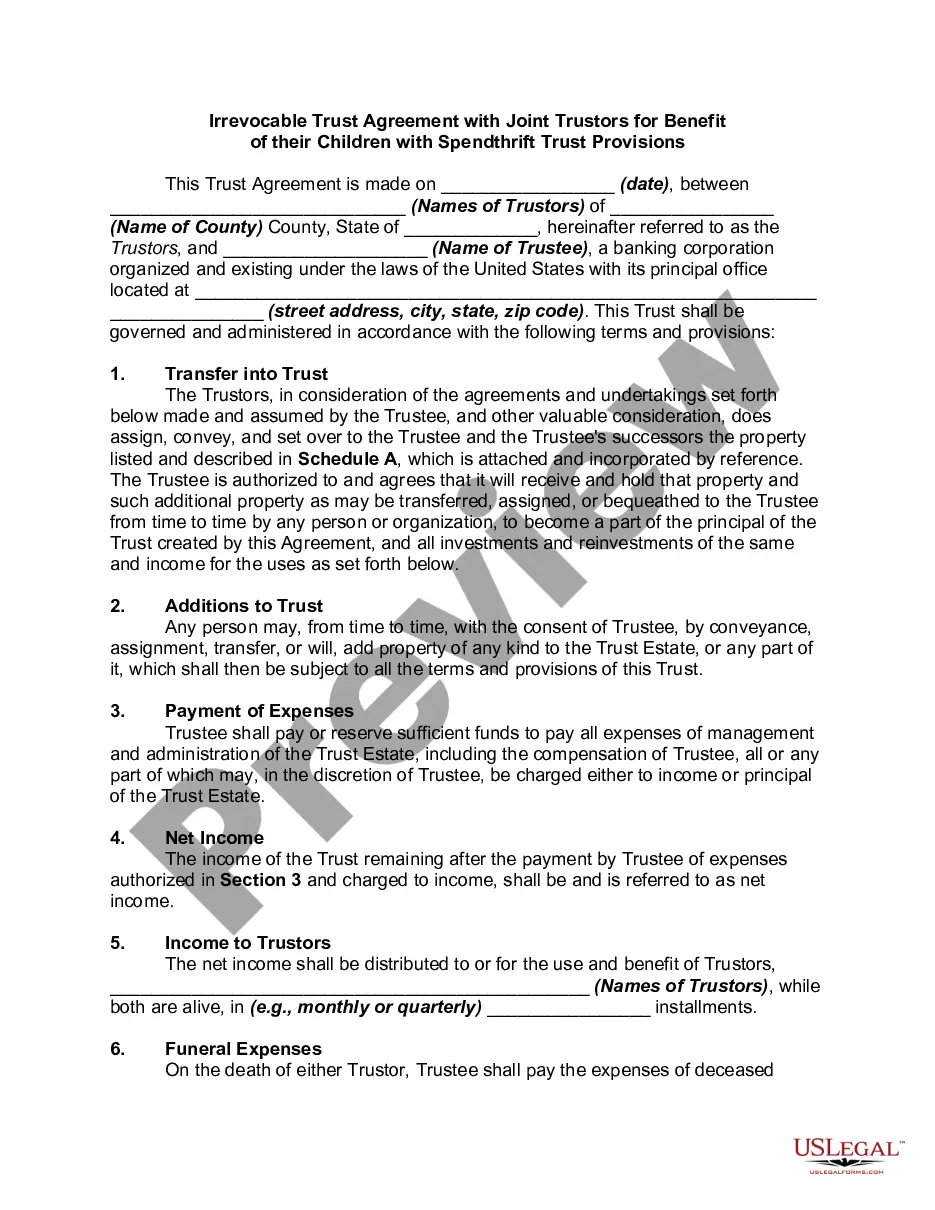
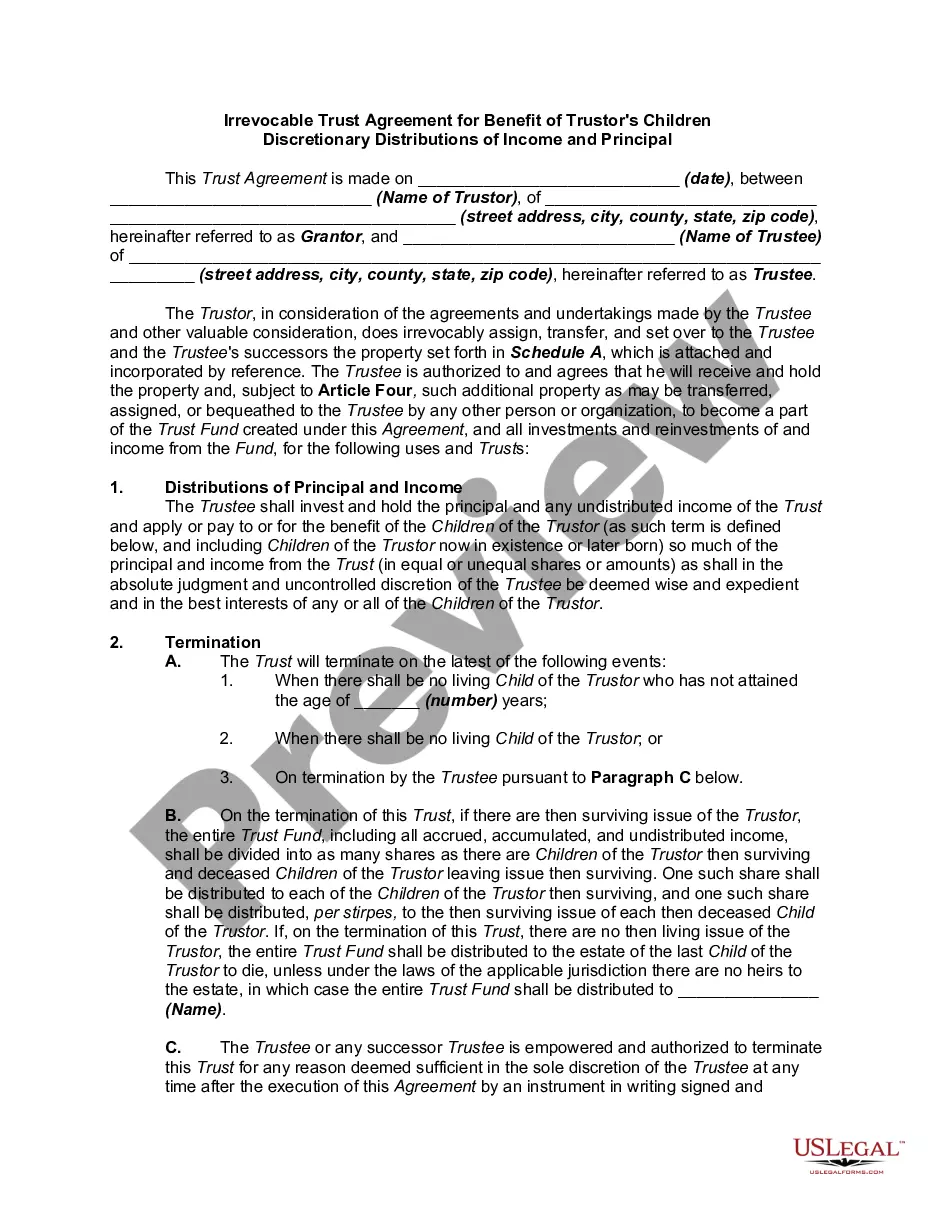
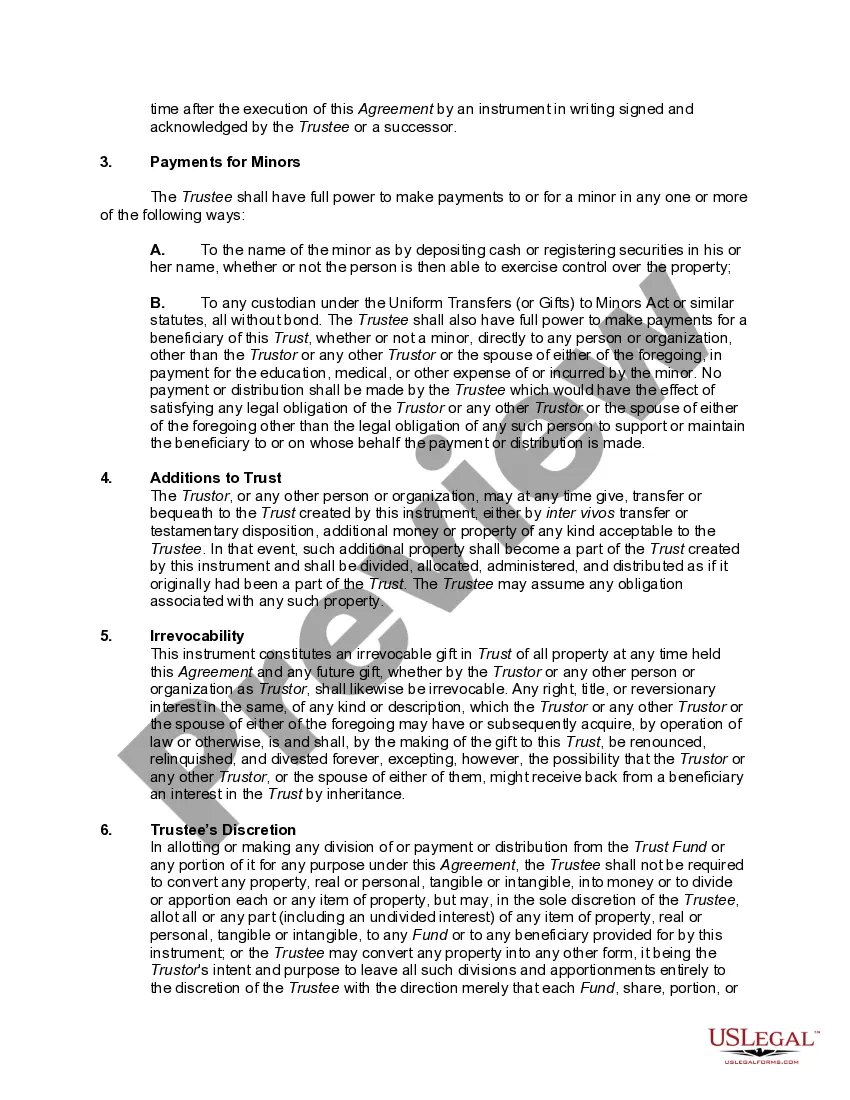
New York Irrevocable Trust Agreement for Benefit of Trustor's Children Discretionary Distributions of Income and Principal

State:
Multi-State
Control #:
US-01736BG
Format:
Word; 
Rich Text
Instant download

Description

An irrevocable trust is an arrangement in which the grantor departs with ownership and control of property. Usually this involves a gift of the property to the trust. The trust then stands as a separate taxable entity and pays tax on its accumulated income.


A discretionary trust is a trust where the beneficiaries and/or their entitlements to the trust fund are not fixed, but are determined by the criteria set out in the trust instrument by trustor. Discretionary trusts can be discretionary in two respects. First, the trustees usually have the power to determine which beneficiaries (from within the class) will receive payments from the trust. Second, trustees can select the amount of trust property that the beneficiary receives. Although most discretionary trusts allow both types of discretion, either can be allowed on its own. It is permissible in most legal systems for a trust to have a fixed number of beneficiaries and for the trustees to have discretion as to how much each beneficiary receives.
Free preview
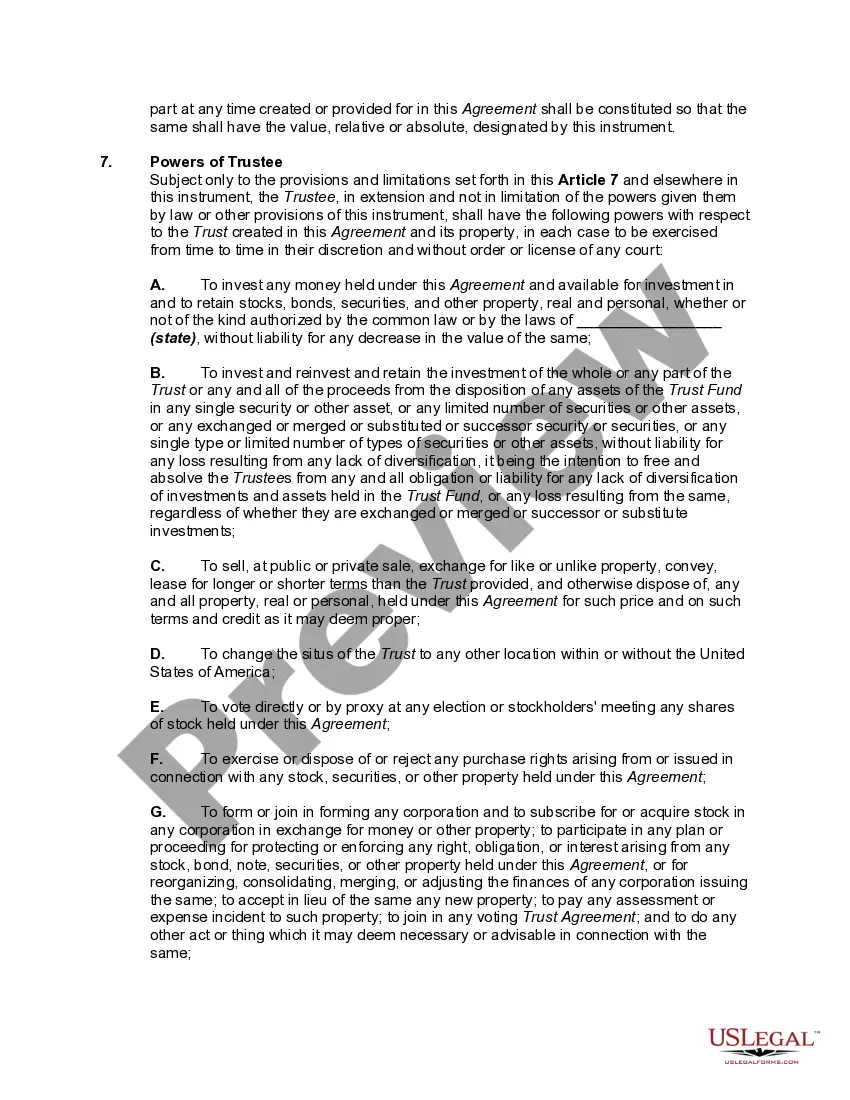
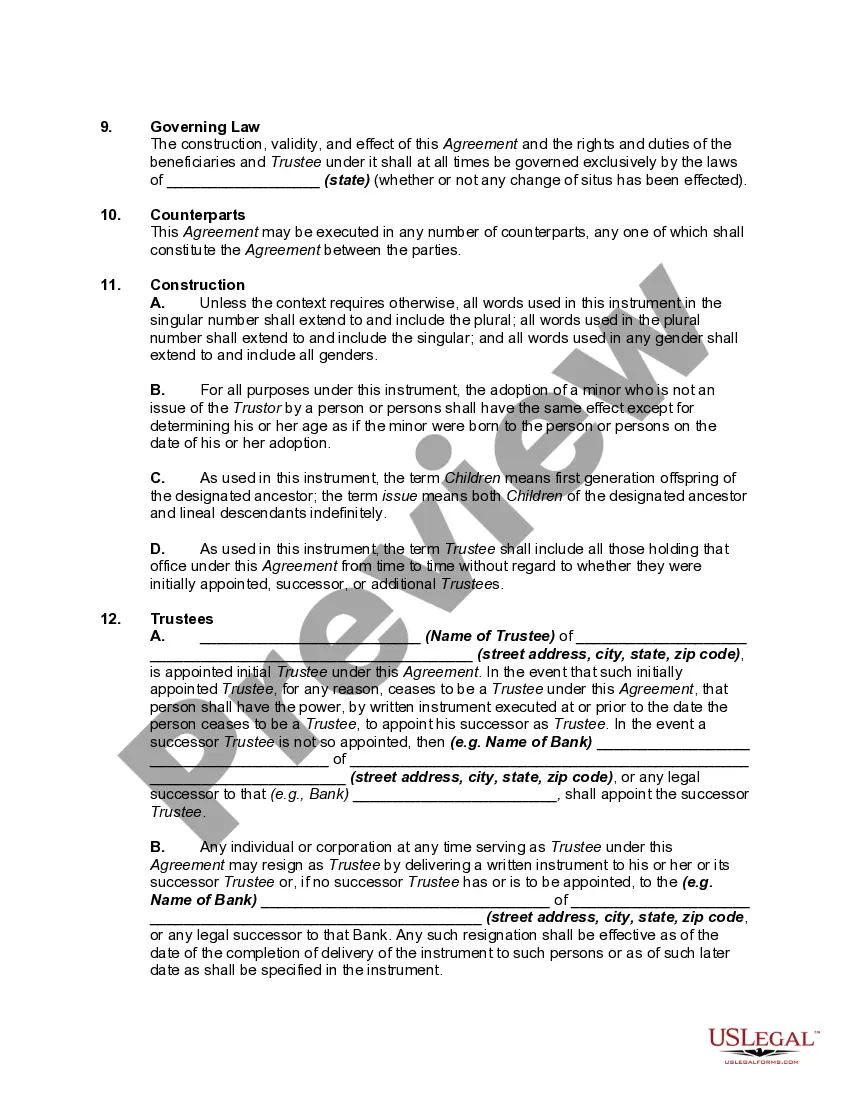
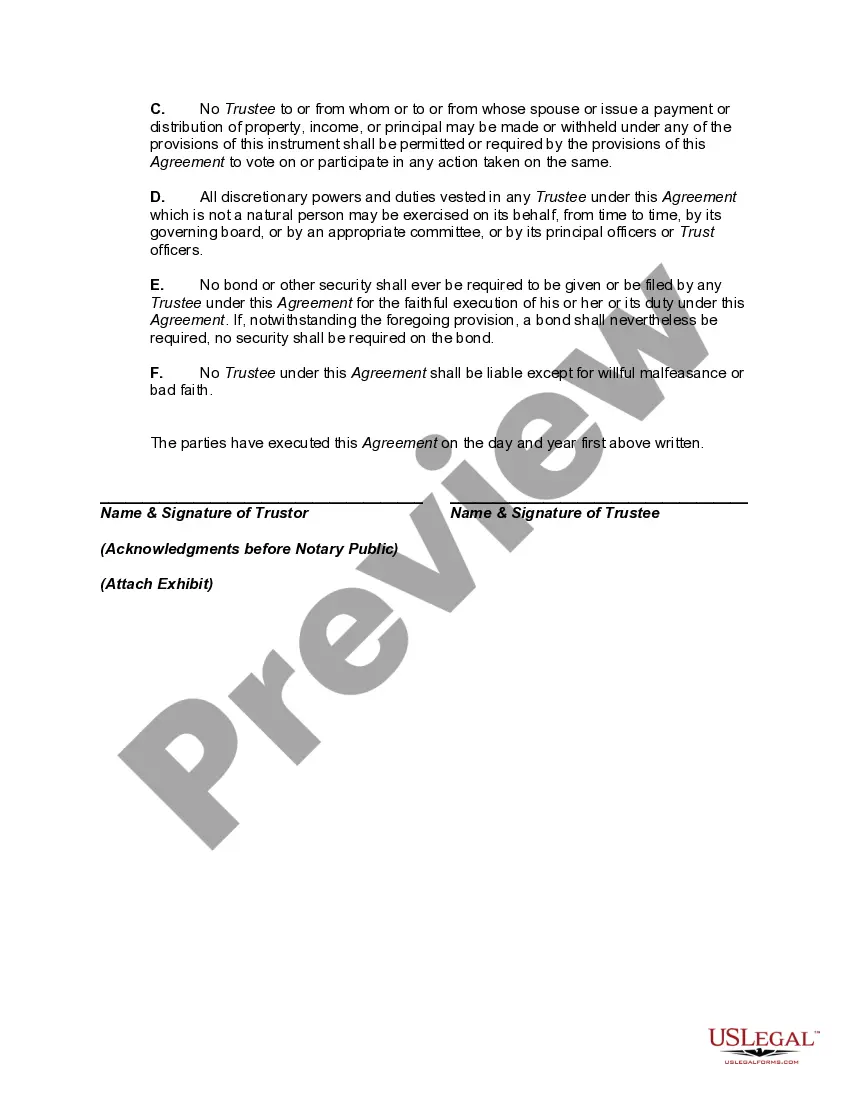
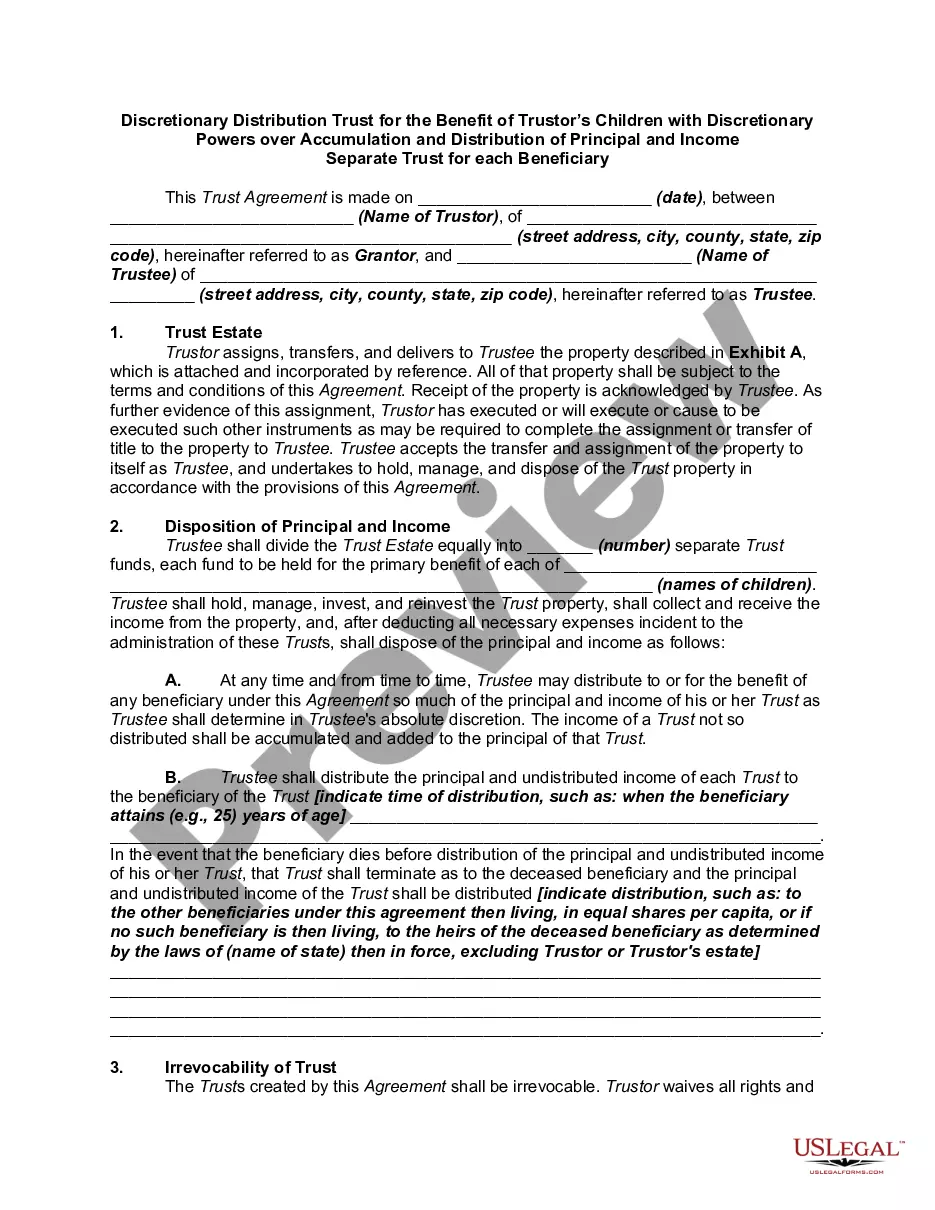
  • Preview Irrevocable Trust Agreement for Benefit of Trustor's Children Discretionary Distributions of Income and Principal
  • Preview Irrevocable Trust Agreement for Benefit of Trustor's Children Discretionary Distributions of Income and Principal
  • Preview Irrevocable Trust Agreement for Benefit of Trustor's Children Discretionary Distributions of Income and Principal
  • Preview Irrevocable Trust Agreement for Benefit of Trustor's Children Discretionary Distributions of Income and Principal
  • Preview Irrevocable Trust Agreement for Benefit of Trustor's Children Discretionary Distributions of Income and Principal
  • Preview Irrevocable Trust Agreement for Benefit of Trustor's Children Discretionary Distributions of Income and Principal

How to fill out Irrevocable Trust Agreement For Benefit Of Trustor's Children Discretionary Distributions Of Income And Principal?

US Legal Forms - one of the largest collections of legal templates in the United States - provides a variety of legal document templates that you can download or print.

By using the website, you can access thousands of forms for business and personal purposes, sorted by categories, states, or keywords.

You can obtain the latest versions of forms such as the New York Irrevocable Trust Agreement for the Benefit of Trustor's Children Discretionary Distributions of Income and Principal within a few moments.

Read the form description to confirm that you have selected the right form.

If the form does not fit your needs, use the Search area at the top of the screen to find the one that does.

  1. If you have an account, Log In and download the New York Irrevocable Trust Agreement for the Benefit of Trustor's Children Discretionary Distributions of Income and Principal from the US Legal Forms library.
  2. The Acquire button will appear on every form you view.
  3. You can access all previously downloaded forms within the My documents section of your account.
  4. If you are using US Legal Forms for the first time, here are simple steps to get started.
  5. Ensure you have selected the correct form for your area/county.
  6. Click on the Review button to examine the form's content.

Form popularity

FAQ

An irrevocable trust provides an alternative to simply giving an asset to a beneficiary in order to reduce your taxable estate. With a trust, you can set the timing of distributions (i.e. when the beneficiary attains 30 years of age) as well as the reasons for distributions (i.e. for education only).

To distribute real estate held by a trust to a beneficiary, the trustee will have to obtain a document known as a grant deed, which, if executed correctly and in accordance with state laws, transfers the title of the property from the trustee to the designated beneficiaries, who will become the new owners of the asset.

When you receive a distribution of principal from irrevocable trust funds, you will be required to report this income on your standard IRS Form 1040 tax form, as this money will almost always be taxed at normal income tax rates.

Principal Distributions. When trust beneficiaries receive distributions from the trust's principal balance, they do not have to pay taxes on the distribution. The Internal Revenue Service (IRS) assumes this money was already taxed before it was placed into the trust.

Principal Distributions. When trust beneficiaries receive distributions from the trust's principal balance, they do not have to pay taxes on the distribution. The Internal Revenue Service (IRS) assumes this money was already taxed before it was placed into the trust.

Irrevocable Trusts Generally, a trustee is the only person allowed to withdraw money from an irrevocable trust. But just as we mentioned earlier, the trustee must follow the rules of the legal document and can only take out income or principal when it's in the best interest of the trust.

The trust must pay taxes on any interest income it holds and does not distribute past year-end. The interest income the trust distributes is taxable for the beneficiary who receives it. The amount distributed to the beneficiary is considered to be from the current-year income first, then from the accumulated principal.

When an irrevocable trust makes a distribution, it deducts the income distributed on its own tax return and issues the beneficiary a tax form called a K-1. This form shows the amount of the beneficiary's distribution that's interest income as opposed to principal.

The default rule under section 643(a)(3) is that capital gains are considered trust principal, and therefore, not income in the fiduciary accounting sense of the term, unless such capital gains are: (1) paid, credited, or required to be distributed to any beneficiary during the taxable year, or (2) paid, permanently

When you receive a distribution of principal from irrevocable trust funds, you will be required to report this income on your standard IRS Form 1040 tax form, as this money will almost always be taxed at normal income tax rates.

Trusted and secure by over 3 million people of the world’s leading companies

New York Irrevocable Trust Agreement for Benefit of Trustor's Children Discretionary Distributions of Income and Principal