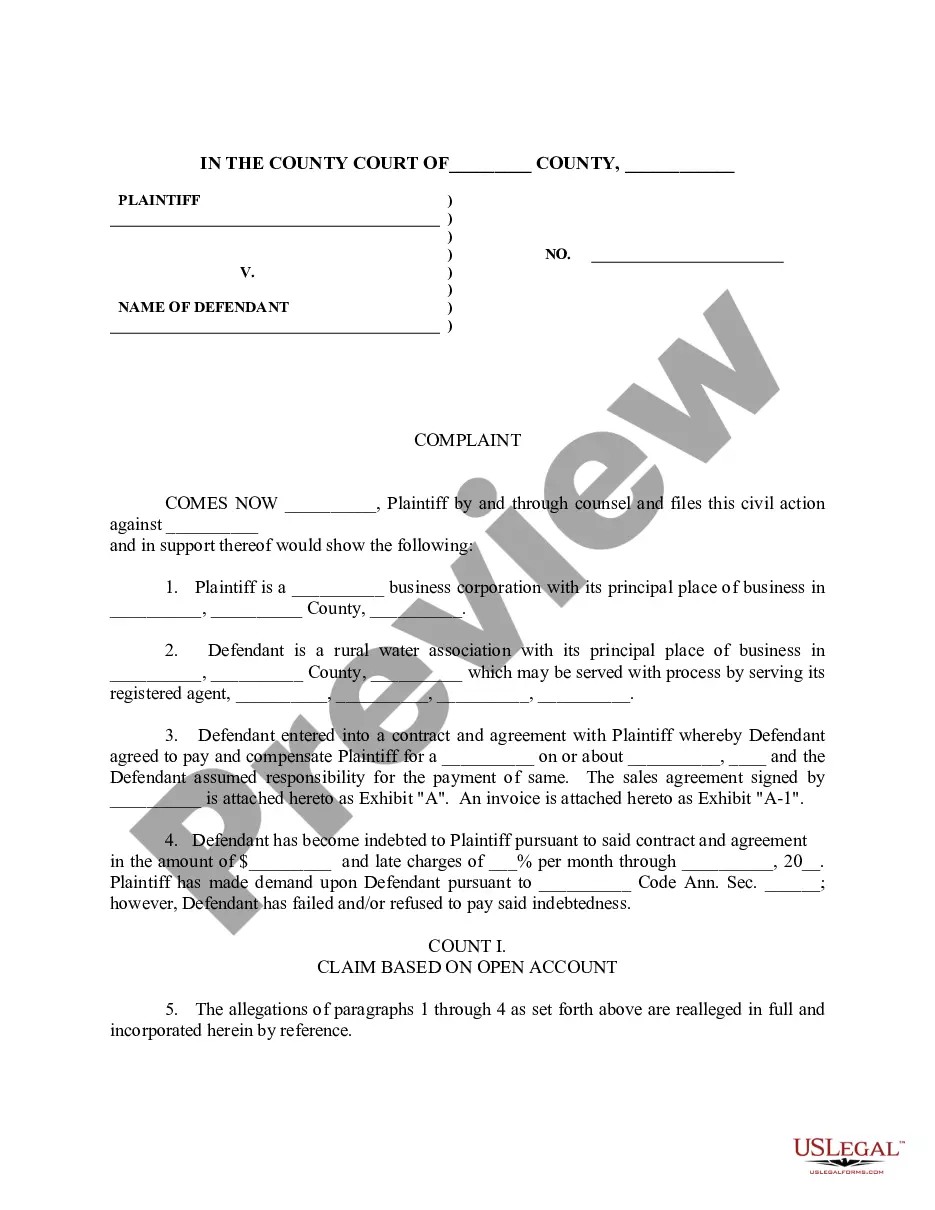
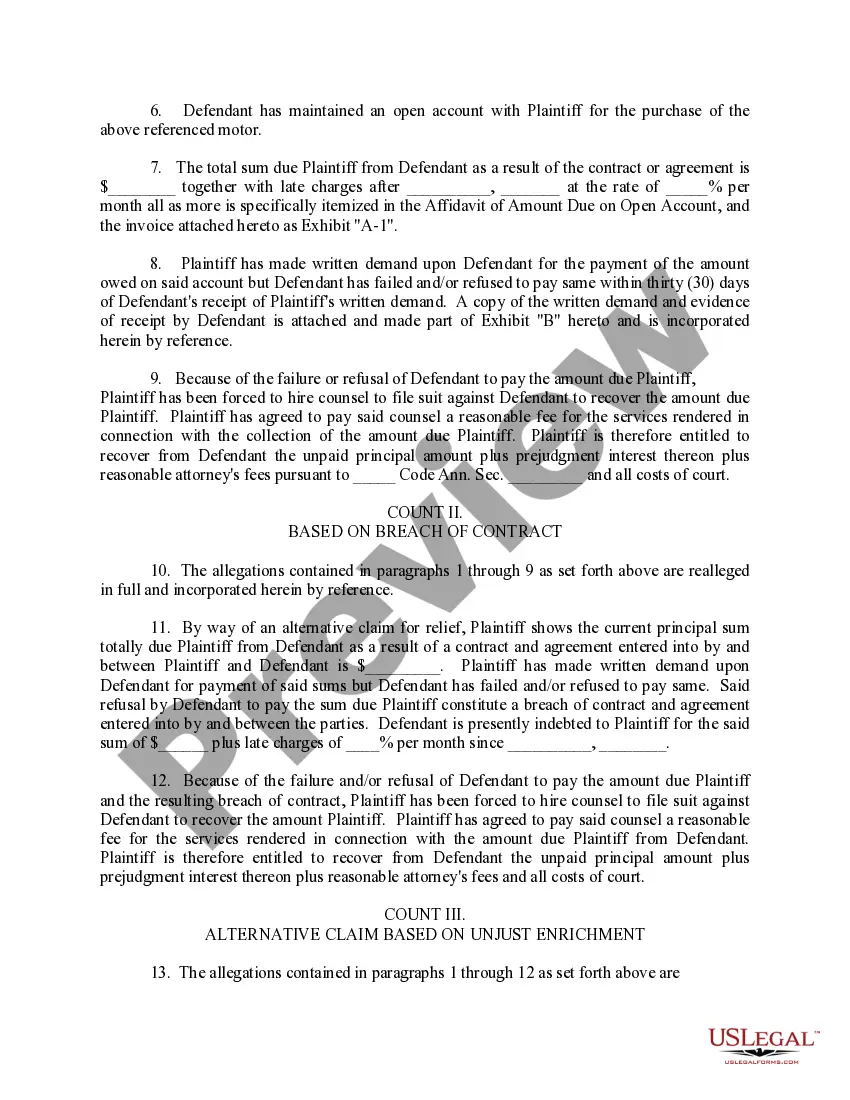
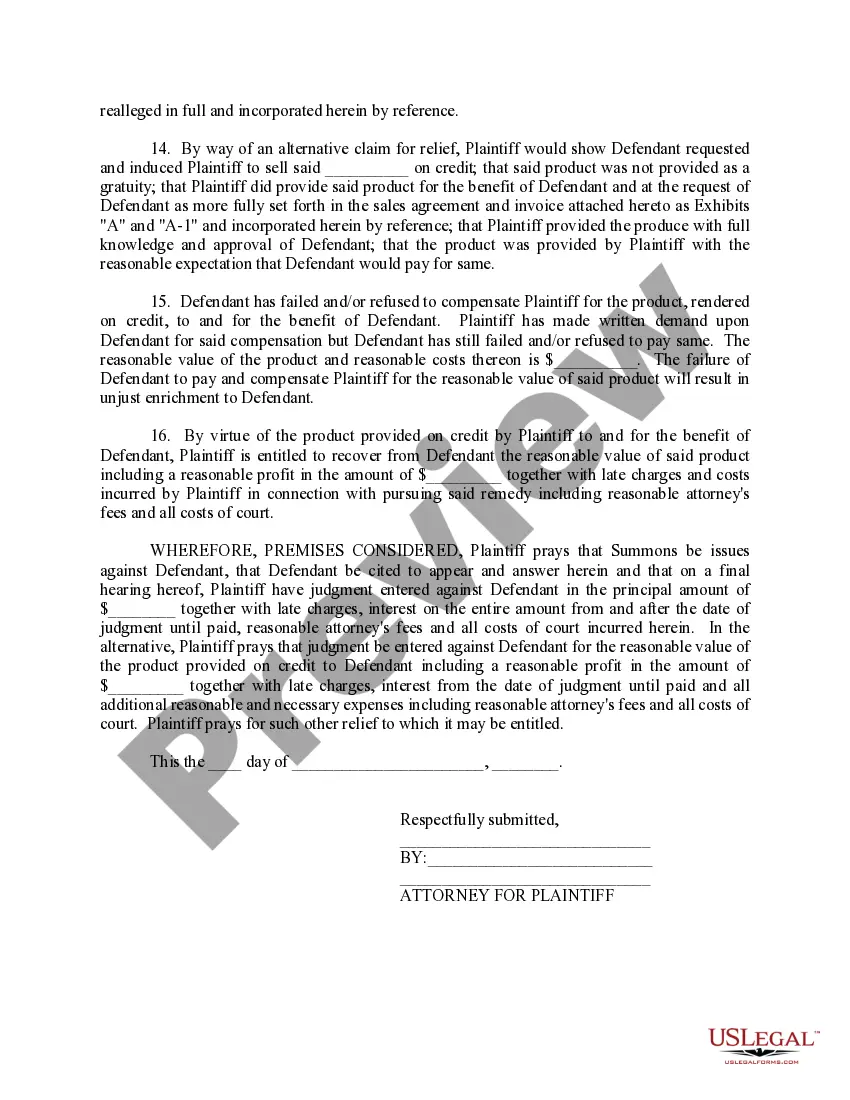
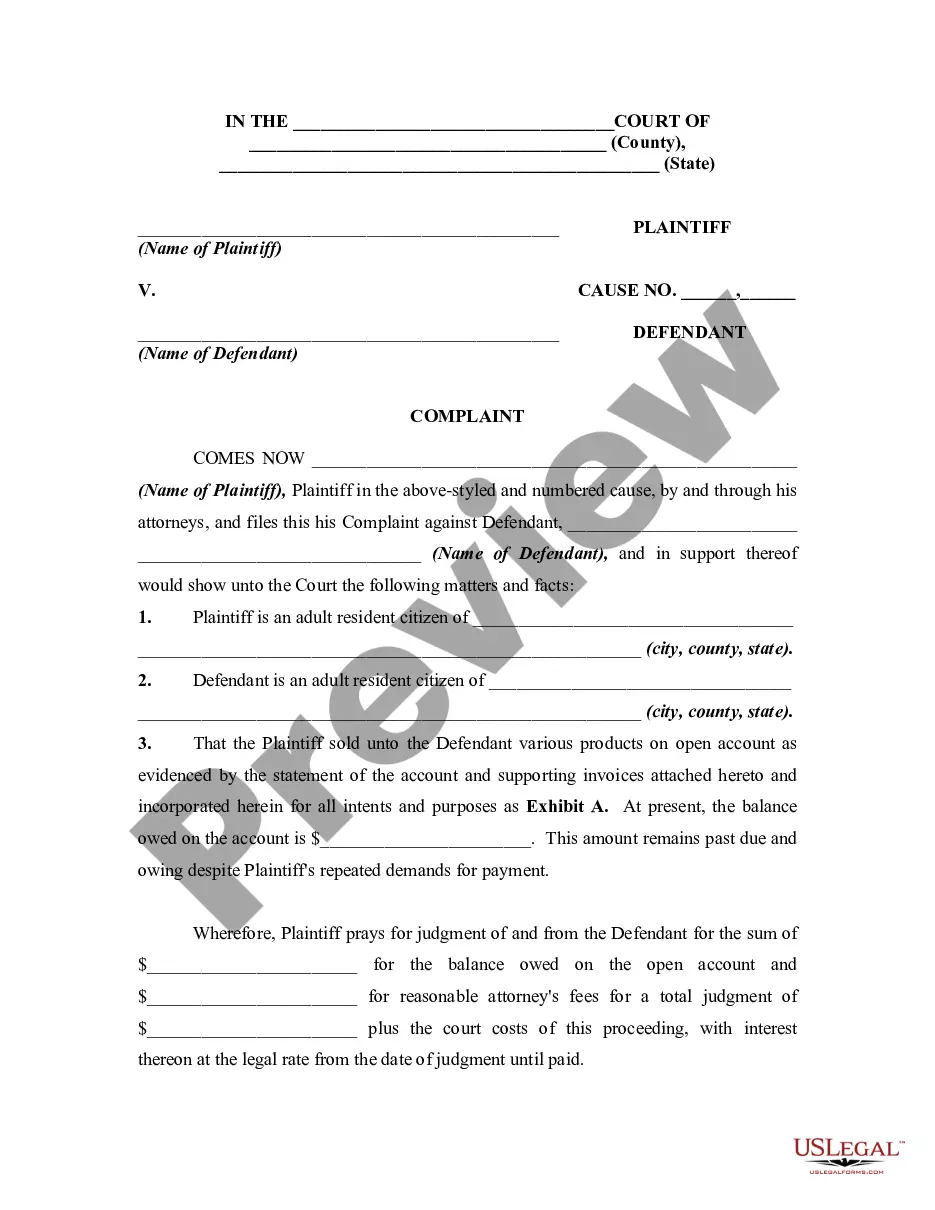
New York Complaint based on Open Account, Breach of Contract, Unjust Enrichment
Description
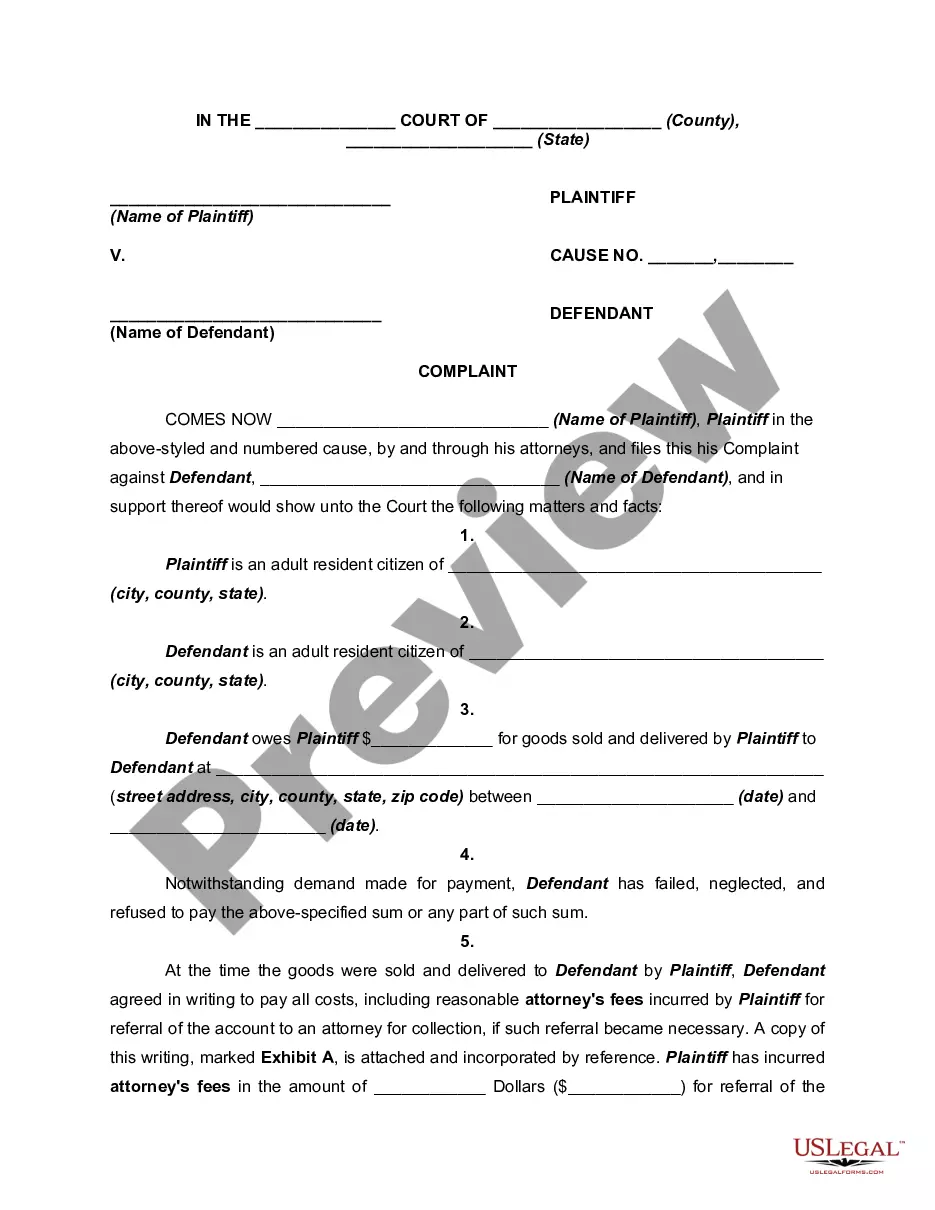
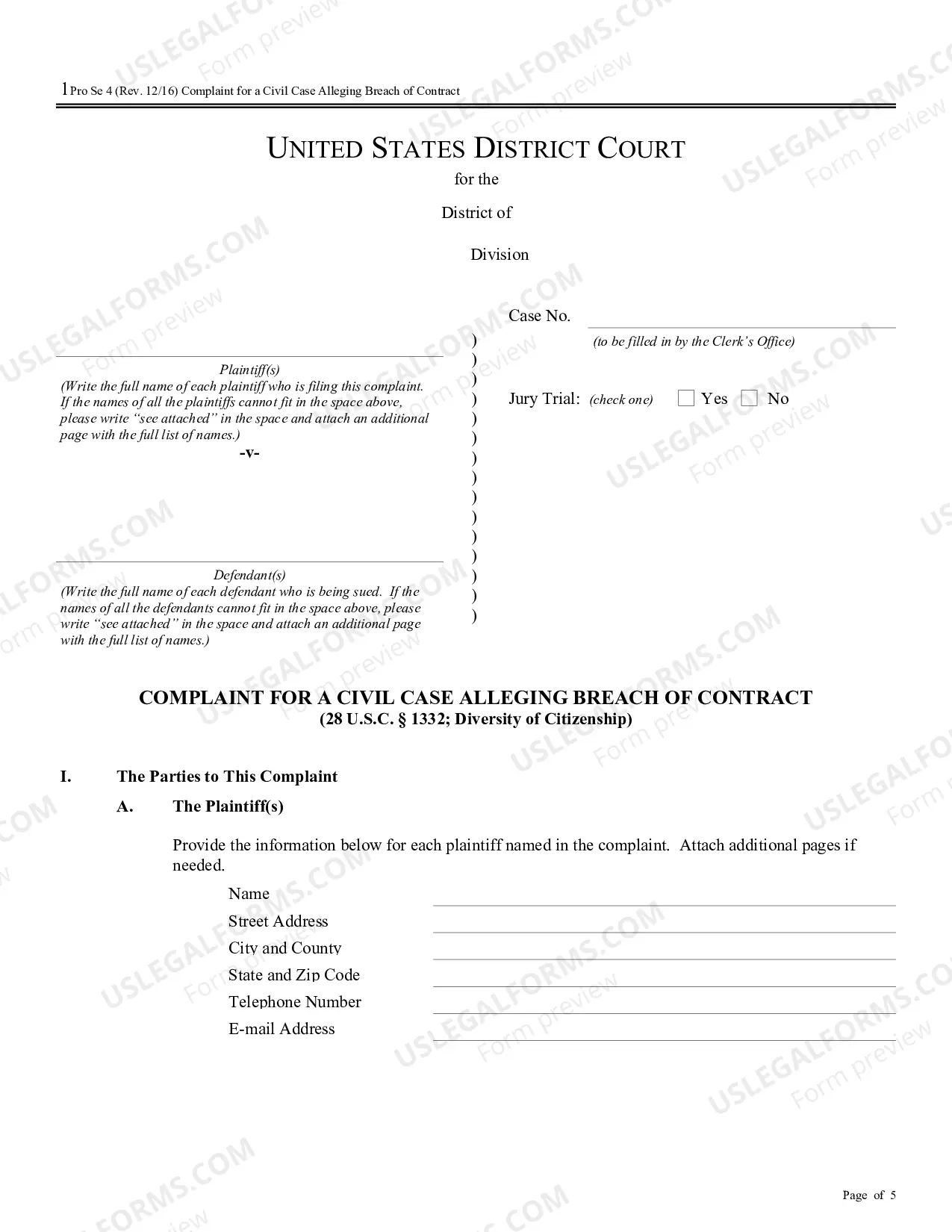
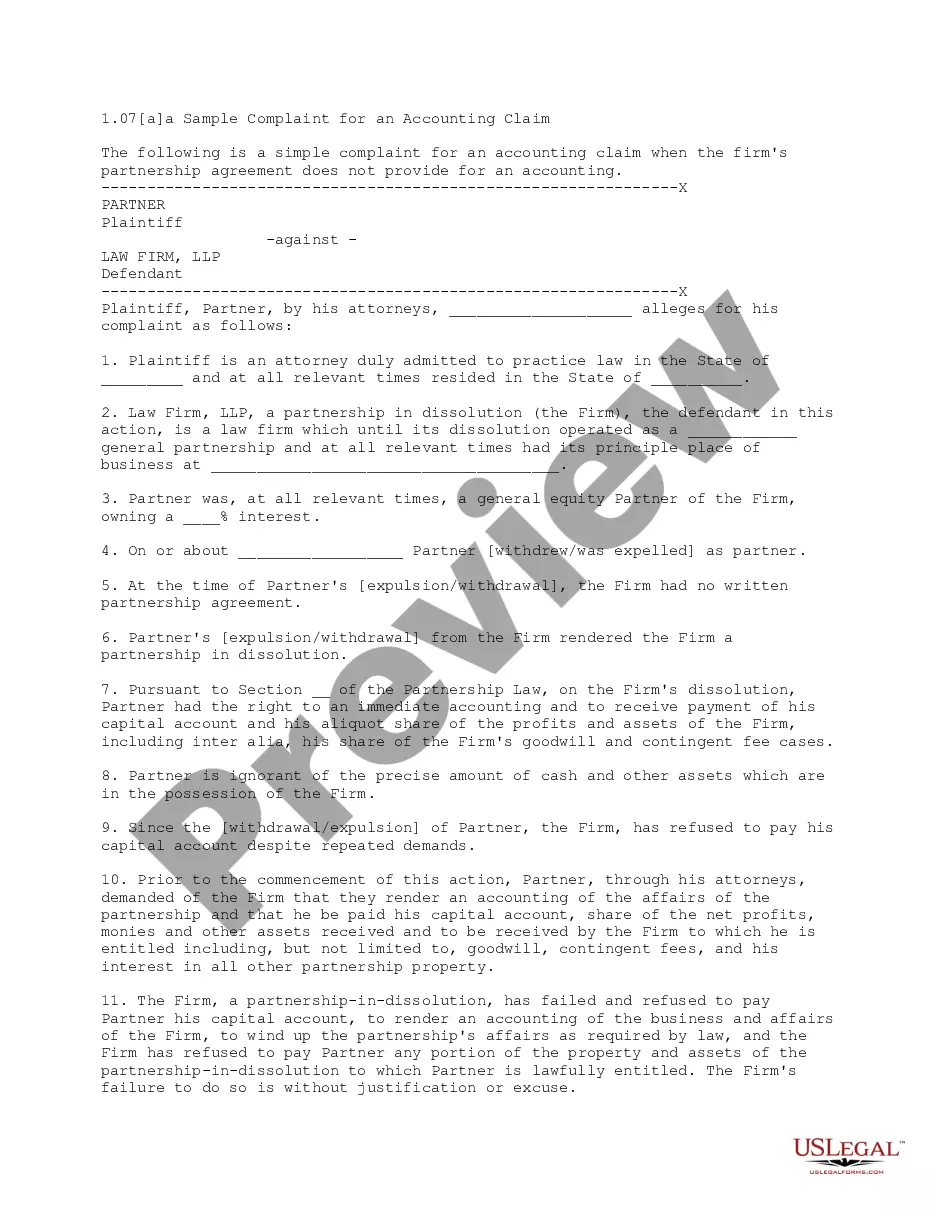
Get your form ready online
Our built-in tools help you complete, sign, share, and store your documents in one place.
Make edits, fill in missing information, and update formatting in US Legal Forms—just like you would in MS Word.
Download a copy, print it, send it by email, or mail it via USPS—whatever works best for your next step.
Sign and collect signatures with our SignNow integration. Send to multiple recipients, set reminders, and more. Go Premium to unlock E-Sign.
If this form requires notarization, complete it online through a secure video call—no need to meet a notary in person or wait for an appointment.
We protect your documents and personal data by following strict security and privacy standards.

Make edits, fill in missing information, and update formatting in US Legal Forms—just like you would in MS Word.

Download a copy, print it, send it by email, or mail it via USPS—whatever works best for your next step.

Sign and collect signatures with our SignNow integration. Send to multiple recipients, set reminders, and more. Go Premium to unlock E-Sign.

If this form requires notarization, complete it online through a secure video call—no need to meet a notary in person or wait for an appointment.

We protect your documents and personal data by following strict security and privacy standards.
Looking for another form?
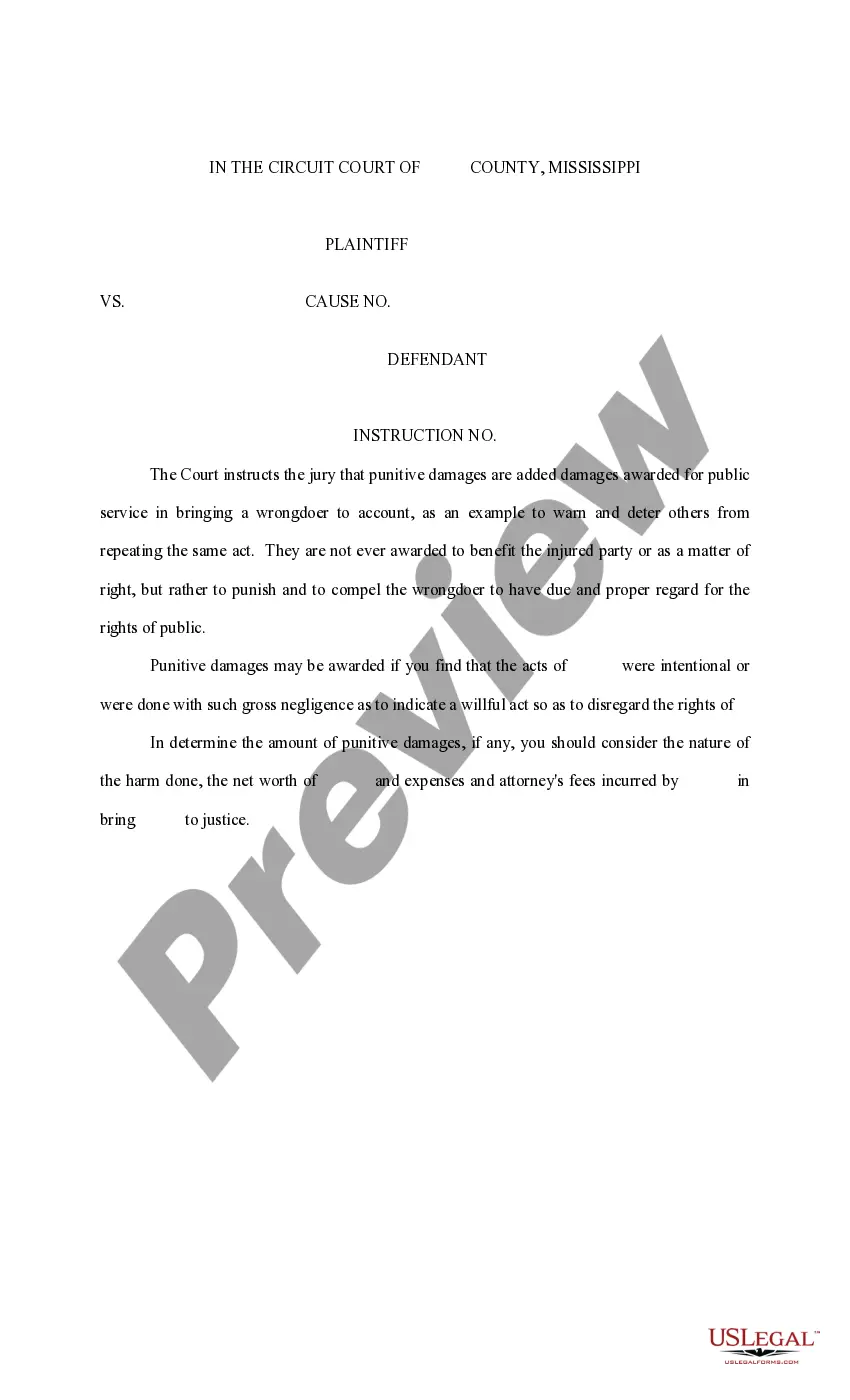

How to fill out Complaint Based On Open Account, Breach Of Contract, Unjust Enrichment?
US Legal Forms - one of the most prominent collections of legal templates in the United States - offers a vast selection of legal document formats that you can obtain or print.
While utilizing the website, you can access thousands of forms for business and personal purposes, categorized by groups, states, or keywords. You can find the latest versions of forms such as the New York Complaint based on Open Account, Breach of Contract, Unjust Enrichment in moments.
If you already possess a monthly subscription, Log In and obtain the New York Complaint based on Open Account, Breach of Contract, Unjust Enrichment from the US Legal Forms library. The Download option will appear on every document you view. You have access to all previously saved forms within the My documents section of your account.
Complete the transaction. Use your credit card or PayPal account to finalize the transaction. Choose the format and download the form to your device.
Make modifications. Fill out, edit, print, and sign the saved New York Complaint based on Open Account, Breach of Contract, Unjust Enrichment. Each template you store in your account has no expiration date and is your property indefinitely. Therefore, if you wish to obtain or print another copy, simply navigate to the My documents section and click on the form you desire. Access the New York Complaint based on Open Account, Breach of Contract, Unjust Enrichment with US Legal Forms, the most extensive collection of legal document templates. Utilize a vast array of professional and state-specific templates that meet your business or personal needs and requirements.
- If you wish to use US Legal Forms for the first time, here are straightforward guidelines to get started.
- Ensure you have selected the correct form for your city/county.
- Click the Preview option to review the content of the form.
- Read the form description to confirm that you have selected the appropriate document.
- If the form does not meet your requirements, utilize the Search field at the top of the screen to find one that does.
- If you are satisfied with the form, confirm your selection by clicking the Purchase now button.
- Next, choose the pricing plan you prefer and provide your details to register for an account.
Form popularity
FAQ
3 Elements of a Claim for Unjust Enrichment The defendant received a benefit; At the plaintiff's expense; and, Under circumstances that would make it unjust for the defendant to retain the benefit without commensurate compensation.
Damages are usually awarded to an injured party for losses suffered as a result of the defaulting party's actions or non-actions. The purpose of an award of damages for breach of contract is to put the injured party in the position it would have been in had the contract been performed.
In order to prevail on a breach of contract claim in New York, the party seeking to enforce the contract must prove (1) the existence of a contract between the parties, (2) the material performance of their contractual obligations, (3) the other party to the contract failed to materially perform their commitments under ...
Unjust enrichment, unlike the other CoA, is not inherently an intentional tort rather, New York's courts have determined that it only necessitates a demonstration of the following: The defendant gained an advantage.
In New York, the elements of an unjust enrichment claim are ?that (1) the other party was enriched, (2) at that party's expense, and (3) that it is against equity and good conscience to permit the other party to retain what is sought to be recovered.? Mandarin Trading Ltd. v. Wildenstein, 16 N.Y. 3d 173, 182 (2011).
?A mistaken payment is generally regarded as the central example of an unjust enrichment. The unjust factor is the mistake which negatives the voluntariness of the payor. The enrichment is the money, which is an incontrovertible benefit.
An award of compensatory damages is the most common of the legal remedies for breach of contract. The calculation of compensatory damages is based on the actual losses you have sustained as a result of the breach of contract. They typically fall into two categories: expectation damages and consequential damages.
You Either Have Breach of Contract, or Unjust Enrichment. You Can't Have Both. Simply put, as a claimant you must decide from the get-go whether your claim is based upon the breach of a valid written contract, or whether your claim is grounded in quasi-contract, i.e., to seek recovery on an strictly equitable basis.