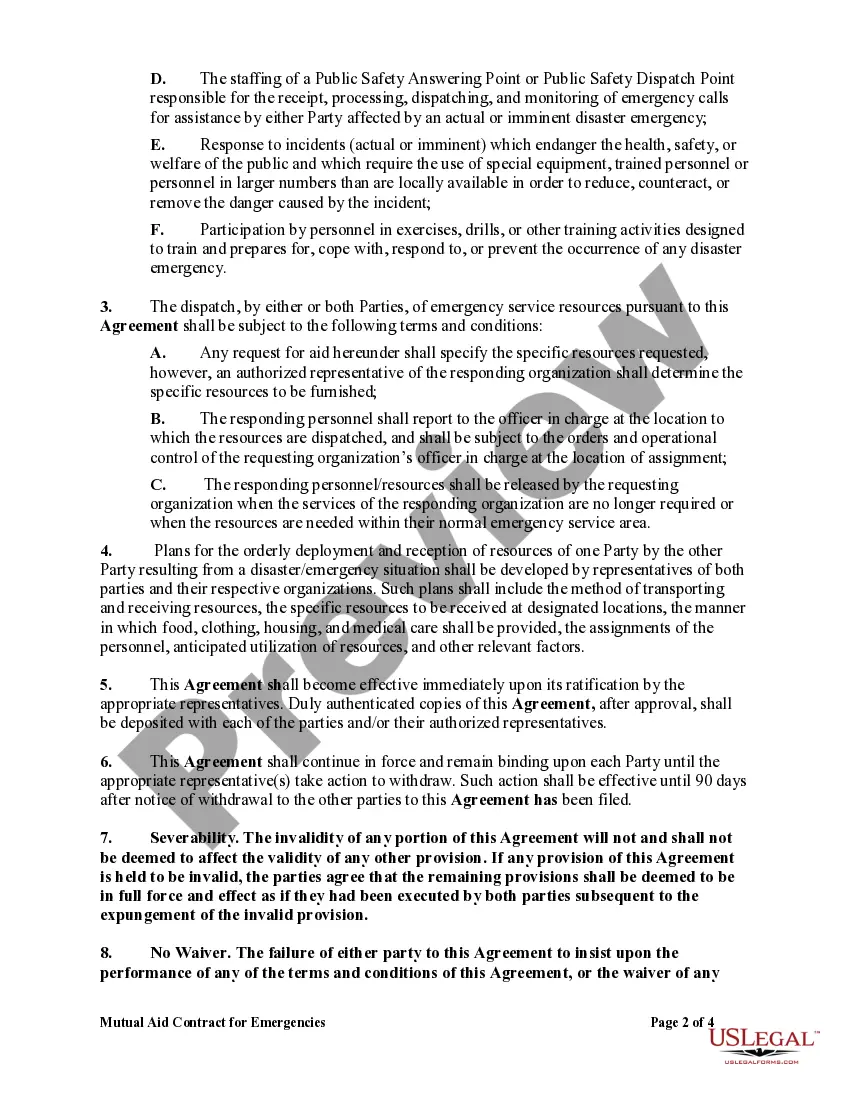
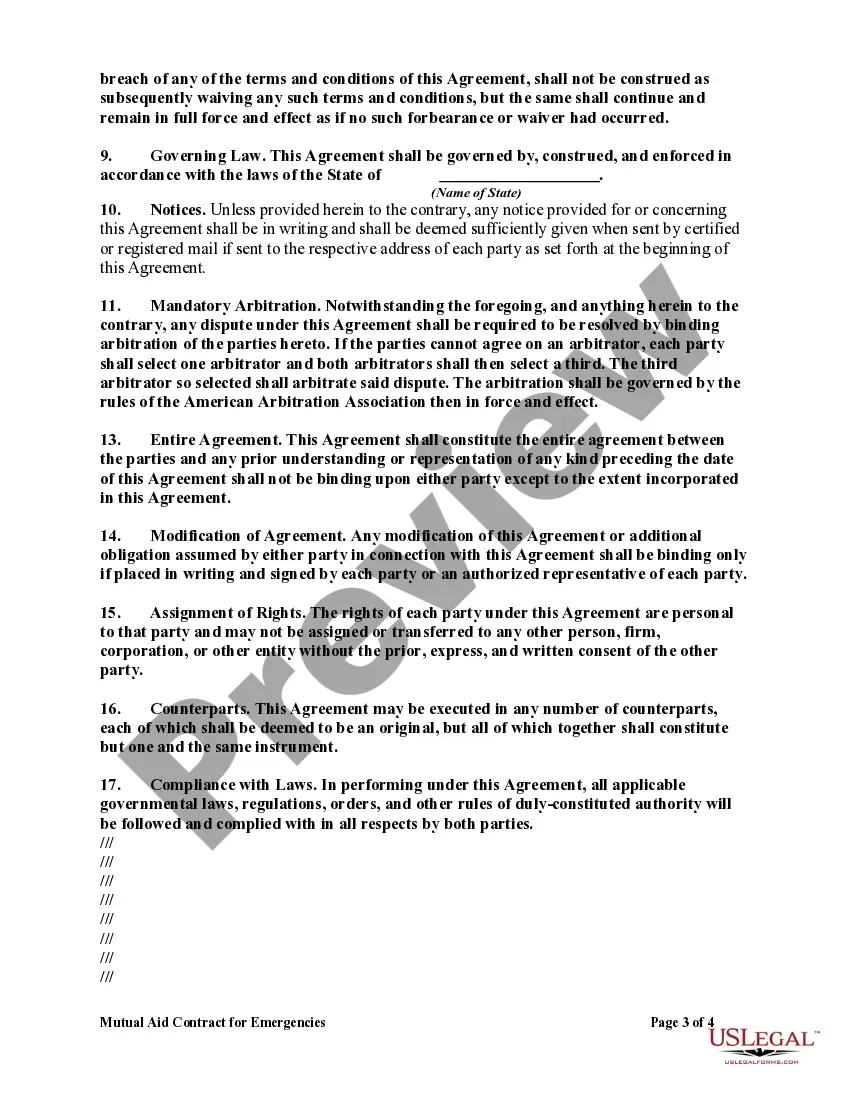
New York Mutual Aid Contract for Emergencies
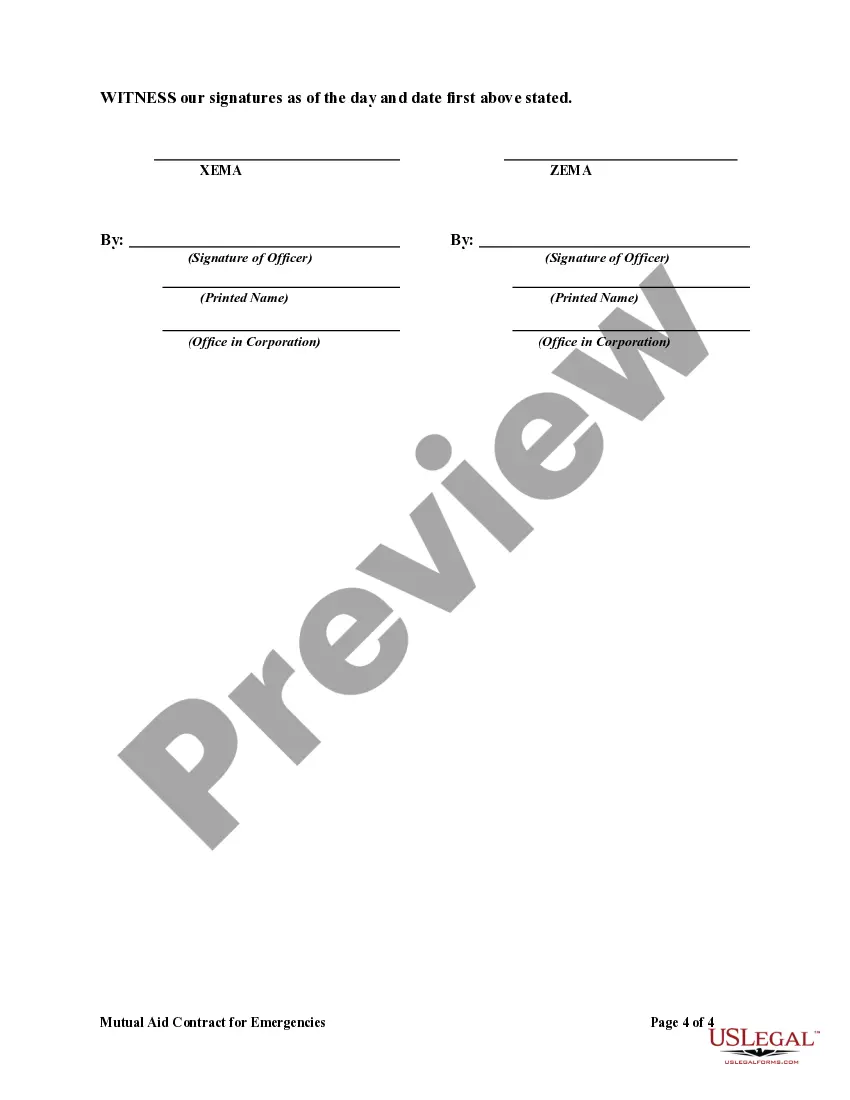
Description


Get your form ready online
Our built-in tools help you complete, sign, share, and store your documents in one place.
Make edits, fill in missing information, and update formatting in US Legal Forms—just like you would in MS Word.
Download a copy, print it, send it by email, or mail it via USPS—whatever works best for your next step.
Sign and collect signatures with our SignNow integration. Send to multiple recipients, set reminders, and more. Go Premium to unlock E-Sign.
If this form requires notarization, complete it online through a secure video call—no need to meet a notary in person or wait for an appointment.
We protect your documents and personal data by following strict security and privacy standards.

Make edits, fill in missing information, and update formatting in US Legal Forms—just like you would in MS Word.

Download a copy, print it, send it by email, or mail it via USPS—whatever works best for your next step.

Sign and collect signatures with our SignNow integration. Send to multiple recipients, set reminders, and more. Go Premium to unlock E-Sign.

If this form requires notarization, complete it online through a secure video call—no need to meet a notary in person or wait for an appointment.

We protect your documents and personal data by following strict security and privacy standards.
Looking for another form?


How to fill out Mutual Aid Contract For Emergencies?
Finding the appropriate legitimate document format can be a challenge.
Clearly, there are numerous templates accessible online, but how can you acquire the correct form you need.
Utilize the US Legal Forms platform.
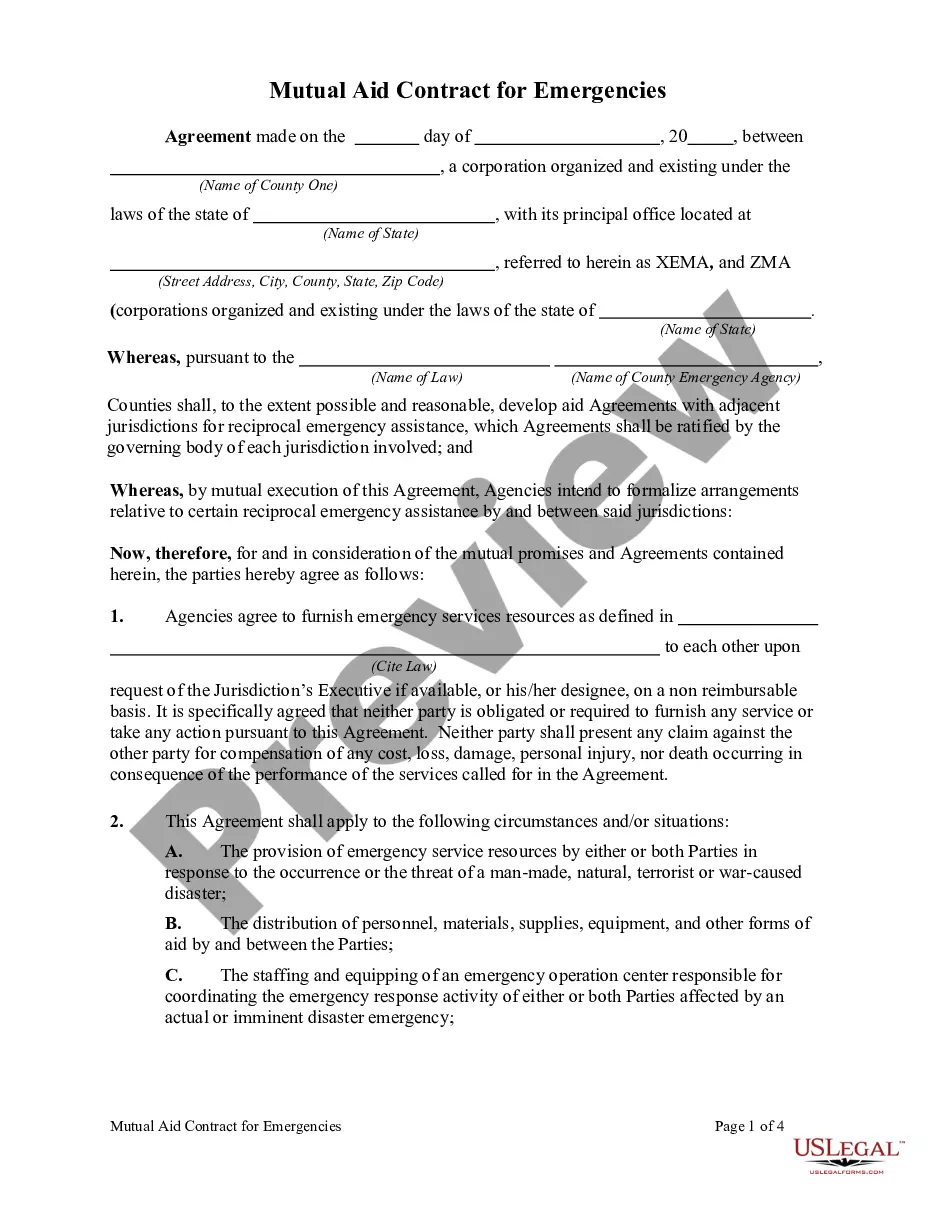
First, ensure you have chosen the correct form for your city/state. You can review the form using the Preview button and read the form description to confirm it is suitable for you.
- The service offers a wide array of templates, such as the New York Mutual Aid Contract for Emergencies, suitable for business and personal needs.
- All forms are verified by professionals and comply with state and federal requirements.
- If you are already registered, Log In to your account and click on the Obtain button to access the New York Mutual Aid Contract for Emergencies.
- Use your account to view the legal documents you have previously acquired.
- Navigate to the My documents section of your account to obtain another copy of the document you need.
- If you are a new user of US Legal Forms, here are straightforward instructions for you to follow.
Form popularity
FAQ
Mutual aid, in simple terms, refers to the practice of sharing resources and assistance among communities during emergencies. The New York Mutual Aid Contract for Emergencies provides a formal way to outline how this collaboration works. It allows jurisdictions to support one another efficiently, ensuring that no community faces a crisis alone.
Mutual aid agreements are typically established by local and state governments, including agencies and departments involved in emergency management. In New York, these agreements often involve collaboration among municipalities, counties, and relevant stakeholders. By working together, jurisdictions create a robust framework for ensuring public safety during emergencies.
The first step in creating a mutual aid agreement, such as the New York Mutual Aid Contract for Emergencies, involves gathering the interested parties to discuss needs and expectations. Understanding the resources each party can provide sets a solid foundation for cooperation. Once these aspects are clear, drafting the agreement with specific terms and roles becomes essential.
A mutual aid agreement FEMA, in the context of the New York Mutual Aid Contract for Emergencies, involves collaboration between local governments and FEMA during major disasters. This agreement enables seamless resource sharing, ensuring all parties can respond swiftly when challenged by emergencies. It aligns with federal guidelines, helping local entities leverage federal support effectively.
The New York Mutual Aid Contract for Emergencies aims to enhance cooperation among local governments during crises. By establishing clear guidelines for resource sharing, it ensures a faster response when disasters occur. This contract allows communities to pool their resources effectively, making emergency management more efficient and coordinated.
Automatic aid occurs when neighboring jurisdictions respond without a formal request for assistance, often based on pre-established agreements. In contrast, mutual aid, as outlined in the New York Mutual Aid Contract for Emergencies, requires a specific request for help. Understanding this distinction is important for effective emergency management and ensures resources are allocated appropriately in response to varying situations.
To request mutual aid, you first need to evaluate the resources at your disposal and determine what assistance you require. Document your request clearly and submit it through your municipality’s emergency management protocol. Engaging your local office, which operates under the New York Mutual Aid Contract for Emergencies, will facilitate a more effective response.
A mutual aid agreement is a formal arrangement between jurisdictions or organizations to provide assistance during emergencies. The New York Mutual Aid Contract for Emergencies establishes a framework for cooperation and support among local entities. It ensures a swift response by clearly defining the terms and expectations of help available. This agreement promotes synergy and resource sharing during critical situations.
Requesting mutual aid requires you to officially document your needs through the appropriate channels. Under the New York Mutual Aid Contract for Emergencies, you should provide detailed information about your request to local emergency management teams. They will review your situation and deploy the necessary resources as quickly as possible to assist you.
To get involved in mutual aid in NYC, identify and connect with local mutual aid groups through social media or community boards. Participate in their events and volunteer opportunities to better understand the operations under the New York Mutual Aid Contract for Emergencies. Engaging with these groups allows you to contribute and learn how mutual aid works in practice.