New York Rental Lease Pooling Provision
Overview of this form
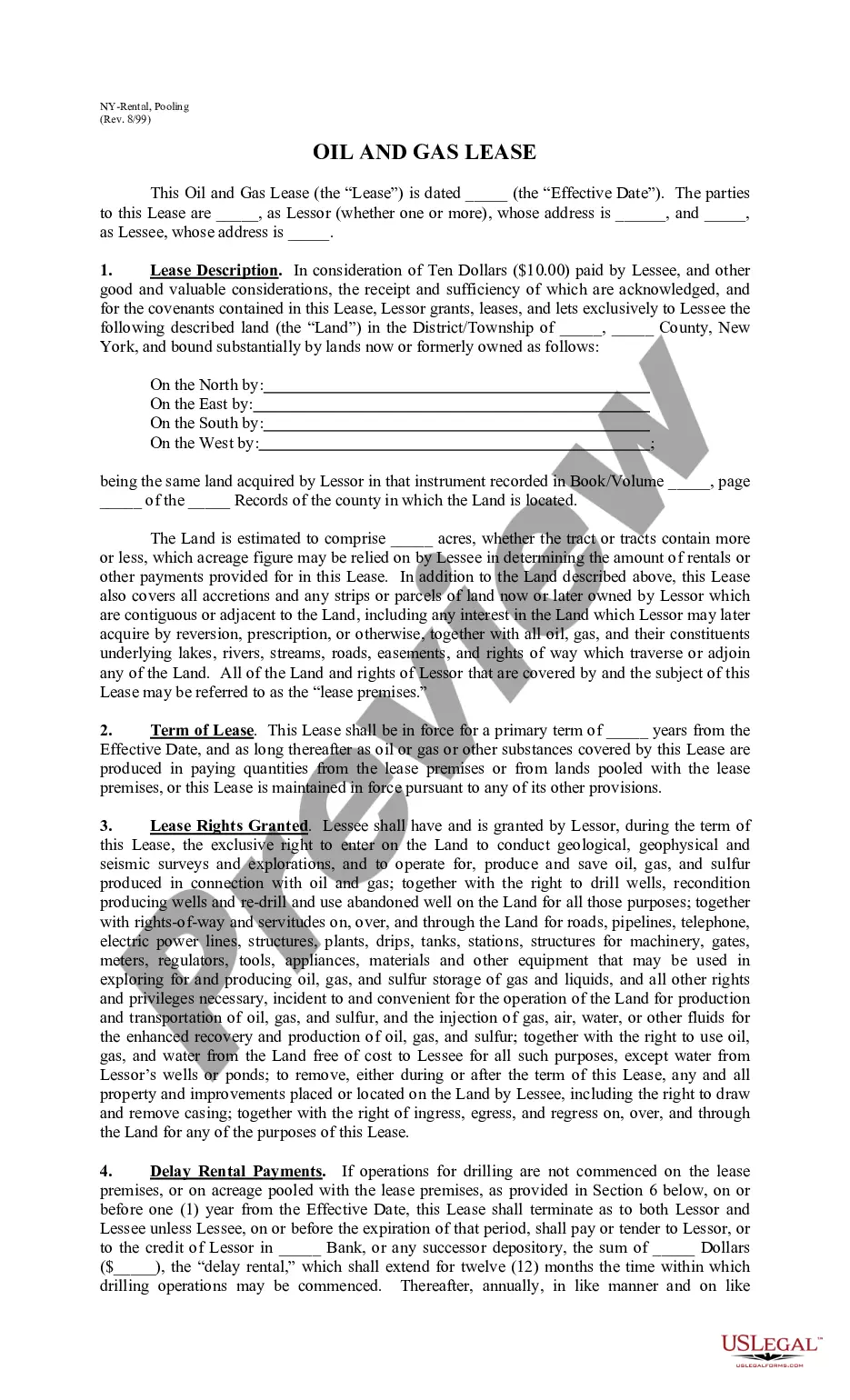
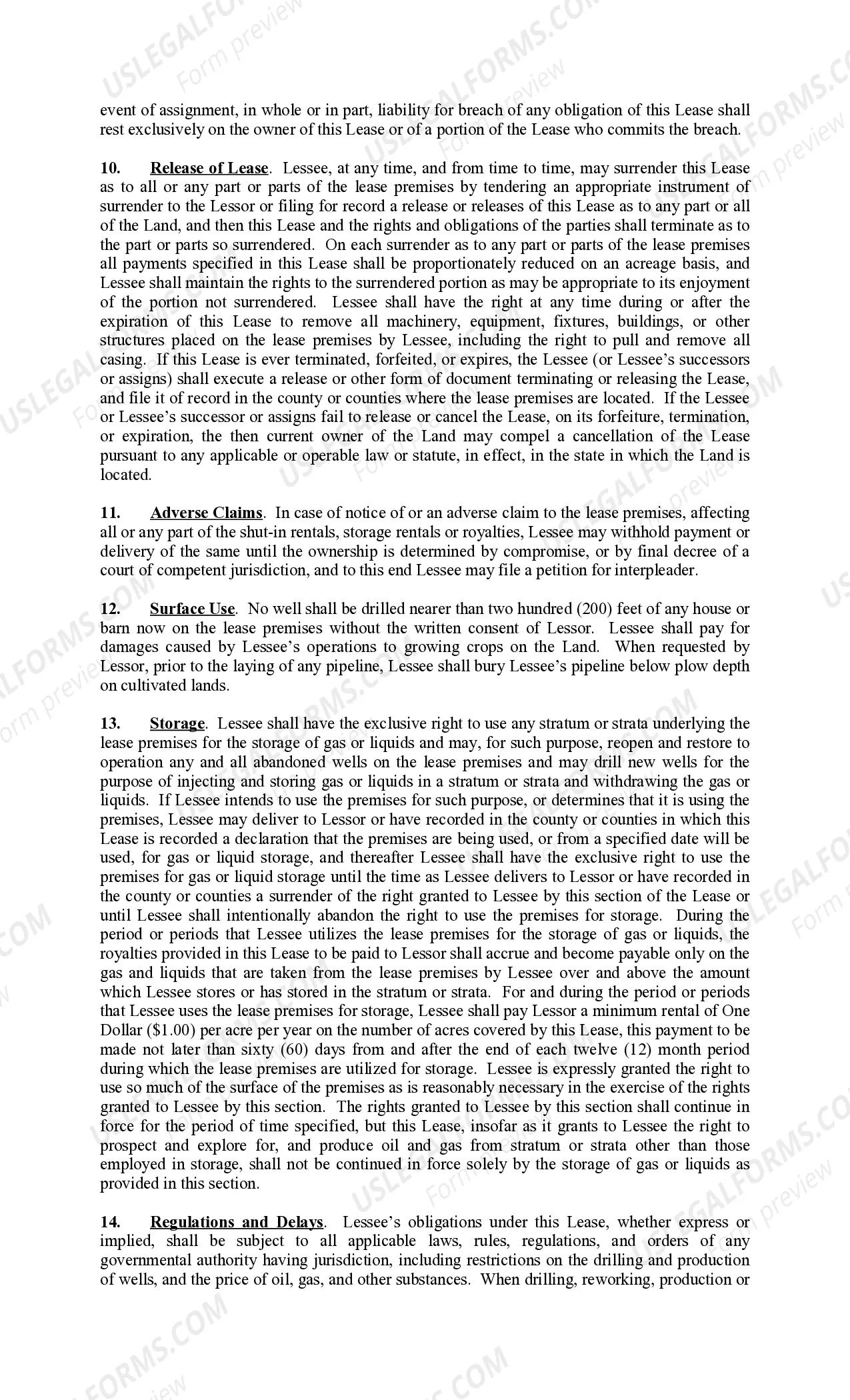
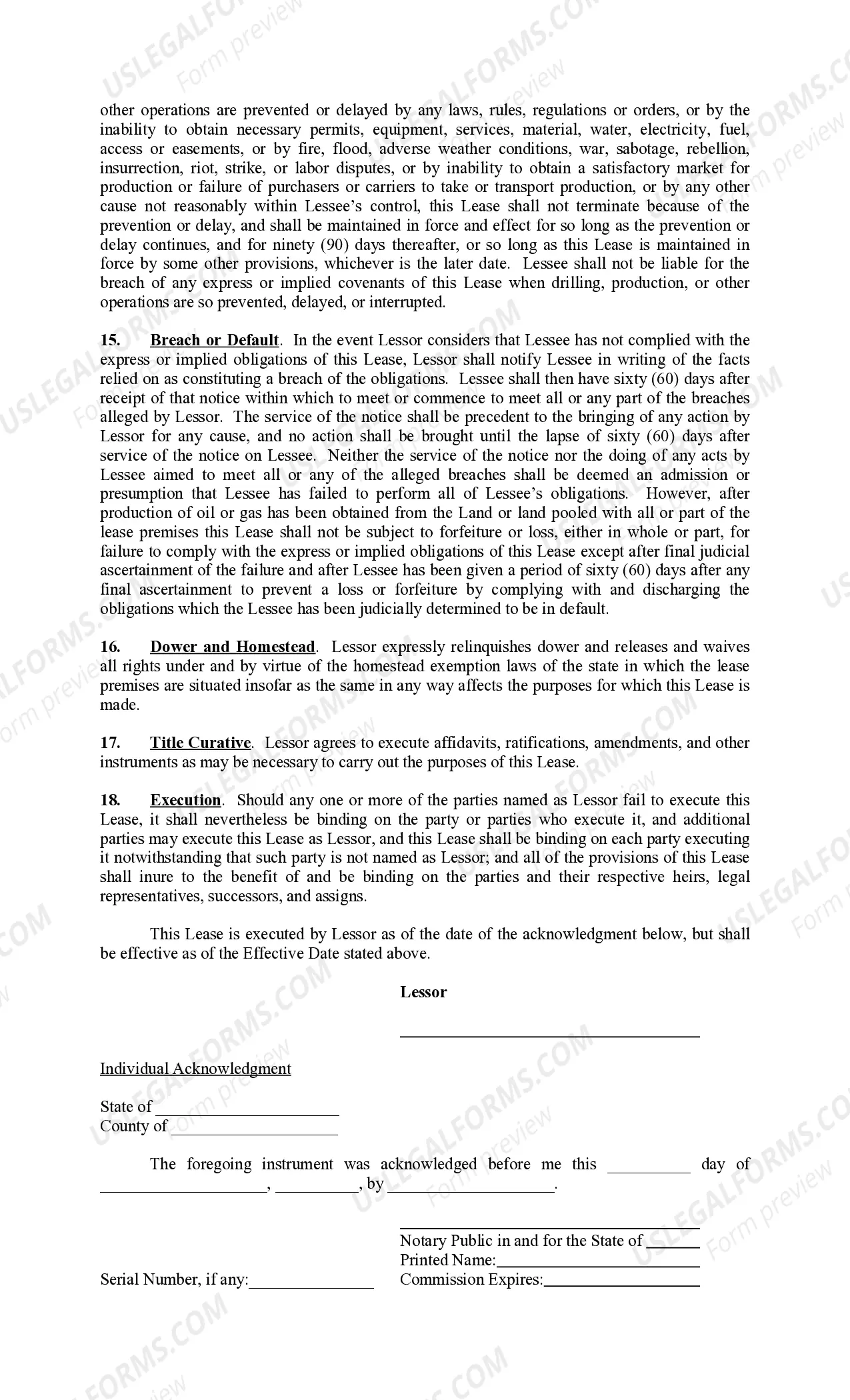
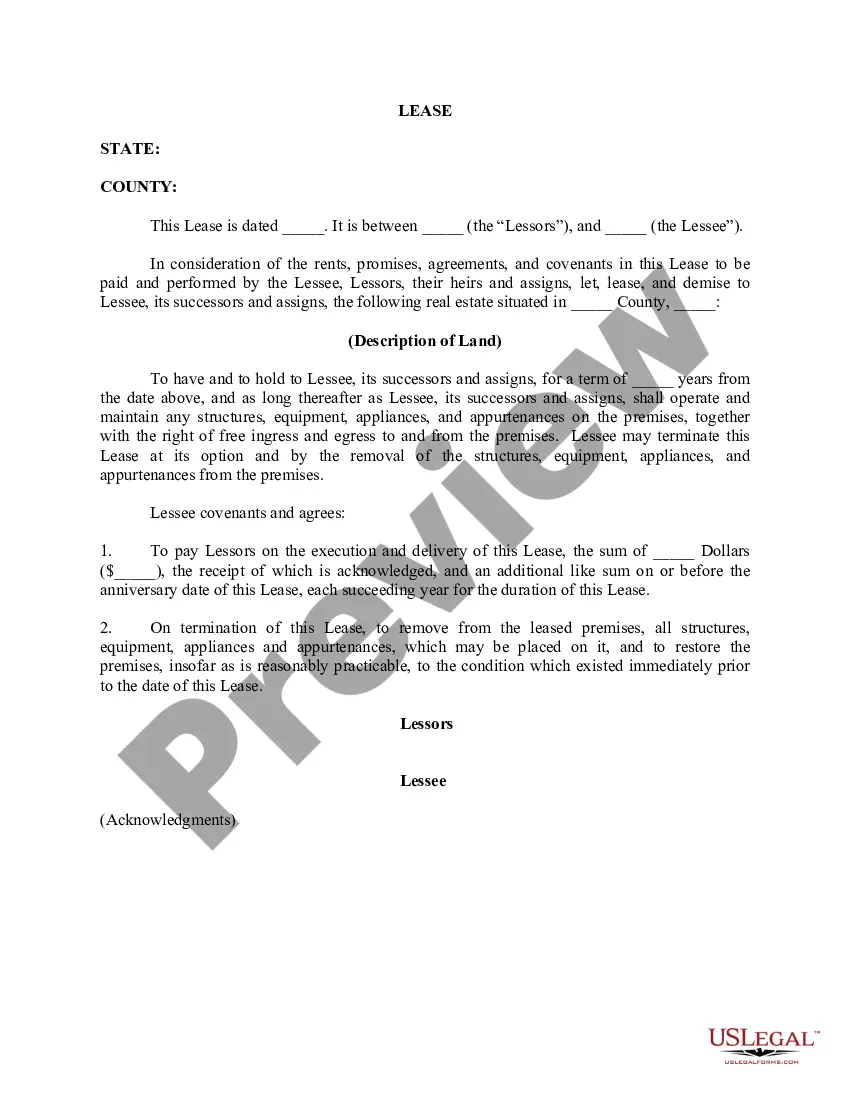
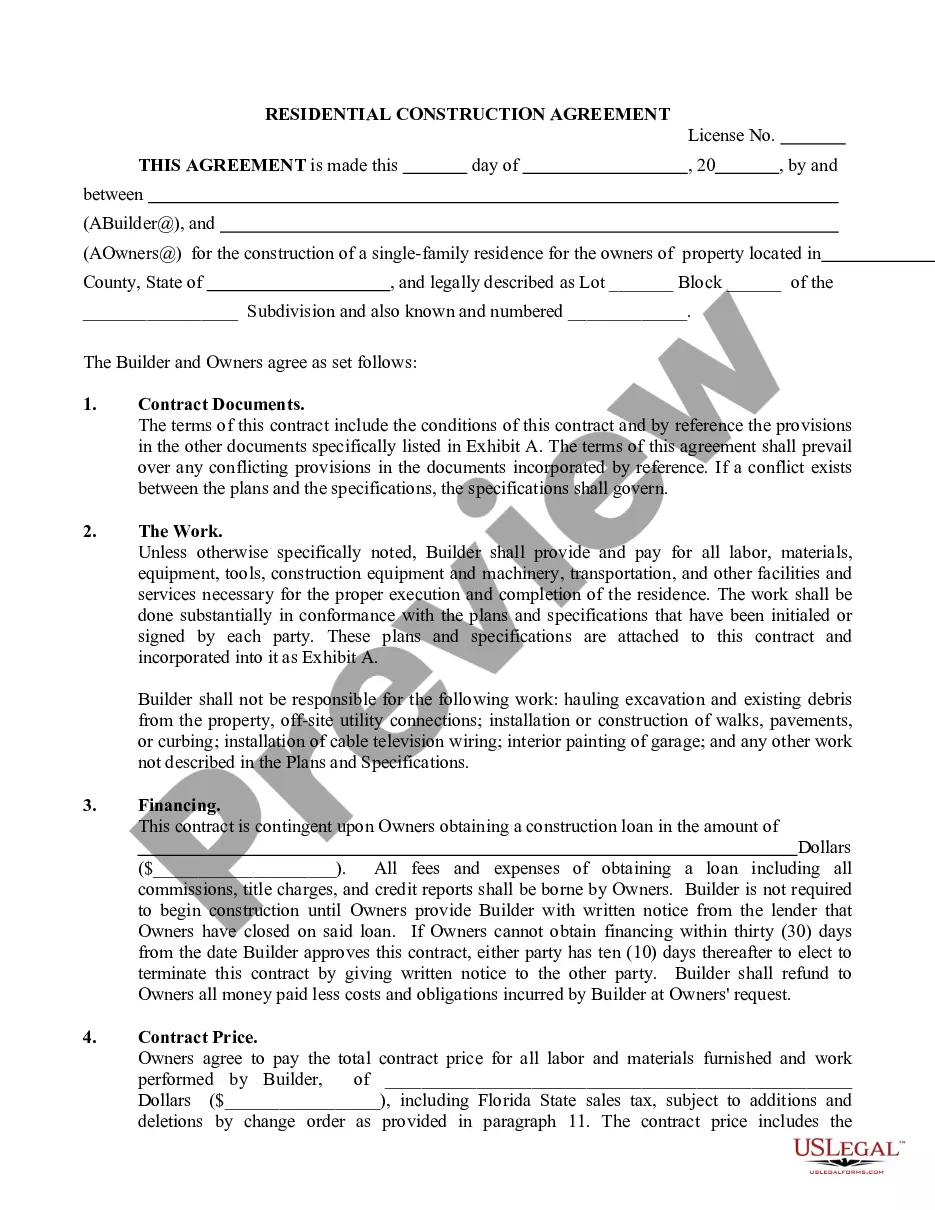
The Rental Lease Pooling Provision is a legal document used in New York that permits a Lessor to lease land to a Lessee for activities related to oil, gas, sulfur, and other mineral exploration and extraction. This form is unique as it includes provisions for pooling, which allows the Lessee to combine land with neighboring properties to optimize resource extraction. Unlike standard lease agreements, this form specifically outlines not just the lease of land but also the rights associated with mineral production and necessary infrastructure development.
Main sections of this form
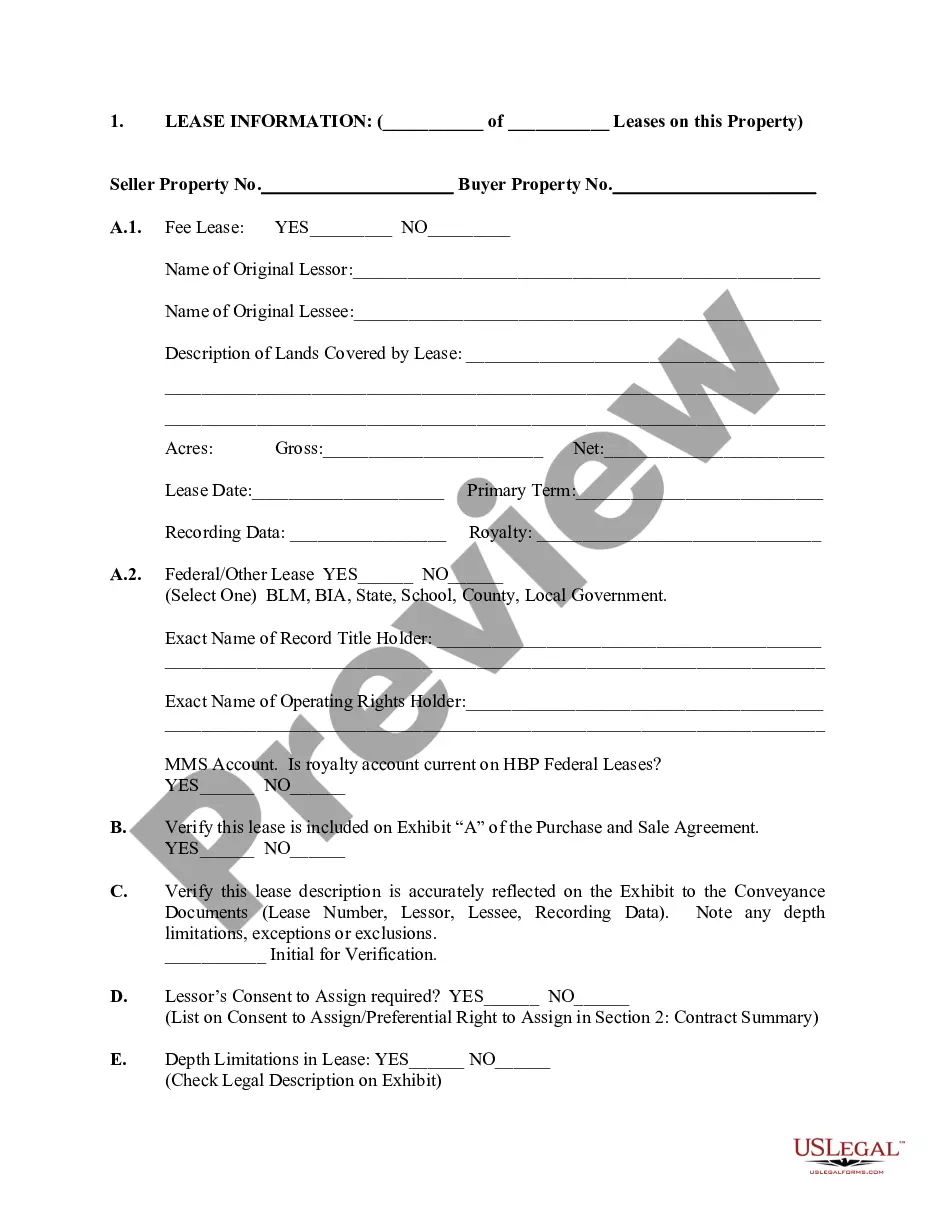
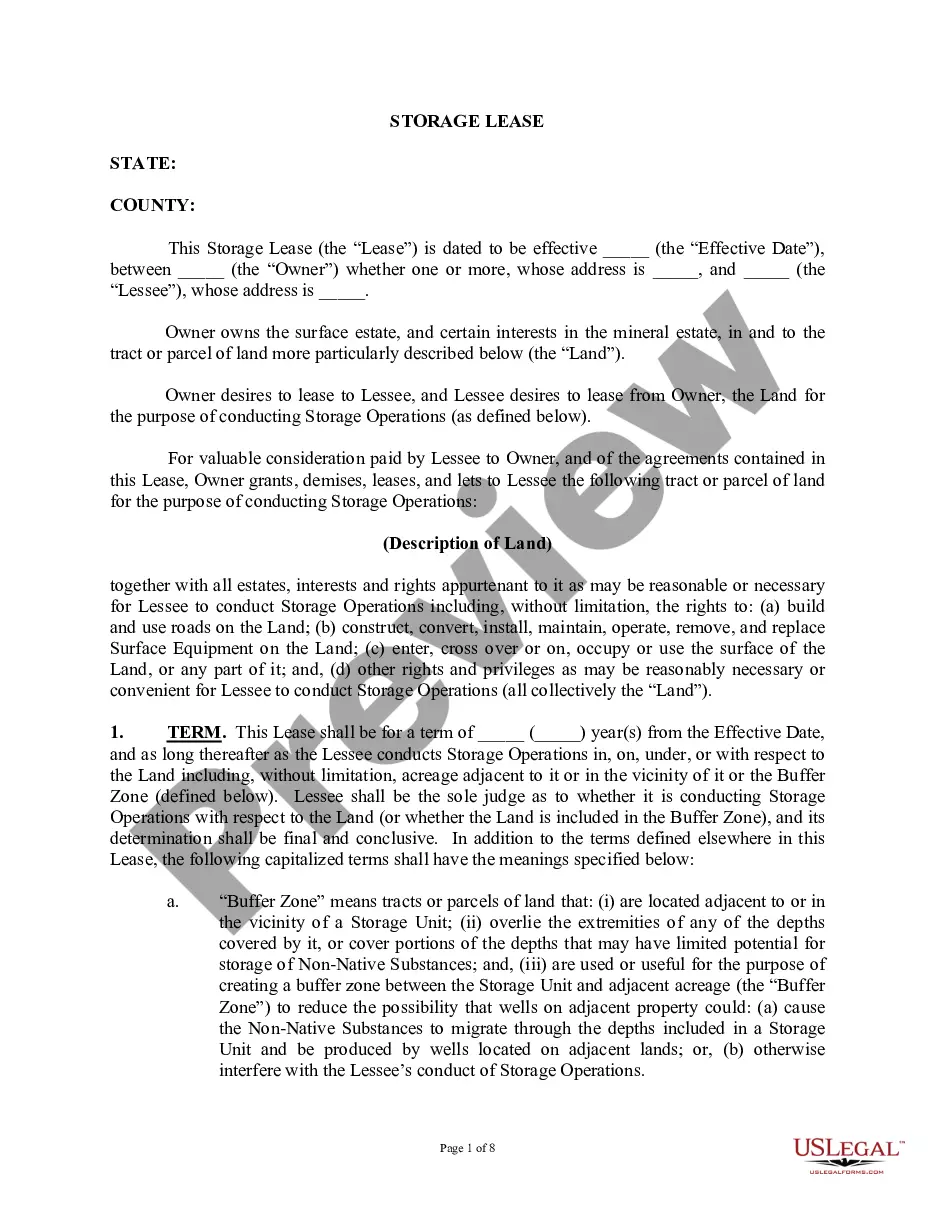
- Lease Description: Details about the land being leased and its boundaries.
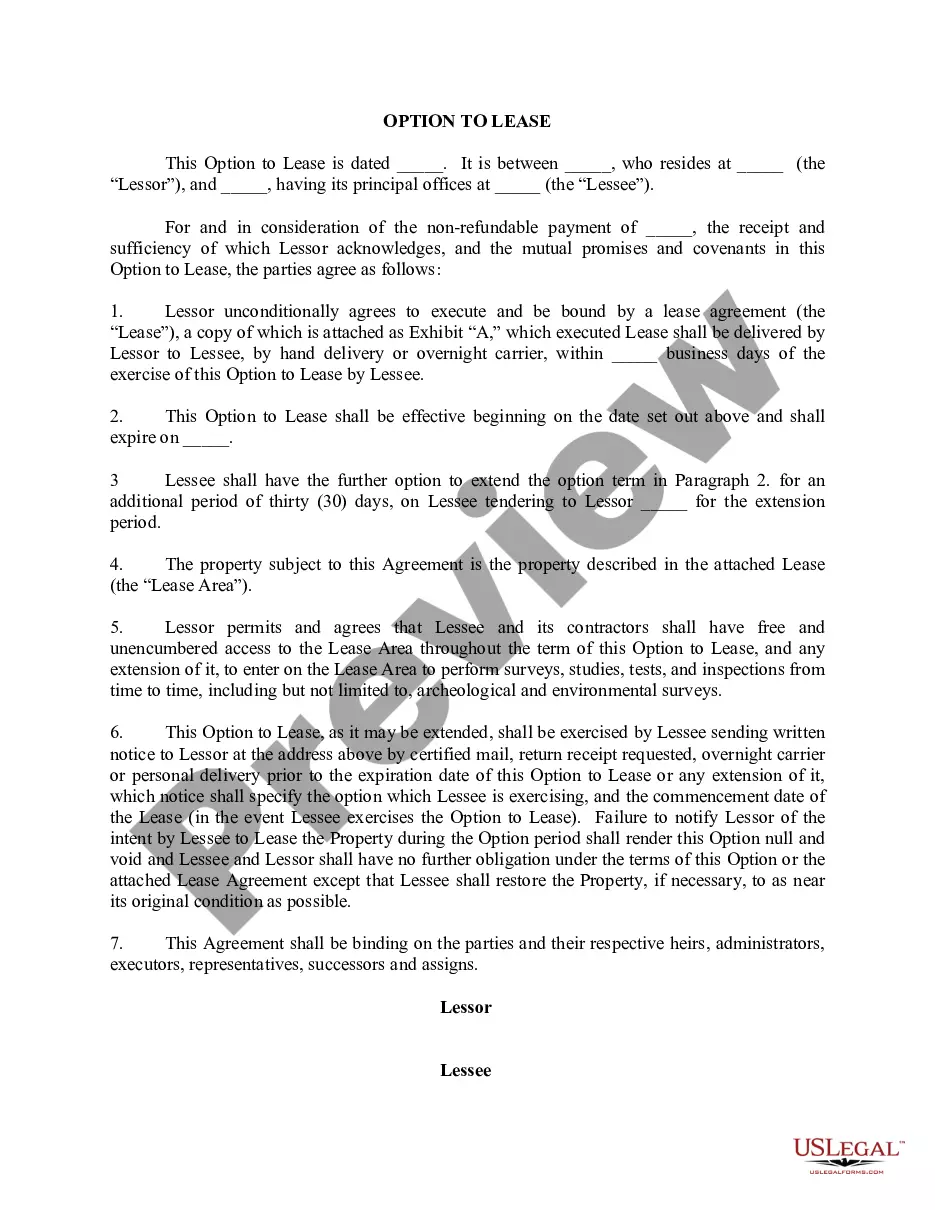
- Term of Lease: Specifies the lease duration and conditions for extending it.
- Lease Rights Granted: Outlines the Lessee's rights regarding exploration, drilling, and production.
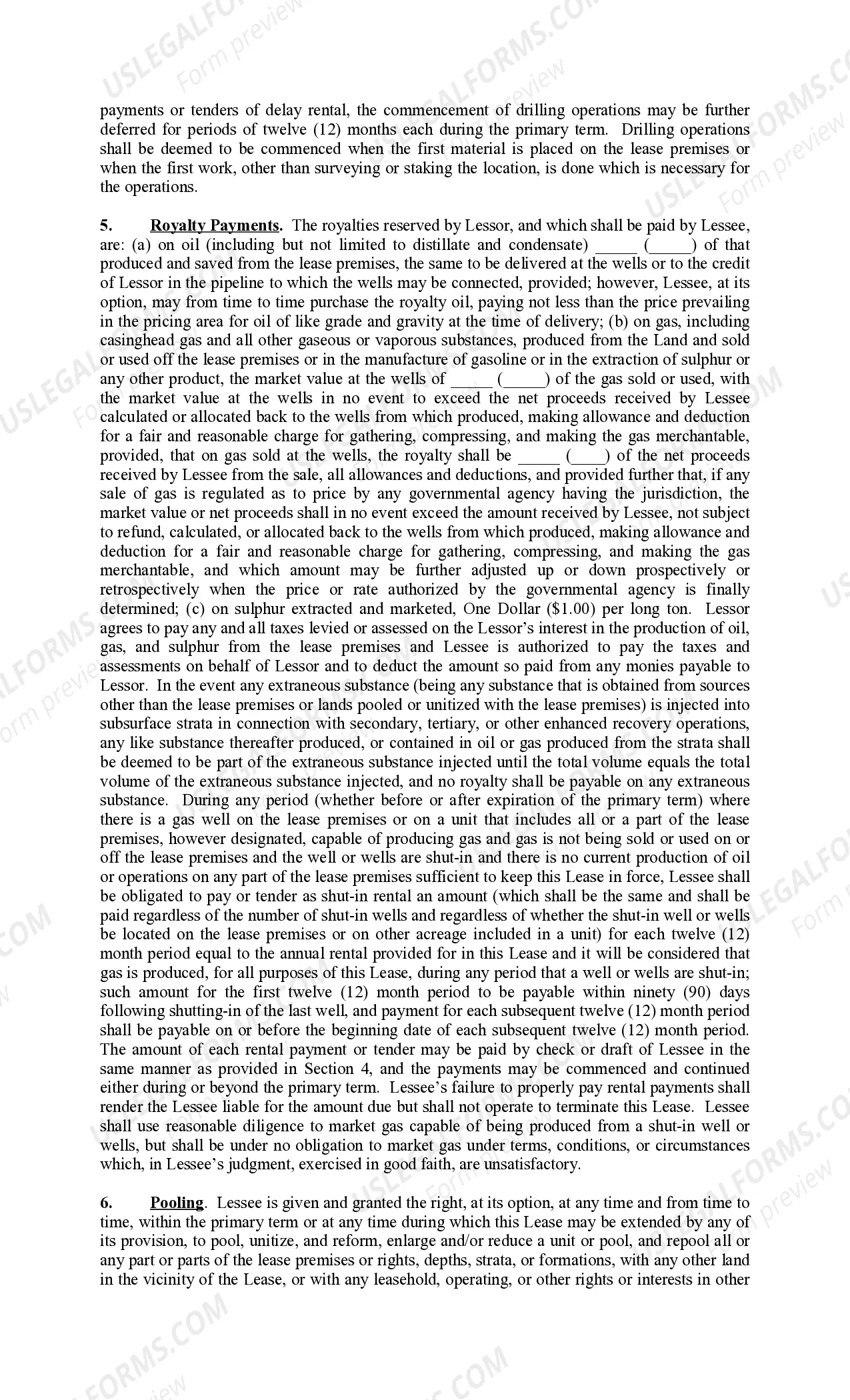
- Royalty Payments: Details on the royalties owed to the Lessor for extracted resources.
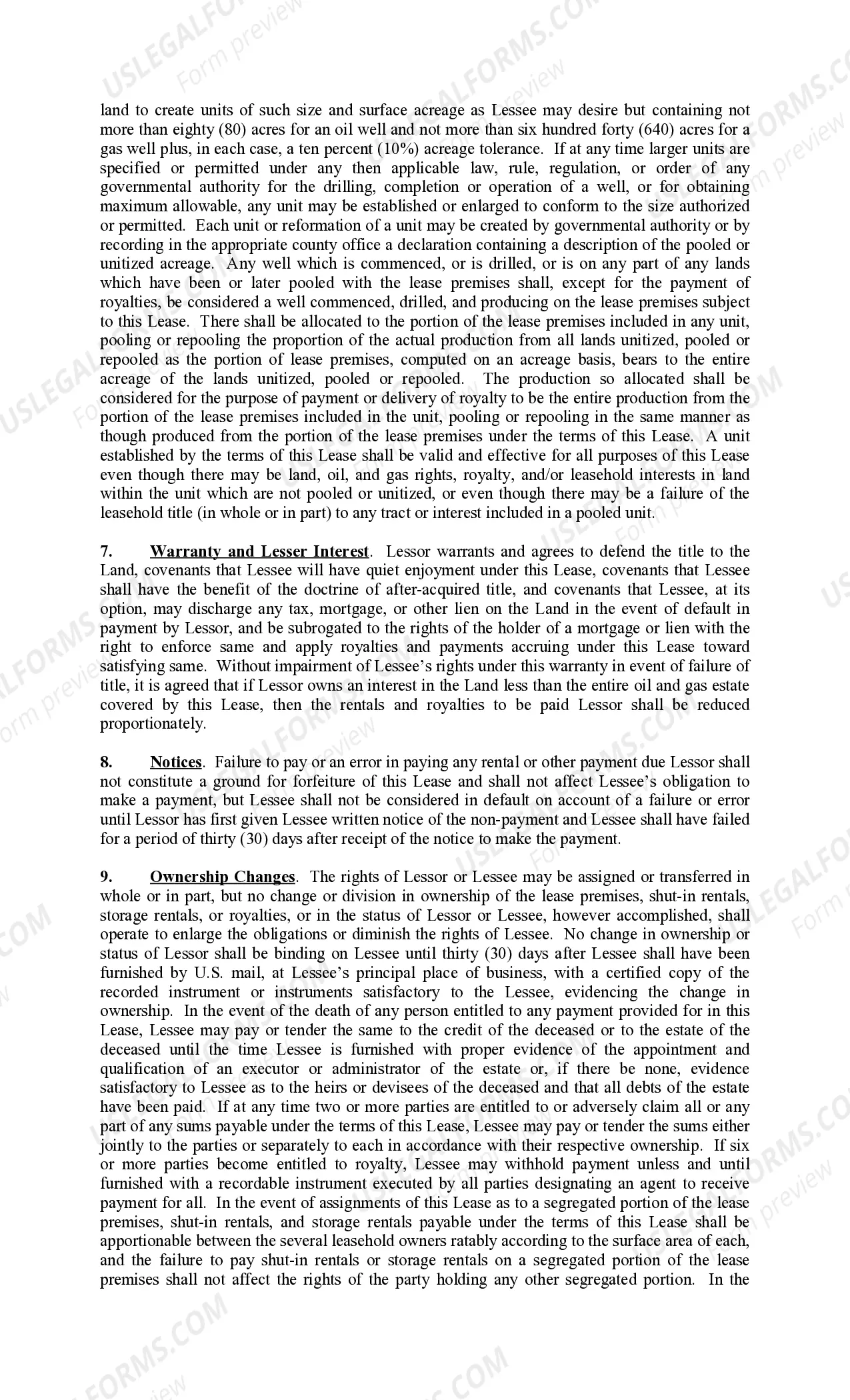
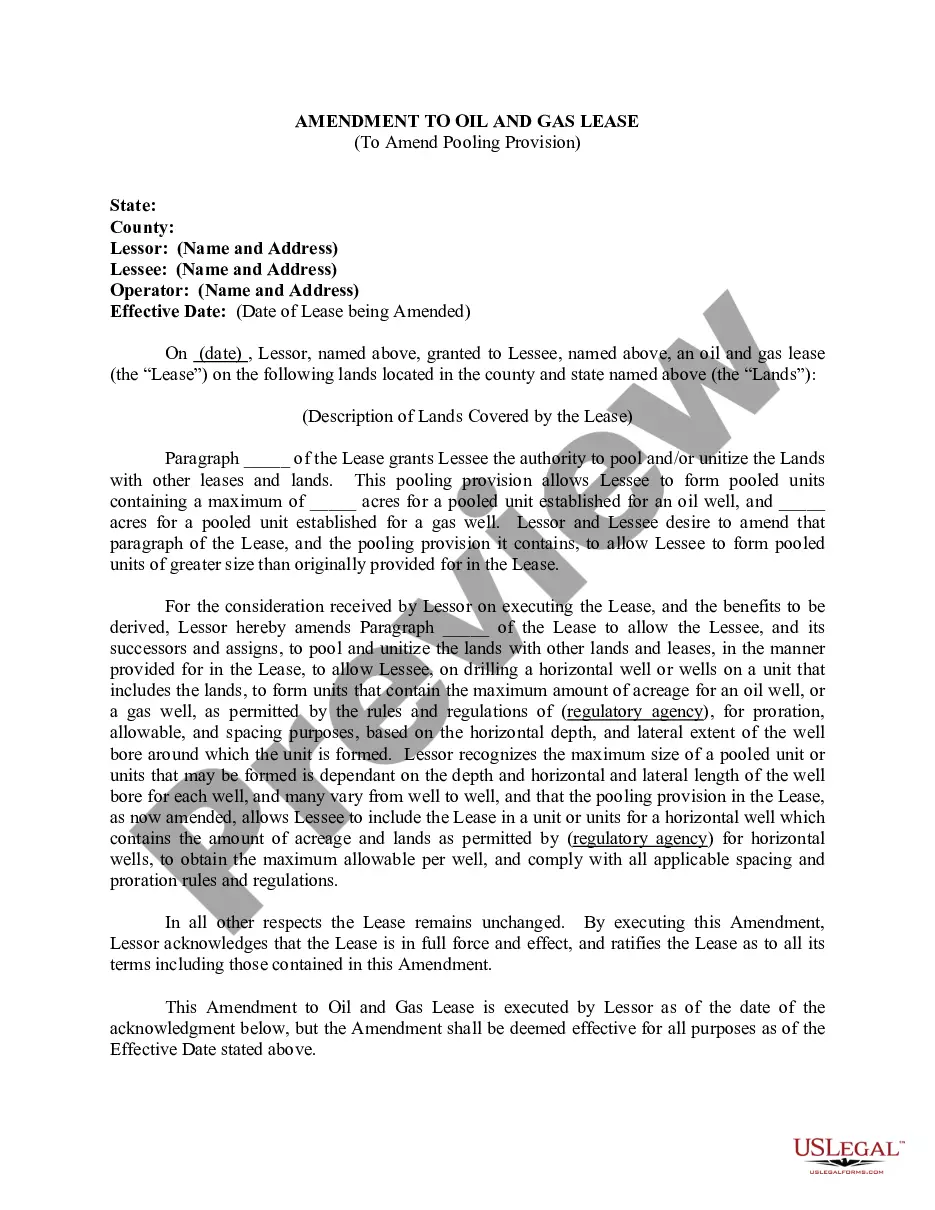
- Pooling: Grants the Lessee the right to combine land with adjacent properties for extraction purposes.
When to use this form
This form should be used when a property owner wishes to lease their land for oil, gas, or mineral extraction while allowing the Lessee to pool the land with neighboring properties. It is necessary in situations where resource extraction operations are planned, and both parties need clear terms regarding revenue sharing, land use, and exploration rights.
Who can use this document
- Property owners (Lessors) who own land suitable for oil and gas production.
- Companies or individuals (Lessees) seeking to explore, drill, and extract minerals from leased land.
- Real estate professionals assisting clients in mineral leasing arrangements.
How to complete this form
- Identify the parties involved: Enter the Lessor (landowner) and Lessee (tenant/company) names and addresses.
- Specify the property: Fill in the details regarding the land being leased, including its description and acreage.
- Enter lease terms: Indicate the duration of the lease and any conditions for renewal or termination.
- Detail the rights granted: Clearly outline the rights of the Lessee for exploration and production activities.
- Sign and date: Both parties should sign and date the document to make it legally valid.
Notarization requirements for this form
This form needs to be notarized to ensure legal validity. US Legal Forms provides secure online notarization powered by Notarize, allowing you to complete the process through a verified video call, available anytime.
Get your form ready online
Our built-in tools help you complete, sign, share, and store your documents in one place.
Make edits, fill in missing information, and update formatting in US Legal Forms—just like you would in MS Word.
Download a copy, print it, send it by email, or mail it via USPS—whatever works best for your next step.
Sign and collect signatures with our SignNow integration. Send to multiple recipients, set reminders, and more. Go Premium to unlock E-Sign.
If this form requires notarization, complete it online through a secure video call—no need to meet a notary in person or wait for an appointment.
We protect your documents and personal data by following strict security and privacy standards.

Make edits, fill in missing information, and update formatting in US Legal Forms—just like you would in MS Word.

Download a copy, print it, send it by email, or mail it via USPS—whatever works best for your next step.

Sign and collect signatures with our SignNow integration. Send to multiple recipients, set reminders, and more. Go Premium to unlock E-Sign.

If this form requires notarization, complete it online through a secure video call—no need to meet a notary in person or wait for an appointment.

We protect your documents and personal data by following strict security and privacy standards.
Common mistakes
- Failing to accurately describe the land and boundaries in the lease.
- Not specifying the terms for royalty payments, leading to disputes later.
- Overlooking the need for pooling provisions, which can limit resource extraction efficiency.
Benefits of using this form online
- Convenience: Easily download and fill out the form from anywhere.
- Editability: Modify the form to fit specific leasing conditions and requirements.
- Reliability: Access updated and attorney-drafted forms tailored to current New York laws.
Looking for another form?
Form popularity
FAQ
Most leases and rental agreements include a clause in which the tenant agrees that the premises are in habitable (livable) condition and promises to alert the landlord to any defective or dangerous condition. Tenant's repair and maintenance responsibilities.
Lease provisions are usually described as "boilerplate," since many leases use standard language. Boilerplate language in a lease may include the terms of the lease, payment dates, and late fees, among others.
An addendum must include the basic elements of any landlord/tenant agreement. You should include the date, the address of the rental property and the names of each party just as you would in the original lease.
If an issue crops up after a lease has begun, you can still add a clause or addendum. You will just need to send your tenant written notice of the change, preferably with a lease amendment, and then get your tenant's signature on the new amendment.
10 Important Rental Lease Clauses. #1 Rent Liability. #2 Severability Clause. #3 Access to Premises. #4 Use of Premises. #5 Holding Over. #6 Sublet Rules. #7 Disturbance Clause.
In New South Wales, a landlord must register a lease that exceeds three years for the tenant to have an enforceable legal interest in the land. Although parties can register a lease for a term of three years or less (including an option period), it's not compulsory. Queensland has a similar regime to NSW.
Most rent agreements are signed for 11 months so that they can avoid stamp duty and other charges. According to the Registration Act, 1908, the registration of a lease agreement is mandatory if the leasing period is more than 12 months.The stamp paper can be in the name of the tenant or the landlord.
In New York City, as most places, landlords are not obligated to renegotiate your lease. However, given the frothy market conditions and the competition for rentals, it's possible that your landlord may accept your early termination as a way to re-rent the place at a higher rate.
2019 New York Rent Laws: Legal Changes for All NYC Renters Landlords must give at least 30 days' notice to tenants if they intend to raise the rent of a unit by more than 5%.