New York Publication Notice - Family Name Change
What this document covers
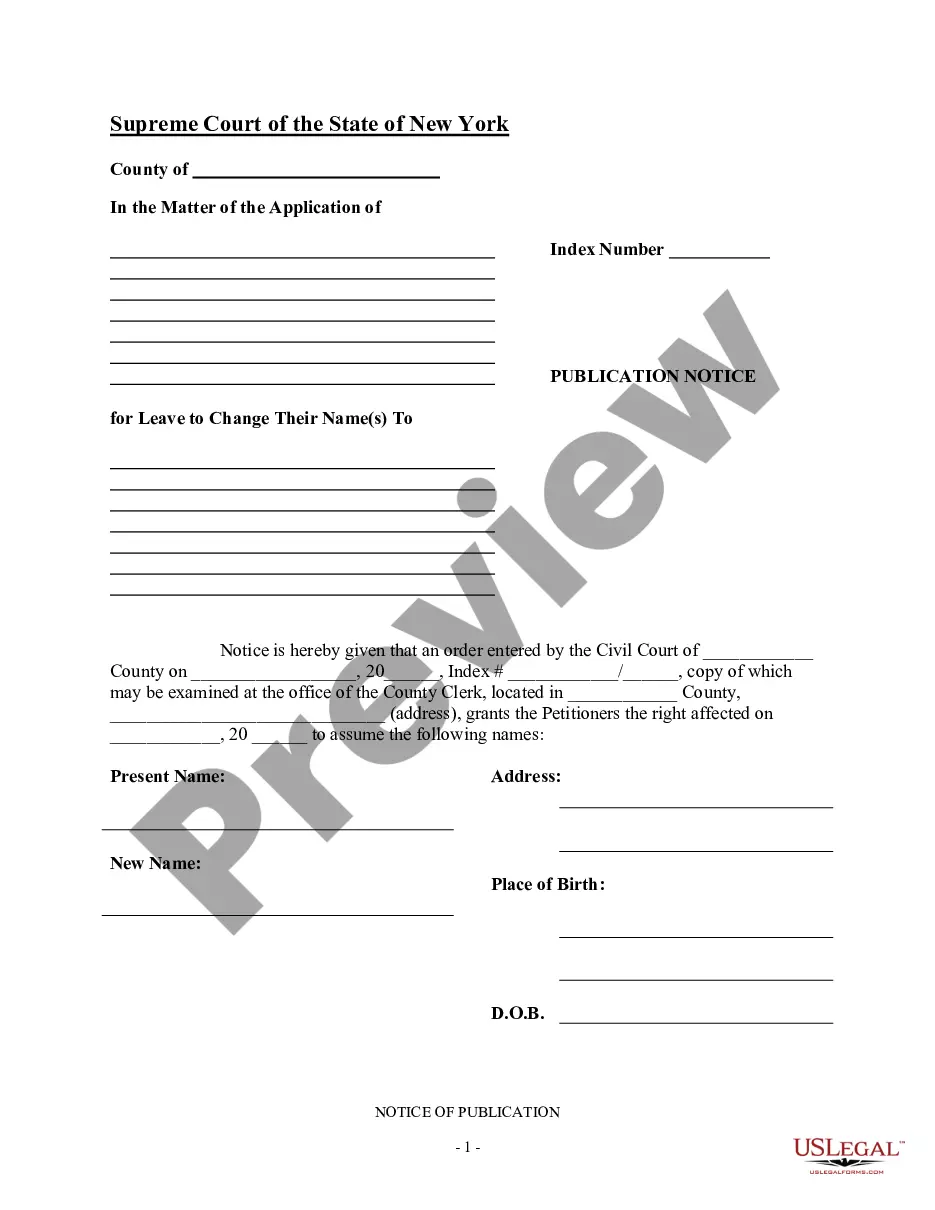
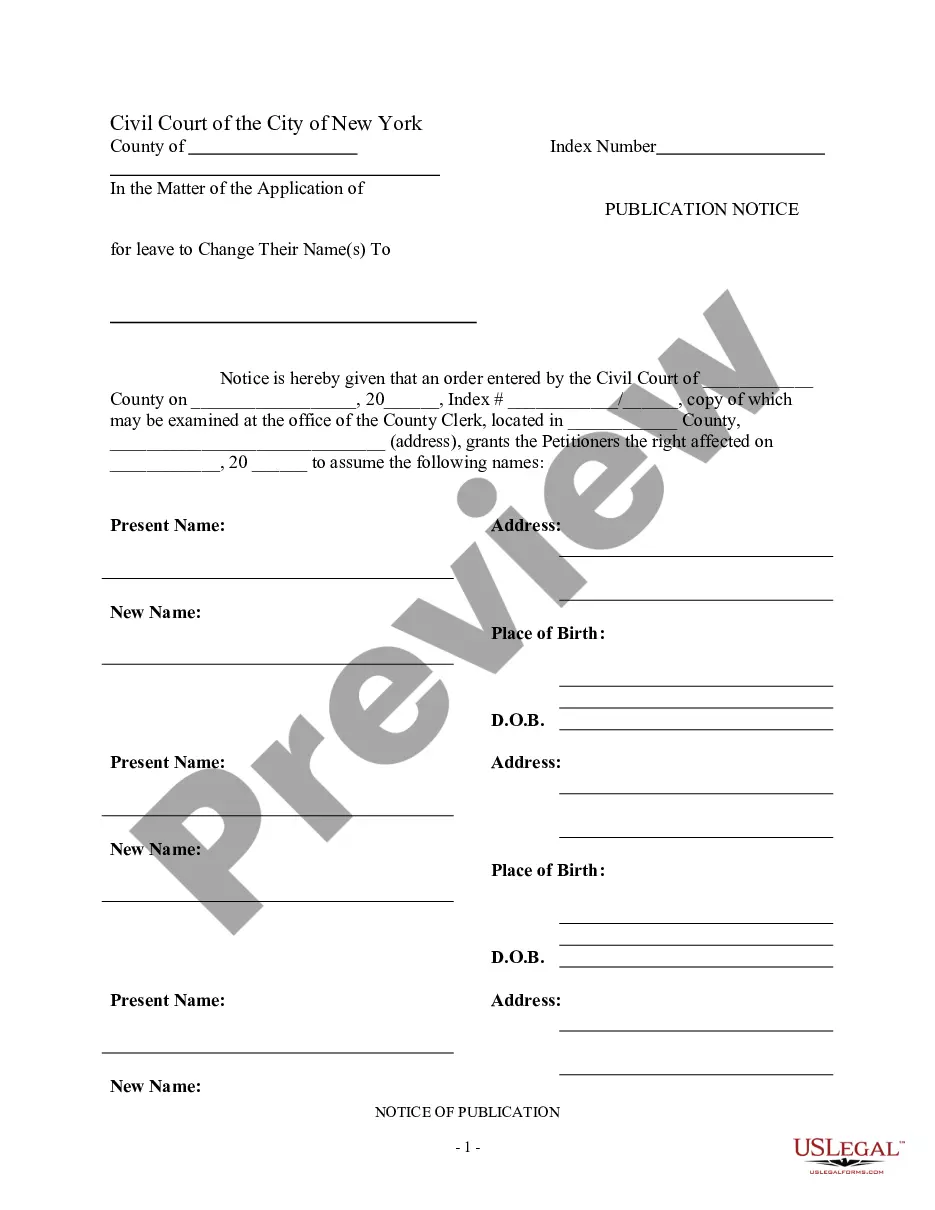
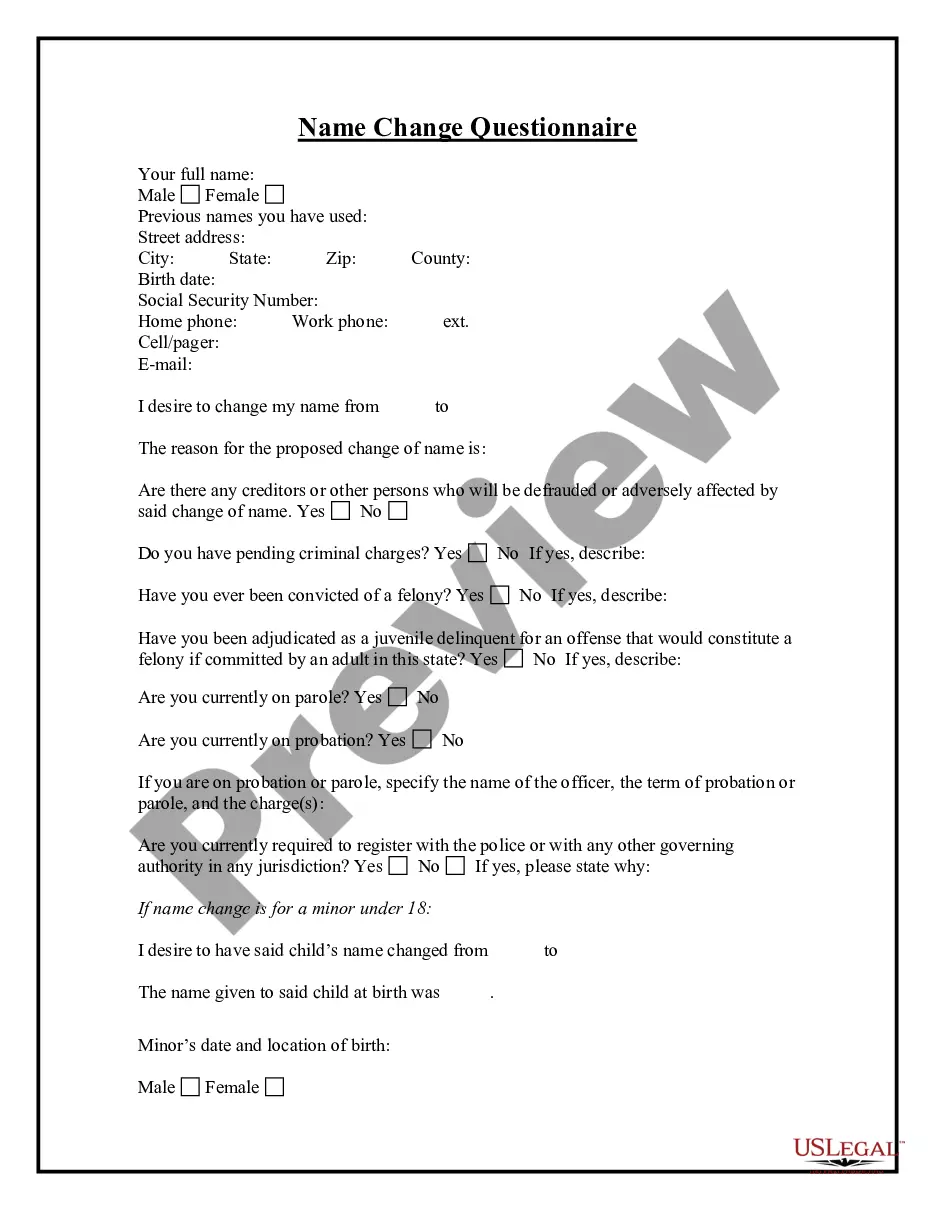
The Publication Notice for Family Name Change is a legal document that serves as a notification of your intention to change your name. This form is essential for ensuring that your name change is publicly recorded, distinguishing it from other name change procedures that may not require public notice. It is a critical step in legally changing your name, especially in family law matters.
Form components explained
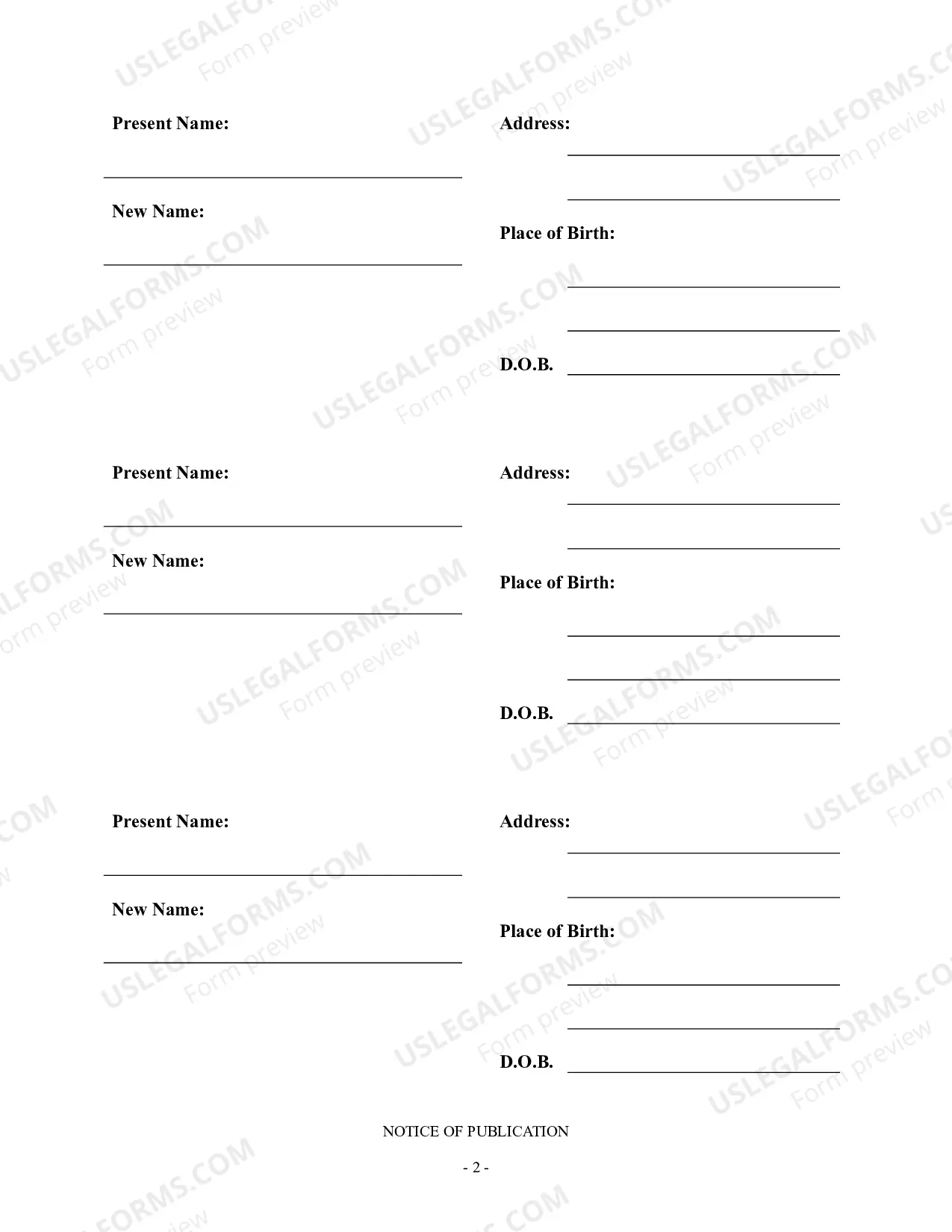
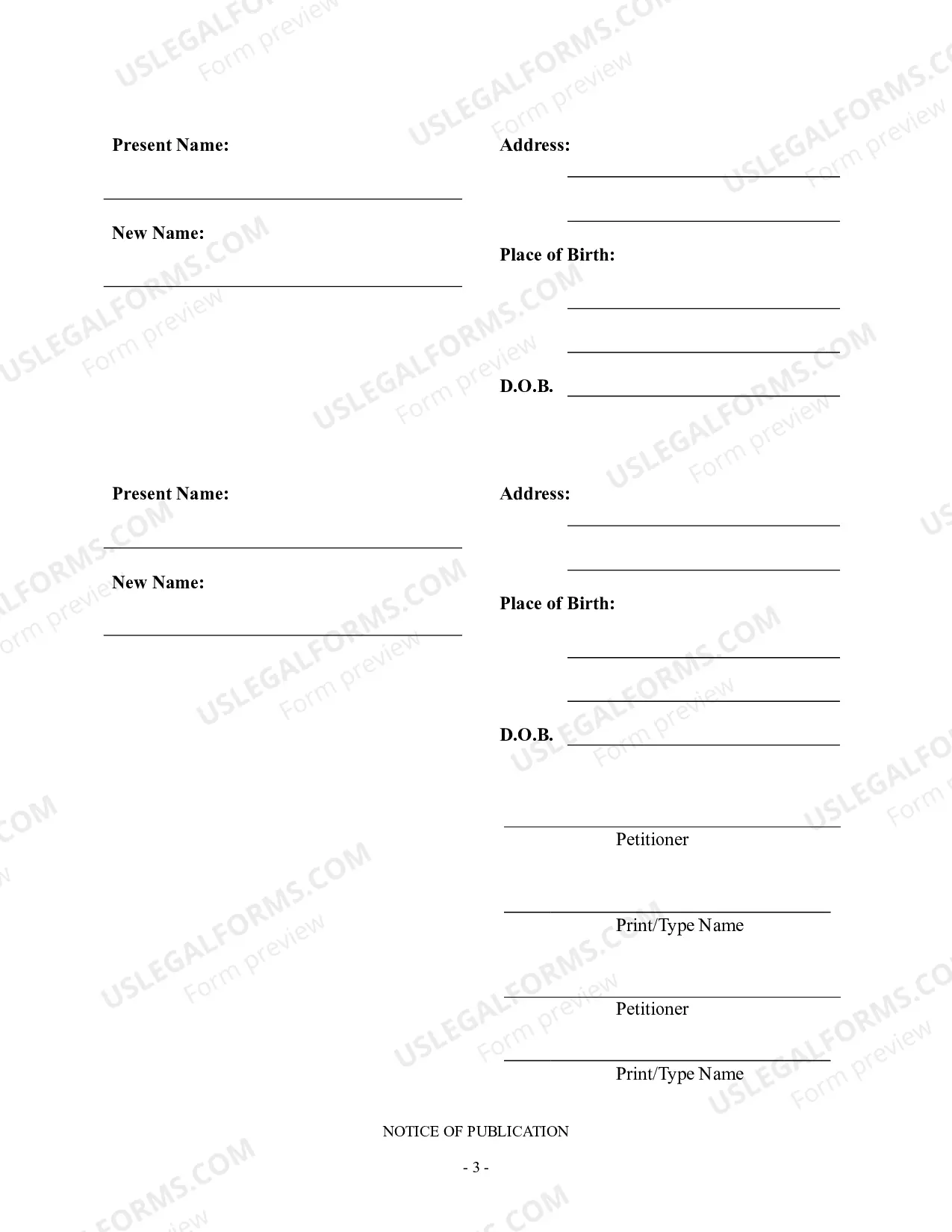
- Identification of the individual seeking the name change
- Proposed new name to be adopted
- Publication details and requirements for local newspapers
- Statement of intent detailing the purpose of the name change
- Signature and date of the individual
Common use cases
This form is typically used when an individual wishes to legally change their name and is required to publish notification in a local newspaper. It is suitable for various situations, such as after a marriage, divorce, or for personal choice. If you need to fulfill publication requirements for your name change, this is the appropriate form to use.
Who this form is for
- Adults seeking a legal name change due to personal choice or life events.
- Parents wishing to change the name of their minor children.
- Individuals going through a divorce who want to revert to a former name.
Completing this form step by step
- Identify the individual requesting the name change and provide their current name.
- Specify the proposed new name clearly in the designated section.
- Include publication details, such as where the notice will be published.
- Provide a statement of intent describing the reason for the name change.
- Sign and date the form to validate the request.
Is notarization required?
In most cases, this form does not require notarization. However, some jurisdictions or signing circumstances might. US Legal Forms offers online notarization powered by Notarize, accessible 24/7 for a quick, remote process.
Get your form ready online
Our built-in tools help you complete, sign, share, and store your documents in one place.
Make edits, fill in missing information, and update formatting in US Legal Forms—just like you would in MS Word.
Download a copy, print it, send it by email, or mail it via USPS—whatever works best for your next step.
Sign and collect signatures with our SignNow integration. Send to multiple recipients, set reminders, and more. Go Premium to unlock E-Sign.
If this form requires notarization, complete it online through a secure video call—no need to meet a notary in person or wait for an appointment.
We protect your documents and personal data by following strict security and privacy standards.

Make edits, fill in missing information, and update formatting in US Legal Forms—just like you would in MS Word.

Download a copy, print it, send it by email, or mail it via USPS—whatever works best for your next step.

Sign and collect signatures with our SignNow integration. Send to multiple recipients, set reminders, and more. Go Premium to unlock E-Sign.

If this form requires notarization, complete it online through a secure video call—no need to meet a notary in person or wait for an appointment.

We protect your documents and personal data by following strict security and privacy standards.
Common mistakes
- Failing to include all required information in the publication details.
- Not signing or dating the form before submission.
- Overlooking specific state requirements for publication format.
Why use this form online
- Convenient access to the form anytime, allowing for easy downloads and printing.
- Editability of the form before finalizing details.
- Access to templates created by licensed attorneys, ensuring legal reliability.
Looking for another form?
Form popularity
FAQ
Select City for Name Change Ad. Choose Newspaper for publishing Change of Name Ad. Select Date. Draft your Name Change Ad. Make Payment.
Court papers asking for the change, this includes: Name Change Petition and Proposed Order. proof of birth. court fee ($210 in Supreme and County Courts; $65.00 in New York City Civil Court)
What can't newspapers publish? Generally, unless editors can prove there is a public interest in doing so, newspapers are not allowed to print:However, if there is a public interest in naming them, journalists are allowed to do this.
Before your court hearing, you will need to publish your Order to Show Cause for Change of Name in a California newspaper of general circulation. Contact the superior court in your county to see if they have a list of approved newspapers. The order form must be published once each week for four (4) weeks consecutively.
Step 1 Petition for Individual Minor's Change of Name. Step 2 Consent to Minor's Change of Name. Step 3 Order Granting Leave to Change Child's Name. Step 4 Gather Documents. Step 5 File Petition at County or Supreme Court. Step 6 Obtain Photocopy of Court Order/Attend Possible Hearing.
The California name change cost is $435. You might also have to pay a small surcharge depending on what county you're in. If you can't afford the filing fee, you may be able to apply for a waiver. Next you'll probably have to publish your Order to Show Cause in a newspaper (yep, we're serious).
Social Security Administration. Department of Motor Vehicles. Passport Office. Post Office. IRS. Voter Registration. Banks and other financial institutions. Credit Card companies (or issuers)
If there is another living biological or adoptive parent, or legal guardian, that parent or legal guardian must also give permission in writing to ask the court to change the child's name.If the other parent's parental rights have been terminated, you do not need a consent.