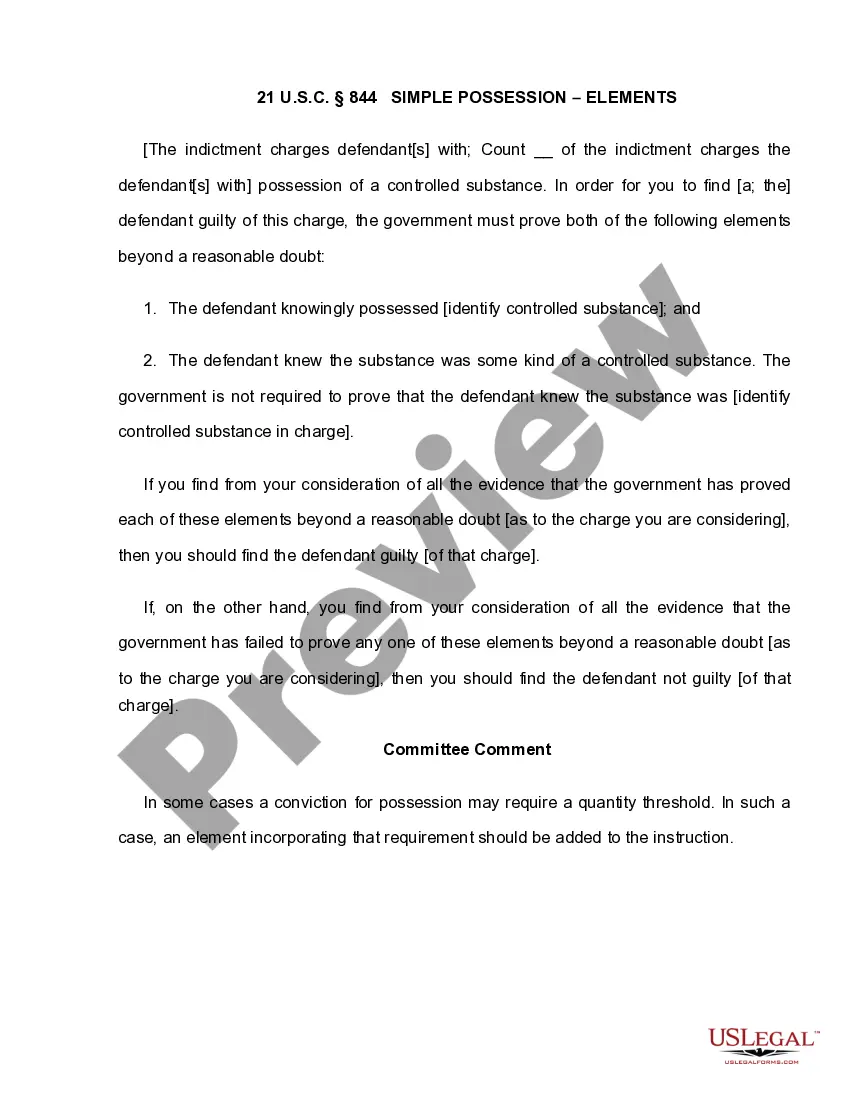
New York Cross Easement for Utility Lines
What this document covers
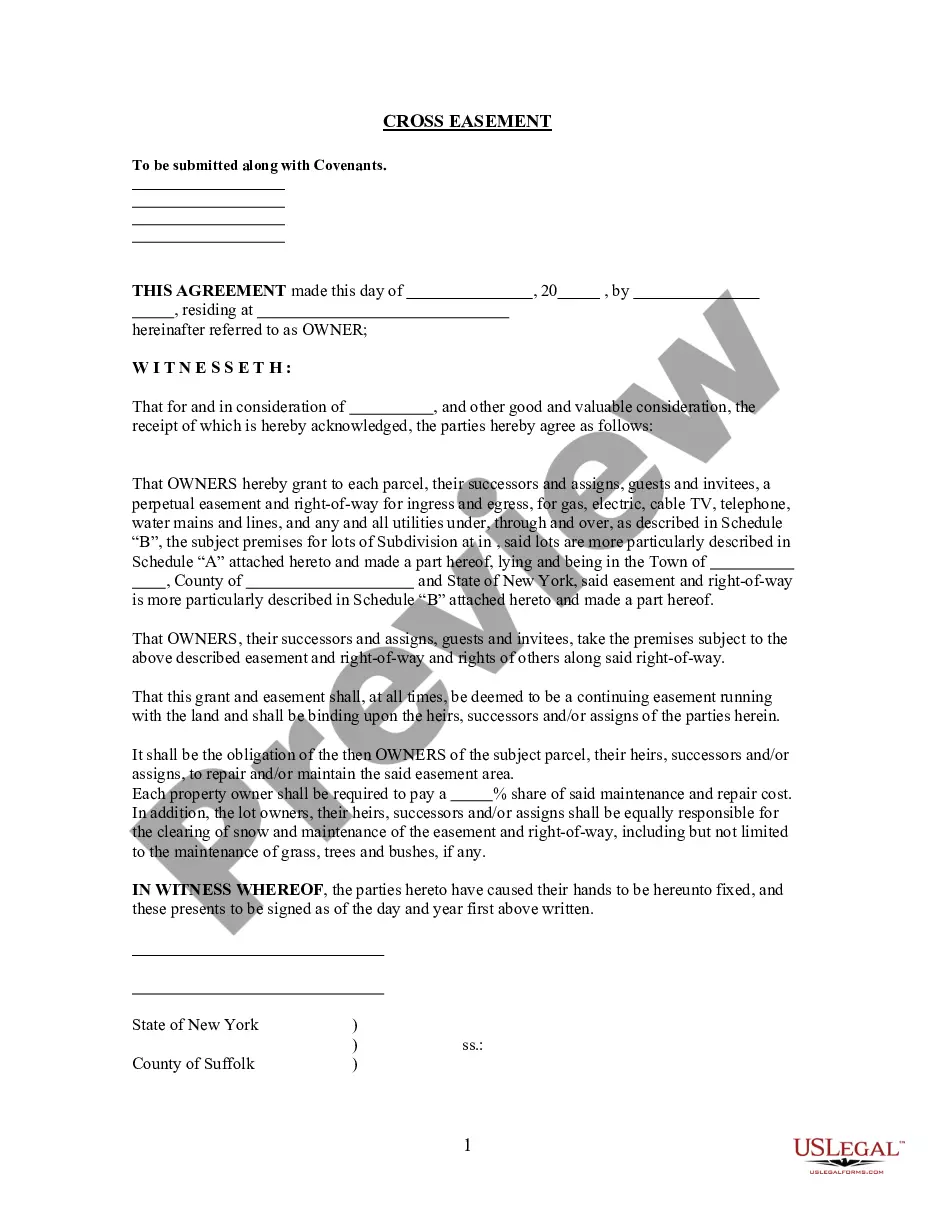
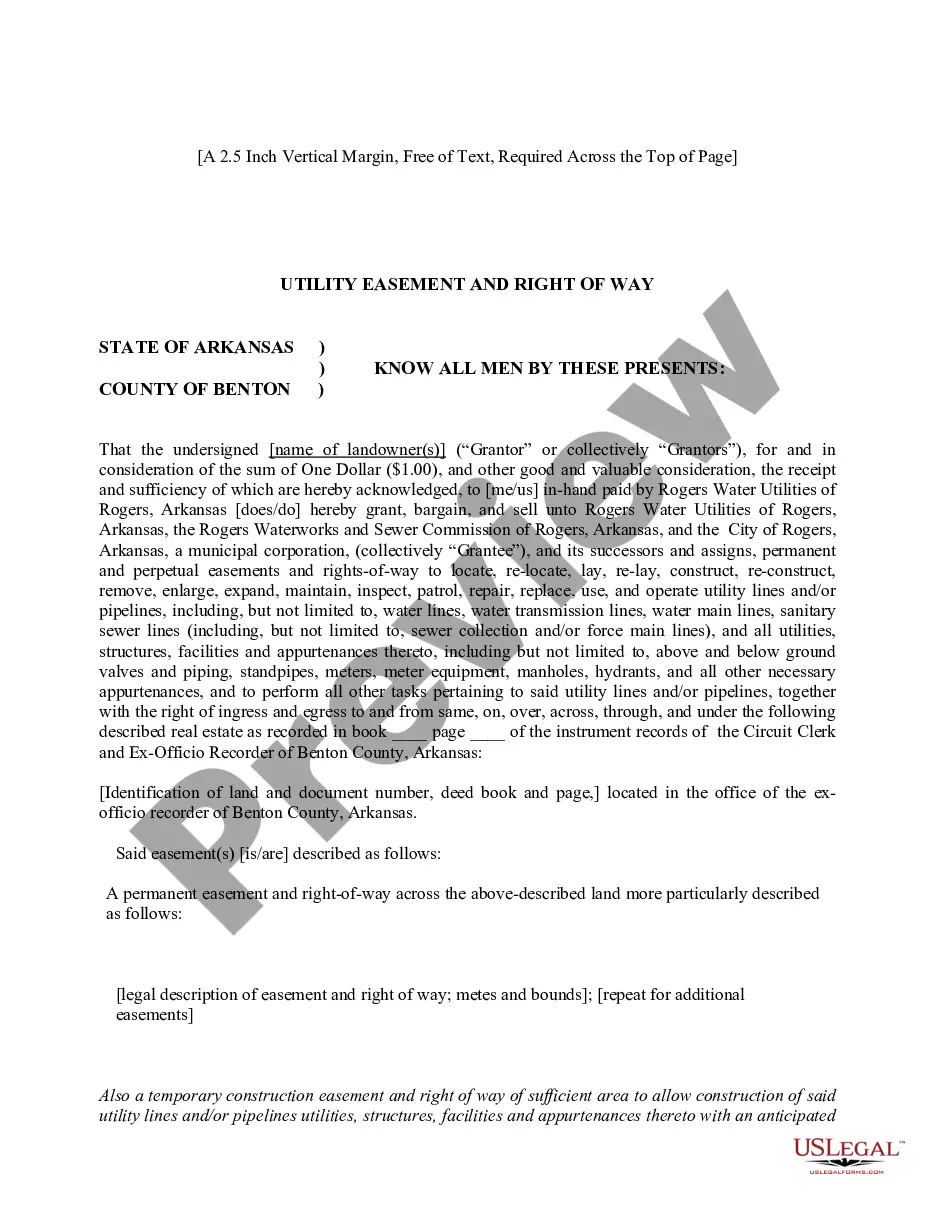
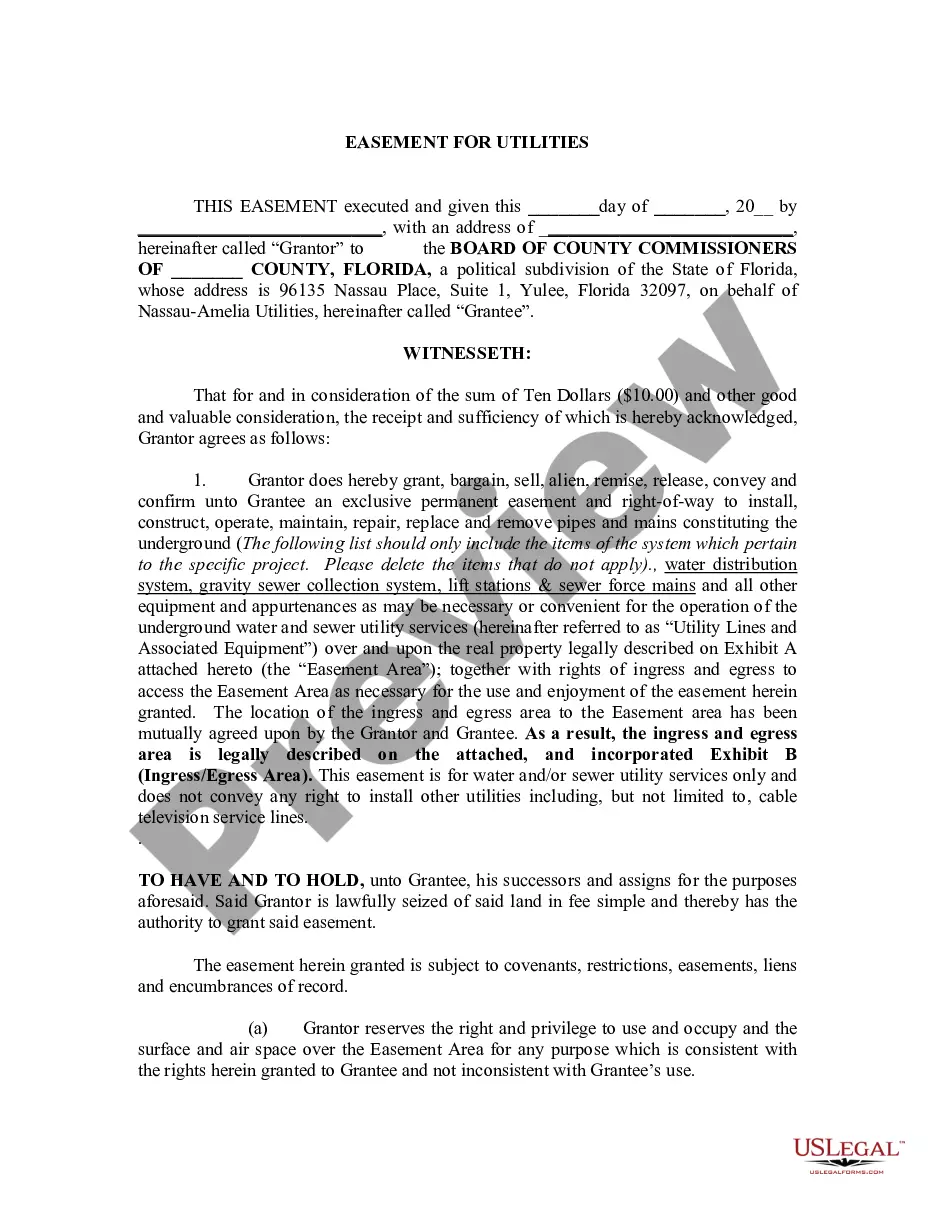
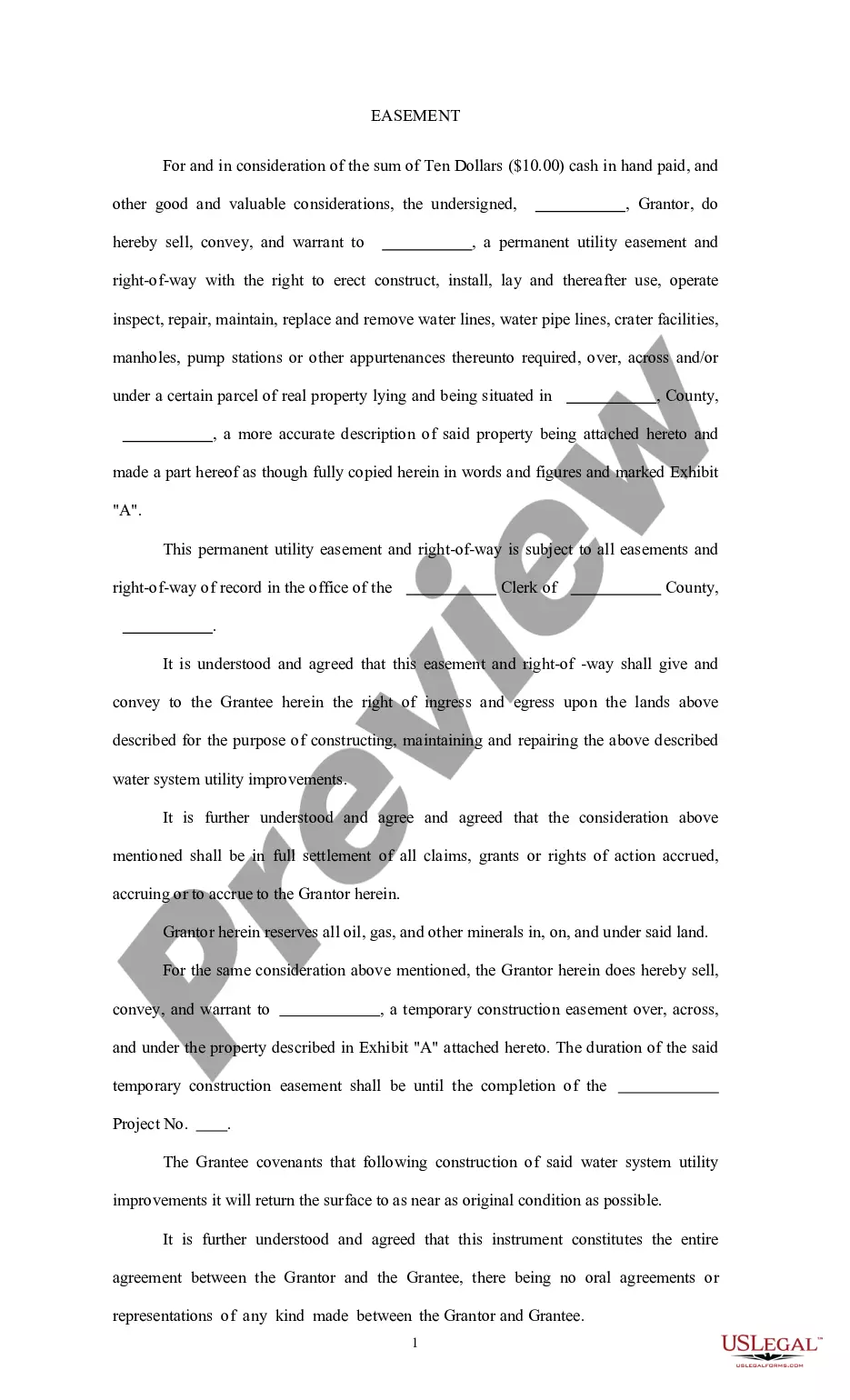
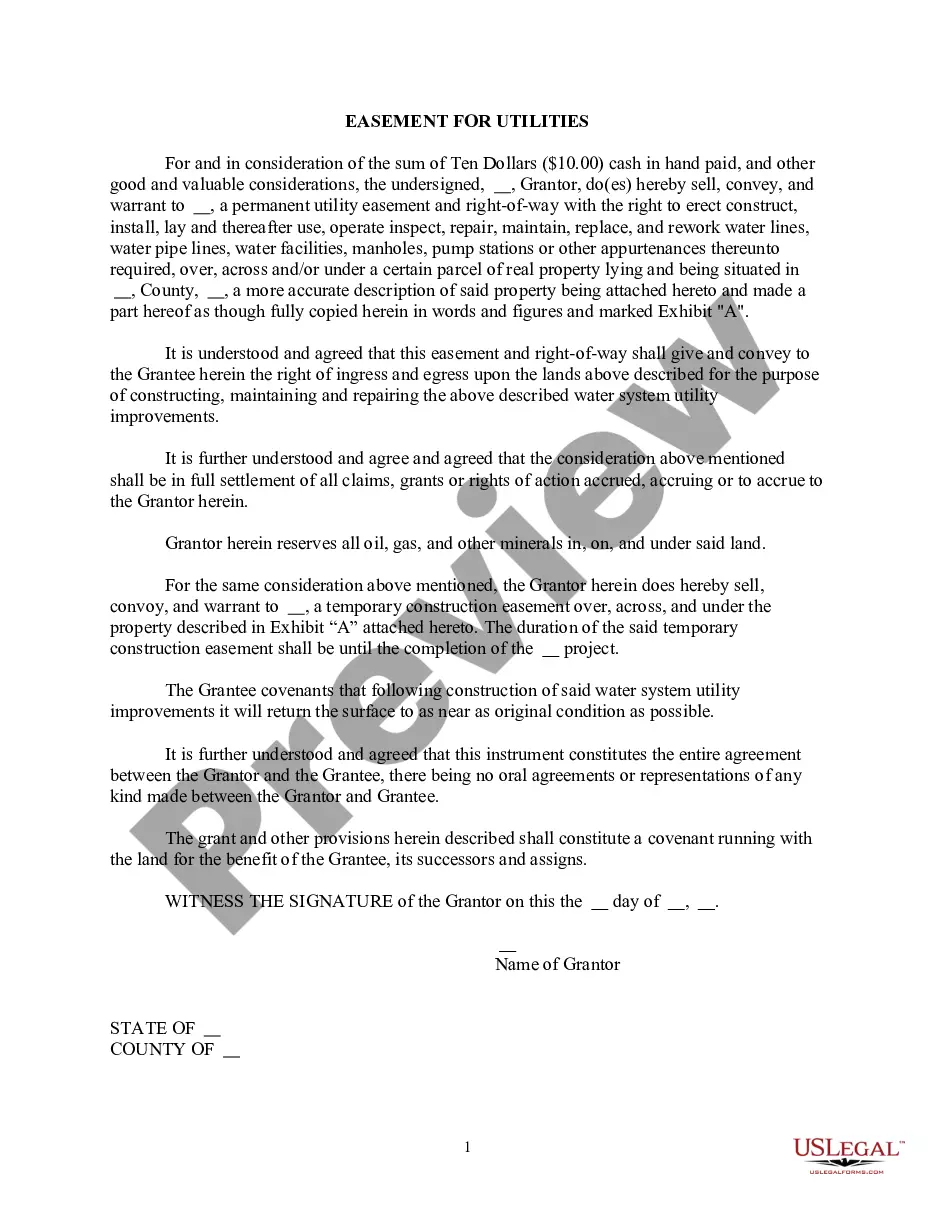
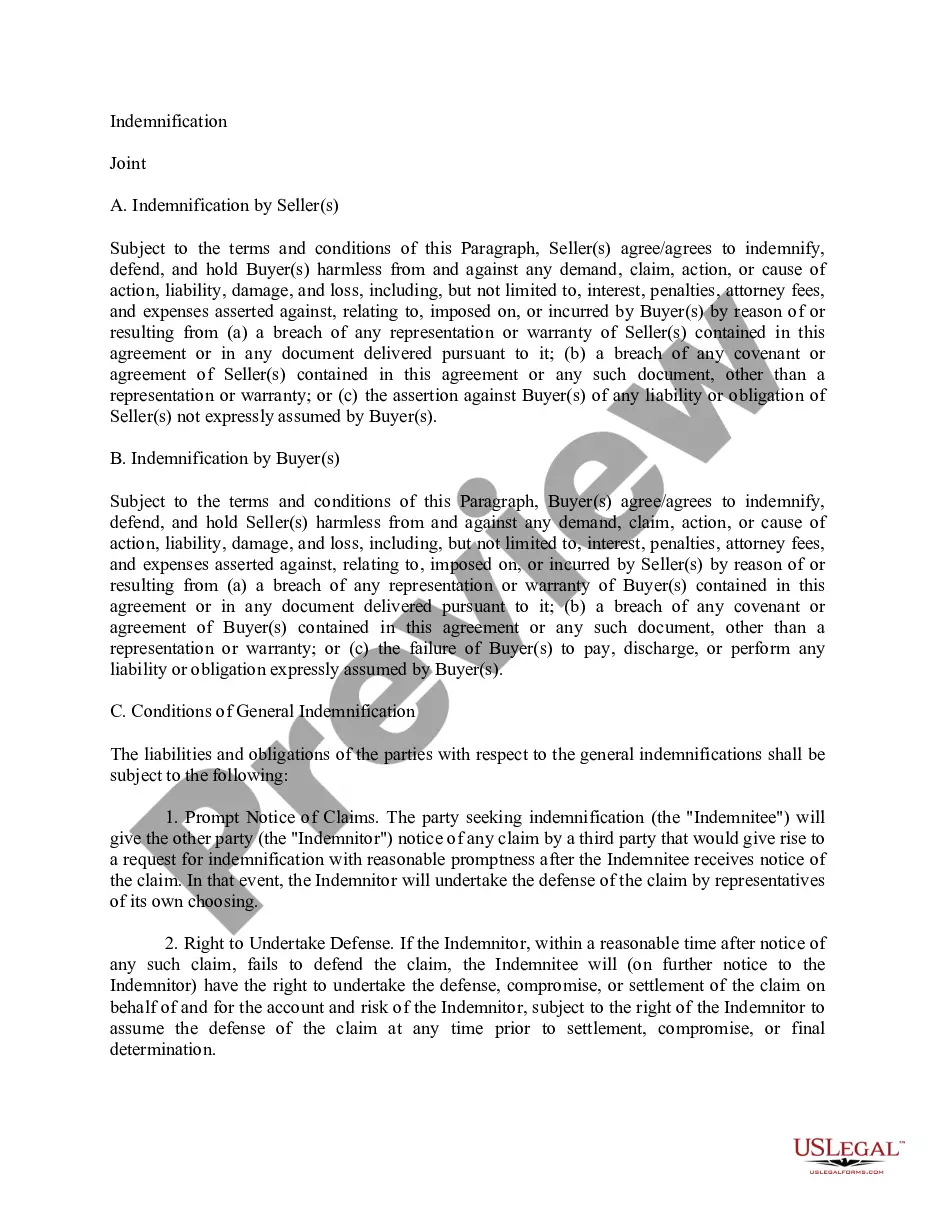
The Cross Easement for Utility Lines is a legal document that grants a perpetual easement and right-of-way for various utilities such as gas, electric, cable TV, and water lines. This form allows utility companies and property owners to legally access each other's land for maintenance and service of utility lines. Unlike standard easements, this specific form facilitates the use of multiple utility types over and under the property.
Key parts of this document
- Grant of easement: Defines the rights granted for utility access.
- Scope of right-of-way: Specifies areas for ingress and egress.
- Binding terms: Establishes that the easement runs with the land for future owners.
- Signature lines: For parties involved to confirm the agreement.
When to use this document
This form is useful when utility companies need access to private property for installation, maintenance, or repair of utility lines. Homeowners may also use this form to formalize agreements allowing multiple utility services across adjacent properties, especially in developments where services need to cross property lines.
Who can use this document
- Property owners granting utility access to service providers.
- Utility companies needing to establish legal rights on private property.
- Developers managing easement agreements for residential projects.
Instructions for completing this form
- Identify the parties involved: Provide the names and addresses of all property owners and utility companies.
- Specify the property: Include a clear description of the property subject to the easement.
- Define the utility services: List the types of utilities covered by the easement.
- Outline the terms: Clarify the rights and responsibilities of both parties regarding access and maintenance.
- Obtain signatures: Make sure all parties sign and date the document to validate the easement agreement.
Is notarization required?
To make this form legally binding, it must be notarized. Our online notarization service, powered by Notarize, lets you verify and sign documents remotely through an encrypted video session.
Get your form ready online
Our built-in tools help you complete, sign, share, and store your documents in one place.
Make edits, fill in missing information, and update formatting in US Legal Forms—just like you would in MS Word.
Download a copy, print it, send it by email, or mail it via USPS—whatever works best for your next step.
Sign and collect signatures with our SignNow integration. Send to multiple recipients, set reminders, and more. Go Premium to unlock E-Sign.
If this form requires notarization, complete it online through a secure video call—no need to meet a notary in person or wait for an appointment.
We protect your documents and personal data by following strict security and privacy standards.

Make edits, fill in missing information, and update formatting in US Legal Forms—just like you would in MS Word.

Download a copy, print it, send it by email, or mail it via USPS—whatever works best for your next step.

Sign and collect signatures with our SignNow integration. Send to multiple recipients, set reminders, and more. Go Premium to unlock E-Sign.

If this form requires notarization, complete it online through a secure video call—no need to meet a notary in person or wait for an appointment.

We protect your documents and personal data by following strict security and privacy standards.
Common mistakes
- Not including all relevant utilities: Ensure all utility types are specified.
- Failing to describe the property accurately: Provide precise language to avoid future disputes.
- Omitting necessary signatures: All parties must sign the document for it to be enforceable.
Benefits of completing this form online
- Convenience of easy download: Access and download the form anytime from any device.
- Editable format: Customize the form as needed to suit specific agreements.
- Reliability: Drafted by licensed attorneys to ensure legal compliance.
Looking for another form?
Form popularity
FAQ
An easement held by an electricity provider allows it to erect and maintain electric power equipment on your land. The easement gives the electric power company the right to use a property for this specific purpose only.
Types of Easements An easement may be classified as either an easement appurtenant or an easement in gross. Easement Appurtenant. An easement appurtenant is an easement that benefits one parcel of land, known as the dominant tenement, to the detriment of another parcel of land, known as the servient tenement.
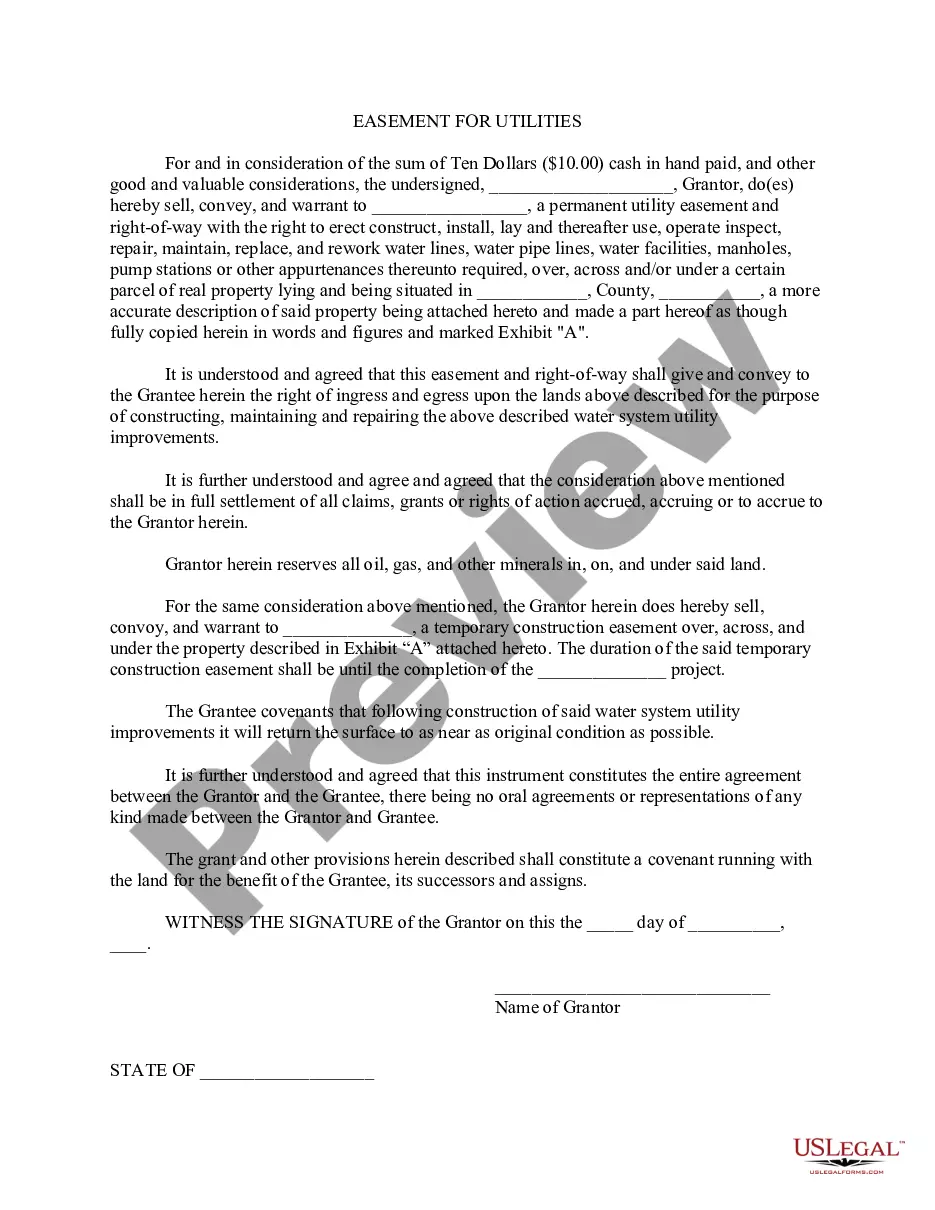
Utility easements are one of the most common types of easements for private property, which generally allow public utility companies access to the property for the purpose of installing, repairing and maintaining utility lines.
When termed as a utility easement, it means a utility company's right to access and control the portion of another person's land that is located near utility facilities and structures (i.e. utility poles, transformers, overhead or underground electrical lines).
When termed as a utility easement, it means a utility company's right to access and control the portion of another person's land that is located near utility facilities and structures (i.e. utility poles, transformers, overhead or underground electrical lines).
An easement in gross is personal to the party that receives the benefit of easement. An example of an easement in gross is an easement to a utility company to run a power line across a burdened piece of property. The utility company is the benefited party and there isn't necessarily a benefited parcel of land.
1. Easement in gross. In this type of easement, only property is involved, and the rights of other owners are not considered. For example, a public utility line easement would be an easement in gross and would be recorded in the public records.
An easement held by an electricity provider allows it to erect and maintain electric power equipment on your land. The easement gives the electric power company the right to use a property for this specific purpose only.