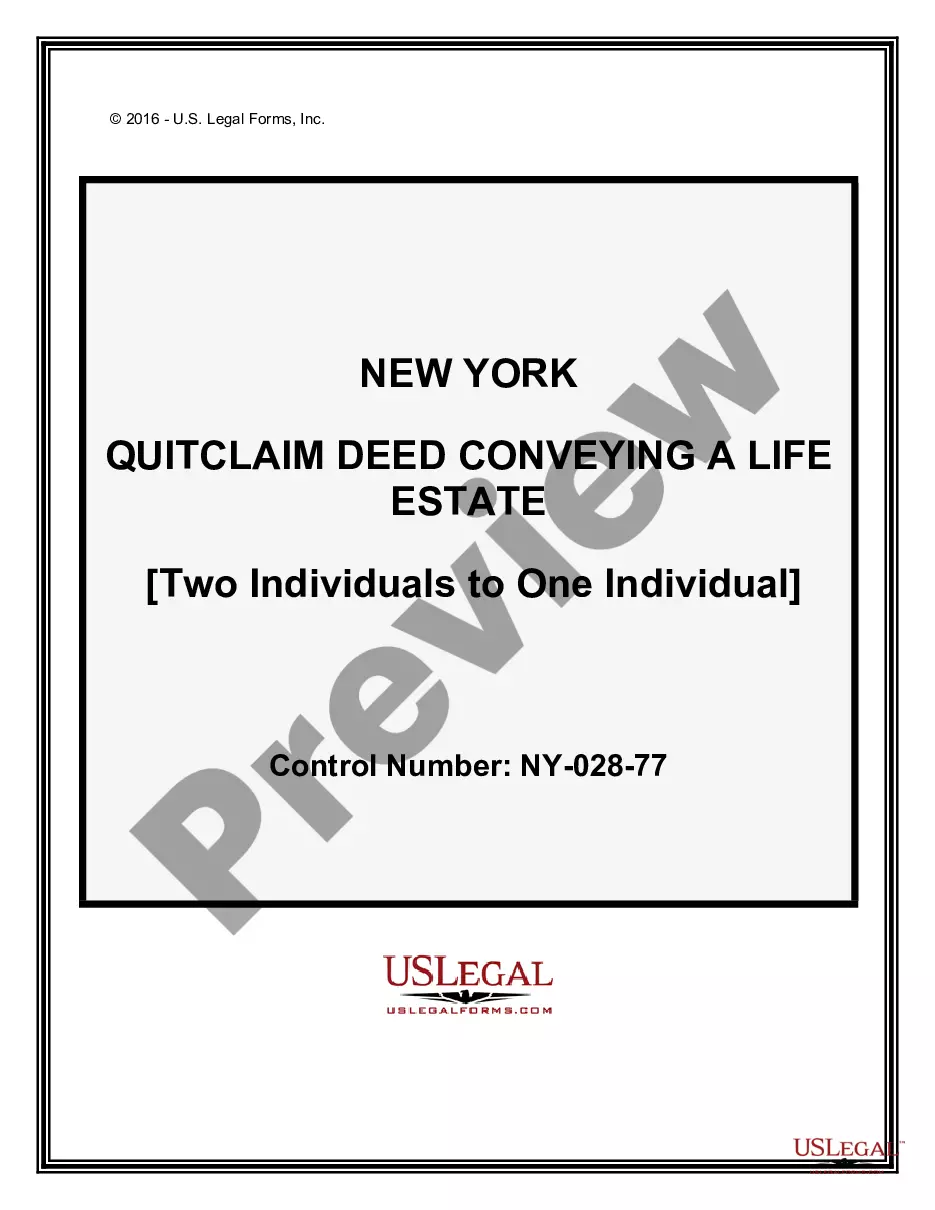
New York Quitclaim Deed Conveying a Life Estate - Husband and Wife / Two Individuals to an Individual
What is this form?
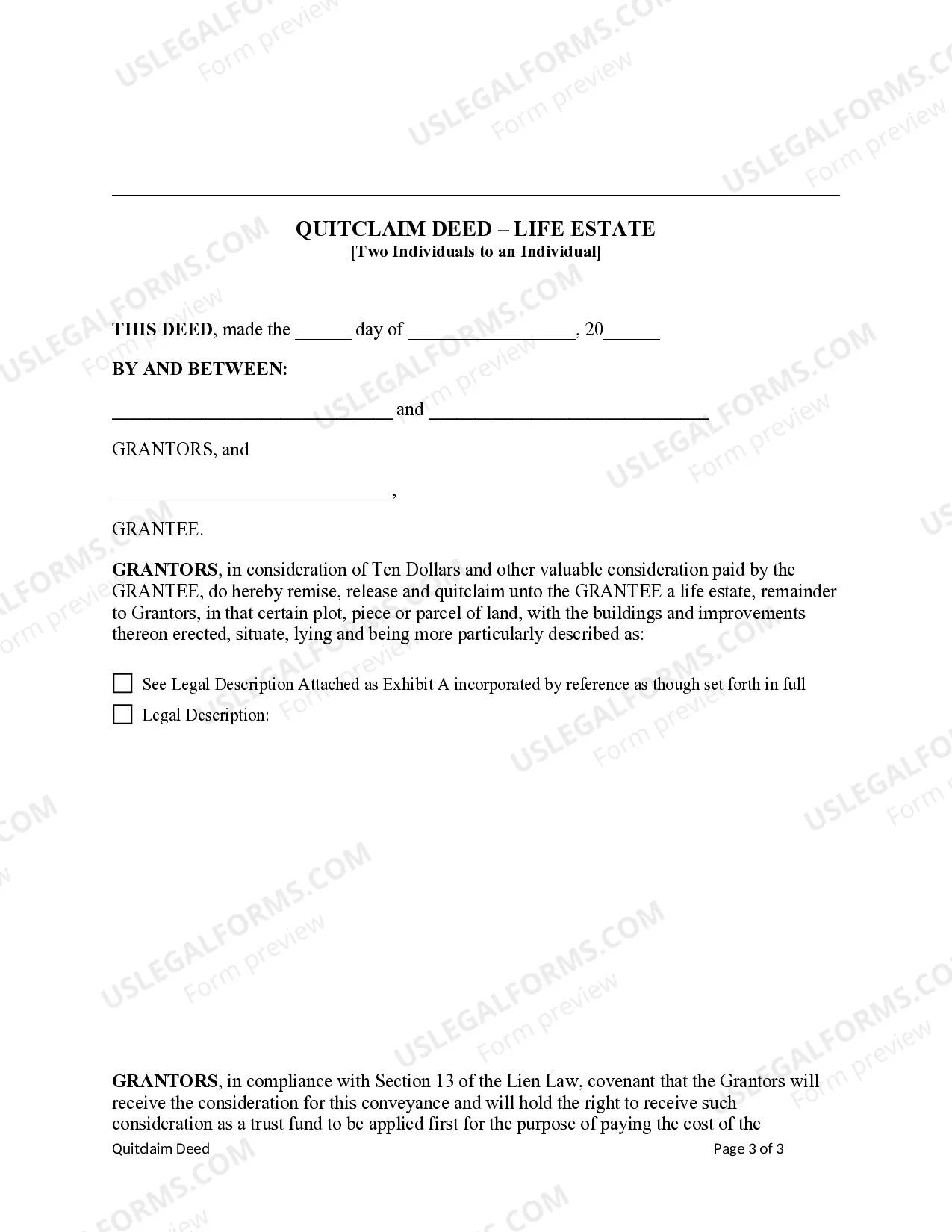
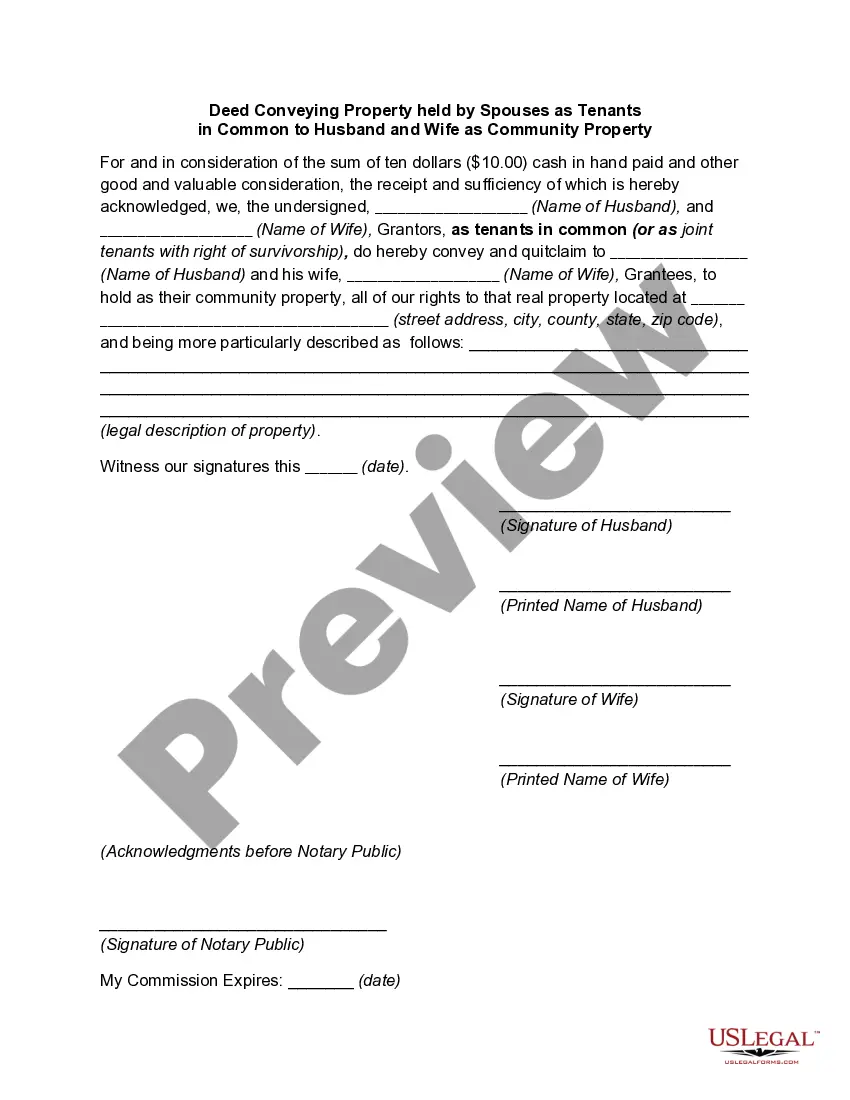
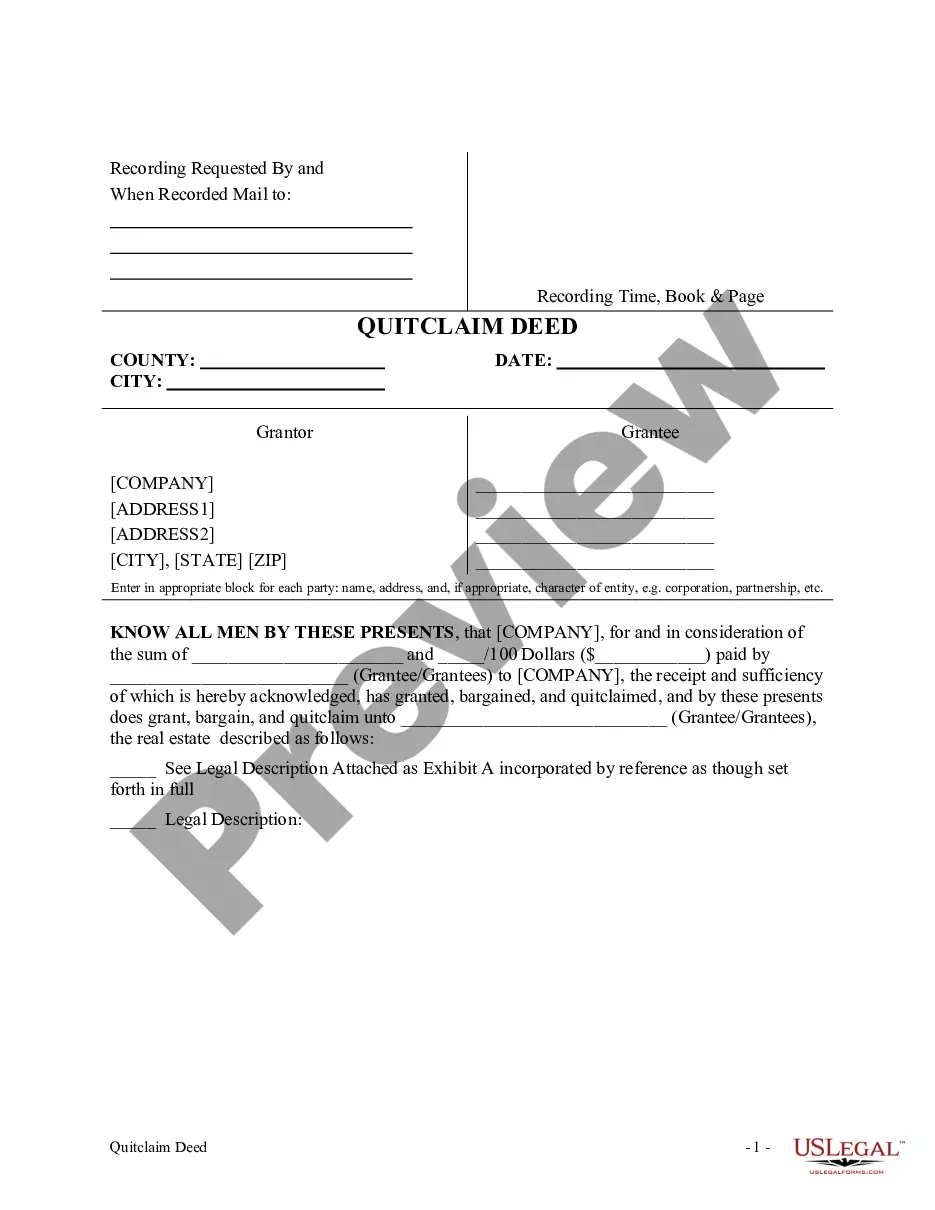
The Quitclaim Deed Conveying a Life Estate is a legal document that allows a husband and wife (or two individuals) to transfer a life estate in property to a third individual. This deed serves to convey the property rights of the Grantors while retaining the remainder interest. Unlike other deeds, a quitclaim deed does not guarantee that the Grantors own the property outright or that it is free of claims. It is crucial for those wishing to document such transfers and establish clear property rights.
Key components of this form
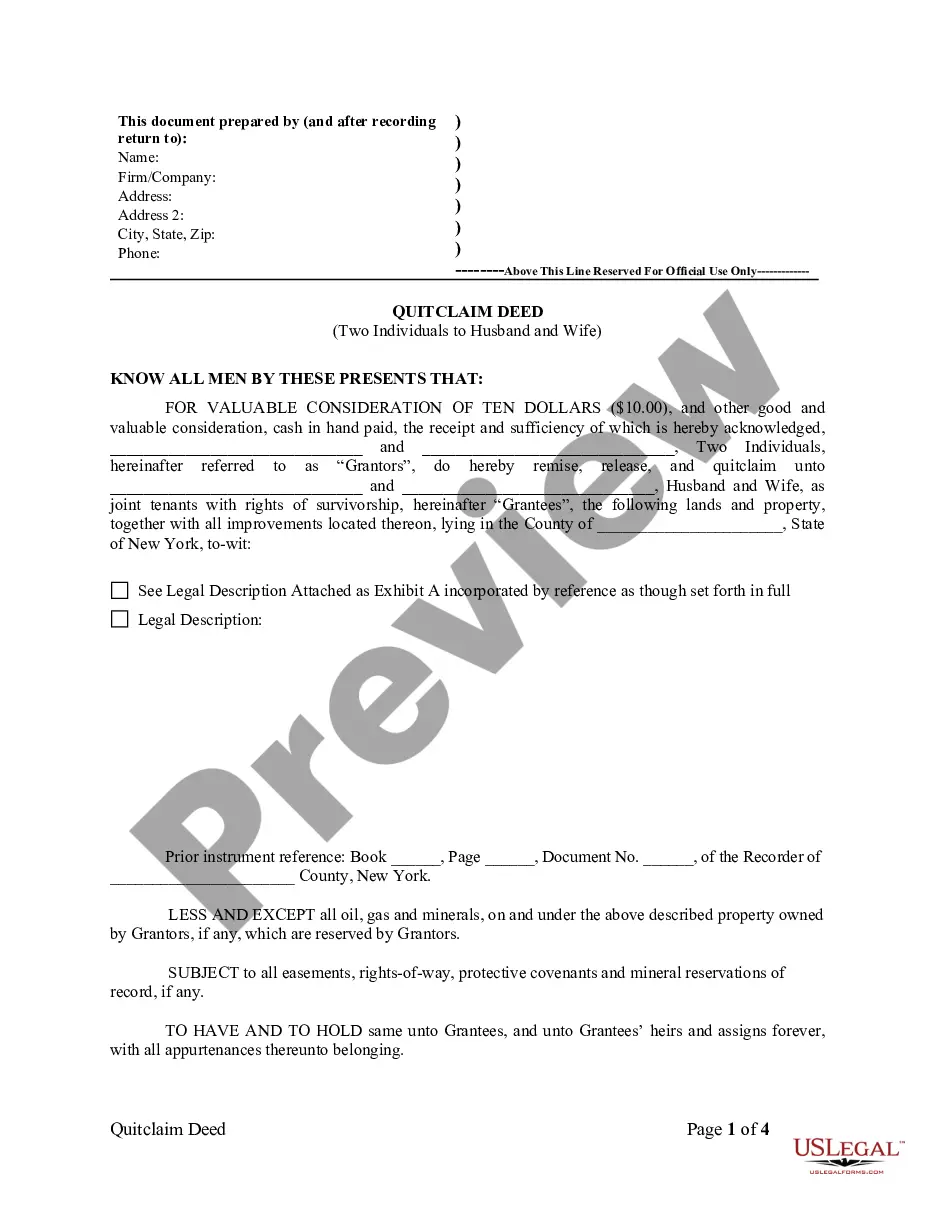
- Names of Grantors and Grantee: Identifies the individuals involved in the property transfer.
- Property Description: Details the location and description of the property being conveyed.
- Consideration Amount: Indicates the payment or value exchanged for the transfer.
- Life Estate Clause: Specifies that a life estate is being conveyed, detailing the rights of the Grantors and Grantee.
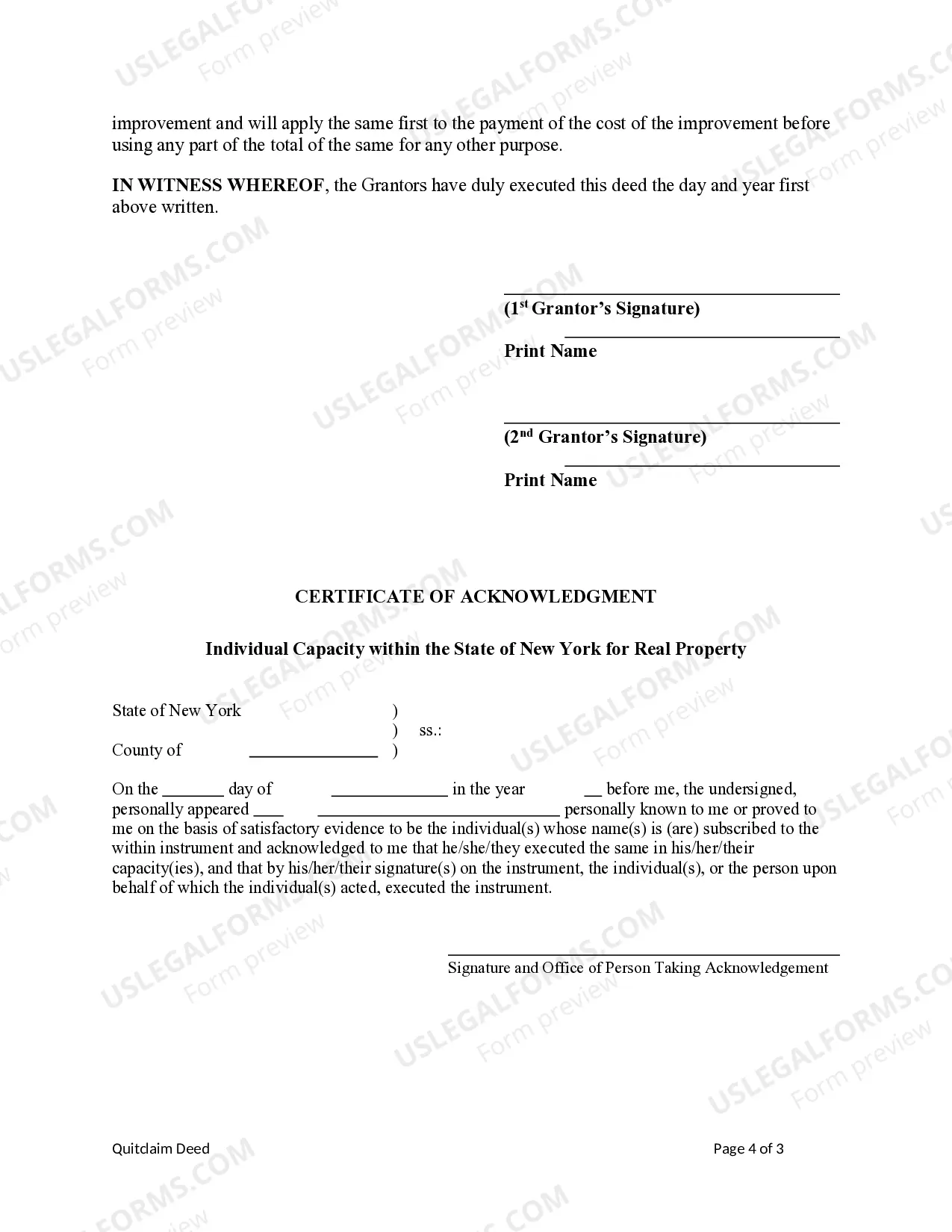
- Signatures: Requires the Grantors' signatures and acknowledgment by a notary public, if necessary.

When to use this form
This form is commonly used when two individuals (such as spouses) want to transfer their interest in a property to another individual while retaining a life estate. Scenarios may include family transfers, estate planning situations, or when simplifying property ownership arrangements. Using a quitclaim deed is an effective way to manage property interests without delving into more complex conveyance methods.
Who should use this form
- Married couples wishing to transfer a life estate to an individual.
- Two individuals, such as partners or siblings, wanting to convey their property interest.
- Anyone in need of a straightforward method of transferring property rights without warranty of ownership.
- Individuals participating in estate planning or property division among family members.
Instructions for completing this form
- Identify the parties: Enter the full names of the Grantors and the Grantee.
- Specify the property: Fill in the legal description of the property being conveyed.
- Enter consideration: Write the amount being exchanged for the transfer, typically a nominal fee.
- Sign the document: Both Grantors must sign the deed in the designated area.
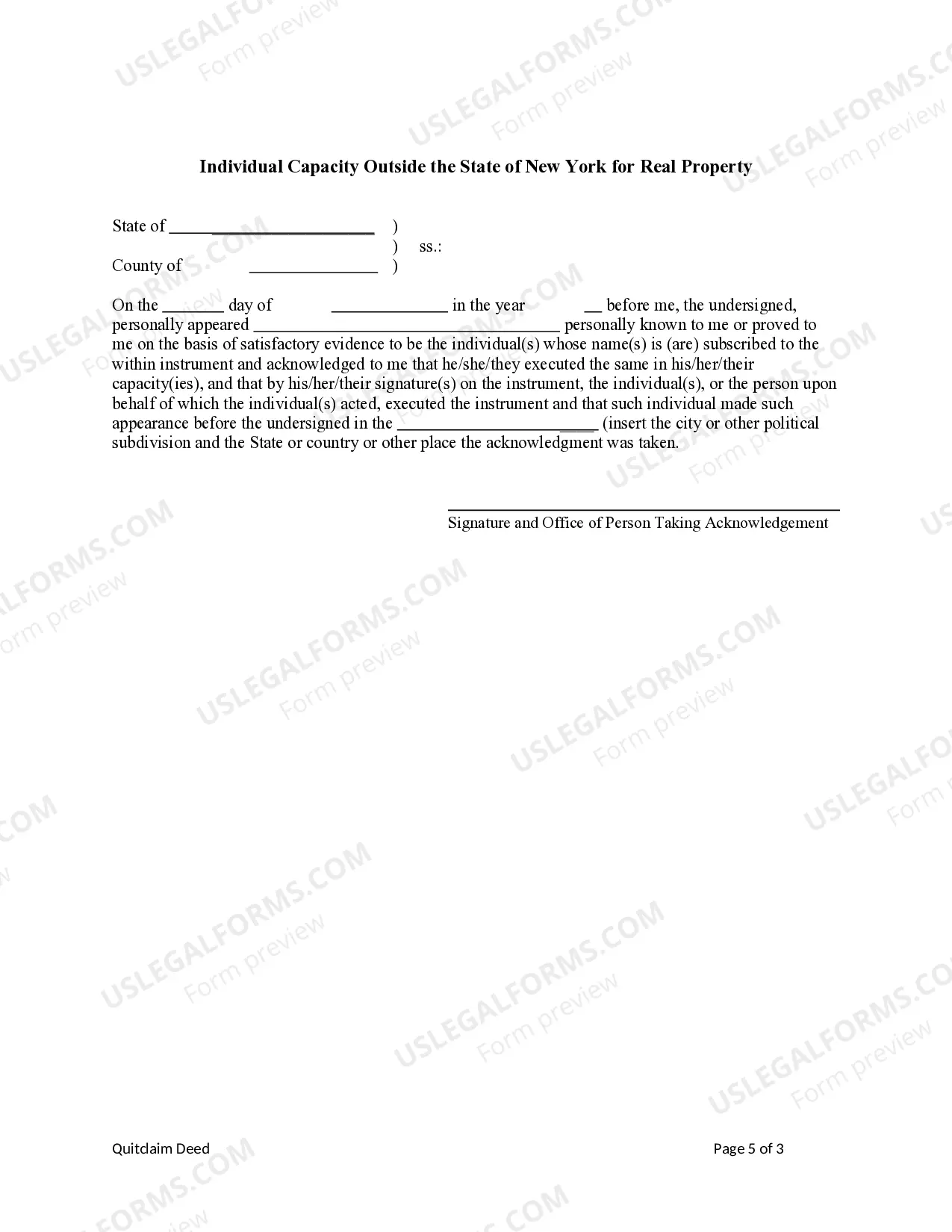
- Acknowledge before a notary: If required, have the signatures notarized to legally validate the document.
Notarization requirements for this form
Yes, this form must be notarized to be legally valid. Notarization ensures the signatures of the Grantors are verified, providing an added layer of legal protection. US Legal Forms offers integrated online notarization, allowing you to complete this process securely through a video call without needing to travel.
Get your form ready online
Our built-in tools help you complete, sign, share, and store your documents in one place.
Make edits, fill in missing information, and update formatting in US Legal Forms—just like you would in MS Word.
Download a copy, print it, send it by email, or mail it via USPS—whatever works best for your next step.
Sign and collect signatures with our SignNow integration. Send to multiple recipients, set reminders, and more. Go Premium to unlock E-Sign.
If this form requires notarization, complete it online through a secure video call—no need to meet a notary in person or wait for an appointment.
We protect your documents and personal data by following strict security and privacy standards.

Make edits, fill in missing information, and update formatting in US Legal Forms—just like you would in MS Word.

Download a copy, print it, send it by email, or mail it via USPS—whatever works best for your next step.

Sign and collect signatures with our SignNow integration. Send to multiple recipients, set reminders, and more. Go Premium to unlock E-Sign.

If this form requires notarization, complete it online through a secure video call—no need to meet a notary in person or wait for an appointment.

We protect your documents and personal data by following strict security and privacy standards.
Mistakes to watch out for
- Failing to accurately describe the property being conveyed.
- Not having the signatures notarized when required.
- Leaving out the consideration amount.
- Not fully understanding the implications of a life estate.
Benefits of using this form online
- Convenience: Easily complete and download the form from any device.
- Editability: Fill in the required information at your own pace.
- Reliability: Access to professionally drafted forms ensures compliance with legal standards.
Legal use & context
- Enforceability: A properly completed quitclaim deed conveys the specified rights and obligations under the law.
- Limitations: This form does not ensure that any liens or encumbrances on the property are cleared, so users should conduct adequate due diligence.
Main things to remember
- The Quitclaim Deed conveys a life estate, allowing Grantors to transfer property rights to an individual.
- Understanding the implications of a life estate is crucial before executing this deed.
- Ensure notarization where required to maintain the legal integrity of the document.
Looking for another form?


Form popularity
FAQ
If you've recently married and already own a home or other real estate, you may want to add your new spouse to the deed for your property so the two of you own it jointly. To add a spouse to a deed, all you have to do is literally fill out, sign and record a new deed in your county recorder's office.
A quitclaim deed transfers title but makes no promises at all about the owner's title.A person who signs a quitclaim deed to transfer property they do not own results in no title at all being transferred since there is no actual ownership interest. The quitclaim deed only transfers the type of title you own.
Fees to File a Quitclaim Deed in New York As of 2018, the basic fee for filing a quitclaim deed of residential or farm property is $125, while the fee for all other property is $250. These fees are for the RP-5217 form.
The easiest way to grant your spouse title to your home is via a quitclaim deed (Californians generally use an interspousal grant deed). With a quitclaim deed, you can name your spouse as the property's joint owner. The quitclaim deed must include the property's description, including its boundary lines.
If you live in a common-law state, you can keep your spouse's name off the title the document that says who owns the property.You can put your spouse on the title without putting them on the mortgage; this would mean that they share ownership of the home but aren't legally responsible for making mortgage payments.
Fill in the deed form. Print it out. Have the grantor(s) sign and get the signature(s) notarized. Complete a transfer tax form, Form TP-584. Complete and print out Form RP-5217 (or, if you are in New York City, Form RP-5217NYC).
Before adding your spouse to the deed, speak with your attorney. The easiest way to grant your spouse title to your home is via a quitclaim deed (Californians generally use an interspousal grant deed). With a quitclaim deed, you can name your spouse as the property's joint owner.
Yes you can. This is called a transfer of equity but you will need the permission of your lender. If you are not married or in a civil partnership you may wish to consider creating a deed of trust and a living together agreement which we can explain to you.
Fill in the deed form. Print it out. Have the grantor(s) sign and get the signature(s) notarized. Complete a transfer tax form, Form TP-584. Complete and print out Form RP-5217 (or, if you are in New York City, Form RP-5217NYC).