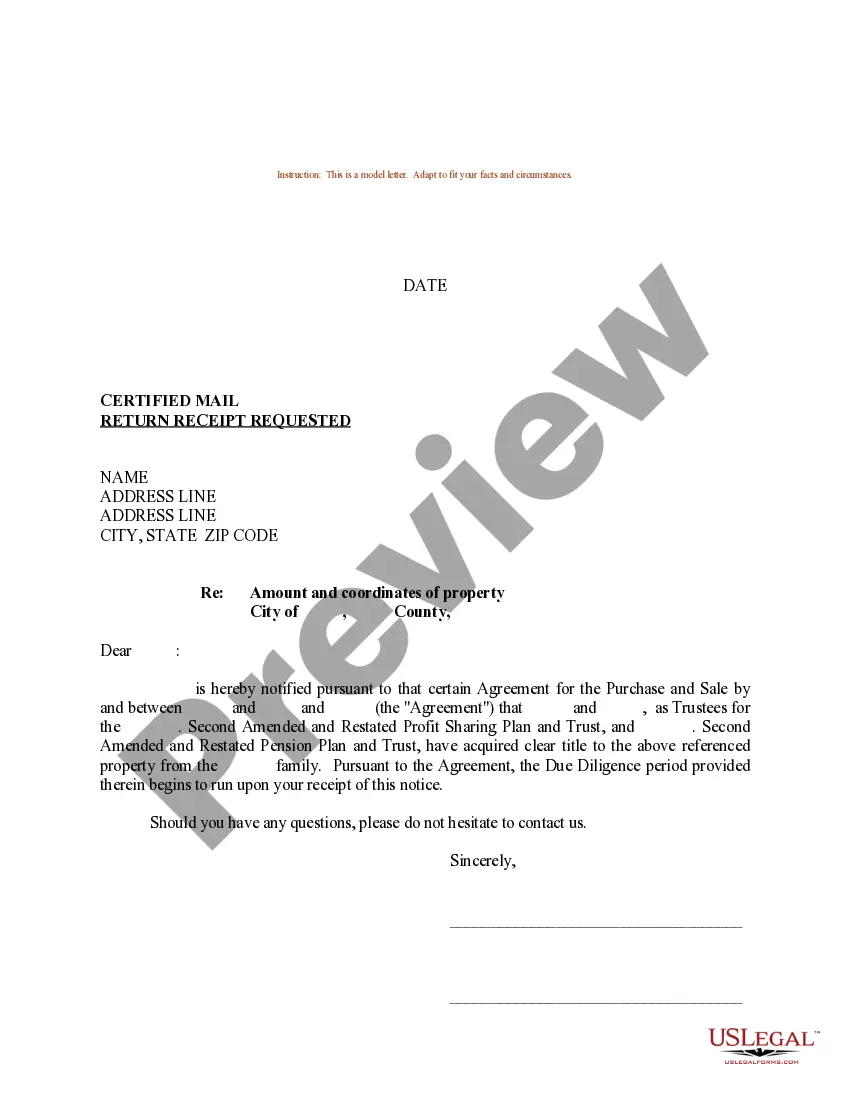
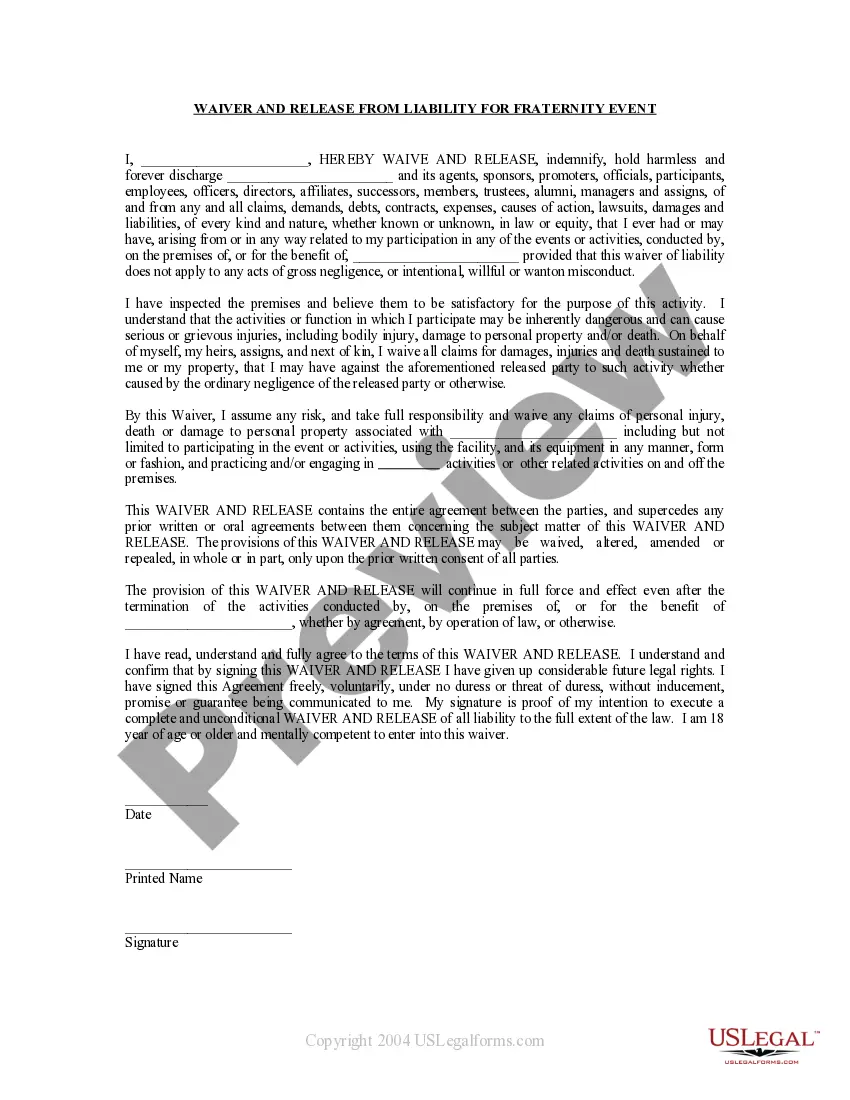
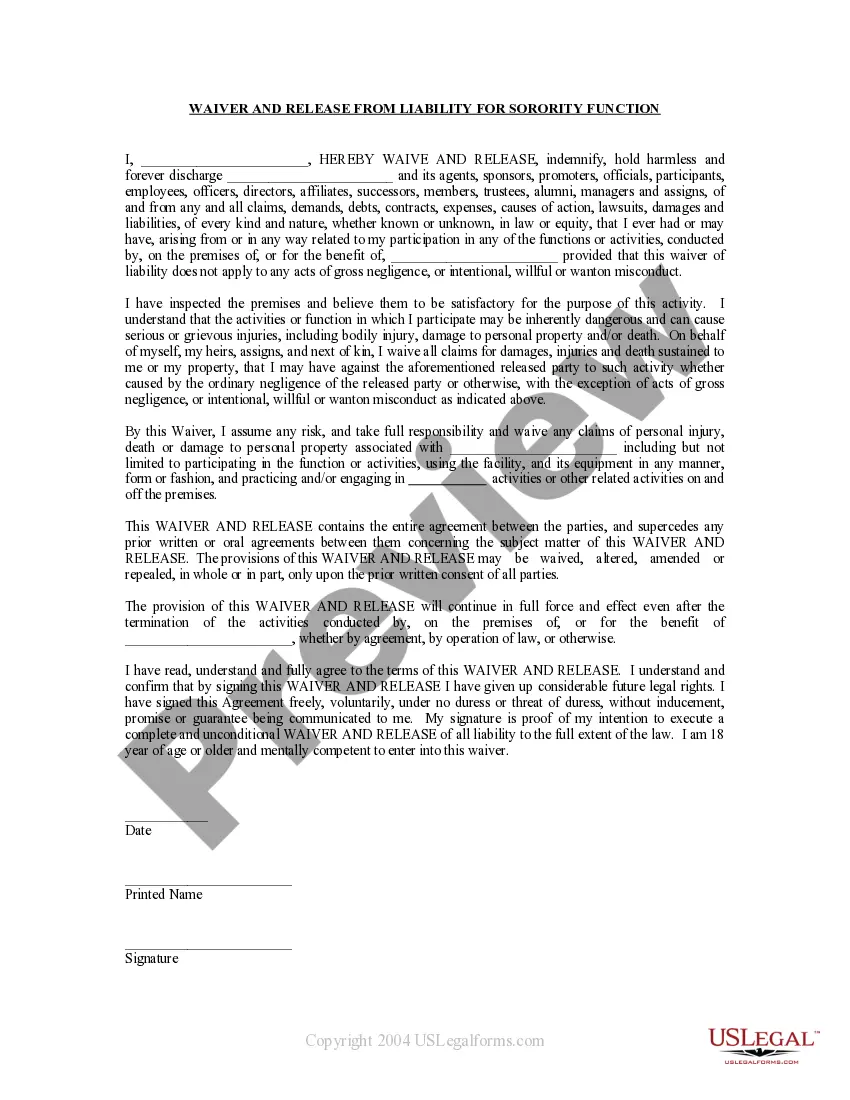
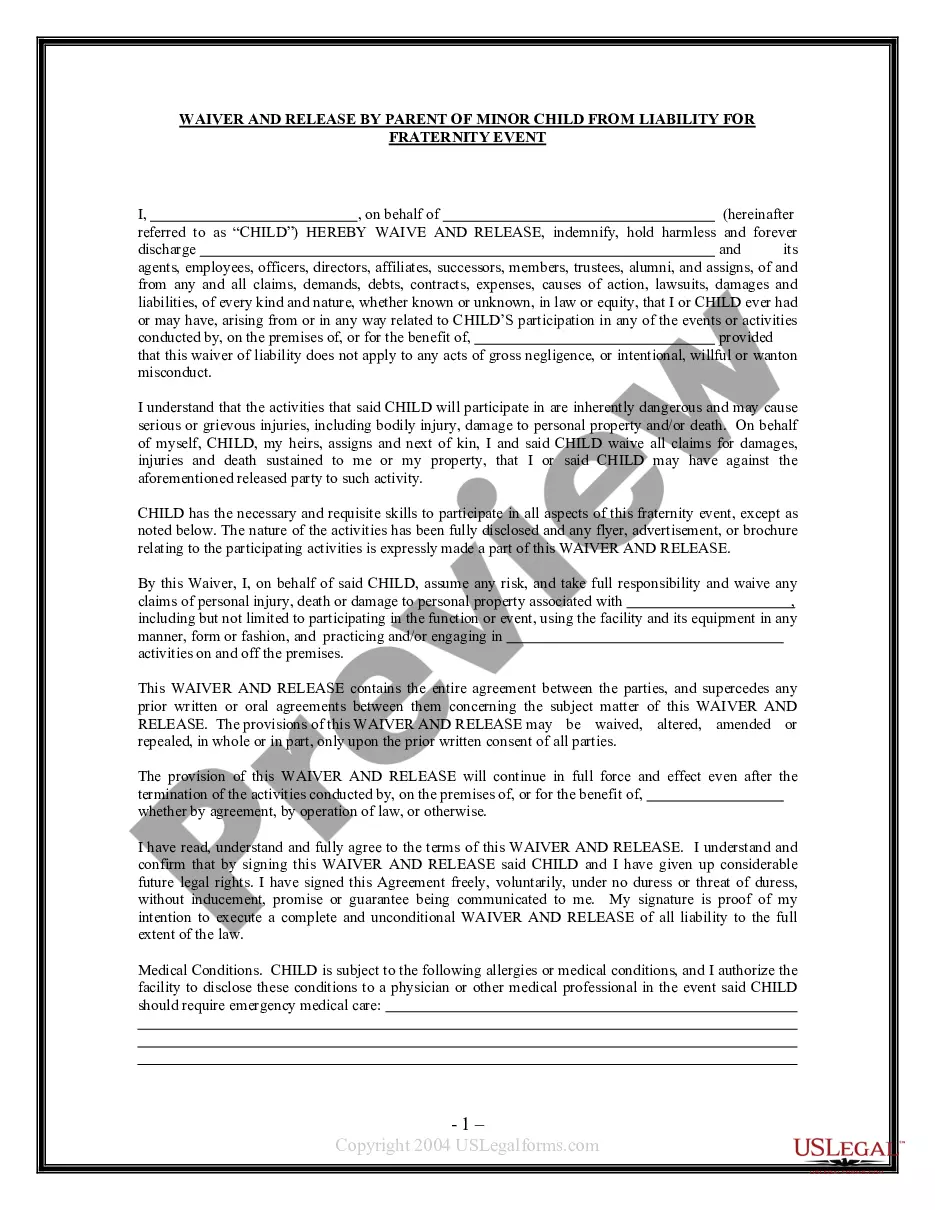
This form releases a property owner from liability for permitting an individual to participate in a farternity event.
Nevada Waiver and Release From Liability For Adult for Fraternity Event
Category:
State:
Multi-State
Control #:
US-WAV-74A
Format:
Word;
Rich Text
Instant download
Description
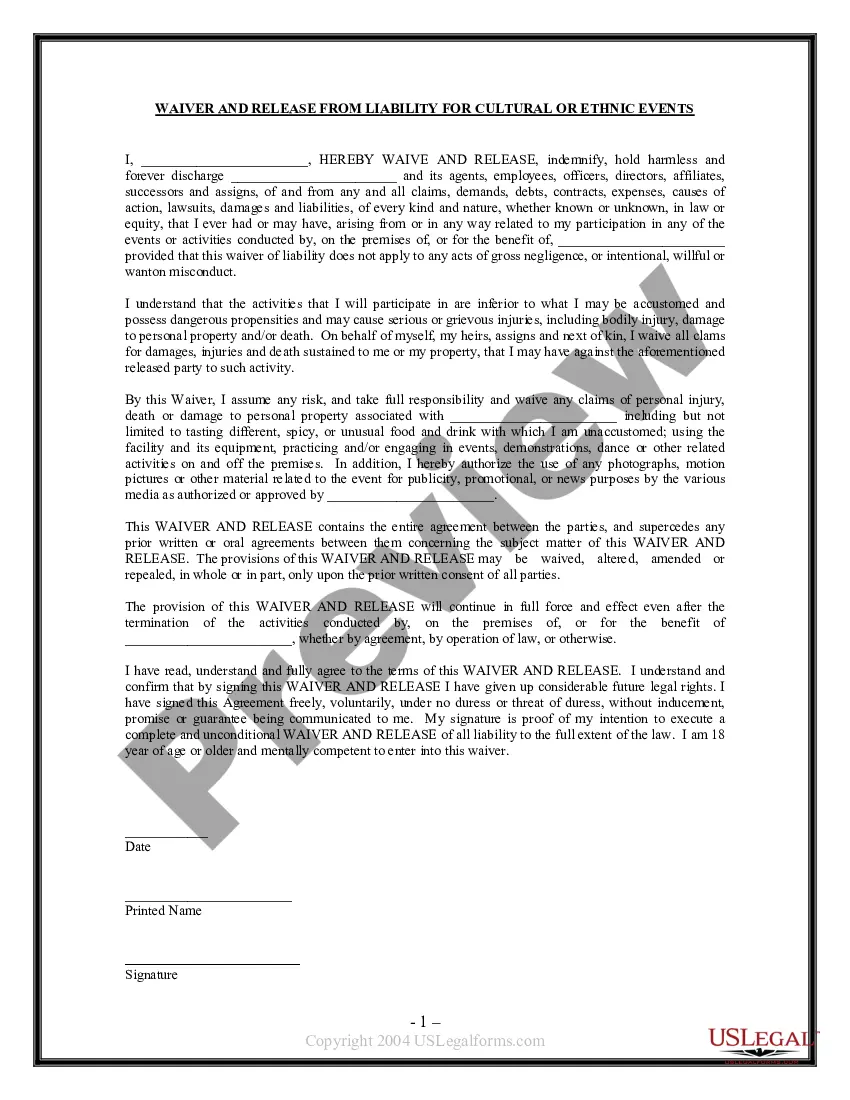
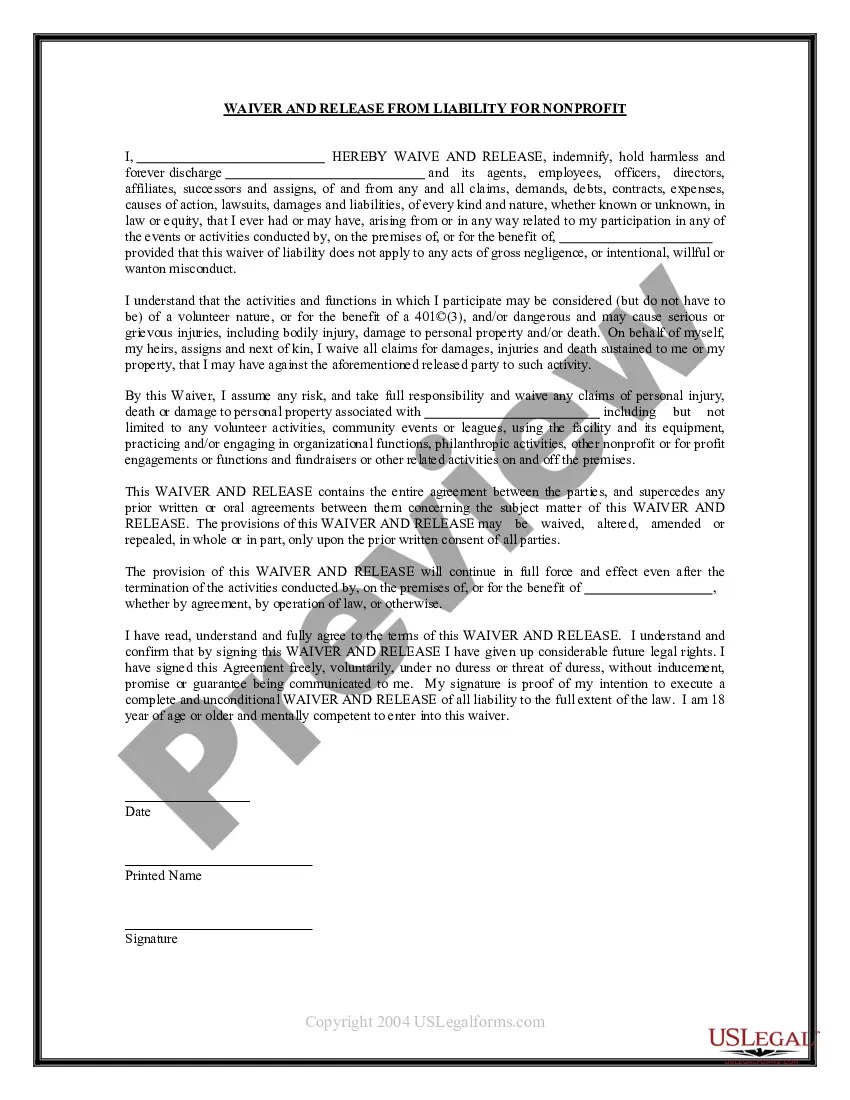
How to fill out Waiver And Release From Liability For Adult For Fraternity Event?
Are you presently in a situation where you require documents for either professional or personal purposes almost every day.
There are numerous legal document templates accessible online, but finding ones you can rely on is not simple.
US Legal Forms provides a wide array of form templates, such as the Nevada Waiver and Release From Liability For Adult for Fraternity Event, which are crafted to satisfy state and federal standards.
When you acquire the correct form, click Purchase now.
Select the payment plan you prefer, fill in the required information to create your account, and pay for the order using your PayPal or credit card.
- If you are already familiar with the US Legal Forms website and have your account, simply Log In.
- After that, you can download the Nevada Waiver and Release From Liability For Adult for Fraternity Event template.
- If you do not have an account and wish to start using US Legal Forms, follow these steps.
- Obtain the form you need and ensure it is for the correct city/county.
- Utilize the Review button to evaluate the form.
- Check the details to confirm you have selected the right form.
- If the form isn’t what you are looking for, use the Search field to locate the form that meets your needs and requirements.
Form popularity
FAQ
Here is all that pertains writing an effective liability waiver:Get help. Writing a waiver should not be complicated.Use the correct structure.Proper formatting.Include a subject line.Include a caution!Talk about the activity risks.Do not forget an assumption of risk.Hold harmless.More items...?22-Jun-2019
A liability waiver is a legal document that a person who participates in an activity may sign to acknowledge the risks involved in their participation. By doing so, the company attempts to remove legal liability from the business or person responsible for the activity.
A waiver is a document that obtains written confirmation from an individual that they are relinquishing a right or privilege. Businesses often use a waiver toward customers to minimize the risk of legal implications if a customer or client gets injured, however, waivers can be used in a variety of situations.
The main difference between releases and waivers is the transferring of ownership. When rights are released, they are transferred to another party. When rights are waived, they are gone altogether.
Event liability waivers explained A signed event liability waiver is a standard legal document. It helps protect businesses and event organizers if injuries or property damage occur during an event. Everyone who wants to participate will need to sign the release of liability form before entering the event.
Liability waivers are enforceable in California solely to the extent they shift to the customer the risk of ordinary negligence. Under California law, a liability waiver cannot excuse an injury caused by a defendant's gross negligence, recklessness or intentionally wrongful act.
Examples of waivers include the waiving of parental rights, waiving liability, tangible goods waivers, and waivers for grounds of inadmissibility. Waivers are common when finalizing lawsuits, as one party does not want the other pursuing them after a settlement is transferred.
A waiver is a legal agreement the primary purpose of which is to let you or another party modify or relinquish a right, privilege, or claim. The agreement can be a separate document on its own, such as if you sign a waiver form, or added to a contract as a waiver clause.
A release of liability, also known as a liability waiver or a hold harmless agreement, is a contract in which one party agrees not to hold another party liable for damages or injury. These contracts are common in fields that involve some risk to property, finances, or health.